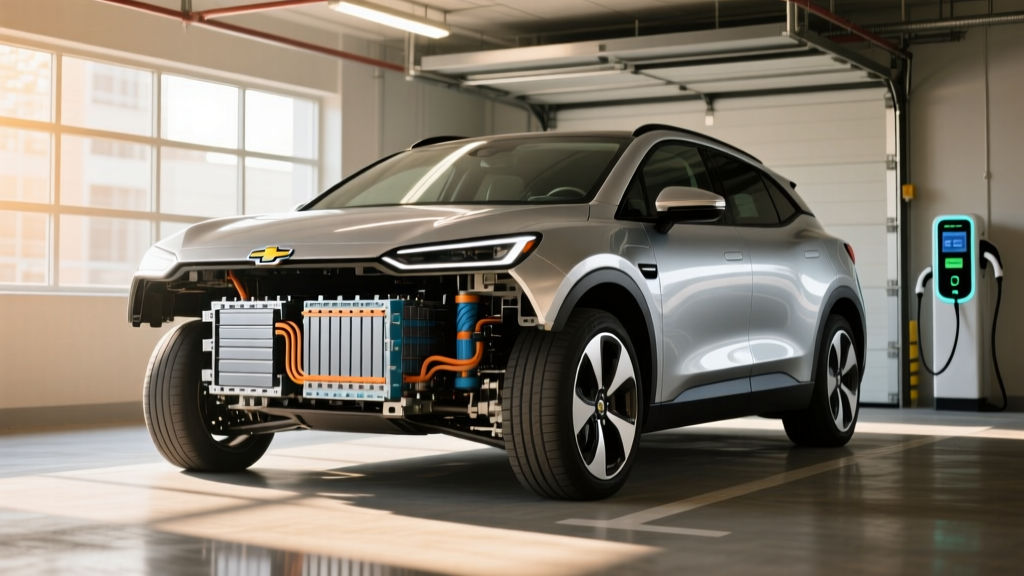
The race to pack more energy into electric vehicles has produced some genuinely massive battery packs. From the GMC Hummer EV's 212.7 kWh behemoth to the Lucid Air's 118 kWh pack delivering over 500 miles of range, the largest lithium ion batteries in production EVs are engineering marvels. But bigger doesn't always mean better — and understanding what's inside these packs matters far more than the kWh number on the spec sheet.
This guide breaks down the chemistry, longevity, degradation realities, and replacement economics of today's EV batteries, with a focus on the largest packs currently on the road.
The Largest Lithium Ion Batteries in Production EVs (2026)
Battery capacity is measured in kilowatt-hours (kWh) — the total energy stored, not the rate of delivery (that's kilowatts, or kW). The largest packs in consumer EVs push well past 100 kWh, with some trucks exceeding 200 kWh. Here's how the biggest packs stack up:
| Vehicle | Usable Capacity (kWh) | Chemistry | EPA Range (mi) | Base MSRP |
|---|---|---|---|---|
| GMC Hummer EV Pickup | ~212.7 | NMC (Ultium) | 329 | $98,845 |
| Chevrolet Silverado EV (4WT) | ~200 | NMC (Ultium) | 450 | $74,800 |
| Rivian R1T (Max Pack) | ~149 | NMC | 420 | $87,600 |
| Lucid Air Grand Touring | ~118 | NMC | 516 | $125,600 |
| Tesla Model S (Long Range) | ~100 | NMC/NCA | 402 | $79,990 |
| Ford F-150 Lightning (Extended) | ~131 | NMC | 320 | $69,995 |
A few observations: the Hummer EV carries the largest lithium ion battery ever put in a production passenger vehicle, but its 329-mile range reflects the enormous energy cost of moving a 9,000+ lb truck. The Lucid Air, by contrast, squeezes 516 miles from just 118 kWh thanks to class-leading efficiency (4.6 mi/kWh). Size isn't everything — efficiency and chemistry matter just as much.
LFP vs NMC vs NCA: Which Battery Chemistry Is Best?
Not all lithium ion batteries are built the same. The cathode chemistry determines energy density, lifespan, cost, and cold-weather behavior. The three dominant chemistries in 2026 EVs are:
- NMC (Nickel Manganese Cobalt): Used in most long-range and performance EVs. Higher energy density means more miles per pound. Found in the Hummer EV, Rivian, Lucid, and most Hyundai/Kia models.
- NCA (Nickel Cobalt Aluminum): Tesla's traditional chemistry, offering similar energy density to NMC with slightly different thermal characteristics.
- LFP (Lithium Iron Phosphate): Lower energy density but significantly longer cycle life, lower cost, no cobalt, and can be charged to 100% daily without accelerated degradation. Used in Tesla Model 3/Y RWD, Ford Mustang Mach-E Select, and many Chinese-market EVs.
| Attribute | LFP | NMC | NCA |
|---|---|---|---|
| Energy Density | Lower (~160 Wh/kg cell) | Higher (~250-300 Wh/kg) | Higher (~260-300 Wh/kg) |
| Cycle Life | 3,000-5,000+ cycles | 1,000-2,000 cycles | 1,000-1,500 cycles |
| Cold-Weather Performance | Weaker (slower charging below 32°F) | Better | Better |
| Cost per kWh | ~$80-100 (2026) | ~$110-140 | ~$115-145 |
| Daily 100% Charging | Recommended | Not recommended (80% daily) | Not recommended (80% daily) |
| Cobalt Content | None | Some | Some |
| Best For | Daily commuters, fleet, budget models | Long-range, performance, trucks | Long-range, Tesla models |
Which is better? It depends on your use case. If you need maximum range from the largest lithium ion battery pack possible — think towing with an F-150 Lightning or road-tripping a Lucid Air — NMC or NCA is the only option that fits enough kWh into the vehicle. If you're a daily commuter who charges at home and wants a battery that will likely outlast the car itself, LFP is the superior longevity play.
How Long Do EV Batteries Actually Last?
The short answer: longer than most buyers expect. Data from fueleconomy.gov, manufacturer warranty filings, and fleet studies consistently show that modern EV batteries lose roughly 1-2% of capacity per year under normal use. A well-maintained pack should retain 80-90% of its original capacity after 8-10 years.
Here's what the real-world degradation data looks like across chemistries and mileages:
| Mileage | Typical NMC Loss | Typical LFP Loss | Data Source / Context |
|---|---|---|---|
| 50,000 mi | 4-7% | 2-4% | Geotab fleet study (2024-2025), Tesla owner surveys |
| 100,000 mi | 8-12% | 4-7% | Geotab, Recurrent Auto data |
| 150,000 mi | 12-18% | 6-10% | High-mileage owner reports, taxi fleet data |
| 200,000+ mi | 15-25% | 8-14% | Limited sample; mostly Tesla Model S/X and Nissan Leaf |
Key context: a 2025 Recurrent Auto study of over 15,000 EVs found that the average battery retained 92% of its original range at 80,000 miles. Only about 1.5% of batteries in that dataset required replacement — and most of those were early-manufacturing defects covered under warranty, not end-of-life failures.
The largest lithium ion battery packs (100+ kWh) have an inherent longevity advantage: because they're bigger, each individual cell is cycled less deeply for a given trip. A 200 kWh pack used for a 50-mile daily commute is only cycling through ~15% of its capacity — far less stress than a 60 kWh pack doing the same trip.
What Does the Battery Warranty Cover?
Federal law mandates a minimum 8-year / 100,000-mile warranty on EV battery packs (10 years / 150,000 miles in CARB states like California, New York, and Massachusetts). Most manufacturers exceed these minimums in meaningful ways:
| Manufacturer | Warranty Term | Capacity Threshold | Notes |
|---|---|---|---|
| Tesla (Model S/X) | 8 yr / 150,000 mi | 70% retention | Includes drive unit |
| Tesla (Model 3/Y RWD — LFP) | 8 yr / 100,000 mi | 70% retention | Lower mile limit vs Long Range |
| GM (Ultium — Hummer, Silverado EV) | 8 yr / 100,000 mi | 70% retention | Module-level replacement possible |
| Hyundai/Kia | 10 yr / 100,000 mi | 70% retention | Longest standard term |
| Ford (F-150 Lightning, Mach-E) | 8 yr / 100,000 mi | 70% retention | Transferable to second owner |
| Rivian | 8 yr / 175,000 mi | 70% retention | Higher mile limit for R1T/R1S |
| Lucid | 8 yr / 100,000 mi | 70% retention | — |
The "70% retention" threshold is critical: if your 100 kWh pack drops below 70 kWh of usable capacity within the warranty period, the manufacturer must repair or replace it. In practice, almost no modern EV falls below this threshold under normal use — the warranty is a safety net, not a prediction.
How Much Does It Cost to Replace an EV Battery?
This is the question that generates the most anxiety — and the most misinformation. Here are actual replacement cost ranges based on manufacturer service bulletins, independent shop data, and insurance claim reports as of early 2026:
| Battery Size | Example Vehicles | Full Pack Replacement | Typical Need Timeline |
|---|---|---|---|
| 50-65 kWh | Tesla Model 3 RWD, Chevy Bolt EV | $8,000 - $14,000 | Rarely needed before 200k+ mi |
| 75-100 kWh | Tesla Model S/Y LR, Hyundai Ioniq 5 | $12,000 - $20,000 | Rarely needed before 175k+ mi |
| 100-135 kWh | F-150 Lightning Ext, Rivian R1T Max | $18,000 - $28,000 | Rarely needed before 150k+ mi |
| 150-213 kWh | Hummer EV, Silverado EV | $25,000 - $40,000+ | Too new for end-of-life data |
Important nuance: many manufacturers, especially GM with its Ultium platform, now design packs for module-level replacement. If one cell group degrades or fails, a technician can swap that single module for $2,000-$5,000 rather than replacing the entire pack. This is a significant cost reduction that most buyers don't know about.
Also critical: the vast majority of EV batteries never need replacement. The NHTSA and independent fleet data show battery replacement rates under 2% within the first 10 years. For context, automatic transmission replacement rates in ICE vehicles are significantly higher over the same period.
Factors That Accelerate (or Protect) Battery Life
Your battery's lifespan isn't just about time and miles — it's about how you treat it. The following factors have the biggest measurable impact on long-term State of Health (SoH):
Habits That Accelerate Degradation
- Exclusive DC fast charging: Vehicles that DC fast charge more than 3x per week show 1.5-2x the degradation rate of those that primarily Level 2 charge at home (Recurrent Auto, 2025).
- Sustained 100% State of Charge: Storing an NMC/NCA battery at 100% for days accelerates calendar aging. LFP is exempt from this concern.
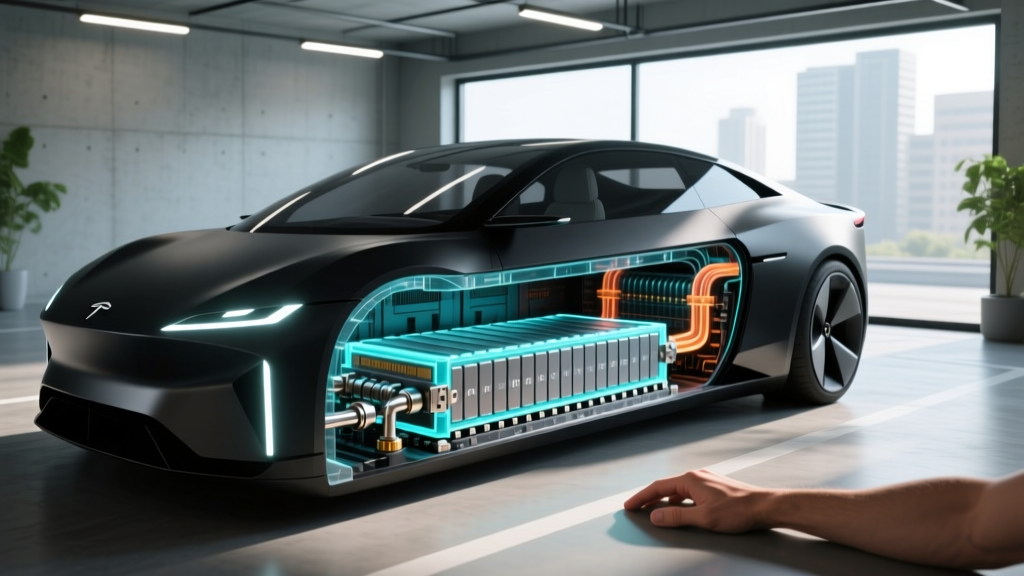
- Extreme heat exposure: Consistently operating or storing in 100°F+ ambient temperatures without active thermal management causes measurable capacity loss. Vehicles with active liquid cooling (Tesla, GM Ultium, Hyundai E-GMP) fare significantly better than passive-cooled packs.
- Deep discharges to 0%: Regularly running the battery to near-zero stresses cells. Most manufacturers build in a bottom buffer (typically 2-5 kWh) to protect against this.
Habits That Maximize Longevity
- Level 2 home charging as primary: Slower charging generates less heat and stress on cells.
- 20-80% daily SoC window (NMC/NCA): Set your charge limit to 80% for daily use; charge to 100% only before long trips.
- 100% is fine for LFP: Tesla and Ford explicitly recommend periodic 100% charges on LFP packs for cell balancing and BMS calibration.
- Precondition before fast charging: Navigating to a DC fast charger in a Tesla or using the preconditioning toggle in other EVs warms the battery to optimal temperature, improving charge speed and reducing stress.
- Garage parking in extreme climates: Even unheated garages moderate temperature swings enough to measurably slow calendar degradation.
How to Check and Monitor Your Battery's State of Health
State of Health (SoH) is the percentage of your battery's original capacity that remains usable. A new 100 kWh pack at 95% SoH effectively holds 95 kWh. Here's how to track it:
- In-vehicle displays: Tesla shows a battery health estimate in the service menu (Software → Service Mode → Battery Health). Hyundai/Kia includes SoH in the EV diagnostic screen. Ford provides range-based estimates via the FordPass app.
- OBD-II dongles + apps: Tools like the OBDLink SX paired with apps such as LeafSpy (Nissan) or Scan My Tesla pull raw BMS data including SoH, cell voltage variance, and cycle count.
- Dealer diagnostic reports: Any authorized service center can run a full battery health report, often free during scheduled service. Request this before buying a used EV.
- Third-party services: Companies like Recurrent Auto offer free battery health reports by connecting to your vehicle's telematics data — useful for tracking degradation over time and generating a certified report for resale.
For buyers of used EVs with the largest lithium ion battery packs, SoH verification is non-negotiable. A 212 kWh Hummer EV pack at 85% SoH still holds 180 kWh — plenty of range — but you should know the number before negotiating price.
What's Next: Solid-State, Silicon Anodes, and Beyond
The battery landscape is evolving rapidly, but it's essential to separate lab announcements from production reality:
- Solid-state batteries: Toyota, Samsung SDI, and QuantumScape have all announced prototype solid-state cells promising 50%+ energy density improvements and 10-minute fast charging. Toyota has confirmed a 2027-2028 production target for a limited-run EV, but widespread availability at scale remains unlikely before 2030. These are not currently available in any production vehicle.
- Silicon anode technology: Companies like Sila Nanotechnologies and Group14 are shipping silicon-dominant anode materials to manufacturers now. Mercedes-Benz's upcoming G-Class EV (announced for 2025-2026) uses a silicon anode pack from Sila, claiming ~20% higher energy density than conventional graphite anodes. This is the nearest-term upgrade already entering production.
- Sodium-ion batteries: CATL and BYD have begun shipping sodium-ion packs in Chinese-market vehicles. Lower energy density than LFP but significantly cheaper and free of lithium. Not yet available in US-market EVs, but potentially relevant for budget models by 2028-2029.
- Cell-to-pack and cell-to-chassis designs: BYD's Blade Battery and Tesla's 4680 structural pack eliminate module housings, packing more kWh into the same physical space. This trend is already live in 2026 models and explains why newer EVs achieve more range without larger physical footprints.
Bottom line: if you're buying in 2026, today's NMC, NCA, and LFP packs are mature, well-tested technologies with strong degradation data. Future chemistries will improve energy density and cost, but they won't make current batteries obsolete any faster than the iPhone 15 made the iPhone 14 unusable.
EV Battery FAQ
How long do EV batteries last in years and miles?
Most modern EV batteries are designed to last 15-20 years and 150,000-200,000+ miles while retaining 70-80% of original capacity. Fleet data from Geotab and Recurrent Auto shows average annual degradation of 1-2% under normal use. Many first-generation Tesla Model S packs have exceeded 200,000 miles with 80%+ SoH.
How much does an EV battery cost to replace?
Full pack replacement ranges from roughly $8,000 for a small pack (Chevy Bolt) to $40,000+ for the largest lithium ion battery packs like the GMC Hummer EV's 212 kWh Ultium. However, module-level repairs can cost $2,000-$5,000, and actual out-of-warranty replacements are rare — under 2% of vehicles require them within the first decade.
What does the EV battery warranty actually cover?
Federal law requires 8 years / 100,000 miles minimum coverage (10 yr / 150,000 mi in CARB states). The warranty guarantees the battery will retain at least 70% of its original capacity. If it drops below that threshold, the manufacturer repairs or replaces it at no cost. Some brands, like Hyundai and Kia, extend this to 10 years / 100,000 miles as standard.
How do I check my EV battery's health?
Use your vehicle's built-in battery health screen (Tesla Service Mode, Hyundai EV diagnostics), connect an OBD-II reader with EV-compatible software, request a dealer diagnostic report, or sign up for a free service like Recurrent Auto that tracks SoH via telematics. Always check SoH before purchasing a used EV.
LFP vs NMC — which battery chemistry should I choose?
Choose LFP if you want maximum cycle life, lower cost, and can charge to 100% daily — ideal for commuters and budget-oriented models. Choose NMC or NCA if you need maximum range or performance from a given pack size — essential for trucks, long-range sedans, and vehicles with the largest lithium ion battery packs. LFP sacrifices energy density; NMC sacrifices some cycle life.
Does DC fast charging damage my battery?
Occasional DC fast charging has minimal impact. However, data from Recurrent Auto shows that vehicles relying primarily on DC fast charging (3+ sessions per week) degrade 1.5-2x faster than those using Level 2 home charging. Use DC fast charging for road trips, and charge at home on Level 2 for daily needs.
Will solid-state batteries make my current EV obsolete?
Not in the near term. Solid-state batteries remain in limited pre-production as of 2026, with Toyota targeting 2027-2028 for a small production run. Widespread, affordable solid-state EVs are unlikely before 2030+. Your current EV's battery will remain functional and supported for years regardless of future chemistry advances.