What Qualifies as the Largest Battery in the World for EVs?
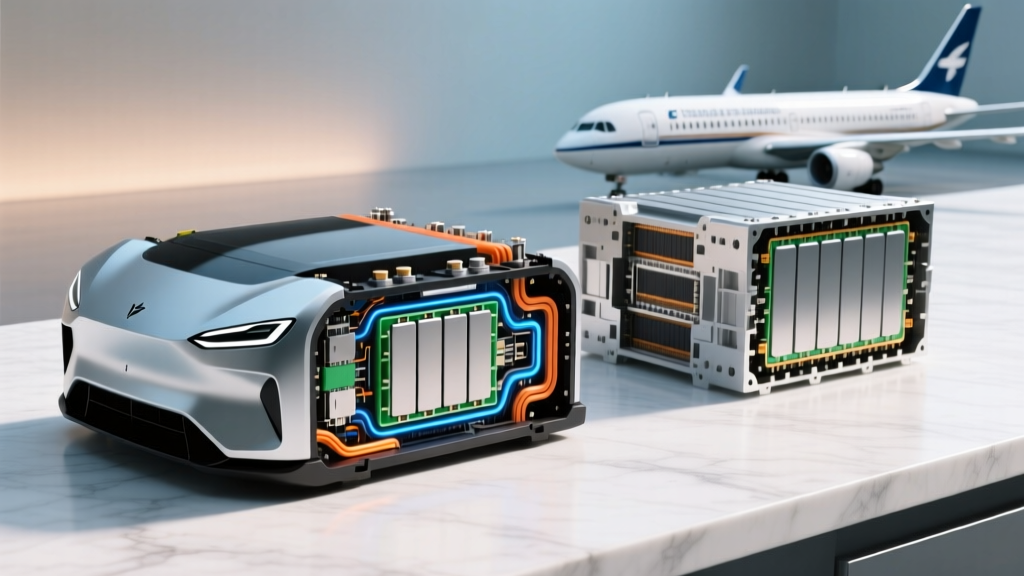
When EV buyers search for the largest battery in the world, they are usually asking two different questions: which passenger vehicle carries the most kilowatt-hours (kWh) of usable energy, and how do those massive packs compare to grid-scale storage projects like Australia's Victorian Big Battery (300 MW / 450 MWh). For this guide we focus on the traction batteries that actually propel production electric vehicles — the high-voltage lithium-ion or lithium iron phosphate packs bolted under the floorpan — because that is what determines your real-world range, charging behavior, and long-term ownership cost.
As of the 2026 model year, the title of largest battery in a mass-production passenger EV belongs to the GMC Hummer EV Pickup, which ships with a 212.7 kWh (gross) Ultium pack — roughly double the capacity of a Tesla Model Y Long Range. The Hummer EV SUV variant uses a slightly smaller 170+ kWh pack, and heavy-duty trucks like the Ford F-150 Lightning Extended Range and Rivian R1T Max Pack cluster in the 135–149 kWh window. But bigger is not automatically better: a 212 kWh NMC pack weighs over 2,900 pounds, costs north of $25,000 to replace out of warranty, and charges more slowly per mile of range added than a lighter, smaller pack. Understanding what's inside these record-setting batteries — and whether the chemistry, degradation profile, and warranty justify the size — matters more than the headline kWh number.
The Biggest EV Battery Packs on Sale Today
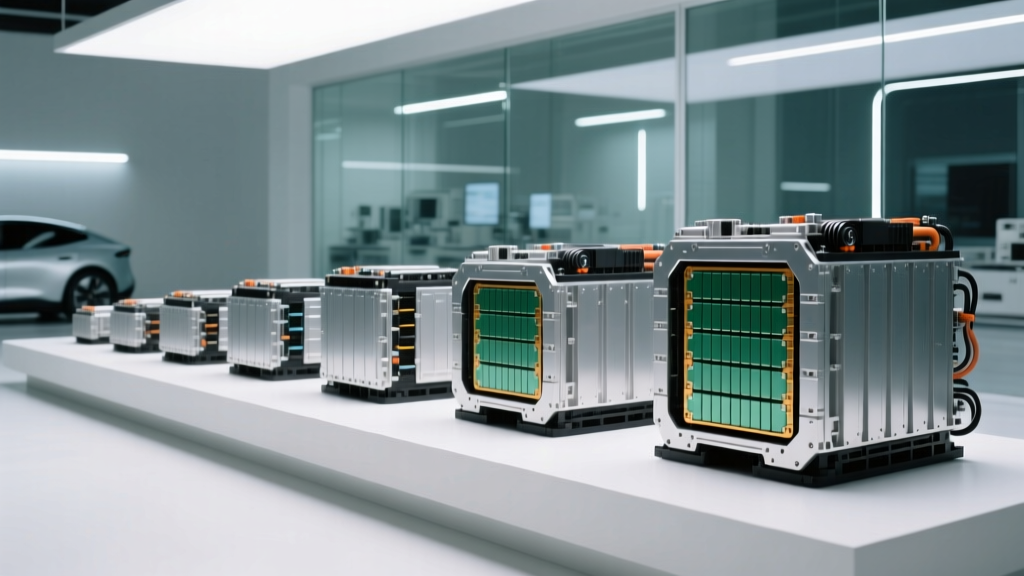
Here is how the largest production EV battery packs stack up against mainstream benchmarks. Note that "usable kWh" is what the vehicle's battery management system (BMS) actually lets you draw; the remaining buffer protects the cells from deep discharge damage.
| Vehicle | Gross kWh | Usable kWh (est.) | Chemistry | EPA Range | 0–60 mph | Base MSRP |
|---|---|---|---|---|---|---|
| GMC Hummer EV Pickup 2X | 212.7 | ~200 | NMC (Ultium) | 329–381 mi | 3.0 s | $98,845 |
| Cadillac Escalade IQ | 200+ | ~190 | NMC (Ultium) | ~450 mi (est.) | <4.0 s | $129,990 |
| Rivian R1T / R1S Max Pack | 149 | ~140 | NMC (Samsung 2170) | 352–410 mi | 3.5 s (tri-motor) | $99,900 |
| Ford F-150 Lightning Ext. Range | 131 | ~123 | NMC | 320 mi | 3.8 s | $69,995 |
| Tesla Model S Long Range | ~100 | ~95 | NCA/NMC | 402 mi | 3.1 s | $79,990 |
| Lucid Air Grand Touring | 112 | ~108 | NMC | 516 mi | 3.0 s | $127,400 |
| Tesla Model Y Long Range (ref) | ~78 | ~75 | NMC | 320 mi | 4.8 s | $44,990 |
For context, the Lucid Air Grand Touring achieves more EPA miles than the Hummer EV despite a pack roughly half the size, because efficiency (kWh per 100 miles) dominates the equation. The Hummer EV 2X consumes around 47–53 kWh/100 mi; the Lucid sips roughly 24 kWh/100 mi. So the "largest battery in the world" in a passenger EV does not automatically deliver the longest range — vehicle mass, aerodynamics, and motor efficiency matter at least as much.
LFP vs NMC vs NCA: Chemistry Trade-Offs Inside Big Packs
Almost every pack on the list above uses nickel-manganese-cobalt (NMC) or nickel-cobalt-aluminum (NCA) chemistry because those formulations offer the highest energy density — essential when you're trying to fit 140+ kWh under a vehicle floor. Lithium iron phosphate (LFP), by contrast, has become the default for standard-range and lower-cost EVs (Tesla Model 3 RWD, base Ford Mustang Mach-E, BYD models sold outside the U.S.). Here is how the three chemistries compare in practice.
| Attribute | LFP | NMC | NCA |
|---|---|---|---|
| Energy density (cell-level) | ~160–180 Wh/kg | ~230–270 Wh/kg | ~250–280 Wh/kg |
| Typical cycle life to 80% SoH | 3,000–5,000+ | 1,000–2,000 | 1,000–1,500 |
| Cold-weather range loss (20°F) | Higher (~35–40%) | Moderate (~25–30%) | Moderate (~25–30%) |
| Fast-charge tolerance | Excellent, can charge to 100% daily | Best kept 20–80% daily | Best kept 20–80% daily |
| Cost per kWh (2025 cell) | ~$70–$90 | ~$100–$130 | ~$110–$140 |
| Used in largest packs? | No — too heavy per kWh | Yes — Hummer, Rivian, Lightning | Yes — Tesla Model S/X |
The practical takeaway: if you want the largest battery in the world in a consumer EV, you are almost certainly buying an NMC pack, which means you should follow the 20–80% daily state-of-charge rule to preserve cycle life. LFP owners can ignore that rule and charge to 100% freely, but no automaker currently ships an LFP pack above ~82 kWh because the weight penalty would be untenable.
How Long Do EV Batteries Actually Last?
The fear that EV batteries need replacement every five or eight years is not supported by fleet data. According to analysis by Recurrent Auto across more than 15,000 vehicles, the average EV retains roughly 90–95% of its original range after 5 years and 80–88% after 10 years. Degradation is not linear: it is steepest in the first 12–24 months (typically 3–6% loss as the solid electrolyte interphase stabilizes) and then flattens into a slow, roughly 1% annual decline.
Typical degradation curve (NMC pack, moderate climate, mixed L2/DCFC charging):
- Year 1 / 15k miles: ~95% State of Health (SoH)
- Year 3 / 45k miles: ~91% SoH
- Year 5 / 75k miles: ~88% SoH
- Year 8 / 120k miles: ~83% SoH
- Year 12 / 180k miles: ~78% SoH (still above warranty threshold)
For the largest packs — the Hummer's 212 kWh or the Lucid's 112 kWh — even a 20% loss leaves 170 kWh or 90 kWh usable, respectively, which is still more total energy than a brand-new Tesla Model Y carries today. This is the hidden advantage of buying a vehicle with an outsized battery: degradation hurts, but it hurts less in absolute terms.
What the Battery Warranty Actually Covers
U.S. federal law effectively mandates a minimum of 8 years / 100,000 miles on the high-voltage traction battery for EVs sold in California and states that follow CARB rules; most automakers apply that standard nationwide. The warranty is a capacity-retention warranty, not a bumper-to-bumper promise: it kicks in only when measured SoH falls below a stated threshold, typically 60–70%.
| Vehicle | Term | Capacity threshold | Notes |
|---|---|---|---|
| GMC Hummer EV | 8 yr / 100,000 mi | ~70% | Ultium pack; module-level service possible |
| Tesla Model S / X | 8 yr / 150,000 mi | 70% | Longest mileage cap in segment |
| Rivian R1T / R1S | 8 yr / 120,000 mi | 70% | Max Pack same terms |
| Ford F-150 Lightning | 8 yr / 100,000 mi | 70% | Standard & Ext. Range same terms |
| Lucid Air | 8 yr / 100,000 mi | 70% | Grand Touring / Sapphire |
| Hyundai Ioniq 5 / Kia EV6 | 10 yr / 100,000 mi | 70% | Longest time-based coverage |
Read the fine print: warranties exclude damage from collisions, flooding, improper charging equipment, or aftermarket modifications. They also do not cover normal 12V auxiliary battery failure — that's a separate, inexpensive component unrelated to the traction pack.
EV Battery Replacement Cost: What Owners Actually Pay
Out-of-warranty high-voltage battery replacement remains the single biggest financial risk of EV ownership, but it is also rare. Most packs outlive the vehicle's economic life, and a growing refurbishment market means many replacements use reconditioned modules rather than brand-new packs. Still, if you plan to keep a large-battery EV for 15 years or buy one used just outside warranty, here is what you are signing up for.
| Vehicle / pack size | New OEM pack (parts) | Labor | Total installed | Refurb option |
|---|---|---|---|---|
| Tesla Model 3 RWD (LFP, ~60 kWh) | $8,000–$11,000 | $1,500–$2,500 | $10,000–$13,500 | Yes, ~$7,500 |
| Tesla Model Y LR (~78 kWh NMC) | $12,000–$15,000 | $1,800–$2,800 | $14,000–$18,000 | Yes, ~$10,000 |
| Ford F-150 Lightning Ext. (131 kWh) | $20,000–$26,000 | $2,500–$3,500 | $22,500–$29,500 | Limited |
| Rivian R1T Max Pack (149 kWh) | $24,000–$30,000 | $3,000–$4,000 | $27,000–$34,000 | Limited |
| GMC Hummer EV (212 kWh) | $30,000–$40,000 | $3,500–$5,000 | $34,000–$45,000 | Not widely available |
Two patterns emerge. First, replacement cost scales roughly with kWh — the largest battery in the world in a passenger EV carries the largest replacement bill. Second, labor is a meaningful but secondary cost component; the cells themselves dominate. Prices have been falling roughly 7–10% annually as cell manufacturing scales, so a replacement in 2035 will almost certainly cost less in real dollars than one in 2026.
What Kills an EV Battery Early (and How to Avoid It)
Calendar age matters less than how the pack is treated. The three biggest accelerants of degradation are well documented in battery research and fleet telemetry:
- High state of charge held for long periods. Storing an NMC pack at 100% SoC in a hot garage for weeks causes more capacity loss than 10,000 miles of driving. Aim for 50% SoC for long-term parking.
- Extreme heat exposure. Cell degradation roughly doubles for every 10°C (18°F) rise above 25°C. Vehicles with active liquid thermal management (Tesla, Rivian, GM Ultium, Hyundai E-GMP) age better than passively cooled packs.
- Exclusive DC fast charging. Occasional DCFC use is fine; daily 150–350 kW charging without preconditioning stresses the anode. Data from IDTechEx and Recurrent shows vehicles that DCFC more than 90% of the time lose roughly 2–4% more capacity over five years than those charging primarily on Level 2.
Battery longevity checklist for large NMC packs:
- Set daily charge limit to 80% (Tesla, Rivian, GM all allow this in-app).
- Use Level 2 home charging as the default; reserve DCFC for road trips.
- Enable battery preconditioning when navigating to a DC fast charger.
- Plug in during extreme cold — the BMS will warm the pack using grid power instead of battery energy.
- Avoid leaving the vehicle at 100% SoC for more than 24 hours.
- For storage over 30 days, target 50% SoC and a cool, shaded location.
Monitoring Battery Health: SoH Tools Owners Actually Use
State of Health is expressed as a percentage of original capacity, and every modern EV tracks it internally. The question is how transparently the automaker exposes it.
- Tesla: No native SoH readout in the car. Owners use third-party apps like Tessie or TeslaFi that infer SoH from energy-added vs. odometer data, or request a battery health report from Service.
- Hyundai / Kia (E-GMP): SoH percentage visible in the EV trip computer menu.
- GM Ultium (Hummer, Cadillac): Accessible via the myGMC / myCadillac app under "Energy" diagnostics.
- Rivian: SoH available through the service menu or via OBD-II dongles paired with apps like ScanMyEV.
- Ford: The FordPass app shows estimated range vs. original, which proxies SoH; a dealer can pull a full BMS report.
- OBD-II tools: Devices like the OBDeleven, Carista, or dedicated EV scanners read the BMS PID for accurate SoH on most platforms.
If you are buying a used large-battery EV — particularly a Hummer EV or Rivian Max Pack — insist on a documented SoH reading before closing the deal. A pack at 85% SoH at 60,000 miles is typical; one at 75% is a red flag and a negotiation lever.
Beyond 2026: Solid-State, Silicon Anodes, and Realistic Timelines
Every article about the largest battery in the world eventually drifts into solid-state promises, so let's anchor the speculation to announced production timelines. Toyota has stated it will commercialize a solid-state EV battery in limited production around 2027–2028, targeting roughly 750 km (465 miles) of range and a 10-minute 10–80% charge. Samsung SDI and QuantumScape are also shipping prototype cells to automaker partners, but none are in any vehicle you can buy today.
Silicon-dominant anodes — used in small quantities in current NMC cells to boost energy density — are the more immediate upgrade. Sila Nanotechnologies supplies silicon anode material for the Mercedes G 580 EQ, and Group14's silicon-carbon anode is in production with multiple cell makers. Expect 10–15% energy-density gains in mainstream packs between 2026 and 2030, which will let automakers either shrink pack weight for the same range or push the "largest battery" ceiling past 220 kWh without the Hummer's current mass penalty.
Mark these as forward-looking: solid-state is real but still in pilot production, and any claim of "solid-state EVs on sale now" is incorrect. The largest battery in the world today, for a production passenger EV, remains the Hummer's 212.7 kWh NMC Ultium pack — and it will likely hold that title through at least the 2027 model year.
Frequently Asked Questions
Which production EV has the largest battery in the world?
The GMC Hummer EV Pickup, with a 212.7 kWh gross (approximately 200 kWh usable) NMC Ultium pack — the highest-capacity traction battery in any mass-production passenger vehicle as of 2026.
How long do EV batteries last before needing replacement?
Fleet data shows most EV batteries retain 80–88% of original capacity at 10 years / 150,000 miles, and many reach 200,000+ miles before falling below the 70% warranty threshold. Full replacement before 15 years is uncommon.
How much does it cost to replace a large EV battery?
Out-of-warranty replacement for a 130–212 kWh pack typically ranges from $22,500 to $45,000 installed at OEM pricing. Smaller 60–80 kWh packs run $10,000–$18,000. Refurbished packs can cut cost by 30–40%.
Is LFP better than NMC for battery longevity?
For cycle life and cost, yes — LFP cells routinely exceed 3,000 cycles to 80% SoH vs. 1,000–2,000 for NMC. But LFP is heavier and less energy-dense, which is why the largest battery packs in the world use NMC. LFP also loses more range in freezing temperatures.
Does fast charging damage my EV battery?
Occasional DC fast charging is fine. Daily high-power DCFC without preconditioning can add roughly 2–4% extra degradation over five years compared to Level 2 charging. Use DCFC for road trips, L2 for daily top-ups.
How do I check my EV battery's State of Health?
Use the automaker's app (GM, Ford, Hyundai/Kia), a third-party telematics app (Tessie, TeslaFi for Tesla), or an OBD-II scanner that reads BMS PIDs. Always verify SoH before buying a used EV.
Are solid-state batteries available in EVs today?
No. Solid-state EV batteries are in pilot production with commercialization targeted for 2027–2028 by Toyota and partners. Any current-production EV uses lithium-ion cells with liquid or gel electrolyte.
Sources: EPA range and efficiency data via fueleconomy.gov; battery degradation trends from Recurrent Auto; warranty and MSRP figures from manufacturer press sites (GM Newsroom, Rivian, Ford, Lucid, Tesla).