Who Actually Builds Your EV Battery?
When you buy an electric vehicle, the badge on the hood is only half the story. Beneath the floor sits a high-voltage traction battery pack — the single most expensive component in the car — and it was almost certainly built by one of a handful of global battery giants. Understanding the largest battery manufacturers in the EV supply chain helps you decode chemistry choices, predict long-term degradation behavior, and evaluate warranty strength before you sign a purchase agreement.
As of early 2026, the EV battery market is dominated by a tier of manufacturers headquartered primarily in China, South Korea, and Japan. Their cell-level decisions — whether to use lithium iron phosphate (LFP) or nickel-manganese-cobalt (NMC/NCA) chemistries — directly shape the range, charging speed, lifespan, and price of the vehicle you drive. Let's map the landscape, then translate it into ownership reality.
The Top Tier: Global Market Share Leaders
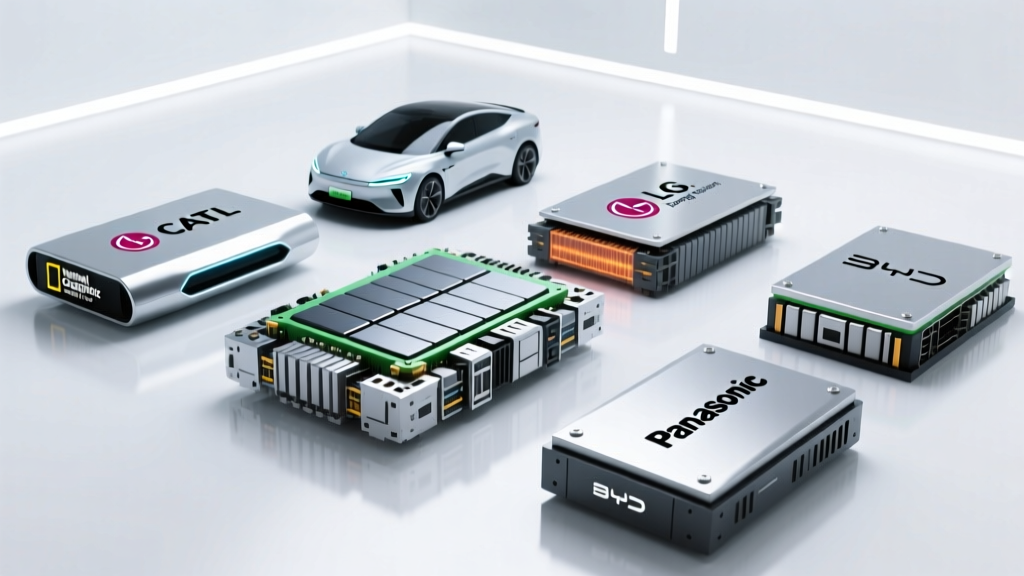
According to data tracked by SNE Research and industry reports, the following manufacturers account for the vast majority of EV battery cells installed worldwide:
- CATL (Contemporary Amperex Technology Co. Limited) — China. The world's largest EV battery maker by a wide margin, supplying Tesla, BMW, Mercedes-Benz, Hyundai, and dozens of Chinese OEMs. CATL pioneered mass-market LFP cells and is scaling sodium-ion and condensed-matter battery tech.
- BYD (Build Your Dreams) — China. Vertically integrated automaker and battery supplier. BYD's "Blade Battery" (LFP) is used in its own vehicles and increasingly supplied to Tesla, Toyota, and others. Known for exceptional cycle life and thermal stability.
- LG Energy Solution — South Korea. Major supplier to GM (Ultium platform), Ford, Stellantis, Hyundai/Kia, and others. Produces NMC cells in pouch and cylindrical formats. Joint-venture plants in the US (Ultium Cells with GM) support domestic production.
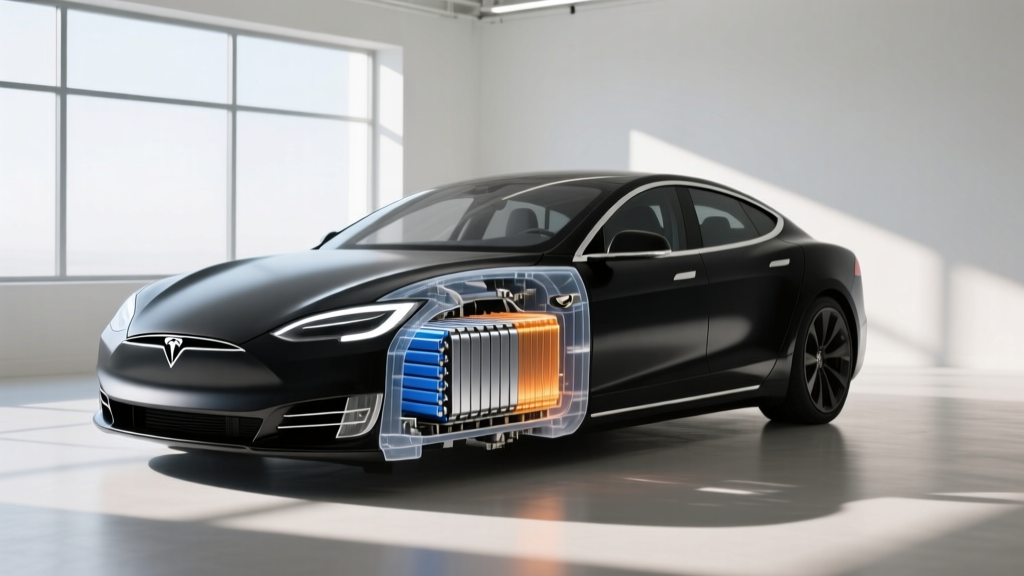
- Panasonic Energy — Japan. Longtime Tesla partner, producing 2170 and 4680-format NCA/NMC cylindrical cells at Gigafactory Nevada and new Kansas facilities. Known for high energy density and consistent quality control.
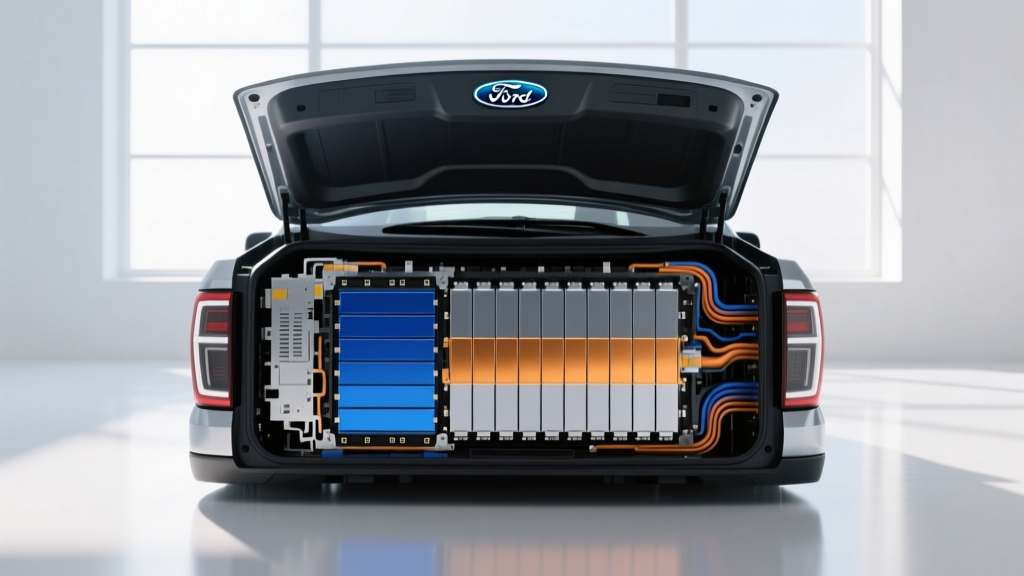
- SK On — South Korea. Supplies Ford (F-150 Lightning, Mustang Mach-E), Hyundai/Kia, and others. Operates US joint-venture plants (BlueOval SK with Ford).
- Samsung SDI — South Korea. Supplies BMW, Stellantis, Rivian, and others. Investing heavily in 46mm-diameter cylindrical cells and solid-state R&D.
- CALB, Gotion High-Tech, EVE Energy — China. Growing Tier-2 suppliers increasingly visible in European and budget-segment EVs. Gotion has a partnership with Volkswagen and is building a US plant in Illinois.
The chemistry each manufacturer favors matters. CATL and BYD lead in LFP volume; LG, Panasonic, SK On, and Samsung SDI lean toward NMC/NCA for higher energy density applications, though all are expanding LFP lines as demand for lower-cost packs grows.
LFP vs NMC/NCA: Chemistry Trade-Offs Explained
The two dominant lithium-ion chemistries in 2026 EVs are LFP (lithium iron phosphate) and NMC/NCA (nickel-manganese-cobalt / nickel-cobalt-aluminum). Neither is universally "better" — the right choice depends on your driving patterns, climate, and budget.
| Attribute | LFP (LiFePO₄) | NMC / NCA |
|---|---|---|
| Energy Density | ~160–200 Wh/kg (cell level) | ~220–300 Wh/kg (cell level) |
| Typical Vehicle Range | 200–330 mi EPA (Standard Range models) | 280–400+ mi EPA (Long Range/Performance) |
| Cycle Life | 3,000–5,000+ cycles to 80% SoH | 1,000–2,500 cycles to 80% SoH |
| Cold-Weather Performance | Moderate; ~15–25% range loss at 20°F | Better; ~10–20% range loss at 20°F (with heat pump) |
| Thermal Stability / Safety | Excellent; highly resistant to thermal runaway | Good; requires robust BMS and cooling |
| Cost (per kWh, pack level) | ~$90–$110 (2026 est.) | ~$120–$145 (2026 est.) |
| Cobalt Content | None (cobalt-free) | Varies; low-cobalt NMC trending, NCA minimal |
| Recommended SoC for Daily Use | 100% OK (manufacturers often recommend periodic full charges for BMS calibration) | 80% daily; 100% for trips only |
| Common Suppliers | CATL, BYD, Gotion | LG, Panasonic, SK On, Samsung SDI |
| Example Vehicles (2026) | Tesla Model 3 RWD, Model Y Std Range, Ford Mustang Mach-E Select (LFP option), BYD Dolphin/Atto 3 | Tesla Model Y Long Range, Hyundai Ioniq 5/6 LR, Chevy Equinox EV, Rivian R1T/R1S, BMW iX |
Which is better for you? If you mostly drive under 250 miles daily, live in a moderate climate, and want maximum longevity with minimal degradation anxiety, LFP is the pragmatic pick. If you need 300+ miles of range, regularly drive in sub-freezing weather, or tow, NMC/NCA delivers the energy density required — at a higher cost per kWh and somewhat shorter cycle life.
How Long Do EV Batteries Actually Last?
The fear of a $20,000 battery swap at year five is the single biggest barrier to EV adoption — and it is largely a myth for modern packs. Real-world degradation data from fleet operators, telematics studies, and owner-reported tracking paints a far more reassuring picture.
Typical Degradation Curve (NMC and LFP Packs, 2020–2026 Vehicles):
- Year 1 / 15,000 mi: ~2–4% capacity loss (initial formation drop)
- Year 3 / 45,000 mi: ~5–8% total loss
- Year 5 / 75,000 mi: ~7–10% total loss
- Year 8 / 120,000 mi: ~10–15% total loss (most packs still above 85% State of Health)
- Year 10+ / 150,000+ mi: ~12–20% total loss depending on usage patterns
Geotab's large-scale telematics study of over 10,000 EVs found an average annual degradation rate of approximately 1.8% per year across all chemistries, with LFP packs showing slower long-term fade. Tesla's own fleet data (published in impact reports) indicates Model 3/Y batteries retain roughly 85% capacity at 200,000 miles. Hyundai/Kia and GM report similar figures for their liquid-cooled packs.
The key takeaway: for the vast majority of owners, the traction battery will outlast the vehicle's useful economic life. Complete failure is rare; gradual capacity loss is the norm, and it is modest.
What the Battery Warranty Actually Covers
Federal law in the US mandates that EV battery warranties cover at least 8 years / 100,000 miles (in CARB states like California, it's 10 years / 150,000 miles). Manufacturers often match or exceed this baseline. Here's how major OEMs structure coverage as of 2026:
| Manufacturer | Warranty Period | Mileage Limit | Capacity Retention Threshold |
|---|---|---|---|
| Tesla (Model 3/Y LFP) | 8 years | 120,000 mi | 70% minimum SoH |
| Tesla (Model 3/Y LR/Perf NMC) | 8 years | 120,000 mi | 70% minimum SoH |
| Hyundai / Kia | 8 years | 100,000 mi | 70% minimum SoH |
| GM (Ultium platform) | 8 years | 100,000 mi | 70% minimum SoH |
| Ford | 8 years | 100,000 mi | 70% minimum SoH |
| Rivian | 8 years | 175,000 mi | 70% minimum SoH |
| BMW | 8 years | 100,000 mi | 70% minimum SoH |
| Volkswagen | 8 years | 100,000 mi | 70% minimum SoH |
What triggers a warranty claim? If your battery's State of Health (SoH) drops below the threshold (typically 70% of original capacity) within the warranty period, the manufacturer will repair or replace the pack — or individual modules, depending on the design — at no cost. Note that the warranty covers defects and abnormal degradation, not damage from collisions, flooding, or unauthorized modifications. Always read the specific warranty booklet for your model.
EV Battery Replacement Costs: The Real Numbers
Out-of-warranty battery replacement is the scenario that generates headlines — but context matters. Most EVs never need a full pack replacement during their operational life. When they do, costs vary dramatically by vehicle, pack size, and whether you're getting a new, remanufactured, or used pack.
| Vehicle | Pack Size (kWh usable) | Chemistry | New Pack Cost (parts + labor) | Reman / Used Pack Cost |
|---|---|---|---|---|
| Tesla Model 3 RWD | ~57 kWh | LFP (CATL) | $12,000–$15,000 | $7,000–$10,000 |
| Tesla Model Y Long Range | ~75 kWh | NMC/NCA | $15,000–$20,000 | $9,000–$13,000 |
| Hyundai Ioniq 5 Long Range | ~77.4 kWh | NMC (SK On/LG) | $16,000–$22,000 | $10,000–$14,000 |
| Chevrolet Equinox EV | ~85 kWh | NMC (Ultium/LG) | $18,000–$24,000 | $11,000–$15,000 |
| Ford F-150 Lightning Ext. Range | ~131 kWh | NMC (SK On) | $25,000–$35,000 | $16,000–$22,000 |
| Rivian R1T (Large Pack) | ~128 kWh | NMC (Samsung SDI) | $24,000–$32,000 | $15,000–$20,000 |
| BMW iX xDrive50 | ~111.5 kWh | NMC (Samsung/CATL) | $22,000–$30,000 | $14,000–$19,000 |
Costs are trending downward. Pack-level pricing has fallen from over $200/kWh in 2020 to roughly $100–$145/kWh in 2026 depending on chemistry and format (source: BloombergNEF battery price surveys). LFP packs are at the lower end. Labor adds $1,500–$4,000 depending on vehicle architecture. As the first generation of mass-market EVs (2018–2022) ages, the remanufactured and salvaged pack market is growing, offering lower-cost alternatives for out-of-warranty vehicles.
When is replacement typically needed? In practice, full pack replacement due to degradation alone is uncommon before 200,000+ miles. More frequent triggers include physical damage (collision, ground strike), coolant intrusion, or isolated module failures that are sometimes repairable without replacing the entire pack.
Factors That Accelerate (or Preserve) Battery Life
Not all miles age a battery equally. The following factors have the greatest measurable impact on long-term State of Health:
What Hurts Your Battery
- Frequent DC fast charging above 150 kW without preconditioning: High C-rates generate heat. Charging at peak power on a cold pack causes lithium plating on the anode, an irreversible degradation mechanism. Always use the vehicle's built-in navigation-based preconditioning when routing to a fast charger.
- Sustaining 100% State of Charge: For NMC/NCA packs, sitting at 100% SoC accelerates electrolyte oxidation. Charge to 80% for daily use; save 100% for road trips. (LFP is more tolerant of full charges and often benefits from periodic 100% sessions for BMS recalibration.)
- Deep discharges below 10% SoC: Repeatedly draining to near-zero stresses cell chemistry. Aim to plug in before dropping below 15–20%.
- Prolonged exposure to extreme heat: Ambient temperatures above 95°F combined with high SoC accelerate calendar aging. Park in shade or a garage when possible. Liquid-cooled packs (standard on nearly all 2026 EVs) mitigate this significantly.
- Aggressive driving / frequent high-power discharge: Sustained high-speed driving and hard acceleration generate internal heat. Moderate driving extends pack life.
What Preserves Your Battery
- Level 2 home charging at 7–11 kW: Gentle, slow charging is the least stressful method for lithium-ion cells.
- Maintaining 20–80% SoC for NMC; 20–100% for LFP: Moderate states of charge minimize mechanical stress on electrode materials.
- Preconditioning before DC fast charging: Brings the pack to optimal temperature (~77–95°F / 25–35°C), enabling faster charging with less degradation.
- Using the vehicle regularly: Lithium-ion cells prefer regular cycling over long-term storage at high SoC. If storing for weeks, set SoC to ~50% and disable Sentry Mode or vampire-drain features.
- Keeping thermal management active: Never disable pack cooling or heating systems. In extreme cold, plug in when parked so the vehicle can maintain pack temperature from grid power rather than battery energy.
How to Check and Monitor Battery Health (SoH)
State of Health (SoH) is the percentage of original capacity your battery can still hold. A new pack is 100% SoH; a pack that originally held 75 kWh and now holds 67.5 kWh is at 90% SoH. Here's how to track it:
- In-vehicle displays: Some manufacturers (Tesla via the service menu, BMW iDrive, Hyundai/Kia via the EV battery health screen) show SoH or estimated range vs. original. Tesla's 2025+ software includes a dedicated Battery Health percentage in the Service menu.
- OBD-II apps and dongles: Tools like OBDLink SX/MX+ paired with apps such as LeafSpy (Nissan), Scan My Tesla, or ABRP (A Better Route Planner) OBD integration can read SoH, cell voltage variance, and pack temperature directly from the BMS. This is the most accurate owner-accessible method.
- Dealer diagnostic reports: Request a battery health printout during service visits. Most OEMs can provide a detailed SoH report showing individual module balance.
- Third-party testing services: Companies like Recurrent Auto and AVILOO offer battery health certification, useful when buying or selling a used EV.
Red flags: If your estimated full-charge range drops more than 3–4% in a single month without a seasonal temperature explanation, or if you see cell voltage imbalance warnings, schedule a diagnostic. Catching a single failing module early can prevent cascading issues and may be covered under warranty.
Emerging Battery Technologies: What's Real vs. What's Coming
The battery landscape is evolving rapidly, but separating shipping technology from lab promises is critical for buyers making decisions today.
Solid-State Batteries
Solid-state cells replace the liquid electrolyte with a solid material (ceramic, sulfide, or polymer), promising higher energy density (400+ Wh/kg), faster charging, and improved safety. As of 2026, Toyota has announced limited production of solid-state-equipped vehicles for 2027–2028, and Samsung SDI targets 2027 for initial automotive production. However, no mass-market EV currently on sale uses a full solid-state battery. Early deployments will likely be in premium, low-volume models at significant cost premiums. Expect broad market availability no earlier than 2029–2030.
Silicon-Dominant Anodes
Replacing graphite anodes with silicon can increase energy density by 20–40%. Companies like Sila Nanotechnologies and Group14 Technologies are supplying silicon-composite anode materials to cell makers. Mercedes-Benz's upcoming AMG models and some Panasonic 4680 cells are incorporating silicon-anode enhancements. This technology is shipping now in limited applications and will gradually proliferate through the late 2020s.
Sodium-Ion Batteries
CATL and BYD are producing sodium-ion cells for low-cost, short-range EVs (primarily in China). Sodium-ion offers lower energy density (~120–160 Wh/kg) but dramatically lower material costs and no lithium, cobalt, or nickel. Do not expect sodium-ion in US-market long-range vehicles, but it may appear in budget urban EVs and energy storage applications by 2027–2028.
LFP Improvements
CATL's second-generation "Shenxing" LFP cells support 4C+ charging rates (10–80% in under 12 minutes) and are appearing in 2026 model-year vehicles from multiple OEMs. This narrows the charging-speed gap between LFP and NMC, making LFP increasingly viable as a mainstream chemistry even for larger vehicles.
Frequently Asked Questions
How long do EV batteries last in years and miles?
Most modern liquid-cooled EV batteries are designed to last 15–20 years or 200,000+ miles before dropping below 70–80% of original capacity. Real-world fleet data from Tesla, Geotab, and others shows average degradation of roughly 1.5–2% per year under normal use. Many packs will outlive the rest of the vehicle.
How much does an EV battery cost to replace in 2026?
Replacement costs range from roughly $12,000 for a smaller LFP pack (e.g., Tesla Model 3 RWD) to $35,000 for a large NMC pack (e.g., Ford F-150 Lightning Extended Range), including parts and labor. Remanufactured packs are 30–50% cheaper. However, full replacement due to degradation alone is rare before 200,000 miles. Most replacements are due to collision damage or isolated manufacturing defects covered under warranty.
What does the EV battery warranty cover?
Federal law requires a minimum 8-year / 100,000-mile warranty (10 years / 150,000 miles in CARB states). The warranty guarantees the battery will retain at least 70% of its original capacity. If SoH drops below this threshold within the warranty period, the manufacturer repairs or replaces the pack at no cost. Coverage does not include physical damage from accidents, misuse, or unauthorized modifications.
How do I check my EV's battery health?
You can check SoH through your vehicle's built-in diagnostics (if available), OBD-II dongles paired with apps like Scan My Tesla or LeafSpy, dealer service reports, or third-party services like AVILOO and Recurrent Auto. For the most accurate reading, an OBD-II scan of BMS data provides cell-level detail including voltage balance and temperature history.
LFP vs NMC — which battery chemistry is better for me?
Choose LFP if you want maximum cycle life (3,000–5,000+ cycles), lower cost, cobalt-free sourcing, and don't mind slightly lower range (200–330 mi EPA). It's ideal for daily commuting and moderate climates. Choose NMC/NCA if you need 300+ miles of range, regularly drive in cold weather, or tow. NMC offers higher energy density but slightly shorter cycle life and higher cost. Neither chemistry is universally superior — match the chemistry to your use case.
Does DC fast charging damage my battery?
Occasional DC fast charging does not meaningfully harm modern batteries with active liquid thermal management. However, exclusive reliance on 150+ kW DC fast charging without preconditioning can accelerate degradation over time. The best practice is to use Level 2 home charging for daily needs and reserve DC fast charging for road trips. Always precondition the battery before a fast-charge session.
Who makes the batteries in my EV?
The world's largest battery manufacturers supplying US-market EVs in 2026 are CATL (China), BYD (China), LG Energy Solution (South Korea), Panasonic (Japan), SK On (South Korea), and Samsung SDI (South Korea). Your specific cell supplier depends on the vehicle model, trim, and production batch. This information is sometimes listed on the battery label under the hood or in the vehicle's compliance documentation.