The Giants Behind Your EV's Power
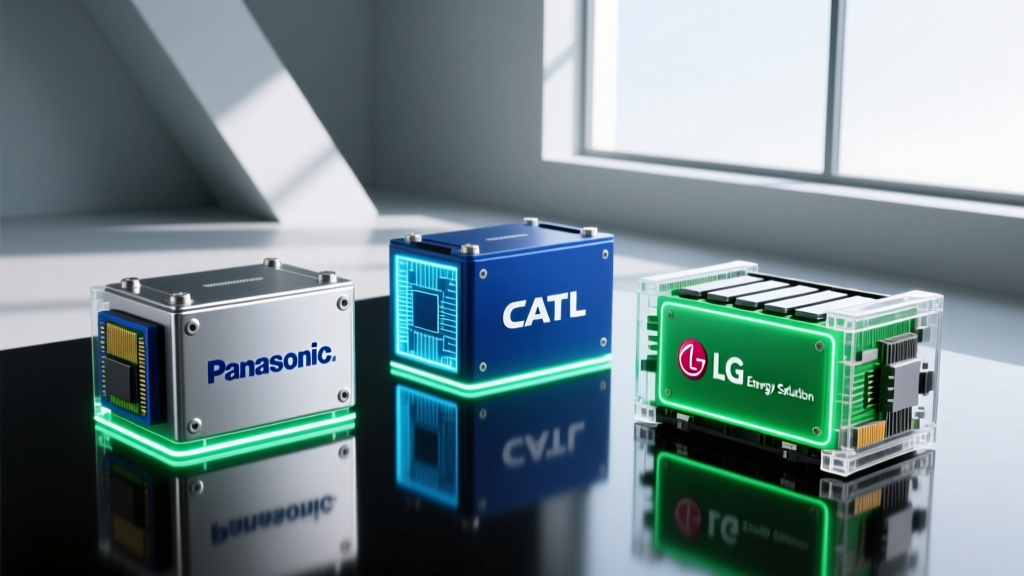
When you research an electric vehicle, you scrutinize range, charging speed, and price — but the component that determines all three is the battery pack. And a handful of largest battery companies dominate who builds those packs. CATL, BYD, LG Energy Solution, Panasonic, SK On, and Samsung SDI collectively supply the vast majority of EV battery cells sold globally. Understanding which company built your battery — and what chemistry they use — directly affects your real-world range, charging habits, long-term degradation, and eventual replacement cost.
This guide breaks down the major suppliers, the chemistries they produce, and the data every EV buyer and owner needs to make informed decisions about battery longevity and care.
The Largest Battery Companies Supplying EVs
Global EV battery production is concentrated among a few massive manufacturers. Here's who supplies whom, and what chemistries they primarily produce:
| Company | Headquarters | Primary Chemistries | Key EV Clients (2025-2026) | Global Market Share (approx.) |
|---|---|---|---|---|
| CATL | China | LFP, NMC, sodium-ion | Tesla (Model 3/Y RWD), Ford, BMW, Hyundai, Rivian | ~37% |
| BYD | China | LFP (Blade Battery) | BYD vehicles, Tesla (some markets), Toyota, Kia | ~17% |
| LG Energy Solution | South Korea | NMC, NCMA | GM (Ultium), Ford, Hyundai, Volkswagen, Stellantis | ~13% |
| Panasonic | Japan | NCA, NMC | Tesla (Model S/X, some 3/Y), Toyota | ~6% |
| SK On | South Korea | NMC, NCM9 | Ford (F-150 Lightning, Mustang Mach-E), Hyundai | ~5% |
| Samsung SDI | South Korea | NMC, NCA | BMW, Stellantis, Hyundai, Volvo | ~5% |
Market share figures are approximate based on 2025 global EV battery installation data from SNE Research. CATL's dominance is largely driven by the massive Chinese EV market and the cost advantages of LFP chemistry, while Korean and Japanese suppliers remain dominant in North American and European premium segments.
LFP vs. NMC/NCA: Chemistry Trade-Offs Explained
The single most important battery decision you'll make is chemistry. The two dominant families are LFP (lithium iron phosphate) and NMC/NCA (nickel manganese cobalt / nickel cobalt aluminum). Each has distinct strengths.
| Attribute | LFP (Lithium Iron Phosphate) | NMC / NCA (Nickel-based) |
|---|---|---|
| Energy Density | Lower (~150-180 Wh/kg cell-level) | Higher (~220-300 Wh/kg cell-level) |
| Real-World Range Impact | Same vehicle gets ~5-10% less range vs. NMC pack of same physical size | Maximum range per pack volume — preferred for long-range trims |
| Cycle Life | 3,000-6,000+ full cycles before 80% capacity | 1,000-2,500 full cycles before 80% capacity |
| Cold-Weather Performance | More range loss in freezing temps (~30-40% reduction at 20°F) | Better cold performance (~20-30% reduction at 20°F) |
| Charging to 100% | Can and should be charged to 100% regularly; no degradation penalty | Best kept at 80% daily; 100% only for trips |
| Cost | ~20-30% cheaper per kWh; no cobalt or nickel | Higher cost; exposed to nickel/cobalt commodity prices |
| Thermal Stability | Excellent — very resistant to thermal runaway | Good, but requires more robust BMS and cooling systems |
| SoC Estimation | Flatter voltage curve makes SoC harder to estimate precisely | Steeper voltage curve = more accurate range readouts |
Which is better? It depends on your use case. If you commute daily and can charge at home, LFP's cycle life and 100% charging tolerance make it the pragmatic choice — and it's cheaper. If you need maximum range for road trips or live in a cold climate, NMC/NCA's energy density and cold-weather edge matter more. Tesla's Model 3/Y Standard Range use CATL LFP cells, while Long Range versions use Panasonic/LG NMC — a clear segmentation strategy.
How Long Do EV Batteries Actually Last?
The fear that EV batteries need frequent replacement is not supported by fleet data. Most modern packs are engineered to outlast the vehicle's economic life.
Typical Degradation Trajectory (based on aggregated fleet data from Recurrent, Geotab, and manufacturer reports):
| Vehicle Age / Mileage | Average Capacity Retained | Notes |
|---|---|---|
| Year 1 / ~15,000 mi | 95-97% | Initial "break-in" loss; steepest part of the curve |
| Year 3 / ~45,000 mi | 91-94% | Degradation rate slows significantly |
| Year 5 / ~75,000 mi | 88-92% | Most owners notice minimal daily range change |
| Year 8 / ~120,000 mi | 83-90% | Still well above warranty threshold for most |
| Year 10+ / 150,000+ mi | 78-87% | High-mileage Tesla Model S/X and Nissan Leaf fleets show wide variance |
Sources: Recurrent Auto degradation studies, Geotab fleet analysis. Individual results vary based on climate, charging habits, and chemistry.
LFP packs generally show slower degradation in calendar aging and cycle life, though they may show slightly steeper initial capacity loss in the first few thousand miles. Tesla's 2025 Impact Report noted that their LFP-equipped Model 3 vehicles retained an average of ~92% capacity at 100,000 miles.
What Does the Battery Warranty Actually Cover?
Federal law in the United States mandates that EV batteries carry a minimum warranty of 8 years or 100,000 miles (whichever comes first). In California Air Resources Board (CARB) states, that extends to 10 years or 150,000 miles. Most manufacturers meet or exceed these minimums.
| Manufacturer | Warranty Term | Capacity Retention Threshold | What Triggers a Claim |
|---|---|---|---|
| Tesla | 8 yr / 120,000 mi (Model S/X); 8 yr / 100,000 mi (Model 3/Y) | 70% | Capacity falls below 70% as measured by Tesla diagnostics |
| Hyundai / Kia | 10 yr / 100,000 mi | 70% | Capacity below 70%; verified by dealer scan tool |
| GM (Chevrolet, Cadillac) | 8 yr / 100,000 mi | 60% (Bolt); 70% (Ultium vehicles) | Capacity below threshold under normal use conditions |
| Ford | 8 yr / 100,000 mi | 70% | Battery capacity below 70% of original |
| BMW | 8 yr / 100,000 mi | 70% | Net capacity below 70% confirmed via BMW diagnostic |
| Rivian | 8 yr / 120,000 mi (Standard); 8 yr / 175,000 mi (Max Pack) | 70% | Usable capacity below 70% |
Critical nuance: Warranties cover capacity degradation below a threshold, not gradual range loss you simply notice. If your 300-mile EPA vehicle now shows 250 miles at 100% (roughly 83% retention), you are still above the 70% warranty line and will not qualify for a replacement. Warranties also exclude damage from accidents, flooding, or unauthorized modifications, but they do cover manufacturing defects and abnormal degradation.
How Much Does an EV Battery Cost to Replace?
Out-of-warranty battery replacement is the most feared EV ownership cost. Here's what the data shows for 2025-2026 model-year vehicles:
| Vehicle | Battery Size (kWh usable) | Chemistry | Estimated Replacement Cost (parts + labor) |
|---|---|---|---|
| Tesla Model 3 RWD | 57.5 kWh | LFP (CATL) | $10,000 – $13,000 |
| Tesla Model Y Long Range | 75 kWh | NMC (Panasonic/LG) | $13,000 – $16,000 |
| Hyundai Ioniq 5 (Long Range) | 77.4 kWh | NMC (SK On) | $14,000 – $18,000 |
| Ford F-150 Lightning (Extended) | 131 kWh | NMC (SK On) | $22,000 – $30,000 |
| Chevrolet Equinox EV | 85 kWh | NMC (LG Ultium) | $14,000 – $17,000 |
| BMW iX xDrive50 | 105.2 kWh | NMC (Samsung SDI) | $20,000 – $27,000 |
Context that matters: The vast majority of EV owners never replace their battery. Data from Recurrent Auto indicates that fewer than 5% of EV batteries have been replaced outside of warranty claims, and most of those replacements were due to manufacturing defects caught early — not end-of-life degradation. Battery cell prices continue to decline (averaging ~$100-115/kWh at the pack level in 2025), meaning replacement costs will be lower by the time a 2026 vehicle actually needs one, if it ever does.
Factors That Accelerate (or Preserve) Battery Life
Battery degradation is not random — it's driven by specific, controllable factors. Here's what the chemistry and fleet data tell us:
What Hurts Your Battery:
- Frequent DC fast charging to high SoC: Repeatedly charging above 80% on DC fast chargers generates sustained heat and high voltage stress. Occasional road-trip fast charging is fine; daily reliance on DCFC accelerates degradation measurably.
- Prolonged exposure to extreme heat: Parking in direct sunlight in Phoenix or Riyadh with a full battery is more damaging than cold. Batteries above 95°F (35°C) at high SoC degrade faster. Vehicles with active thermal management (Tesla, Hyundai E-GMP, GM Ultium) handle this better than passively cooled packs.
- Sitting at 100% SoC for extended periods: For NMC/NCA batteries, storing at full charge for days or weeks accelerates calendar aging. LFP batteries tolerate 100% storage much better.
- Deep discharges to 0%: Letting the battery sit at or near 0% for prolonged periods can cause copper dissolution in the anode current collector. Drive or charge promptly if you hit very low SoC.
- Charging in extreme cold without preconditioning: Plugging into a DC fast charger with a cold-soaked battery (below 32°F / 0°C) without preconditioning can cause lithium plating on the anode — a permanent capacity loss mechanism.
What Preserves Your Battery:
- Daily charging to 80% (NMC) or 100% (LFP): Set your charge limit appropriately for your chemistry and stick to it for daily use.
- Home Level 2 charging as your primary method: Slow, overnight charging at 7-11 kW generates minimal heat and stress.
- Preconditioning before DC fast charging: Use your vehicle's navigation-to-charger feature (Tesla, Hyundai, Ford, BMW all offer this) to warm the battery to optimal temperature before arrival.
- Garage parking in extreme climates: Keeping your vehicle in a garage — even unheated — moderates temperature swings significantly.
- Driving regularly: Batteries prefer regular cycling over prolonged sitting. Even short daily drives are better than leaving the car unused for weeks.
Monitoring Battery Health: State of Health (SoH) for Owners
State of Health (SoH) is the percentage of your battery's original usable capacity that remains. A brand-new battery is 100% SoH; a battery that can only store 85 kWh of its original 100 kWh is at 85% SoH. Here's how to check it:
- In-vehicle displays: Tesla offers a battery health test via the Service menu (or through the app). Some Hyundai/Kia models show a degradation indicator in the EV settings. BMW provides SoH through the iDrive system.
- OBD-II dongles + apps: Third-party tools like OBDeleven, Leaf Spy (Nissan Leaf), or Scan My Tesla can read the Battery Management System (BMS) directly and report SoH, cell voltage variance, and cycle count.
- Dealer diagnostics: Any authorized dealer can pull a full battery health report. This is the method used for warranty claims.
- Manual estimation: Charge to 100%, note the displayed range, and compare to the original EPA rating adjusted for your vehicle's configuration. If your 310-mile EPA Model 3 shows 265 miles at 100% on a warm day, you're at roughly ~85% SoH. (Note: displayed range varies by driving style and temperature — this is a rough estimate.)
Pro tip: Check SoH every 6-12 months, or before purchasing a used EV. A vehicle with a verified 92% SoH at 50,000 miles is tracking well; one at 82% at the same mileage may indicate heavy DC fast charging or hot-climate storage and warrants further investigation.
Emerging Battery Tech: Solid-State and Beyond
Next-generation battery technologies are in active development but are not yet available in production consumer EVs as of early 2026. Here's a realistic timeline based on manufacturer announcements and industry analysis:
- Solid-state batteries: Toyota has announced a solid-state battery targeting 2027-2028 production with a goal of ~600-mile range and 10-minute fast charging. Samsung SDI is targeting 2027 for solid-state production. These promise higher energy density (~400+ Wh/kg) and improved safety (no liquid electrolyte = no thermal runaway risk). However, manufacturing scale-up remains the primary challenge, and initial deployment will likely be limited to premium, low-volume models.
- Silicon-dominant anodes: Companies like Sila Nanotechnologies and Group14 are replacing graphite anodes with silicon to boost energy density by 20-40%. Mercedes-Benz's G-Class 580e uses a silicon-anode battery from Sila, but at limited scale. Expect broader adoption in 2027-2029 model-year vehicles.
- Sodium-ion batteries: CATL has begun producing sodium-ion cells for lower-cost, shorter-range EVs in China. Energy density is lower than LFP (~120-150 Wh/kg), but sodium is abundant and cheap. Possible in US-market budget EVs by 2028-2029.
- LFP improvements: CATL's "Shenxing" LFP cells support 4C charging (10-80% in ~10 minutes) and are entering production in 2025-2026. This narrows the charging-speed gap between LFP and NMC significantly.
These technologies are forward-looking. Current buyers should make decisions based on today's proven LFP and NMC chemistries, not anticipated breakthroughs that remain 2-4 years from mass-market availability.
Frequently Asked Questions
How long do EV batteries last in years and miles?
Based on fleet data, most modern EV batteries retain 83-90% of their original capacity at 8 years / 120,000 miles. Many packs will function adequately (above 75% SoH) for 15+ years and 200,000+ miles. LFP chemistries tend to last longer in cycle life than NMC, though real-world outcomes depend heavily on climate and charging habits. The battery will likely outlast the vehicle's economic value.
How much does it cost to replace an EV battery?
Replacement costs range from roughly $10,000 for a smaller LFP pack (Tesla Model 3 RWD) to $30,000 for a large NMC pack (F-150 Lightning Extended Range), including parts and labor. However, fewer than 5% of EV batteries have required out-of-warranty replacement. Cell prices continue declining, so costs will be lower by the time a current vehicle might need one.
What does the EV battery warranty cover?
By federal mandate, EV batteries carry at minimum an 8-year/100,000-mile warranty. Coverage applies when capacity drops below a stated threshold — typically 70% of original capacity — under normal use. It covers manufacturing defects and abnormal degradation but not accident damage, flooding, or unauthorized modifications. CARB states extend this to 10 years / 150,000 miles.
How do I check and maximize my EV battery health?
Check SoH through your vehicle's built-in diagnostics, an OBD-II app, or a dealer scan. To maximize longevity: use Level 2 home charging as your primary method, set daily charge limits to 80% (NMC) or 100% (LFP), precondition before DC fast charging, avoid prolonged storage at extreme SoC levels, and garage-park in extreme climates when possible.
LFP vs. NMC — which battery chemistry is better for me?
Choose LFP if: you commute daily, charge at home, want the longest cycle life, prefer charging to 100% without worry, and want lower cost. Choose NMC/NCA if: you need maximum range, frequently drive in cold weather, take regular road trips where energy density matters, or need faster charging speeds at DC fast chargers. Neither is universally "better" — it's a use-case decision.
Does fast charging damage my EV battery?
Occasional DC fast charging does not meaningfully accelerate degradation. What matters is frequency and heat. Daily DC fast charging — especially in hot climates without preconditioning — does measurably increase capacity loss over time. Fleet data from Geotab shows that vehicles charged primarily on Level 2 with occasional DCFC show virtually identical degradation curves to those that never use DCFC. The key is moderation and using your vehicle's preconditioning feature.
Which of the largest battery companies makes the most reliable cells?
All major suppliers — CATL, BYD, LG Energy Solution, Panasonic, SK On, and Samsung SDI — produce cells that meet manufacturer durability standards and warranty thresholds. Panasonic's NCA cells in Tesla vehicles have some of the longest-tracked fleet data showing strong longevity. CATL's LFP cells demonstrate excellent cycle life. LG Energy Solution's recall for certain Chevrolet Bolt batteries (2017-2022) was a manufacturing-defect issue, not a chemistry flaw, and has been addressed. Reliability is more a function of chemistry choice and pack-level thermal management design than the cell supplier alone.