Understanding the kWh Tesla Battery: Capacity, Chemistry, and What It Means for Ownership
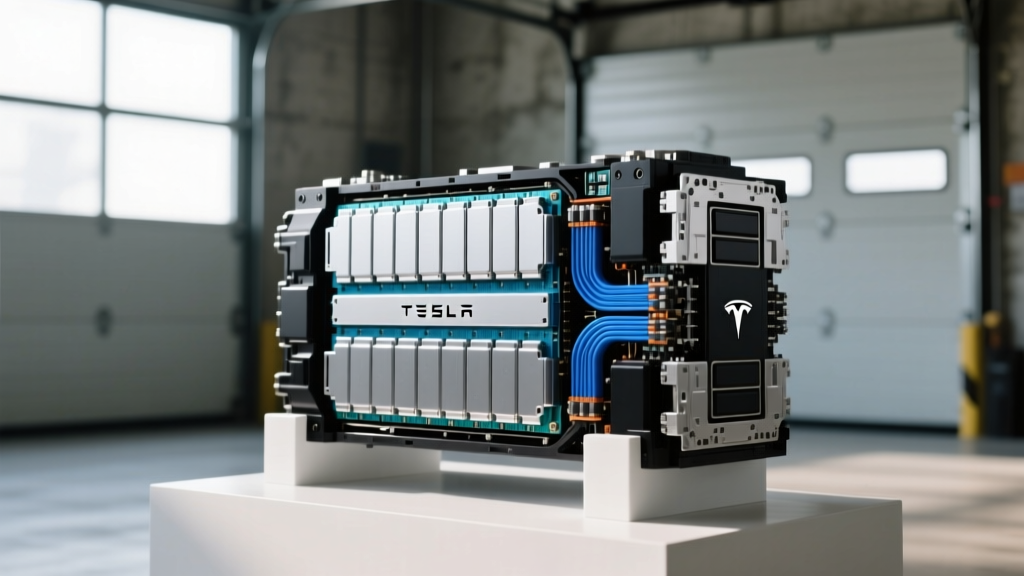
When shoppers ask about a "kWh Tesla battery," they're usually trying to answer three questions: How much energy does it store? How long will it last before degrading? And what happens when it eventually needs replacement? The answers depend heavily on which Tesla model and trim you choose, because Tesla uses two fundamentally different battery chemistries across its lineup — and each has distinct implications for range, longevity, and daily charging habits.
A kilowatt-hour (kWh) measures energy capacity — think of it as the size of the fuel tank. A higher kWh number generally means more range. But the chemistry inside those cells determines how that capacity holds up over 100,000+ miles, how the battery performs in freezing weather, and how often you can safely DC fast-charge without accelerating wear.
As of the 2026 model year, Tesla offers roughly the following usable battery capacities across its lineup:
- Model 3 RWD: ~60 kWh (LFP chemistry)
- Model 3 Long Range: ~79 kWh (NMC/NCA chemistry)
- Model Y RWD: ~60 kWh (LFP)
- Model Y Long Range: ~79 kWh (NMC/NCA)
- Model S: ~100 kWh (NMC/NCA)
- Model X: ~100 kWh (NMC/NCA)
- Cybertruck: ~123 kWh (NMC/NCA)
These are usable kWh figures — the actual gross capacity is slightly higher, but Tesla locks a small buffer at the top and bottom of the pack to protect against overcharge and deep-discharge damage. Understanding which chemistry sits inside your specific trim is critical, because it changes everything from how you charge daily to what range you'll see in January in Minnesota.
LFP vs NMC/NCA: The Chemistry Decision That Shapes Your Ownership
Tesla sources cells from multiple suppliers — primarily CATL (for LFP cells) and Panasonic/LG Energy Solution (for NMC and NCA cells). The chemistry choice isn't just an engineering footnote; it's a practical ownership variable.
| Attribute | LFP (Lithium Iron Phosphate) | NMC/NCA (Nickel Manganese Cobalt / Nickel Cobalt Aluminum) |
|---|---|---|
| Energy Density | Lower (~160 Wh/kg cell-level) | Higher (~250-300 Wh/kg cell-level) |
| Typical Tesla Use | Model 3/Y RWD (Standard Range) | Model 3/Y Long Range, Model S/X, Cybertruck |
| Cycle Life | 3,000-5,000+ cycles to 80% SoH | 1,000-2,000 cycles to 80% SoH |
| Recommended Daily Charge | 100% (Tesla recommends periodic full charges to calibrate BMS) | 80% daily; 100% only before long trips |
| Cold-Weather Performance | More range loss in freezing temps (~30-40% reduction) | Better cold tolerance (~20-30% reduction) |
| Cost | Lower — no cobalt or nickel | Higher — commodity-sensitive materials |
| Thermal Stability | Excellent — higher runaway threshold | Good — requires more active thermal management |
| SoC Estimation Accuracy | Flatter voltage curve makes % estimation harder (BMS drift) | More linear voltage curve, easier estimation |
The practical takeaway: If you buy a Model 3 or Model Y RWD, you're getting an LFP pack. That means you should charge to 100% regularly — which is counterintuitive for EV owners trained on the "80% rule." Tesla explicitly recommends this for LFP packs because the flat voltage curve causes the Battery Management System (BMS) to lose calibration if you never hit full. If you buy a Long Range or Performance variant, you're getting NMC/NCA, and the 80% daily limit applies to preserve longevity.
Neither chemistry is universally "better." LFP wins on cycle life and cost; NMC/NCA wins on energy density and cold-weather range. Your climate, commute distance, and charging access determine which trade-off makes sense.
Real-World Degradation: What the Data Actually Shows
Battery degradation is the gradual, irreversible loss of usable kWh capacity over time and charge cycles. It is not a cliff — it's a curve that's steepest in the first year or two, then flattens significantly.
Based on aggregated fleet data from sources including Tesla's own Impact Report and independent analysis by researchers like those at fueleconomy.gov and EV fleet studies, here's what typical degradation looks like for Tesla packs:
| Mileage | Approximate Capacity Retained | Notes |
|---|---|---|
| 0-15,000 mi | ~95-97% | Initial calibration loss; steepest early drop |
| 30,000 mi | ~92-95% | Curve begins to flatten |
| 50,000 mi | ~90-93% | Most owners notice minimal real-world difference |
| 100,000 mi | ~85-90% | Noticeable but manageable; a 358-mi LR Model 3 might show ~305-320 mi |
| 150,000 mi | ~82-88% | Warranty threshold territory |
| 200,000+ mi | ~80-85% | Many packs reach this; data from high-mileage fleet vehicles |
Tesla's 2025 Impact Report stated that Model 3 and Model Y batteries retain approximately 85% of their original capacity at 150,000 miles. Model S and Model X packs, which tend to see more varied charging patterns, show roughly similar retention at that mileage.
The critical insight: degradation is front-loaded. You'll lose 3-5% in the first 20,000 miles, then roughly 1% per 15,000-20,000 miles thereafter. For most owners who drive 12,000-15,000 miles annually, the battery will outlast the vehicle's useful economic life.
Tesla's Battery Warranty: What's Covered and What's Not
Tesla's battery and drive unit warranty is one of the more straightforward in the industry, but the details matter — especially the capacity retention threshold that triggers a claim.
| Model | Warranty Period | Mileage Limit | Minimum Capacity Retention |
|---|---|---|---|
| Model 3 RWD | 8 years | 100,000 miles | 70% |
| Model 3 Long Range / Performance | 8 years | 120,000 miles | 70% |
| Model Y RWD | 8 years | 100,000 miles | 70% |
| Model Y Long Range / Performance | 8 years | 120,000 miles | 70% |
| Model S | 8 years | 150,000 miles | 70% |
| Model X | 8 years | 150,000 miles | 70% |
| Cybertruck (AWD / Cyberbeast) | 8 years | 120,000 miles | 70% |
The 70% threshold is the trigger: if your battery's usable capacity drops below 70% of its original kWh rating within the warranty period, Tesla will repair or replace it. In practice, very few owners hit this threshold. Based on the degradation curve above, you'd need to experience abnormally high loss — likely from repeated exposure to extreme heat without thermal management, manufacturing defects, or consistent 100% SoC storage in hot climates.
The warranty covers defects and abnormal degradation. It does not cover damage from accidents, flooding, improper modifications, or use as a stationary power source (unless using an approved Tesla Powerwall integration). The warranty is transferable to subsequent owners, which supports resale value.
EV Battery Replacement Cost: When and How Much
Let's address the concern directly: yes, an out-of-warranty Tesla battery replacement is expensive. But context matters — the vast majority of Tesla batteries do not require replacement during the vehicle's typical ownership cycle.
| Model | Battery Size | Chemistry | Estimated Replacement Cost |
|---|---|---|---|
| Model 3 RWD | ~60 kWh | LFP | $8,000 – $12,000 |
| Model 3 Long Range | ~79 kWh | NMC/NCA | $12,000 – $16,000 |
| Model Y Long Range | ~79 kWh | NMC/NCA | $12,000 – $16,000 |
| Model S | ~100 kWh | NMC/NCA | $15,000 – $22,000 |
| Model X | ~100 kWh | NMC/NCA | $15,000 – $22,000 |
| Cybertruck | ~123 kWh | NMC/NCA | $18,000 – $25,000 |
These estimates include the battery pack, labor, and associated diagnostics at a Tesla Service Center. Independent EV shops may offer refurbished pack swaps for 20-30% less. Prices have trended downward as cell costs fall — battery-pack pricing has dropped from over $1,000/kWh a decade ago to roughly $130-$150/kWh at the cell level today, though labor, BMS integration, and structural pack design (especially in the 4680-cell Cybertruck and Model Y) add significant cost.
When is replacement actually needed? In most cases, it isn't. A battery at 80% capacity still provides ample range for daily driving. A Model 3 Long Range with 79 kWh original capacity at 80% retention still holds ~63 kWh — enough for roughly 260+ real-world miles. Replacement typically becomes relevant only when a pack develops a fault (cell imbalance, coolant leak into the pack, BMS failure) rather than from gradual degradation alone.
Factors That Accelerate (or Slow) Battery Degradation
Not all miles are created equal. How you charge and store your Tesla has a measurable impact on long-term capacity retention. Here are the variables that matter most, ranked roughly by impact:
Battery Care Checklist: Maximize Your Pack's Lifespan
- Avoid prolonged 100% SoC storage: For NMC/NCA packs, don't charge to 100% unless you're driving within a few hours. Sitting at full charge accelerates electrolyte decomposition. Set your daily limit to 80%.
- Minimize DC fast-charging frequency: Occasional Supercharging is fine — Tesla's thermal management is robust. But daily 250 kW Supercharging sessions generate sustained heat that stresses cells over years. If you have home Level 2 charging, use it as your primary method.
- Don't let the pack sit at 0%: Deep discharge damages cells. If storing the car for weeks, leave it at ~50% SoC and plugged in so the BMS can maintain the pack.
- Precondition before fast charging: Tesla's navigation-based battery preconditioning warms the pack to optimal temperature before you arrive at a Supercharger. This reduces charge time and thermal stress. Always navigate to the charger rather than just driving there.
- Extreme heat is worse than extreme cold for longevity: Cold temporarily reduces range (reversible) but doesn't permanently damage the pack. Sustained high temperatures — like parking at 110°F in Phoenix at high SoC — accelerate calendar degradation. Use the Tesla app's cabin overheat protection and, when possible, park in shade or a garage.
- For LFP packs, charge to 100% at least weekly: This keeps the BMS calibrated and prevents range-estimation drift. Tesla's in-app guidance reflects this.
- Keep firmware updated: Tesla periodically refines BMS algorithms and thermal management via OTA updates. These can meaningfully affect long-term pack health.
The single biggest controllable factor is sustained high SoC combined with high temperature. An NMC pack stored at 100% in 95°F heat will degrade measurably faster than one stored at 60% in a 70°F garage — even if both are driven identically.
Monitoring Battery Health: How to Check Your Tesla's State of Health
State of Health (SoH) is the percentage of original capacity your battery currently retains. Tesla doesn't surface a direct SoH percentage in the vehicle's UI, which frustrates some owners. Here's how to estimate it:
Method 1: Range comparison at 100% charge. Charge your NMC pack to 100% (or your LFP pack to 100%, as recommended) and note the displayed range. Compare this to the EPA-rated range when new. A Model 3 Long Range rated at 358 miles EPA that shows 325 miles at 100% is at roughly 91% SoH. This isn't perfectly precise — the displayed range is an estimate influenced by recent driving patterns — but it's a reasonable approximation.
Method 2: Third-party apps. Services like Tessie, Stats (for Tesla), and TeslaFi log detailed charge data, including energy added vs. SoC change, which allows a more precise kWh calculation. By tracking how many kWh it takes to charge from, say, 20% to 80%, you can calculate current usable capacity and compare it to the original spec.
Method 3: Tesla Service diagnostic. If you suspect abnormal degradation (e.g., a sudden range drop), Tesla Service can run a full battery health test. This is the most authoritative method and is the one used for warranty claims.
Check your SoH every 6-12 months, or whenever you notice a meaningful range change that isn't explained by temperature or driving style. A gradual 1-2% annual loss after the first year is normal; a sudden 5%+ drop warrants a service visit.
Looking Ahead: Solid-State and Silicon-Anode Batteries
Next-generation battery technologies are in active development, but it's important to separate laboratory progress from showroom availability.
Solid-state batteries replace the liquid electrolyte with a solid material, promising higher energy density, faster charging, and improved safety. Companies including Toyota, Samsung SDI, and QuantumScape have demonstrated prototype cells, but manufacturing at automotive scale remains unsolved. Realistic timeline for mass-market EV deployment: 2029-2032 at the earliest. Tesla has not announced a solid-state roadmap.
Silicon-anode batteries replace the graphite anode with silicon, which can store roughly 10x more lithium ions per unit mass. This boosts energy density by 20-40%. Companies like Sila Nanotechnologies and Group14 are supplying silicon-anode materials for limited production runs (the Mercedes G-Class 580e uses a silicon-anode pack). Expect broader adoption in premium EVs by 2027-2028, with Tesla likely integrating silicon-dominant anodes into 4680-cell iterations as supply scales.
Sodium-ion batteries are emerging as a low-cost alternative for entry-level EVs, eliminating lithium entirely. CATL has begun production, and these cells may appear in future base-model Teslas for markets where cost matters more than range. Energy density is lower than LFP, so don't expect them in Long Range variants.
None of these technologies are available in any Tesla you can buy today. If you're deciding on a purchase now, the choice is between LFP and NMC/NCA — both proven, both well-understood, and both capable of 200,000+ miles with proper care.
Frequently Asked Questions
How long do Tesla batteries last in years and miles?
Based on fleet data, most Tesla batteries retain 80-85% of original capacity at 150,000-200,000 miles, which translates to roughly 12-15 years of average driving (12,000-15,000 miles/year). Many packs will outlast the vehicle itself. The battery doesn't "die" — it gradually holds fewer kWh, reducing range but remaining functional.
How much does it cost to replace a Tesla battery?
Out-of-warranty replacement ranges from approximately $8,000 for a Model 3 RWD LFP pack to $25,000 for a Cybertruck. Most owners never need a replacement — degradation alone rarely makes a pack unusable. Failures that do require replacement (cell faults, coolant intrusion) typically occur under warranty.
What does Tesla's battery warranty cover?
Tesla covers battery defects and capacity loss below 70% of original kWh for 8 years, with mileage limits of 100,000-150,000 miles depending on the model. The warranty is transferable. It does not cover accident damage, misuse, or modifications.
How do I check my Tesla battery health?
Charge to 100% and compare the displayed range to the original EPA rating. For more precision, use third-party apps like Tessie or TeslaFi to track kWh added per charge session. Tesla Service can run a formal diagnostic if you suspect abnormal degradation.
LFP vs NMC — which Tesla battery is better?
It depends on your use case. LFP (Model 3/Y RWD) offers longer cycle life, lower cost, and the convenience of regular 100% charging — but with lower energy density and worse cold-weather range. NMC/NCA (Long Range, Model S/X) delivers more range per kWh and better winter performance, but requires an 80% daily charge limit and has a shorter cycle life. For warm-climate commuters with home charging, LFP is arguably the more practical and durable choice. For long-distance drivers and cold-climate owners, NMC/NCA's range advantage is worth the trade-off.
Does frequent Supercharging damage the battery?
Occasional Supercharging has minimal impact thanks to Tesla's active liquid cooling during fast-charge sessions. However, exclusive reliance on 250 kW DC fast charging — especially in hot climates — does accelerate degradation compared to primarily using Level 2 home charging. The data suggests a few percentage points of additional loss over 100,000 miles. If you can charge at home on Level 2 most days and Supercharge only on road trips, your pack will age more gracefully.