From Kilo Lithium to Kilowatt-Hours: Why Battery Chemistry Matters
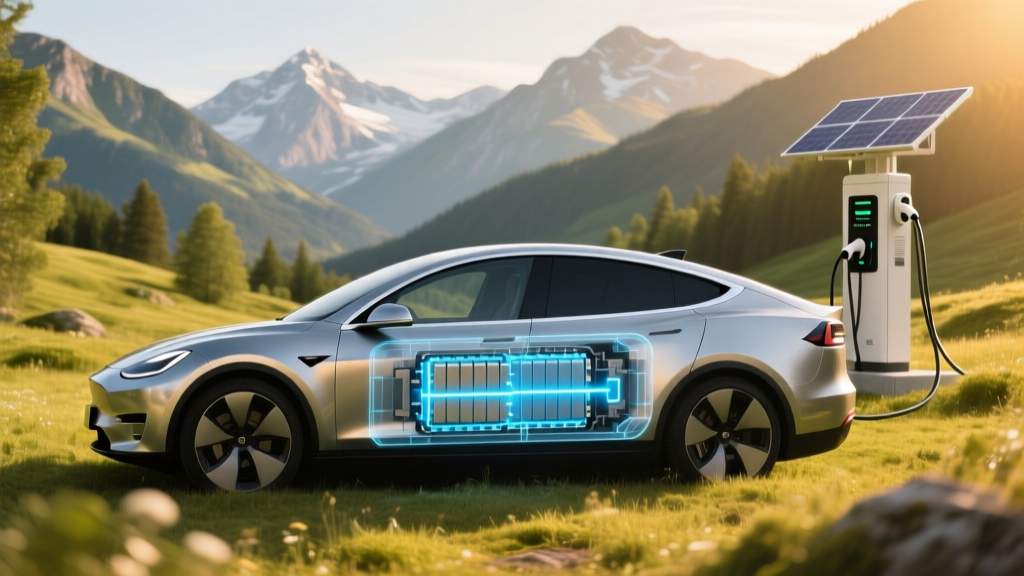
Every electric vehicle on the road in 2026 owes its range to a handful of raw materials — and lithium is the one that gives the battery its name. But when analysts talk about "kilo lithium" (kilograms of lithium metal equivalent, or LME), what does that actually mean for the kWh pack sitting under your EV's floor? The answer shapes everything from the EPA range sticker on the window to how much capacity you'll retain after 150,000 miles.
A single kilogram of lithium metal equivalent can yield roughly 50–60 kWh of battery cell capacity, depending on the chemistry. That means the 82 kWh usable pack in a Tesla Model 3 Long Range requires approximately 1.4–1.6 kg of lithium if built with NMC (nickel-manganese-cobalt) cells, while an LFP (lithium iron phosphate) variant of similar capacity demands closer to 1.6–1.8 kg because LFP cells are heavier and less energy-dense. Understanding this kilo lithium-to-kWh relationship is the foundation for every decision an EV buyer makes: which chemistry to choose, how long the battery will last, and what it costs if something goes wrong.
This guide breaks down the chemistry, degradation data, warranty protections, replacement economics, and daily habits that determine your EV battery's real-world lifespan — with the exact numbers spec-sheet shoppers need.
LFP vs NMC/NCA: The Chemistry Trade-Off Explained
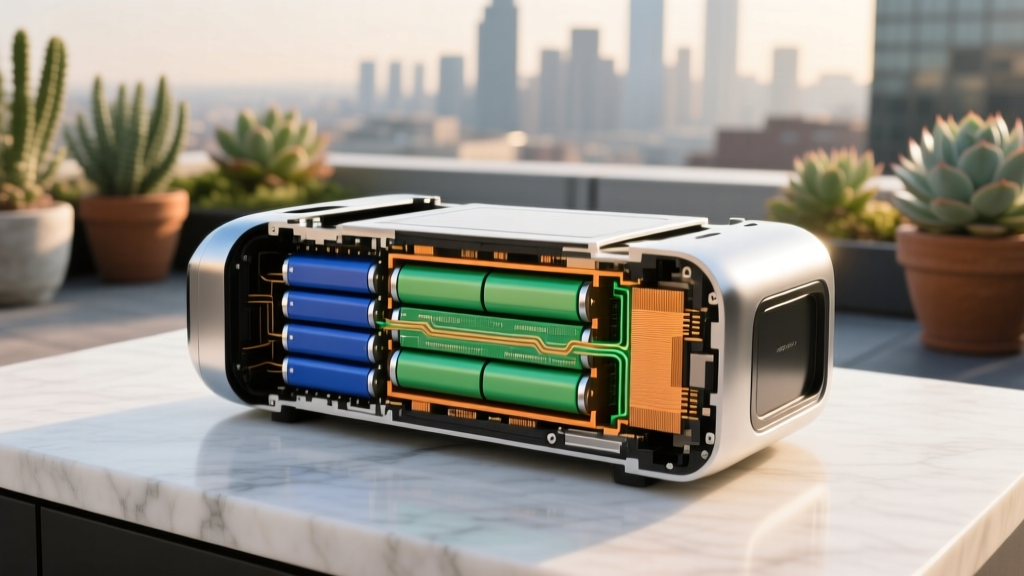
Two dominant cathode chemistries power nearly every 2026-model-year EV sold in the United States. Each has distinct trade-offs in energy density, cycle life, cold-weather behavior, and cost.
| Attribute | LFP (Lithium Iron Phosphate) | NMC / NCA (Nickel-based) |
|---|---|---|
| Energy Density (cell-level) | ~160–180 Wh/kg | ~230–280 Wh/kg |
| Typical Use | Standard-range / base trims (Tesla Model 3 RWD, Ford Mustang Mach-E Select SR) | Long-range / performance trims (Model 3 LR, Hyundai Ioniq 5 LR, Rivian R1T Max Pack) |
| Cycle Life (to 80% SoH) | 3,000–5,000+ cycles | 1,500–2,500 cycles |
| Cold-Weather Performance | Greater range loss below 32°F; slower charge acceptance when cold | Better low-temp conductivity; preconditioning mitigates most loss |
| Cost per kWh (pack-level, 2026) | ~$90–$110 | ~$115–$145 |
| Recommended SoC for Daily Use | 100% is fine; BMS benefits from periodic full charges | 80% daily; 100% for road trips only |
| Cobalt Content | Zero | Varies; trending toward low-cobalt NMC 811 |
| Kilo Lithium per kWh (approx.) | ~0.028–0.032 kg LME | ~0.022–0.028 kg LME |
The bottom line: NMC/NCA wins on energy density — meaning more EPA-rated miles in the same physical space — making it the default for long-range and performance models. LFP wins on longevity and cost, which is why automakers like Tesla, BYD, and Ford now deploy it in standard-range trims where absolute maximum range is less critical.
Real-World Degradation: What the Data Actually Shows
Battery degradation is the gradual loss of total kWh capacity over time and charge cycles. It is not a cliff — it's a curve that is steepest in the first year and then flattens. Here is what aggregated fleet data from sources including Geotab's long-term EV battery study and manufacturer warranty claims reveal:
Typical Degradation Trajectory (NMC Packs, Average Use)
- Year 1 / ~15,000 mi: 2–4% capacity loss (initial SEI layer formation)
- Year 3 / ~45,000 mi: 5–8% total loss
- Year 5 / ~75,000 mi: 8–12% total loss
- Year 8 / ~120,000 mi: 10–15% total loss
- Year 10+ / 150,000+ mi: 12–20% total loss (many packs still above 80% SoH)
LFP packs generally show 1–3 percentage points less degradation at equivalent mileage, owing to their superior cycle life. However, LFP's weaker cold-weather performance can offset this advantage for owners in northern climates who lack garage parking.
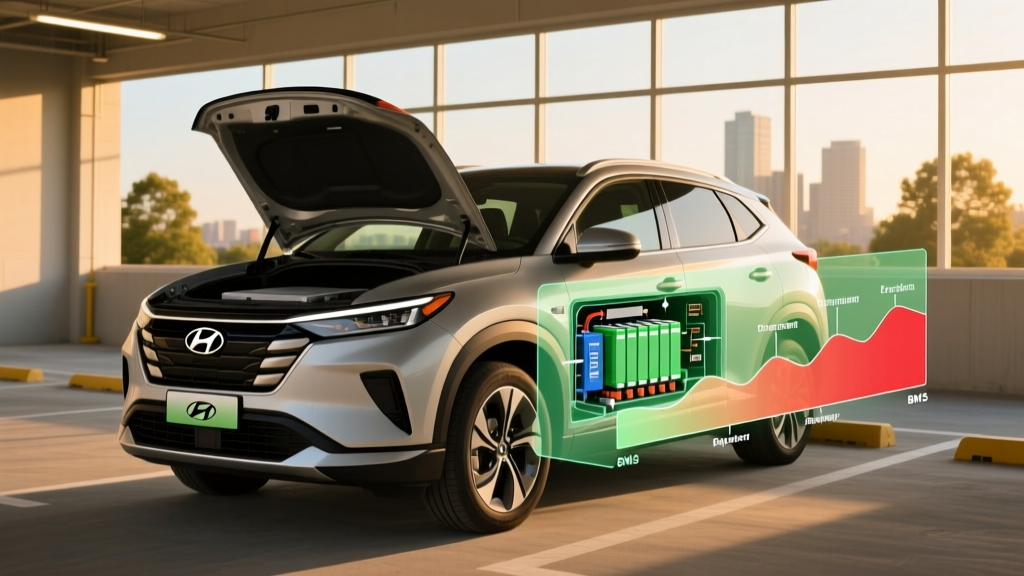
For context, a 2026 Hyundai Ioniq 5 Long Range with its 77.4 kWh NMC pack rated at 305 miles EPA would realistically deliver around 265–280 miles after five years and 75,000 miles — still comfortably sufficient for most daily driving and road trips with DC fast charging.
Battery Warranty Terms: What Automakers Guarantee
Federal law mandates a minimum 8-year/100,000-mile warranty on EV battery packs for emissions-related compliance, and every major automaker selling EVs in the U.S. in 2026 meets or exceeds this baseline. The critical number is the capacity retention threshold — the minimum State of Health (SoH) the manufacturer guarantees.
| Manufacturer | Warranty Period | Mileage Cap | Min. Capacity Retention |
|---|---|---|---|
| Tesla (Model 3/Y LFP) | 8 years | 120,000 mi | 70% |
| Tesla (Model 3/Y LR NMC) | 8 years | 120,000 mi | 70% |
| Hyundai / Kia | 10 years | 100,000 mi | 70% |
| Ford (Mustang Mach-E) | 8 years | 100,000 mi | 70% |
| Rivian | 8 years | 175,000 mi | 70% |
| BMW (iX / i4) | 8 years | 100,000 mi | 70% |
| GM (Ultium-based) | 8 years | 100,000 mi | 70% (some models 60% for Bolt-era packs) |
What triggers a warranty claim? If your battery's State of Health drops below the stated threshold (typically 70%) within the warranty window, the manufacturer will repair or replace modules — or the entire pack — at no cost. In practice, very few packs fall below 70% within eight years under normal use. Most degradation-related warranty claims involve defective modules or thermal management failures, not normal wear.
Battery Replacement Cost: The Honest Numbers
This is the question that generates the most anxiety — and the most misinformation. Let's put real numbers to it.
| Vehicle / Pack Size | Chemistry | Full Pack Replacement (Parts + Labor) | Module-Level Repair |
|---|---|---|---|
| Tesla Model 3 RWD (~60 kWh) | LFP | $10,000–$13,000 | $2,500–$4,500 |
| Tesla Model 3 LR (~82 kWh) | NMC | $14,000–$18,000 | $3,000–$5,500 |
| Hyundai Ioniq 5 (~77.4 kWh) | NMC | $13,000–$17,000 | $3,000–$5,000 |
| Ford F-150 Lightning Ext. Range (~131 kWh) | NMC | $22,000–$30,000 | $4,000–$7,000 |
| Chevrolet Equinox EV (~85 kWh) | NMC (Ultium) | $14,000–$18,000 | $3,500–$5,500 |
When is replacement actually needed? For the vast majority of owners, the answer is: never during their ownership. The degradation data above shows that even at 150,000 miles, most packs retain 80–88% of original capacity. A full pack replacement typically becomes relevant only after 200,000+ miles or 12–15+ years — at which point the vehicle's residual value often makes replacement an economic decision rather than a practical necessity.
More commonly, a single degraded or failed module can be replaced for $2,500–$7,000, restoring most of the pack's capacity without a full swap. As the EV fleet ages, third-party refurbishers and recyclers (including Redwood Materials and Li-Cycle) are driving down module costs year over year.
Factors That Accelerate — or Slow — Battery Aging
Not all miles are created equal when it comes to battery wear. The following factors have the largest measurable impact on long-term State of Health:
Battery Care Checklist for Maximum Longevity
- Avoid sustained high SoC on NMC packs: Daily charging to 80% (not 100%) reduces calendar aging significantly. Reserve 100% charges for road-trip departure mornings. (LFP owners: charge to 100% at least weekly for BMS calibration.)
- Minimize DC fast charging when Level 2 is available: Occasional DCFC is fine, but daily use of 150+ kW chargers accelerates degradation by an estimated 1–3 percentage points over 5 years versus exclusive Level 2 charging. The heat generated at high C-rates stresses cell chemistry.
- Precondition before fast charging: Most 2026 EVs automatically precondition the battery when you navigate to a DC fast charger. This warms the cells to the optimal 30–40°C range, improving charge speed and reducing lithium plating risk. Always use the vehicle's built-in navigation to route to chargers when possible.
- Park in shade or garages during extreme heat: Sustained battery temperatures above 95°F (35°C) accelerate calendar degradation. A garage or shaded spot matters more than most owners realize — especially in Arizona, Texas, and Florida.
- Don't let the pack sit at 0% or near-zero for extended periods: If storing the vehicle for weeks, leave it at ~50% SoC. The 12V auxiliary system and BMS draw a small parasitic load; a near-empty traction battery can brick if left unattended too long.
- Use regenerative braking moderately in extreme cold: On icy roads, aggressive regen can stress cold cells. Most 2026 models automatically limit regen when battery temperature is low, but manual reduction adds a safety margin.
How to Monitor Your Battery's State of Health
State of Health (SoH) is expressed as a percentage of original capacity. A new pack is 100% SoH; a pack that once held 77.4 kWh but now holds 70 kWh is at ~90.4% SoH. Here is how owners can check it in 2026:
Built-in vehicle tools: Tesla's app and in-car service menu display estimated SoH under Battery Health. Hyundai/Kia's Bluelink/Uvo connected services show battery condition reports. Ford's SYNC 4 includes a battery health screen under Settings > Vehicle. BMW's iDrive provides a battery health certificate on request.
OBD-II diagnostic apps: Third-party tools like Leaf Spy Pro (for Nissan Leaf), TeslaFi, and ABRP (A Better Route Planner) + OBD dongle combinations can read cell-level voltage data and compute SoH with high accuracy. These are particularly useful for used-EV buyers evaluating a pre-purchase vehicle.
Dealer diagnostic reports: Any authorized service center can run a full pack health scan, typically showing per-module voltage variance and internal resistance — the two most reliable indicators of cell-level degradation. Request this report during any routine service visit.
Looking Ahead: Solid-State and Silicon Anode Batteries
Next-generation battery technologies promise step-change improvements in energy density and charge speed — but realistic timelines matter more than press-release promises.
Solid-state batteries replace the liquid electrolyte with a solid ceramic, polymer, or sulfide material, enabling lithium-metal anodes and energy densities of 400+ Wh/kg at the cell level. Toyota has announced limited solid-state production for 2027–2028 in select models, while Samsung SDI targets 2027 for mass production. However, manufacturing yield challenges and cost remain significant barriers. Expect solid-state packs to debut in premium/low-volume applications before reaching mainstream pricing — likely not before 2030 for sub-$50,000 vehicles.
Silicon-dominant anodes (replacing graphite) can boost energy density by 20–40% and are closer to commercialization. Companies like Sila Nanotechnologies and Group14 are already supplying silicon-composite anode materials to cell manufacturers. Several 2026–2027 model-year EVs are expected to incorporate partial silicon anode blends, yielding modest range bumps without the manufacturing hurdles of full solid-state cells.
Sodium-ion batteries are entering the market as a lithium-free alternative for budget and urban EVs. CATL has begun shipping sodium-ion cells in Chinese-market vehicles, and while U.S. availability remains limited, the technology could reduce kilo lithium demand for entry-level segments in the coming years.
For buyers shopping today, current LFP and NMC chemistries are mature, well-understood, and backed by extensive warranty coverage. Waiting for solid-state means waiting at least 3–5 years for broad availability and affordable pricing.
Frequently Asked Questions
How long do EV batteries last in years and miles?
Based on aggregated fleet data, most EV battery packs retain 80–88% of original capacity after 10 years and 150,000 miles. Many packs exceed 200,000 miles before falling below the 70% warranty threshold. LFP chemistries tend to outlast NMC by a small margin at equivalent mileage, though cold-climate factors can narrow this gap.
How much does an EV battery cost to replace?
Full pack replacement ranges from approximately $10,000 for a ~60 kWh LFP pack to $30,000 for a ~131 kWh NMC pack (e.g., Ford F-150 Lightning Extended Range), including parts and labor. Module-level repairs — which address individual degraded cells rather than the entire pack — typically cost $2,500–$7,000. Most owners never need a replacement during their ownership period.
What does the EV battery warranty actually cover?
Federal mandate requires at minimum 8 years/100,000 miles of battery coverage. Most manufacturers guarantee that the pack will retain at least 70% of original capacity within that window. If SoH drops below the threshold, the automaker covers module or pack replacement. Warranties also cover defects in the battery management system, thermal management components, and high-voltage wiring. They do not cover damage from accidents, flooding, or unauthorized modifications.
How do I check my EV's battery health?
Use your vehicle's built-in battery health screen (available in Tesla, Hyundai, Ford, and BMW infotainment systems), connect an OBD-II diagnostic tool paired with apps like TeslaFi or Leaf Spy Pro, or request a dealer diagnostic report during service. Key metrics to watch: overall SoH percentage, per-module voltage variance (should be under 30 mV), and whether estimated range is declining faster than seasonal temperature changes would explain.
LFP vs NMC — which battery chemistry is better for me?
Choose LFP if you prioritize longevity, lower cost, and mostly commute within 200 miles daily — and you don't mind slightly reduced cold-weather range. Charge LFP to 100% regularly. Choose NMC/NCA if you need maximum EPA range for frequent road trips, live in a cold climate, or want the fastest DC charging speeds. Limit daily NMC charges to 80% and save 100% for trip days. Neither chemistry is universally "better" — the right choice depends on your driving pattern and climate.
Understanding the journey from kilo lithium to the kilowatt-hours on your dashboard demystifies the single most expensive component in your EV. The data is clear: modern battery packs are lasting longer than early skeptics predicted, warranties provide genuine protection, and smart charging habits can add years of useful life. Shop the chemistry that fits your routine, monitor SoH periodically, and let the numbers — not the anxiety — guide your next EV purchase.