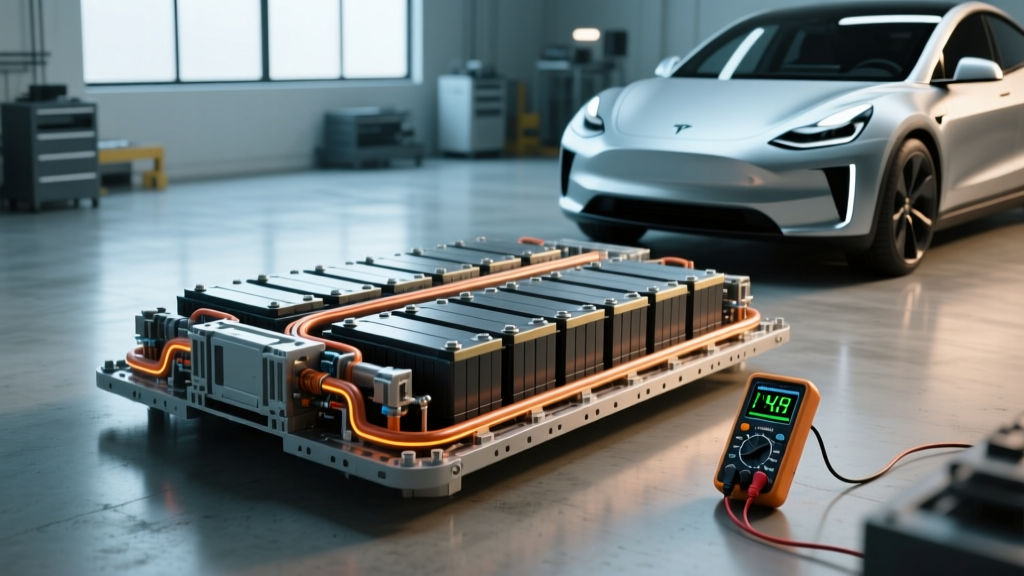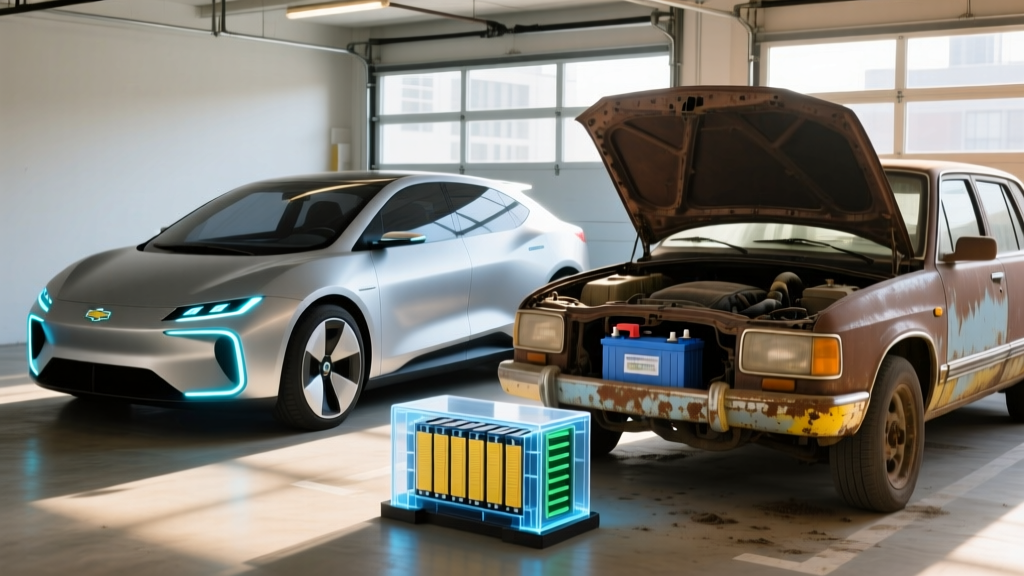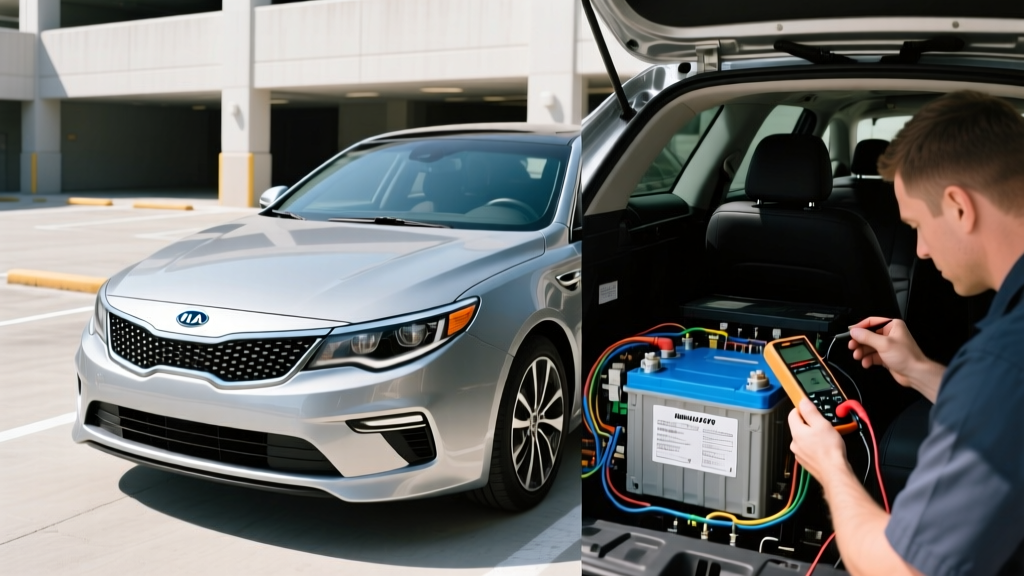
If you own or are considering a used 2013 Kia Optima Hybrid, the high-voltage traction battery is likely your biggest question mark. This early-generation hybrid paired a 1.4 kWh lithium-polymer pack with a 2.4-liter four-cylinder engine — a modest system by today's standards, but one that has accumulated over a decade of real-world data on longevity, degradation, and replacement economics.
This guide covers what actually happens to a 2013 Kia Optima hybrid battery at 100,000+ miles, what replacement costs in 2026, how the warranty works, and how this early lithium-polymer chemistry compares to the LFP and NMC packs powering modern EVs and hybrids.
2013 Kia Optima Hybrid Battery: The Original Specs
The 2013 Optima Hybrid used a 1.4 kWh (gross) lithium-polymer (LiPoly) traction battery manufactured by LG Chem. Unlike the nickel-metal hydride (NiMH) packs Toyota and Honda used in that era, Kia went with lithium-based chemistry for its higher energy density and lighter weight. The pack operated at approximately 270V and weighed roughly 115 lbs.
Because this is a conventional hybrid (HEV), not a plug-in, the battery is never deeply cycled. The vehicle's battery management system (BMS) keeps the state of charge (SoC) in a narrow window — typically between 40% and 80% — which significantly reduces stress on the cells compared to a full EV that regularly charges to 100% and discharges to near zero.
- Chemistry: Lithium-polymer (LiPoly), LG Chem
- Capacity: 1.4 kWh gross (~0.9 kWh usable)
- Voltage: ~270V nominal
- Electric motor output: 40 HP (30 kW)
- Combined system output: 206 HP
- EPA fuel economy: 35 MPG combined (36 city / 34 highway)
- Original MSRP: ~$25,900 (base hybrid)
How Long Does the 2013 Kia Optima Hybrid Battery Last?
The short answer from over a decade of fleet and owner data: most 2013 Optima Hybrid batteries last 150,000 to 200,000+ miles before degradation becomes functionally noticeable. Some have exceeded 250,000 miles on the original pack.
Here's why the lifespan is relatively long despite the pack's age:
- Shallow cycling: The BMS restricts usable capacity to roughly 60-65% of total (about 0.9 kWh usable out of 1.4 kWh gross). Shallow depth-of-discharge is the single biggest factor in lithium-ion longevity.
- Low C-rate: The 40 HP (30 kW) motor draws modest current from a 1.4 kWh pack, meaning charge and discharge rates stay gentle — typically under 1C during normal driving.
- No DC fast charging: HEV batteries charge only from regenerative braking and the engine — no high-current external charging to generate excess heat.
| Mileage | Estimated Capacity Retention | Real-World Effect |
|---|---|---|
| 0–50,000 mi | 95–100% | No perceptible change in MPG or EV-mode assist |
| 50,000–100,000 mi | 88–94% | Slightly shorter EV-only pulses at low speed; MPG unchanged |
| 100,000–150,000 mi | 80–88% | Noticeable reduction in electric assist duration; 1–2 MPG drop possible |
| 150,000–200,000 mi | 70–82% | Reduced regen effectiveness; engine runs more frequently |
| 200,000+ mi | Below 70% (varies) | Potential hybrid system warnings; replacement may be needed |
Sources: Kia technical service bulletins, hybrid owner forum data aggregations, and fueleconomy.gov for baseline EPA figures. Individual results vary based on climate, driving style, and maintenance.
The critical threshold is roughly 70% capacity retention. Below this, the battery can no longer provide meaningful electric assist, regenerative braking weakens, and fuel economy drops noticeably. For most owners, this threshold arrives between 150,000 and 200,000 miles — or 12 to 15 years of average driving.
2013 Kia Optima Hybrid Battery Replacement Cost
If your pack does reach end-of-life, here's what replacement looks like in 2026:
| Option | Parts Cost | Labor | Total Range |
|---|---|---|---|
| New OEM pack (Kia dealer) | $2,200–$2,800 | $400–$700 | $2,600–$3,500 |
| Remanufactured pack (independent hybrid shop) | $1,200–$1,800 | $300–$500 | $1,500–$2,300 |
| Used/salvage pack (self-source + install) | $500–$900 | $300–$500 | $800–$1,400 |
| Individual cell/module replacement | $150–$400 | $300–$600 | $450–$1,000 |
Several factors affect where you land in this range:
- OEM availability: Kia still supports the 2013 Optima Hybrid with genuine parts, but supply is tightening as the model ages. Order lead times of 2–4 weeks are common at dealerships.
- Remanufactured packs: Companies like Green Bean Battery and others offer reconditioned hybrid packs with limited warranties (typically 1–3 years). These replace only the degraded modules and rebalance the pack.
- Module-level repair: A qualified hybrid technician can test individual modules and replace only the weak ones. This is the cheapest option but requires specialized diagnostic equipment and high-voltage safety training.
For context, the 2013 Optima Hybrid's current resale value (as of early 2026) ranges from roughly $4,000 to $8,000 depending on mileage and condition. A $2,600–$3,500 OEM replacement represents a meaningful percentage of the vehicle's value — making remanufactured or module-level repair the more economically rational choice for most owners.
Battery Warranty: What Kia Covered and What Remains
Kia's original hybrid battery warranty for the 2013 Optima Hybrid was among the best in the industry at launch:
| Coverage | Term | Details |
|---|---|---|
| Hybrid battery (traction) | 10 years / 100,000 miles | Defects and capacity loss below functional threshold; original owner only in most states |
| Hybrid system components | 10 years / 100,000 miles | Motor, inverter, BMS, wiring |
| Emissions-related (CARB states) | 10 years / 150,000 miles | Hybrid battery may qualify as an emissions component in CARB-adopting states |
| Transferability | Varies by state | In most states, the 10/100k warranty applies to original owner; CARB-state emissions coverage may transfer to subsequent owners |
As of 2026, the original 10-year/100,000-mile warranty has expired for virtually all 2013 Optima Hybrids (the newest turned 13 years old in January 2026). However, if you live in a CARB-adopting state (California, Colorado, Connecticut, Maine, Maryland, Massachusetts, New Jersey, New York, Oregon, Rhode Island, Vermont, Virginia, Washington, and others), the hybrid battery may still qualify under extended emissions warranty provisions at up to 150,000 miles. Check with your local Kia dealer and reference your state's emissions warranty regulations.
Understanding the Chemistry: LiPoly vs. Modern LFP and NMC
The 2013 Optima's lithium-polymer pack was a bridge technology. Today's hybrids and EVs use either NMC (nickel-manganese-cobalt) or LFP (lithium iron phosphate) chemistries. Understanding the differences helps contextualize how far battery technology has come — and what to expect if you upgrade to a modern hybrid or EV.
| Attribute | LiPoly (2013 Optima) | NMC (most modern EVs) | LFP (Tesla, BYD, others) |
|---|---|---|---|
| Energy density | Moderate (~140 Wh/kg) | High (220–300 Wh/kg) | Lower (140–180 Wh/kg) |
| Cycle life | ~1,000–2,000 cycles | ~1,500–3,000 cycles | ~3,000–6,000+ cycles |
| Cold-weather performance | Moderate loss | 15–30% range loss below freezing | 20–40% range loss below freezing (worse than NMC) |
| Thermal stability / safety | Good | Good (requires active cooling) | Excellent (inherently stable) |
| Cost per kWh (2026) | N/A (legacy) | ~$100–$130/kWh (pack level) | ~$70–$95/kWh (pack level) |
| Typical use case | Early hybrids | Long-range EVs, performance | Standard-range EVs, daily commuters |
LFP vs. NMC — which is better? Neither is universally superior. NMC wins on energy density (more range in a smaller, lighter pack), making it the choice for long-range vehicles like the Hyundai Ioniq 6 (361 miles EPA) and Ford F-150 Lightning Extended Range. LFP wins on cycle life, cost, and thermal safety — ideal for standard-range models like the Tesla Model 3 RWD and base Hyundai Ioniq 5, where daily charging to 100% is recommended without degradation concern.
For the 2013 Optima Hybrid, the LiPoly chemistry was appropriate for its era: the pack was small, the cycling was shallow, and the energy density requirements were modest. The fact that many of these packs are still functioning at 12+ years old validates the engineering decision.
Factors That Accelerate Hybrid Battery Degradation
While the 2013 Optima Hybrid's BMS does an excellent job protecting the pack, certain conditions accelerate aging:
- Extreme heat exposure: Consistently parking in 100°F+ environments without shade accelerates electrolyte decomposition. Phoenix and Las Vegas vehicles tend to degrade faster than those in mild climates.
- Prolonged storage at high SoC: Leaving the vehicle unused for weeks with the hybrid battery near full charge stresses lithium-ion cells. If storing, drive the car at least once every two weeks.
- Aggressive driving in extreme cold: Demanding heavy regen and acceleration when the battery is below freezing forces high current through cold cells, causing lithium plating over time.
- Neglected cooling system: The Optima Hybrid's battery has an air-cooling system. A clogged intake filter or blocked vent forces the pack to run hotter than designed.
- Ignoring warning lights: A hybrid system warning or reduced-power mode indicates cell imbalance. Continuing to drive without diagnosis can cascade one weak module into pack-wide failure.
- Drive regularly — even short trips keep cells balanced and the BMS calibrated.
- Park in shade or a garage when possible, especially in hot climates.
- Keep the battery cooling system intake clear of debris and pet hair.
- Address hybrid system warnings immediately at a qualified shop.
- Maintain the 12V auxiliary battery — a weak 12V can cause the hybrid system to behave erratically and stress the traction pack.
How to Check Your Optima Hybrid's Battery Health
Unlike modern EVs with built-in State of Health (SoH) readouts in the infotainment screen, the 2013 Optima Hybrid doesn't display battery health directly to the driver. Here are your options:
- OBD-II scan tool with hybrid capability: Devices like the Carista OBD-II adapter or more advanced tools (Autel, Foxwell) can read hybrid battery voltage, individual module voltages, and estimated SoH. Look for a tool that supports Hyundai/Kia hybrid protocols.
- Dealer diagnostic scan: A Kia dealership can run a full hybrid system diagnostic using the KDS (Kia Diagnostic System). This provides module-level voltage data, internal resistance readings, and a health assessment. Expect a diagnostic fee of $80–$150.
- Independent hybrid specialist: Shops that specialize in hybrid repair (Prius, Optima, Sonata) often have the same diagnostic capability as dealers at lower labor rates.
- DIY voltage monitoring: Using an OBD-II app like Torque Pro, you can monitor real-time hybrid battery voltage and current. A healthy pack at ~60% SoC should read around 250–280V. Significant voltage sag under acceleration or large voltage differences between modules (visible on advanced scanners) indicates degradation.
As a rule of thumb: if your fuel economy has dropped more than 3–4 MPG from the original EPA combined rating of 35 MPG, and you've ruled out tire pressure, air filter, and brake drag issues, the hybrid battery is likely the cause.
Beyond the 2013 Optima: Modern Hybrid and EV Battery Outlook
If you're weighing whether to replace the battery in your 2013 Optima Hybrid or upgrade to a newer vehicle, the battery technology landscape has shifted dramatically:
- Modern hybrids like the 2026 Toyota Camry Hybrid and Hyundai Sonata Hybrid use packs with 2–3x the capacity of the 2013 Optima, delivering 44–52 MPG combined with more robust battery management and longer warranty transferability.
- PHEVs like the 2026 Kia Sportage PHEV offer 34 miles of electric-only range on a 13.8 kWh NMC pack — effectively eliminating engine use for daily commutes while retaining hybrid flexibility for road trips.
- BEVs with LFP chemistry (Tesla Model 3 RWD at $38,990, 272 miles EPA) offer 3,000+ cycle-life batteries that, at typical daily driving distances, can theoretically outlast 500,000 miles of use.
Emerging technologies on the horizon:
- Solid-state batteries: Toyota, Samsung SDI, and others have announced production timelines in the 2027–2030 window. These promise 50–80% more energy density, faster charging, and improved safety. However, they remain in pre-commercial stages as of early 2026 and will debut in limited, premium models first.
- Silicon-dominant anodes: Companies like Sila Nanotechnologies and Group14 are supplying silicon-carbon anode materials that boost energy density by 15–25% over graphite. These are entering production in select 2026–2027 model-year vehicles but are not yet widespread.
- Sodium-ion batteries: CATL and BYD have begun deploying sodium-ion packs in Chinese-market vehicles. These eliminate lithium and cobalt entirely, offering lower cost and better cold performance at the trade-off of lower energy density. US-market availability is not expected before 2028.
None of these technologies are available in production vehicles you can buy in the US today. They are forward-looking developments that will influence the next generation of hybrids and EVs from 2028 onward.
Frequently Asked Questions
How long does a 2013 Kia Optima Hybrid battery last?
Most original packs last between 150,000 and 200,000 miles before capacity drops below the 70% threshold where performance is noticeably affected. Some packs have exceeded 250,000 miles with proper maintenance and moderate climate exposure. The shallow cycling design of the HEV system is the primary reason for this longevity.
How much does it cost to replace a 2013 Kia Optima Hybrid battery?
A new OEM replacement from a Kia dealer runs $2,600–$3,500 including labor. Remanufactured packs from independent hybrid shops cost $1,500–$2,300. Module-level repair (replacing only the weak cells) can be as low as $450–$1,000. Given the vehicle's current resale value of $4,000–$8,000, remanufactured or module repair is usually the most cost-effective choice.
Is the 2013 Optima Hybrid battery still under warranty?
Kia's original 10-year/100,000-mile hybrid battery warranty has expired for all 2013 models. However, in CARB-adopting states (California, New York, and others), the battery may still qualify as an emissions-related component under extended warranty provisions up to 150,000 miles. Check with your state's emissions warranty rules and a Kia dealer for specifics.
Can I upgrade to a modern LFP or NMC battery in my 2013 Optima Hybrid?
No. The 2013 Optima Hybrid's battery management system, inverter, motor, and physical pack housing are designed specifically for the original LG Chem LiPoly modules. Retrofitting a different chemistry would require replacing the entire hybrid powertrain — which is not practical or cost-effective. If you want modern battery chemistry, upgrading to a newer hybrid or EV is the realistic path.
What's the difference between the 12V battery and the hybrid traction battery?
The 2013 Optima Hybrid has two batteries: a standard 12V lead-acid auxiliary battery (under the hood, powers lights, infotainment, and electronics) and the high-voltage 270V traction battery (behind the rear seat, powers the electric motor for hybrid assist). The 12V battery is a routine maintenance item replaced every 3–5 years for $100–$200. The traction battery is the expensive, long-life component discussed in this guide. A failing 12V battery can cause hybrid system error codes, so don't overlook it when troubleshooting.
How do I maximize the remaining life of my Optima Hybrid battery?
Drive regularly (at least weekly), park in shade when possible, keep the battery cooling vent unobstructed, address warning lights immediately, and maintain the 12V auxiliary battery. Avoid leaving the car unused for extended periods, especially in hot weather. These practices apply to any lithium-ion hybrid pack and are supported by battery longevity research from NREL.