If you've ever popped the hood of an electric vehicle looking for a battery to jump-start, you may have been confused by what you found — or didn't find. The question of whether to put jumper cables on battery terminals in an EV is one of the most common points of confusion for new electric-car owners, and getting it wrong can be dangerous or at minimum leave you stranded. This guide breaks down exactly what's under the hood, why EVs have two batteries, and everything you need to know about the high-voltage traction battery that actually powers your car — from chemistry and degradation to warranties and replacement costs.
Why Jumper Cables on an EV Battery Is the Wrong Question (and the Right One)
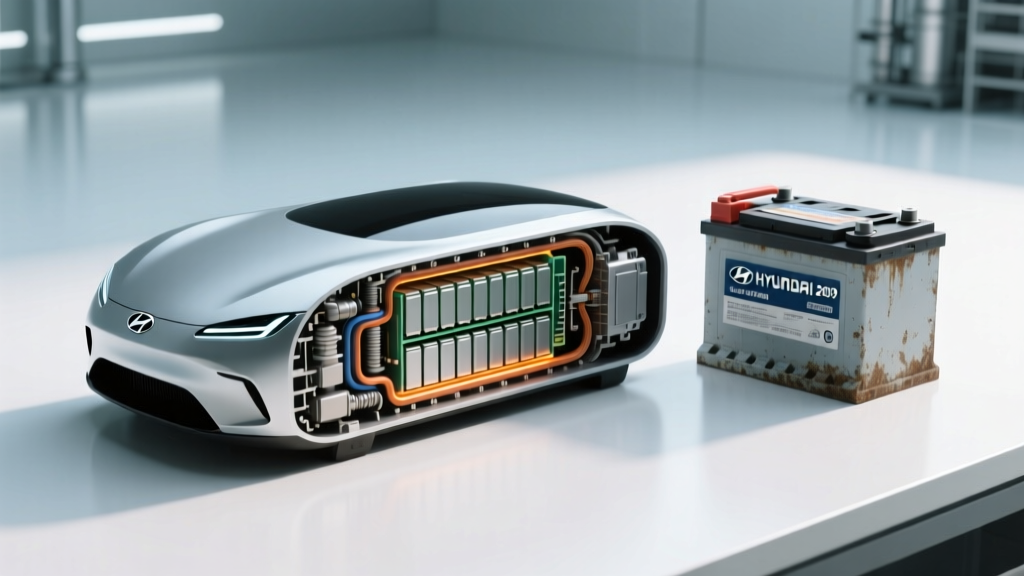
Every EV on the road in 2026 has two completely separate batteries. Understanding this distinction is the single most important thing an EV owner can learn about their vehicle's electrical system:
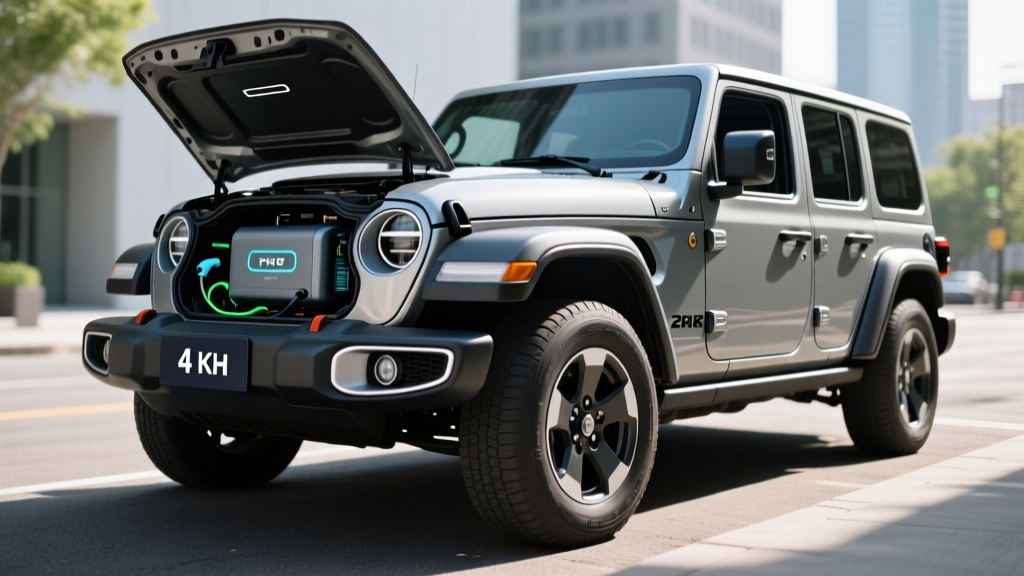
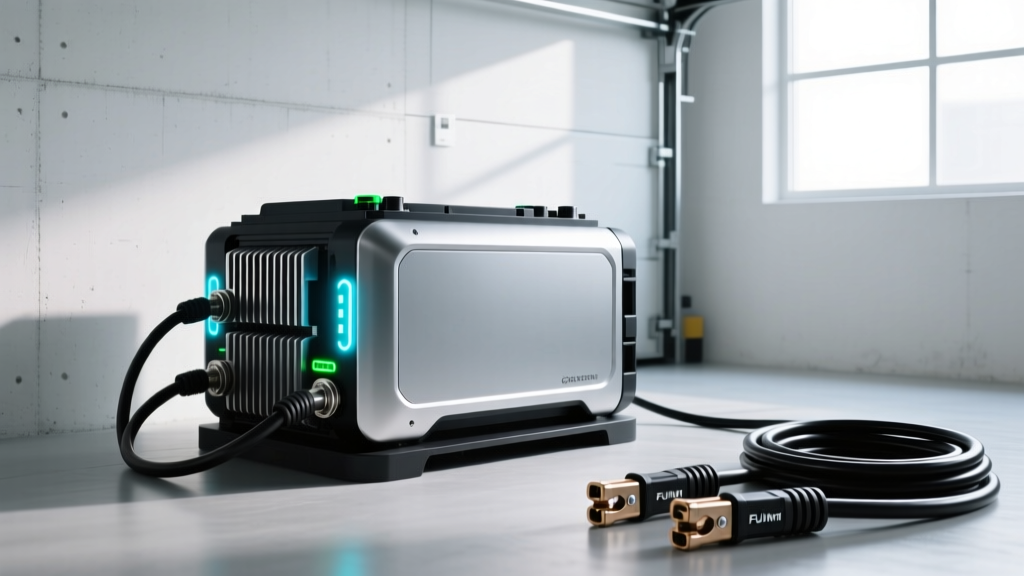
- 12V auxiliary battery: A small lead-acid or lithium-ion battery that powers the vehicle's computers, lights, infotainment, door locks, and — critically — the contactors that close the circuit to the main battery. This is the battery you can jump-start with jumper cables or a portable lithium jump pack, just like a gas car.
- High-voltage traction battery: The large lithium-ion pack (typically 40–120+ kWh) mounted under the floor that powers the electric motor(s) and moves the car. This battery operates at 400V (or 800V in vehicles like the Hyundai Ioniq 5, Kia EV6, and Porsche Taycan). You must never attempt to connect jumper cables to the traction battery. Doing so risks lethal electrocution, catastrophic damage to the vehicle's power electronics, and fire.
When an EV appears "dead," it is almost always the 12V auxiliary battery that has failed or been drained — not the traction battery. The 12V battery is what wakes up the car's computers and closes the high-voltage contactors. If the 12V battery is flat, the car won't start even if the main pack is at 100% State of Charge (SoC).
Inside the Traction Battery: LFP vs. NMC Chemistry Explained
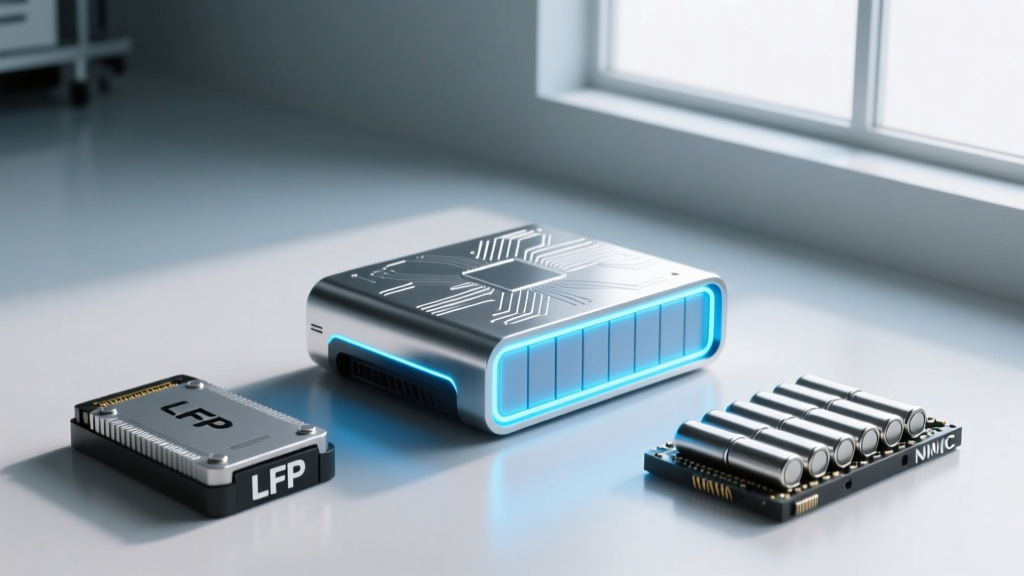
The high-voltage traction battery is the most expensive and technologically complex component in any EV. In 2026, two lithium-ion chemistries dominate the market, each with distinct trade-offs that affect range, longevity, charging behavior, and cost.
| Attribute | LFP (Lithium Iron Phosphate) | NMC/NCA (Nickel Manganese Cobalt / Nickel Cobalt Aluminum) |
|---|---|---|
| Energy Density | Lower (~160–180 Wh/kg cell-level) | Higher (~220–300 Wh/kg cell-level) |
| Cycle Life | 3,000–5,000+ cycles to 80% SoH | 1,000–2,500 cycles to 80% SoH |
| Cold-Weather Performance | Weaker — greater range loss below freezing; slower cold charging | Better — maintains performance in sub-freezing temps |
| Charging to 100% | Recommended periodically for BMS calibration | Daily 80% limit recommended; 100% for trips only |
| Cost | Lower — no cobalt or nickel | Higher — commodity-price dependent |
| Thermal Stability | Excellent — highly resistant to thermal runaway | Good — requires more active thermal management |
| Common 2026 Applications | Tesla Model 3/Y RWD, Ford Mustang Mach-E Select, base Chevy Equinox EV | Tesla Long Range, Hyundai Ioniq 5, BMW iX, Rivian R1T/R1S, most luxury EVs |
Which is better? Neither is universally superior. LFP wins on longevity, safety, and cost — making it ideal for daily commuters who charge at home and want a battery that will likely outlast the car. NMC/NCA wins on energy density and cold-weather usability, making it the choice for long-range models, AWD performance trims, and drivers in northern climates. According to fueleconomy.gov, NMC-equipped long-range models typically achieve 300+ miles EPA, while LFP standard-range variants cluster around 240–270 miles.
How Long Do EV Batteries Actually Last?
The fear that EV batteries need frequent, expensive replacement is one of the most persistent myths in electric mobility. Real-world data tells a different story.
Based on aggregated fleet data from sources including Recurrent Auto and Geotab's analysis of over 10,000 EVs, here is what degradation actually looks like:
| Age / Mileage | Average Capacity Retained (SoH) | Range Impact (Example: 300-mi EPA new) |
|---|---|---|
| Year 1 / 15,000 mi | 96–98% | ~288–294 mi |
| Year 3 / 45,000 mi | 92–95% | ~276–285 mi |
| Year 5 / 75,000 mi | 88–93% | ~264–279 mi |
| Year 8 / 120,000 mi | 83–90% | ~249–270 mi |
| Year 12 / 180,000 mi | 78–87% | ~234–261 mi |
The degradation curve is not linear. Most batteries experience a steeper drop in the first 1–2 years (calendar and cycle aging), then the curve flattens significantly. LFP batteries tend to show a more linear, slower degradation profile, while NMC may show a slightly steeper initial drop before stabilizing.
The critical takeaway: the vast majority of EV batteries outlast the useful life of the vehicle itself. A 2023 study by Recurrent found that only about 1.5% of EVs in their dataset had ever needed a battery replacement outside of warranty — and most of those were due to manufacturing defects, not age-related degradation.
What Does the Battery Warranty Actually Cover?
Federal law in the United States mandates that EV batteries carry a minimum warranty of 8 years or 100,000 miles (whichever comes first). In California Air Resources Board (CARB) states, the mandate extends to 10 years or 150,000 miles. Most manufacturers meet or exceed these minimums.
| Manufacturer | Warranty Period | Capacity Retention Threshold | Notes |
|---|---|---|---|
| Tesla | 8 yr / 120,000 mi (Model 3/Y RWD); 8 yr / 120,000 mi (LR/Performance) | 70% | Covers defects + degradation below threshold |
| Hyundai / Kia | 10 yr / 100,000 mi | 70% | Among the longest coverage in the industry |
| Ford | 8 yr / 100,000 mi | 70% | Covers battery components and capacity loss |
| GM (Chevy/Cadillac) | 8 yr / 100,000 mi | 70% (most); 60% (some commercial) | Ultium platform covered across brands |
| BMW | 8 yr / 100,000 mi | 70% | Transferable to subsequent owners |
| Rivian | 8 yr / 175,000 mi | 70% | Highest mileage threshold among major OEMs |
A critical nuance: warranty replacement does not mean you get a brand-new battery. Most manufacturers will repair or replace failed modules within the pack, or provide a refurbished unit that meets the capacity threshold. Full new-pack replacements are rare and typically reserved for catastrophic failures.
EV Battery Replacement Cost: What to Actually Expect
If your battery does fall outside warranty coverage and needs replacement, the costs are significant — but context matters. Here is what the market looks like in 2026:
| Vehicle / Battery Size | Pack Capacity | Estimated Replacement Cost (Parts + Labor) |
|---|---|---|
| Nissan LEAF (40 kWh) | 40 kWh | $6,500–$9,000 |
| Tesla Model 3 RWD (LFP, ~60 kWh) | ~60 kWh | $12,000–$16,000 |
| Tesla Model Y Long Range (~82 kWh) | ~82 kWh | $15,000–$22,000 |
| Ford F-150 Lightning (Extended Range, 131 kWh) | 131 kWh | $25,000–$35,000 |
| Chevrolet Silverado EV (200+ kWh) | ~200 kWh | $30,000–$45,000+ |
These are worst-case, out-of-warranty, full-pack-replacement figures. In practice, most degradation-related issues can be resolved by replacing individual modules (a few hundred to a few thousand dollars) rather than the entire pack. And because the overwhelming majority of failures happen within the warranty period, out-of-pocket full replacements remain statistically rare.
Battery costs have also continued their long-term decline. According to BloombergNEF, average lithium-ion pack prices fell below $100/kWh at the cell level in 2025, meaning replacement costs will continue to trend downward in the years ahead.
Factors That Accelerate (or Slow) Battery Degradation
Not all EV batteries age equally. How you charge, drive, and store your vehicle has a measurable impact on State of Health over time.
- Daily charging limit: Set to 80% for NMC/NCA batteries. LFP batteries can (and should) be charged to 100% periodically for accurate BMS calibration.
- Minimize DC fast charging: Occasional road-trip fast charging is fine, but daily use of 150+ kW DC chargers accelerates degradation. Level 2 home charging (7–11 kW) is gentler on cells.
- Avoid extreme SoC storage: Don't leave the car sitting at 100% or below 10% for extended periods. If storing for weeks, aim for 50–60% SoC.
- Precondition before fast charging: Use the vehicle's navigation-to-charger feature (Tesla, Hyundai, Ford, BMW all offer this) to warm the battery to optimal temperature before arriving at a DC fast charger. Cold batteries charge slower and experience more stress.
- Park in shade or a garage when possible: Sustained high battery temperatures (above 95°F/35°C ambient) accelerate calendar aging. Vehicles with active thermal management (liquid cooling) handle this better than passively cooled packs.
- Don't obsess over regen settings: While aggressive regen generates more charge/discharge micro-cycles, the impact on overall degradation is negligible compared to SoC and temperature management.
How to Check Your EV's Battery Health (State of Health)
State of Health (SoH) is expressed as a percentage of the battery's original usable capacity. A new battery is at 100% SoH; at 70% SoH, your 300-mile EPA vehicle now has roughly 210 miles of range at full charge. Here is how to monitor it:
- In-vehicle displays: Tesla provides a battery health estimate in the service menu (available since 2023 software updates). Hyundai/Kia's infotainment system shows SoH in the EV diagnostics screen. BMW's iDrive includes a battery health indicator under the vehicle status menu.
- OBD-II dongles and apps: Third-party tools like OBDeleven, LeafSpy (for Nissan LEAF), and Scan My Tesla can read detailed cell-level data including individual module voltages, internal resistance, and calculated SoH.
- Dealer diagnostics: Any authorized service center can run a full battery health report, typically free during scheduled maintenance. Request one before purchasing a used EV.
- Recurrent and similar services: Some fleet-management and battery-analytics services offer SoH estimates based on charging data patterns, though these are approximations rather than direct cell measurements.
A practical tip: compare your actual range at 100% SoC (measured over several full charges) to the original EPA rating. If your car originally delivered 300 miles EPA and now consistently shows 260 miles at full charge under similar conditions, your SoH is approximately 87%.
What's Next: Solid-State and Silicon-Anode Batteries
The next frontier in EV battery technology includes solid-state batteries (which replace the liquid electrolyte with a solid conductor) and silicon-anode cells (which boost energy density by using silicon instead of graphite at the anode). Here is where these technologies actually stand as of 2026:
- Solid-state batteries: Toyota has announced limited production of solid-state-equipped vehicles for 2027–2028, targeting 750+ km (WLTP) range and 10-minute 10–80% charging. Samsung SDI and QuantumScape are also in late-stage validation. However, mass-market availability at scale remains 2029–2030 at the earliest. Current prototypes have demonstrated impressive lab results but face manufacturing-yield and cost challenges.
- Silicon-anode batteries: Already in limited production. GM's Ultium platform uses a small percentage of silicon in the anode, and companies like Sila Nanotechnologies are supplying silicon-dominant anodes for select applications. Expect incremental adoption through 2026–2028, offering 10–20% energy-density improvements rather than a step-change revolution.
- Sodium-ion batteries: CATL has begun shipping sodium-ion packs for lower-cost Chinese-market EVs. These offer lower energy density but excellent cold performance and no lithium or cobalt dependency. US-market adoption remains uncertain due to energy-density limitations for larger vehicles.
These are promising developments, but none change the buying equation today. Current lithium-ion technology (both LFP and NMC) is mature, well-understood, and proven to last the life of the vehicle in the vast majority of cases.
Frequently Asked Questions
Can I use jumper cables on my EV's main battery?
No. The high-voltage traction battery (400V–800V) is extremely dangerous and should never be accessed by the owner. Jumper cables are only appropriate for the 12V auxiliary battery, which is a separate, small battery that powers the vehicle's electronics. Consult your owner's manual for the correct 12V jump-start procedure.
How long do EV batteries last in years and miles?
Based on fleet data, most modern EV batteries retain 83–90% of their original capacity at 8 years / 120,000 miles. Many will last 15–20 years or 200,000+ miles before reaching the 70% capacity threshold that defines "end of life" for automotive use. At that point, the battery still functions — it simply offers reduced range.
How much does it cost to replace an EV battery?
Full pack replacement ranges from approximately $6,500 for smaller packs (40 kWh) to $35,000+ for large truck packs (130+ kWh). However, the vast majority of replacements are covered under the 8-year/100,000-mile federal warranty mandate, and most failures are resolved by replacing individual modules rather than the full pack.
What does the EV battery warranty cover?
Federal law requires a minimum of 8 years / 100,000 miles of coverage against both defects and capacity loss below a stated threshold (typically 70% of original capacity). In CARB states, the mandate is 10 years / 150,000 miles. Coverage includes the battery pack, modules, thermal management system, and associated power electronics.
Is LFP or NMC better for my EV?
LFP is better if you prioritize longevity, lower cost, and safety, and if you primarily charge at home in moderate climates. NMC/NCA is better if you need maximum range, live in a cold climate, or frequently road-trip and need the energy density. Both chemistries are proven and reliable — the choice depends on your driving patterns.
Does fast charging damage my EV battery?
Occasional DC fast charging has a minimal impact on battery life. However, exclusive reliance on DC fast charging (150+ kW) instead of Level 2 home charging can accelerate degradation by an estimated 2–5% over the battery's lifetime. Modern thermal management systems mitigate much of this effect, but Level 2 remains the gentler option for daily use.
How do I check my EV battery's State of Health?
Use your vehicle's built-in battery health display (if available), an OBD-II diagnostic app like LeafSpy or Scan My Tesla, or request a dealer diagnostic report. You can also estimate SoH by comparing your real-world range at full charge to the original EPA rating.
Sources: fueleconomy.gov (EPA range and efficiency data), IRS §30D clean vehicle credit guidance, manufacturer warranty documentation. Battery degradation data aggregated from Recurrent Auto and Geotab fleet studies. All cost figures are 2026 estimates and may vary by region and service provider.