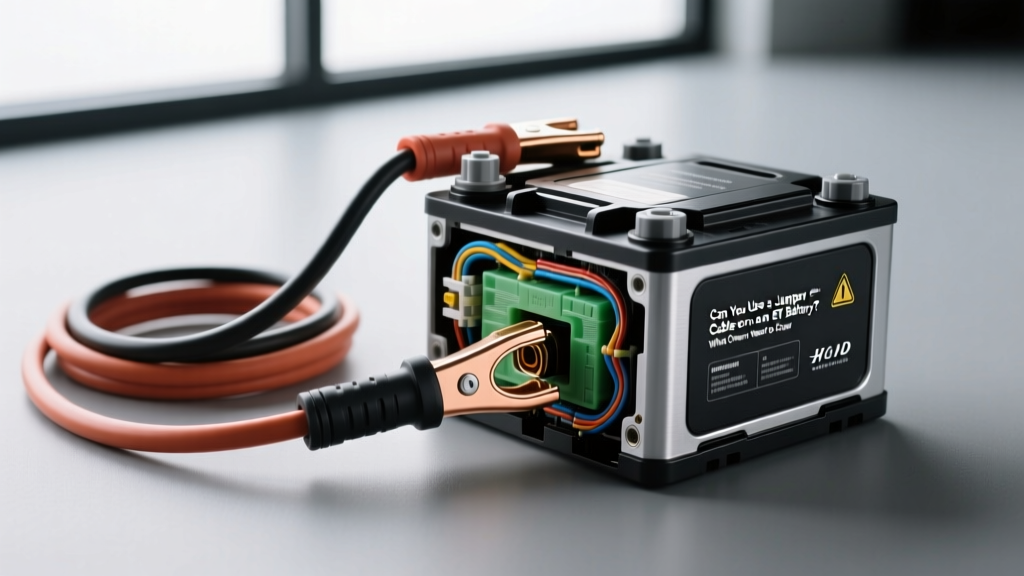
If you have ever stood in a parking lot with a dead EV and a set of jumper cables in your trunk, you probably asked yourself: can you use a jumper cable on an EV battery? The short answer is yes and no — it depends entirely on which battery you are talking about. Every electric vehicle on the road in 2026 carries two batteries: a conventional 12-volt auxiliary battery that powers the lights, infotainment, and onboard computers, and a high-voltage traction battery (typically 400V or 800V) that actually drives the wheels. Jumper cables are relevant only to the 12V side. Attempting to jump or externally charge the high-voltage pack is extraordinarily dangerous and should never be attempted.
This guide untangles the two-battery reality of modern EVs, then goes deep on what actually matters for long-term ownership: traction battery chemistry, degradation data, warranty coverage, replacement costs, and the habits that extend — or shorten — your pack's useful life.
The Two Batteries in Your EV: 12V Auxiliary vs. High-Voltage Traction
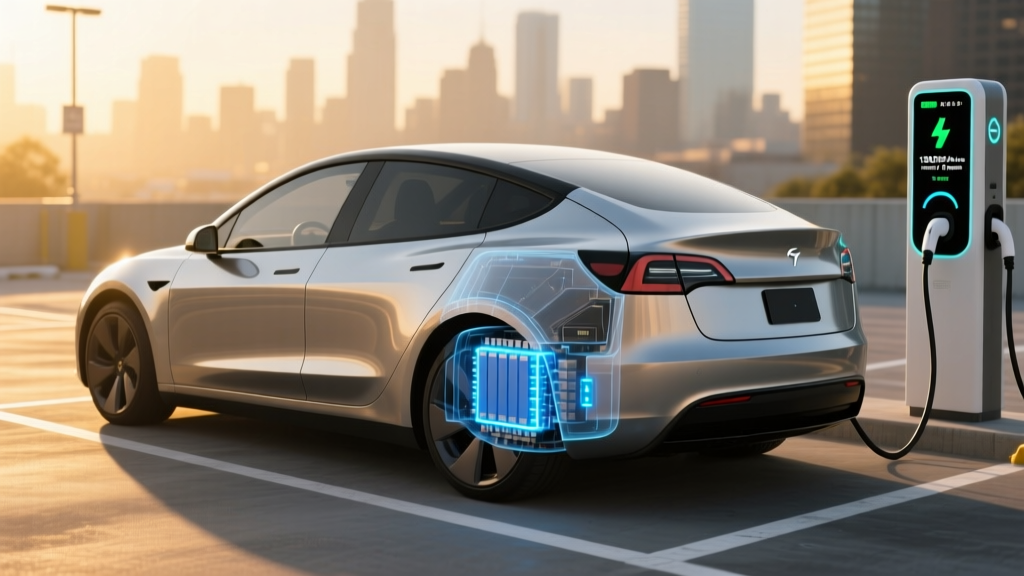
Understanding why jumper cables sometimes apply to an EV requires a quick anatomy lesson. The 12V auxiliary battery is a small lead-acid or lithium-ion unit (usually 12–16V, under 1 kWh) that energizes the vehicle's low-voltage systems: door locks, hazard lights, the DC-DC converter, and crucially, the contactors that close the circuit to the high-voltage pack. If the 12V battery dies, the car is completely bricked — even if the traction battery is at 100% State of Charge (SoC).
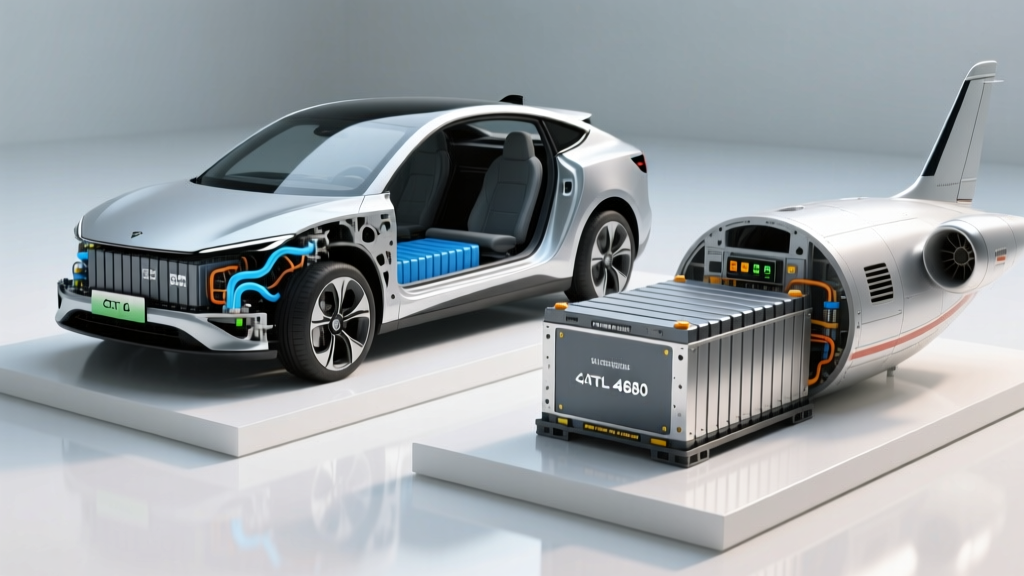
The high-voltage traction battery is the large lithium-ion pack mounted under the floor, ranging from roughly 40 kWh in a base Nissan LEAF to over 130 kWh in a GMC Hummer EV or Rivian R1T Max Pack. This pack operates at 400V (most vehicles) or 800V (Hyundai Ioniq 5/6, Kia EV6, Porsche Taycan, Genesis GV60). It is sealed, liquid-cooled, and managed by a sophisticated Battery Management System (BMS). You cannot jump-start it with conventional cables, and no consumer product exists to do so safely.
LFP vs. NMC/NCA: Which Battery Chemistry Is in Your EV?
The traction battery in your EV uses one of two dominant lithium-ion chemistries, and the choice has meaningful implications for longevity, range, charging behavior, and cost.
| Attribute | LFP (Lithium Iron Phosphate) | NMC/NCA (Nickel Manganese Cobalt / Nickel Cobalt Aluminum) |
|---|---|---|
| Energy Density | Lower (~160–180 Wh/kg cell-level) | Higher (~220–300 Wh/kg cell-level) |
| Typical Use | Standard-range / base trims (Tesla Model 3 RWD, Model Y RWD, Ford Mustang Mach-E Select SR) | Long-range / performance trims (Tesla Model 3 LR, Hyundai Ioniq 5 LR, BMW i4 eDrive40) |
| Cycle Life | 3,000–5,000+ cycles to 80% SoH | 1,000–2,000 cycles to 80% SoH |
| Cold-Weather Performance | Weaker — greater range loss below 32°F; slower charge acceptance when cold | Better cold-weather discharge and charge performance |
| Charging to 100% | Recommended periodically (helps BMS calibration); no degradation penalty | Best kept at 80% daily; 100% only for trips |
| Cobalt Content | Zero cobalt — lower supply-chain and ethical concerns | Contains cobalt and/or nickel — higher material cost |
| Cost (Pack-Level) | ~$100–120/kWh (2026 estimates) | ~$130–160/kWh (2026 estimates) |
| Thermal Stability | Excellent — higher thermal runaway threshold | Good but lower threshold; requires robust BMS and cooling |
Which is better? Neither is universally superior. LFP wins on longevity, cost, and safety — making it ideal for daily commuting and high-mileage drivers who charge frequently. NMC/NCA wins on energy density and cold-weather usability — making it the right pick for long-range trims where maximizing miles per charge matters. If you live in Minnesota and regularly drive in sub-zero temperatures, NMC's cold-weather edge is meaningful. If you live in Southern California, drive 40 miles round-trip, and plan to keep the car 10 years, LFP's cycle-life advantage is substantial.
How Long Do EV Batteries Actually Last?
The most persistent fear among prospective EV buyers is that the battery will fail prematurely and cost a fortune to replace. The data tells a more reassuring story: most modern EV traction batteries are engineered to outlast the vehicle's conventional components.
- Tesla Model 3/Y (NMC, 2018–2022): Fleet data aggregated by Tesla shows median degradation of approximately 12% at 150,000 miles, with the curve flattening significantly after the initial 20,000-mile break-in period (~5% loss). (Tesla Impact Report)
- Nissan LEAF (passive air-cooled, 2011–2017): Earlier LEAF models with air-cooled packs showed higher degradation — some owners reported 20–30% capacity loss by 80,000–100,000 miles, particularly in hot climates. The 2018+ LEAF with liquid cooling improved this significantly.
- Chevrolet Bolt EV/EUV (NMC, 2017–2023): Following the 2021 recall and battery replacement program, GM reported replacement packs showing minimal degradation in early monitoring. Original packs averaged roughly 8–10% loss at 100,000 miles among non-recalled units.
- Hyundai Ioniq 5 (NMC, 2022–present): Early fleet data from European and US owners suggests approximately 4–6% degradation at 50,000 miles with mixed Level 2 and DC fast charging.
- Tesla Model 3 Standard Range (LFP, 2021–present): LFP packs have shown remarkably flat degradation curves, with many owners reporting under 5% loss at 60,000 miles, consistent with LFP's higher cycle-life rating.
The bottom line: A modern, liquid-cooled EV battery from a major manufacturer should retain 80–90% of its original capacity at 150,000 miles and 10–15 years of typical use. Catastrophic failure (complete pack death outside of recalls) is rare. Gradual capacity loss — not sudden failure — is the norm, and it happens slowly enough that most owners adapt without noticing.
What Does the EV Battery Warranty Actually Cover?
Federal law in the United States mandates that EV batteries carry a minimum warranty of 8 years or 100,000 miles (whichever comes first). In California and states that follow CARB (California Air Resources Board) emissions standards, the requirement extends to 10 years or 150,000 miles. Most manufacturers meet or exceed these minimums.
| Manufacturer | Warranty Period | Mileage Limit | Capacity Retention Threshold |
|---|---|---|---|
| Tesla (Model 3/Y RWD — LFP) | 8 years | 100,000 miles | 70% |
| Tesla (Model 3/Y LR — NMC) | 8 years | 120,000 miles | 70% |
| Hyundai / Kia | 8 years | 100,000 miles | 70% |
| Ford (Mustang Mach-E) | 8 years | 100,000 miles | 70% |
| BMW (i4, iX) | 8 years | 100,000 miles | 70% |
| Rivian (R1T, R1S) | 8 years | 175,000 miles | 70% |
| GM (Chevrolet, Cadillac EVs) | 8 years | 100,000 miles | 60–70% (varies by model) |
What triggers a warranty claim? If your battery's State of Health (SoH) drops below the stated threshold — typically 70% of original capacity — within the warranty period, the manufacturer is obligated to repair or replace the pack at no cost to you. This means a 75 kWh pack warranted at 70% would qualify for service if it could no longer hold at least 52.5 kWh of usable energy.
What is NOT covered: Damage from accidents, improper modifications, using non-approved charging equipment that causes electrical damage, or failure to follow basic maintenance guidelines (such as ignoring repeated thermal warnings). Normal gradual degradation above the threshold is also not covered — if your pack is at 72% after 8 years, you are just outside the warranty window.
How Much Does It Cost to Replace an EV Battery?
Out-of-warranty battery replacement is the scenario that generates the most anxiety. Here is what the numbers actually look like in 2026:
| Vehicle | Battery Size (kWh) | Estimated Pack Cost | Labor & Ancillary | Total Estimated Range |
|---|---|---|---|---|
| Nissan LEAF (40 kWh) | 40 | $5,500–$7,500 | $1,500–$2,500 | $7,000–$10,000 |
| Chevrolet Bolt EV (65 kWh) | 65 | $8,000–$11,000 | $2,000–$3,000 | $10,000–$14,000 |
| Tesla Model 3 LR (82 kWh) | 82 | $10,000–$14,000 | $2,000–$3,500 | $12,000–$17,500 |
| Hyundai Ioniq 5 (77.4 kWh) | 77.4 | $10,000–$13,000 | $2,000–$3,000 | $12,000–$16,000 |
| Ford F-150 Lightning Ext. Range (131 kWh) | 131 | $18,000–$25,000 | $3,000–$5,000 | $21,000–$30,000 |
| GMC Hummer EV (200+ kWh) | 200+ | $25,000–$35,000 | $4,000–$6,000 | $29,000–$41,000 |
Important context: Pack prices have fallen dramatically — from over $1,000/kWh in 2010 to roughly $130–160/kWh at the pack level in 2026, according to BloombergNEF tracking. Many manufacturers now offer module-level replacement rather than full-pack swaps. If only 2 or 3 modules in a 12-module pack have degraded unevenly, a dealer may replace just those modules for $2,000–$5,000 rather than the entire pack. Third-party EV repair shops are also increasingly capable of module-level diagnostics and repair.
When is replacement actually needed? For the vast majority of EV owners, the answer is never during their ownership. Battery replacement typically becomes a consideration only at very high mileages (200,000+) or after 15–20 years, and even then, a pack at 70% SoH still provides usable daily range — it just means a 300-mile EPA vehicle now delivers roughly 210 miles. Many owners simply adjust their expectations rather than invest in a replacement on a 15-year-old car.
Factors That Affect EV Battery Life — and What You Can Control
Battery degradation is driven by a combination of chemistry, temperature, charging habits, and time. While you cannot stop degradation entirely, you can meaningfully slow it.
- Limit DC fast charging frequency: Occasional road-trip fast charging is fine. Daily reliance on 150+ kW DC charging accelerates degradation, particularly for NMC packs. Use Level 2 (home/work) as your primary charging method.
- Avoid extreme State of Charge storage: For NMC/NCA packs, do not leave the car sitting at 100% SoC for days. Set your daily charge limit to 80%. For LFP packs, charge to 100% at least once a week to help the BMS calibrate cell voltages.
- Precondition before fast charging: Most modern EVs automatically precondition the battery when you navigate to a DC fast charger. If yours does not, drive for 15–20 minutes before plugging in to bring the pack to optimal temperature (roughly 70–95°F internally).
- Minimize exposure to extreme heat: Parking in direct sunlight in 100°F+ weather for extended periods stresses the pack. Use a garage or shaded parking when possible. The thermal management system runs even when parked, consuming energy and cycling the cooling system.
- Do not let SoC drop to 0% and sit: A fully depleted battery left uncharged for weeks can suffer irreversible cell damage. If storing the vehicle, leave it at approximately 50% SoC and plugged in if possible.
- Use regenerative braking moderately in cold weather: Cold batteries cannot accept high regen currents. Most EVs limit regen automatically when the pack is cold, but driving gently for the first 10–15 minutes in freezing weather reduces stress.
How to Check Your EV Battery's State of Health (SoH)
State of Health (SoH) is a percentage representing your battery's current maximum capacity relative to its original capacity when new. A brand-new pack is at 100% SoH; a pack that originally held 75 kWh but now holds 67.5 kWh is at 90% SoH.
Built-in vehicle tools: Some manufacturers provide SoH readouts directly in the infotainment system or mobile app. Hyundai and Kia include a battery health indicator in their EV menus. Tesla does not display SoH natively, but you can approximate it by comparing your current maximum rated range at 100% SoC to the original EPA-rated range.
Third-party apps and OBD-II readers: Tools like OBDeleven, Carista, and EV-specific apps such as TeslaFi (for Tesla owners) or ABRP (A Better Route Planner) can pull battery health data from the vehicle's CAN bus. For a more definitive reading, many dealers can run a full pack diagnostic that measures individual module voltages and internal resistance — often for $100–$200 if out of warranty.
The manual method: Charge your EV to 100%, note the displayed range, and compare it to the original EPA-rated range. If your 2022 Ioniq 5 originally showed 303 miles at 100% and now shows 272 miles, that is roughly 90% SoH. This method is imprecise (displayed range is affected by recent driving patterns and temperature), but it provides a useful ballpark.
What Comes Next: Solid-State, Silicon Anodes, and Beyond
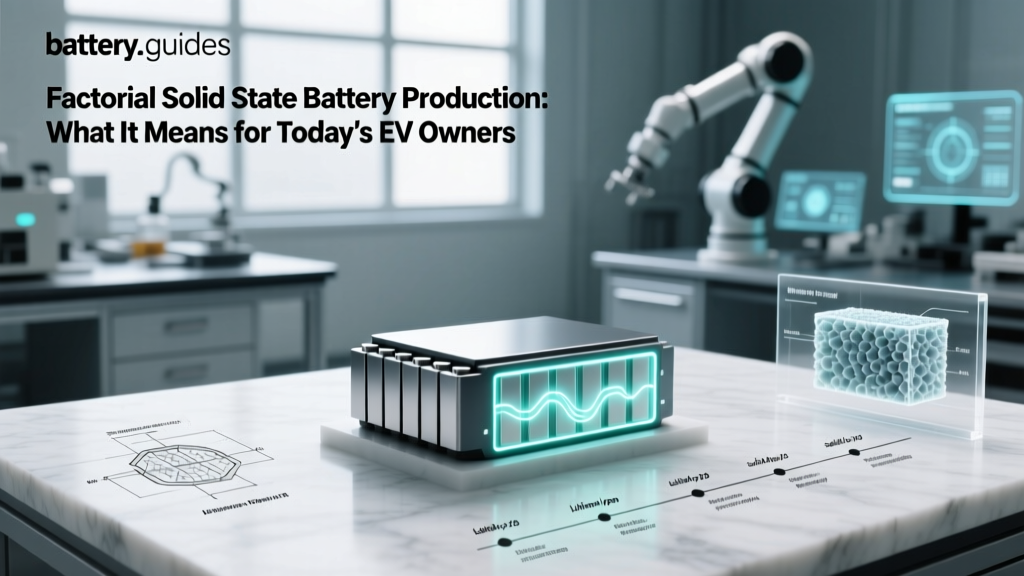
The next major leap in EV battery technology is solid-state batteries, which replace the liquid electrolyte in current lithium-ion cells with a solid material (ceramic, sulfide, or polymer). The promised advantages are substantial: higher energy density (potentially 400–500 Wh/kg at the cell level), faster charging, improved safety (no flammable liquid electrolyte), and longer cycle life.
Realistic timeline: As of 2026, solid-state batteries remain in limited pilot production. Toyota has announced a solid-state EV for the late 2020s, and companies like QuantumScape and Samsung SDI are supplying prototype cells to automakers for testing. However, mass production at automotive scale with competitive pricing is not expected before 2028–2030 at the earliest. Early solid-state EVs will likely appear in premium, low-volume applications before reaching mainstream price points.
Silicon anode technology is closer to market. Companies like Sila Nanotechnologies and Group14 are supplying silicon-dominant anode materials that increase energy density by 20–40% compared to conventional graphite anodes. These are appearing in some 2025–2026 model-year vehicles in blended form and represent an incremental but meaningful improvement over current technology.
Sodium-ion batteries are also emerging as a low-cost alternative for budget EVs and stationary storage. CATL and other Chinese manufacturers have begun shipping sodium-ion packs in select models, though energy density remains significantly lower than lithium-ion. These are unlikely to appear in US-market vehicles before 2028.
Frequently Asked Questions
Can I use jumper cables on my EV's high-voltage battery?
No. The high-voltage traction battery (400V–800V) is a sealed, liquid-cooled system that cannot and should not be jumped, externally charged, or serviced by anyone without high-voltage certification. Jumper cables are only applicable to the 12V auxiliary battery, following standard automotive jump-start procedures.
Why did my EV go completely dead if the main battery was charged?
Your 12V auxiliary battery likely died. The 12V battery powers the contactors — electrical switches that connect the high-voltage pack to the rest of the car. If the 12V battery is dead, the contactors cannot close, and the car cannot access the traction battery's energy, even if it is fully charged. Jumping the 12V battery (or replacing it) will resolve this.
How often should I replace the 12V auxiliary battery in my EV?
EV 12V batteries typically last 3–5 years, similar to those in conventional vehicles. Some EVs (including many Tesla and Hyundai models) have moved to lithium-ion 12V batteries that last longer — often 6–8 years — and are lighter. Check your owner's manual for the specific battery type and replacement interval.
Does fast charging really damage my EV battery?
DC fast charging generates more heat and subjects cells to higher current stress than Level 2 charging. Occasional fast charging (road trips, a few times per month) has minimal measurable impact. Daily fast charging, especially at 250+ kW, does accelerate degradation over time. The effect is most pronounced for NMC/NCA chemistries. LFP packs are somewhat more tolerant of fast charging due to their superior thermal stability.
Is it worth buying an extended battery warranty?
For most buyers, the standard 8-year/100,000-mile federal mandate provides adequate coverage. Extended warranties may make sense if you plan to keep the vehicle well beyond 100,000 miles and want peace of mind against the $10,000–$20,000 replacement cost. However, given that most packs retain 80%+ capacity at 150,000 miles, the statistical risk of needing an out-of-warranty replacement during typical ownership is low. Evaluate the extended warranty cost against the actual probability and your risk tolerance.
How do I know if my EV battery qualifies for a warranty replacement?
If your battery's State of Health drops below the warranty threshold (typically 70% for most manufacturers) within the warranty period (8 years/100,000 miles, or 10 years/150,000 miles in CARB states), you qualify. Request a battery health diagnostic from an authorized dealer. If the SoH reading falls below the threshold, the manufacturer will replace or repair the pack at no charge. Keep records of all diagnostics.