If you have ever replaced a 12V lead-acid battery under the hood, chances are you have handled a product from Johnson Controls — one of the world's largest manufacturers of conventional automotive starter batteries. But as the industry shifts toward full electrification, buyers are asking a more complex question: how do Johnson Controls automotive batteries relate to the high-voltage lithium-ion traction packs that actually propel modern EVs? This guide untangles that relationship and delivers the hard numbers EV owners need on battery chemistry, degradation, warranties, replacement costs, and long-term care.
Johnson Controls in the Auto Battery Market: 12V vs. High-Voltage Traction
Johnson Controls built its reputation on 12V lead-acid and AGM (Absorbent Glass Mat) batteries — the kind that start your engine, run your infotainment, and keep your lights on. These are fundamentally different from the 400V–800V lithium-ion traction batteries that store tens of kilowatt-hours (kWh) of energy and drive an EV's electric motor. Johnson Controls exited much of its power-solutions business when it spun off Clarios (formerly Power Solutions) in 2019, and Clarios now supplies the 12V auxiliary batteries found in many EVs, including models from Ford, GM, and Stellantis.
For EV shoppers, the critical distinction is this: the 12V auxiliary battery (often a Clarios/legacy Johnson Controls product) powers low-voltage electronics and safety systems, while the high-voltage traction battery (supplied by CATL, LG Energy Solution, SK On, Panasonic, BYD, and others) is the multi-thousand-dollar energy reservoir that determines your vehicle's range, performance, and longevity. This guide focuses on the traction battery — the component that matters most to your wallet and your ownership experience.
EV Battery Chemistry: LFP vs. NMC vs. NCA Trade-Offs
Not all lithium-ion traction batteries are created equal. The two dominant chemistries in 2026 passenger EVs are LFP (Lithium Iron Phosphate) and NMC/NCA (Nickel Manganese Cobalt / Nickel Cobalt Aluminum). Each carries distinct trade-offs that affect range, longevity, cold-weather behavior, and price.
| Attribute | LFP (LiFePO₄) | NMC / NCA |
|---|---|---|
| Energy Density | Lower (~160 Wh/kg cell-level) | Higher (~250–300 Wh/kg cell-level) |
| Typical Cycle Life | 3,000–5,000+ cycles | 1,000–2,000 cycles |
| Cold-Weather Performance | Weaker; greater range loss below freezing | Better low-temp discharge capability |
| Cost per kWh | Lower (no cobalt or nickel) | Higher (commodity-sensitive metals) |
| Thermal Stability | Excellent; less prone to thermal runaway | Good; requires robust BMS and cooling |
| Recommended Daily SoC | 100% OK (regular full charges encouraged) | 80% ideal for daily; 100% for road trips |
| Notable 2026 Applications | Tesla Model 3/Y RWD, Ford Mustang Mach-E Select (LFP option), BYD models | Hyundai Ioniq 5, Kia EV6, Tesla Long Range/Performance, Rivian, Lucid |
Which is better? There is no universal winner. If you prioritize maximum range per charge and live in a cold climate, NMC/NCA's higher energy density and better cold performance make it the practical choice. If you plan to keep your EV for 10+ years, charge daily to 100%, and want lower replacement risk, LFP's superior cycle life and thermal stability are compelling. Tesla's strategy — LFP for standard-range trims, NMC for long-range — reflects this segmentation, and other OEMs are following.
How Long Do EV Batteries Actually Last? Degradation Data
The fear that an EV battery will "die" at 100,000 miles is not supported by fleet data. Modern liquid-cooled traction batteries with sophisticated Battery Management Systems (BMS) degrade gradually, not catastrophically. Here is what the numbers show:
Typical Degradation Curve (Fleet & Owner Data):
- Year 1–2 (0–30,000 mi): ~2–5% capacity loss. Initial drop as the solid electrolyte interphase (SEI) layer stabilizes.
- Year 3–5 (30,000–75,000 mi): ~5–8% total loss. Degradation rate slows significantly after the initial period.
- Year 6–10 (75,000–150,000 mi): ~8–15% total loss. Most batteries retain 85–92% of original capacity at 150,000 miles.
- Beyond 150,000 mi: Data is sparser, but well-maintained packs (especially LFP) have been documented above 80% SoH at 200,000+ miles in taxi and fleet service.
Sources: Geotab fleet study (10,000+ EVs), Tesla Impact Reports, Recurrent Auto battery data.
Real-world example: A 2024 Tesla Model 3 Long Range (82 kWh usable, NMC) with an EPA range of 341 miles might realistically deliver ~310 miles at 50,000 miles and ~290 miles at 100,000 miles, assuming mixed driving with moderate DC fast-charging use. An LFP-equipped Model 3 RWD (60 kWh usable, EPA 272 mi) under similar conditions may retain closer to ~255 miles at 100,000 miles due to LFP's slower degradation profile.
EV Battery Warranties: What's Covered and What's Not
Federal law mandates a minimum 8-year/100,000-mile warranty on EV battery packs for emissions-related compliance, and most manufacturers meet or exceed this standard. The key metric is the capacity retention threshold — the State of Health (SoH) percentage below which the manufacturer will repair or replace the pack.
| Manufacturer | Warranty Period | Capacity Retention Threshold |
|---|---|---|
| Tesla (Model 3/Y) | 8 yr / 120,000 mi (LR/AWD); 8 yr / 100,000 mi (RWD) | 70% |
| Hyundai / Kia | 10 yr / 100,000 mi | 70% |
| Ford (Mustang Mach-E, F-150 Lightning) | 8 yr / 100,000 mi | 70% |
| GM (Ultium-based: Equinox EV, Blazer EV, Silverado EV) | 8 yr / 100,000 mi | 70% (some models 60% for specific modules) |
| Rivian | 8 yr / 175,000 mi | 70% |
| BMW | 8 yr / 100,000 mi | 70% |
What the warranty covers: Defects in materials/workmanship and capacity loss below the stated threshold under normal use. What it typically excludes: Damage from collisions, flooding, unauthorized modifications, or using non-approved charging equipment. Cosmetic issues and minor range reductions above the threshold are not covered. Always read your specific warranty booklet — terms vary by model year and trim.
EV Battery Replacement Cost: What to Budget and When It's Needed
The good news: the vast majority of EV owners will never need a traction battery replacement. Most packs outlast the vehicle's useful economic life. But for buyers considering high-mileage used EVs or planning 15+ year ownership, replacement cost is a legitimate line item.
| Vehicle / Pack Size | Battery Capacity | Estimated Replacement Cost (Parts + Labor) | Typical Replacement Trigger |
|---|---|---|---|
| Tesla Model 3 RWD (LFP) | ~60 kWh | $12,000–$16,000 | Rare before 200,000+ mi; module repair possible |
| Tesla Model Y Long Range (NMC) | ~82 kWh | $16,000–$22,000 | Rare before 150,000+ mi |
| Hyundai Ioniq 5 (NMC) | ~77.4 kWh | $14,000–$20,000 | Rare before 150,000+ mi |
| Ford F-150 Lightning Extended Range | ~131 kWh | $25,000–$35,000 | Rare before 150,000+ mi; largest consumer packs |
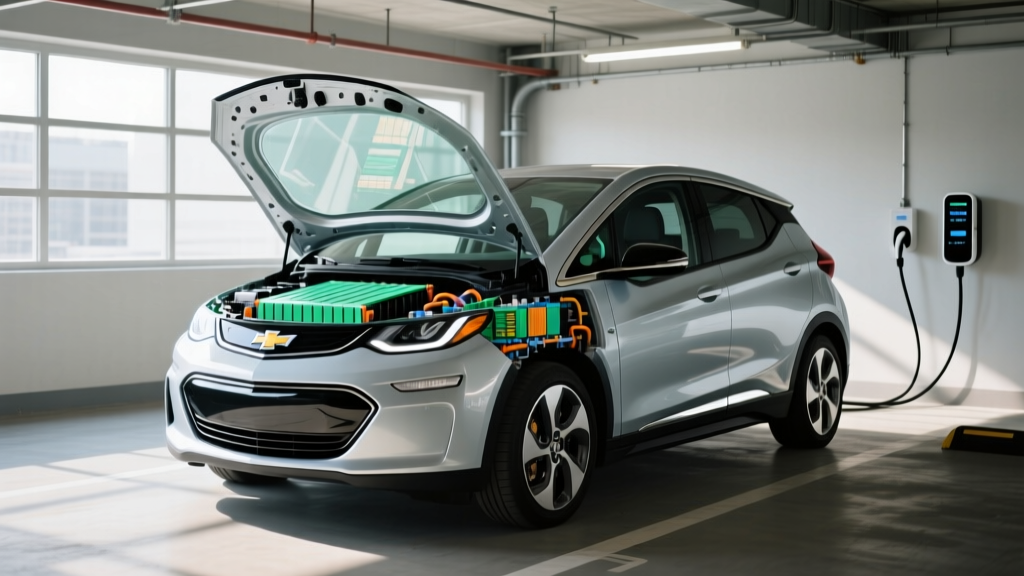
| Chevrolet Bolt EV/EUV (older NMC) | ~65 kWh | $14,000–$16,000 | Some early recalls; generally durable post-recall |
Several important caveats: (1) Many manufacturers now offer module-level repair, replacing individual defective modules rather than the entire pack, reducing costs to $2,000–$6,000. (2) The used EV battery market is growing, with refurbished packs available at 40–60% of new-pack pricing. (3) Battery costs per kWh have fallen from ~$1,200/kWh in 2010 to roughly $130–$150/kWh at the cell level in 2025–2026, and this trend continues to push replacement costs down. Data from BloombergNEF tracks these declines.
Factors That Accelerate Battery Degradation (and How to Minimize Them)
Battery chemistry sets the ceiling, but your habits determine where your pack lands on the degradation curve. Here are the primary accelerants and mitigations:
- DC Fast-Charging Frequency: Occasional road-trip use is fine, but daily reliance on 150+ kW DCFC accelerates wear. Aim for Level 2 home charging as your daily routine; reserve DCFC for trips. Studies show packs fast-charged >3x/week degrade ~1–2% faster over 5 years.
- State of Charge Habits (NMC/NCA): Avoid sitting at 100% SoC for extended periods. Set your daily charge limit to 80% and only charge to 100% when departing on a trip within hours. LFP packs are an exception — Tesla and BYD recommend periodic 100% charges for BMS calibration.
- Extreme Heat Exposure: Prolonged exposure to ambient temperatures above 95°F (35°C) — especially at high SoC — stresses cells. If you live in the Southwest, park in shade or a garage when possible. Liquid-cooled packs (standard on most 2026 EVs) manage this far better than older passive-cooled designs.
- Extreme Cold Charging: Charging a cold battery (below ~32°F / 0°C) without preconditioning causes lithium plating, a permanent degradation mechanism. Always use your EV's preconditioning feature before DC fast charging in winter — the car warms the pack to an optimal ~68–77°F (20–25°C) before accepting peak charge rates.
- Deep Discharge Storage: Never store an EV at 0% SoC for weeks. If leaving the car unused for extended periods, set SoC to ~50% and leave it plugged in with a scheduled departure or maintenance charge enabled.
How to Check and Monitor Your EV Battery's State of Health
State of Health (SoH) is the percentage of original capacity your battery can still hold. A brand-new pack is at 100% SoH; a pack that held 82 kWh when new and now holds 73.8 kWh is at 90% SoH. Here is how to monitor it:
In-Vehicle Displays: Many 2026 EVs (Tesla, Hyundai/Kia, BMW, Rivian) include a battery health indicator in the settings menu, though precision varies. Tesla's service mode provides a detailed SoH percentage; Hyundai's Bluelink app shows estimated range at full charge, which you can compare to original EPA figures.
OBD-II Diagnostics: Third-party tools like OBD2 dongles paired with apps such as Car Scanner, ABRP (A Better Route Planner), or Leaf Spy (for Nissan Leaf) can read BMS-reported SoH directly. These typically cost $20–$50 for the hardware and provide more granular data than the OEM app.
Dealer/Service Center Reports: Request a battery health check during routine service. Most manufacturers can pull a detailed SoH report showing individual module voltage variance — a key indicator of pack balance and impending issues.
Real-World Tracking: Simply track your "miles at 100% charge" over time. If your Ioniq 5 showed 305 miles at 100% when new and now shows 280 miles (with similar tire pressure and temperature), you are at roughly 92% SoH. Apps like Recurrent aggregate anonymized fleet data to benchmark your pack against similar vehicles.
Emerging Battery Technologies: Solid-State, Silicon Anode, and Beyond
The next frontier in EV battery technology promises higher energy density, faster charging, and improved safety — but realistic timelines matter more than press-release promises.
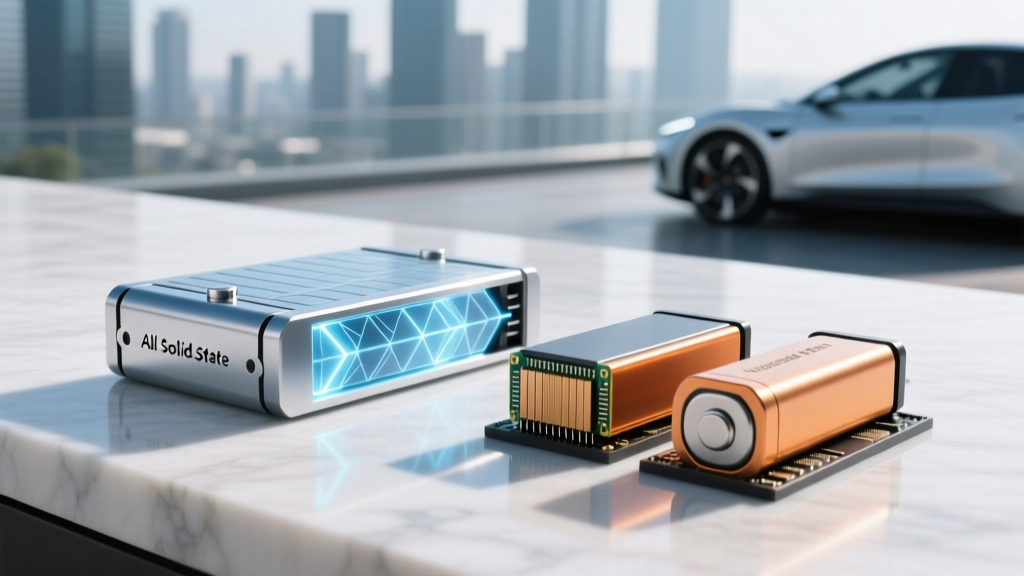
Solid-State Batteries: These replace the liquid electrolyte with a solid conductor, enabling lithium-metal anodes and energy densities potentially exceeding 400 Wh/kg. Toyota has announced limited solid-state production for 2027–2028, initially in low volumes and likely in premium models first. Samsung SDI and QuantumScape are also advancing prototypes, but cost-per-kWh remains 3–5x current lithium-ion. Realistic mass-market timeline: 2029–2032 at the earliest.
Silicon Anode Batteries: Adding silicon to the graphite anode boosts capacity by 10–30%. Sila Nanotechnologies (partnered with Mercedes-Benz/Panasonic) and Group14 (backed by Porsche) are scaling production. Expect silicon-dominant anodes in performance EVs by 2027–2028, with broader adoption by 2030. This is an incremental improvement, not a revolution — but it meaningfully extends range without enlarging the pack.
Sodium-Ion Batteries: CATL and BYD are producing sodium-ion cells for lower-cost, lower-range applications (urban EVs, energy storage). Energy density is ~30% below LFP, but raw materials are abundant and cheap. These may appear in budget EVs by 2027–2028, particularly in markets outside North America initially.
For today's buyers: current LFP and NMC chemistries are mature, well-understood, and backed by substantial warranties. There is no strong financial case for waiting on next-generation chemistries unless your purchase timeline is 4+ years out.
Frequently Asked Questions
How long do EV batteries last in years and miles?
Most modern liquid-cooled EV traction batteries retain 85–92% of original capacity at 150,000 miles and 8–10 years. LFP packs frequently exceed 200,000 miles before dropping below 80% SoH. Catastrophic failure (sudden "death") is extremely rare; degradation is gradual and linear after the first 1–2 years.
How much does an EV battery cost to replace?
Full pack replacement ranges from approximately $12,000 for a ~60 kWh LFP pack to $35,000 for a ~131 kWh NMC pack (e.g., F-150 Lightning Extended Range), including parts and labor. However, most owners never need a full replacement — module-level repairs cost $2,000–$6,000, and the vast majority of packs outlast the vehicle's economic life. Federal warranty mandates ensure coverage for at least 8 years / 100,000 miles.
What does the EV battery warranty cover?
Manufacturer warranties cover defects and capacity loss below a specified threshold (typically 70% of original capacity) over 8–10 years and 100,000–175,000 miles, depending on the brand. Warranties do not cover collision damage, flood damage, unauthorized modifications, or use of non-approved charging equipment. Check your specific warranty booklet for exact terms.
How do I check and maximize my EV battery's health?
Monitor SoH through your vehicle's settings menu, OBD-II diagnostic tools (e.g., Car Scanner, ABRP), or dealer service reports. Maximize longevity by: using Level 2 home charging daily, limiting NMC/NCA packs to 80% SoC for routine use, enabling preconditioning before winter DC fast charging, avoiding prolonged storage at 0% or 100% SoC, and minimizing DCFC frequency to road-trip occasions.
LFP vs NMC — which battery chemistry is better for me?
Choose LFP if: you plan to own the EV for 10+ years, want to charge to 100% daily without guilt, prioritize lower cost and superior thermal safety, and live in a mild-to-warm climate. Choose NMC/NCA if: you need maximum range per charge, frequently drive in sub-freezing temperatures, want the lightest pack for performance handling, or are buying a long-range or performance trim (which typically uses NMC). Neither is universally superior — the right choice depends on your ownership horizon, climate, and driving patterns.
Does Johnson Controls make EV traction batteries?
No. Johnson Controls (through its former Power Solutions division, now Clarios) manufactures 12V lead-acid and AGM auxiliary batteries used in many vehicles, including EVs. The high-voltage traction batteries that power EVs are supplied by companies like CATL, LG Energy Solution, SK On, Panasonic, BYD, and Samsung SDI. If you see a "Johnson Controls" label in your EV, it is almost certainly on the 12V auxiliary battery — a completely separate, low-voltage system.
For current federal EV tax credit rules affecting new EV purchases, consult IRS §30D guidelines, which include MSRP caps, buyer income limits, and battery-sourcing requirements that change periodically.