What Is a Jelly Roll Battery and Why It Matters for Your EV
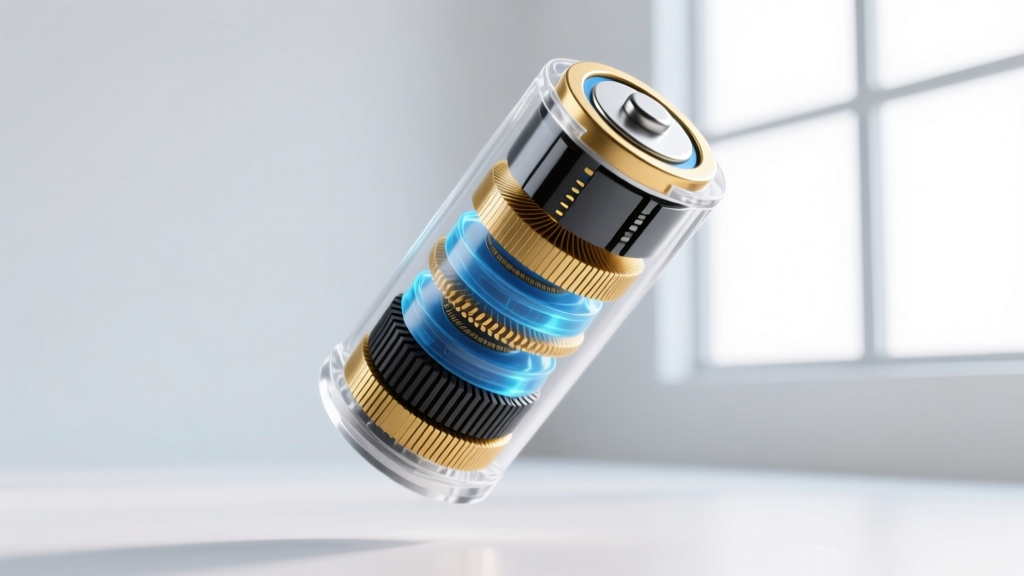
If you have ever wondered what physically sits inside an EV battery pack, the answer usually starts with a jelly roll battery cell. The term describes the internal geometry of a cylindrical or prismatic lithium-ion cell: thin sheets of anode, cathode, and separator are stacked or wound into a tight spiral that resembles a rolled Swiss cake — hence the name "jelly roll" (sometimes called a "scroll" or "wound electrode" design).
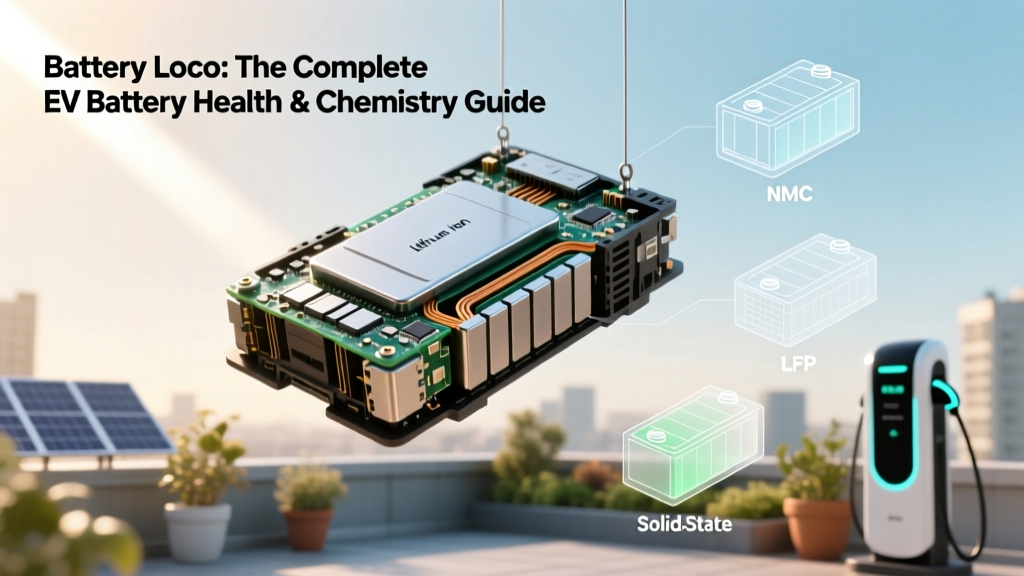
This is not a separate battery chemistry. A jelly roll is a manufacturing format. The same jelly roll architecture can house NMC (nickel-manganese-cobalt), NCA (nickel-cobalt-aluminum), or LFP (lithium iron phosphate) chemistry. Tesla's 4680 cells, Panasonic's 2170 cells in older Model 3 variants, and many CATL prismatic cells all use wound or stacked jelly roll electrodes.
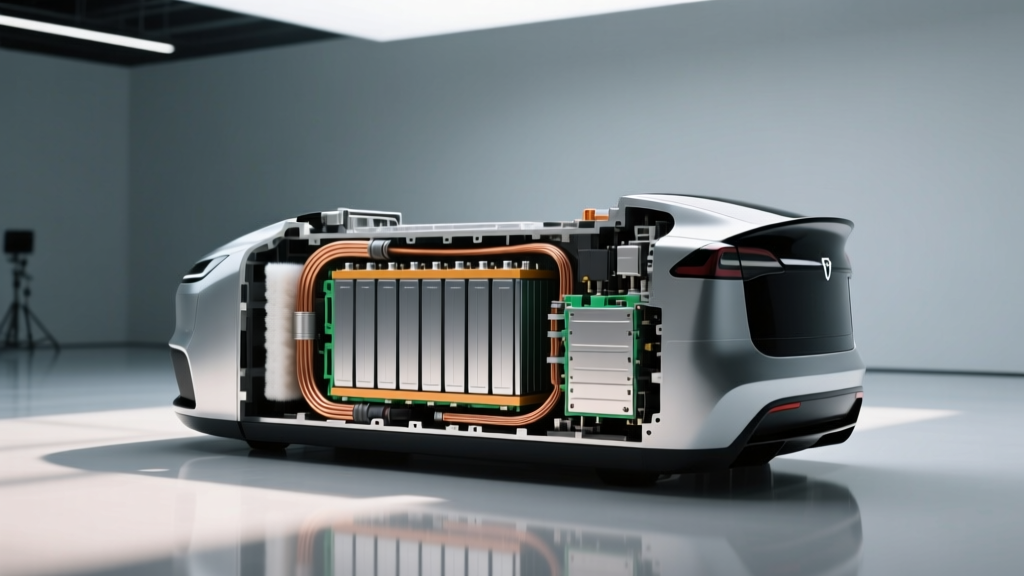
The jelly roll design dominates EV battery production because it maximizes energy density within a given volume. By winding electrode sheets tightly, manufacturers pack more active material into a smaller footprint, reducing dead space inside the cell casing. The trade-off is thermal management: tightly wound cells trap heat in the core, which is why modern EV packs invest heavily in liquid cooling plates and thermal interface materials between cells.
LFP vs NMC vs NCA: The Chemistry Inside the Jelly Roll
The jelly roll is just the container. What determines your EV's range, longevity, cold-weather behavior, and cost is the cathode chemistry layered onto those electrode sheets. Here is how the three dominant chemistries compare in 2026 production vehicles:
| Attribute | LFP (Lithium Iron Phosphate) | NMC (Nickel-Manganese-Cobalt) | NCA (Nickel-Cobalt-Aluminum) |
|---|---|---|---|
| Energy density (cell-level) | ~160–180 Wh/kg | ~220–260 Wh/kg | ~250–280 Wh/kg |
| Cycle life (to 80% capacity) | 3,000–5,000+ cycles | 1,000–2,000 cycles | 1,000–1,500 cycles |
| Cold-weather range retention | Moderate (15–25% loss at 20°F) | Better (10–20% loss at 20°F) | Better (10–20% loss at 20°F) |
| Thermal stability / safety | Excellent (higher runaway threshold) | Good (requires robust BMS) | Good (requires robust BMS) |
| Cobalt / critical mineral content | None | Yes (cobalt, nickel) | Yes (cobalt, nickel) |
| Cost per kWh (2026 pack-level) | ~$90–$110 | ~$120–$145 | ~$125–$150 |
| Common 2026 vehicles | Tesla Model 3 RWD, Ford Mustang Mach-E Select (LFP option), BYD models | Hyundai Ioniq 5, Kia EV6, VW ID.4, Ford F-150 Lightning Extended | Tesla Model S/X, older Model 3 Long Range |
The practical takeaway: LFP sacrifices energy density — meaning a heavier or larger pack for the same range — but gains dramatically in cycle life, safety, and cost. NMC and NCA pack more energy per kilogram, making them the choice for long-range and performance trims where weight matters. For a daily commuter who charges at home and rarely needs 350+ miles of range, LFP is increasingly the rational pick. For road-trip-heavy drivers or cold-climate owners, NMC's superior cold performance and density still hold an edge.
For a deeper look at how EPA rates these chemistries in real vehicles, fueleconomy.gov's EV technology overview provides efficiency data across the current market.
How Long Do EV Batteries Actually Last?
This is the question that keeps potential EV buyers up at night, and the data is reassuring. Modern liquid-cooled jelly roll cells, managed by sophisticated battery management systems (BMS), are lasting far longer than early-generation EV batteries.
Typical degradation curves (based on aggregated fleet data and manufacturer testing):
- Year 1 / 15,000 miles: 2–5% capacity loss (initial formation loss)
- Year 3 / 45,000 miles: 5–8% total loss
- Year 5 / 75,000 miles: 7–12% total loss
- Year 8 / 120,000 miles: 10–15% total loss
- Year 10+ / 150,000+ miles: 12–20% total loss (varies heavily by usage)
Sources: Recurrent Auto battery degradation reports, manufacturer warranty thresholds.
The critical insight is that degradation is non-linear. Most capacity loss occurs in the first 12–24 months as the solid electrolyte interphase (SEI) layer forms and stabilizes on the anode. After that, degradation slows significantly. Many EVs driven 100,000+ miles still retain 85–90% of original capacity.
LFP cells in a jelly roll format show even slower degradation. Tesla's LFP-equipped Model 3 RWD units have demonstrated less than 5% loss over 100,000 miles in fleet data, owing to LFP's inherently stable olivine crystal structure that resists the micro-cracking that degrades NMC cathodes over repeated charge cycles.
Battery Warranty: What Is Actually Covered?
Federal law in the United States mandates that EV batteries carry a minimum warranty of 8 years or 100,000 miles (whichever comes first). In California Air Resources Board (CARB) states, that extends to 10 years or 150,000 miles. Here is how major manufacturers structure their coverage as of the 2026 model year:
| Manufacturer | Warranty Period | Capacity Retention Threshold | Notes |
|---|---|---|---|
| Tesla (Model 3/Y LFP) | 8 yr / 120,000 mi | 70% | Long Range/Performance NMC: 8 yr / 120,000 mi at 70% |
| Hyundai / Kia | 10 yr / 100,000 mi | 70% | Among the longest coverage in the market |
| Ford (Mustang Mach-E, F-150 Lightning) | 8 yr / 100,000 mi | 70% | Covers battery and hybrid/electric components |
| General Motors (Ultium platform) | 8 yr / 100,000 mi | 70% | Module-level replacement supported |
| Volkswagen (ID.4) | 8 yr / 100,000 mi | 70% | Coverage transfers to subsequent owners |
| BMW (iX, i4) | 8 yr / 100,000 mi | 70% | Includes battery conditioning system |
What the warranty covers: If your battery's usable capacity drops below the stated threshold (typically 70% of original) within the warranty period, the manufacturer will repair or replace it — often swapping defective modules rather than the entire pack. The warranty also covers defects in materials and workmanship.
What it does not cover: Damage from accidents, improper modifications, using non-approved charging equipment, or total vehicle loss. Gradual degradation above the threshold is considered normal wear and is not warrantable.
EV Battery Replacement Cost: The Real Numbers
Most EV batteries will never need a full replacement during the original owner's tenure. But for buyers of used EVs or those planning 15+ year ownership, replacement cost is a legitimate line item. Here is what the market looks like in 2026:
| Vehicle / Battery Size | Chemistry | Replacement Cost (Parts + Labor) | Typical Replacement Trigger |
|---|---|---|---|
| Tesla Model 3 RWD (~60 kWh) | LFP | $10,000–$14,000 | Rare before 200,000 mi |
| Tesla Model Y Long Range (~82 kWh) | NMC/NCA | $14,000–$18,000 | Rare before 180,000 mi |
| Hyundai Ioniq 5 (~77.4 kWh) | NMC | $12,000–$16,000 | Rare before 170,000 mi |
| Ford F-150 Lightning Extended (~131 kWh) | NMC | $22,000–$30,000 | Rare before 150,000 mi |
| Chevrolet Equinox EV (~85 kWh) | NMC (Ultium) | $13,000–$17,000 | Rare before 170,000 mi |
Several factors are pushing replacement costs down. First, module-level repair is increasingly common: instead of replacing a 1,500-pound pack, a technician swaps one or two degraded modules for $2,000–$5,000. Second, pack-level prices per kWh have fallen from over $400/kWh in 2015 to roughly $110–$140/kWh at the pack level in 2026, according to BloombergNEF data. Third, the growing EV salvage and refurbishment market is making used/remanufactured packs available at 40–60% of new-pack pricing.
When is replacement actually needed? Almost never during the warranty period for a properly maintained EV. The most common triggers are high-mileage fleet vehicles (200,000+ miles), physical damage from collisions or ground strikes, or manufacturing defects that the warranty should cover.
Factors That Accelerate Battery Degradation
Your jelly roll cells are not static — they are electrochemical systems that respond to how you treat them. The following factors have the most measurable impact on long-term State of Health (SoH):
Battery care best practices (backed by cell-level testing data):
- Avoid sustained 100% State of Charge: For NMC/NCA, charge to 80–90% daily; reserve 100% for road trips. LFP tolerates 100% better and manufacturers often recommend periodic full charges for BMS calibration.
- Minimize DC fast charging frequency: Occasional fast charging is fine. Daily DCFC sessions at 150+ kW accelerate SEI growth and lithium plating. A study by Geotab found that vehicles fast-charging more than 3x per week showed ~1% additional annual degradation versus Level 2-only charging.
- Precondition before fast charging: Cold cells charged at high C-rates suffer lithium plating on the anode. Use your EV's navigation-based preconditioning (Tesla, Hyundai, Ford all offer this) to warm the pack before arriving at a DC fast charger.
- Avoid extreme SoC in extreme heat: A fully charged battery sitting in 100°F+ ambient heat accelerates electrolyte decomposition. If storing in hot weather, aim for 50–60% SoC.
- Drive it regularly: Lithium-ion cells prefer moderate cycling to long-term storage at high SoC. A daily-driven EV often degrades less than a weekend car sitting at 90% for weeks.
- Use Level 2 home charging as your baseline: A 7–11 kW Level 2 charger adds 25–45 miles of range per hour and generates far less thermal stress than a 150 kW DC fast charger. For daily use, this is the sweet spot.
How to Check and Monitor Your Battery's State of Health
State of Health (SoH) is expressed as a percentage of your battery's current maximum capacity relative to its original capacity. A new EV starts at 100% SoH; a vehicle with 10% degradation sits at 90% SoH.
How to check SoH:
- In-vehicle displays: Some EVs (notably Tesla via the service menu, and certain Hyundai/Kia models) show estimated battery health or remaining capacity in kWh. Navigate to Settings > Battery or use the service mode.
- OBD-II diagnostic apps: Tools like LeafSpy (Nissan), Tessie (Tesla), or Car Scanner ELM OBD2 (generic) can read the BMS-reported SoH directly. A $20–$40 OBD-II dongle plus a smartphone app gives you real data.
- Dealer diagnostic reports: During service visits, dealerships can pull a full battery health report showing individual module voltages, internal resistance, and overall SoH. Request this when buying a used EV.
- Range-based estimation: If your EV originally displayed 280 miles at 100% SoC and now shows 252 miles under identical conditions, that is roughly 90% SoH. This method is imprecise because range estimates factor in driving habits and temperature.
For used-EV buyers, a pre-purchase battery diagnostic is as important as a compression test on a used gas car. Services like Recurrent Auto offer battery health reports based on connected-vehicle data, and many dealerships now include a battery health certificate with certified pre-owned EVs.
What Comes After the Jelly Roll? Emerging Battery Tech
The jelly roll format has served lithium-ion batteries well for three decades, but next-generation chemistries and form factors are moving toward production. Here is where the technology stands as of 2026 — with realistic timelines, not concept-car promises:
Silicon-dominant anodes: Companies like Sila Nanotechnologies and Group14 are replacing graphite anodes with silicon composites that store up to 10x more lithium ions per gram. Early commercial deployments (Mercedes G-Class EV, announced) show ~20–40% energy density gains at the cell level. Expect broader availability in 2027–2028 production vehicles. These cells still use jelly roll or stacked-electrode formats.
Semi-solid-state batteries: NIO's 150 kWh semi-solid pack (available in China since 2024) replaces liquid electrolyte with a gel polymer, improving safety and energy density. Weilan and Samsung SDI are targeting 2027–2028 for US-market vehicles. These represent an evolution, not a revolution — they still rely on lithium-ion chemistry but with improved separators and electrolytes.
True solid-state batteries: Toyota, QuantumScape, and others have demonstrated solid-state cells in lab settings with 2x energy density and 10-minute fast-charge capability. However, manufacturing scale-up remains the bottleneck. Toyota has announced a 2027–2028 limited production target, but widespread availability in affordable EVs is realistically 2030 or later. No solid-state EV is currently available for purchase in the US market.
Sodium-ion batteries: CATL and BYD have begun producing sodium-ion cells for lower-range, budget EVs (primarily in China). Sodium-ion avoids lithium, cobalt, and nickel entirely, with energy density around 140–160 Wh/kg. If these reach the US market (likely 2028+), they would target city cars and fleet vehicles where 150–200 miles of range suffices.
The jelly roll form factor itself may eventually give way to stacked-electrode or bipolar designs in solid-state cells, where the rigid solid electrolyte does not lend itself to winding. But for the NMC and LFP cells powering the vast majority of EVs sold through 2030, the jelly roll remains the engineering standard.
Frequently Asked Questions
How long do EV batteries last in years and miles?
Based on fleet data from millions of EVs on the road, most modern liquid-cooled batteries retain 85–90% of their original capacity at 100,000 miles and 80–85% at 150,000 miles. In calendar years, that translates to reliable service for 12–15+ years for most owners. LFP chemistry extends this further, with some fleet vehicles showing less than 10% degradation at 200,000 miles. Complete battery failure requiring replacement is rare and typically covered under the 8-year/100,000-mile federal warranty minimum.
How much does an EV battery cost to replace?
Full pack replacement costs range from roughly $10,000 for a smaller LFP pack (Tesla Model 3 RWD, ~60 kWh) to $22,000–$30,000 for a large NMC pack (Ford F-150 Lightning Extended Range, ~131 kWh). However, module-level repair — replacing only the degraded sections — often costs $2,000–$5,000. Most EV batteries never require replacement during typical ownership. Pack prices continue declining at roughly 8–12% annually, so costs will be lower by the time a replacement might actually be needed.
What does the EV battery warranty cover?
Federal law requires a minimum 8-year/100,000-mile warranty on EV batteries (10 years/150,000 miles in CARB states). The warranty guarantees that battery capacity will not fall below a specified threshold — typically 70% of original capacity — during the coverage period. If it does, the manufacturer repairs or replaces the battery at no cost. The warranty also covers manufacturing defects. It does not cover damage from accidents, misuse, or unauthorized modifications.
How do I check and maximize my EV battery health?
Check SoH through your EV's built-in diagnostics, an OBD-II app like Tessie or Car Scanner, or a dealer diagnostic report. To maximize longevity: charge to 80–90% daily for NMC/NCA (100% is fine for LFP), use Level 2 home charging as your primary method, precondition the battery before DC fast charging, avoid leaving the car at 100% SoC in extreme heat, and drive regularly rather than storing at high charge for extended periods.
LFP vs NMC — which battery chemistry is better?
Neither is universally better; the right choice depends on your driving pattern. Choose LFP if you commute daily, charge at home, prioritize longevity and lower cost, and do not regularly need 300+ miles of range. LFP offers 3,000–5,000+ charge cycles, better thermal safety, and no cobalt. Choose NMC if you take frequent road trips, live in a cold climate (better cold-weather range retention), or need maximum range from a lighter pack. NMC delivers higher energy density (~220–260 Wh/kg vs LFP's ~160–180 Wh/kg) at a higher cost and shorter cycle life.
Is a jelly roll battery different from a regular EV battery?
No. "Jelly roll" describes the internal electrode winding geometry used in most cylindrical and many prismatic EV battery cells. It is a manufacturing format, not a chemistry. The same NMC, NCA, or LFP chemistry can be wound into a jelly roll. The term simply explains how the thin electrode sheets are packed efficiently inside the cell casing to maximize energy density.