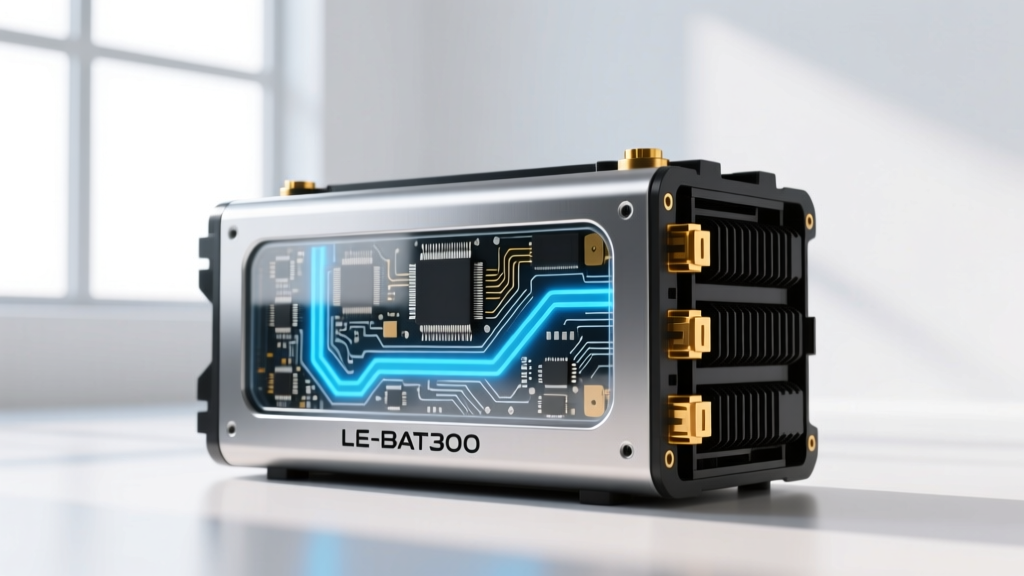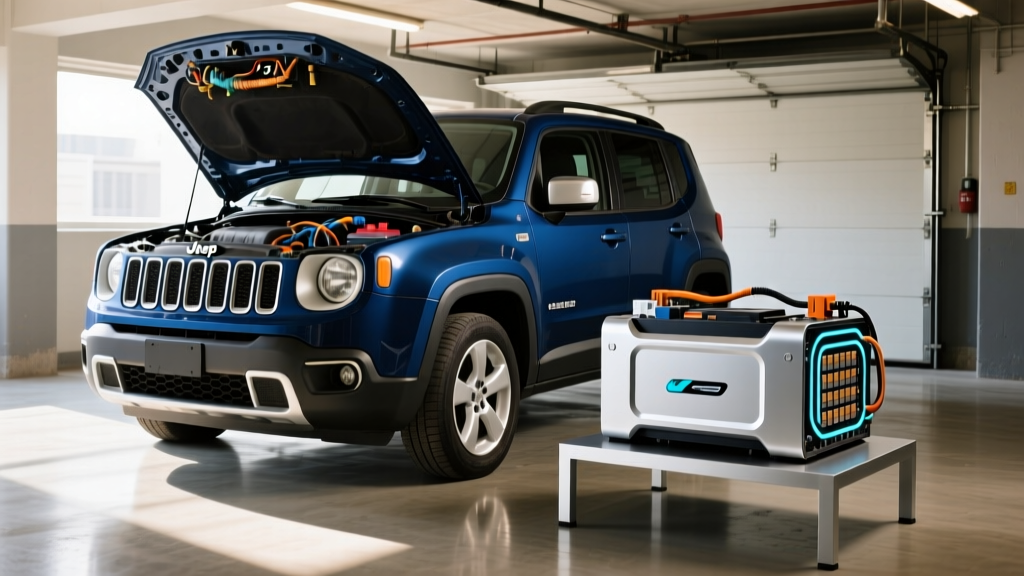
If you're searching for a battery for a 2014 Jeep Patriot, you're almost certainly dealing with a conventional 12-volt lead-acid replacement — the 2014 Patriot is an internal-combustion compact SUV with no high-voltage electrification. But understanding the gap between that simple $150–$220 Group 86 battery and the sophisticated lithium-ion traction packs powering today's EVs is one of the most useful things a car buyer can learn in 2026.
This guide uses the Patriot's 12V system as a baseline, then dives deep into modern EV battery chemistry, degradation science, warranty structures, and replacement economics — the data every EV shopper or owner actually needs.
What Battery Does a 2014 Jeep Patriot Use?
The 2014 Jeep Patriot (both the 2.0L and 2.4L engines) uses a standard Group 86 (or Group 47/H5) 12V lead-acid battery. Key specs:
- Cold Cranking Amps (CCA): 550–650 CCA recommended
- Reserve Capacity: ~90–100 minutes
- Typical cost: $140–$220 at retail (AutoZone, Advance Auto, Costco)
- Warranty: 2–3 years free replacement, prorated to year 4 or 5
- Lifespan: 3–5 years depending on climate and usage
This battery powers the starter motor, lights, infotainment, and ECU — it has nothing in common with the 60–100+ kWh lithium-ion traction batteries that propel electric vehicles. Confusing a 12V auxiliary battery with an EV's high-voltage pack is one of the most common errors in mainstream auto coverage. We won't make that mistake here.
EV Traction Batteries: LFP vs NMC Chemistry Explained
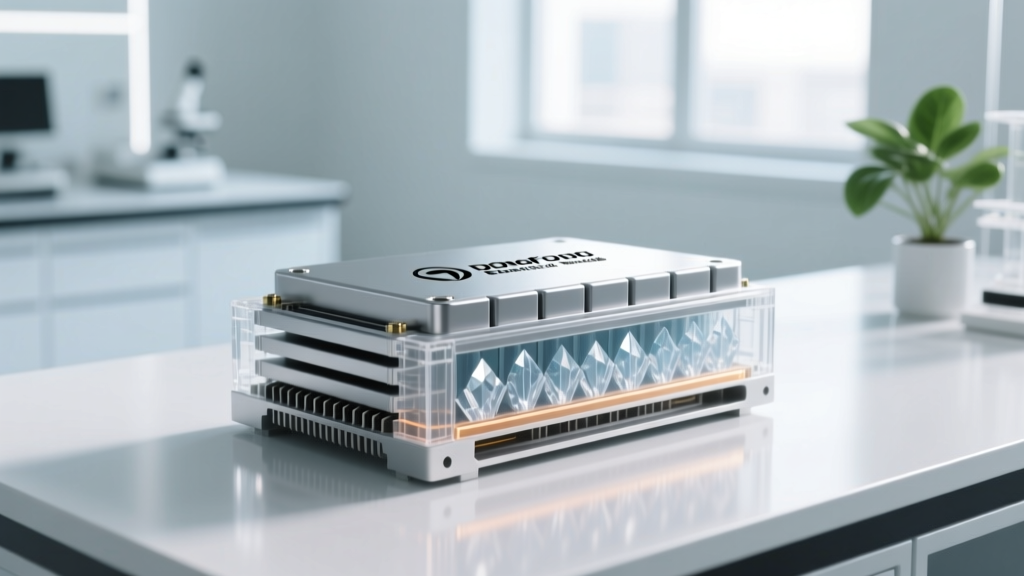
Modern EVs use one of two dominant lithium-ion chemistries: LFP (lithium iron phosphate) or NMC/NCA (nickel manganese cobalt / nickel cobalt aluminum). The chemistry determines range, longevity, cold-weather behavior, and cost.
| Attribute | LFP (Lithium Iron Phosphate) | NMC / NCA (Nickel-based) |
|---|---|---|
| Energy Density | ~160–180 Wh/kg (lower) | ~220–300 Wh/kg (higher) |
| Cycle Life | 3,000–6,000+ cycles | 1,000–2,500 cycles |
| Cold-Weather Performance | More range loss below 20°F | Better low-temp discharge |
| Cost per kWh (2026) | ~$75–$95/kWh at pack level | ~$100–$130/kWh at pack level |
| Recommended Daily SoC | 100% OK (no buffer concern) | 80% daily, 100% for trips only |
| Safety / Thermal Runaway | Higher ignition threshold | Lower threshold, more active cooling needed |
| Common In (2026) | Tesla Model 3/Y RWD, Ford Mustang Mach-E Select, Rivian Standard, BYD models | Tesla Long Range, Hyundai Ioniq 5/6, BMW iX, Mercedes EQS, most premium EVs |
Which is better? For daily commuting and high-mileage owners who want maximum cycle life and don't need 350+ miles of range, LFP is the 2026 value pick. For road-trippers, cold-climate drivers, and anyone prioritizing maximum range per charge, NMC remains the performance standard. Neither is universally superior — it depends on your driving profile.
How Long Do EV Batteries Actually Last? Degradation Data
This is the question that drives purchase hesitation more than any other. The data, drawn from large-scale fleet studies and owner reporting, is reassuring.
Typical Lithium-Ion EV Battery Degradation Curve
Based on aggregated data from Recurrent Auto (tracking 15,000+ EVs) and manufacturer warranty structures:
- Year 1 (0–15k mi): ~2–5% capacity loss (initial "break-in" drop)
- Year 3 (30–45k mi): ~6–9% total loss
- Year 5 (60–75k mi): ~8–12% total loss
- Year 8 (90–120k mi): ~10–15% total loss
- Year 10 (120–150k mi): ~12–18% total loss
- Year 15 (180k+ mi): ~18–25% total loss (many packs still functional)
The degradation curve flattens significantly after year 3. Most EVs retain 85–90% of original capacity at 100,000 miles. Catastrophic failure (sudden death, not gradual fade) is rare — well under 1.5% of packs in large datasets.
For comparison: your 2014 Jeep Patriot's engine at 150,000 miles likely burns oil, has worn piston rings, and needs a timing chain inspection. The EV powertrain at the same mileage has lost maybe 15% of its range and has zero moving parts in the motor.
EV Battery Warranty Terms: What's Actually Covered
Federal law mandates a minimum 8-year / 100,000-mile warranty on EV battery packs (10 years / 150,000 miles in CARB states including California, New York, Massachusetts, and others). Here's how major manufacturers structure theirs in 2026:
| Manufacturer | Warranty Period | Capacity Threshold | Notes |
|---|---|---|---|
| Tesla (Model 3/Y) | 8 yr / 120,000 mi (LR/AWD); 8 yr / 100,000 mi (RWD) | 70% retention | Transferable to second owner |
| Hyundai / Kia | 10 yr / 100,000 mi | 70% retention | Among the longest coverage |
| Ford (Mach-E, F-150 Lightning) | 8 yr / 100,000 mi | 70% retention | Covers battery and EV components |
| GM (Ultium platform) | 8 yr / 100,000 mi | 70% retention (60% on some commercial) | Modular replacement possible |
| Rivian | 8 yr / 175,000 mi (R1T/R1S) | 70% retention | Higher mileage cap than most |
| BMW / Mercedes | 8 yr / 100,000 mi | 70% retention | Some offer capacity buffer disclosures |
What triggers a warranty claim: If your battery falls below the stated threshold (usually 70% of original capacity) within the time/mileage window, the manufacturer must repair or replace it at no cost. The warranty covers defects and abnormal degradation — it does not cover damage from accidents, flooding, or unauthorized modifications.
Source: fueleconomy.gov — EV Battery and Warranty Information
How Much Does an EV Battery Cost to Replace?
This is where fear-mongering thrives. Here are the actual numbers for 2026:
| Vehicle / Pack Size | Full Pack Replacement | Module Repair (where applicable) | Typical Need Timeline |
|---|---|---|---|
| Tesla Model 3 RWD (LFP, ~60 kWh) | $8,000–$12,000 | N/A (structural pack) | Rarely needed under 200k mi |
| Tesla Model Y LR (NMC, ~75 kWh) | $12,000–$16,000 | N/A | Rarely needed under 200k mi |
| Hyundai Ioniq 5 (77.4 kWh NMC) | $13,000–$18,000 | $3,000–$6,000 (single module) | Rarely needed under 150k mi |
| Ford F-150 Lightning Ext. Range (~131 kWh) | $20,000–$28,000 | $4,000–$8,000 (modular) | Rarely needed under 150k mi |
| Chevrolet Bolt EV (65 kWh NMC) | $9,000–$14,000 | N/A | Post-recall packs show strong longevity |
| BMW iX xDrive50 (~111 kWh) | $22,000–$30,000 | $5,000–$10,000 (modular) | Rarely needed under 150k mi |
Critical context: The vast majority of EV owners will never pay for a battery replacement. According to Recurrent Auto's fleet data, fewer than 1.5% of EV batteries have required out-of-warranty replacement as of 2025. Most EVs are sold or retired before the battery reaches end-of-life. Pack prices have also dropped roughly 80% since 2013 (BloombergNEF data), and module-level repairs are increasingly common on platforms like GM's Ultium and VW's MEB, where individual modules can be swapped instead of the full pack.
Compare this to the 2014 Jeep Patriot: a transmission replacement at 120,000 miles runs $3,500–$5,500, and you'll likely need it. An EV drivetrain at the same mileage is essentially untouched.
Factors That Accelerate (or Preserve) Battery Life
Not all miles are equal when it comes to battery wear. These are the variables with the strongest evidence behind them:
Battery Care Best Practices
- Avoid chronic DC fast charging: Occasional road-trip fast charging is fine, but daily 150+ kW sessions accelerate degradation. Level 2 home charging (7–11 kW) is the longevity sweet spot.
- Manage State of Charge (SoC): For NMC batteries, set your daily charge limit to 80%. Reserve 100% for road trips. LFP batteries tolerate 100% daily charging — Tesla and Ford explicitly recommend periodic 100% charges for LFP to keep the BMS calibrated.
- Avoid extreme SoC storage: Don't leave an NMC car sitting at 100% or below 10% for weeks. Store at ~50% SoC if parking long-term.
- Precondition before fast charging: Use your EV's navigation to route to a DC fast charger — this triggers battery preconditioning, warming the pack to optimal charging temperature and reducing stress.
- Cold-climate awareness: Below 20°F, expect 20–35% range reduction (temporary, not degradation). A garage or battery heater (standard on most 2026 EVs) mitigates this.
- Heat is the real enemy: Sustained high temperatures (Phoenix summers, repeated track use) degrade lithium-ion cells faster than cold. Park in shade when possible; active thermal management handles most scenarios.
How to Check Your EV Battery's State of Health (SoH)
State of Health (SoH) is the percentage of original capacity your battery currently holds. A new pack is 100% SoH; at 70%, you'd trigger most warranty claims.
How owners check SoH in 2026:
- In-car displays: Tesla, Hyundai/Kia, BMW, and Mercedes now show SoH or usable capacity estimates in the vehicle settings menu. Tesla's "Battery Health" screen shows current max range vs. original.
- OBD-II dongles + apps: Tools like OBDLink MX+ paired with apps such as LeafSpy (Nissan Leaf), Scan My Tesla, or Car Scanner ELM can read the battery management system (BMS) directly for precise SoH readings.
- Third-party services: Companies like Recurrent offer battery health reports that compare your pack to thousands of identical vehicles — useful when buying or selling a used EV.
- Dealer diagnostics: Any authorized service center can pull a full BMS log showing cell-level voltage variance, internal resistance, and capacity retention.
What to look for: If your SoH drops more than 3–4% in a single year (after the first year), or if individual cell groups show significant voltage imbalance (>50 mV spread), it warrants a dealer visit. Gradual, even decline is normal and expected.
Emerging Battery Technology: What's Next (and When)
Several next-generation technologies are in development. None are available in production vehicles as of early 2026, but timelines are becoming clearer:
- Solid-state batteries: Toyota has announced a 2027–2028 production target for solid-state packs promising ~750 km (466 mi) range and 10-minute fast charging. Samsung SDI and QuantumScape are pursuing similar timelines. Realistic availability in mainstream vehicles: 2029–2031. These are announced/preliminary targets, not guarantees.
- Silicon-dominant anodes: Companies like Sila Nanotechnologies and Group14 are replacing graphite anodes with silicon composites, boosting energy density 20–40%. Limited deployment began in 2025 (Mercedes G-Class electric); broader adoption expected 2027–2029.
- Sodium-ion batteries: CATL and BYD are producing sodium-ion packs for budget EVs in China. Lower energy density (~120–150 Wh/kg) but cheaper and cobalt-free. US availability is uncertain and likely 2028+ at earliest.
- LMFP (lithium manganese iron phosphate): An LFP evolution adding manganese for ~15–20% higher energy density while retaining LFP's safety and cycle-life advantages. Expected in Tesla and Ford models by 2027–2028.
The practical takeaway: today's lithium-ion batteries (LFP and NMC) are mature, well-understood, and backed by extensive warranty coverage. Waiting for solid-state means waiting 3–5+ years with no guaranteed pricing or availability advantage.
So — What Does This Mean for Your 2014 Patriot?
If you're replacing the 12V battery in a 2014 Jeep Patriot, you're spending $150–$220 at an auto parts store and swapping it in 15 minutes with a 10mm wrench. That battery will last 3–5 years, and over the vehicle's lifetime you'll buy 3 or 4 of them.
If you're considering an EV and battery longevity is your concern, the data says: modern EV packs routinely outlast 150,000 miles with 85%+ capacity, are covered by 8–10 year warranties, and rarely require replacement. The total cost of battery ownership over 10 years is typically zero — because the warranty covers it, or because the degradation is so gradual that it doesn't materially affect daily driving.
The 2014 Patriot's gasoline engine, by contrast, will likely need a timing chain, water pump, and transmission service before 150,000 miles — costing $3,000–$7,000 combined. The EV powertrain simply doesn't have those failure points.
Frequently Asked Questions
How long do EV batteries last in years and miles?
Based on fleet data from Recurrent Auto and manufacturer warranty structures, most EV batteries retain 85–90% of original capacity at 100,000 miles (roughly 8–10 years). Many packs reach 200,000+ miles with 75–80% capacity still available. Catastrophic failure is rare (under 1.5% of packs). The battery almost always outlasts the rest of the vehicle.
How much does an EV battery cost to replace?
Full pack replacement ranges from $8,000–$16,000 for most sedans and crossovers (60–80 kWh) to $20,000–$30,000 for large trucks and SUVs (100–131 kWh). However, fewer than 1.5% of EVs have needed out-of-warranty replacement. Module-level repairs, where supported, cost $3,000–$10,000. Most owners never pay for a battery replacement.
What does the EV battery warranty actually cover?
Federal law requires a minimum 8-year/100,000-mile battery warranty (10 yr/150,000 mi in CARB states). If capacity drops below ~70% within that window, the manufacturer repairs or replaces the pack at no cost. Coverage includes defects and abnormal degradation but excludes accident damage, flooding, and unauthorized modifications. Warranties are typically transferable to second owners.
How do I check and maximize my EV battery's health?
Check SoH through your vehicle's settings menu, an OBD-II reader with BMS access, or a third-party service like Recurrent. To maximize longevity: use Level 2 home charging as your default, limit NMC batteries to 80% daily SoC (100% is fine for LFP), precondition before DC fast charging, avoid storing at extreme SoC levels, and minimize exposure to sustained high heat.
LFP vs NMC — which battery chemistry should I choose?
Choose LFP if you prioritize longevity (3,000–6,000 cycle life), lower cost (~$75–95/kWh), daily 100% charging convenience, and don't need maximum range or extreme cold-weather performance. Choose NMC/NCA if you need 300+ miles of EPA range, drive frequently in sub-freezing temperatures, or prioritize energy density for road trips. Both chemistries are proven and reliable in 2026.
Can I put an EV battery in my 2014 Jeep Patriot?
No. The 2014 Patriot has no high-voltage architecture. Its only battery is the 12V lead-acid unit (Group 86/47) that powers the starter and electronics. There is no factory or aftermarket EV conversion pathway that is practical or cost-effective for this vehicle. If you want EV technology, you'll need to purchase a dedicated EV or PHEV.