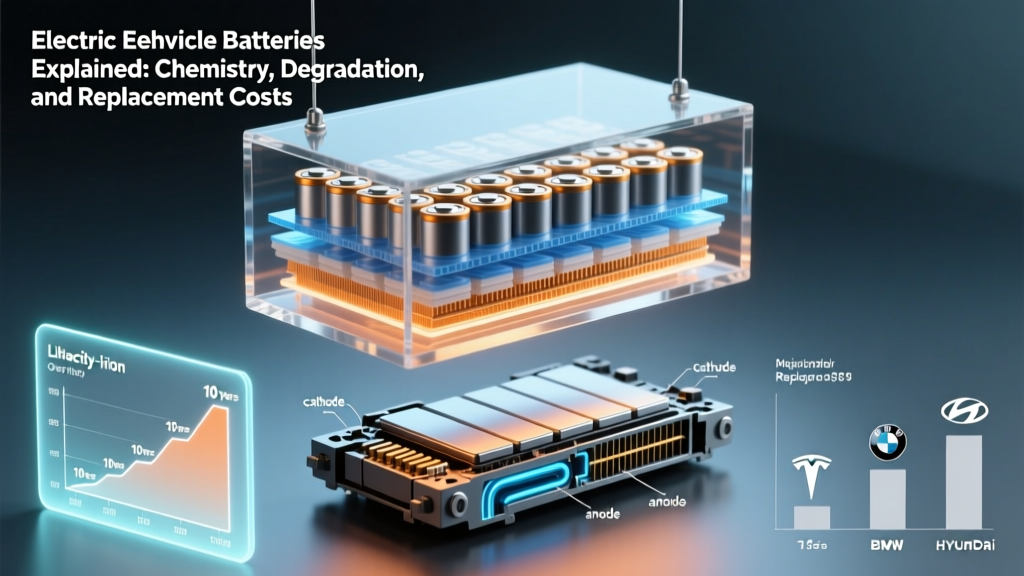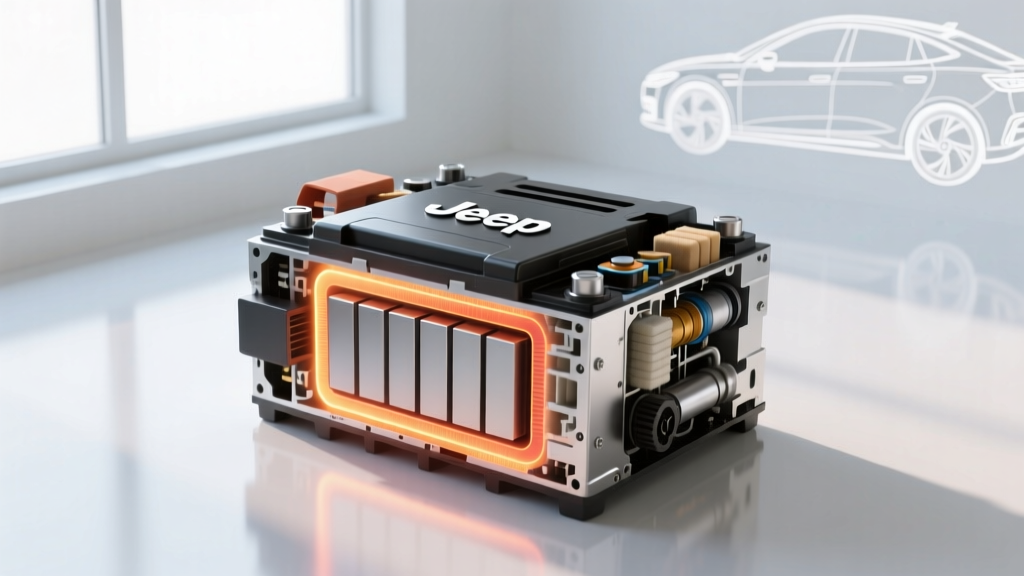
Searches for "Jeep battery fire risk" have climbed as Stellantis expands its electrified lineup with the Wagoneer S, Recon, and Cherokee PHEV. For shoppers and current owners, the concern is rational: a high-voltage traction battery stores 60–100+ kWh of energy, and thermal events—while statistically rare—make headlines. This guide separates documented NHTSA incident data from internet rumor, explains how battery chemistry (NMC vs LFP) influences fire probability, and shows what owners can do to monitor and protect their pack.
Is There a Documented Jeep Battery Fire Risk?
As of early 2026, the National Highway Traffic Safety Administration (NHTSA) has not issued a broad recall for Jeep or Stellantis EV traction batteries specifically tied to spontaneous fire. The Wrangler 4xe (PHEV) has seen isolated incident reports—mostly tied to aftermarket modifications, collision damage, or 12V electrical faults misattributed to the high-voltage pack. The all-electric Wagoneer S (launching 2025–2026 model years with a ~100 kWh NMC pack) is too new for a meaningful incident sample.
Context matters: according to data compiled by the NHTSA and independent researchers, EV battery fires occur at roughly 25 per 100,000 vehicles, compared to approximately 1,500 per 100,000 for internal-combustion vehicles. The perceived risk is amplified by media coverage, not frequency.
Battery Chemistry and Fire Risk: LFP vs NMC Explained
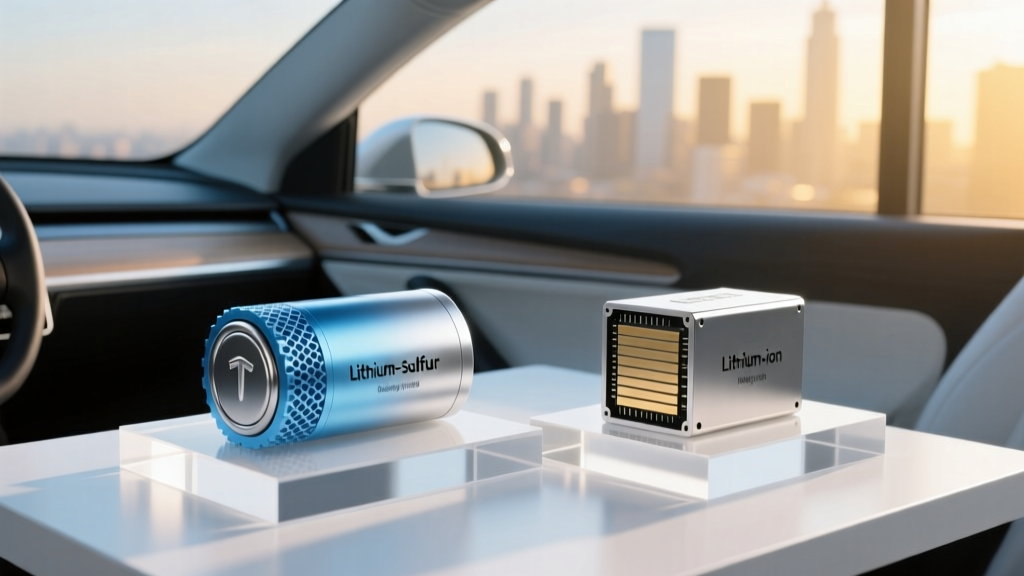
The chemistry inside the cells is the single largest variable in thermal stability. Most Jeep/Stellantis electrified models (Wrangler 4xe, Grand Cherokee 4xe, Wagoneer S) use NMC (nickel-manganese-cobalt) or NCA (nickel-cobalt-aluminum) chemistries because they deliver the energy density needed for a large SUV's range. LFP (lithium iron phosphate), used in some Tesla and Rivian base trims, is inherently more thermally stable but heavier and less energy-dense.
| Attribute | LFP (Lithium Iron Phosphate) | NMC / NCA |
|---|---|---|
| Thermal runaway onset | ~270°C (higher stability) | ~210°C (requires more active cooling) |
| Energy density | 160–180 Wh/kg | 220–300 Wh/kg |
| Cycle life | 3,000–5,000 cycles | 1,500–2,500 cycles |
| Cold-weather performance | Moderate (slower charge below 0°C) | Better low-temp discharge |
| Cost per kWh | ~$90–110 (2025) | ~$120–150 (2025) |
| Fire risk profile | Lower — less oxygen release at failure | Higher — requires robust BMS & cooling |
For a heavy Jeep SUV needing 300+ miles of range, NMC is the pragmatic engineering choice. The trade-off is that thermal management systems (liquid cooling plates, cell-to-cell barriers, venting channels) must be more robust—and that's where build quality and BMS (battery management system) calibration matter more than chemistry alone.
How Often Do EV Batteries Actually Catch Fire?
Peer-reviewed analyses, including data from the Insurance Institute for Highway Safety (IIHS) and Swedish Civil Contingencies Agency (MSB), show EV fire rates at roughly 0.025% of registered vehicles over their lifetimes, versus 1.5% for gasoline vehicles. The difference is that EV battery fires burn hotter, longer, and are harder to extinguish—requiring specialized foam or thousands of gallons of water—so each incident is more visible.
Root causes in documented EV thermal events typically fall into three buckets:
- Mechanical damage: Punctured underbody from road debris or collision. Skid plates and structural battery enclosures (like Stellantis' "skateboard" architecture on the STLA Large platform) mitigate this.
- Manufacturing defects: Internal short circuits from metallic contaminants in cells. This is what drove the Chevrolet Bolt recall (LG cells) and some Hyundai Kona recalls. Stellantis sources from multiple suppliers, including Samsung SDI and CATL, each with different quality-control track records.
- Electrical abuse: Aftermarket chargers, improper jump-starting of the 12V system, or software-induced overcharge. OEM BMS systems have multiple redundant shutoffs to prevent this.
Battery Degradation: What the Data Shows
Fire risk aside, the more common owner concern is capacity loss. Modern liquid-cooled packs degrade slowly. Geotab's analysis of ~10,000 EVs shows average annual degradation of 1.8% per year across brands, with a typical curve that flattens after year 3.
| Age / Mileage | Expected Capacity Retention | Notes |
|---|---|---|
| Year 1 / 15,000 mi | 97–98% | Initial formation loss |
| Year 3 / 45,000 mi | 93–95% | Curve flattens |
| Year 5 / 75,000 mi | 89–92% | Most owners still above 90% |
| Year 8 / 100,000 mi | 85–90% | Warranty threshold period |
| Year 10 / 150,000 mi | 80–87% | Range noticeably reduced but usable |
Jeep's electrified models follow the federal mandate: a minimum 8-year/100,000-mile warranty on the high-voltage battery with a capacity retention threshold typically set at 70%. If your 4xe or Wagoneer S drops below 70% of original capacity within that window, Stellantis must repair or replace the pack at no cost.
EV Battery Replacement Cost: When and How Much
Replacement outside warranty is the fear that keeps prospective buyers up at night. The reality: most liquid-cooled packs outlive the vehicle's economic life. But if you plan to keep a Jeep EV for 15 years or buy a high-mileage used example, here's what replacement looks like in 2026.
| Vehicle / Pack Size | Chemistry | Parts Cost | Labor | Total Range |
|---|---|---|---|---|
| Wrangler 4xe (17 kWh) | NMC | $6,000–$8,500 | $1,500–$2,500 | $7,500–$11,000 |
| Grand Cherokee 4xe (17 kWh) | NMC | $6,500–$9,000 | $1,800–$2,800 | $8,300–$11,800 |
| Wagoneer S (~100 kWh) | NMC | $18,000–$25,000 | $3,000–$5,000 | $21,000–$30,000 |
| Tesla Model Y (75 kWh, baseline) | LFP/NMC | $12,000–$16,000 | $2,000–$3,500 | $14,000–$19,500 |
Two realities soften these numbers: (1) module-level repair is increasingly available—replacing 1–2 degraded modules for $2,000–$5,000 instead of the full pack—and (2) by year 10, refurbished packs from salvaged vehicles enter the market at 40–60% of new-pack cost. Most owners never face a full-pack replacement.
How to Check and Maximize Battery Health
State of Health (SoH) is the percentage of original capacity your pack can still hold. Here's how to monitor it and what to avoid:
- OEM app: Stellantis' Uconnect/Jeep app shows estimated range and charge behavior; some third-party OBD-II tools (e.g., OBDeleven, Carista) can read actual SoH from the BMS.
- Manual calculation: Charge to 100%, note the displayed range, divide by original EPA range. Repeat quarterly for a trend.
- Dealer diagnostic: A Stellantis service center can pull a full BMS report with cell-voltage variance and SoH percentage during routine service.
- Keep daily SoC between 20% and 80% (NMC). LFP can be charged to 100% regularly without penalty.
- Minimize DC fast charging to road trips; Level 2 overnight charging is gentler on cells.
- Precondition the battery before fast charging (most Jeeps do this automatically when a charger is set in nav).
- Avoid leaving the vehicle at 100% SoC for extended periods, especially in heat above 90°F.
- Don't let SoC sit below 10% for more than a few days.
Emerging Tech: Solid-State and Silicon Anodes
Solid-state batteries—using a ceramic or polymer electrolyte instead of liquid—promise dramatically lower fire risk (no flammable electrolyte), higher energy density, and faster charging. Toyota, Samsung SDI, and QuantumScape have announced pilot production, but commercial-scale automotive deployment remains announced for 2027–2030 and is not yet available in any production vehicle as of 2026.
Silicon-anode cells (used in limited applications by Porsche and startups like Sila Nanotechnologies) offer ~20% energy-density gains and are entering production now, but they don't fundamentally change thermal risk profiles. For a Jeep buyer in 2026, the relevant tech is today's liquid-cooled NMC with mature BMS—not tomorrow's lab prototypes.
FAQ: Jeep EV Battery Safety and Longevity
Has NHTSA recalled any Jeep EVs for battery fire risk?
As of early 2026, no broad NHTSA recall targets Jeep high-voltage traction batteries for fire risk. Isolated Wrangler 4xe incidents have been linked to collision damage or aftermarket electrical work, not spontaneous pack failure. Always search nhtsa.gov/recalls by VIN.
How long do Jeep EV batteries last?
Liquid-cooled NMC packs in the Wrangler 4xe and Wagoneer S are engineered for 200,000+ miles before dropping to 70–80% of original capacity. The federal warranty mandates coverage for at least 8 years/100,000 miles at 70% retention.
Is LFP safer than NMC for a Jeep?
LFP has a higher thermal runaway threshold (~270°C vs ~210°C) and is less likely to propagate fire if a single cell fails. However, LFP's lower energy density makes it impractical for a heavy SUV needing 300+ miles of range. Jeep/Stellantis uses NMC with robust liquid cooling and cell isolation to compensate.
What voids the Jeep EV battery warranty?
Typical exclusions: collision damage, flood/submersion, unauthorized modifications to the high-voltage system, use of non-OEM chargers that cause electrical abuse, and failure to follow the owner's manual SoC/temperature guidelines. Normal degradation is covered if below the 70% threshold within 8 years/100,000 miles.
Should I avoid DC fast charging to reduce fire risk?
DC fast charging generates more heat than Level 2, but the vehicle's BMS actively manages cell temperature and will throttle charge speed if needed. Fire risk from fast charging alone is negligible on a properly functioning pack. The real longevity impact is accelerated degradation (not fire)—so reserve frequent DC fast charging for road trips rather than daily use.
How do I report a suspected battery issue in my Jeep?
Contact a Stellantis/Jeep dealer for a BMS diagnostic. If you believe there's a safety defect, file a report directly with NHTSA at nhtsa.gov/report-a-safety-problem. Include your VIN, mileage, and a description of the event (smell, smoke, warning lights, error codes).