Jeep Cherokee EV Battery Capacity: What We Know for 2026
Searches for "what is the battery capacity of the all-new Jeep Cherokee" have surged as Stellantis expands its electrified lineup under the STLA Large platform. The all-new Jeep Cherokee, transitioning from the discontinued 2023 model into a next-generation electrified SUV, is positioned between the Compass 4xe plug-in hybrid and the larger Grand Cherokee 4xe / Recon in Jeep's portfolio.
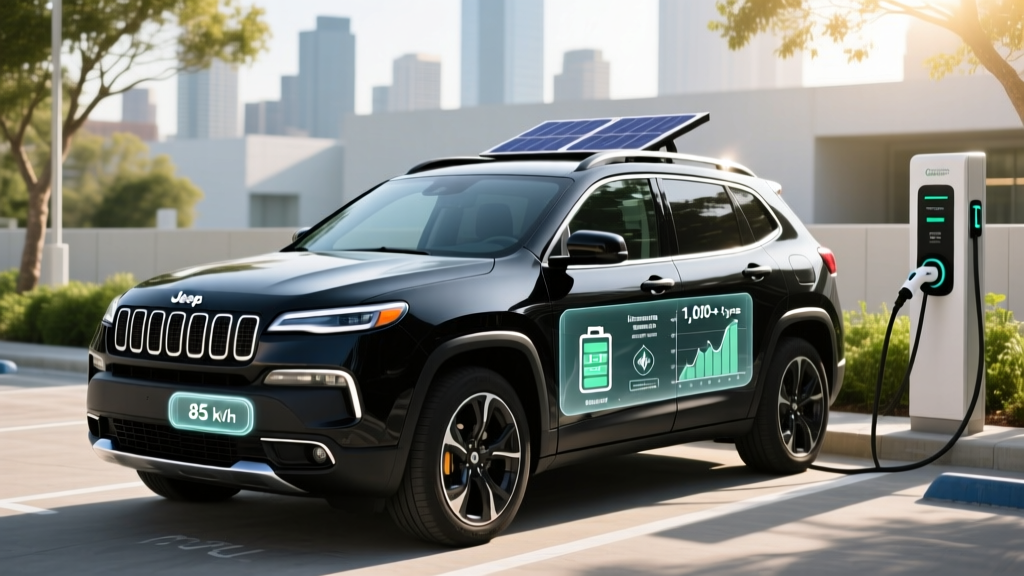
As of early 2026, Jeep has not published a final, independently verified kWh figure for the all-new Cherokee EV. However, based on STLA Large platform disclosures and comparable Stellantis EVs, the battery pack is expected in the 85–100 kWh usable range, likely using NMC (nickel manganese cobalt) chemistry for energy density. If Jeep follows the Recon's architecture, expect EPA range targets between 280–350 miles depending on drivetrain and trim.
For buyers researching the Cherokee's battery, the capacity number is only the starting point. Chemistry type, degradation behavior, warranty coverage, and long-term replacement economics matter just as much — especially if you plan to keep the vehicle past the warranty period. This guide covers everything you need to evaluate the Cherokee's battery alongside any modern EV pack.
LFP vs NMC: Which Battery Chemistry Powers the Cherokee?
The two dominant lithium-ion chemistries in 2026 EVs are NMC (nickel manganese cobalt, sometimes NCA with aluminum) and LFP (lithium iron phosphate). Jeep's STLA Large platform vehicles, including the Recon, have primarily used NMC packs for their superior energy density — critical for achieving 300+ mile range targets in a heavy, boxy SUV.
| Attribute | LFP (Lithium Iron Phosphate) | NMC / NCA |
|---|---|---|
| Energy Density | ~160–180 Wh/kg (lower) | ~220–260 Wh/kg (higher) |
| Cycle Life | 3,000–5,000+ cycles | 1,000–2,000 cycles |
| Cold-Weather Performance | More range loss below 32°F; slower cold charging | Better low-temp conductivity; less range loss |
| Cost per kWh | Lower (~$90–110/kWh at pack level) | Higher (~$120–150/kWh at pack level) |
| Thermal Stability | Excellent — highly resistant to thermal runaway | Good, but requires more active thermal management |
| Charging to 100% Daily | Recommended — no degradation penalty | Not recommended — accelerates degradation above 80% |
| Typical Use | Standard-range models, fleet vehicles, daily commuters | Long-range and performance models |
What this means for the Cherokee: If Jeep equips the Cherokee with an NMC pack (most likely for range targets above 300 miles), owners should aim to charge to 80% for daily use and only hit 100% before long road trips. If a standard-range LFP variant is offered, daily 100% charging is fine and actually helps the BMS (battery management system) calibrate accurately.
How Long Do EV Batteries Last? Degradation Data
The single most common question from EV shoppers is longevity. The data in 2026 is reassuring: modern liquid-cooled EV battery packs routinely retain 85–92% of original capacity after 100,000 miles, and most will outlast the vehicle's structural and cosmetic lifespan.
- Year 1 / 15,000 mi: ~3–5% capacity loss (initial formation loss)
- Year 3 / 45,000 mi: ~7–9% total loss
- Year 5 / 75,000 mi: ~9–12% total loss
- Year 8 / 120,000 mi: ~12–16% total loss
- Year 10 / 150,000 mi: ~15–20% total loss
Sources: Geotab fleet data (6,000+ EVs), Recurrent Auto battery health reports. Degradation is non-linear — steepest in year one, then flattening significantly.
For a Cherokee with a hypothetical 92 kWh usable pack, a 15% loss at 150,000 miles means ~78 kWh usable — still enough for roughly 250+ miles of range in a vehicle that originally delivered ~300. That's meaningful daily usability well past the typical ownership period.
Key degradation accelerants to avoid:
- Frequent DC fast charging above 150 kW without preconditioning
- Regularly sitting at 100% state of charge in hot weather (above 90°F)
- Deep discharges below 10% state of charge on a recurring basis
- Storing the vehicle at 0% or 100% SoC for weeks without driving
Jeep / Stellantis Battery Warranty: What's Covered
Federal law mandates that EV battery warranties cover a minimum of 8 years / 100,000 miles (10 years / 150,000 miles in California and states adopting CARB standards). Stellantis has historically met or slightly exceeded this baseline on its electrified vehicles.
| Term | Coverage |
|---|---|
| Duration | 8 years / 100,000 miles (federal); 10 yr / 150,000 mi (CARB states) |
| Capacity Retention Threshold | 70% of original capacity (industry standard) |
| What Triggers a Claim | Measured SoH falls below 70% as verified by dealer diagnostic tool |
| Remedy | Module replacement, full pack replacement, or refurbished pack at Stellantis discretion |
| Exclusions | Damage from accidents, flooding, unauthorized modifications, or improper charging equipment |
| Transferability | Yes — warranty follows the VIN, transfers to subsequent owners |
The 70% threshold is important context: a Cherokee that starts with 300 miles of range would need to drop below ~210 miles (measured at the same temperature and driving conditions) to qualify for a warranty claim. Given the degradation data above, hitting that threshold within 8 years / 100,000 miles is statistically unlikely for a liquid-cooled pack under normal use.
EV Battery Replacement Cost: When and How Much
Out-of-warranty battery replacement is the nightmare scenario EV skeptics cite — but the reality is that fewer than 2% of modern EVs require a full pack replacement during their operational life, according to Consumer Reports analysis. When replacement is needed, it's typically due to manufacturing defects (caught under warranty) or physical damage (covered by insurance).
| Battery Size | Estimated Pack Cost | Labor + Diagnostics | Total Out-of-Pocket |
|---|---|---|---|
| 40–60 kWh (compact EVs) | $5,000–$8,000 | $1,500–$2,500 | $6,500–$10,500 |
| 70–90 kWh (midsize SUVs) | $8,000–$13,000 | $2,000–$3,500 | $10,000–$16,500 |
| 100–120 kWh (large SUVs/trucks) | $12,000–$18,000 | $2,500–$4,000 | $14,500–$22,000 |
For a Cherokee-class vehicle with an ~90 kWh pack, expect the total replacement range to be $10,000–$16,500 if it ever becomes necessary out of warranty. However, pack-level costs have declined roughly 10–15% per year over the last five years, and by the time a 2026 Cherokee might need a replacement (2036+), costs will likely be substantially lower. Additionally, module-level repair — replacing only degraded cells rather than the full pack — is increasingly common and can cut costs by 50–70%.
Maximizing Cherokee Battery Health: Owner Best Practices
- Daily charge limit: Set to 80% for routine driving. Use 100% only for road trips.
- Avoid deep discharge: Try not to drop below 15–20% regularly. Plan charging stops on road trips before hitting 10%.
- Precondition before DC fast charging: Use the vehicle's nav-based preconditioning (if equipped) to warm the battery before arriving at a fast charger. This protects cells and unlocks peak charge rates.
- Limit frequent 150+ kW DC charging: Occasional fast charging is fine; daily reliance on it accelerates degradation modestly (~1–2% extra loss over 5 years).
- Hot weather storage: If parking for days in 90°F+ heat, leave the vehicle plugged in with charge limit at 50–60%. The thermal management system will keep the pack cool using grid power.
- Cold weather: Plug in when possible and use scheduled departure to precondition the battery. Cold doesn't degrade the battery permanently, but it temporarily reduces range by 20–30%.
- Long-term storage: If storing for weeks, set SoC to ~50% and leave plugged in with a low charge limit.
How to Check Battery State of Health (SoH)
Monitoring your Cherokee's battery health is straightforward in 2026, with multiple options available:
- In-vehicle display: Most Stellantis EVs include a battery health or range-efficiency screen in the infotainment system. Check for a "Battery Health" or "Energy History" menu that shows kWh consumed per mile over time.
- OBD-II diagnostic apps: Tools like OBDeleven, Car Scanner, or dedicated EV apps can read the BMS-reported SoH percentage directly via the OBD-II port. Look for the "State of Health" or "Battery Capacity" PID.
- Dealer diagnostic: A Stellantis dealer can run a full battery health report using the wiTECH diagnostic tool, providing cell-level voltage variance and total capacity measurement. Request this during routine service visits.
- Third-party services: Companies like Recurrent Auto offer free battery health monitoring if you connect your vehicle's telematics data. They provide SoH reports useful for resale value documentation.
A healthy battery at 50,000 miles should show 90–94% SoH. If your reading drops below 85% before 60,000 miles, it may indicate a defective module worth investigating under warranty.
Emerging Battery Tech: Solid-State and Silicon Anodes
Looking beyond the Cherokee's current-generation pack, two technologies are reshaping the battery landscape:
Solid-state batteries replace the liquid electrolyte with a solid ceramic or polymer layer, promising 30–50% higher energy density, faster charging (potentially 10–80% in under 10 minutes), and improved safety. Toyota, Samsung SDI, and QuantumScape have all announced production timelines for 2027–2029, but initial deployment will be in limited, premium models. Mass-market availability in vehicles like the Cherokee is realistically a 2030+ proposition.
Silicon-dominant anodes replace graphite with silicon, which can store roughly 10x more lithium ions per gram. Companies like Sila Nanotechnologies and Group14 are already shipping silicon-anode cells in limited applications. Expect this technology to appear in mainstream EVs by 2027–2028, offering 15–20% more range in the same physical pack size.
Frequently Asked Questions
What is the battery capacity of the all-new Jeep Cherokee?
As of early 2026, Jeep has not published a final confirmed kWh figure for the all-new Cherokee EV. Based on the STLA Large platform architecture and comparable Stellantis models, the usable battery capacity is expected in the 85–100 kWh range, likely with NMC chemistry. Final EPA range and capacity figures will be confirmed closer to the on-sale date.
How long do EV batteries last in years and miles?
Modern liquid-cooled EV batteries typically retain 80–88% of their original capacity after 150,000 miles or 10 years. Most will functionally outlast the vehicle itself. Catastrophic failure requiring full replacement is rare — under 2% of vehicles according to fleet data.
How much does it cost to replace the battery in a Jeep Cherokee EV?
For a midsize SUV with an ~85–100 kWh pack, out-of-warranty replacement would likely cost $10,000–$16,500 including labor at 2026 pricing. However, pack costs are declining annually, module-level repairs are increasingly available at lower cost, and most batteries never require replacement during the vehicle's life.
What does the Jeep EV battery warranty cover?
Stellantis typically covers the high-voltage battery for 8 years / 100,000 miles (10 years / 150,000 miles in CARB states) against capacity loss below 70% of original. The warranty follows the VIN and transfers to subsequent owners. Physical damage from accidents or flooding is excluded but may be covered by auto insurance.
LFP vs NMC — which battery chemistry is better for a Jeep Cherokee?
For a midsize SUV targeting 300+ miles of range, NMC is the practical choice due to its higher energy density — you get more range per pound. LFP is better suited to standard-range models where cost, longevity, and daily 100% charging convenience are priorities. If Jeep offers both chemistries in different Cherokee trims, choose NMC for maximum range and LFP for lowest long-term degradation.
How do I check my Cherokee EV's battery health?
You can check State of Health (SoH) through the vehicle's infotainment battery screen, an OBD-II diagnostic app reading BMS data, a dealer wiTECH diagnostic report, or third-party telematics services like Recurrent Auto. Expect 90–94% SoH at 50,000 miles for a healthy pack.