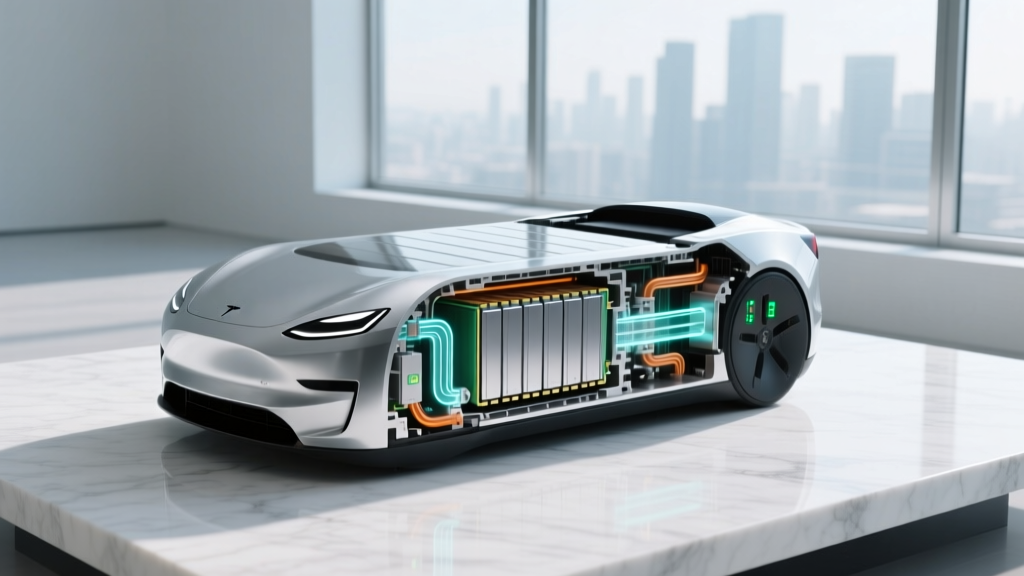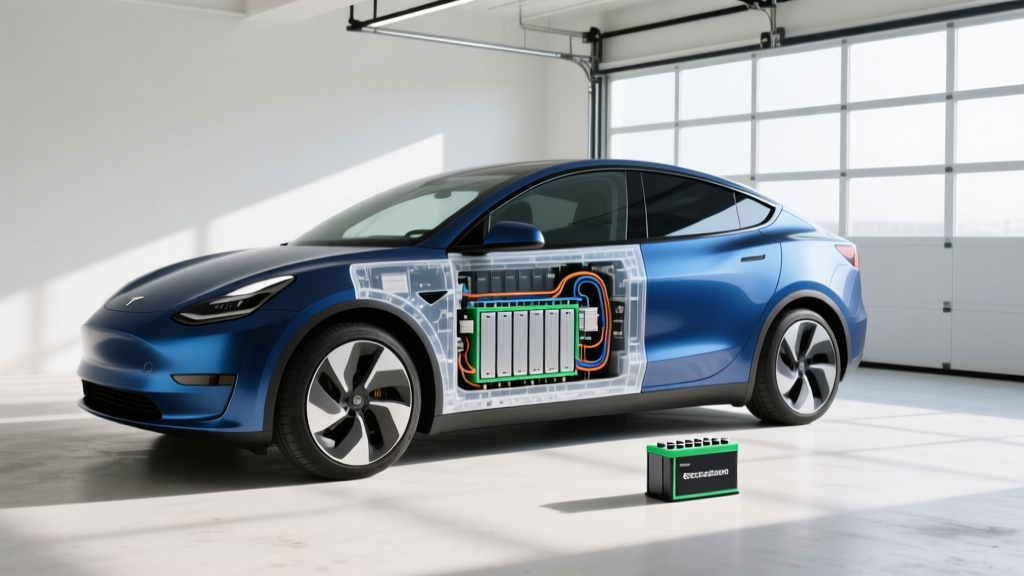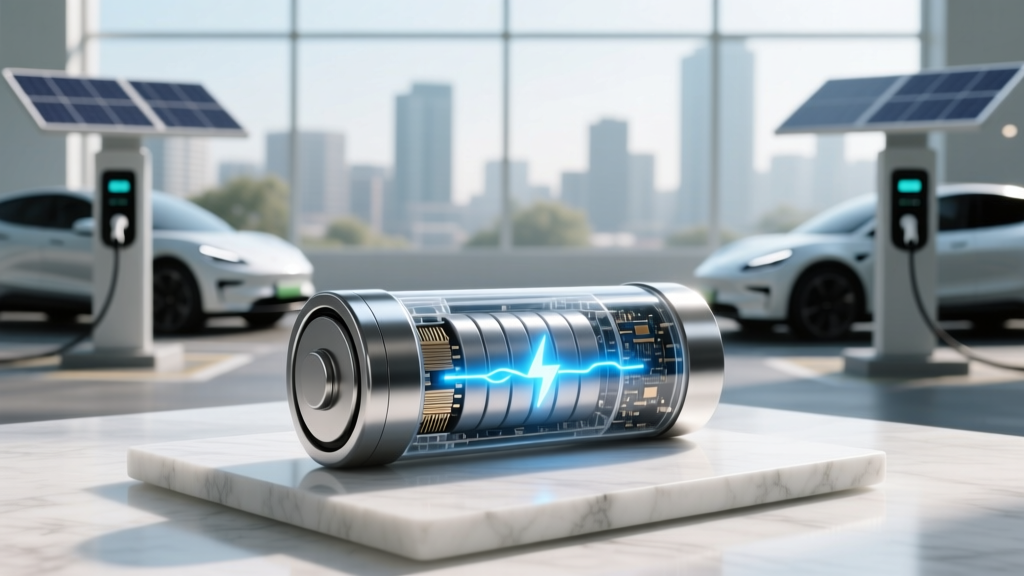
If you have been following energy-storage headlines, you have probably seen the term iron air battery surface in discussions about the future of electric vehicles. Form Energy's iron-air system — essentially a rechargeable rust cell — promises ultra-low-cost, multi-day energy storage that could reshape how the grid supports EV charging. But what does a grid-scale iron air battery actually mean for the pack under your car's floor? And how does it stack up against the lithium-ion chemistries powering today's EVs?
This guide breaks down iron air technology in plain terms, then grounds you in the chemistries that matter right now — LFP and NMC/NCA — with hard data on degradation, warranties, replacement costs, and how to monitor and maximize your battery's health.
What Is an Iron Air Battery and Why Does It Matter for EVs?
An iron air battery stores energy through a reversible rusting process. During discharge, iron particles are exposed to oxygen and water, forming iron oxide (rust). During charging, the rust is reduced back to iron, releasing oxygen. The raw materials — iron, water, air — are among the cheapest on Earth, which is why companies like Form Energy are targeting iron air at grid-scale, multi-day storage where cost per kWh matters far more than weight or volume.
Here is the critical distinction: iron air batteries are not going into your next EV. The chemistry's energy density is far too low for automotive use, and charge/discharge rates are measured in tens of hours, not minutes. What iron air can do is stabilize the electrical grid, store renewable energy across multi-day weather lulls, and reduce the cost of the electricity that charges your EV. Think of it as infrastructure that supports electrification, not a replacement for your traction battery.
For the battery actually in your car — or the one you are shopping for — the chemistries that matter today and through the rest of this decade are lithium iron phosphate (LFP) and nickel-based lithium-ion (NMC/NCA). Let us compare them with real numbers.
LFP vs NMC/NCA: The Chemistries Powering Today's EVs
Every mainstream EV sold in 2026 uses one of two lithium-ion cathode families. Understanding the trade-offs is the single most important battery decision you will make as a buyer.
| Attribute | LFP (Lithium Iron Phosphate) | NMC/NCA (Nickel Manganese Cobalt / Nickel Cobalt Aluminum) |
|---|---|---|
| Energy Density (cell-level) | ~160–180 Wh/kg | ~220–300 Wh/kg |
| Typical Cycle Life | 3,000–5,000+ cycles to 80% SoH | 1,000–2,000 cycles to 80% SoH |
| Cold-Weather Performance | Moderate — slower charge acceptance below 32°F; range loss ~25–35% at 20°F | Better low-temp conductivity; range loss ~20–30% at 20°F |
| Thermal Stability | Excellent — higher thermal runaway threshold (~518°F) | Good but lower threshold (~410°F); requires more robust BMS |
| Cost per kWh (pack-level, 2026) | ~$90–$110 | ~$120–$150 |
| Cobalt Content | None | Varies; NMC 811 uses less than older NMC 532 |
| Charging to 100% SoC Regularly | Recommended for calibration; minimal stress | Not recommended daily; accelerates degradation above 80% |
| Notable 2026 Vehicles | Tesla Model 3 RWD, Model Y RWD, Ford Mustang Mach-E Select, Rivian EDV | Hyundai Ioniq 5/6 Long Range, Tesla Model 3 LR, BMW iX, Porsche Taycan |
The practical takeaway: If you charge at home nightly and prioritize longevity and lower cost, LFP is the stronger choice. If you need maximum range per charge and frequently road-trip in cold climates, NMC/NCA's higher energy density and better cold-weather performance justify the premium. Neither chemistry is universally "better" — the right answer depends on your driving pattern.
How Long Do EV Batteries Actually Last?
The short answer: almost certainly longer than you will own the car. Data from fleet operators, manufacturer reports, and independent testing consistently shows that modern EV traction batteries lose capacity slowly and predictably.
- Tesla Model 3/Y (NMC, 2019–2023 fleet data): Average ~5% capacity loss at 50,000 miles, ~8–10% at 100,000 miles, based on Tesla's published Impact Report and third-party fleet analyses.
- Chevrolet Bolt EV/EUV (NMC, 2017–2023): Recurrent Auto data shows median ~6–8% degradation at 80,000 miles across thousands of vehicles tracked.
- LFP-equipped vehicles (Tesla Model 3 RWD, 2021–present): Early fleet data indicates ~3–5% loss at 60,000 miles, reflecting LFP's superior cycle life.
- General trajectory: Most EVs retain 85–92% of original capacity at 100,000 miles. Significant failure (below 70% capacity) within warranty periods remains rare — typically under 1–2% of vehicles according to manufacturer warranty claim data.
The degradation curve is not linear. You will see a steeper drop in the first 10,000–20,000 miles (initial formation and SEI layer stabilization), then a long, slow decline. This is why a 2026 EV with a 300-mile EPA range will likely still deliver 255–270 miles at 100,000 miles — still very usable.
What Does the Battery Warranty Actually Cover?
Federal law mandates a minimum 8-year/100,000-mile warranty on EV battery packs for emissions-related compliance, and most manufacturers match or exceed this voluntarily. California and states adopting CARB standards require 10 years/150,000 miles.
| Manufacturer | Warranty Period | Capacity Retention Threshold | Notes |
|---|---|---|---|
| Tesla (Model 3/Y) | 8 yr / 120,000 mi (LR/AWD); 8 yr / 100,000 mi (RWD) | 70% | Covers defects and degradation below threshold |
| Hyundai / Kia | 10 yr / 100,000 mi | 70% | Among the longest coverage in the industry |
| Ford (Mach-E, F-150 Lightning) | 8 yr / 100,000 mi | 70% | Covers battery components and capacity loss |
| GM (Ultium-based) | 8 yr / 100,000 mi | 70% | Module-level replacement where possible |
| Rivian | 8 yr / 120,000 mi (Standard); 8 yr / 175,000 mi (Max) | 70% | Higher mileage threshold on Max pack |
| BMW (iX, i4) | 8 yr / 100,000 mi | 70% | Includes battery management system |
Key detail: The 70% threshold means the manufacturer will repair or replace the battery (or individual modules) only if capacity drops below 70% of original within the warranty window. Normal degradation above that threshold is considered expected wear. In practice, very few vehicles breach this threshold during the warranty period based on current fleet data.
How Much Does an EV Battery Replacement Cost?
This is the question that generates the most anxiety — and the most misinformation. Here are the real numbers, with the crucial context that most EV batteries never need full replacement during the vehicle's usable life.
| Vehicle / Pack Size | Battery Capacity | Estimated Replacement Cost (Parts + Labor) | Typical When Needed |
|---|---|---|---|
| Tesla Model 3 RWD (LFP) | ~60 kWh | $10,000–$13,000 | 150,000–200,000+ mi (if ever) |
| Tesla Model Y Long Range (NMC) | ~75 kWh | $13,000–$16,000 | 150,000–200,000+ mi |
| Hyundai Ioniq 5 Long Range | ~77.4 kWh | $14,000–$18,000 | 150,000+ mi |
| Ford F-150 Lightning Extended Range | ~131 kWh | $20,000–$28,000 | 150,000+ mi |
| Chevrolet Equinox EV | ~85 kWh | $14,000–$17,000 | 150,000+ mi |
| BMW iX xDrive50 | ~105.2 kWh (usable) | $18,000–$25,000 | 150,000+ mi |
Several factors work in your favor. Pack costs continue to decline — BloombergNEF data shows average lithium-ion pack prices fell below $130/kWh in 2025 and are projected to approach $100/kWh by the late 2020s. Module-level repair (replacing only degraded sections rather than the entire pack) is increasingly common and can cost $2,000–$6,000 depending on the vehicle. And by the time a 2026 EV actually needs a new battery in the 2040s, next-generation packs will likely cost significantly less and may even be backward-compatible through adapter programs.
Factors That Affect Battery Life — and What You Can Control
Not all miles age a battery equally. These are the variables with the largest measurable impact on long-term State of Health (SoH):
- Daily charging limit: Set to 80% for NMC/NCA; 100% is fine for LFP. Avoid sitting at 100% SoC for extended periods (hours, not minutes) with NMC.
- DC fast charging frequency: Occasional road-trip fast charging has negligible impact. Daily 150+ kW DC charging adds ~1–3% additional degradation over 100,000 miles vs. Level 2 home charging, per Idaho National Lab research.
- Temperature management: Precondition your battery before fast charging (most EVs do this automatically when you navigate to a charger). Avoid leaving the car at high SoC in extreme heat (above 95°F) for days at a time.
- Low SoC storage: Never store the vehicle below 10% SoC for more than a few days. If leaving for a vacation, set the charge limit to 50% and plug in.
- Cold-weather charging: Always precondition before charging in sub-freezing temperatures. Charging a cold battery at high power causes lithium plating, which permanently reduces capacity.
- Regenerative braking settings: Standard regen is fine; extreme one-pedal settings do not meaningfully impact battery health but can slightly increase thermal cycling.
The single highest-impact habit is avoiding sustained high SoC with NMC chemistry. A 2023 study published in the Journal of Energy Storage found that NMC cells cycled between 20–80% SoC retained ~95% capacity after 1,000 cycles, while cells cycled 0–100% retained ~85% over the same period. For LFP, the difference is far smaller — which is why Tesla recommends periodic 100% charges for calibration on LFP-equipped vehicles.
How to Check and Monitor Your Battery's State of Health
State of Health (SoH) is expressed as a percentage of original usable capacity. A new EV starts at 100% SoH; at 70% SoH, you would see 30% less range than the original EPA sticker. Here is how to track it:
- In-vehicle displays: Some manufacturers (Tesla, Hyundai, BMW) provide battery health metrics in the service menu or through the companion app. Tesla's "Battery Health" test, accessible through the service menu, compares your pack's current capacity to its original rated capacity.
- OBD-II diagnostic tools: Devices like the OBDLink SX paired with apps such as Leaf Spy (Nissan) or ABRP's OBD integration can read battery management system (BMS) data including SoH, cell voltage variance, and pack temperature.
- Third-party fleet analytics: Services like Recurrent Auto (free for owners) track your battery's degradation curve over time and benchmark it against thousands of identical vehicles. This is the most actionable option for ongoing monitoring.
- Dealer diagnostic reports: Request a battery health report during scheduled service. Most manufacturers can pull a detailed SoH readout that includes individual module balance.
A healthy battery will show cell voltage variance under 20–30 mV across all modules at a given SoC. Wider variance may indicate a weak module that could benefit from warranty-covered replacement before the entire pack degrades.
Beyond Lithium-Ion: Solid-State, Silicon Anode, and the Road Ahead
While iron air batteries target the grid, several next-generation chemistries are aimed directly at EVs. Here is where each stands as of 2026 — with realistic timelines, not marketing promises:
- Solid-state batteries: Toyota has announced limited production of solid-state-equipped vehicles for 2027–2028, targeting 450+ mile range and 10-minute fast charging in lab conditions. Samsung SDI and QuantumScape are also advancing prototypes. However, manufacturing scale-up remains the bottleneck; expect meaningful solid-state availability in mainstream (sub-$50,000) EVs no earlier than 2030–2032. These are announced/preliminary timelines, not guarantees.
- Silicon anode batteries: Companies like Sila Nanotechnologies and Group14 are already shipping silicon-dominant anode materials to battery manufacturers. The Mercedes-AMG EQG (G-Wagon EV) uses a silicon anode pack from Group14 for higher energy density. Expect silicon anodes to become a standard feature in premium EVs by 2027–2028, offering 15–25% more energy density than today's graphite anodes.
- Sodium-ion batteries: CATL and BYD have begun producing sodium-ion packs for entry-level EVs in China, with energy density around 140–160 Wh/kg. While unlikely to appear in US-market vehicles before 2028, sodium-ion could become a low-cost alternative for shorter-range urban EVs.
- Iron air (grid-scale): Form Energy's pilot facility in West Virginia is producing iron air modules for utility-scale deployments. If successful at scale, iron air storage could reduce off-peak electricity costs and improve renewable grid penetration — indirectly lowering your cost per mile to charge.
None of these technologies change the buying decision you face today. Current LFP and NMC packs are mature, well-warrantied, and demonstrably long-lasting. The emerging chemistries are worth watching but should not delay a purchase.
Frequently Asked Questions
Will an iron air battery ever power an EV directly?
Almost certainly not. Iron air's energy density (estimated at 20–50 Wh/kg at the system level) is roughly one-tenth that of LFP and one-fifteenth that of NMC. The weight and volume required for even 100 miles of range would be impractical in a passenger vehicle. Iron air's value is grid storage, where weight does not matter and cost per kWh is paramount.
How long do EV batteries last in years and miles?
Based on current fleet data, most EV batteries retain 85–92% of original capacity at 100,000 miles and 80–88% at 150,000 miles. In terms of years, a battery losing roughly 1.5–2.5% capacity per year under normal use should remain functional (above 70% SoH) for 15–20 years. Full failure requiring replacement is rare and typically covered under the 8-year/100,000-mile minimum warranty.
Is LFP better than NMC for daily commuting?
For daily commuting with home charging, yes — LFP is generally the better choice. It tolerates regular 100% charging, offers 2–3× the cycle life, costs less per kWh, and contains no cobalt. The trade-off is lower energy density (less range per pound) and slightly worse cold-weather performance. If your commute is under 60 miles round-trip and you charge at home, the range difference is irrelevant day-to-day.
Does frequent DC fast charging destroy my battery?
No. Research from the Idaho National Lab tested Nissan Leaf packs subjected to exclusively DC fast charging vs. exclusively Level 2 charging over 50,000 miles. The fast-charged packs showed only ~2–3% additional capacity loss. Modern battery management systems actively manage temperature and taper charge rates to protect the cells. Fast charging is a convenience, not a battery death sentence — just avoid doing it daily if Level 2 home charging is available.
What happens if my battery degrades past 70% during the warranty?
The manufacturer is obligated to repair or replace the battery to bring it above the 70% threshold. This may involve replacing individual modules rather than the entire pack. Contact your dealer's EV service department for a diagnostic. Keep records of your SoH readings (from Recurrent Auto, in-app data, or dealer reports) to support a warranty claim.
Can I replace my NMC battery with an LFP pack later?
Not currently. Battery packs are engineered for specific vehicle architectures, voltages, and BMS configurations. Swapping chemistries would require a complete powertrain re-engineering. However, as packs age out and the used-EV market matures, third-party refurbishment shops may offer like-chemistry replacement modules at lower cost than OEM packs.
The EV battery landscape in 2026 is mature enough to buy with confidence. LFP and NMC packs are lasting longer, degrading slower, and costing less than early-EV-era predictions suggested. Iron air batteries will play a meaningful role in making the grid that charges your car cheaper and cleaner — just not under your hood. Focus on the chemistry that fits your driving pattern, follow basic SoC best practices, and let the warranty do its job.