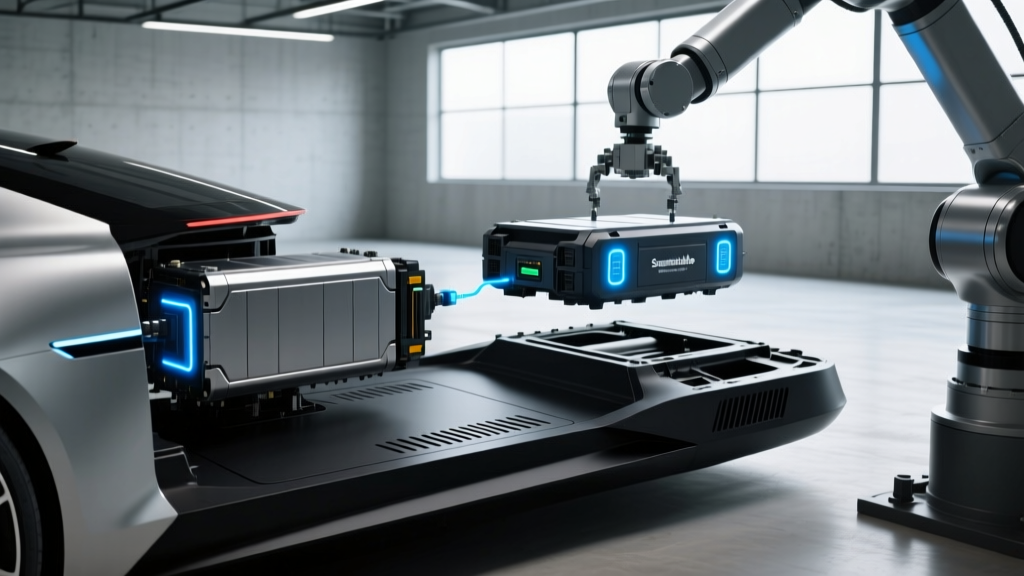
The search for alternatives to lithium-ion EV batteries has intensified as automakers and fleet operators grapple with raw-material costs, thermal safety, and supply-chain fragility. One name surfacing in these conversations is the Inlyte Energy salt battery — a sodium-ion energy storage concept that promises abundant materials and lower cost. But how does it actually stack up against the lithium-ion chemistries powering today's EVs? And is it something car buyers should factor into a 2026 purchase decision?
This guide breaks down the chemistry behind sodium-ion (salt) batteries, compares them head-to-head with the LFP and NMC cells dominating the current EV market, and delivers the hard degradation, warranty, and replacement-cost data every EV owner or shopper needs — regardless of which chemistry ends up under their floor.
What Is the Inlyte Energy Salt Battery?
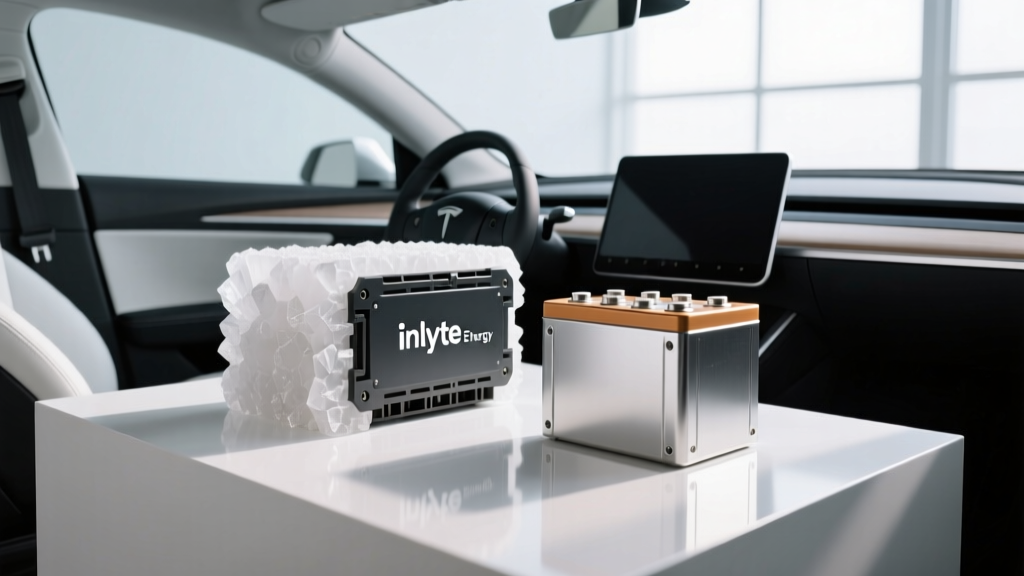
Inlyte Energy has been developing sodium-ion battery technology positioned primarily for stationary energy storage and, potentially, light-duty electric vehicles. Unlike lithium-ion cells that rely on lithium, cobalt, and nickel, sodium-ion batteries use sodium — one of the most abundant elements on Earth — as the charge carrier. The "salt battery" shorthand comes from sodium's chemical lineage (sodium chloride is table salt), though the actual electrochemistry involves sodium ions moving between cathode and anode during charge and discharge cycles, much like lithium ions do in conventional cells.
The value proposition is straightforward: sodium is roughly 1,000 times more abundant than lithium in Earth's crust, doesn't require the same geopolitical supply chains (lithium mining is concentrated in Australia, Chile, and China), and can use aluminum current collectors instead of copper — further reducing material cost. Inlyte Energy's approach targets these advantages for grid-scale and residential storage first, with EV applications as a longer-term possibility.
EV Battery Chemistry Showdown: LFP vs NMC vs Sodium-Ion
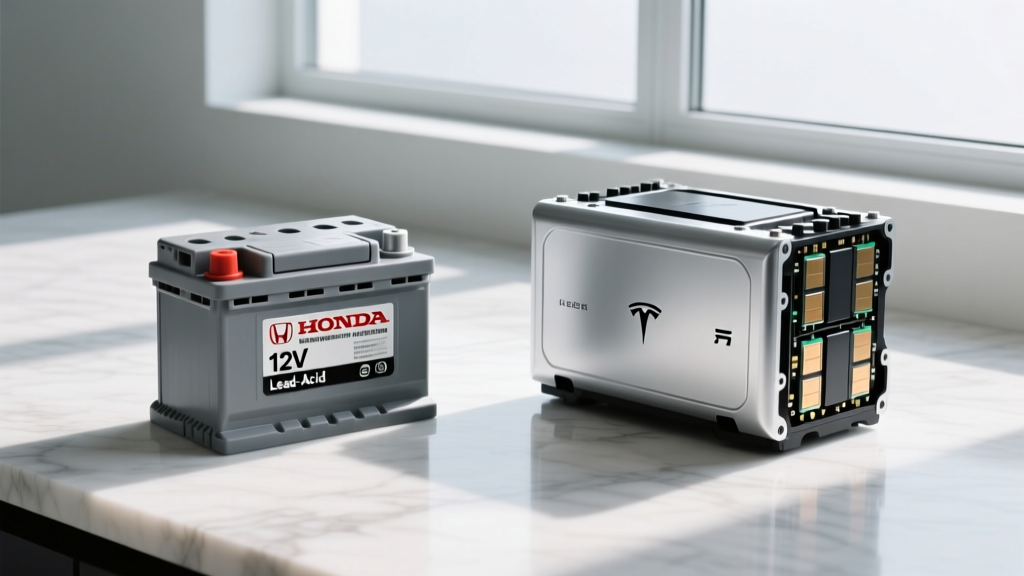
To evaluate where a sodium-ion salt battery fits, you need to understand the two lithium-ion chemistries that dominate the 2026 EV market. Here's how all three compare on the metrics that matter to owners:
| Attribute | NMC / NCA (Lithium) | LFP (Lithium Iron Phosphate) | Sodium-Ion (Salt Battery) |
|---|---|---|---|
| Energy Density | 220–300 Wh/kg (cell level) | 150–180 Wh/kg (cell level) | 120–160 Wh/kg (estimated) |
| Cycle Life | 1,000–2,000 cycles to 80% SoH | 3,000–6,000+ cycles to 80% SoH | 2,000–4,000 cycles (projected) |
| Cold Performance | Moderate loss (~20–30% range at 20°F) | Higher loss (~30–40% range at 20°F) | Potentially better low-temp discharge; limited real-world EV data |
| Raw Material Cost | High (lithium, cobalt, nickel) | Moderate (iron, phosphate — no cobalt/nickel) | Low (sodium, aluminum — no lithium/copper) |
| Thermal Safety | Good with active management; thermal runaway risk if damaged | Excellent — very resistant to thermal runaway | Expected excellent — inherently stable chemistry |
| Typical EV Use (2026) | Long-range sedans, SUVs, trucks (Tesla Model Y LR, Hyundai Ioniq 5, F-150 Lightning) | Standard-range models (Tesla Model 3 RWD, base Model Y, some Chinese-market EVs) | Not in U.S. EVs yet; stationary storage and micro-EVs in China |
The practical takeaway: NMC/NCA wins on energy density — packing more miles into a lighter, smaller pack, which is why it powers most long-range EVs. LFP wins on longevity and safety, trading some range per kilogram for dramatically longer cycle life. A sodium-ion salt battery like Inlyte Energy's would sit below both on energy density but could undercut them significantly on cost, making it attractive for budget EVs and fleet applications where weight and maximum range are secondary priorities.
How Long Do EV Batteries Actually Last?
This is the question behind every EV purchase, and the answer is more reassuring than the headlines suggest. Modern lithium-ion EV batteries are engineered to outlast the vehicles they power.
Typical degradation trajectory for lithium-ion EV batteries:
- Year 1–2 (0–30,000 miles): 2–5% capacity loss. This initial drop is normal as the solid electrolyte interphase (SEI) layer stabilizes.
- Year 3–5 (30,000–75,000 miles): Degradation slows to roughly 1–2% per year. Most owners report 90–95% State of Health (SoH) at the 5-year mark.
- Year 6–10 (75,000–150,000 miles): Continued gradual decline. Real-world fleet data from Tesla's 2025 Impact Report shows Model S/X batteries retaining approximately 85% capacity at 150,000 miles. LFP-equipped vehicles tend to track slightly better due to higher cycle-life tolerance.
- Beyond 150,000 miles: Batteries don't "die" — they continue functioning with reduced range. A pack that started at 300 miles EPA might deliver 240–255 miles at 200,000 miles. Many EVs are still on their original battery at this point.
For context on sodium-ion longevity, published lab data suggests cycle life in the 2,000–4,000 range to 80% capacity retention — competitive with NMC but below LFP's exceptional endurance. Real-world EV fleet data for sodium-ion packs simply doesn't exist at scale yet.
What Does the EV Battery Warranty Cover?
Federal law mandates that EV battery warranties cover a minimum of 8 years / 100,000 miles (in California Air Resources Board states, it's 10 years / 150,000 miles). Here's how major automakers structure their coverage in 2026:
| Automaker | Coverage Period | Capacity Threshold | What Triggers a Claim |
|---|---|---|---|
| Tesla | 8 yr / 120,000 mi (Model 3/Y); 8 yr / 150,000 mi (Model S/X) | 70% retention | Capacity drops below 70% as measured by Tesla diagnostics |
| Hyundai / Kia | 10 yr / 100,000 mi | 70% retention | SoH below 70% confirmed via dealer scan tool |
| Ford | 8 yr / 100,000 mi | 70% retention | Capacity below 70% or component failure |
| GM (Chevrolet, Cadillac) | 8 yr / 100,000 mi | 70% retention (60% on some commercial) | Verified capacity loss below threshold |
| BMW | 8 yr / 100,000 mi | 70% retention | Diagnostic-confirmed degradation below threshold |
Critical detail: Warranty coverage applies to capacity degradation below the stated threshold — not to normal, gradual range loss. If your 300-mile EV drops to 220 miles (about 73% SoH), that's above the 70% threshold and won't trigger a warranty replacement. You'd need to fall to roughly 210 miles or below. Also, warranties typically exclude damage from accidents, flooding, improper charging equipment, or unauthorized modifications.
For any future sodium-ion EV entering the U.S. market, expect warranty terms structured similarly — the 8-year/100,000-mile federal minimum is a floor, not a ceiling, and automakers will match or exceed it to build buyer confidence in a new chemistry.
EV Battery Replacement Cost: What You'd Actually Pay
While most EV batteries outlive the vehicle, it's important to understand replacement economics for out-of-warranty scenarios — especially relevant for used-EV buyers considering high-mileage examples.
| Vehicle / Pack Size | Battery Capacity | Chemistry | Estimated Replacement Cost (2026) |
|---|---|---|---|
| Tesla Model 3 RWD | ~60 kWh | LFP | $10,000–$13,000 |
| Tesla Model Y Long Range | ~75 kWh | NMC | $14,000–$18,000 |
| Hyundai Ioniq 5 | 77.4 kWh | NMC | $15,000–$20,000 |
| Ford F-150 Lightning Ext. Range | 131 kWh | NMC | $25,000–$32,000 |
| Chevrolet Bolt EV (discontinued) | 65 kWh | NMC | $14,000–$16,000 |
These figures include the battery pack and labor but can vary significantly by region, dealer vs. independent shop, and whether the pack is new OEM, refurbished, or a salvaged unit. Prices have declined roughly 10–15% since 2023 as cell costs have dropped and more third-party refurbishers have entered the market.
Where sodium-ion could change the equation: If Inlyte Energy or similar sodium-ion manufacturers achieve volume production, the material cost advantage (no lithium, cobalt, nickel, or copper) could push pack-level costs well below current LFP pricing. Some industry analysts project sodium-ion cell costs at $40–50/kWh at scale versus $70–90/kWh for LFP in 2026. For a 60 kWh pack, that's a potential replacement cost in the $5,000–$8,000 range — a meaningful shift for total cost of ownership. But this remains projection, not current reality.
What Kills an EV Battery? Factors That Accelerate Degradation
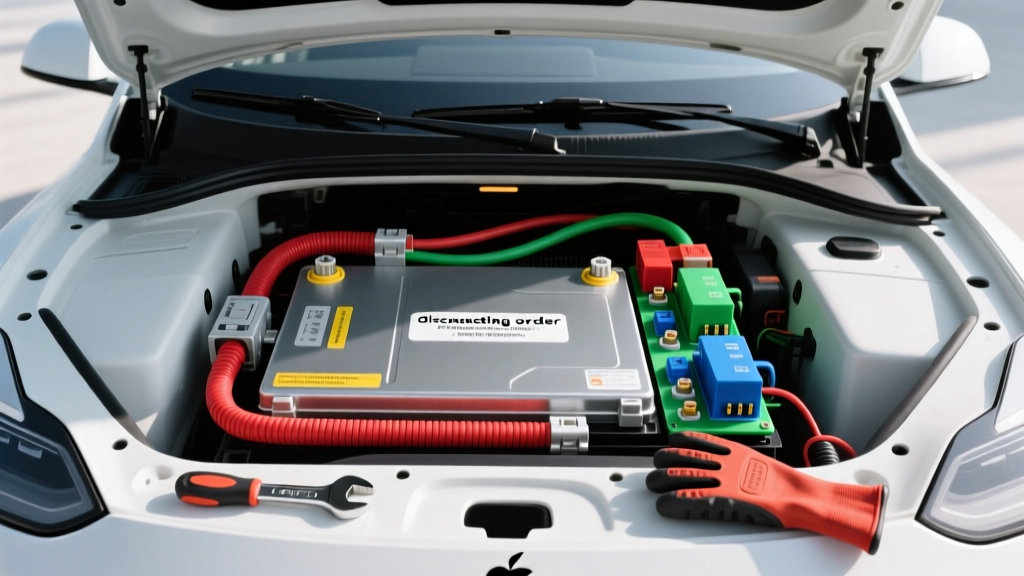
Whether your EV uses NMC, LFP, or a future sodium-ion pack, the physics of degradation follow similar patterns. Here are the factors that measurably shorten battery life, ranked by impact:
Battery Longevity Factors — Ranked by Impact
- Sustained high State of Charge (SoC) storage — Parking at 100% SoC for days or weeks, especially in heat, accelerates electrolyte decomposition. Daily charge limit of 80% (NMC) or 100% (LFP, which tolerates it better) is the single highest-impact habit.
- Extreme heat exposure — Battery temperature above 104°F (40°C) for extended periods causes permanent capacity loss. Garage parking in hot climates matters more than most owners realize.
- Frequent DC fast charging to high SoC — Occasional road-trip fast charging is fine. Daily reliance on DCFC, particularly charging above 80% at high kW rates, stresses cells through heat and lithium plating. The charging curve tapers above 80% specifically to protect the battery.
- Deep discharge cycles — Regularly running the battery to 0% or near-zero causes copper dissolution in the anode current collector. Keep the floor at 10–15% for daily use.
- Cold-weather fast charging without preconditioning — Charging a cold battery at high power causes lithium plating on the anode. Always use your vehicle's battery preconditioning feature (available on Tesla, Hyundai/Kia, Ford, and most modern EVs) before arriving at a DC fast charger in cold weather.
The good news: following these guidelines, an NMC battery should comfortably deliver 1,500+ equivalent full cycles before reaching 80% SoH — that's roughly 300,000+ miles for a 250-mile-range EV. LFP can deliver 3,000–6,000 cycles under similar conditions, which is essentially the lifetime of the vehicle and then some.
How to Check and Monitor Your EV Battery Health
State of Health (SoH) is the percentage of original capacity your battery retains. A new EV starts at 100% SoH; a degraded pack might sit at 92% after three years. Here's how to monitor it:
Built-in vehicle tools:
- Tesla: The mobile app displays estimated range at 100% charge. Compare this to the original EPA range to approximate SoH. Third-party apps like Tessie or Stats provide more granular SoH estimates using OBD-II data.
- Hyundai/Kia: The EV-specific menu in the infotainment system shows battery health percentage on recent model years (2024+).
- BMW: The iDrive system includes a battery health indicator accessible through the service menu.
- Ford: The FordPass app provides battery status; dealers can pull detailed SoH reports via the diagnostic port.
Third-party diagnostic options:
- OBD-II scan tools like the OBDLink MX+ paired with apps such as EVbatmon or Car Scanner can read actual battery capacity data from the BMS (Battery Management System) on most EVs.
- Dealer diagnostic reports — Request a battery health printout during any service visit. This is the most authoritative measurement and the one that matters for warranty claims.
- Recurring range tracking — Simply noting your vehicle's displayed range at full charge over time gives a rough SoH trend. If your 310-mile EV now shows 285 miles at 100%, you're at roughly 92% SoH.
For any future EV using sodium-ion chemistry, SoH monitoring would work identically — the BMS tracks capacity regardless of cell chemistry. Expect the same app-based and dealer-diagnostic interfaces.
Emerging Battery Tech: Solid-State, Silicon Anode, and What's Next
Beyond sodium-ion concepts like the Inlyte Energy salt battery, several next-generation technologies are in development. Here's where they stand with realistic timelines:
Solid-state batteries: Replace the liquid electrolyte with a solid material, promising higher energy density (potentially 400+ Wh/kg at cell level) and improved safety. Toyota has announced a solid-state EV for 2027–2028, and Samsung SDI targets 2027 production. However, manufacturing challenges — particularly achieving consistent solid-electrolyte contact at scale — have repeatedly delayed timelines. Expect limited, premium-vehicle deployment by 2028–2029 at the earliest, with broad availability not before 2030.
Silicon anode batteries: Companies like Sila Nanotechnologies and Group14 are replacing graphite anodes with silicon-dominant materials, boosting energy density by 20–40%. These are already appearing in limited consumer electronics applications and are expected to reach EV production in 2027–2028, initially as a blended anode (silicon + graphite) rather than pure silicon.
Sodium-ion scale-up: CATL, the world's largest battery manufacturer, has begun integrating sodium-ion cells into some Chinese-market EVs. If Inlyte Energy or competitors can demonstrate automotive-grade performance and cycle life, sodium-ion packs could appear in budget U.S. EVs by 2028–2030 — most likely in fleet vehicles, urban runabouts, and entry-level models where the lower energy density is acceptable.
LFP vs NMC vs Salt Battery: Which Should You Choose?
For anyone buying an EV in 2026, the decision comes down to NMC or LFP — sodium-ion is not yet an option. Here's a practical decision framework:
Choose NMC/NCA if:
- You need maximum range per charge (300+ miles EPA)
- You regularly take long road trips and want fewer charging stops
- You live in a cold climate where energy density matters more for winter range
- You're buying a larger vehicle (SUV, truck) where pack weight is already significant
Choose LFP if:
- You want the longest possible battery lifespan (highest cycle life)
- You can charge to 100% daily without degradation concern (LFP prefers full charges for accurate BMS calibration)
- Your daily commute is under 200 miles and you don't need maximum range
- Lower purchase price matters — LFP packs cost less, and savings are passed to the buyer
Watch for sodium-ion (Inlyte Energy salt battery and others) if:
- You're a fleet buyer prioritizing lowest total cost of ownership over maximum range
- You're considering a budget EV in the 2028+ timeframe
- Stationary home energy storage is your primary interest — this is where sodium-ion will likely arrive first in the U.S.
Frequently Asked Questions
How long do EV batteries last in years and miles?
Modern lithium-ion EV batteries are designed to last 15–20 years or 200,000+ miles before degrading to 70–80% of original capacity. Real-world fleet data from fueleconomy.gov and manufacturer reports confirm that the vast majority of EV batteries outlast the vehicles they power. Complete failure is rare; gradual range reduction is the norm.
How much does an EV battery cost to replace?
Out-of-warranty replacement costs range from approximately $10,000 for a smaller LFP pack (60 kWh) to $25,000–$32,000 for a large NMC pack (130+ kWh, as in the F-150 Lightning Extended Range). These costs include parts and labor. However, most EVs never need a replacement — batteries typically retain 80–90% capacity at the 150,000-mile mark.
What does the EV battery warranty actually cover?
Federal law requires a minimum of 8 years / 100,000 miles of battery coverage. Most automakers guarantee that the battery will retain at least 70% of its original capacity during this period. If capacity drops below that threshold, the manufacturer will repair or replace the pack at no cost. The warranty does not cover normal gradual degradation above the threshold, accident damage, or damage from improper charging equipment.
How do I check my EV battery health?
Most modern EVs display battery health information through the infotainment system, mobile app, or a hidden service menu. You can also use an OBD-II scanner with EV-compatible software to read State of Health (SoH) directly from the Battery Management System. The simplest method is tracking your displayed range at 100% charge over time — a consistent decline signals normal degradation.
Is LFP better than NMC for daily driving?
For daily commuting under 200 miles, LFP offers advantages: longer cycle life (3,000–6,000 cycles vs. 1,000–2,000 for NMC), better thermal safety, and the ability to charge to 100% daily without accelerated degradation. NMC is better when you need maximum range for road trips or live in very cold climates. Neither is universally "better" — the right choice depends on your driving pattern.
Will the Inlyte Energy salt battery be available in U.S. EVs?
Not in the near term. As of 2026, sodium-ion batteries from Inlyte Energy and similar developers are targeted at stationary energy storage and light-duty vehicles in Asian markets. U.S. EV deployment would require meeting federal safety standards, establishing domestic supply chains, and proving long-term durability in varied climates — a process likely extending to 2028–2030 at the earliest.
Does frequent DC fast charging damage my EV battery?
Occasional DC fast charging (road trips, a few times per month) has minimal impact on battery health. Daily DCFC use, especially charging above 80% SoC at high power, does accelerate degradation through heat stress and potential lithium plating. For daily charging, Level 2 home charging at 7–11 kW is optimal for battery longevity. Always precondition your battery before fast charging in cold weather.
The Inlyte Energy salt battery represents a legitimate and potentially cost-disruptive chemistry for the future of energy storage. For today's EV buyer, however, the decision remains between proven lithium-ion options — and both NMC and LFP deliver lifespans that should eliminate battery anxiety as a purchase barrier. The best battery is the one you maintain well: charge smart, precondition for fast charging, and let the warranty handle the rest.