Why EV Owners Are Asking About an Induction Stove With Battery Power
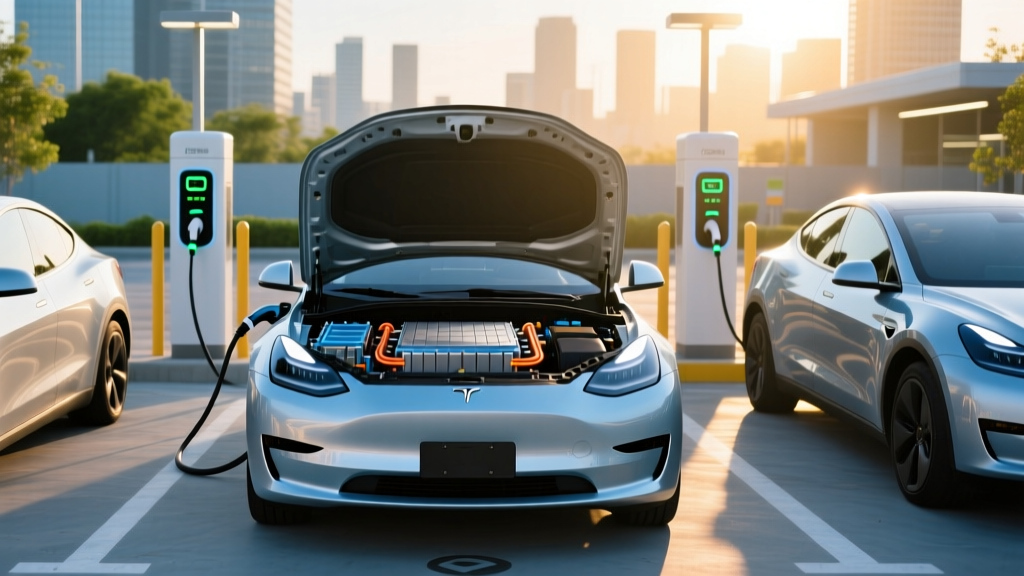
If you own an electric vehicle — or are considering one — you've likely noticed something: your car is essentially a massive rolling battery. A 2026 Tesla Model Y Long Range carries roughly 75 kWh of usable energy. A Ford F-150 Lightning Extended Range packs about 131 kWh. That's enough to power an average American home for several days. Naturally, the question arises: can you use that stored energy to run high-draw appliances, like an induction stove, off-grid or during an outage?
The short answer is yes — but the practical answer depends heavily on battery chemistry, inverter capacity, state of charge management, and whether you're talking about a dedicated home battery system, a portable power station, or vehicle-to-home (V2H) technology. This guide unpacks the EV battery science behind running an induction stove with battery power, whether that battery lives in your garage, your driveway, or your kitchen.
How Much Battery Does an Induction Stove Actually Need?
Before comparing chemistries or debating LFP vs NMC, let's establish the energy math. A typical single-burner induction cooktop operates between 1,200W and 1,800W at full power. A dual-burner or full-size induction range can pull 3,000W to 3,600W (sometimes more on boost settings).
Here's what that means in real cooking scenarios:
| Task | Power Draw | Duration | Energy Used (kWh) |
|---|---|---|---|
| Boiling 1 liter of water | 1,800W | ~4 minutes | 0.12 kWh |
| Cooking a full meal (1 burner, 30 min) | 1,200W avg | 30 minutes | 0.60 kWh |
| Full dinner (2 burners, 45 min) | 2,400W avg | 45 minutes | 1.80 kWh |
| Thanksgiving-level cooking (range, 3 hrs) | 3,000W avg | 3 hours | 9.00 kWh |
For context, a single meal cooked on one burner uses roughly 0.6 kWh — a trivial amount for a 75 kWh EV battery. Even an extended cooking session pulling 9 kWh represents only about 12% of a Model Y's usable capacity. The challenge isn't total energy; it's power delivery. Your battery system must sustain 1.8–3.6 kW continuous output through an inverter, which requires robust thermal management and sufficient C-rate capability.
LFP vs NMC: Which Battery Chemistry Is Better for Home Cooking Power?
Whether you're evaluating a home battery system (like a Tesla Powerwall 3 or a BYD Battery-Box), a repurposed EV battery pack, or a portable power station for induction cooking, the lithium-ion chemistry inside matters enormously. The two dominant chemistries in 2026 are lithium iron phosphate (LFP) and nickel manganese cobalt (NMC/NCA).
| Attribute | LFP (Lithium Iron Phosphate) | NMC / NCA (Nickel-based) |
|---|---|---|
| Energy Density | Lower (~160–180 Wh/kg cell-level) | Higher (~220–300 Wh/kg cell-level) |
| Cycle Life | 3,000–6,000+ cycles to 80% capacity | 1,000–2,000 cycles to 80% capacity |
| Cold Performance | Weaker below 0°C; reduced power output | Better low-temp discharge capability |
| Thermal Stability | Excellent; very low thermal runaway risk | Good but requires more active management |
| Cost (2026) | Lower — ~$80–100/kWh at pack level | Higher — ~$110–140/kWh at pack level |
| State of Charge Tolerance | Can sit at 100% SoC with minimal degradation | Prefers 20–80% SoC for longevity |
| Best For (Induction Cooking) | Home battery banks, daily cycling, garage install | Portable units where weight/size matters |
The verdict for induction stove use: LFP wins for most home scenarios. If you're installing a stationary battery system to run an induction cooktop during outages or off-grid, LFP's superior cycle life, tolerance for full-charge storage, and lower thermal runaway risk make it the clear choice. NMC makes sense only when portability and weight are critical — say, a 2 kWh portable power station you carry to a campsite.
Notably, Tesla's Powerwall 3 (2026 version) uses an LFP configuration, as do most serious home battery products from BYD, Enphase, and FranklinWH. Standard-range EVs from Tesla (Model 3/Y RWD), Ford (base Mustang Mach-E), and several Chinese-market models also use LFP — meaning their batteries are inherently well-suited for secondary-life home energy applications.
EV Battery Degradation: What Happens Over Years and Miles?
If you're planning to repurpose an EV battery for home cooking power — or simply want to understand how your car's battery will age — degradation data is essential. Here's what real-world tracking shows as of 2026:
- Year 1 / 15,000 miles: ~2–3% capacity loss (initial formation loss)
- Year 3 / 45,000 miles: ~5–7% total loss (NMC); ~3–5% (LFP)
- Year 5 / 75,000 miles: ~8–12% total loss (NMC); ~5–7% (LFP)
- Year 8 / 120,000 miles: ~12–18% total loss (NMC); ~7–10% (LFP)
- Year 10 / 150,000 miles: ~15–22% (NMC); ~10–14% (LFP)
Sources: Recurrent Auto fleet data (2025 report), Tesla Impact Reports, Geotab battery health studies. Individual results vary by climate, charging habits, and chemistry.
For a repurposed EV battery used in home energy storage, this degradation curve is actually favorable. A 75 kWh pack that has degraded to 85% state of health (SoH) still offers ~64 kWh of usable energy — enough to run an induction stove for dozens of meals, power a refrigerator for days, and handle lighting and electronics simultaneously.
The key insight: EV batteries rarely "die" suddenly. They gradually lose capacity. A pack at 70–80% SoH is generally considered end-of-first-life for automotive use (reduced range becomes noticeable) but remains perfectly viable for stationary storage where weight and volume are less constrained.
EV Battery Warranties: What's Actually Covered?
Understanding warranty terms is critical whether you're buying new or evaluating a used EV for battery repurposing. Federal law mandates a minimum 8-year/100,000-mile warranty on EV batteries for emissions-related compliance, but most manufacturers exceed this baseline.
| Manufacturer | Warranty Period | Mileage Limit | Capacity Retention Threshold |
|---|---|---|---|
| Tesla (Model 3/Y LFP) | 8 years | 100,000 miles | 70% minimum SoH |
| Tesla (Model 3/Y Long Range NMC) | 8 years | 120,000 miles | 70% minimum SoH |
| Hyundai / Kia (E-GMP platform) | 10 years | 100,000 miles | 70% minimum SoH |
| Ford (F-150 Lightning, Mach-E) | 8 years | 100,000 miles | 70% minimum SoH |
| GM (Ultium platform) | 8 years | 100,000 miles | 70% minimum SoH (60% for Bolt-era) |
| Rivian | 8 years | 175,000 miles (R1T/R1S) | 70% minimum SoH |
| BMW (iX, i4) | 8 years | 100,000 miles | 70% minimum SoH |
What triggers a warranty claim? If your battery falls below the stated capacity retention threshold within the warranty period, the manufacturer must repair or replace it to bring it back above that threshold. This does not mean you get a brand-new battery — refurbished or remanufactured packs are common. Per fueleconomy.gov, most EV batteries are lasting well beyond their warranty periods in real-world use.
Important caveat: warranties typically cover defects and abnormal degradation. Damage from accidents, flooding, improper modifications, or unauthorized third-party charging equipment may void coverage. Always check specific terms with the manufacturer.
EV Battery Replacement Cost: When and How Much?
The fear of a $20,000 battery replacement haunts many prospective EV buyers. Let's ground that fear in 2026 data:
| Vehicle / Battery Size | Battery Chemistry | Replacement Cost (Parts + Labor) | Typical Replacement Timeline |
|---|---|---|---|
| Tesla Model 3 RWD (~60 kWh) | LFP | $12,000–$15,000 | Rarely needed before 200,000+ miles |
| Tesla Model Y LR (~75 kWh) | NMC | $14,000–$18,000 | Rarely needed before 180,000+ miles |
| Hyundai Ioniq 5 (~77 kWh) | NMC | $13,000–$17,000 | Rarely needed before 180,000+ miles |
| Ford F-150 Lightning Ext. (~131 kWh) | NMC | $20,000–$28,000 | Rarely needed before 150,000+ miles |
| Chevrolet Equinox EV (~85 kWh) | NMC (Ultium) | $14,000–$18,000 | Rarely needed before 180,000+ miles |
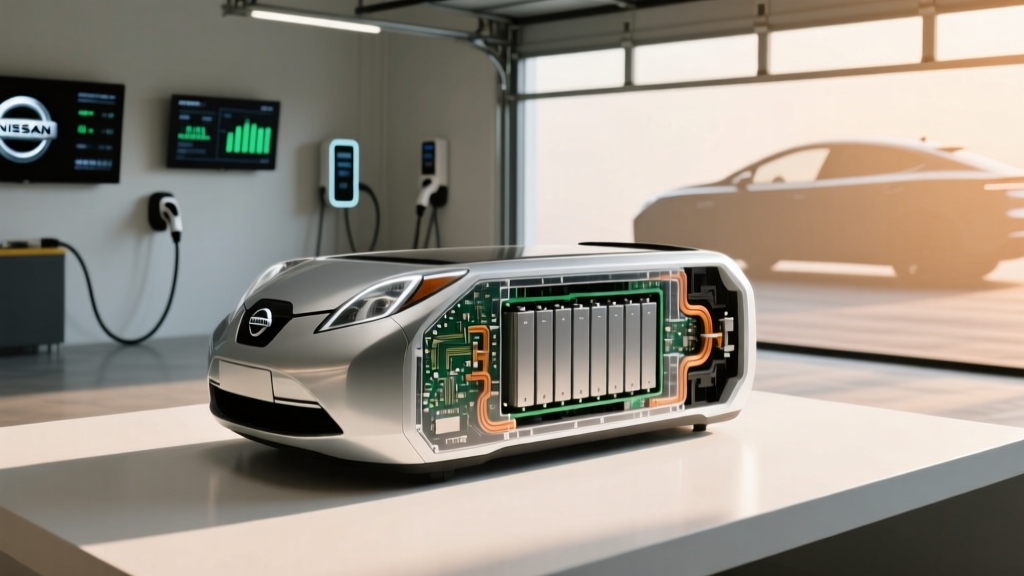
| Nissan Leaf (40 kWh / 60 kWh) | NMC (older gen) | $6,500–$10,000 | Earlier degradation; 100,000–150,000 miles |
Reality check: According to data from Recurrent Auto and Consumer Reports, the vast majority of EV batteries outlast the vehicle itself. Full replacements under 150,000 miles are uncommon outside of manufacturing defects (which warranties cover). The Nissan Leaf — with its passive air-cooled battery — is the notable exception; active liquid-cooled packs from Tesla, Hyundai, GM, and Ford show far better longevity.
If you're considering buying a used EV specifically to repurpose its battery for home energy (running an induction stove, powering backup circuits), target vehicles with 80,000–120,000 miles. These packs typically retain 85–92% SoH and can be acquired through salvage channels for $3,000–$8,000 depending on the model. Pair that with a bidirectional inverter ($1,500–$4,000) and you have a cost-effective home battery bank.
How to Check and Maximize Battery Health (SoH)
Whether you're monitoring your daily-driver EV or evaluating a used pack for home energy, knowing your battery's State of Health is essential.
How to Check State of Health
- In-car displays: Tesla, Rivian, and some Hyundai/Kia models show estimated battery health or degradation percentage in the settings menu.
- OBD-II diagnostic tools: Devices like the OBDLink SX combined with apps such as LeafSpy (Nissan) or Scan My Tesla can read pack voltage, cell balance, and estimated SoH.
- Third-party services: Recurrent offers battery health reports by analyzing connected-car telemetry. Some dealerships can run a full pack diagnostic.
- Manual calculation: Track your actual range over a full 100%→10% discharge cycle and compare it to the original EPA-rated range. A consistent 15% shortfall suggests ~85% SoH.
Maximizing Battery Longevity — Best Practices
- Avoid frequent DC fast charging above 150 kW — sustained high-C-rate charging accelerates degradation. Use Level 2 (7–19 kW) for daily needs.
- Keep SoC between 20–80% for NMC batteries — LFP batteries tolerate 100% storage better and should be charged to 100% periodically for BMS calibration.
- Precondition in cold weather — charging a cold battery (below 10°C / 50°F) without preconditioning causes lithium plating. Use your car's scheduled departure feature.
- Avoid prolonged storage at 0% or 100% SoC — if storing for weeks, target 50% SoC in a temperature-controlled environment.
- Minimize exposure to extreme heat — parking in shade or a garage when ambient temps exceed 95°F reduces calendar aging.
- Use regenerative braking moderately — aggressive one-pedal driving in cold conditions can stress the pack; many EVs automatically limit regen when cold.
Running an Induction Stove From an EV: Vehicle-to-Home (V2H) in 2026
The most elegant solution for powering an induction stove with your EV battery is vehicle-to-home (V2H) or vehicle-to-load (V2L) technology. Here's where things stand in 2026:
V2L (Vehicle-to-Load): The Ford F-150 Lightning, Hyundai Ioniq 5, Kia EV6, and Rivian R1T/R1S offer built-in 120V/240V outlets that can deliver 1.9 kW to 9.6 kW of continuous power. A single 1,800W induction burner runs easily from a V2L-equipped truck or SUV — no additional hardware required beyond a proper extension cord rated for the amperage.
V2H (Vehicle-to-Home): This requires a bidirectional charger (such as the Ford Charge Station Pro or the Wallbox Quasar 2) wired into your home's electrical panel. The F-150 Lightning with the 131 kWh Extended Range pack can supply up to 9.6 kW to your home — enough to run an induction range, refrigerator, HVAC, and lighting simultaneously for several days. Ford's Intelligent Backup Power system automatically switches your home to battery power during an outage.
What about other brands? GM announced V2H capability for Ultium-based vehicles (Silverado EV, Blazer EV) via the PowerShift charger. Hyundai/Kia's E-GMP platform supports V2L natively, with V2H accessories available in select markets. Tesla has not yet enabled V2H/V2L on the North American Model Y or Cybertruck as of early 2026, though the Cybertruck's Powershare feature offers limited 120V/240V outlet capability.
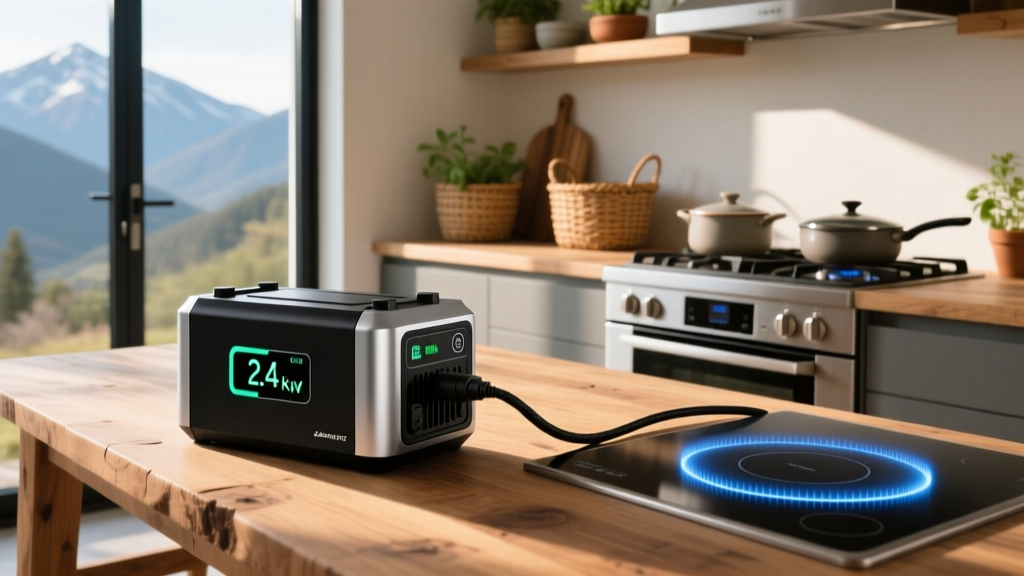
For induction cooking specifically, V2L from a Ford Lightning or Ioniq 5 is the simplest path: plug a portable 1,800W induction cooktop into the truck bed outlet and cook. Total energy used for a 30-minute meal: ~0.6 kWh, or less than 1% of the Lightning's 131 kWh pack.
Emerging Battery Tech: Solid-State and Silicon Anodes
Looking beyond 2026, two battery technologies could reshape both EV range and home energy storage:
Solid-state batteries replace the liquid electrolyte with a solid ceramic or polymer, promising higher energy density (potentially 400+ Wh/kg at the cell level), faster charging, and improved safety. Toyota has announced a limited-production solid-state EV for 2027–2028, and Samsung SDI is targeting 2027 mass production. However, these timelines have shifted repeatedly, and initial applications will likely be limited to premium vehicles at high cost. Realistically, solid-state batteries won't reach mainstream home storage applications until the early 2030s.
Silicon-dominant anodes (replacing graphite) offer 20–40% energy density improvements and are already appearing in limited form. Companies like Sila Nanotechnologies and Group14 are supplying silicon-carbon composite anodes to battery manufacturers. Expect incremental adoption through 2026–2029, improving EV range without fundamentally changing pack architecture.
For anyone planning an induction-stove-with-battery setup today, these future technologies are irrelevant to your purchasing decision. LFP and NMC chemistries are mature, affordable, and well-understood — and they'll remain the practical choice for at least the next 5–7 years.
Frequently Asked Questions
How long do EV batteries last in years and miles?
Most modern liquid-cooled EV batteries (2021 and newer) last 15–20 years or 200,000+ miles before degrading to 70–80% of original capacity. LFP chemistry packs tend to outlast NMC in cycle life. Data from Recurrent Auto shows Tesla Model 3/Y packs retaining ~88% capacity at 100,000 miles on average. Catastrophic failure (complete pack death) is rare and typically covered under the 8-year/100,000-mile federal minimum warranty.
How much does an EV battery cost to replace?
Full replacement costs range from roughly $6,500 (Nissan Leaf 40 kWh) to $28,000 (Ford F-150 Lightning 131 kWh Extended Range), including parts and labor. Most mainstream EVs (Tesla Model 3/Y, Hyundai Ioniq 5, Chevrolet Equinox EV) fall in the $12,000–$18,000 range. However, full replacements are uncommon — most packs outlast the vehicle. Module-level repairs (replacing individual degraded modules rather than the entire pack) can cost $2,000–$5,000.
What does the EV battery warranty cover?
Manufacturer warranties guarantee that the battery will retain at least 70% of its original capacity (60% for older Chevrolet Bolts) for 8 years or 100,000 miles, whichever comes first. Hyundai/Kia extends this to 10 years. If capacity drops below the threshold, the manufacturer repairs or replaces the pack. Warranties cover defects and abnormal degradation but typically exclude damage from accidents, flooding, or unauthorized modifications.
How do I check my EV battery's health?
Use your vehicle's built-in battery health display (if available), an OBD-II scanner with EV-specific software (LeafSpy, Scan My Tesla), or a third-party service like Recurrent. You can also estimate SoH by comparing your real-world range on a full charge to the original EPA rating. For a home battery system, most inverters and battery management systems report SoH directly in their monitoring app.
LFP vs NMC — which battery chemistry is better?
It depends on your use case. LFP offers longer cycle life (3,000–6,000 cycles vs 1,000–2,000), better thermal safety, lower cost, and tolerance for 100% SoC storage — making it ideal for home battery banks and daily-use EVs where maximum range isn't critical. NMC provides higher energy density (more range in a lighter, smaller pack) and better cold-weather performance — making it better for long-range EVs and portable applications. For running an induction stove from a stationary battery, LFP is the superior choice.
Can I run a full-size induction range from a portable power station?
Most portable power stations max out at 1,800–2,000W continuous output, which handles a single portable induction burner but not a full 3,600W range. For a full-size induction cooktop, you need either a V2H/V2L-equipped EV, a large home battery system (Tesla Powerwall 3 delivers 11.5 kW continuous), or a generator-backed inverter system. Always check your inverter's continuous watt rating — not just its peak/surge rating.
Is it safe to use an EV battery for home energy storage?
When done through manufacturer-approved V2H/V2L systems (Ford Intelligent Backup Power, Hyundai V2L), yes — these systems include proper inverters, transfer switches, and safety interlocks. DIY repurposing of salvaged EV battery modules is possible but requires expertise in high-voltage DC systems, proper BMS configuration, and compliance with local electrical codes. Always work with a licensed electrician for any connection to your home's electrical panel.
Sources consulted: U.S. DOE / fueleconomy.gov, Recurrent Auto battery data, IRS §30D clean vehicle credits. Battery costs and degradation figures reflect 2025–2026 industry data and may vary by manufacturer and region.