If you've been researching electric vehicles long enough, you'll eventually encounter the term "IFE battery" in forums, spec sheets, or technical discussions. The IFE battery meaning most commonly points to iron-fluoride-based or iron-based cathode chemistries being explored as next-generation alternatives to today's dominant lithium-ion formats. But for current EV buyers and owners, the more immediately relevant chemistry conversation centers on lithium iron phosphate (LFP) versus nickel manganese cobalt (NMC) and nickel cobalt aluminum (NCA) — the batteries actually powering vehicles you can buy today.
This guide breaks down what IFE and related iron-based battery technologies mean for the EV landscape, how they compare to what's on showroom floors now, and everything you need to know about EV battery longevity, degradation, warranties, and replacement costs in 2026.
What Does IFE Battery Mean in the EV Context?
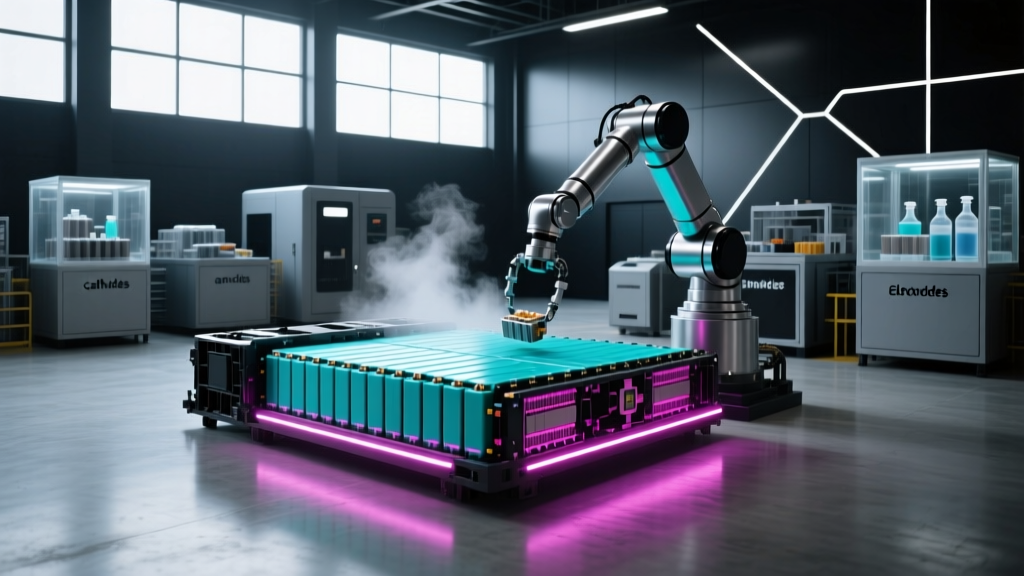
In battery research literature, "IFE" can refer to iron fluoride (FeF₃) conversion-type cathode materials — a class of chemistry that promises significantly higher theoretical energy density than current intercalation cathodes. Iron fluoride can theoretically store roughly 3x the capacity of conventional NMC cathodes because it uses a conversion reaction rather than simply shuttling lithium ions in and out of a crystal lattice.
However, IFE batteries remain firmly in the research and development stage. No production vehicle on sale in 2026 uses an iron fluoride battery. The challenges — poor cycle life, voltage hysteresis, and electrode pulverization during charge/discharge — have kept IFE out of commercial automotive applications. When you see "IFE battery" discussed in EV contexts, it's most often either:
- A reference to iron-based battery chemistries broadly, including LFP (lithium iron phosphate)
- A discussion of emerging research into iron fluoride conversion cathodes
- Occasional confusion with LFP (the correct commercial term for iron-phosphate EV batteries)
For practical EV ownership decisions in 2026, the chemistry that matters is LFP — the iron-based battery you can actually buy and drive today.
LFP vs NMC/NCA: The Chemistry Comparison That Matters Now
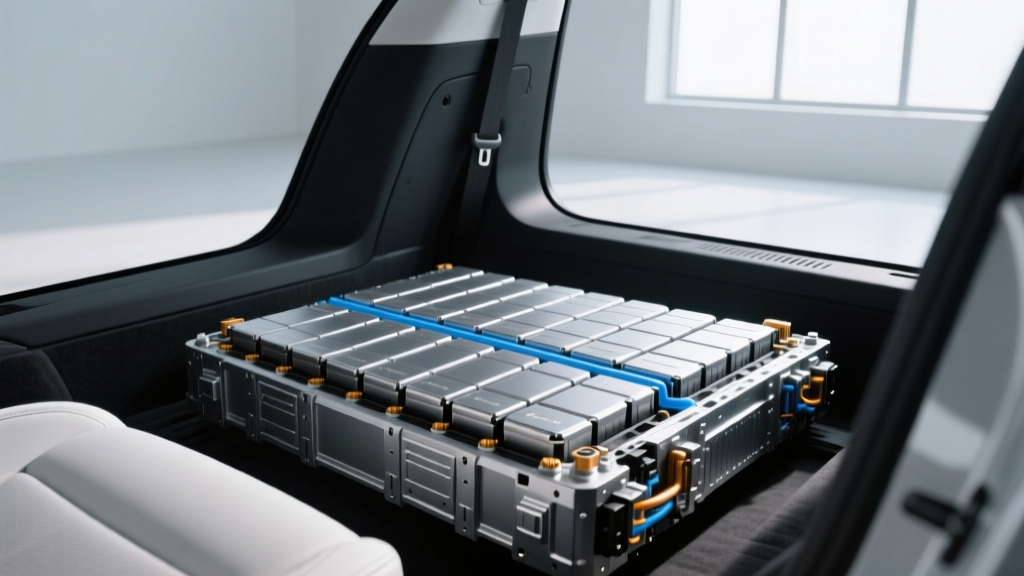
The current EV market splits into two dominant cathode chemistries, each with distinct trade-offs. Here's how they compare on the metrics that affect your daily driving and long-term ownership:
| Attribute | LFP (Lithium Iron Phosphate) | NMC / NCA (Nickel-Based) |
|---|---|---|
| Energy Density (cell-level) | ~160–180 Wh/kg | ~230–300 Wh/kg |
| Typical Cycle Life | 3,000–6,000+ cycles | 1,000–2,500 cycles |
| Cost per kWh (pack-level, 2026) | ~$90–$110 | ~$120–$150 |
| Cold-Weather Performance | Moderate — loses more range below 20°F | Better — retains more capacity in cold |
| Thermal Stability / Safety | Excellent — highly resistant to thermal runaway | Good — requires more active thermal management |
| Recommended Daily Charge Limit | 100% (LFP tolerates full charge well) | 80% for daily use, 100% for trips only |
| Cobalt / Nickel Content | None — iron and phosphate only | Contains nickel, cobalt, or both |
| SoC Estimation Accuracy | Challenging — flat voltage curve makes % harder to gauge | More linear voltage curve, easier estimation |
| Example 2026 Vehicles | Tesla Model 3 RWD, Tesla Model Y RWD, Ford Mustang Mach-E Select (LFP option), BYD models | Tesla Model 3/Y Long Range, Hyundai Ioniq 5, Kia EV6, BMW i4, Rivian R1S/R1T |
The takeaway: LFP wins on cost, cycle life, and safety; NMC/NCA wins on energy density and cold-weather range. Neither is universally "better" — the right choice depends on your driving patterns, climate, and budget.
How Long Do EV Batteries Actually Last?
The data from vehicles now reaching high mileage is reassuring. Most EV batteries are engineered to outlast the useful life of the vehicle itself. Here's what real-world degradation looks like based on aggregated fleet and owner data:
Typical EV Battery Degradation Curve (NMC chemistry, average use):
- Year 1 / 15,000 miles: ~2–4% capacity loss (initial settling)
- Year 3 / 45,000 miles: ~5–8% total capacity loss
- Year 5 / 75,000 miles: ~8–12% total capacity loss
- Year 8 / 120,000 miles: ~10–15% total capacity loss
- Year 10+ / 150,000+ miles: ~12–20% total capacity loss (varies widely by use pattern)
LFP chemistry typically shows slower degradation in the middle years, often retaining 90%+ capacity past 100,000 miles when charged within normal parameters. Data from Geotab's fleet analysis of over 6,000 EVs shows an average annual degradation rate of roughly 1.8% across all chemistries — meaning the average EV retains approximately 82% of its original capacity after 10 years.
For context, a vehicle with an EPA range of 310 miles when new would typically retain roughly 255–280 miles of range after 8 years — still entirely practical for most daily driving. Battery failure (a sudden, total loss of function) is exceedingly rare; degradation is a slow, gradual process.
What Does the EV Battery Warranty Actually Cover?
Federal law mandates a minimum battery warranty of 8 years / 100,000 miles for EVs sold in the United States, with California Air Resources Board (CARB) states requiring 10 years / 150,000 miles. Here's how major manufacturers structure their coverage in 2026:
| Manufacturer | Battery Warranty | Capacity Retention Threshold | What Triggers a Claim |
|---|---|---|---|
| Tesla | 8 yr / 100,000 mi (RWD); 8 yr / 120,000 mi (Long Range/Performance) | 70% of original capacity | SoH drops below 70% during warranty period |
| Hyundai / Kia | 10 yr / 100,000 mi | 70% of original capacity | SoH below 70% as measured by dealer diagnostic |
| Ford | 8 yr / 100,000 mi | 70% of original capacity | Capacity below 70% confirmed via onboard diagnostics |
| BMW | 8 yr / 100,000 mi | 70% of original capacity | Net capacity below 70% per BMW diagnostic tool |
| Rivian | 8 yr / 175,000 mi | 70% of original capacity | SoH below 70% during coverage period |
Critical detail: The warranty covers the battery when its State of Health (SoH) drops below the stated threshold — typically 70%. It does not cover range loss from normal degradation above that threshold. A battery at 72% SoH that still functions is not a warranty claim, even though you've lost 28% of your original range. This is worth understanding before purchase: the warranty is a floor, not a guarantee of like-new performance.
Most warranties also exclude damage from external factors: flooding, fire, collision damage, improper charging equipment, or unauthorized modifications. They cover defects in materials and workmanship plus abnormal degradation under normal use.
How Much Does an EV Battery Replacement Cost?
This is the question that generates the most anxiety — and the most misinformation. Here's the reality of EV battery replacement costs in 2026:
| Vehicle / Battery Size | Battery Capacity | Replacement Cost Range (2026) | When Typically Needed |
|---|---|---|---|
| Tesla Model 3 RWD (LFP) | ~60 kWh | $8,000 – $12,000 | Rarely — LFP packs often exceed 200,000 mi |
| Tesla Model Y Long Range (NMC) | ~75 kWh | $12,000 – $16,000 | Typically 150,000+ mi if needed at all |
| Hyundai Ioniq 5 (NMC) | ~77.4 kWh | $11,000 – $15,000 | 150,000+ mi; most still above 70% SoH at 100k |
| Ford F-150 Lightning Extended Range | ~131 kWh | $18,000 – $25,000 | Large pack; rarely needed within vehicle life |
| Chevrolet Bolt EV/EUV (NMC) | ~65 kWh | $9,000 – $14,000 | Post-recall replacement packs; most outlast the car |
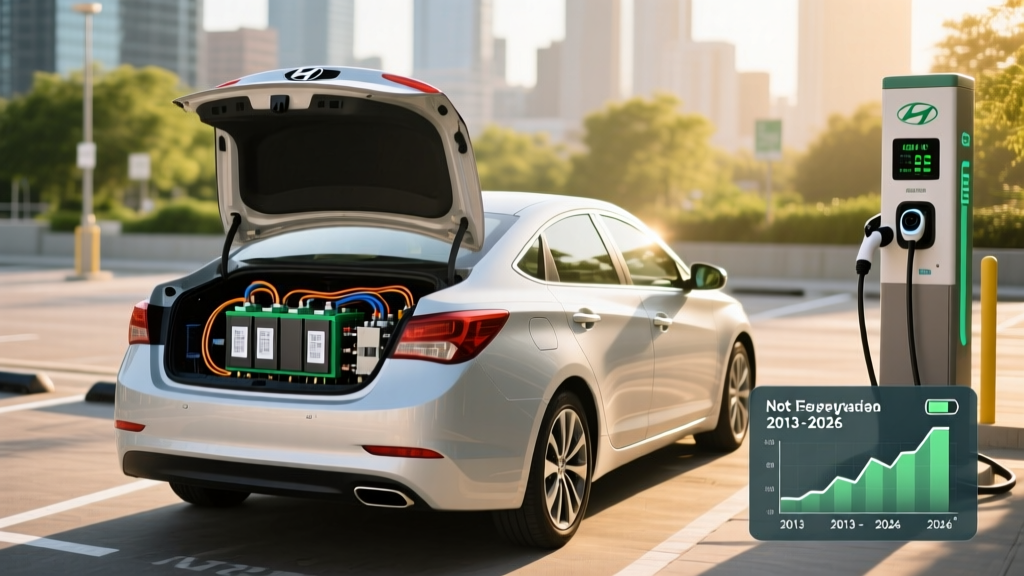
The honest context most articles skip: The vast majority of EV batteries never need replacement. According to data from Recurrent Auto's analysis of over 15,000 EVs, fewer than 1.5% of EV batteries have been replaced outside of recall campaigns. Most EV batteries will retain 75–85% of their original capacity at 150,000 miles — still entirely functional. Pack-level costs have also dropped from $1,000+/kWh in 2010 to roughly $110–$140/kWh in 2026, per BloombergNEF battery price surveys.
Additionally, many replacement scenarios involve module-level repair rather than full pack replacement. A technician can identify and swap individual degraded modules for $2,000–$5,000 rather than replacing the entire pack.
Factors That Accelerate (or Preserve) Battery Health
Not all miles are created equal when it comes to battery wear. The following factors have the most significant measurable impact on long-term State of Health:
What degrades batteries faster:
- Frequent DC fast charging above 150 kW — sustained high-C-rate charging generates heat that accelerates electrolyte decomposition. Occasional road-trip fast charging is fine; daily 200 kW sessions add up.
- Regularly charging to 100% on NMC/NCA — high state of charge stresses nickel-based cathodes. LFP is the exception: charging to 100% is recommended for accurate SoC calibration.
- Deep discharges to 0–5% — consistently running the battery to near-empty stresses the anode. The low-SoC buffer helps, but repeated deep cycling adds wear.
- Prolonged exposure to extreme heat — parking in 100°F+ ambient for days without thermal management active accelerates calendar degradation. This matters more than cold weather for long-term SoH.
- Storing at 100% SoC in hot conditions — the worst combination for battery health. If storing for weeks, target 50–60% SoC in a cool environment.
What preserves battery health:
- Daily charging between 20–80% SoC (NMC/NCA) or regular 100% charges (LFP)
- Primarily using Level 2 home charging at 7–11 kW — gentler on the pack than repeated DC fast charging
- Preconditioning the battery before fast charging — warming the pack to optimal temperature (~70–90°F) enables faster charging with less stress
- Driving in moderate climates — battery thermal management systems work hardest (and age fastest) in extreme heat
- Keeping firmware updated — manufacturers regularly refine battery management algorithms to optimize longevity
How to Check and Monitor Your Battery's State of Health
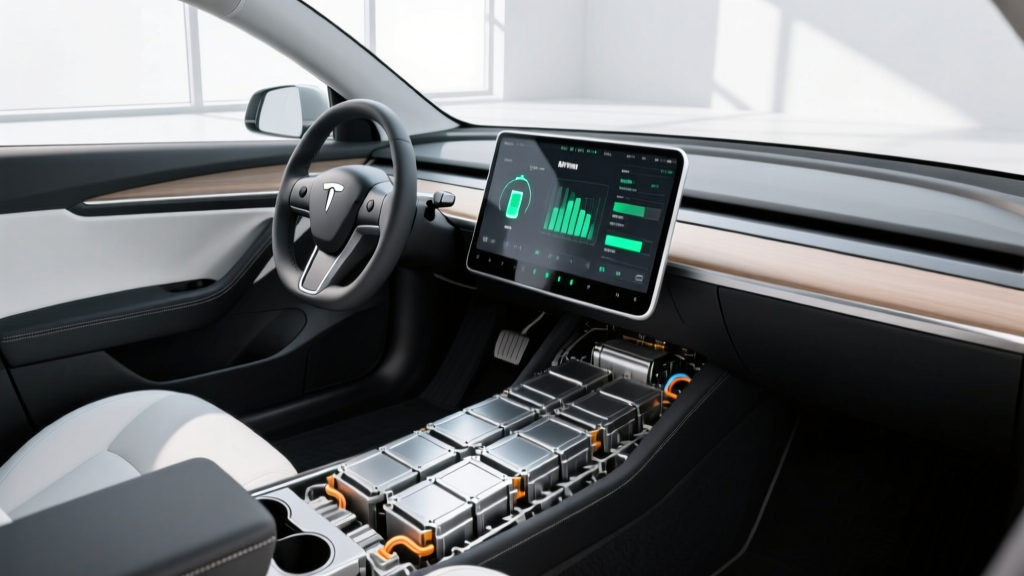
State of Health (SoH) is the percentage of your battery's current maximum capacity relative to its original capacity when new. A battery at 92% SoH holds 92% of the kWh it did on day one. Here's how to track it:
Built-in vehicle tools:
- Tesla: The service menu (accessible via the software screen) shows estimated battery capacity. Third-party apps like Tessie or Stats for Tesla log SoH over time using the vehicle's API.
- Hyundai/Kia: The EV dashboard includes a battery health indicator. Dealer diagnostic tools provide precise SoH readings during service visits.
- Ford: The FordPass app and in-cluster displays show estimated range and battery status; dealer OBD-II tools read precise SoH.
- BMW: The iDrive system provides battery health information, and BMW service centers can run a full capacity test.
Third-party monitoring:
- Recurrent Auto offers a free battery health report that connects to your vehicle's telematics and provides SoH tracking, range estimates, and comparisons to similar vehicles.
- OBD-II dongles paired with apps like ABRP (A Better Route Planner) or LeafSpy (for Nissan Leaf owners) can read real-time battery metrics.
- Manual tracking: Charge to a known SoC, drive a measured distance, and compare energy consumed to expected values. This is less precise but free and requires no equipment.
For buyers evaluating a used EV, always request a battery health report or have a dealer run a diagnostic before purchase. A 3-year-old EV at 94% SoH is in excellent shape; one at 85% warrants investigation into prior charging habits.
IFE, Solid-State, and What Comes Next
While IFE (iron fluoride) batteries remain a research-stage technology, the broader battery innovation pipeline includes several chemistries with more concrete timelines:
Solid-state batteries — which replace the liquid electrolyte with a solid conductor — are the most anticipated advancement. Toyota has announced plans for limited solid-state EV production around 2027–2028, targeting 750+ km (WLTP) range and 10-minute fast charging. Samsung SDI and QuantumScape are also in advanced testing phases. However, no solid-state EV is currently available for purchase, and initial production will likely be limited to premium models at high prices. Broad market availability at competitive pricing is realistically a 2029–2031 prospect.
Silicon-dominant anodes — already in limited use (GM's Ultium platform incorporates silicon in the anode) — offer 20–40% energy density improvements over graphite anodes. Expect this technology to proliferate through the late 2020s as manufacturing scales.
Sodium-ion batteries — which replace lithium with abundant sodium — are entering production in China (CATL, BYD) for lower-cost, shorter-range EVs. U.S. availability is likely 2027+ and would target budget segments.
LMFP (lithium manganese iron phosphate) — an evolution of LFP that adds manganese to boost energy density by roughly 15–20% while retaining LFP's cost and safety advantages — is expected in production vehicles by 2026–2027. Tesla and several Chinese OEMs are validating this chemistry.
The practical advice: don't delay an EV purchase waiting for next-generation chemistry. Today's LFP and NMC batteries are mature, well-warranted, and proven to last. The improvements coming are incremental, not transformative enough to justify waiting 3–5 years.
Frequently Asked Questions
What is the IFE battery meaning in electric vehicles?
IFE most commonly refers to iron fluoride (FeF₃) conversion-type cathode materials in battery research. It's a next-generation chemistry not yet in production vehicles. In casual discussion, some users conflate "IFE" with LFP (lithium iron phosphate), which is the iron-based battery chemistry actually available in EVs today.
LFP vs NMC — which battery chemistry is better for me?
Choose LFP if: you want lower cost, maximum cycle life, can charge at home regularly, live in a moderate climate, and don't need the absolute longest range. Choose NMC/NCA if: you need maximum range per charge, regularly drive in cold weather, frequently take road trips where energy density matters, or want faster charging speeds at DC fast chargers.
How long do EV batteries last in years and miles?
Based on fleet data from Geotab and Recurrent Auto, the average EV battery retains roughly 82% of its original capacity after 10 years. Most EV batteries remain functional well past 150,000 miles. Full battery replacement is rare — fewer than 1.5% of EVs require it outside of recalls.
How much does it cost to replace an EV battery in 2026?
Full pack replacement ranges from approximately $8,000 for smaller packs (~60 kWh) to $25,000 for the largest packs (~130+ kWh). Module-level repairs are often possible for $2,000–$5,000. However, most EV batteries never need replacement — they outlast the vehicle's useful life.
What does the EV battery warranty cover?
Federal minimum is 8 years/100,000 miles (10 years/150,000 miles in CARB states). Coverage triggers when State of Health drops below the manufacturer's threshold — typically 70% of original capacity. The warranty covers defects and abnormal degradation but not damage from accidents, flooding, or unauthorized modifications.
Does fast charging damage my EV battery?
Occasional DC fast charging during road trips has minimal impact. However, daily reliance on 150+ kW fast charging does accelerate degradation compared to Level 2 home charging. The heat generated during high-power charging is the primary stressor. Preconditioning your battery before fast charging helps mitigate this.
Should I charge my EV to 100% every day?
It depends on chemistry. For NMC/NCA batteries: no — limit daily charging to 80% and reserve 100% for road trips. For LFP batteries: yes — charging to 100% is recommended and actually helps the battery management system calibrate accurately. Check your owner's manual for your specific vehicle's guidance.
How do I check my EV battery's State of Health?
Use your vehicle's built-in battery health display, connect a third-party service like Recurrent Auto, use an OBD-II diagnostic tool, or ask your dealer to run a capacity test during a service visit. For used EV purchases, always verify SoH before buying.