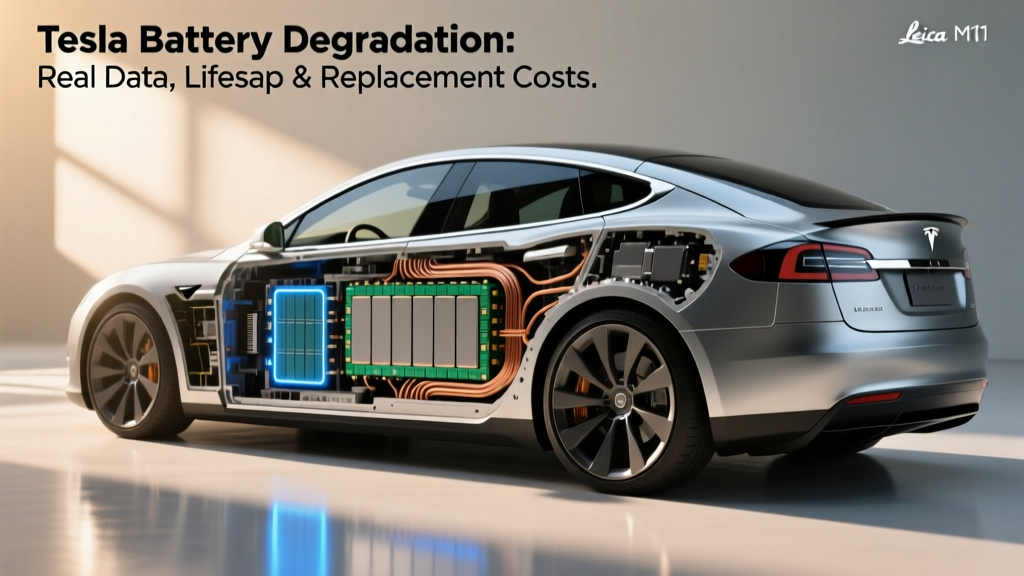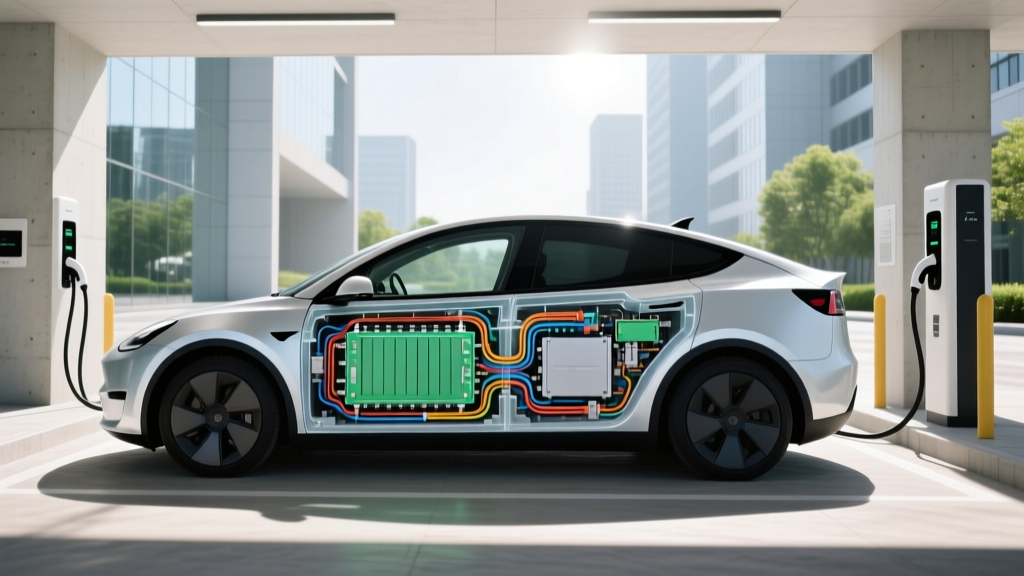
If you are shopping for an electric vehicle in 2026 or already own one, knowing how to id battery chemistry is one of the highest-leverage pieces of knowledge you can have. The high-voltage traction pack sitting under your floorboards is the single most expensive component in the vehicle, and its chemistry dictates everything from real-world range and cold-weather performance to how fast it can charge and how long it will last. Yet most buyers never look past the EPA range sticker.
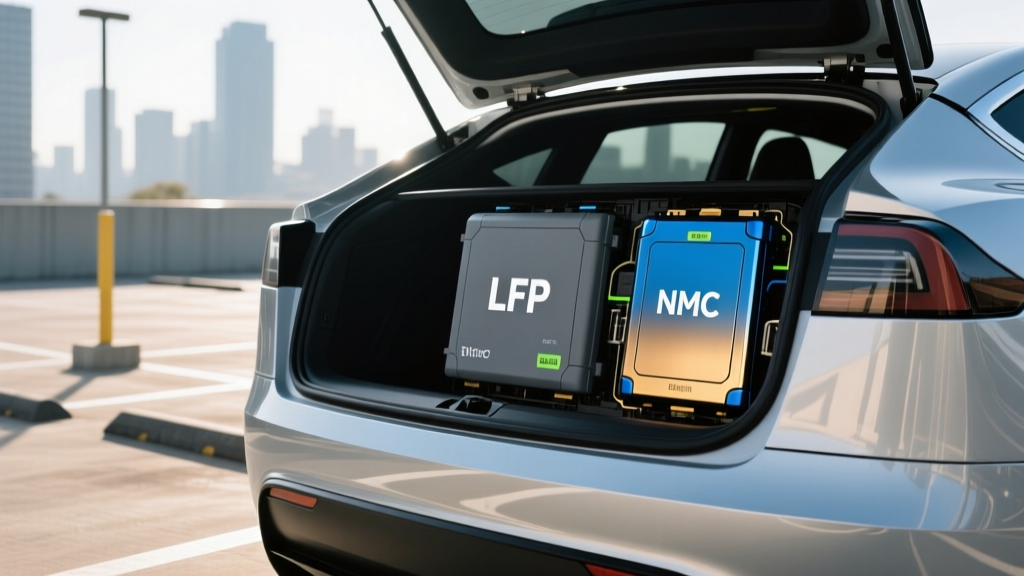
This guide breaks down the two dominant lithium-ion chemistries on the road today — LFP (lithium iron phosphate) and NMC/NCA (nickel manganese cobalt / nickel cobalt aluminum) — with exact data on degradation, warranty coverage, replacement costs, and the daily habits that extend or shorten pack life.
LFP vs NMC/NCA: How to ID Battery Chemistry and What It Means
To id battery chemistry in a specific model, start with the manufacturer's spec sheet or the window sticker. Automakers are increasingly transparent: Tesla labels LFP on the "Standard Range" Model 3 and Model Y rear-wheel-drive trims; Ford uses LFP in the base Mustang Mach-E Select; BYD's entire global lineup runs on its Blade LFP cells. Most long-range and performance trims from Hyundai, Kia, BMW, Mercedes, and GM still rely on NMC or NCA.
| Attribute | LFP (Lithium Iron Phosphate) | NMC / NCA (Nickel-based) |
|---|---|---|
| Energy Density (Wh/kg, cell-level) | 160–200 Wh/kg | 230–300 Wh/kg |
| Typical Cycle Life | 3,000–5,000+ full cycles | 1,000–2,000 full cycles |
| Cold-Weather Range Loss (20°F) | ~30–40% loss without heat pump | ~20–30% loss without heat pump |
| Recommended Daily Charge Limit | 100% SoC (no penalty) | 80% SoC for daily use |
| DC Fast-Charge Tolerance | Excellent — handles frequent 100% fast charges | Best kept 10–80%; frequent 100% accelerates degradation |
| Cost per kWh (pack-level, 2026 est.) | ~$80–$100/kWh | ~$110–$140/kWh |
| Cobalt / Nickel Content | Zero cobalt, zero nickel | Contains cobalt and/or nickel |
| Thermal Runaway Risk | Very low — inherently stable | Higher — requires advanced BMS and cooling |
The trade-off is straightforward: NMC/NCA packs store more energy in a smaller, lighter package, making them the default for 300+ mile range targets and performance models. LFP packs are heavier and bulkier for the same kWh, but they last dramatically longer in cycle life, tolerate full-charge habits, cost less to manufacture, and carry lower supply-chain and ethical concerns around cobalt mining.
If your commute is under 60 miles round-trip and you have home charging, an LFP-equipped vehicle is often the smarter long-term play. If you regularly drive 200+ miles between charges or need maximum range in a heavy SUV, NMC remains the practical choice.
How Long Do EV Batteries Last? Real Degradation Data
The fear that an EV battery will "die" like a smartphone after two years is not supported by fleet data. According to analysis from Recurrent Auto, which tracks over 15,000 EVs in real-world conditions, the average battery pack loses roughly 5–8% of its original capacity over the first 100,000 miles, with the curve flattening significantly after the initial break-in period.
| Age / Mileage | Average Capacity Retained (NMC) | Average Capacity Retained (LFP) |
|---|---|---|
| Year 1 / 15,000 mi | 95–97% | 97–99% |
| Year 3 / 45,000 mi | 91–94% | 95–98% |
| Year 5 / 75,000 mi | 88–92% | 93–97% |
| Year 8 / 120,000 mi | 83–88% | 90–95% |
| Year 10 / 150,000 mi | 78–85% | 88–93% |
Most degradation occurs in the first 20,000–30,000 miles as the solid electrolyte interface (SEI) layer forms on the anode. After that, capacity loss slows to roughly 0.5–1% per year for NMC and even less for LFP. A 2024 Tesla Model 3 Long Range (NMC, ~82 kWh usable) showing 88% State of Health (SoH) at 80,000 miles is typical — and still delivers over 290 real-world miles from its original 341 EPA estimate.
Outliers exist. Vehicles subjected to frequent DC fast charging in hot climates (Arizona, Texas) without preconditioning can see 2–3% additional loss. Vehicles with liquid-cooled packs and moderate charging habits routinely exceed 200,000 miles before approaching the 70% capacity threshold that triggers a warranty claim.
What Does the Battery Warranty Actually Cover?
Federal law mandates a minimum 8-year / 100,000-mile warranty on EV battery packs for emissions-related components, and every major automaker meets or exceeds this baseline. California Air Resources Board (CARB) states require 10 years / 150,000 miles.
| Manufacturer | Warranty Term | Capacity Retention Threshold | Coverage Type |
|---|---|---|---|
| Tesla (Model 3/Y RWD, LFP) | 8 yr / 100,000 mi | 70% | Repair or replace to threshold |
| Tesla (Model 3/Y LR/Perf, NMC) | 8 yr / 120,000 mi | 70% | Repair or replace to threshold |
| Hyundai / Kia (EV9, Ioniq 5/6) | 10 yr / 100,000 mi | 70% | Repair or replace to threshold |
| GM (Ultium-based: Equinox EV, Blazer EV) | 8 yr / 100,000 mi | 70% | Repair or replace to threshold |
| Ford (Mustang Mach-E, F-150 Lightning) | 8 yr / 100,000 mi | 70% | Repair or replace to threshold |
| BMW (iX, i4, i7) | 8 yr / 100,000 mi | 70% | Repair or replace to threshold |
Key details that buyers miss:
- The threshold is 70%, not 100%. If your 300-mile EPA vehicle degrades to 215 miles of range, you have not yet triggered a claim — even though you have lost 85 miles.
- Warranties cover defects and abnormal degradation, not normal wear. Losing 10% over five years is considered normal; dropping to 65% in three years is a warranty event.
- Replacement modules, not full packs. Most warranty repairs involve swapping individual modules (a pack contains 4–16 modules depending on architecture), not the entire battery.
- Transferability varies. Tesla, Hyundai, and GM warranties transfer to second owners; always confirm before buying used.
How Much Does an EV Battery Cost to Replace?
Out-of-warranty battery replacement is the number-one anxiety for used-EV buyers. The cost depends heavily on pack size, chemistry, and whether the manufacturer offers module-level repair.
| Vehicle (Example) | Pack Size (kWh Usable) | Chemistry | Full Pack Replacement | Module-Level Repair |
|---|---|---|---|---|
| Tesla Model 3 RWD | ~60 kWh | LFP | $8,000–$12,000 | $1,500–$3,000 per module |
| Tesla Model Y Long Range | ~75 kWh | NMC | $12,000–$16,000 | $2,000–$4,000 per module |
| Hyundai Ioniq 5 (Long Range) | ~77.4 kWh | NMC | $13,000–$18,000 | $1,800–$3,500 per module |
| Ford F-150 Lightning (Extended) | ~131 kWh | NMC | $20,000–$28,000 | $2,500–$5,000 per module |
| Chevrolet Bolt EV (2023 final gen) | ~65 kWh | NMC | $9,000–$14,000 | $1,500–$2,800 per module |
The critical context: most EV batteries outlast the vehicle itself. Data from fueleconomy.gov and fleet operators shows that fewer than 1.5% of EV battery packs require full replacement before 200,000 miles. Module-level repair — where a technician identifies and swaps only the degraded modules — has become standard practice at dealer service centers and specialized EV shops, keeping real-world costs well below the full-pack figure.
When a full replacement is needed, it is typically at 12–15 years of age or 200,000+ miles, at which point the vehicle's residual value is often less than the replacement cost. For most owners, the battery is a non-issue over a typical 8–10 year ownership cycle.
Factors That Accelerate Battery Degradation
Battery chemistry sets the ceiling, but daily habits determine where you land on the curve. The four biggest degradation accelerators, ranked by impact:
1. Sustained High State of Charge (NMC Only)
Storing an NMC pack at 100% SoC for days or weeks causes electrolyte oxidation at the cathode. For daily driving, charge to 80% and only hit 100% when you need the full range for a road trip. LFP owners can ignore this — the chemistry is stable at full charge, and Tesla and Ford actually recommend periodic 100% charges to keep the battery management system (BMS) calibration accurate.
2. Frequent DC Fast Charging Without Preconditioning
Pushing 150–250 kW into a cold battery causes lithium plating on the anode — a permanent capacity loss mechanism. Always use your vehicle's navigation-based preconditioning (Tesla's "Trip Planner," Hyundai's "Battery Preconditioning" in navigation mode) to warm the pack before arriving at a DC fast charger. If your vehicle lacks this feature, drive for 15–20 minutes at highway speed before plugging in.
3. Extreme Heat Exposure
Battery packs degrade faster when ambient temperatures consistently exceed 95°F, especially if the vehicle sits parked at high SoC. Vehicles with active liquid cooling (nearly all 2026 models) handle this better than passive-cooled packs, but parking in shade or a garage in hot climates measurably extends pack life.
4. Deep Discharge Cycles
Routinely driving the battery below 10% SoC stresses the cell chemistry. Most modern EVs have a bottom buffer (typically 2–5 kWh reserved below the "0%" display) to protect against this, but habitually arriving at 0% is still harder on the pack than keeping SoC between 20–80%.
How to Check and Maximize Battery Health (SoH)
State of Health (SoH) is the percentage of original capacity your pack currently holds. A new battery is 100% SoH; a pack that has degraded to 90% retains 90% of its original kWh.
How to Check SoH
- In-vehicle displays: Tesla does not natively show SoH in the app (as of 2026), but third-party apps like Tessie or Stats for Tesla can estimate it from charge logs. Hyundai/Kia's infotainment system includes a battery health readout under EV diagnostics. GM's Ultium-based vehicles display SoH in the myChevrolet/myCadillac app.
- OBD-II dongles + apps: Devices like the OBDLink SX paired with apps such as ABRP (A Better Route Planner) or Leaf Spy (for Nissan LEAF owners) can read BMS data including SoH, cell voltage variance, and pack temperature.
- Dealer diagnostic report: Any authorized service center can pull a full battery health report. Request this before purchasing a used EV — it is the single most important pre-purchase inspection item.
- Manual calculation: Charge to 100% (or your known max), note the displayed range, and compare it to the original EPA figure adjusted for the pack's usable kWh. If your 82 kWh pack shows 290 miles at 100% vs. the original 341, your SoH is roughly 85%.
Battery Care Checklist for Maximum Longevity
- Set daily charge limit to 80% for NMC; 100% is fine for LFP
- Use nav-based preconditioning before every DC fast charge
- Avoid parking at 100% SoC for more than 24 hours (NMC)
- Minimize DC fast charging to 1–2 sessions per week when possible
- In hot climates, park in shade or a garage; enable cabin overheat protection
- Keep SoC above 15% for daily storage; avoid habitual deep discharge
- Update BMS firmware via OTA — manufacturers refine charge algorithms regularly
- Check SoH every 6–12 months via app or dealer diagnostic
Emerging Battery Tech: Solid-State and Silicon Anodes
Next-generation battery technology is advancing, but realistic timelines matter more than press-release promises.
Silicon-dominant anodes (replacing graphite with silicon to boost energy density by 20–40%) are already in limited production. Sila Nanotechnologies supplies silicon anode material for the Mercedes G-Class electric SUV launching in 2026, and Group14 Technologies is scaling production for multiple automakers. Expect silicon-anode cells to appear in premium models through 2027–2028, with mainstream adoption by 2030.
Solid-state batteries (replacing liquid electrolyte with a solid ceramic, sulfide, or polymer separator) promise 30–50% higher energy density, faster charging, and near-zero fire risk. Toyota has announced a 2027–2028 production timeline for solid-state EVs with 750+ km (WLTP) range, and Samsung SDI is targeting 2027 for mass production. However, manufacturing yield, cost, and scalability remain unsolved at volume. Realistic widespread availability in the US market is 2029–2032 at the earliest.
For buyers deciding today: current LFP and NMC chemistries are mature, well-understood, and proven to last the life of the vehicle. Waiting for solid-state is not a practical purchase strategy unless your timeline extends well into the next decade.
EV Battery FAQ
How long do EV batteries last in years and miles?
Most modern EV battery packs are designed to retain 70–85% of original capacity at 150,000–200,000 miles (10–15 years). LFP packs typically outlast NMC by 3–5% at equivalent mileage. Fleet data shows fewer than 1.5% of packs require replacement before 200,000 miles.
How much does an EV battery cost to replace?
Full pack replacement ranges from $8,000 for a ~60 kWh LFP pack to $28,000 for a ~131 kWh NMC pack (parts and labor, 2026 estimates). However, module-level repair — replacing only the degraded sections — typically costs $1,500–$5,000 and is the more common service path. Most packs never need replacement during typical ownership.
What does the battery warranty cover?
Federal law requires a minimum 8-year / 100,000-mile warranty (10 yr / 150,000 mi in CARB states). Coverage triggers when capacity drops below 70% of original. The warranty covers defects and abnormal degradation; normal wear (e.g., 10% loss over 5 years) is not covered. Manufacturers typically repair via module replacement rather than full pack swap.
How do I check my EV battery's State of Health?
Check SoH through your vehicle's app (GM Ultium vehicles, Hyundai/Kia), third-party apps like Tessie or Leaf Spy via OBD-II, or request a dealer diagnostic report. You can also manually estimate SoH by comparing displayed range at full charge to the original EPA estimate.
LFP vs NMC — which is better and why?
Neither is universally better; it depends on your use case. Choose LFP if you want maximum cycle life, lower cost, 100% daily charging tolerance, and zero cobalt — ideal for commuters with home charging. Choose NMC if you need 300+ miles of range, better cold-weather performance, or a lighter pack in a large SUV — ideal for road-trippers and performance buyers.
Does fast charging damage the battery?
DC fast charging causes slightly more degradation than Level 2 charging due to heat generation, but the impact is modest with modern liquid-cooled packs — roughly 1–2% additional loss over 100,000 miles if you fast-charge 3+ times per week. The key is preconditioning: always warm the pack via navigation routing before arriving at the charger to minimize lithium plating risk.
Will my EV battery need replacing before the car wears out?
Statistically, no. With degradation averaging 5–8% at 100,000 miles and the pack lasting 200,000+ miles before approaching 70% capacity, most EV batteries outlive other vehicle components (suspension, interior, electronics). The vehicle is more likely to be retired for non-battery reasons than for a failed pack.