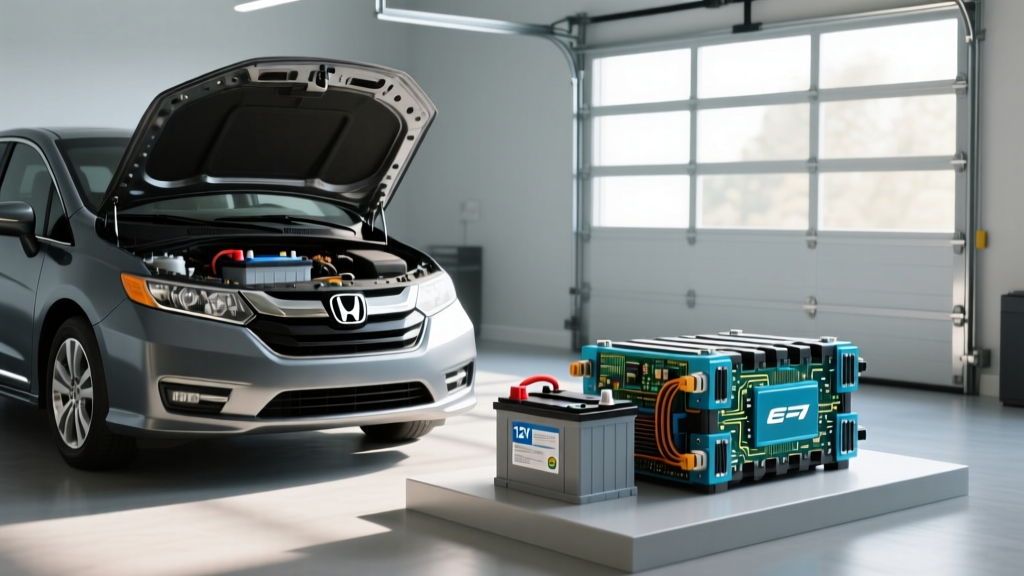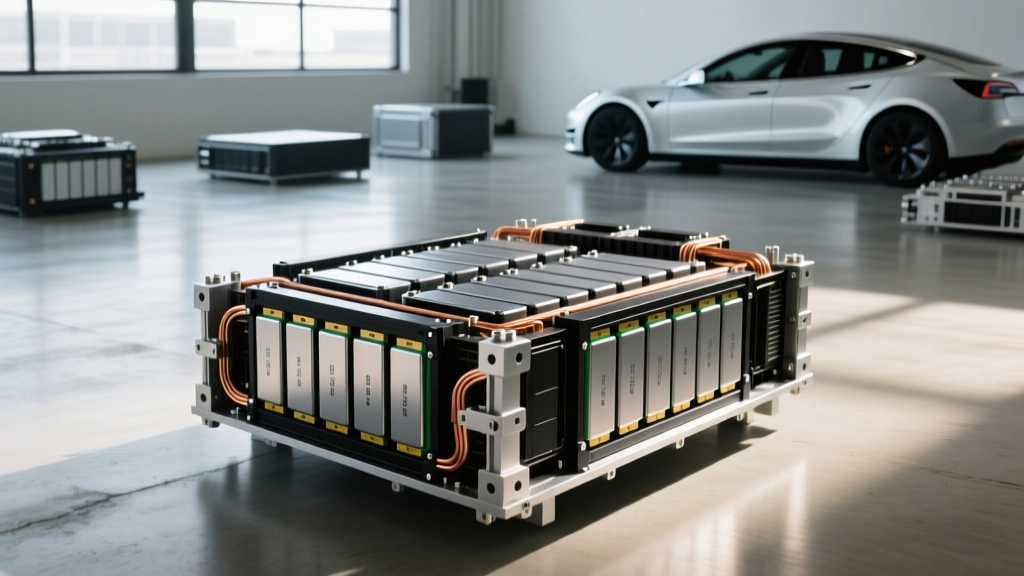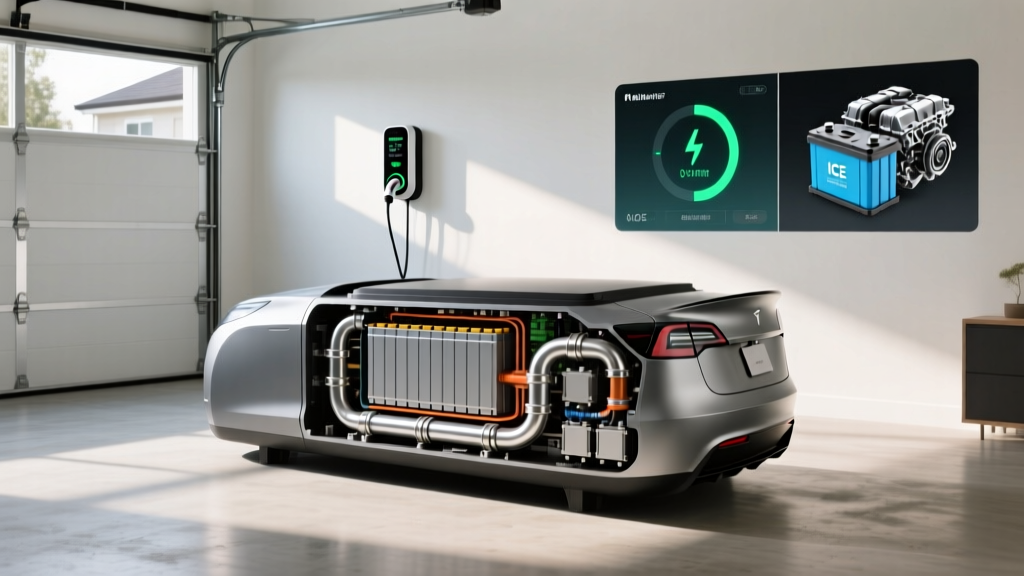
When homeowners search for an "ice battery for home," they're usually looking at thermal energy storage systems — specifically, Ice Energy's Ice Bear or similar ice-based cooling batteries that freeze water at night to reduce daytime AC loads. But if you're an EV owner or shopper, the battery conversation extends far beyond home cooling. The lithium-ion packs powering modern electric vehicles share chemistry roots with stationary storage, yet operate under vastly different demands. This guide bridges both worlds, giving you a precise, data-driven look at EV battery technology in 2026 — from LFP vs. NMC chemistry trade-offs to real degradation numbers, warranty coverage, and replacement costs.
What Is an ICE Battery for Home, and How Does It Compare to EV Batteries?
An ice battery for home — most commonly associated with thermal storage systems like the Ice Bear — uses off-peak electricity to freeze water into ice, then melts that ice during peak hours to cool your home without running the compressor. It's a clever demand-shifting strategy, but it stores thermal energy, not electrical energy. An EV traction battery, by contrast, stores electrical energy in lithium-ion cells and must deliver hundreds of kilowatts on demand while surviving thousands of charge cycles across extreme temperatures.
The key distinction: home ice batteries are purpose-built for one task (cooling) and operate within narrow parameters. EV batteries must handle acceleration, regenerative braking, fast charging, cold starts, and hot-weather highway driving — all while retaining at least 70-80% of their original capacity over 8-10 years. That demand profile is why EV battery chemistry, thermal management, and warranty structures are far more complex than anything in the residential thermal-storage space.
LFP vs. NMC/NCA: The Chemistry Decision That Defines Your EV
Every EV battery in 2026 uses one of two dominant cathode chemistries: Lithium Iron Phosphate (LFP) or Nickel Manganese Cobalt / Nickel Cobalt Aluminum (NMC/NCA). The choice affects range, longevity, cost, and cold-weather behavior — and it's not a simple "better or worse" equation.
| Attribute | LFP (Lithium Iron Phosphate) | NMC / NCA |
|---|---|---|
| Energy Density | Lower (~160 Wh/kg cell-level). Heavier pack for same kWh. | Higher (~250-300 Wh/kg). More range per kg. |
| Cycle Life | 3,000-5,000+ cycles to 80% SoH. Exceptional longevity. | 1,000-2,000 cycles to 80% SoH. Good but lower. |
| Cold Performance | Weaker. Greater range loss below 32°F. Slower charging in cold. | Better low-temp conductivity. Less winter range penalty. |
| Cost | Lower. No cobalt or nickel. ~$100-120/kWh at pack level (2026). | Higher. Cobalt/nickel commodity exposure. ~$130-160/kWh. |
| Thermal Stability | Superior. Higher thermal runaway threshold (~270°C). | Good with BMS, but lower runaway threshold (~210°C). |
| SoC Recommendation | Can charge to 100% daily. Periodic full charges actually help BMS calibration. | 80% daily recommended. 100% for trips only. |
| Common in (2026) | Tesla Model 3/Y RWD, BYD models, Ford Mustang Mach-E Select | Tesla LR/Performance, Hyundai Ioniq 5/6, Rivian, BMW iX |
Which is better? If you prioritize maximum range and cold-weather performance and don't mind charging to 80% daily, NMC/NCA is the stronger fit. If you want maximum cycle life, lower cost, and the simplicity of charging to 100% every night — and you can accept slightly less range or live in a moderate climate — LFP is the smarter long-term play. Neither is universally superior; the right choice depends on your driving pattern and climate.
How Long Do EV Batteries Actually Last? Real Degradation Data
The fear that EV batteries will fail like smartphone batteries after two years is the single biggest misconception in the EV space. Modern traction batteries are engineered for 15-20 year service lives. Here's what the data shows:
- Tesla fleet data (2025 Impact Report): Model 3/Y batteries retain ~88% capacity at 150,000 miles. NMC packs show ~12% loss; LFP packs show ~8-10% loss at the same mileage.
- Geotab fleet study (2024, 10,000+ EVs): Average annual degradation across all brands is ~1.8% per year, meaning a typical EV retains ~82% capacity after 10 years.
- Hyundai/Kia E-GMP platform: Owner-reported data on Ioniq 5 fleets shows ~5-7% degradation at 60,000 miles with mixed L2/DCFC charging.
- Nissan Leaf (passive cooling, older gen): Higher degradation rates of 3-4% annually in hot climates, underscoring the importance of active liquid cooling in modern packs.
Most EV batteries will outlast the vehicle's body, suspension, and interior. Catastrophic failure (a pack that simply stops working) is extremely rare — degradation is a slow, linear process where you gradually lose range over years. A 300-mile EPA-rated EV that loses 12% capacity over 8 years still delivers ~264 miles, which remains practical for the vast majority of drivers.
Battery Warranty Coverage: What's Actually Protected
Federal law mandates a minimum 8-year/100,000-mile warranty on EV battery packs (10 years/150,000 miles in CARB states like California). But the details matter — specifically the capacity retention threshold that triggers a warranty claim.
| Manufacturer | Coverage Period | Capacity Threshold | Notes |
|---|---|---|---|
| Tesla | 8 yr / 120,000 mi (Model 3/Y LR) | 70% | RWD (LFP): 8yr/100,000mi, 70% |
| Hyundai / Kia | 10 yr / 100,000 mi | 70% | Among the longest coverage terms |
| Ford | 8 yr / 100,000 mi | 70% | Covers Mustang Mach-E, F-150 Lightning |
| BMW | 8 yr / 100,000 mi | 70% | i4, iX, i7 covered |
| Rivian | 8 yr / 175,000 mi | 70% | Highest mileage cap in the industry |
The critical number is the 70% capacity retention threshold. If your battery drops below 70% of its original capacity within the warranty period, the manufacturer must repair or replace it at no cost. In practice, very few modern EVs hit this threshold within the warranty window — the data above shows most packs retain 80-90% at 100,000 miles. The warranty is protection against manufacturing defects and abnormal degradation, not a guarantee your battery will fail.
EV Battery Replacement Cost: When and How Much
Out-of-warranty battery replacement is the cost EV skeptics cite most often. The numbers are real but need context: most EVs never need a full pack replacement during typical ownership, and costs have declined significantly.
| Model | Battery Size | Chemistry | Replacement Cost Range |
|---|---|---|---|
| Tesla Model 3 RWD | ~60 kWh | LFP | $8,000 – $12,000 |
| Tesla Model Y LR | ~75 kWh | NMC | $12,000 – $16,000 |
| Hyundai Ioniq 5 | 77.4 kWh | NMC | $13,000 – $18,000 |
| Ford F-150 Lightning (ER) | ~131 kWh | NMC | $20,000 – $28,000 |
| Chevrolet Equinox EV | ~85 kWh | NMC | $14,000 – $19,000 |
These costs include the pack and labor but can vary by region and dealer. Importantly, module-level repair is increasingly common: if only a few cell modules degrade abnormally, many shops can replace individual modules for $1,500-$4,000 rather than swapping the entire pack. As fueleconomy.gov notes, EV battery technology continues to improve in durability while costs per kWh decline year over year.
When is replacement typically needed? Based on current degradation curves, a full pack replacement outside warranty would most likely be considered at 200,000-300,000 miles or 15-20 years — at which point the vehicle's resale value is minimal and most owners have moved on. For context, the average US vehicle age is 12.6 years; most EVs will be retired for non-battery reasons (body damage, electronics failures, owner upgrades) before the pack needs replacing.
What Affects EV Battery Life — and What You Can Control
Not all miles are created equal when it comes to battery wear. Here are the factors that meaningfully impact long-term State of Health (SoH), ranked by impact:
- Avoid sustained high SoC (NMC only): Charge to 80% daily; reserve 100% for road trips. LFP owners can charge to 100% regularly without concern.
- Limit DC fast charging frequency: Occasional DCFC is fine, but daily 150+ kW sessions accelerate degradation. If you can charge on Level 2 at home (7-11 kW), do so for daily use.
- Don't let SoC sit at 0% or 100% for extended periods: If storing the vehicle for weeks, set charge limit to ~50%.
- Precondition before fast charging: Most EVs do this automatically when you navigate to a charger. Cold batteries charge slower and experience more stress. Preconditioning warms the pack to optimal temperature (~25-35°C).
- Extreme heat is worse than extreme cold for degradation: Parking in shade or a garage in hot climates meaningfully extends pack life. Cold reduces range temporarily but doesn't cause permanent damage.
- Use the vehicle's built-in charge scheduling: Most EVs let you set charge windows so the battery doesn't sit at high SoC overnight. Charge to finish right before you leave.
The single most impactful habit: if you drive an NMC-equipped EV, set your daily charge limit to 80% and use Level 2 home charging for the majority of your charging. Owners who follow this pattern consistently see degradation rates of 1-1.5% per year — well within warranty thresholds.
How to Monitor Your Battery's State of Health (SoH)
State of Health (SoH) represents your battery's current maximum capacity as a percentage of its original capacity. A new EV starts at 100% SoH; if your 75 kWh pack can now hold 67.5 kWh, your SoH is 90%.
How to check SoH:
- In-vehicle displays: Tesla provides a battery health estimate in the service menu. Hyundai/Kia shows SoH via the infotainment system on newer models. BMW displays it in the iDrive EV settings.
- OBD-II tools: Devices like the OBDLink SX paired with apps such as EVNotify, LeafSpy (for Nissan), or Scan My Tesla can read cell-level voltage data and calculate SoH with reasonable accuracy.
- Dealer diagnostics: A service center can run a full capacity test, though this may require leaving the vehicle for a controlled discharge cycle.
- Third-party services: Companies like Recurrent Auto offer free battery health reports by connecting to your vehicle's telematics data, tracking degradation over time against fleet averages.
Monitoring SoH quarterly is sufficient for most owners. If you notice a sudden drop (more than 2-3% in a single month), that warrants a dealer visit to check for module imbalance or cooling system issues.
Emerging Battery Tech: Solid-State, Silicon Anodes, and Realistic Timelines
The EV battery landscape is evolving rapidly, but separating marketing hype from production reality is essential:
Solid-state batteries: These replace the liquid electrolyte with a solid material, promising higher energy density (potentially 400+ Wh/kg at cell level), faster charging, and improved safety. Toyota has announced solid-state EVs for 2027-2028 with ~750 km (WLTP) range and 10-minute 10-80% charging. Samsung SDI and QuantumScape are also in advanced testing. However, manufacturing scale-up remains the bottleneck — expect limited availability in premium models first, with mainstream adoption likely not before 2030. These are not available in any production vehicle as of 2026.
Silicon-dominant anodes: Companies like Sila Nanotechnologies and Group14 are replacing graphite anodes with silicon composites, boosting energy density by 20-40%. These are beginning to appear in limited production (Mercedes G-Class electric uses Sila cells). Expect broader adoption in 2027-2029 model-year vehicles.
Sodium-ion batteries: CATL and BYD are producing sodium-ion cells for lower-cost, shorter-range EVs. These avoid lithium entirely, reducing cost and supply-chain risk, but offer lower energy density (~140 Wh/kg). Best suited for urban runabouts and fleet vehicles. First appearing in Chinese-market vehicles in 2025-2026, US availability is uncertain.
For buyers today, these technologies are forward-looking context — not reasons to delay a purchase. Current LFP and NMC batteries already deliver 200,000+ mile service lives with manageable degradation, and today's EVs benefit from mature, proven technology with established service networks.
Frequently Asked Questions
How long do EV batteries last in years and miles?
Based on fleet data from Tesla, Geotab, and manufacturer reports, modern EV batteries typically last 15-20 years or 200,000-300,000 miles before degradation makes them impractical for daily use. Most retain 80-88% capacity at 150,000 miles. The battery will almost certainly outlast the rest of the vehicle.
How much does it cost to replace an EV battery?
Full pack replacement costs range from roughly $8,000 for a smaller LFP pack (Tesla Model 3 RWD) to $28,000 for a large NMC pack (F-150 Lightning Extended Range). Module-level repairs cost $1,500-$4,000. Most owners never need a replacement — the pack outlives the vehicle in the vast majority of cases.
What does the EV battery warranty actually cover?
Federal law requires a minimum 8-year/100,000-mile battery warranty (10yr/150,000mi in CARB states). Coverage applies if capacity drops below 70% of original within the warranty period. Some manufacturers, like Hyundai/Kia and Rivian, offer more generous terms. The warranty covers manufacturing defects and abnormal degradation, not damage from accidents or misuse.
How do I check and maximize my EV battery health?
Check SoH through your vehicle's infotainment system, OBD-II apps like Scan My Tesla or LeafSpy, or free services like Recurrent Auto. Maximize longevity by charging to 80% daily (NMC), using Level 2 home charging over DCFC, preconditioning before fast charging, and avoiding prolonged storage at 0% or 100% SoC.
Is LFP or NMC better for my EV?
LFP offers longer cycle life (3,000-5,000+ cycles), lower cost, and the convenience of 100% daily charging, but with lower energy density and weaker cold-weather performance. NMC delivers more range per kWh and better cold performance but has shorter cycle life and requires 80% daily charge limits. Choose LFP for longevity and simplicity; choose NMC for maximum range and cold-climate driving.
Sources: U.S. Department of Energy / fueleconomy.gov, IRS §30D Clean Vehicle Credits, manufacturer warranty documentation.