If you've been following EV headlines, you've likely seen the phrase Hyundai solid state battery surface in press releases and tech demonstrations. Hyundai Motor Group, in partnership with Samsung SDI, has showcased solid-state prototype cells and published a roadmap pointing toward limited commercialization in the latter half of this decade. For prospective EV buyers in 2026, the critical question isn't whether solid-state technology is real — it's whether you should wait for it, or whether today's lithium-ion battery packs are already durable, affordable, and efficient enough to justify buying now.
This guide cuts through the hype. We'll examine the chemistry powering Hyundai's current EV lineup (including the Ioniq 5, Ioniq 6, and Kona Electric), explain real-world degradation data, break down warranty coverage and replacement costs, and put Hyundai's solid-state ambitions in proper timeline context. The goal: give you the data to decide whether to buy today's EV or wait for tomorrow's.
Hyundai's Current EV Battery Chemistry: NMC vs LFP Trade-Offs
As of the 2026 model year, Hyundai primarily uses two battery chemistries across its electrified lineup:
- NMC (Nickel Manganese Cobalt): Found in the Ioniq 5 (77.4 kWh usable), Ioniq 6 (77.4 kWh usable), and Kona Electric (64.8 kWh). NMC offers high energy density, enabling 300+ mile EPA ranges in mid-size crossovers and sedans.
- LFP (Lithium Iron Phosphate): Hyundai has begun introducing LFP packs in select global markets for base-trim and fleet-oriented models. LFP sacrifices some energy density but gains in cycle life, thermal stability, and lower raw-material cost.
Understanding the trade-offs between these chemistries is essential before we discuss Hyundai's solid-state roadmap. Here's how they compare across the metrics that matter most to owners:
| Attribute | NMC (Nickel Manganese Cobalt) | LFP (Lithium Iron Phosphate) |
|---|---|---|
| Energy Density (Wh/kg, cell-level) | 230–300 Wh/kg | 160–200 Wh/kg |
| Typical Cycle Life (to 80% capacity) | 1,000–2,000 cycles | 3,000–6,000+ cycles |
| Cold-Weather Performance (at -10°C / 14°F) | Moderate range loss (~20-30%) | Higher range loss (~30-40%), slower charge acceptance |
| Thermal Runaway Risk | Higher (requires robust BMS/cooling) | Significantly lower (inherently stable chemistry) |
| Cost per kWh (cell-level, 2026 est.) | ~$100–$120/kWh | ~$70–$90/kWh |
| Cobalt Content | Yes (supply-chain and ethical concerns) | None |
| Recommended Daily Charge Limit | 80% for longevity | 100% acceptable (and recommended periodically for cell balancing) |
Which is better? It depends on your use case. If you need maximum range in a smaller vehicle footprint — say, a 310-mile Ioniq 6 for highway commuting — NMC is the answer today. If you drive shorter daily routes, can charge at home nightly, and want maximum long-term cycle life, LFP is compelling. Hyundai's dual-chemistry strategy mirrors the broader industry: NMC for range-oriented trims, LFP for cost-optimized and high-utilization applications.
How Long Do Hyundai EV Batteries Actually Last?
This is the question every EV buyer asks, and the answer is better than most expect. Modern Hyundai EV batteries are engineered to outlast the typical ownership cycle of the vehicle itself.
Real-World Degradation Data
Based on aggregated fleet data, owner reports, and third-party testing from sources like Geotab's EV battery health study, here's what degradation looks like for liquid-cooled NMC packs similar to those in Hyundai's E-GMP platform vehicles:
- Year 1–2: ~2–4% capacity loss (initial formation period; steepest early curve)
- Year 3–5: ~1–2% loss per year (plateau phase)
- Year 6–8: ~1–1.5% loss per year
- Year 10 (projected): Total capacity retention of ~85–90% for a well-maintained pack
To put that in miles: a Hyundai Ioniq 5 with a 77.4 kWh battery and 260-mile EPA range would still deliver roughly 225–235 miles of range at 100,000 miles, and approximately 210–220 miles at 150,000 miles. That's a meaningful reduction, but not one that renders the vehicle unusable — it simply shifts from a "road-trip machine" to a "daily commuter with margin."
LFP packs degrade even more slowly. Data from BYD and CATL LFP cells (similar to those Hyundai sources for LFP applications) shows capacity retention of 90%+ after 2,000 charge cycles — equivalent to roughly 400,000+ miles of driving in an Ioniq 5-class vehicle.
Hyundai's EV Battery Warranty: What's Covered
Hyundai backs its high-voltage traction batteries with one of the more robust warranties in the industry. Here's the breakdown for 2026 model-year vehicles sold in the United States:
| Term | Details |
|---|---|
| Duration | 10 years / 100,000 miles (whichever comes first) |
| Capacity Retention Threshold | 70% of original usable capacity |
| What's Covered | Defects in materials/workmanship; capacity loss below 70% threshold under normal use |
| What's NOT Covered | Damage from accidents, flooding, improper modifications, or use outside manufacturer guidelines |
| Transferability | Warranty transfers to subsequent owners (a significant resale-value factor) |
| California / PZEV States | 10 years / 150,000 miles in CARB-adopting states for emission-related components (hybrid battery coverage may differ; confirm with dealer for BEV specifics) |
The 70% threshold is industry-standard, matching what you'll find from Kia, Volkswagen, and most legacy automakers. Tesla sets its threshold at 70% for 8 years/100,000–120,000 miles depending on model. Hyundai's 10-year duration is among the longest in the market, which matters when you consider that most EVs are kept for 8–12 years by their original or second owners.
Key caveat: The warranty covers the battery falling below 70% capacity — not gradual degradation above that threshold. If your pack is at 75% capacity at year 9, that's considered normal wear and isn't a warranty claim.
EV Battery Replacement Cost: The Numbers Buyers Fear (and Why They Shouldn't)
Let's address the elephant in the room: what if the battery fails out of warranty?
| Model | Battery Size (kWh) | Replacement Cost Estimate (Parts + Labor) |
|---|---|---|
| Hyundai Kona Electric | 64.8 kWh | $10,000–$14,000 |
| Hyundai Ioniq 5 | 77.4 kWh | $12,000–$18,000 |
| Hyundai Ioniq 6 | 77.4 kWh | $12,000–$18,000 |
| Comparable: Tesla Model Y | 75 kWh | $12,000–$16,000 |
| Comparable: Ford Mustang Mach-E | 91 kWh (extended) | $15,000–$22,000 |
Those numbers look steep — and they are. But context matters enormously:
- Most batteries never need full replacement. Catastrophic failure (sudden cell death, manufacturing defect) is rare and almost always occurs within the warranty period. Gradual degradation to the point of "needing replacement" typically takes 15–20+ years.
- Cell-level repair is increasingly viable. Modern EV battery packs are modular. A single failing module can often be replaced for $1,500–$4,000 rather than swapping the entire pack.
- Prices are falling. Pack-level battery prices have declined roughly 10–15% annually over the past decade. A replacement pack in 2035 will cost significantly less than today's estimates.
- The vehicle's value offsets the equation. A 10-year-old EV with 85% battery health still has substantial market value. The total cost of ownership over a decade — factoring in zero oil changes, minimal brake wear (regen braking), and lower per-mile energy cost — typically favors the EV even if a battery replacement were needed in year 12 or 13.
What Factors Affect EV Battery Lifespan?
Battery degradation isn't random — it's driven by measurable, controllable factors. Here's what accelerates wear and what you can do about it:
1. Fast-Charging Frequency
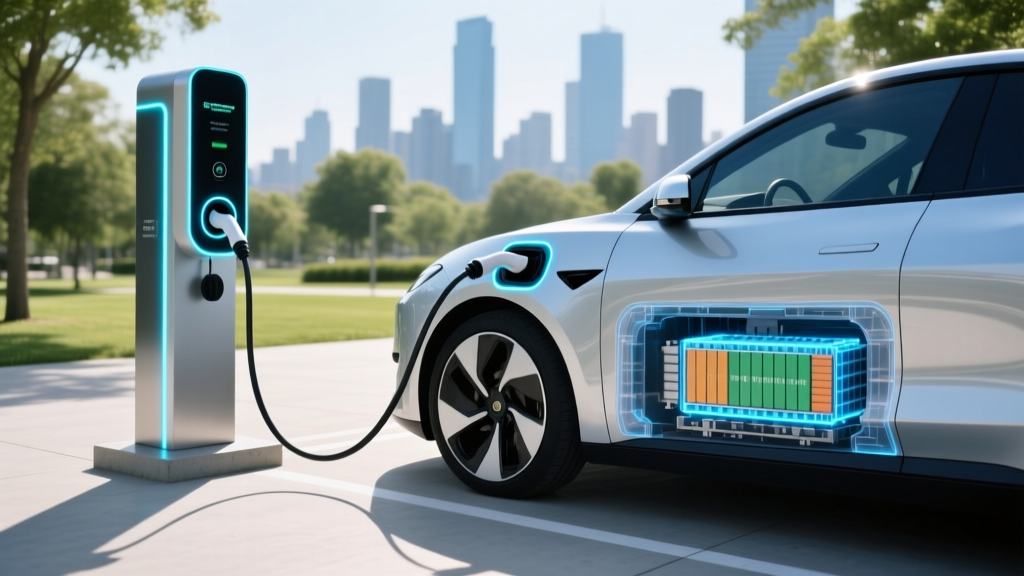
DC fast charging at 150–350 kW generates significant heat and forces lithium ions through the anode at high rates. Occasional road-trip fast charging is fine, but daily reliance on DCFC accelerates degradation. Hyundai's E-GMP platform includes battery preconditioning (warming the pack before you arrive at a charger), which mitigates some of this stress. Best practice: Use Level 2 home charging for daily needs; reserve DCFC for road trips.
2. Extreme Temperatures
Both hot and cold climates stress batteries, but in different ways. Sustained high ambient temperatures (above 95°F / 35°C) accelerate chemical degradation inside cells. Extreme cold doesn't permanently damage cells but reduces charge acceptance and temporarily limits range. Hyundai's liquid-cooled thermal management system actively regulates pack temperature, which is a significant advantage over older passively-cooled designs (like early Nissan Leafs).
3. State of Charge (SoC) Habits
For NMC batteries, consistently charging to 100% or discharging to near 0% stresses the cells. The lithium ions are most stable at intermediate states. Best practice for NMC: Set your daily charge limit to 80% and only charge to 100% when you need the full range for a trip. For LFP batteries, periodic 100% charges are actually recommended for cell balancing — a key ownership difference.
4. Storage Conditions
Leaving an EV parked at 100% SoC in hot weather for weeks accelerates calendar degradation. If you're going on vacation, set the charge to ~50% and park in shade or a garage if possible.
- ✅ Use Level 2 (7–11 kW) home charging as your daily routine
- ✅ Set NMC daily charge limit to 80%; charge to 100% only for trips
- ✅ For LFP packs, charge to 100% at least once per month for cell balancing
- ✅ Enable battery preconditioning before DC fast charging (automatic via navigation in Hyundai EVs)
- ✅ Avoid leaving the car at 100% or below 10% SoC for extended periods
- ✅ Park in shade/garage during extreme heat when possible
- ✅ Keep your Hyundai's OTA software updated — BMS algorithms improve over time
How to Check Your Hyundai's Battery Health (State of Health)
Monitoring your battery's State of Health (SoH) — the percentage of original capacity remaining — is straightforward with modern Hyundai EVs:
Via the Vehicle's Infotainment System
On 2024+ Hyundai EVs running the latest ccNC infotainment software, navigate to EV Settings → Battery Information. You'll see current SoC, estimated range, and — on updated software versions — an SoH percentage. If this menu isn't visible, a dealer can read the SoH via the OBD-II diagnostic port using Hyundai's GDS (Global Diagnostic System) tool.
Via Third-Party OBD-II Tools
Devices like the OBDLink MX+ paired with apps such as EVNotify or Car Scanner ELM OBD2 can pull detailed battery telemetry, including individual cell voltages, pack temperature, and calculated SoH. These readings are generally accurate to within 1–2% of the dealer diagnostic tool.
Via Hyundai's Bluelink App
Hyundai's connected-services app shows charging status and estimated range, but as of 2026 does not display a raw SoH percentage directly. However, if you notice your full-charge estimated range has dropped significantly from the EPA sticker (e.g., an Ioniq 5 that originally showed 260 miles at 100% now shows 215 miles), that's a practical SoH indicator worth discussing with your dealer.
The Hyundai Solid State Battery: Realistic Timeline and What It Promises
Now let's address the headline technology: Hyundai's solid-state battery program.
Solid-state batteries replace the liquid electrolyte in conventional lithium-ion cells with a solid material (ceramic, sulfide-based, or polymer). The theoretical advantages are substantial:
- Higher energy density: 400–500+ Wh/kg at the cell level (vs. 230–300 for today's NMC), potentially enabling 500+ mile ranges in the same physical pack size
- Faster charging: Solid electrolytes can theoretically tolerate higher charge rates without lithium plating, potentially enabling 10–80% charges in under 10 minutes
- Improved safety: No flammable liquid electrolyte means dramatically reduced thermal runaway risk
- Longer cycle life: Some solid-state chemistries project 5,000–10,000+ cycles to 80% retention
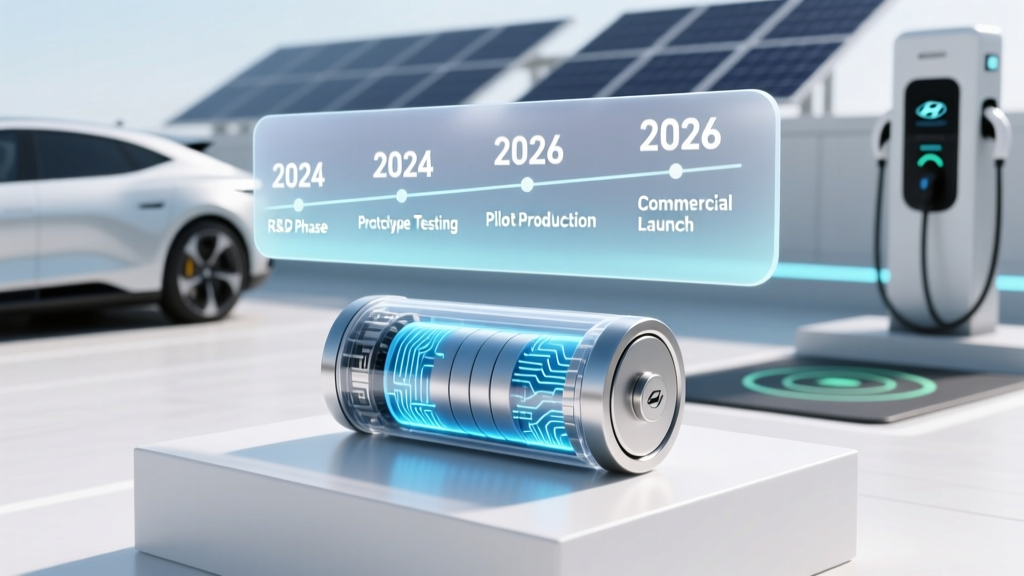
Hyundai Motor Group has partnered with Samsung SDI on solid-state cell development and has publicly stated goals to begin limited production of solid-state battery-equipped vehicles by approximately 2028–2030. Samsung SDI has demonstrated prototype all-solid-state cells at industry events, and Hyundai has shown test mules running solid-state packs.
Why You Shouldn't Wait
Here's the reality check that matters for buyers in 2026:
- Timeline slippage is the norm. Solid-state batteries have been "5 years away" for roughly 15 years. Manufacturing challenges — particularly achieving consistent solid-electrolyte-to-electrode contact at scale, managing dendrite formation, and reducing per-kWh cost — remain significant. A 2028–2030 Hyundai solid-state vehicle, if it arrives on schedule, will likely be a limited-run, premium-priced model — not a volume product.
- Volume affordability is years further out. Even after initial production begins, solid-state packs will carry a substantial cost premium. Affordable solid-state EVs (at price parity with today's NMC packs) are realistically a 2032–2035+ proposition.
- Today's batteries already solve the problems buyers cite. Range? The Ioniq 5 delivers 260+ real-world miles and charges 10–80% in ~18 minutes on a 350 kW charger. Longevity? 85–90% capacity at 10 years. Safety? Hyundai's E-GMP platform has earned IIHS Top Safety Pick+ ratings. The gap between today's lithium-ion and tomorrow's solid-state is meaningful but not transformative enough to delay a purchase for most buyers.
- Silicon-anode improvements are the nearer-term upgrade. Before full solid-state arrives, expect incremental improvements like silicon-dominant anodes (boosting energy density 15–25% within existing cell formats) and advanced NMC formulations. These will arrive in Hyundai vehicles within the next 2–4 model years without requiring entirely new manufacturing infrastructure.
Hyundai EV Battery FAQ
How long do Hyundai EV batteries last in years and miles?
Based on degradation data for Hyundai's liquid-cooled NMC packs, expect approximately 85–90% capacity retention at 10 years or 150,000 miles with normal use and proper charging habits. Many packs will remain functional well beyond 200,000 miles, albeit with reduced range. LFP-equipped Hyundais are projected to exceed 90% retention at the same intervals.
How much does it cost to replace a Hyundai EV battery?
Full pack replacement for a Hyundai Ioniq 5 or Ioniq 6 (77.4 kWh) currently ranges from approximately $12,000 to $18,000 including labor. The Kona Electric (64.8 kWh) ranges from $10,000 to $14,000. However, most packs never require full replacement — and module-level repairs for isolated cell failures cost $1,500–$4,000. Prices are expected to decline as battery manufacturing scales.
What does Hyundai's battery warranty cover?
Hyundai covers the high-voltage traction battery for 10 years / 100,000 miles against defects and capacity loss below 70% of original usable capacity. The warranty is transferable to subsequent owners. It does not cover damage from accidents, modifications, or misuse, nor does it cover normal degradation above the 70% threshold.
How do I check my Hyundai EV's battery health?
You can check State of Health (SoH) through the vehicle's infotainment system (EV Settings → Battery Information on updated software), via a Hyundai dealer's diagnostic tool, or through third-party OBD-II readers paired with EV-specific apps like EVNotify or Car Scanner. Monitoring your full-charge estimated range over time also provides a practical SoH indicator.
LFP vs NMC: which Hyundai battery chemistry is better for me?
Choose NMC if you need maximum range (300+ miles EPA), frequently drive highway distances, or live in a cold climate where LFP's reduced cold-weather performance would be a drawback. Choose LFP if your daily driving is under 150 miles, you charge at home nightly, you want maximum cycle life and thermal safety, and you prefer the simplicity of charging to 100% without longevity concerns. For most single-vehicle households that road-trip regularly, NMC remains the practical choice in 2026.
Should I wait for Hyundai's solid-state battery before buying an EV?
For most buyers, no. Hyundai's solid-state battery is projected for limited production around 2028–2030, with volume affordability likely not arriving until the early-to-mid 2030s. Today's Hyundai EVs already offer 260–360 miles of EPA range, 10–80% fast charging in 18–25 minutes, 10-year battery warranties, and proven real-world durability. Unless your purchase timeline naturally aligns with the early 2030s, waiting means forgoing 5–8+ years of EV ownership savings and benefits.
Sources: EPA range and efficiency data via fueleconomy.gov; Hyundai warranty terms via Hyundai USA; battery degradation research via Geotab EV Battery Health Study.