Understanding the Ioniq 5 Battery Capacity and Architecture
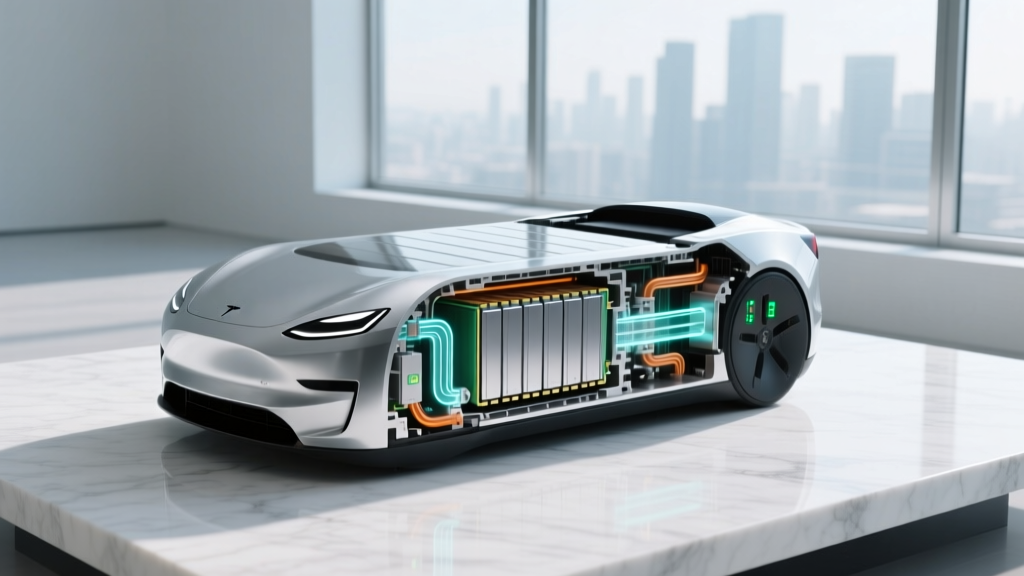
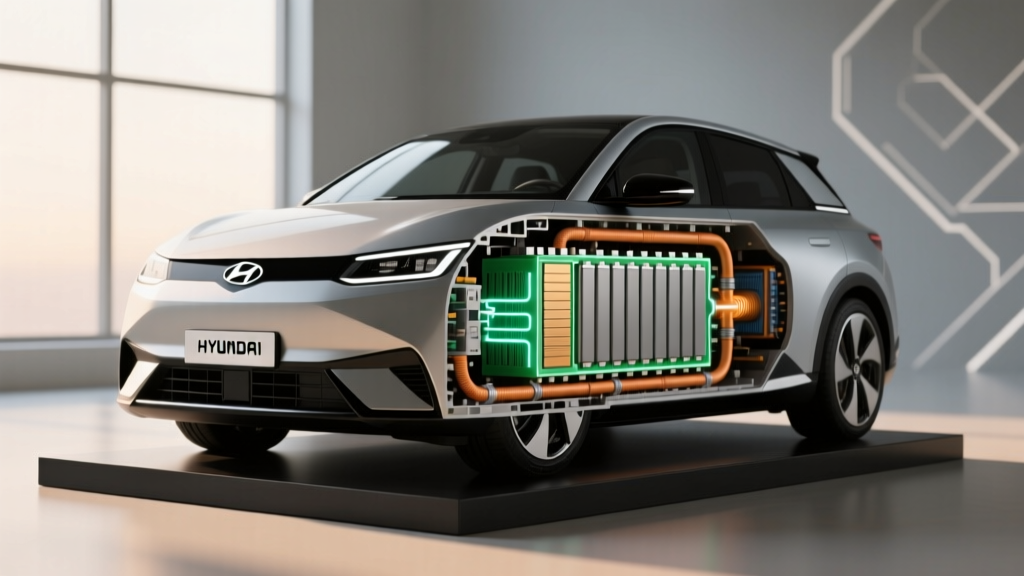
The Hyundai Ioniq 5 rides on the E-GMP (Electric Global Modular Platform) and is offered with two battery packs for the 2026 model year. The Standard Range model uses a 63.0 kWh usable lithium-ion pack, while the Long Range variant carries a larger 84.0 kWh usable battery. Both packs utilize NMC (nickel-manganese-cobalt) cell chemistry supplied primarily by SK On, housed in a flat, skateboard-style enclosure beneath the floor.
Understanding the Ioniq 5 battery capacity matters because it directly determines your EPA-rated range, charging speed envelope, and long-term degradation trajectory. The Long Range AWD model is EPA-rated at 290 miles, while the RWD Long Range pushes to 303 miles. The Standard Range RWD comes in at approximately 240 miles EPA. As with all EVs, expect real-world highway range to drop 10–15% below sticker figures at sustained 70+ mph speeds, and cold-weather range can fall 20–30% below EPA in sub-freezing temperatures without preconditioning.
NMC Chemistry in the Ioniq 5: Trade-Offs vs. LFP
Hyundai has equipped the Ioniq 5 with NMC (nickel-manganese-cobalt) cells rather than LFP (lithium iron phosphate). This is a deliberate engineering choice that prioritizes energy density and cold-weather performance — critical for a crossover targeting 300+ mile range in a variety of climates. Understanding the chemistry helps set realistic expectations for longevity and care.
| Attribute | NMC (Ioniq 5) | LFP (e.g., Tesla Model 3 RWD) |
|---|---|---|
| Energy Density | Higher (~250 Wh/kg cell-level) | Lower (~170 Wh/kg cell-level) |
| Typical Cycle Life | 1,000–2,000 cycles to 80% SoH | 3,000–5,000 cycles to 80% SoH |
| Cold Performance | Better low-temp conductivity | More range loss below freezing |
| 100% SoC Stress | Higher degradation at sustained 100% | Tolerates regular 100% charges |
| Cost (cell-level) | Higher (cobalt/nickel content) | Lower (iron/phosphate abundance) |
| Recommended Daily Charge Limit | 80% for daily use | 100% acceptable regularly |
The NMC chemistry in the Ioniq 5 gives you more range per kilogram of battery weight and faster charging in cold conditions, but it demands slightly more attentive state-of-charge management than an LFP pack. This is not a flaw — it is a well-understood trade-off that every NMC-equipped EV shares.
Degradation Data: What Ioniq 5 Owners Actually See
Battery degradation is the gradual, irreversible loss of total capacity over time and charge cycles. For the Ioniq 5's NMC pack, real-world fleet data and Hyundai's own engineering targets paint a reassuring picture.
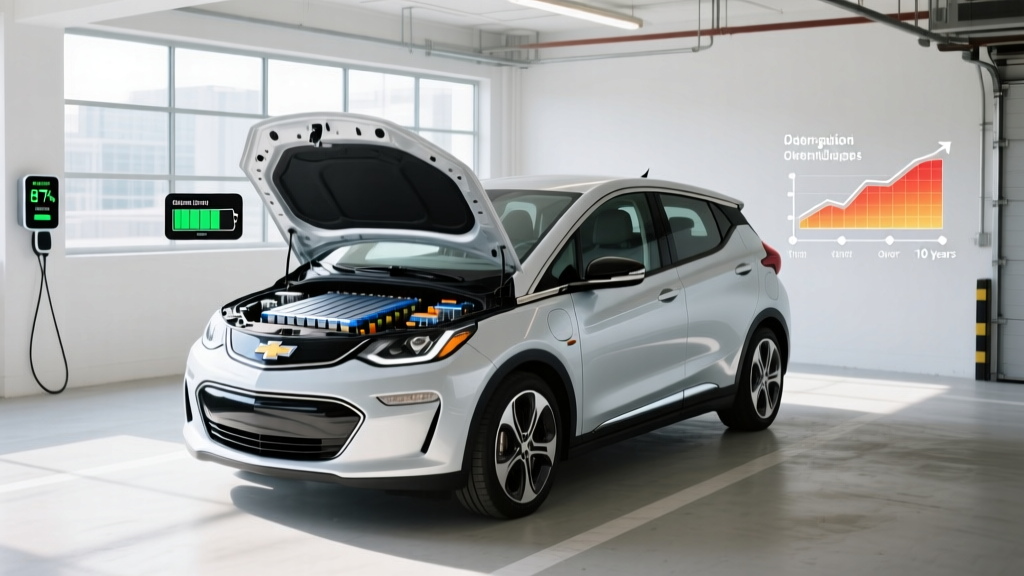
Based on aggregated owner data from EV tracking platforms and Hyundai's internal testing disclosures, typical Ioniq 5 NMC degradation follows this pattern:
- Year 1 (0–15,000 mi): 2–4% capacity loss — the initial "formation" drop common to all lithium-ion cells
- Years 2–4 (15,000–60,000 mi): ~1–1.5% per year — the slow, linear phase
- Years 5–8 (60,000–120,000 mi): Continued gradual loss; most packs retain 85–92% State of Health (SoH)
- Year 10+ (150,000+ mi): Projected 75–85% SoH depending on charging habits and climate
Hyundai's warranty guarantees the high-voltage battery will retain at least 70% of its original capacity over 8 years or 100,000 miles (10 years/150,000 miles in California and states adopting CARB standards). This threshold is conservative — the vast majority of Ioniq 5 packs will never approach it under normal use. According to data compiled by fueleconomy.gov, modern liquid-cooled EV batteries like the Ioniq 5's are designed to outlast the functional life of the vehicle itself.
The Ioniq 5's advanced thermal management system — a liquid cooling/heating loop that actively conditions the pack — is a major factor in keeping degradation low. Batteries that are thermally managed degrade far more slowly than passively cooled packs, particularly in hot climates or under frequent DC fast-charging use.
Battery Warranty Coverage: What Hyundai Guarantees
Understanding the warranty is critical for long-term ownership confidence. Hyundai provides one of the more straightforward high-voltage battery warranties in the industry.
| Coverage Detail | Specification |
|---|---|
| Standard Warranty Period | 8 years / 100,000 miles (whichever comes first) |
| CARB-State Warranty Period | 10 years / 150,000 miles |
| Capacity Retention Threshold | 70% of original usable capacity |
| What Triggers a Claim | Measured SoH falls below 70% during warranty period |
| Remedy | Repair, module replacement, or full pack replacement at Hyundai's discretion |
| Transferability | Fully transferable to subsequent owners |
| Exclusions | Damage from accidents, flooding, unauthorized modifications, or improper charging equipment |
The 70% threshold is industry-standard and aligns with federal requirements for EV battery warranty reporting. In practice, a 70% SoH on the 84.0 kWh Long Range pack still yields roughly 58.8 kWh usable — enough for approximately 200+ miles of real-world range. For most owners, this level of degradation would be noticeable but entirely livable.
Replacement Cost: What If the Pack Fails Out of Warranty?
This is the question that causes the most anxiety among prospective EV buyers. The honest answer: full high-voltage battery replacements on modern liquid-cooled EVs like the Ioniq 5 are rare. Most packs outlive the vehicle's economic life. But if you plan to keep an Ioniq 5 for 15+ years, or buy one used well past warranty, knowing the cost landscape matters.
| Scenario | Estimated Cost (Parts + Labor) | Notes |
|---|---|---|
| Single module replacement (Ioniq 5) | $2,000–$5,000 | Most common out-of-warranty repair; addresses one degraded cell group |
| Full pack replacement (84.0 kWh Long Range) | $12,000–$18,000 | Rare; prices declining as supply chains mature |
| Full pack replacement (63.0 kWh Standard Range) | $9,000–$14,000 | Smaller pack = lower material cost |
| Refurbished/remanufactured pack | $6,000–$10,000 | Emerging market; availability varies by region |
For context, a major engine or transmission replacement on a comparable ICE vehicle can run $5,000–$9,000. The Ioniq 5's battery pack is designed for modular service — technicians can replace individual cell modules rather than the entire enclosure, which keeps most out-of-warranty repairs in the lower cost tier. According to Hyundai's official newsroom, the E-GMP platform was engineered with serviceability as a priority.
The likelihood of needing a full pack replacement before 200,000 miles is low based on current fleet data. Most owners will sell or trade the vehicle long before the battery becomes economically unviable.
Maximizing Ioniq 5 Battery Life: Care Habits That Matter
NMC chemistry rewards mindful charging habits. You do not need to baby the battery, but a few consistent practices will measurably slow degradation over a decade of ownership.
- Set daily charge limit to 80%: Use the infotainment charge-limit setting. Reserve 100% for road trips. Sustained high SoC accelerates NMC electrolyte oxidation.
- Minimize DC fast charging when possible: The Ioniq 5's 800V architecture handles peak rates up to 240 kW beautifully (10–80% in ~18 minutes), but frequent 350 kW sessions generate cumulative thermal stress. Use Level 2 for daily needs.
- Precondition in cold weather: Use the Hyundai app or scheduled departure to warm the battery while plugged in. A cold NMC pack charged at high rates is susceptible to lithium plating.
- Avoid prolonged storage at extremes: If parking for weeks, leave SoC at 50–60%. Never store at 100% or below 10% for extended periods.
- Don't obsess over 12V: The Ioniq 5's 12V auxiliary battery is separate from the traction battery. If the 12V dies, it does not affect high-voltage pack health — but keep it maintained to avoid strandings.
- Use regenerative braking wisely: Level 2 or 3 regen reduces mechanical brake wear and generates moderate charge currents that are gentle on the pack.
The single most impactful habit is the 80% daily charge limit. NMC cells experience exponentially more stress between 80–100% SoC than between 20–80%. Keeping daily driving within that middle band is the closest thing to a "battery longevity cheat code."
Monitoring Battery Health: How to Check SoH
State of Health (SoH) is the percentage of original capacity your battery can still hold. A new Ioniq 5 Long Range at 100% SoH holds 84.0 kWh usable. At 90% SoH, it holds roughly 75.6 kWh — translating to a proportional range reduction.
Hyundai does not display a real-time SoH percentage on the dashboard, but there are several reliable methods to track it:
- Hyundai dealer diagnostic: Any authorized service center can run a battery health check using Hyundai's GDS (Global Diagnostic System) tool. Request this during routine service visits — it is typically free under warranty and provides a printed SoH report.
- OBD-II dongle + app: Third-party tools like the Car Scanner app paired with an OBDLink or vLinker dongle can read BMS (Battery Management System) data directly, including estimated SoH, cell voltage spread, and cumulative charge energy.
- Manual range tracking: Charge to 100% occasionally (once a month is fine), note the displayed range estimate, and compare it to the original EPA figure adjusted for your driving style. A consistent 5% drop over a year is normal; a sudden 10%+ drop warrants a dealer visit.
- Charging energy audit: Track kWh delivered during a full 10–100% charge session on your Level 2 charger. If your 84.0 kWh pack only accepts 72 kWh from 10% to full, your SoH is approximately 85–87% (accounting for charging losses).
For used Ioniq 5 buyers, always request a dealer SoH printout before purchase. A pack showing 90%+ SoH at 40,000 miles is typical and healthy. Anything below 85% at that mileage may indicate heavy DC fast-charging use or thermal exposure and deserves scrutiny.
Looking Ahead: Solid-State and Silicon Anode Timelines
Hyundai Motor Group has invested heavily in next-generation battery R&D, including partnerships with solid-state battery developers. However, it is important to separate announced research from production reality.
Solid-state batteries replace the liquid electrolyte with a solid conductor, promising higher energy density, faster charging, and improved safety. Hyundai has demonstrated prototype cells and has stated a target for limited production vehicles around 2027–2028. However, these will likely debut in premium Genesis models before reaching the Ioniq lineup. Mass-market solid-state packs with cost parity to current NMC are not expected before 2030 at the earliest.
Silicon anode technology — which replaces graphite anodes with silicon to boost energy density by 20–40% — is closer to reality. Several cell suppliers are shipping early silicon-dominant anode cells in limited applications. Expect incremental silicon-blend anodes to appear in NMC cells within the next 2–3 model years, gradually boosting capacity without changing pack dimensions.
For current Ioniq 5 buyers: waiting for solid-state is not a practical strategy. The NMC pack in today's Ioniq 5 is mature, well-cooled, and backed by robust warranty coverage. Next-generation chemistries will arrive as future model-year upgrades, not as retrofits.
Frequently Asked Questions
How long do Ioniq 5 batteries last in years and miles?
Based on fleet data and Hyundai's engineering targets, the Ioniq 5's NMC battery is designed to retain 70%+ capacity for 8–10 years or 100,000–150,000 miles. Many packs will exceed 200,000 miles before dropping below 70% SoH, particularly when owners follow moderate charging habits (80% daily limit, limited DC fast charging).
How much does it cost to replace an Ioniq 5 battery?
A full 84.0 kWh pack replacement runs $12,000–$18,000 at current pricing, but this is rarely needed. Most out-of-warranty battery service involves single-module replacements at $2,000–$5,000. Prices continue to decline as battery manufacturing scales and refurbished packs enter the market.
What does the Hyundai battery warranty actually cover?
Hyundai covers the high-voltage traction battery for 8 years/100,000 miles (10 years/150,000 miles in CARB states) against capacity loss below 70% of original. The warranty is fully transferable and covers parts and labor. It does not cover damage from accidents, floods, or unauthorized modifications.
Is LFP better than the NMC chemistry in the Ioniq 5?
Neither is universally "better" — they optimize for different priorities. LFP offers longer cycle life, lower cost, and tolerance for regular 100% charging, but sacrifices energy density and cold-weather performance. The Ioniq 5's NMC pack delivers more range per kilogram, better winter usability, and faster cold-weather charging — trade-offs that suit a 300-mile crossover sold across diverse US climates.
How can I check my Ioniq 5 battery health at home?
The most accessible home method is an OBD-II dongle paired with an app like Car Scanner, which reads SoH directly from the BMS. Alternatively, track kWh accepted during a 10–100% Level 2 charge and compare to the pack's rated usable capacity. For the most authoritative reading, request a GDS diagnostic printout at any Hyundai dealer.
Does frequent DC fast charging hurt the Ioniq 5 battery?
The Ioniq 5's 800V architecture and active liquid cooling are specifically designed to handle high-power DC charging with minimal stress. Occasional road-trip fast charging is perfectly fine. However, exclusive reliance on 350 kW chargers for daily charging will accelerate degradation compared to predominantly Level 2 charging. Think of DC fast charging as a road-trip tool, not a daily routine.