How Hybrids Actually Charge: Regenerative Braking, Engines, and Plug-In Power
Every hybrid on the road in 2026 — from the Toyota Prius to the Ford Maverick Hybrid — charges its high-voltage traction battery using some combination of three methods: regenerative braking, the internal combustion engine acting as a generator, and (in plug-in hybrids) an external AC or DC power source. But the details matter enormously depending on whether you're looking at a conventional hybrid (HEV) or a plug-in hybrid (PHEV), and the battery chemistry inside that pack determines how long it will last, how it handles cold weather, and what replacement might eventually cost.
This guide covers the full picture: the physics of how hybrid batteries charge, the chemistry trade-offs between LFP and NMC cells, real degradation data, warranty specifics, and what owners can do to maximize battery lifespan over 150,000+ miles.
The Three Ways a Hybrid Charges Its Battery
Understanding hybrid battery charging starts with recognizing that HEVs and PHEVs operate on fundamentally different architectures, even though both use regenerative braking as a baseline charging method.
Regenerative Braking (Both HEV and PHEV)
When you lift off the accelerator or press the brake pedal in a hybrid, the electric motor reverses its function and becomes a generator. Kinetic energy that would otherwise be wasted as heat in the friction brakes is instead converted into electrical energy and stored in the traction battery. Most hybrids recover between 15–30 kW of power during moderate deceleration, though aggressive braking events can see brief peaks above 50 kW in larger PHEV packs.
The efficiency of this system depends on driving patterns. Stop-and-go city driving generates far more regenerative charging opportunities than steady-state highway cruising. This is why hybrids achieve their best fuel economy in city conditions — the opposite of conventional gas cars.
Engine-as-Generator (Both HEV and PHEV)
When the battery's State of Charge (SoC) drops below a programmed threshold — typically around 40–60% depending on the manufacturer — the gasoline engine activates not just to drive the wheels but to spin a generator that tops up the battery. In Toyota's Hybrid Synergy Drive (used in the 2026 Prius and RAV4 Hybrid), the engine can simultaneously propel the vehicle and charge the battery through a planetary gearset that splits power between mechanical and electrical paths.
This is why an HEV never needs to be plugged in: the engine maintains the battery's charge level indefinitely, using fuel energy converted to electricity at roughly 30–38% efficiency (significantly better than a standalone gasoline generator).
External Plug-In Charging (PHEV Only)
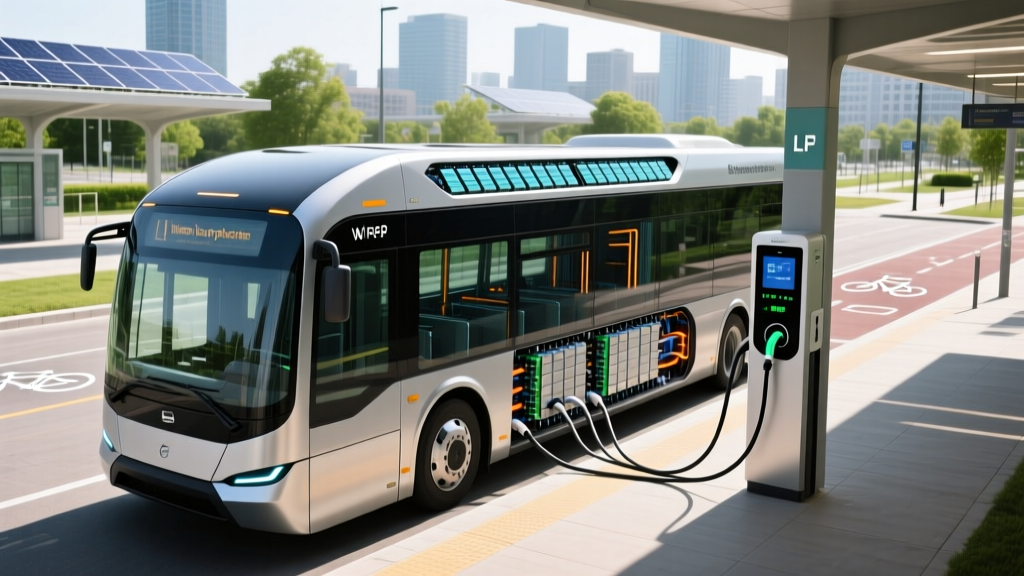
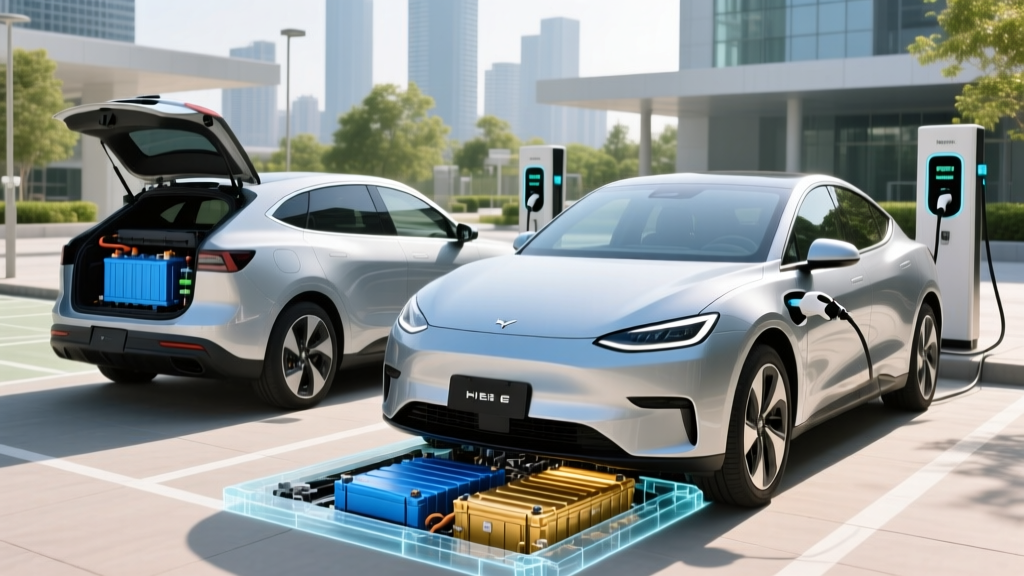
Plug-in hybrids add a charging port — typically J1772 for Level 1/Level 2 AC charging, with some 2026 models now offering CCS1 or NACS DC fast-charging capability. A PHEV like the 2026 Toyota RAV4 Prime accepts up to 6.6 kW on Level 2 AC, fully replenishing its 18.1 kWh battery in approximately 2.5 hours. The 2026 Jeep Wrangler 4xe supports Level 2 at 7.2 kW, charging its 17.3 kWh pack in roughly 2 hours.
Most PHEVs do not support DC fast charging, though exceptions exist: the 2026 Chrysler Pacifica Hybrid accepts up to 50 kW DC, and several European-market PHEVs (BMW X5 xDrive50e) offer DC capability. This is a deliberate engineering trade-off — PHEV batteries are small enough (typically 13–25 kWh) that overnight Level 2 charging is sufficient for daily use.
- HEV (e.g., Prius, CR-V Hybrid): Regen braking + engine generator only. No plug. Battery stays between ~40–80% SoC automatically.
- PHEV (e.g., RAV4 Prime, Wrangler 4xe): Regen + engine + plug-in (Level 1/Level 2). Battery can charge to 100% from a wall outlet.
- EREV / Range-Extended (e.g., upcoming Ram REV): Regen + engine generator (engine never drives wheels) + plug-in DC fast charging.
Battery Chemistry: LFP vs NMC in Hybrid Applications
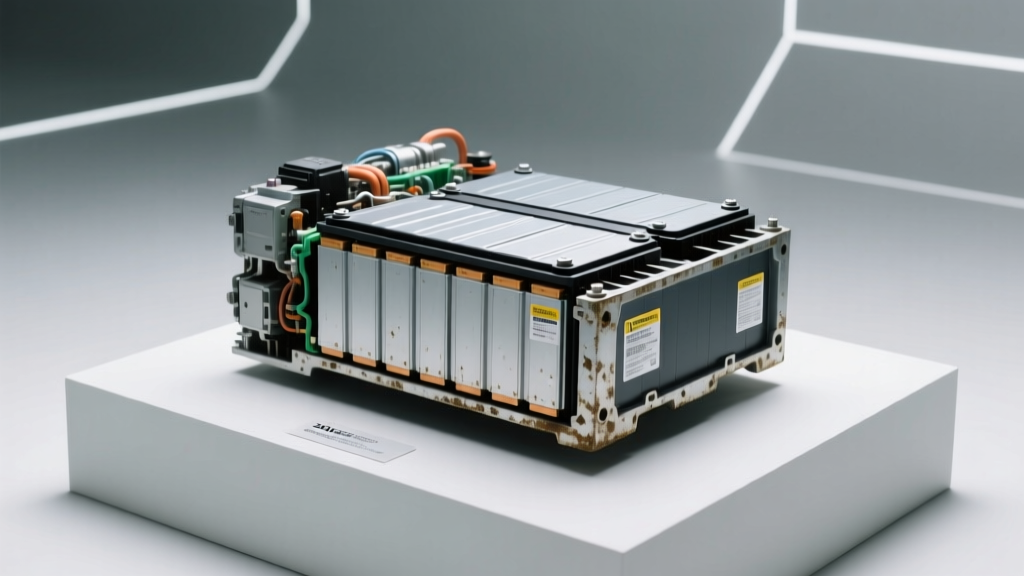
The lithium-ion cells inside hybrid battery packs aren't all created equal. Two dominant chemistries define the trade-offs manufacturers navigate: Lithium Iron Phosphate (LFP) and Nickel Manganese Cobalt (NMC) or Nickel Cobalt Aluminum (NCA). Each has distinct strengths that make it better suited to different hybrid architectures.
| Attribute | LFP (Lithium Iron Phosphate) | NMC / NCA (Nickel-based) |
|---|---|---|
| Energy Density | Lower (~160 Wh/kg cell-level) | Higher (~220–260 Wh/kg cell-level) |
| Cycle Life | 3,000–5,000+ full cycles | 1,000–2,000 full cycles |
| Cold-Weather Performance | Reduced — more power loss below 32°F | Better cold-weather discharge capability |
| Thermal Stability / Safety | Superior — higher thermal runaway threshold | Good, but requires more active thermal management |
| Cost (per kWh) | Lower — no cobalt or nickel | Higher — commodity-sensitive supply chain |
| Common Hybrid Use | HEV packs (Toyota, BYD); some PHEVs where weight is less critical | PHEV packs where maximizing electric-only range in a compact package matters |
For conventional HEVs with small batteries (1.0–2.0 kWh), Toyota has increasingly moved toward bipolar nickel-metal hydride (NiMH) and LFP lithium-ion cells in its 2026 lineup because cycle life and cost matter more than energy density when the battery only needs to buffer short bursts of electric assist. For PHEVs where 30–45 miles of electric-only range must fit in a limited under-floor space, NMC remains dominant because its higher energy density keeps pack size and weight manageable.
Neither chemistry is universally "better." LFP wins on longevity and cost; NMC wins on range-per-kilogram and cold performance. Your ideal choice depends on climate, driving habits, and whether you prioritize 15-year durability or maximum electric-only miles.
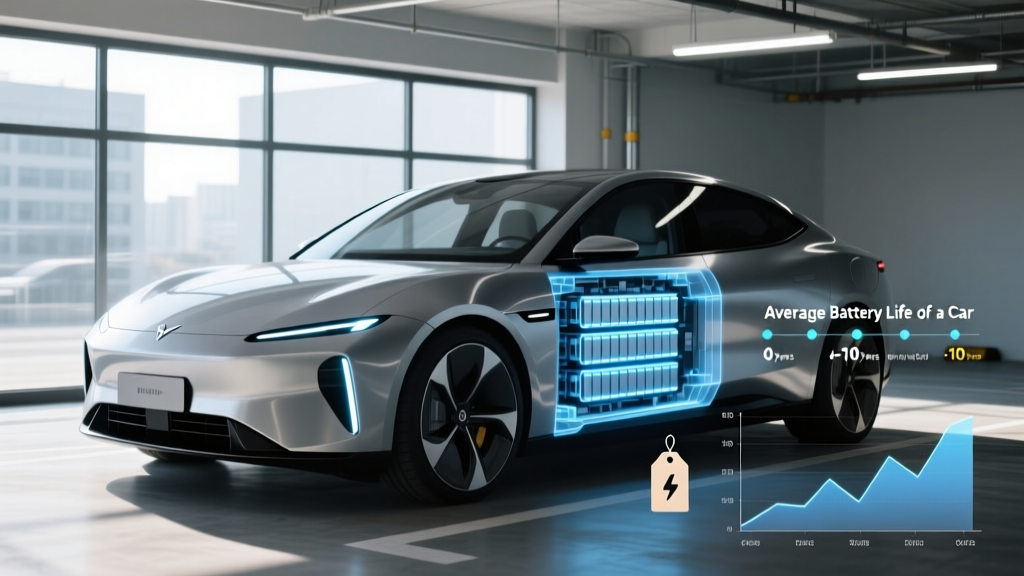
How Long Do Hybrid Batteries Last? Real Degradation Data
The question of battery lifespan generates more anxiety than almost any other EV or hybrid ownership concern. The data, however, tells a reassuring story — particularly for hybrids, whose battery management systems (BMS) are designed to be conservative with State of Charge windows.
Conventional HEVs like the Toyota Prius maintain their small battery packs between roughly 40% and 80% SoC at all times. The engine tops up the pack before it drops below the lower threshold, and regenerative braking is curtailed before the pack exceeds the upper threshold. This narrow operating window dramatically reduces calendar and cycle degradation. According to data compiled from fleet studies and owner reports tracked by sources including fueleconomy.gov, Toyota Prius NiMH and lithium-ion packs routinely exceed 150,000 miles with less than 15% capacity loss. Many first-generation Prius taxis logged 300,000+ miles on original battery packs.
PHEV batteries face a somewhat harder life because owners frequently charge them to 100% for maximum electric range and deplete them to near-zero before the engine kicks in. Even so, modern PHEV packs with active thermal management (liquid cooling) show degradation rates of approximately 1.5–2.5% per year under typical use. A 2026 RAV4 Prime owner driving 15,000 miles annually and charging daily can expect roughly 85–90% of original capacity after 8 years.
- Year 1: 2–3% loss (initial formation settling)
- Years 2–5: ~1.5–2% per year (steady-state linear decline)
- Years 6–10: ~1–1.5% per year (degradation slows as cell aging stabilizes)
- Year 10 expected SoH: 82–88% for HEV; 78–85% for PHEV (varies by climate and charging habits)
Note: These figures assume moderate climates and typical driving. Sustained exposure to 95°F+ ambient temperatures or frequent DC fast charging (PHEVs only) accelerates loss by 0.5–1% annually.
Battery Warranty Terms: What's Actually Covered
Federal law mandates that hybrid and EV battery packs carry a minimum warranty of 8 years / 100,000 miles in all 50 states, and 10 years / 150,000 miles in California Air Resources Board (CARB) states (which include California, New York, Massachusetts, Oregon, Washington, and several others). Most manufacturers meet or exceed these minimums, and the specific capacity-retention thresholds vary.
| Manufacturer (2026 Models) | Warranty Period | Capacity Retention Threshold | CARB-State Extension |
|---|---|---|---|
| Toyota (Prius, RAV4 Hybrid/Prime) | 10 yr / 150,000 mi | Below 70% SoH (hybrid battery) | Same — 10/150k nationwide |
| Hyundai / Kia (Tucson Hybrid, Sportage PHEV) | 10 yr / 100,000 mi | Below 70% SoH | 10 yr / 150,000 mi in CARB states |
| Ford (Maverick Hybrid, Escape PHEV) | 8 yr / 100,000 mi | Below 70% SoH | 10 yr / 150,000 mi in CARB states |
| Stellantis (Wrangler 4xe, Pacifica Hybrid) | 8 yr / 100,000 mi | Below 70% SoH | 10 yr / 150,000 mi in CARB states |
The critical detail: warranty replacement is triggered only when capacity drops below the stated threshold — typically 70%. A battery at 72% SoH is not eligible for warranty replacement even if the owner notices reduced electric-only range. This threshold is measured by the dealer's diagnostic tool reading the BMS-reported SoH value, not by the owner's subjective range observation.
Hybrid Battery Replacement Cost: When and How Much
The most persistent myth in hybrid ownership is that battery replacement will cost more than the vehicle is worth. While replacement is expensive, the data shows most hybrid batteries outlast the vehicles they're installed in — and when replacement is needed, costs have declined significantly over the past decade.
| Model (2026) | Battery Size | New OEM Replacement Cost | Refurbished / Aftermarket | Typical Replacement Mileage |
|---|---|---|---|---|
| Toyota Prius (HEV) | ~1.3 kWh (Li-ion) | $2,500–$3,800 | $1,200–$2,000 | 180,000–250,000+ mi |
| Toyota RAV4 Hybrid | ~1.6 kWh (NiMH/Li-ion) | $3,000–$4,500 | $1,500–$2,500 | 180,000–250,000+ mi |
| Toyota RAV4 Prime (PHEV) | 18.1 kWh (NMC Li-ion) | $7,500–$10,000 | $4,500–$6,500 | 200,000+ mi (projected) |
| Ford Maverick Hybrid | ~1.1 kWh (Li-ion) | $2,800–$4,000 | $1,400–$2,200 | 170,000–220,000+ mi |
| Jeep Wrangler 4xe (PHEV) | 17.3 kWh (NMC Li-ion) | $8,000–$12,000 | $5,000–$7,500 | 150,000–200,000+ mi |
Several factors make outright replacement less likely than many buyers fear. First, individual module or cell replacement is increasingly available from independent hybrid specialists for $500–$1,500, addressing a single failed module rather than the entire pack. Second, the refurbished battery market has matured significantly, with reconditioned OEM packs carrying 1–3 year warranties at roughly half the cost of new units. Third, most hybrids are retired or traded in before reaching the mileage where battery failure becomes statistically likely.
Factors That Accelerate — or Extend — Hybrid Battery Life
Battery degradation is not a single-variable equation. Five primary factors determine how quickly a hybrid's pack loses capacity over time, and owners have meaningful control over most of them.
1. State of Charge Extremes
Lithium-ion cells experience the most stress at the top and bottom of their SoC range. Sustained storage at 100% SoC accelerates electrolyte decomposition, while deep discharge below 10% risks copper dendrite formation. HEVs sidestep this problem entirely by never allowing the pack to reach either extreme. PHEV owners who charge to 100% nightly and immediately drive (rather than letting the car sit fully charged for days) minimize high-SoC dwell time.
2. Temperature Exposure
Battery cells degrade fastest when repeatedly exposed to high temperatures — specifically, cell temperatures above 104°F (40°C). This is why hybrids with active liquid cooling (most PHEVs, some HEVs) show measurably better long-term SoH than passively cooled packs in hot climates. Parking in shade or a garage during summer months reduces calendar aging by an estimated 15–25% over a decade, based on comparative fleet data from Arizona vs. Oregon Prius taxis.
3. Charge Rate and Frequency (PHEV-Specific)
For PHEVs that accept DC fast charging, frequent use of high-power DC (50+ kW) accelerates degradation compared to Level 2 AC charging. The high current generates internal cell heating that stresses the anode structure. PHEV owners with home Level 2 access should use DC fast charging only for road trips, not daily top-ups.
4. Depth of Discharge Cycles
A PHEV owner who drives 15 miles on battery (using ~40% of a 40-mile-range pack) and then recharges experiences far less cycle wear than one who fully depletes the pack daily. Shallow cycles — using 30–50% of capacity per cycle rather than 80–100% — can double or triple effective cycle life.
5. Calendar Age
Even a hybrid that sits unused experiences slow chemical degradation. Calendar aging accounts for roughly 0.5–1% capacity loss per year regardless of mileage. This is unavoidable but modest: a 10-year-old Prius with 60,000 miles will show roughly 8–12% total degradation from calendar effects alone.
- ✅ HEV: Drive normally — the BMS manages SoC automatically. No action required.
- ✅ PHEV: Use Level 2 AC charging for daily use; reserve DC fast charging for trips.
- ✅ PHEV: If your commute uses only 30–50% of electric range, consider charging to 80% instead of 100% (if your vehicle offers a charge-limit setting).
- ✅ Both: Park in shade or a garage during hot months to reduce thermal aging.
- ✅ Both: Don't let the vehicle sit unused for months — start and drive it at least once every 2–3 weeks to keep the BMS cycling the battery.
- ❌ Avoid: Aftermarket "battery conditioners" or additives — they do nothing for lithium-ion chemistry and may void your warranty.
Monitoring Your Hybrid Battery's State of Health
Knowing your battery's current State of Health (SoH) — expressed as a percentage of original capacity — is essential for planning ahead and validating warranty claims. Here's how hybrid owners can check it:
Dealer Diagnostic Scan: Every franchised dealer can pull a SoH reading from the BMS using the manufacturer's scan tool. This is typically included in a standard service visit or can be requested specifically. The reading shows current maximum capacity vs. the factory baseline and is the official metric for warranty evaluation.
OBD-II Apps (DIY Method): For Toyota hybrids, the Dr. Prius app (paired with an OBD-II Bluetooth dongle like the OBDLink MX+) reads real-time battery voltage, current, temperature, and estimated SoH. Similar apps exist for Hyundai/Kia (EVNotify) and Ford (Forscan) hybrids. These readings are not warranty-official but provide useful trend data over time.
Range Tracking: For PHEVs, the simplest proxy is tracking your electric-only range over months. If your RAV4 Prime delivered 42 miles of electric range when new and now consistently delivers 35 miles under similar conditions, you're seeing roughly 83% SoH — consistent with normal 4–5 year degradation.
What's Next: Solid-State and Silicon-Anode Batteries
The next generation of battery technology promises meaningful improvements for hybrids, but realistic timelines matter more than press-release optimism.
Solid-State Batteries: Toyota has announced plans to commercialize solid-state battery packs in limited production by 2027–2028, initially in BEVs rather than hybrids. Solid-state cells replace the liquid electrolyte with a solid ceramic or polymer separator, offering potentially 2x energy density and faster charging. For PHEVs, this could mean 60–80 miles of electric range from a pack the same physical size as today's 30–40 mile units. However, cost will remain a barrier for mainstream adoption until at least 2030, based on current manufacturing scale-up projections.
Silicon-Anode Cells: Companies like Sila Nanotechnologies and Group14 are producing silicon-dominant anode materials that increase cell energy density by 20–40% over conventional graphite anodes. These cells are already appearing in limited consumer electronics and are expected in automotive applications by 2027–2028. For hybrids, silicon anodes could reduce pack weight by 15–25% while maintaining the same kWh capacity — improving vehicle efficiency without requiring chemistry changes to the cathode.
Sodium-Ion Batteries: CATL and BYD have begun mass-producing sodium-ion cells for lower-cost applications. While sodium-ion's energy density (~120–140 Wh/kg) makes it less suitable for PHEVs where space is constrained, it could be viable for HEV packs where the battery is small and cost sensitivity is high. Watch for sodium-ion HEV batteries in budget-oriented models by 2028–2029.
None of these technologies are available in 2026 production hybrids. Buyers should make decisions based on current LFP and NMC technology, which is mature, well-understood, and backed by extensive warranty coverage.
Frequently Asked Questions
Does a hybrid car charge its battery while driving?
Yes. Both HEVs and PHEVs continuously charge their batteries during driving through regenerative braking (converting kinetic energy during deceleration) and through the gasoline engine acting as a generator when the battery's State of Charge drops below a set threshold. You never need to think about it — the vehicle's powertrain control module manages all charging automatically in HEV mode.
Can I plug in a regular hybrid (HEV) to charge it?
No. Conventional hybrids like the Toyota Prius, Honda CR-V Hybrid, and Ford Maverick Hybrid have no charging port. Their batteries are charged exclusively by regenerative braking and the engine-driven generator. Only plug-in hybrids (PHEVs) have a charging port for external power.
How long do hybrid batteries last before needing replacement?
Based on fleet data and owner reports, most HEV batteries last 180,000–250,000+ miles before degradation becomes functionally significant. PHEV batteries, which are larger and undergo deeper cycles, typically reach 150,000–200,000+ miles. In most cases, the vehicle is retired, traded, or totaled for unrelated reasons before the battery requires replacement.
Is LFP or NMC better for a hybrid battery?
For HEVs with small battery packs where cycle life and cost matter more than energy density, LFP (or even NiMH) is the better choice — Toyota uses these chemistries extensively. For PHEVs where maximizing electric-only range in a compact, lightweight package is the priority, NMC is preferred. Neither is universally superior; the best chemistry depends on the vehicle's architecture and your use case.
What does a hybrid battery warranty actually cover?
Hybrid battery warranties cover defects and excessive capacity loss — typically defined as dropping below 70% State of Health — within the warranty period (8 yr/100,000 mi federally, 10 yr/150,000 mi in CARB states). If your battery drops below the threshold within the warranty window, the manufacturer replaces or reconditions it at no cost. Damage from accidents, flooding, or unauthorized modifications is not covered.
How much does it cost to replace a hybrid battery?
Replacement costs range from approximately $2,500–$4,500 for small HEV packs (Prius, Maverick Hybrid) to $7,500–$12,000 for larger PHEV packs (RAV4 Prime, Wrangler 4xe). Refurbished OEM batteries are available at roughly 50–60% of new cost. Independent hybrid specialists can also replace individual failed modules for $500–$1,500, extending pack life at a fraction of full-replacement cost.
How can I check my hybrid battery's health?
The most reliable method is a dealer diagnostic scan that reads the BMS-reported State of Health percentage. For DIY monitoring, OBD-II apps like Dr. Prius (Toyota) or Forscan (Ford) provide real-time battery data via a Bluetooth dongle. PHEV owners can also track electric-only range over time as a practical SoH proxy.
Does fast charging damage a PHEV battery?
Occasional DC fast charging does not cause significant harm, but frequent daily use of high-power DC charging (50+ kW) accelerates degradation compared to Level 2 AC charging due to increased internal cell heating. PHEV owners with home charging access should use Level 2 as their primary method and reserve DC fast charging for road trips.
Sources: U.S. Department of Energy / fueleconomy.gov for efficiency and range data; manufacturer specification pages for battery capacity and warranty terms; IRS.gov for PHEV federal tax credit eligibility under §30D. All specifications reflect 2026 model-year data where available.