Why Hybrid Battery Recycling Matters More Than Ever
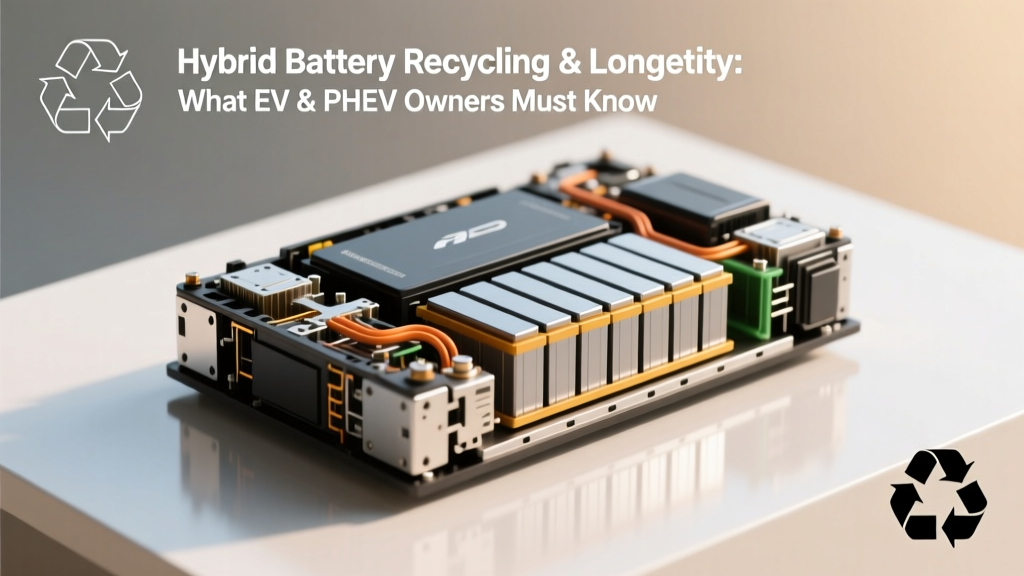
As the first generation of mass-market hybrids and plug-in hybrids (PHEVs) crosses the 10-year and 150,000-mile marks, a practical question is surfacing for owners, buyers, and the industry: what happens when a high-voltage traction battery reaches end-of-life? The answer sits at the intersection of battery chemistry, degradation science, replacement economics, and the rapidly maturing field of hybrid battery recycling.
This guide breaks down the real numbers behind battery longevity, what warranties actually cover, what replacement costs look like in 2026, and how emerging recycling infrastructure is reshaping the total cost of ownership for electrified vehicles. Whether you drive a Toyota RAV4 Hybrid, a Chrysler Pacifica PHEV, or a fully electric Hyundai Ioniq 5, the traction battery is the single most expensive component in your vehicle — understanding its lifecycle is essential.
Battery Chemistry 101: LFP vs. NMC vs. NCA
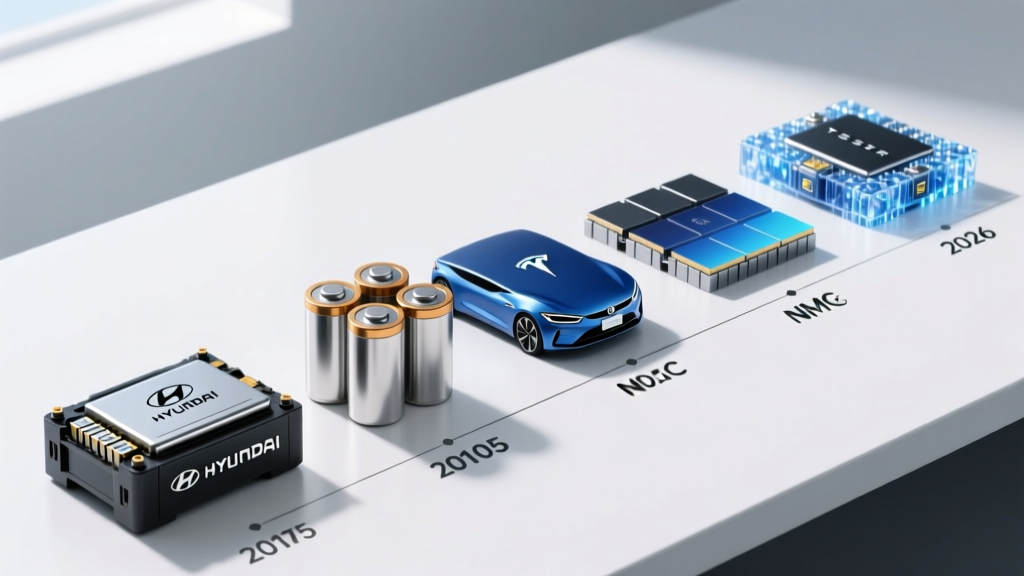
The longevity, recyclability, and replacement cost of any electrified vehicle battery trace back to its cell chemistry. Most hybrids, PHEVs, and BEVs on US roads use one of three lithium-ion formulations:
- NMC (Nickel Manganese Cobalt): The dominant chemistry in most EVs and PHEVs. Offers high energy density (more range per kilogram), good cold-weather performance, but a shorter cycle life and higher materials cost due to cobalt and nickel content.
- NCA (Nickel Cobalt Aluminum): Used primarily by Tesla and a few other manufacturers. Similar energy density advantages to NMC, with slightly better thermal stability but comparable degradation profiles.
- LFP (Lithium Iron Phosphate): Gaining rapid adoption in standard-range EVs (Tesla Model 3 RWD, Ford Mustang Mach-E Select, BYD models). Lower energy density but significantly longer cycle life, lower cost, no cobalt, and better thermal safety. The trade-off is reduced cold-weather range and a heavier pack for equivalent kWh.
Most conventional hybrids (HEVs) like the Toyota Prius use smaller NMC packs (typically 1.0–1.8 kWh) that are shallow-cycled — the battery rarely drops below 40% or charges above 80% State of Charge (SoC). This operating window dramatically extends calendar life, which is why many Prius batteries last 15+ years. PHEVs use larger packs (10–25 kWh) that see deeper cycles, and full BEVs use 60–120 kWh packs with varying chemistries.
| Attribute | LFP (LiFePO₄) | NMC / NCA |
|---|---|---|
| Energy Density | ~160 Wh/kg (lower) | ~250–300 Wh/kg (higher) |
| Cycle Life (to 80% SoH) | 3,000–5,000+ cycles | 1,000–2,000 cycles |
| Cold-Weather Performance | Greater range loss below 32°F | Better low-temp efficiency |
| Cost per kWh (cell-level) | ~$70–90 | ~$100–130 |
| Recyclability | Lower material recovery value (no Co/Ni) | Higher recovery value (Co, Ni, Mn) |
| Thermal Safety | Excellent (higher runaway temp) | Good (requires more BMS management) |
| Typical Use | Standard-range BEVs, some PHEVs | Long-range BEVs, most PHEVs, most HEVs |
Recycling implication: NMC and NCA batteries are currently more economically attractive to recycle because recovered cobalt, nickel, and manganese carry significant commodity value. LFP packs, while cheaper to replace, yield less valuable materials, which affects the economics of hybrid battery recycling. However, companies like Redwood Materials and Li-Cycle are developing LFP-specific recovery processes that are expected to scale through 2028.
How Long Do EV and Hybrid Batteries Actually Last?
Battery lifespan is measured in two dimensions: calendar age (chemical degradation over time regardless of use) and cycle life (degradation from charge-discharge cycles). Most batteries degrade from both simultaneously.
Typical Degradation Data Points (aggregated from fleet and owner data):
- Year 1: ~2–4% capacity loss (initial formation loss, steepest early drop)
- Years 2–5: ~1–2% per year (linear, gradual decline)
- Years 6–10: ~1–2% per year (continues linearly for most chemistries)
- Typical 8-year SoH: 85–92% for NMC/NCA BEVs; 90–95% for LFP; 93–97% for HEVs (shallow cycling)
- 200,000-mile fleet data (Geotab, 2024 study): Average BEV battery retains ~83% SoH at 200K miles; most remain functional well beyond this point
The critical threshold is generally 70–80% State of Health (SoH). Below 70%, you'll notice meaningful range reduction — a 300-mile EPA-rated EV might deliver only 210 miles. Below 60%, the battery may trigger fault codes or fail to accept a full charge. Most manufacturers warranty the battery to 70% capacity retention over 8 years / 100,000 miles.
Real-world context: Data from fueleconomy.gov and long-term fleet studies consistently show that the vast majority of EV and hybrid batteries outlast the vehicle itself. Complete battery failure before 150,000 miles is statistically rare (well under 5% of vehicles). The fear of a $20,000 replacement at 80,000 miles is largely unsupported by the data.
Battery Warranty Terms: What's Actually Covered
Federal law mandates a minimum warranty of 8 years / 100,000 miles for EV and PHEV traction batteries (10 years / 150,000 miles in CARB states including California, New York, Massachusetts, and others). Here's how major manufacturers structure coverage:
| Manufacturer | Warranty Period | Capacity Threshold | Notes |
|---|---|---|---|
| Tesla (Model 3/Y LFP) | 8 yr / 120,000 mi | 70% SoH | LFP packs covered same as NMC |
| Tesla (Model S/X) | 8 yr / 150,000 mi | 70% SoH | Longer mileage for premium models |
| Hyundai / Kia | 10 yr / 100,000 mi | 70% SoH | Among the longest calendar coverage |
| Toyota (HEV/PHEV) | 10 yr / 150,000 mi | Varies by model | Hybrid Synergy Drive coverage |
| Ford (BEV) | 8 yr / 100,000 mi | 70% SoH | Covers battery and hybrid components |
| GM (Ultium BEV) | 8 yr / 100,000 mi | 70% SoH | Includes propulsion components |
| BMW / Mercedes | 8 yr / 100,000 mi | 70% SoH | Standard across luxury EVs |
What the warranty covers: Capacity loss below the stated threshold, manufacturing defects, and cell/module failures. It does not cover damage from accidents, improper charging equipment, flooding, or modifications. If your battery drops below 70% SoH within the warranty window, the manufacturer will replace or refurbish it at no cost — often with a remanufactured pack that still meets the capacity threshold.
EV Battery Replacement Cost: The Real Numbers
When a battery does need replacement outside warranty, costs vary dramatically by vehicle, battery size, and whether the replacement is new, remanufactured, or used:
| Vehicle Type | Battery Size | New OEM Pack | Remanufactured / Refurb | When Typically Needed |
|---|---|---|---|---|
| HEV (Prius, Camry Hybrid) | 1.0–1.8 kWh | $3,000–$5,000 | $1,500–$3,000 | 150K–250K mi / 12–18 yr |
| PHEV (RAV4 Prime, Pacifica) | 10–18 kWh | $8,000–$14,000 | $4,000–$8,000 | 120K–200K mi / 10–15 yr |
| BEV Standard Range (Model 3, Bolt) | 50–65 kWh | $10,000–$16,000 | $6,000–$10,000 | 150K–250K mi / 12–18 yr |
| BEV Long Range (Model Y LR, Ioniq 5) | 75–85 kWh | $14,000–$22,000 | $8,000–$14,000 | 150K–250K mi / 12–18 yr |
| BEV Large Pack (F-150 Lightning Ext, Hummer) | 100–215 kWh | $20,000–$35,000+ | $12,000–$22,000 | 150K–250K mi / 12–18 yr |
Key context: These costs have been declining roughly 8–12% per year as cell prices fall and the remanufactured battery market matures. Companies like Repowered and others now offer refurbished hybrid and EV battery packs at 40–60% below new OEM pricing. Additionally, many replacements involve only individual module swaps rather than full pack replacements — a Prius hybrid battery module replacement can cost as little as $500–$1,200 if only 1–2 of the 28 modules have degraded.
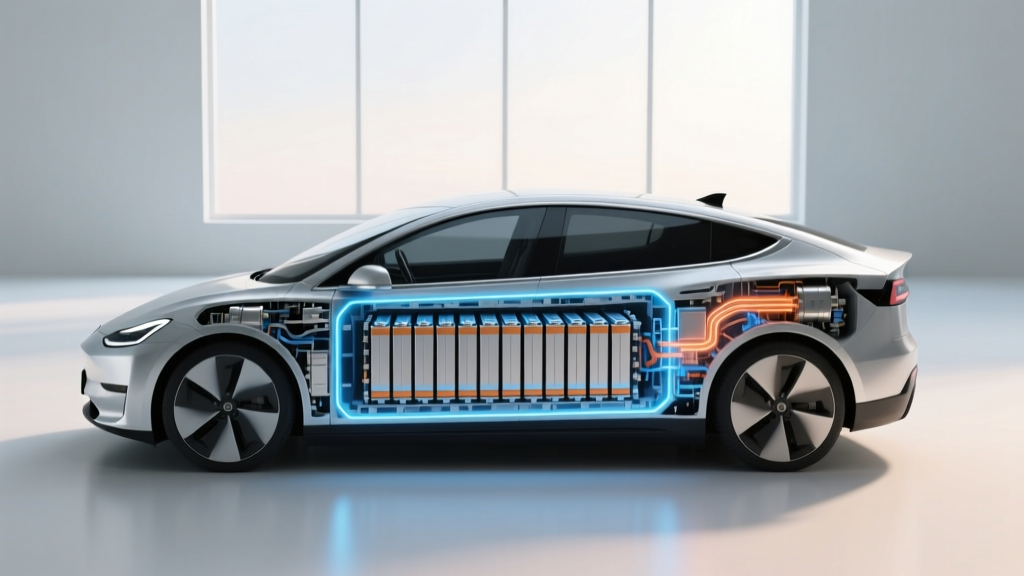
This is also where hybrid battery recycling closes the loop. End-of-life packs are either repurposed for stationary energy storage ("second-life" applications) or processed through hydrometallurgical recycling to recover lithium, cobalt, nickel, and manganese. Recovered materials are then fed back into new cell production, which is gradually reducing replacement pack costs.
What Actually Kills a Battery: Degradation Factors
Battery degradation isn't random — it's driven by specific, controllable stressors. Understanding these is the single most effective way to maximize your battery's lifespan and delay any recycling or replacement event.
Battery Longevity Checklist — Do's and Don'ts:
- Do charge to 80% daily (for NMC/NCA): Sustained 100% SoC accelerates electrolyte decomposition. LFP owners can charge to 100% regularly — the chemistry tolerates it, and Tesla recommends periodic 100% charges for LFP calibration.
- Don't DC fast-charge exclusively: Frequent 150+ kW DCFC sessions (especially without preconditioning) generate heat that degrades cells. Studies show batteries charged primarily on Level 2 (7–11 kW) retain 3–5% more capacity at 100K miles vs. DCFC-heavy usage.
- Do precondition before fast charging: Battery preconditioning (automatic in Tesla, Rivian, Hyundai E-GMP vehicles) warms the pack to optimal temperature (~95°F), enabling faster charging with less stress. Without it, cold packs charge slower and experience more lithium plating.
- Don't store at 0% or 100% SoC: If parking for weeks, aim for 40–60% SoC. Extended storage at full charge or near-empty accelerates calendar degradation.
- Do use a heat pump or garage in extreme cold: Repeated deep-freeze cycles (below 10°F) without thermal management increase internal resistance over time. Vehicles with heat pumps and active thermal management (most modern BEVs) handle this better.
- Don't ignore coolant service intervals: The battery thermal management system uses glycol coolant that degrades. Follow manufacturer service schedules (typically every 4–5 years) to prevent thermal system failure.
How to Check Your Battery's State of Health (SoH)
Unlike a gas tank, you can't simply look at an EV battery and assess its condition. Here's how owners monitor SoH in 2026:
- In-vehicle battery health displays: Tesla (Settings → Software → Battery Health), Hyundai/Kia (via the infotainment engineering menu or dealer scan tool), and BMW provide a SoH percentage directly. Nissan Leaf's "battery health bars" on the dash are a simpler 12-bar indicator.
- OBD-II scan tools: Devices like the OBDLink SX paired with apps such as LeafSpy (Nissan), TeslaFi, or Carista can read detailed battery telemetry including individual cell voltages, internal resistance, and calculated SoH.
- Dealer diagnostic reports: Any authorized service center can pull a full battery health report. This is recommended before purchasing a used EV or PHEV and is often required for warranty claims.
- Range tracking: The simplest method — if your vehicle consistently delivered 280 miles at 100% SoC when new and now delivers 250 miles under identical conditions, your SoH is approximately 89%. Control for temperature, tire pressure, and driving style when comparing.
Pro tip: Log your 100%-charge range estimate monthly under similar conditions. A gradual decline is normal and expected. A sudden drop of 10+ miles in a single month warrants a dealer diagnostic — it may indicate a failing cell module that can be replaced individually rather than requiring a full pack swap.
Hybrid Battery Recycling: The Current Landscape
The hybrid battery recycling industry has matured significantly. Here's how the process works and what it means for owners:
When a traction battery is retired, three pathways exist:
- Module-level repair: Individual degraded modules are replaced, extending the pack's life by 5–10 additional years. This is the most common and cost-effective approach for HEVs and older PHEVs.
- Second-life repurposing: Packs at 70–80% SoH are removed from vehicles and installed in stationary energy storage systems (home battery walls, grid-scale storage, commercial backup power). A retired EV battery at 75% SoH still holds 45–90 kWh of usable capacity — plenty for non-mobile applications.
- Hydrometallurgical recycling: End-of-life cells are shredded and processed to recover lithium, cobalt, nickel, manganese, copper, and aluminum. Recovery rates for key metals now exceed 95% at facilities operated by companies like Redwood Materials, Li-Cycle, and Cirba Solutions. Recovered materials are sold back to cell manufacturers.
For owners: When you replace a hybrid or EV battery, the old pack has residual value. Many shops and recyclers will credit you $200–$2,000 for a retired pack depending on its chemistry, size, and remaining SoH. NMC/NCA packs command higher trade-in values due to cobalt and nickel content. Always ask about core credits when getting a replacement quote.
Emerging Battery Tech: What's on the Horizon
Several next-generation technologies promise to further extend battery life and improve recyclability. These are announced and in development — not currently available in production vehicles:
- Solid-state batteries: Replace liquid electrolyte with a solid conductor, potentially doubling cycle life and energy density while improving safety. Toyota, Samsung SDI, and QuantumScape have announced pilot production timelines for 2027–2029, but cost and manufacturing scale remain significant hurdles. Realistic volume production for consumer vehicles: 2029–2032.
- Silicon-dominant anodes: Replace graphite anodes with silicon, increasing energy density by 20–40%. Companies like Sila Nanotechnologies and Group14 are supplying early production cells. Expected in select models by 2027–2028.
- Sodium-ion batteries: Use abundant sodium instead of lithium, dramatically reducing cost and improving recyclability. Lower energy density limits use to budget city EVs and stationary storage. CATL and BYD have begun limited production in China; US-market availability is estimated for 2028+.
- Direct recycling: A newer process that recovers intact cathode material without breaking it down to individual elements, preserving more value and reducing energy use. Still in pilot stage but promising for LFP packs where traditional recycling economics are weaker.
These technologies are worth tracking but should not influence current purchase decisions. Today's NMC and LFP batteries, properly maintained, will comfortably outlast the typical ownership period.
Frequently Asked Questions
How long do EV batteries last in years and miles?
Most modern EV and hybrid traction batteries are designed to last 15–20 years and 200,000–300,000 miles before reaching 70% State of Health. Fleet data from Geotab and other sources shows average degradation of roughly 1.5–2.5% per year under normal use. Complete failure before 150,000 miles is rare (under 5% of vehicles). The battery will likely outlast other major vehicle components.
How much does it cost to replace an EV or hybrid battery?
Replacement costs range from $1,500–$3,000 for a remanufactured hybrid (HEV) battery to $14,000–$22,000 for a new long-range BEV pack. Remanufactured and refurbished packs cost 40–60% less than new OEM units. Module-level repairs (replacing individual degraded cells) can cost as little as $500–$1,200. Costs have been declining 8–12% annually and are expected to continue falling.
What does the battery warranty actually cover?
Federal law requires a minimum 8-year/100,000-mile warranty on EV and PHEV traction batteries (10 years/150,000 miles in CARB states). Coverage applies when capacity drops below the manufacturer's threshold (typically 70% SoH) or if a defect causes failure. It does not cover accident damage, improper charging, or environmental damage. Always review your specific manufacturer's warranty booklet for exact terms.
How do I check and maximize my battery's health?
Monitor SoH through your vehicle's built-in battery health display, an OBD-II scan tool, or dealer diagnostics. To maximize lifespan: charge NMC/NCA batteries to 80% for daily use (LFP can go to 100%), minimize exclusive DC fast-charging, precondition before fast charging, avoid storing at extreme SoC levels, and follow coolant service intervals. Track your 100%-charge range monthly to spot abnormal degradation early.
LFP vs. NMC — which battery chemistry is better?
Neither is universally better; it depends on your priorities. LFP offers longer cycle life (3,000–5,000+ cycles vs. 1,000–2,000), lower cost, better thermal safety, and can be charged to 100% daily. Its trade-offs are lower energy density (heavier pack for the same range) and worse cold-weather performance. NMC/NCA provides more range per kilogram and better winter efficiency but degrades faster and costs more. If you prioritize longevity and value, LFP is the stronger choice. If you need maximum range in a lighter package, NMC/NCA wins.
Is hybrid battery recycling actually happening at scale?
Yes. Companies like Redwood Materials, Li-Cycle, and Cirba Solutions are processing tens of thousands of battery packs annually with metal recovery rates exceeding 95% for cobalt, nickel, and copper. As first-generation hybrids and EVs reach end-of-life in growing numbers, recycling capacity is expanding rapidly. Retired packs also have core trade-in value ($200–$2,000 depending on chemistry and condition), and many are repurposed for stationary energy storage before being recycled.