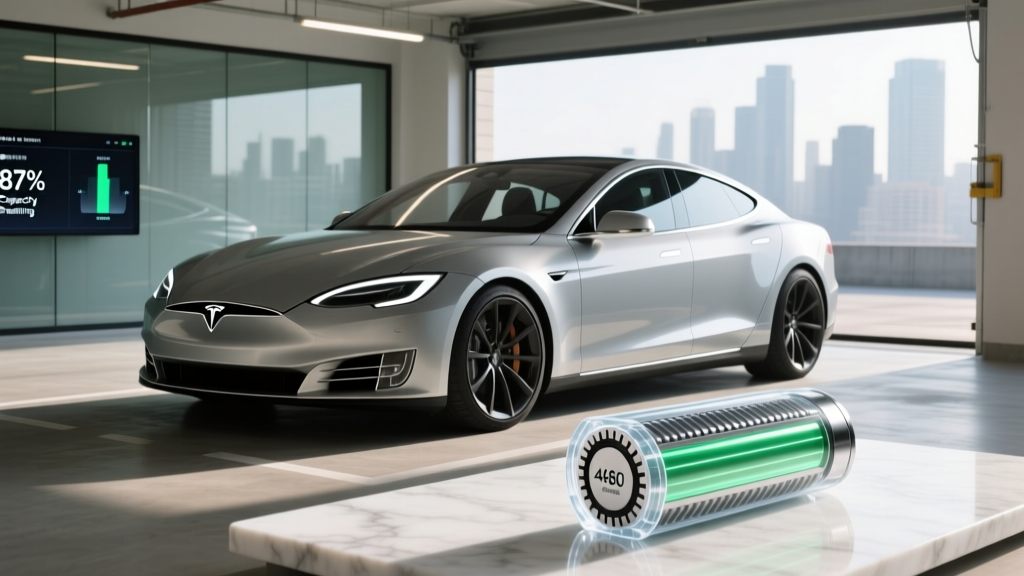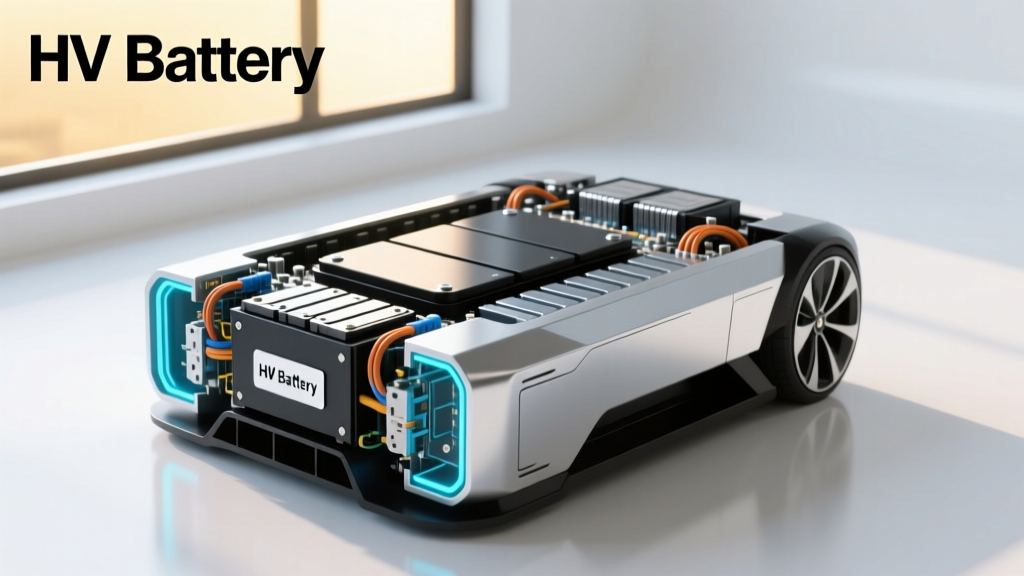
The high-voltage (HV) battery pack is the single most expensive component in any electric vehicle — and the one buyers worry about most. Will it last? How much does replacement cost? Does fast charging destroy it? These questions matter because the HV battery isn't just the car's fuel tank; it determines your daily range, your charging speed, and ultimately your total cost of ownership.
This guide breaks down everything you need to know about EV HV batteries in 2026: the two dominant chemistries (LFP and NMC/NCA), real-world degradation data from fleets and long-term tests, exactly what the warranty covers, replacement cost ranges by model, and the daily habits that meaningfully extend battery life. No fear-mongering, no marketing gloss — just the numbers.
LFP vs NMC/NCA: Which HV Battery Chemistry Is Right for You?
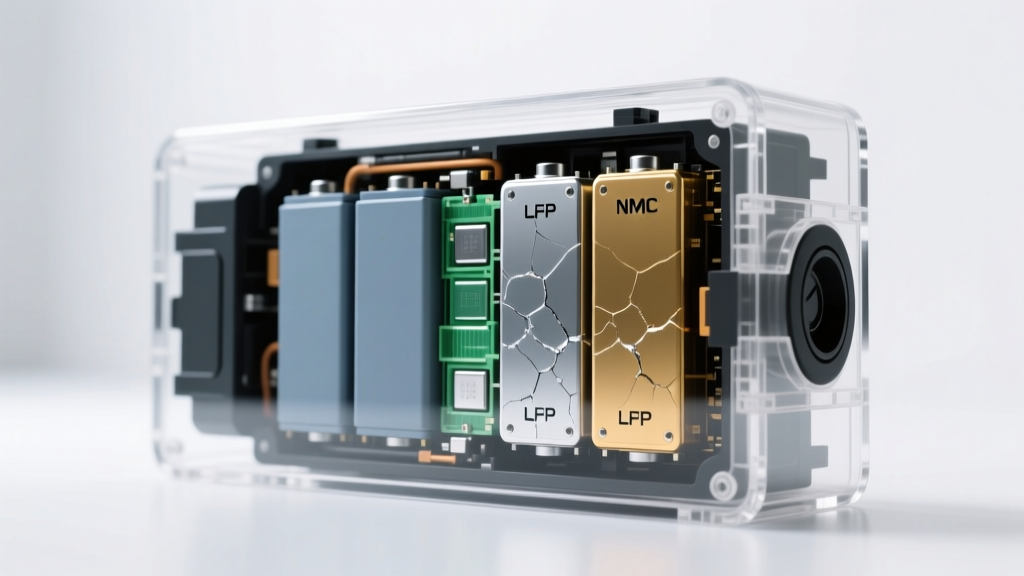
Not all HV batteries are built the same. The two chemistries dominating the 2026 EV market are lithium iron phosphate (LFP) and nickel manganese cobalt / nickel cobalt aluminum (NMC/NCA). Each has distinct trade-offs that affect your range, longevity, charging behavior, and price.
LFP (LiFePO₄) uses iron and phosphate in the cathode. It's cheaper to produce, tolerates repeated full charges without accelerated wear, and offers a longer cycle life (often 3,000+ full cycles before significant degradation). The trade-off: lower energy density, meaning a heavier, bulkier pack for the same kWh — and noticeably weaker performance in freezing temperatures. Tesla uses LFP in the Model 3 and Model Y Standard Range; Ford uses it in the base Mustang Mach-E Select; BYD's entire lineup is LFP-based.
NMC/NCA packs pack more energy per kilogram, giving longer range in a lighter package. They perform better in cold weather and accept faster charge rates at low temperatures. But they degrade faster if routinely charged to 100%, cost more to produce, and rely on cobalt and nickel — materials with supply-chain and ethical sourcing concerns. Most long-range and performance EVs (Hyundai Ioniq 5/6, BMW iX, Rivian R1S/R1T, Chevrolet Silverado EV) use NMC variants.
| Attribute | LFP (Lithium Iron Phosphate) | NMC / NCA (Nickel-Based) |
|---|---|---|
| Energy Density | ~160–180 Wh/kg (lower) | ~220–260 Wh/kg (higher) |
| Typical Cycle Life | 3,000–5,000+ cycles | 1,000–2,000 cycles |
| 100% SoC Charging | Tolerates well; manufacturers recommend periodic 100% calibration | Accelerates degradation; 80% daily limit recommended |
| Cold-Weather Performance | Noticeable range loss below 32°F; slower charge acceptance | Better cold tolerance; preconditioning still essential |
| Cost per kWh (pack level) | ~$90–$110 | ~$120–$150 |
| Thermal Stability | Excellent — very low thermal runaway risk | Good — requires robust BMS and cooling |
| Common Applications | Tesla Model 3 RWD, Ford Mach-E Select, BYD models | Hyundai Ioniq 5, Rivian R1T, BMW iX, most LR/AWD trims |
Which is better? If you charge at home nightly, drive under 250 miles daily, and live in a moderate climate, LFP is the smarter longevity play — you can charge to 100% without guilt, and the pack will likely outlast the car. If you need maximum range, tow frequently, or regularly face sub-freezing winters, NMC's energy density and cold-weather edge justify the trade-offs — provided you follow the 80% daily charge guideline.
How Long Do EV HV Batteries Actually Last?
The short answer: most HV batteries outlast the vehicles they're installed in. The average EV is scrapped or exported at around 17–18 years. Current battery chemistries, with proper care, are engineered to retain 70–80% of original capacity at 150,000–200,000 miles.
Here's what real-world data shows:
- Tesla fleet data (2025 Impact Report): Model S/X batteries retained ~88% capacity at 150,000 miles; Model 3/Y (NMC) retained ~85% at the same mileage. LFP packs in the Model 3 RWD showed even slower degradation curves.
- Geotab fleet study (2024, 10,000+ EVs): Average annual degradation was 1.8% per year across all chemistries, implying ~82% State of Health (SoH) at 10 years for typical use.
- Recurrent Auto data (2025): Chevrolet Bolt EV owners saw ~92% SoH at 50,000 miles, with degradation slowing significantly after the initial 10,000-mile break-in period.
Typical HV Battery Degradation Curve (NMC, moderate climate, mixed charging):
- Year 1 / 12,000 mi: ~95% SoH (initial ~5% drop is normal)
- Year 3 / 36,000 mi: ~91% SoH
- Year 5 / 60,000 mi: ~88% SoH
- Year 8 / 96,000 mi: ~84% SoH
- Year 10 / 120,000 mi: ~80% SoH
- Year 15 / 180,000 mi: ~74% SoH
Source: Aggregated from Geotab fleet data, Recurrent Auto reports, and OEM disclosures. Individual results vary based on climate, charging habits, and chemistry.
The critical insight: degradation is non-linear. You lose the most capacity in the first 10,000–20,000 miles, then the curve flattens considerably. A battery at 88% SoH at 50,000 miles isn't on a trajectory to zero at 300,000 miles — it's likely plateauing.
What Does the HV Battery Warranty Actually Cover?
Federal law mandates a minimum HV battery warranty of 8 years / 100,000 miles for all EVs sold in the US. California and states that follow CARB standards (including New York, Massachusetts, Washington, Oregon, and others) require 10 years / 150,000 miles. Most manufacturers meet or exceed these minimums.
The warranty covers capacity loss below a specified threshold — typically 70% of original capacity — as well as defects in materials, manufacturing, and the battery management system (BMS). It does not cover damage from accidents, flooding, unauthorized modifications, or failure to follow the owner's manual charging guidelines.
| Vehicle | Warranty Term | Capacity Threshold | Chemistry |
|---|---|---|---|
| Tesla Model 3 RWD | 8 yr / 100,000 mi | 70% retention | LFP |
| Tesla Model 3 Long Range | 8 yr / 120,000 mi | 70% retention | NMC |
| Hyundai Ioniq 5 | 10 yr / 100,000 mi | 70% retention | NMC |
| Ford Mustang Mach-E | 8 yr / 100,000 mi | 70% retention | NMC (ext. range); LFP (std.) |
| Rivian R1T / R1S | 8 yr / 175,000 mi | 70% retention | NMC |
| BMW iX xDrive50 | 8 yr / 100,000 mi | 70% retention | NMC |
| Chevrolet Equinox EV | 8 yr / 100,000 mi | 70% retention | NMC |
Key warranty nuance: If your pack drops to 69% capacity at year 7 and 95,000 miles, the manufacturer will replace or refurbish it — but likely with a remanufactured pack of equivalent capacity, not a brand-new one. The warranty guarantees a floor, not a like-new replacement. Also note that warranty claims require the vehicle to pass a diagnostic scan confirming the degradation is battery-intrinsic, not caused by a faulty 12V system, charger, or BMS sensor.
For full warranty terms on your specific vehicle, always reference the owner's manual and the manufacturer's official warranty booklet. The EPA's fueleconomy.gov site also lists warranty information by model.
How Much Does an HV Battery Replacement Cost?
This is the question that keeps prospective EV buyers up at night. Let's ground it in real numbers. In 2026, out-of-warranty HV battery replacement costs range from roughly $5,000 for a small pack to over $22,000 for a large one, depending on capacity (kWh), chemistry, and whether you're getting a new, remanufactured, or used pack.
The good news: total HV battery replacement is rare. Most packs never drop below the 70% warranty threshold within the vehicle's useful life. When replacements do occur, they're often covered under warranty or involve replacing individual modules rather than the entire pack.
| Vehicle | Pack Capacity | Chemistry | Full Pack Replacement (New) | Remanufactured / Module Repair |
|---|---|---|---|---|
| Tesla Model 3 RWD | ~60 kWh | LFP | $8,000–$10,000 | $4,500–$6,500 |
| Tesla Model Y Long Range | ~75 kWh | NMC | $12,000–$14,000 | $7,000–$9,000 |
| Hyundai Ioniq 5 (Std. Range) | ~58 kWh | NMC | $9,000–$12,000 | $5,500–$8,000 |
| Ford F-150 Lightning (Ext. Range) | ~131 kWh | NMC | $18,000–$22,000 | $10,000–$14,000 |
| Chevrolet Bolt EV | ~65 kWh | NMC | $9,000–$11,000 | $5,000–$7,500 |
| Rivian R1T (Max Pack) | ~149 kWh | NMC | $20,000–$22,000+ | $12,000–$16,000 |
When is replacement actually needed? Most HV batteries that require service do so because of a defective module, coolant leak, or BMS failure — not uniform capacity loss across all cells. Modern packs are modular: a technician can often replace just the degraded or faulty modules (typically 1–4 out of 12–24) for $2,000–$5,000, restoring the pack to functional health. Full-pack replacement is generally only necessary after catastrophic damage or extreme, uniform degradation past 200,000+ miles.
Pack-level pricing continues to decline. Bloomberg NEF reported average pack prices at approximately $115/kWh in 2025, down from $140/kWh in 2023. As LFP adoption grows and manufacturing scales, expect replacement costs to keep falling through the end of the decade.
Factors That Accelerate (or Preserve) HV Battery Health
Your HV battery's lifespan isn't fixed — it's a function of how you treat it. The following factors have measurable, data-backed impacts on degradation rate:
1. State of Charge (SoC) Habits
Lithium-ion cells experience the most stress at the extremes: sitting at 100% SoC or dropping below 10%. For NMC packs, daily charging to 80% and avoiding drops below 15% can reduce annual degradation from ~2% to ~1.2%. LFP packs tolerate 100% SoC far better — Tesla explicitly recommends periodic full charges for LFP vehicles to maintain BMS calibration.
2. DC Fast Charging Frequency
DC fast charging (Level 3, 50–350 kW) generates significant heat. Occasional use — road trips, a few times a month — has negligible long-term impact. But daily fast charging, especially at 250+ kW without adequate preconditioning, can add 0.5–1.0% to annual degradation. The data from Recurrent Auto shows that Tesla owners who fast-charge more than 90% of the time see ~3% more degradation at 100,000 miles versus those who charge primarily at home on Level 2.
3. Temperature Exposure
Heat is the primary enemy. Battery packs held at 95°F+ ambient temperatures for extended periods degrade faster — this is why liquid-cooled packs (standard on nearly all 2026 EVs) outperform passively cooled ones. Cold weather doesn't cause permanent degradation but does temporarily reduce range (15–30% loss at 20°F) and slows charge acceptance. Preconditioning — warming the pack before fast charging via the vehicle's navigation-to-charger feature — is critical in cold climates.
4. Calendar Aging
Even a parked EV battery degrades over time. Calendar aging accounts for roughly 0.5–1.0% capacity loss per year regardless of mileage. Storing a vehicle at 50% SoC in a cool garage minimizes this; leaving it at 100% in a hot driveway accelerates it.
HV Battery Care Checklist — Maximize Longevity
- ✅ Set daily charge limit to 80% (NMC) or 100% (LFP per manufacturer guidance)
- ✅ Avoid leaving the car at 0–5% SoC for more than a few hours
- ✅ Use Level 2 home charging as your primary charging method
- ✅ Limit DC fast charging to road trips and emergencies when possible
- ✅ Always precondition the battery before fast charging in cold weather
- ✅ Park in shade or a garage during hot summer months
- ✅ If storing for 2+ weeks, leave SoC at ~50% and disable Sentry/vampire-drain features
- ✅ Keep tire pressure at spec — underinflated tires increase energy draw and heat
- ✅ Install software updates promptly — OEMs refine BMS algorithms regularly
How to Check Your HV Battery's State of Health (SoH)
State of Health (SoH) is the percentage of original capacity your HV battery currently retains. A new battery is 100% SoH; at 70%, it's typically at the warranty claim threshold. Here's how to monitor it:
In-Vehicle Displays
Some manufacturers provide SoH data directly. Hyundai/Kia's infotainment system includes an EV battery diagnostics screen showing estimated SoH percentage. Tesla displays a "Battery Health" estimate in the service menu on newer software versions, though it's an approximation based on charge/discharge cycles rather than a lab-grade measurement.
OBD-II Diagnostic Tools
Third-party OBD-II readers like the OBDLink SX paired with apps such as LeafSpy (Nissan Leaf), Scan My Tesla, or Car Scanner ELM OBD2 can read detailed battery telemetry: individual cell voltages, pack voltage, temperature, and calculated SoH. This is the most accessible method for hands-on owners.
Dealer Diagnostic Scan
If you suspect abnormal degradation — range has dropped significantly, or the car throws a battery-related fault code — a dealership service center can run a full HV battery diagnostic. This is typically free under warranty and provides a definitive SoH reading with cell-level balance data.
Third-Party Battery Reports
Services like Recurrent offer ongoing battery health monitoring by connecting to your vehicle's telematics data. When buying a used EV, request a battery health report from the seller or run a diagnostic scan before purchase.
What's Next: Solid-State and Silicon-Anode Batteries
The next frontier in HV battery technology is solid-state batteries, which replace the liquid electrolyte with a solid material (ceramic, sulfide, or polymer). The theoretical benefits are substantial: 2–3× energy density, faster charging (potentially 10–80% in under 10 minutes), near-zero thermal runaway risk, and cycle lives exceeding 10,000 cycles.
However, solid-state batteries are not yet available in any production vehicle sold in the US as of 2026. Toyota has announced limited production of a solid-state-equipped vehicle for the Japanese market, targeting 2027–2028, with US availability likely not before 2029–2030. Samsung SDI and QuantumScape are supplying prototype cells to OEM partners, but scaling manufacturing yield and reducing cost remain unsolved engineering challenges. Expect solid-state to debut in low-volume, premium vehicles first, with mainstream adoption likely in the 2030s.
Silicon-anode batteries are closer to market. Companies like Sila Nanotechnologies and Group14 are supplying silicon-dominant anode materials that boost energy density by 20–40% over conventional graphite anodes. Mercedes-Benz's upcoming G-Class EV (announced for 2027) is expected to feature a silicon-anode pack from Group14. This is an incremental but meaningful improvement — not a revolution, but a notable step toward lighter, longer-range packs.
For buyers deciding today: current LFP and NMC batteries are mature, well-understood, and backed by real warranty data. Waiting for solid-state means waiting 4–6+ years for uncertain pricing and availability.
Frequently Asked Questions
How long do EV HV batteries last in years and miles?
Most modern HV batteries are engineered to retain 70–80% of original capacity at 150,000–200,000 miles, which typically translates to 12–18 years of average use (12,000–15,000 miles/year). Fleet data from Tesla, Geotab, and Recurrent Auto confirms that the majority of packs never need replacement within the vehicle's useful life.
How much does it cost to replace an EV HV battery?
Full-pack replacement ranges from $5,000–$10,000 for a small-to-mid pack (58–75 kWh) to $18,000–$22,000+ for large packs (130+ kWh). Remanufactured packs or individual module repairs typically cost $4,500–$14,000 depending on the vehicle. However, full replacement is rare — most battery service involves module-level repair under warranty.
What does the HV battery warranty cover?
Federal minimum is 8 years / 100,000 miles (10 years / 150,000 miles in CARB states). Coverage includes capacity loss below ~70% of original, manufacturing defects, and BMS failures. It excludes accident damage, flooding, unauthorized modifications, and improper charging practices. Check the IRS §30D guidelines for how battery sourcing also affects tax credit eligibility.
How do I check my HV battery health?
Use your vehicle's built-in diagnostics screen (if available), an OBD-II reader with an EV-compatible app (Scan My Tesla, LeafSpy, Car Scanner), or visit a dealership for a professional diagnostic scan. Third-party services like Recurrent also provide ongoing SoH monitoring via telematics.
Is LFP or NMC better for my EV?
It depends on your use case. LFP is better for daily commuting, home charging, moderate climates, and maximum longevity — you can charge to 100% without concern. NMC is better for long-range needs, towing, cold climates, and performance driving — but requires an 80% daily charge limit and more careful thermal management. Neither is universally superior; match the chemistry to your driving pattern.
Does fast charging damage the HV battery?
Occasional DC fast charging has minimal long-term impact. Daily fast charging, especially at 250+ kW without battery preconditioning, can add roughly 0.5–1.0% to annual degradation. For maximum battery life, use Level 2 home charging as your primary method and reserve DC fast charging for road trips. Always use your vehicle's preconditioning feature when navigating to a fast charger in cold weather.
Can I extend my HV battery's life?
Yes. The most impactful habits: keep NMC packs between 20–80% SoC for daily use, minimize DC fast charging, precondition before fast charging, park in shade or a garage during hot weather, and avoid leaving the car at very low SoC for extended periods. These practices can reduce annual degradation from ~2% to ~1.2%, adding years of useful range.