Huawei's Solid-State Push — and Why It Matters for Your Next EV
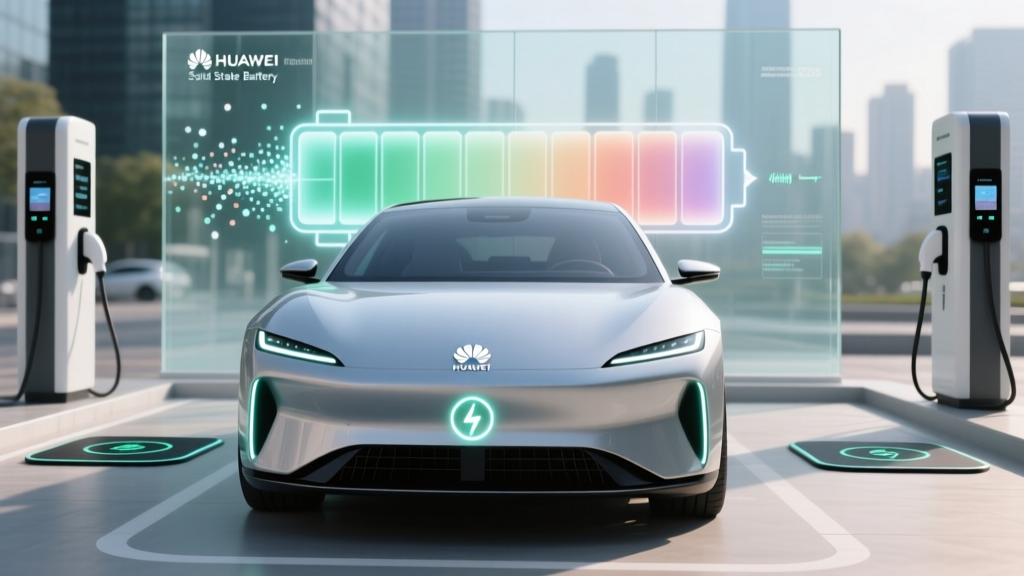
Huawei has emerged as a serious contender in the electric vehicle supply chain, and its solid-state battery research has drawn attention from EV shoppers wondering whether to buy now or wait. The company's Watt Lab division has been developing sulfide-based solid-state cells aimed at the automotive market, with pilot production lines reportedly targeting energy densities above 400 Wh/kg at the cell level — roughly double what today's best NMC (nickel manganese cobalt) cells deliver.
But here's the critical context for any buyer reading this in 2026: no mass-produced passenger vehicle with a Huawei solid-state battery is currently available for purchase. Huawei's solid-state cells remain in the prototype and pilot-production phase, with industry analysts projecting limited commercial availability in vehicles no earlier than 2028–2030. If you're shopping for an EV today, you're choosing between proven lithium-ion chemistries — primarily LFP and NMC/NCA — and understanding those options matters far more than any announced solid-state roadmap.
This guide breaks down how Huawei's solid-state ambitions fit into the broader battery landscape, what today's chemistries actually deliver in real-world ownership, and how to evaluate battery longevity, cost, and care for any EV you can buy right now.
Today's EV Battery Chemistries: LFP vs. NMC/NCA Explained
Every EV sold in the US in 2026 uses a lithium-ion traction battery, but not all lithium-ion cells are built the same. The cathode chemistry determines the pack's energy density, lifespan, cost, cold-weather behavior, and safety profile. The two dominant families are LFP (lithium iron phosphate) and NMC/NCA (nickel manganese cobalt / nickel cobalt aluminum).
| Attribute | LFP (Lithium Iron Phosphate) | NMC/NCA (Nickel-Based) |
|---|---|---|
| Cell Energy Density | 160–200 Wh/kg | 250–320 Wh/kg |
| Typical Pack Size (mid-size sedan) | 60–75 kWh usable | 75–100 kWh usable |
| Cycle Life (to 80% SoH) | 3,000–5,000+ cycles | 1,500–2,500 cycles |
| Cold-Weather Range Loss (20°F) | ~30–40% reduction | ~20–30% reduction |
| Cost per kWh (pack level, 2026) | ~$90–$110 | ~$120–$150 |
| Thermal Stability | Excellent — higher runaway threshold | Good — requires more active thermal mgmt |
| Recommended Daily Charge Limit | 100% SoC acceptable | 80% SoC for daily use |
| Notable 2026 Vehicles | Tesla Model 3 RWD, Model Y RWD, BYD Seal, Ford Mustang Mach-E Select (LFP option) | Hyundai Ioniq 5, BMW i4, Rivian R1T, Chevrolet Equinox EV |
LFP: The Durability and Value Pick
LFP cells sacrifice energy density for longevity, lower cost, and superior thermal stability. Tesla has used CATL-sourced LFP packs in its standard-range Model 3 and Model Y since 2021, and the chemistry has proven out well in fleet data: these packs show minimal degradation even after 100,000+ miles. LFP's main trade-off is weight and volume — you need more cells for the same range, which is why LFP is common in standard-range trims but rare in long-range or performance variants. LFP also suffers more in freezing temperatures because the chemistry's internal resistance rises more sharply in cold conditions.
NMC/NCA: The Range and Performance Pick
Nickel-based chemistries deliver more energy per kilogram, enabling the 300+ mile EPA ratings buyers want in larger vehicles. Hyundai's Ioniq 5 uses an NMC pack (77.4 kWh usable in the Long Range) achieving 305 miles EPA. The trade-off: NMC cells degrade faster than LFP over time, cost more per kWh, and require more careful state-of-charge management (keeping daily charging to 80% rather than 100%). Modern thermal management systems have narrowed the gap, and 2026 NMC packs are far more durable than early-generation cells, but the fundamental chemistry trade-offs remain.
How Solid-State Batteries (Including Huawei's) Could Change the Equation
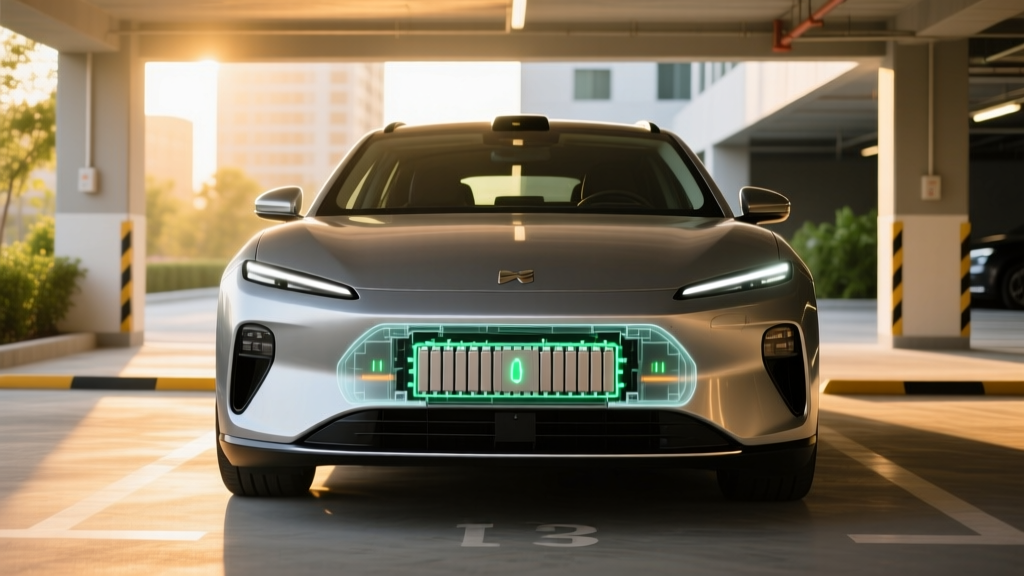
Solid-state batteries replace the liquid electrolyte in today's lithium-ion cells with a solid material — typically a sulfide, oxide, or polymer compound. This eliminates flammability risk, enables lithium-metal anodes, and theoretically doubles energy density at the cell level. Huawei's Watt Lab has focused on sulfide-based solid electrolytes, publishing research on interface stability and ionic conductivity that places them among the more credible corporate R&D programs alongside Toyota, Samsung SDI, and QuantumScape.
Here's what Huawei's solid-state battery program could deliver if it reaches mass production:
- Energy density: 400+ Wh/kg at cell level, potentially enabling 500+ mile EPA ranges in a mid-size sedan without increasing pack weight
- Charging speed: Solid-state cells can theoretically accept higher C-rates without lithium plating, potentially cutting 10–80% charge times to under 10 minutes
- Safety: No flammable liquid electrolyte means dramatically reduced thermal runaway risk
- Temperature tolerance: Better low-temperature performance than current NMC, though real-world data is still limited
Emerging anode technologies — particularly silicon-dominant anodes from companies like Sila Nanotechnologies and Group14 — are closer to market and already appearing in limited applications. These offer 20–40% energy density improvements over graphite anodes and may bridge the gap between today's cells and eventual solid-state production.
How Long Do EV Batteries Actually Last? Real Degradation Data
The most persistent concern among EV shoppers is battery longevity. The data from vehicles now exceeding 150,000+ miles tells a reassuring story: most modern EV batteries will outlast the vehicle they're installed in.
Observed Degradation by Chemistry and Mileage
| Mileage | LFP Packs (e.g., Tesla Model 3 RWD) | NMC Packs (e.g., Hyundai Ioniq 5, BMW i4) | Early-Gen NMC (2013–2017 era) |
|---|---|---|---|
| 30,000 mi | ~2–3% loss | ~3–5% loss | ~5–8% loss |
| 60,000 mi | ~4–6% loss | ~6–9% loss | ~10–15% loss |
| 100,000 mi | ~6–9% loss | ~9–13% loss | ~15–22% loss |
| 150,000 mi | ~8–12% loss | ~12–17% loss | ~20–30% loss (some replacement) |
| 200,000 mi | ~10–15% loss | ~15–22% loss | Rare — most vehicles retired |
Sources: Recurrent Auto battery health data (2025 report), Tesla Impact Report, fleet telemetry aggregations. Individual results vary based on climate, charging habits, and thermal management.
The degradation curve is not linear. Most packs lose 2–5% capacity in the first year (the "break-in" drop), then degradation slows to roughly 1–2% per year under normal use. A 2024 Tesla Model 3 RWD with an LFP pack showing 92% State of Health (SoH) at 60,000 miles is entirely typical — and that car still has 280+ miles of real-world range from its original 341-mile EPA rating.
Early-generation EVs (2011–2017 Nissan Leaf, early Chevy Spark EV) used passive air cooling and less stable cell chemistries, leading to the higher degradation numbers that still color public perception. Every major EV sold in 2026 uses active liquid thermal management, which has dramatically improved pack lifespan.
Battery Warranty Coverage: What's Protected and What Isn't
Federal law mandates a minimum 8-year/100,000-mile warranty on EV battery packs for emissions-related compliance, and most manufacturers meet or exceed this baseline. The warranty covers capacity loss below a specified threshold — typically 70% of original capacity — not cosmetic issues or damage from accidents.
| Vehicle | Battery Warranty | Capacity Threshold | Chemistry |
|---|---|---|---|
| Tesla Model 3 RWD (LFP) | 8 yr / 100,000 mi | 70% retention | LFP (CATL) |
| Tesla Model 3 Long Range | 8 yr / 120,000 mi | 70% retention | NMC |
| Hyundai Ioniq 5 | 10 yr / 100,000 mi | 70% retention | NMC (SK On) |
| BMW i4 eDrive40 | 8 yr / 100,000 mi | 70% retention | NMC (Samsung SDI) |
| Ford F-150 Lightning | 8 yr / 100,000 mi | 70% retention | NMC (SK On) |
| Rivian R1T | 8 yr / 175,000 mi | 70% retention | NMC (Samsung SDI) |
| Chevrolet Equinox EV | 8 yr / 100,000 mi | 60% retention | NMC (Ultium/LG) |
Key nuances to understand about battery warranties:
- The threshold is low: 70% capacity retention means the manufacturer only owes you a repair or replacement if your 300-mile EPA vehicle drops below 210 miles of range. In practice, very few modern packs hit this threshold within the warranty period.
- "Repair" may mean module replacement: Manufacturers may replace individual degraded modules rather than the entire pack, which restores capacity without a full swap.
- Exclusions apply: Damage from flooding, accidents, improper charging equipment, or aftermarket modifications can void coverage. Read the fine print.
- Transferability varies: Some warranties transfer to second owners; others don't. This affects resale value.
EV Battery Replacement Cost: The Numbers and When It Happens
Battery replacement is the single most cited fear among prospective EV buyers. The cost is real, but the context matters: the vast majority of EVs are retired, traded, or scrapped before the pack needs replacement.
| Vehicle / Pack Size | Battery Cost (OEM) | Labor | Total Estimate | Typical Replacement Trigger |
|---|---|---|---|---|
| Tesla Model 3 RWD (60 kWh LFP) | $8,000–$11,000 | $1,500–$2,500 | $10,000–$13,500 | Rare — LFP packs highly durable |
| Hyundai Ioniq 5 (77.4 kWh NMC) | $12,000–$16,000 | $2,000–$3,000 | $14,000–$19,000 | 150,000+ mi or cell failure |
| Ford F-150 Lightning Ext. Range (131 kWh) | $20,000–$28,000 | $2,500–$4,000 | $22,500–$32,000 | Large pack; module repair more likely |
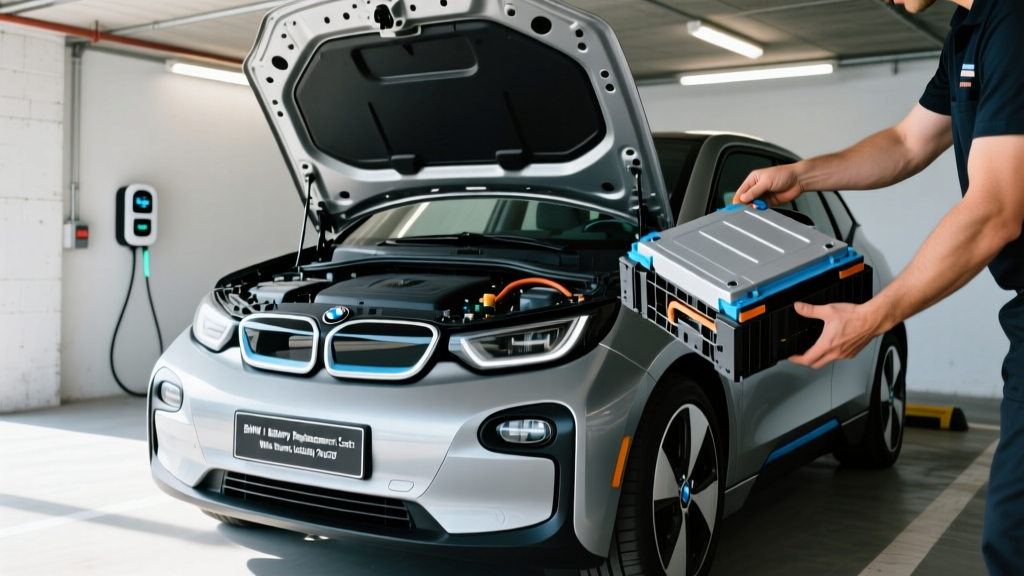
| Chevrolet Bolt EV (65 kWh, older gen) | $9,000–$14,000 | $1,500–$2,500 | $10,500–$16,500 | Post-recall replacement |
| BMW i4 (83.9 kWh NMC) | $15,000–$20,000 | $2,500–$3,500 | $17,500–$23,500 | Warranty-covered in most cases |
Costs based on 2025–2026 OEM parts pricing and independent shop labor rates. Prices have declined ~30% since 2020 and continue trending down as pack-level costs fall below $130/kWh. Aftermarket and refurbished packs may cost 30–50% less.
When is replacement actually needed? In practice, full pack replacement occurs in three scenarios:
- Catastrophic cell or module failure — rare, usually covered under warranty
- Gradual degradation below the 70% threshold — very few modern packs reach this within 150,000 miles
- Collision or flood damage — handled by insurance, not the battery warranty
Module-level repair (replacing 1–2 degraded modules within the pack) is increasingly common and costs $2,000–$6,000 depending on the vehicle. This is the more realistic "repair" scenario for a high-mileage EV in 2030 and beyond.
Factors That Accelerate Battery Degradation — and How to Minimize Them
Battery chemistry sets the ceiling for longevity, but your habits determine where your pack lands within that range. Research from the National Renewable Energy Laboratory (NREL battery aging studies) and fleet data from Recurrent Auto identify these primary degradation accelerators:
Battery Care Checklist: Maximize Pack Life
| Factor | High Degradation Risk | Best Practice |
|---|---|---|
| State of Charge (SoC) | Sitting at 100% for days; running below 10% regularly | NMC: 20–80% daily. LFP: charge to 100% weekly to calibrate BMS |
| DC Fast Charging | Exclusive DCFC use (3+ times/week without Level 2) | Use Level 2 for daily charging; DCFC for road trips. Precondition before DCFC |
| Temperature Extremes | Parked in 100°F+ heat at high SoC; no garage in sub-zero winters | Park in shade/garage when possible. Use scheduled departure preconditioning |
| Calendar Aging | Vehicle sits unused for months at high SoC | If storing, leave at ~50% SoC and plug in to maintain thermal management |
| Regen Braking Aggression | Maximum regen in freezing temps (cold cells + high charge rate) | Reduce regen setting in cold weather; let pack warm up first |
A note on DC fast charging: the concern is real but often overstated. Modern battery management systems (BMS) actively throttle charge rates when cell temperatures are too high or too low, and the charging curve tapers significantly above 80% SoC to protect the cells. A Tesla Model 3 charging at a 250 kW Supercharger peaks at ~250 kW only between roughly 10–30% SoC, then tapers to ~100 kW by 60% and ~40 kW by 85%. This taper is the BMS protecting your battery. Exclusive DCFC use does accelerate degradation — studies show roughly 1–3% additional capacity loss over 100,000 miles compared to Level 2-only charging — but it's not the battery-killer that early EV forums suggested.
Preconditioning matters. If your EV offers battery preconditioning (Tesla, Hyundai/Kia, BMW, Ford all include this), always use it before DC fast charging. The system warms the pack to optimal temperature (~95–105°F), which enables faster charging and reduces cell stress. Arriving at a charger with a cold pack can cut peak charge rates by 40–60% and force the BMS to manage higher internal resistance.
Monitoring Battery Health: How to Check Your State of Health (SoH)
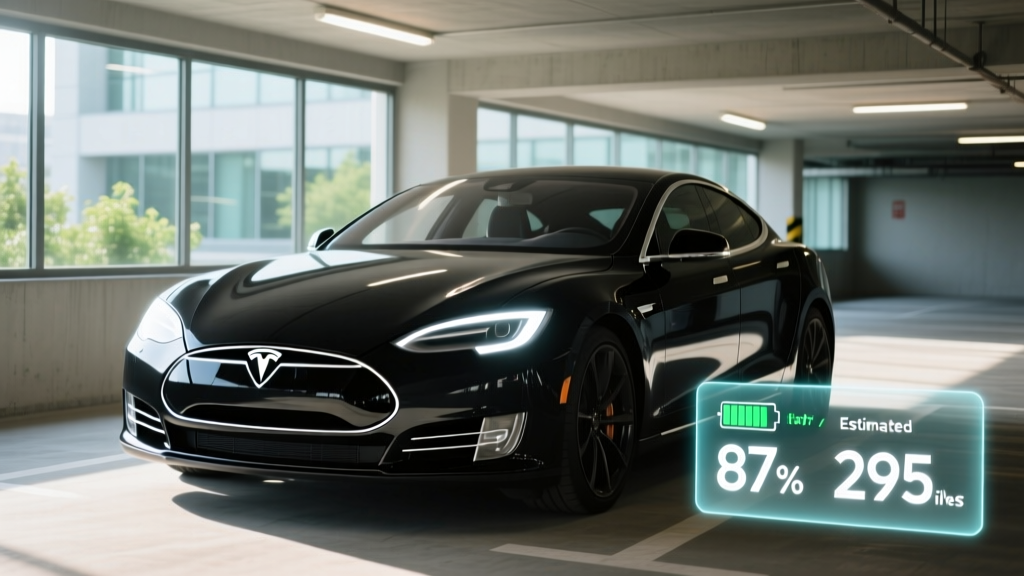
State of Health (SoH) is the percentage of your battery's original usable capacity that remains available. A pack with 90% SoH that originally held 75 kWh now holds approximately 67.5 kWh usable, translating to proportionally less range.
Built-In SoH Monitoring
Most 2026 EVs provide some form of battery health data through the infotainment system or companion app:
- Tesla: Service mode (accessible via the software menu) shows battery health percentage and nominal full-pack capacity in kWh.
- Hyundai/Kia: The EV app dashboard includes a battery health indicator, though it's less granular than Tesla's — typically showing "good" / "normal" rather than an exact percentage.
- BMW: iDrive includes a battery health report accessible through the service menu, with exact SoH percentage.
- Ford: FordPass app provides battery health status and can flag when capacity drops below warranty thresholds.
Third-Party SoH Assessment
For used EV buyers, a more rigorous assessment is available:
- OBD-II diagnostic tools: Devices like the OBDLink SX paired with apps such as Leaf Spy (Nissan), TeslaFi, or ABRP can read the BMS-reported capacity directly.
- Recurrent Auto: This service provides free battery health reports for many popular EV models, comparing your pack's degradation to a fleet average.
- Dealer diagnostic: A pre-purchase inspection at an authorized dealer can pull the full BMS log, including cycle count, DCFC session history, and cell voltage variance.
Cell voltage variance is a subtle but important metric. If individual cells within the pack show wide voltage differences (more than 30–50 mV spread at rest), it indicates module imbalance that may require service even if overall SoH appears acceptable.
Where Huawei Solid-State Fits in the Broader Timeline
Huawei's involvement in the EV battery space extends beyond solid-state cells. The company already supplies drive systems, thermal management components, and intelligent cockpit electronics to Chinese automakers including AITO (Seres) and Avatr (Changan). Its solid-state battery program is one piece of a broader strategy to become a Tier 1 EV supplier — analogous to Bosch's role in the internal combustion era.
For US buyers, the practical implications are limited in the near term. Huawei components face significant regulatory barriers in the US market due to ongoing trade restrictions, and no US-market vehicle currently incorporates Huawei battery technology. However, the global competitive pressure from solid-state programs at Huawei, Toyota, CATL, and Samsung SDI is accelerating investment across the industry, which benefits all EV buyers through faster cost reductions and incremental improvements in today's lithium-ion packs.
The realistic timeline for solid-state batteries in production passenger vehicles:
- 2026–2027: Limited pilot production; solid-state cells in niche applications (e.g., premium EVs in Japan/China with small production runs)
- 2028–2030: First volume-production vehicles with solid-state or semi-solid-state packs, likely in premium segments priced above $60,000
- 2031+: Potential cost parity with current NMC packs, enabling mainstream adoption — dependent on manufacturing scale-up and yield improvements
Frequently Asked Questions
How long do EV batteries last in years and miles?
Modern EV batteries (2022+ production) with active liquid thermal management typically retain 85–92% of original capacity at 100,000 miles and 80–88% at 150,000 miles. In years, most packs will provide 15–20 years of usable service before degradation makes the vehicle impractical as a primary car. LFP chemistry packs trend toward the higher end of these ranges. The battery will almost always outlast the rest of the vehicle's mechanical and cosmetic life.
How much does an EV battery cost to replace in 2026?
Full pack replacement costs range from approximately $10,000 for a 60 kWh LFP pack (Tesla Model 3 RWD) to $28,000+ for a 131 kWh NMC pack (F-150 Lightning Extended Range), including labor. However, most high-mileage repairs involve module-level replacement at $2,000–$6,000 rather than a full pack swap. Pack-level costs have declined roughly 30% since 2020 and continue to fall.
What does the EV battery warranty actually cover?
The standard battery warranty covers capacity loss below a specified threshold — typically 70% of original capacity — for 8 years/100,000 miles (10 years/100,000 for Hyundai/Kia, 8 years/175,000 for Rivian). It does not cover damage from accidents, floods, improper charging, or modifications. If your pack drops below the threshold, the manufacturer will repair or replace it to restore capacity above the threshold — which may mean module replacement rather than a full new pack.
LFP vs. NMC — which battery chemistry is better for me?
Choose LFP if you prioritize longevity, lower cost, and don't mind slightly less range or reduced cold-weather performance. LFP is ideal for daily commuting, warm-climate drivers, and buyers who want to charge to 100% without worry. Choose NMC if you need maximum range (300+ miles), plan frequent road trips in cold weather, or are buying a larger vehicle where weight savings matter. Both chemistries are proven and reliable in 2026 — the "better" choice depends on your use case.
Should I wait for solid-state batteries before buying an EV?
No. Solid-state batteries from Huawei, Toyota, and others will not be available in mainstream, affordable passenger vehicles before 2029–2030 at the earliest, and initial pricing will be in the premium segment. Today's lithium-ion packs (both LFP and NMC) offer excellent longevity, declining costs, and proven reliability. Waiting 4–5+ years means paying for gasoline, missing current federal tax credits under IRS §30D, and forgoing years of fuel savings.
Does frequent DC fast charging damage my battery?
Exclusive DCFC use accelerates degradation by roughly 1–3% over 100,000 miles compared to Level 2 charging — measurable but not catastrophic. Modern BMS systems actively protect the pack through charge-curve tapering and thermal management. The best practice is to use Level 2 (home or workplace) for daily charging and reserve DC fast charging for road trips. Always precondition the battery before a DCFC session to reduce cell stress and improve charge speed.
Sources: fueleconomy.gov (EPA range and efficiency data), IRS §30D Clean Vehicle Credit, Recurrent Auto Battery Health Reports (2025), National Renewable Energy Laboratory battery aging research, manufacturer specification sheets.