If you've ever searched for "how to unplug a battery" in an electric vehicle, you're likely facing one of two scenarios: you need to disconnect the 12V auxiliary battery for maintenance, or you're trying to understand how the high-voltage traction battery can be safely isolated. These are very different systems, and confusing them can be dangerous. This guide clarifies exactly what you can and cannot disconnect yourself, then dives deep into the chemistry, degradation, warranty, and care practices that determine how long your EV's traction battery will last.
What "Unplugging a Battery" Actually Means in an EV
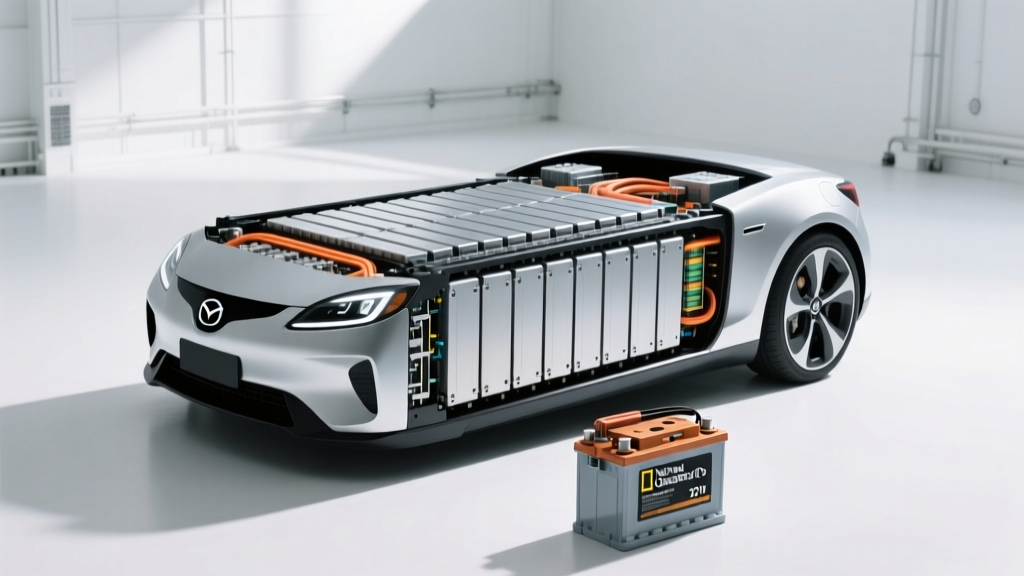
Every electric vehicle on the road in 2026 carries two batteries:
- 12V auxiliary battery — A small lead-acid or lithium-ion battery that powers the vehicle's computers, lighting, infotainment, and door locks. It's similar to a conventional car battery and can be disconnected for service.
- High-voltage (HV) traction battery — The large lithium-based pack (typically 50–120 kWh) that propels the vehicle. This pack operates at 400V or 800V and is not a DIY disconnect. It is sealed, shielded, and equipped with a service disconnect plug that only trained high-voltage technicians should handle.
Disconnecting the 12V Auxiliary Battery
For routine maintenance — such as replacing the 12V battery, performing certain resets, or preparing the vehicle for long-term storage — you can disconnect the 12V battery. Here's the general procedure (always confirm with your owner's manual, as steps vary by manufacturer):
- Power the vehicle fully off (not sleep mode — full shutdown via the touchscreen or power button).
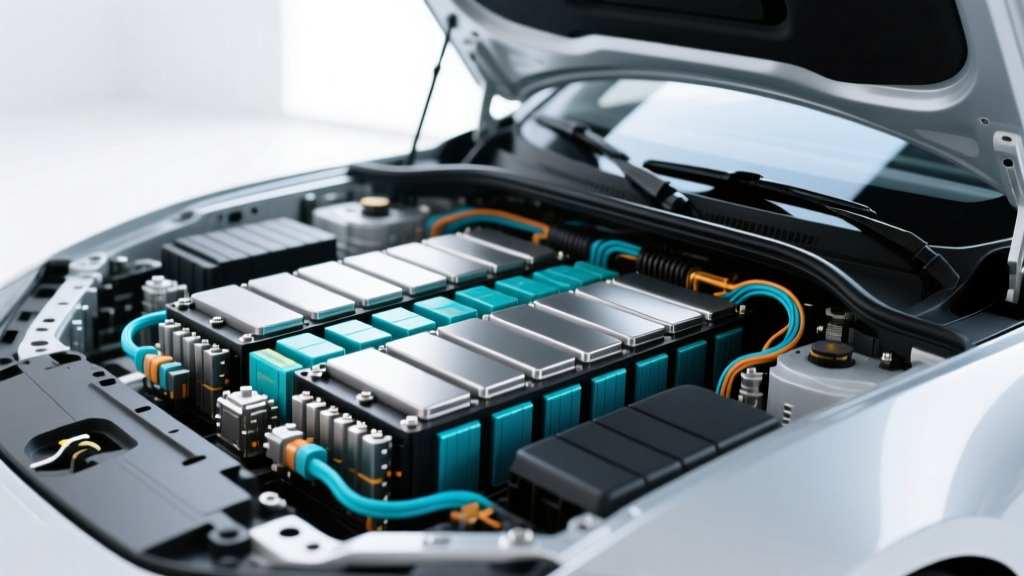
- Open the hood or access panel where the 12V battery is housed (some EVs place it in the frunk area, others under a rear seat or in the trunk).
- Disconnect the negative (−) terminal first, then the positive (+) terminal. This prevents short-circuit risk.
- If your EV uses a lithium-ion 12V replacement (common in newer Teslas, Hyundai Ioniq models, and others), note that these may have a built-in battery management system (BMS) that requires a reset procedure after reconnection.
- Reconnect in reverse order: positive first, then negative.
After reconnecting, expect a brief system initialization period (30–90 seconds) before the vehicle's computers fully boot. Some settings — like window auto-up/down calibration or steering-angle sensors — may require a short drive cycle to recalibrate.
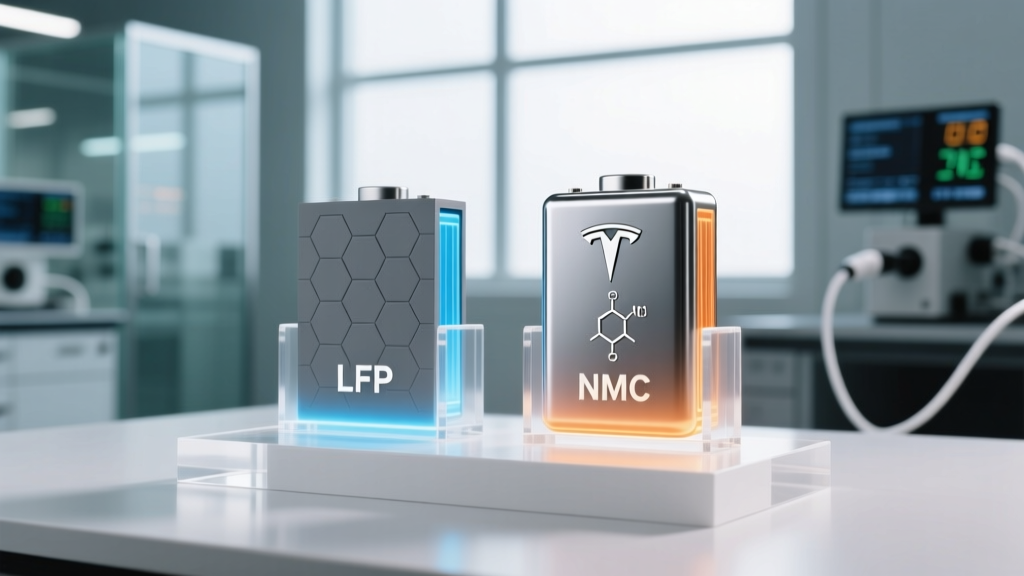
LFP vs NMC: Which Battery Chemistry Is in Your EV?
The single biggest factor in your battery's lifespan, cost, and daily usability is its chemistry. In 2026, virtually all consumer EVs use one of two lithium-ion chemistries:
| Attribute | LFP (Lithium Iron Phosphate) | NMC / NCA (Nickel Manganese Cobalt / Nickel Cobalt Aluminum) |
|---|---|---|
| Energy density | ~160–180 Wh/kg (lower) | ~220–300 Wh/kg (higher) |
| Cycle life | 3,000–5,000+ cycles to 80% SoH | 1,000–2,000 cycles to 80% SoH |
| Cold-weather performance | More range loss below 32°F; slower charge acceptance without preconditioning | Better low-temp discharge; still benefits from thermal preconditioning |
| Recommended daily SoC | 100% daily is fine (manufacturer-recommended for accurate BMS calibration) | 80% daily; 100% only for trips |
| Cost per kWh (pack-level) | ~$100–$115/kWh | ~$125–$155/kWh |
| Thermal stability | Excellent — very resistant to thermal runaway | Good — requires robust BMS and cooling |
| Common in (2026 models) | Tesla Model 3/Y RWD, BYD models, Ford Mustang Mach-E Select (LFP option), Rivian Standard | Tesla Long Range, Hyundai Ioniq 5/6, BMW iX, most luxury/long-range trims |
Which is better? It depends on your use case. If you want maximum range per charge and don't mind charging to 80% daily, NMC delivers more miles in a lighter pack. If you want a battery that can be charged to 100% every day without degradation anxiety, has a longer cycle life, and costs less upfront, LFP is the pragmatic choice — especially for commuters and city drivers. The trade-off is that LFP packs are heavier for the same energy capacity, and they lose more range in freezing temperatures.
How Long Do EV Batteries Actually Last?
The short answer: far longer than most buyers expect. Data from fleet operators, manufacturer reports, and independent testing consistently shows that modern EV batteries retain 85–95% of their original capacity after 100,000 miles.
- Tesla Model 3/Y (NMC, 2018–2022): Fleet data aggregated by fueleconomy.gov and third-party telemetry shows ~5–7% degradation at 100,000 miles, with degradation slowing significantly after the initial break-in period.
- Chevrolet Bolt EV/EUV (NMC, 2017–2023): Owner-reported data on forums and Recurrent Auto studies show ~8–10% loss at 100,000 miles, with most packs remaining well above the 70% warranty threshold at 150,000+ miles.
- Hyundai Ioniq 5 (NMC, 2022–2025): Early fleet data indicates ~4–6% loss at 60,000 miles with predominantly Level 2 home charging.
- Tesla Model 3 RWD (LFP, 2022–2025): LFP packs show minimal measurable degradation in the first 50,000 miles when charged to 100% regularly, consistent with LFP's higher cycle-life rating.
The degradation curve is not linear. Most lithium-ion packs experience a steeper drop in the first 10,000–20,000 miles (typically 2–4%), then settle into a very gradual decline of roughly 0.5–1% per year or per 15,000–20,000 miles. This means a battery that loses 5% in its first year might only lose another 5% over the next five years.
Based on current data, most EV batteries built from 2020 onward should last 200,000–300,000 miles before reaching the 70% capacity threshold — and many will outlast the vehicle's body, suspension, and interior.
What the Battery Warranty Actually Covers
Federal law mandates that EV batteries carry a minimum warranty of 8 years / 100,000 miles (10 years / 150,000 miles in California and states that follow CARB standards). Most manufacturers exceed this baseline. Here's how the major warranties compare for 2026 models:
| Manufacturer | Coverage | Capacity Threshold | Notes |
|---|---|---|---|
| Tesla | 8 yr / 120,000 mi (Model 3/Y LR); 8 yr / 100,000 mi (RWD) | 70% retention | Covers defects and excessive degradation below threshold |
| Hyundai / Kia | 10 yr / 100,000 mi | 70% retention | Among the longest time-based coverage |
| Ford | 8 yr / 100,000 mi | 70% retention | Covers Mach-E, F-150 Lightning packs |
| GM (Chevy/GMC/Cadillac) | 8 yr / 100,000 mi | 60–70% retention (varies by model) | Ultium packs; check specific model terms |
| BMW | 8 yr / 100,000 mi | 70% retention | iX, i4, i7 covered |
| Rivian | 8 yr / 175,000 mi (R1T); 8 yr / 120,000 mi (R1S) | 70% retention | Higher mileage cap on R1T reflects truck use case |
What's covered: Manufacturing defects, cell failures, and degradation below the stated capacity threshold. If your battery drops below 70% of its original capacity within the warranty period, the manufacturer must repair or replace it at no cost to you.
What's typically not covered: Damage from accidents, flooding, improper modifications, or using non-approved charging equipment. Normal gradual degradation above the threshold is also not covered — a battery at 72% after 8 years is considered within specification.
EV Battery Replacement Cost: What to Expect
Battery replacement is the single biggest fear for prospective EV buyers — and the most misunderstood. The reality: the vast majority of EV batteries never need full replacement during the vehicle's useful life. When they do, costs have been declining steadily.
| Vehicle / Pack Size | Pack Capacity | Estimated Replacement Cost (Parts + Labor) | Typical Replacement Timeline |
|---|---|---|---|
| Tesla Model 3 RWD (LFP) | ~57 kWh | $8,000–$12,000 | 250,000+ mi / 15+ years (if ever) |
| Tesla Model Y LR (NMC) | ~75 kWh | $12,000–$16,000 | 200,000+ mi / 12+ years |
| Hyundai Ioniq 5 (NMC) | 77.4 kWh | $11,000–$15,000 | 200,000+ mi / 12+ years |
| Ford F-150 Lightning (Extended Range) | ~131 kWh | $18,000–$25,000 | 200,000+ mi / 12+ years |
| Chevrolet Equinox EV | ~85 kWh | $12,000–$16,000 | 200,000+ mi / 12+ years |
These costs include the battery pack and labor at a dealership or authorized service center. Independent EV repair shops and refurbished pack options can reduce costs by 20–40%. It's also worth noting that many manufacturers now offer module-level replacement — swapping individual defective cell modules rather than the entire pack — which can cost $2,000–$5,000 instead of a full pack replacement.
According to data from the National Highway Traffic Safety Administration (NHTSA) and industry tracking, battery-related warranty claims remain low, with failure rates well under 1% in the first five years for major manufacturers.
Factors That Accelerate (or Preserve) Battery Life
Your daily habits have a measurable impact on how quickly your battery degrades. Here are the factors ranked by impact, based on aggregated fleet data and battery research:
- Limit DC fast charging to road trips. Occasional DC fast charging (150–350 kW) is fine, but daily fast charging accelerates degradation by an estimated 1–3% over 100,000 miles compared to Level 2 home charging. The heat generated at high charge rates stresses cells.
- Avoid prolonged exposure to extreme SoC. For NMC batteries, don't store the car at 100% or below 10% for days at a time. For LFP, charging to 100% regularly is recommended for BMS calibration, but avoid leaving it at 0% for extended periods.
- Use preconditioning before fast charging. Most EVs with active thermal management (Tesla, Hyundai E-GMP, GM Ultium, BMW) will precondition the battery when you navigate to a fast charger. This brings the pack to optimal temperature (~77–95°F / 25–35°C) for faster charging and reduced cell stress.
- Park in shade or a garage in hot climates. Sustained pack temperatures above 104°F (40°C) accelerate calendar aging. In Phoenix or Las Vegas summers, a garage can reduce battery temperature by 15–25°F compared to outdoor parking.
- Don't obsess over daily precision. The difference between charging to 80% vs 85% daily is negligible over the life of the car. Use your car normally — modern BMS systems have buffers (typically 2–5 kWh at the top and bottom) that protect cells from true 0% or 100% states.
What has the least impact: Regenerative braking settings, driving style (aggressive vs. gentle acceleration affects range but has minimal effect on battery degradation), and whether you use Level 1 (120V) vs Level 2 (240V) home charging. Both Level 1 and Level 2 are low-stress charge rates for modern packs.
How to Check Your Battery's State of Health (SoH)
State of Health (SoH) is the percentage of your battery's original capacity that remains usable. A new battery is 100% SoH; a battery that can only hold 85 kWh of its original 100 kWh is at 85% SoH. Here's how to monitor it:
Built-In Vehicle Tools
- Tesla: The Tesla app and in-car service menu show estimated range at 100% charge. Compare this to the original EPA-rated range to estimate SoH. Third-party tools like Tessie or TeslaFi log this data over time.
- Hyundai/Kia: The infotainment system's EV diagnostics page shows battery health percentage. The Bluelink/Uvo connected app also provides SoH estimates.
- GM (Ultium): The myChevrolet/myCadillac app includes a battery health indicator. OnStar diagnostics can provide a more detailed SoH report.
- BMW: The iDrive system and BMW Connected app display battery health status. A full SoH readout is available at service visits.
Third-Party and OBD-II Tools
- OBD-II scanners with EV support (such as the OBDLink MX+ paired with apps like ABRP or LeafSpy for Nissan LEAF) can read the battery management system's internal SoH estimate directly.
- Recurrent Auto and Geotab offer fleet and individual battery health tracking using telematics data, comparing your pack's degradation against thousands of identical vehicles.
- Dealership diagnostic check: If you're considering a used EV or want a definitive SoH reading, any authorized dealer can run a full battery diagnostic — often free during a service visit.
For a practical at-home estimate: charge the battery to 100% (or 80% for NMC, then calculate), note the displayed range, and divide by the original EPA-rated range. A 2022 Hyundai Ioniq 5 Limited originally rated at 256 miles EPA that now shows 240 miles at 100% is at roughly 94% SoH — well within normal expectations.
Emerging Battery Tech: What's Next (and When)
Several next-generation battery technologies are in development. None are available in consumer vehicles as of 2026, but they're worth tracking:
- Solid-state batteries: These replace the liquid electrolyte with a solid conductor, promising higher energy density (~400+ Wh/kg at the cell level), faster charging, and improved safety. Toyota has announced a solid-state battery targeting 2027–2028 production in limited models. Samsung SDI and QuantumScape are also in advanced testing. Realistic mass-market availability: 2029–2032.
- Silicon anode batteries: Replacing graphite anodes with silicon can boost energy density by 20–40%. Sila Nanotechnologies and Group14 are supplying early production cells. Some luxury and performance EVs may adopt this by 2027–2028.
- Sodium-ion batteries: Lower cost and no critical minerals (no lithium, cobalt, or nickel), but significantly lower energy density (~120–160 Wh/kg). CATL and BYD are producing sodium-ion cells for budget EVs in China. US-market adoption is uncertain and likely limited to entry-level or urban-focused models.
These technologies are forward-looking and subject to production delays. If you're buying an EV in 2026, current LFP and NMC chemistries are mature, well-understood, and backed by robust warranty coverage. Waiting for solid-state means waiting at minimum 3–5 years for limited availability at premium prices.
Frequently Asked Questions
Can I unplug the high-voltage battery myself?
No. The HV traction battery operates at 400–800V and requires a certified service disconnect procedure. Only qualified high-voltage technicians with proper PPE and lockout/tagout training should handle HV battery disconnection. Attempting this yourself risks electrocution and will void your warranty.
How long do EV batteries last in years and miles?
Based on fleet data from 2018–2025 model-year vehicles, most modern EV batteries retain 85–93% of their original capacity at 100,000 miles. At 200,000 miles, many packs still hold 75–85%. In years, that translates to 15–20+ years of typical use before reaching the 70% warranty threshold. Most batteries will outlast the rest of the vehicle.
How much does it cost to replace an EV battery?
Full pack replacement costs range from approximately $8,000 for a smaller LFP pack (Tesla Model 3 RWD) to $25,000 for a large pack (F-150 Lightning Extended Range, ~131 kWh). Module-level repairs cost significantly less ($2,000–$5,000). However, the vast majority of EV batteries never need replacement during the vehicle's useful life.
What does the EV battery warranty cover?
Federally mandated minimum coverage is 8 years / 100,000 miles (10 years / 150,000 miles in CARB states). The warranty covers manufacturing defects and degradation below a specified capacity threshold (typically 70% of original capacity). It does not cover accident damage, flooding, or modifications. Check your specific manufacturer's terms, as some offer 10-year or higher-mileage coverage.
Is LFP better than NMC for daily driving?
For daily commuting and city driving, LFP has practical advantages: you can charge to 100% every day without degradation concern, it has a longer cycle life (3,000–5,000 cycles vs 1,000–2,000), and it's cheaper per kWh. NMC offers higher energy density (more range in a lighter pack) and better cold-weather performance, making it preferable for long-range models and cold climates. Neither is universally "better" — it depends on your driving pattern and climate.
Does fast charging damage my EV battery?
Occasional DC fast charging (a few times per month on road trips) has a negligible effect on battery life. Daily DC fast charging does accelerate degradation modestly — studies show roughly 1–3% additional capacity loss over 100,000 miles compared to consistent Level 2 home charging. The main mechanism is heat stress. Modern EVs with active thermal management (liquid cooling) mitigate this significantly, but Level 2 home charging remains the lowest-stress option.
How do I check my EV battery health at home?
Charge to 100% (or a known percentage like 80%), note the displayed estimated range, and compare it to the original EPA-rated range. For more precision, use an OBD-II scanner with EV-compatible software to read the BMS-reported State of Health directly. Your dealer can also run a full diagnostic during a service visit.
Sources: fueleconomy.gov (EPA range and efficiency data), NHTSA (safety and recall data), manufacturer warranty documentation. Battery degradation data aggregated from fleet telemetry studies and owner-reported datasets. Replacement cost estimates based on 2025–2026 dealership and independent shop pricing; actual costs vary by region and model year.