Why Would You Need to Remove an EV Battery?
Searches for "how to take a battery out a car" spike for two very different reasons. Most people are trying to replace a dead 12V auxiliary battery — the same small lead-acid or lithium unit that powers your infotainment and door locks. A smaller but growing group is asking about the high-voltage traction battery: the 40–120 kWh pack that actually drives the wheels.
This guide focuses on the traction battery — the one that costs thousands, weighs 600–1,200 pounds, and determines your EV's range, performance, and resale value. If your question is really about the 12V battery, consult your owner's manual; that's a straightforward DIY job on most models.
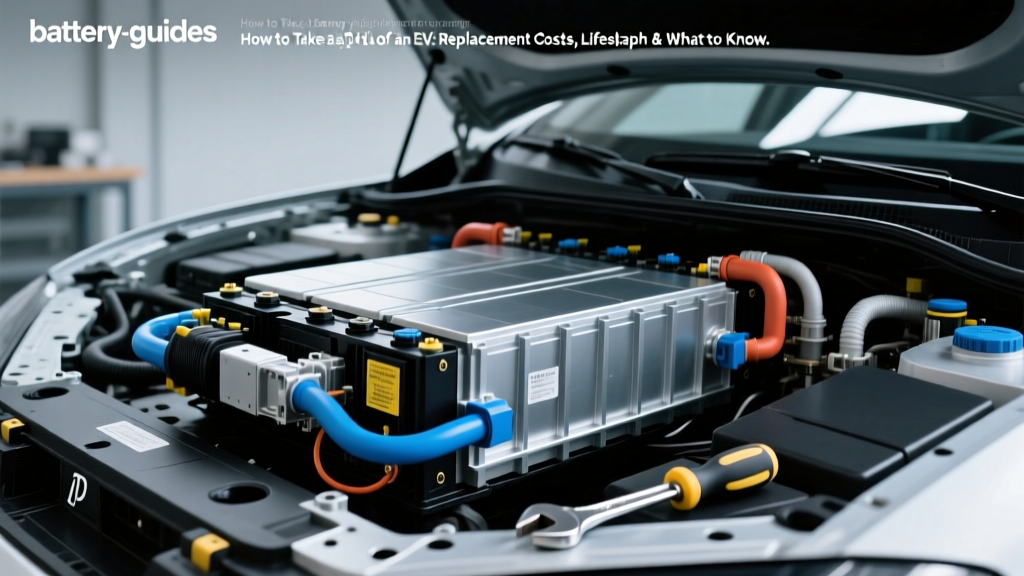
The traction battery, by contrast, is not a consumer-serviceable component. It sits beneath the floor pan, sealed in a structural aluminum or steel enclosure, connected to 400V or 800V high-voltage cabling, liquid-cooling loops, and the vehicle's battery management system (BMS). Removal requires a lift, insulated tools, manufacturer-specific diagnostic software, and technicians certified to handle high-voltage systems. In 2026, that means a dealership service center or an independent EV specialist — never a driveway project.
How Long Do EV Batteries Actually Last?
The honest answer: longer than most buyers assume. Data aggregated from fleet operators, manufacturer warranty claims, and independent studies (including Geotab's long-term EV battery health study) shows that the average modern lithium-ion traction battery loses roughly 5–10% of its original capacity over the first 8 years or 100,000 miles. That's not catastrophic — it means a vehicle with an EPA-rated 300-mile range might deliver 270–285 miles after eight years of typical use.
Here's what the data actually looks like across common ownership timelines:
Typical Capacity Retention Over Time (NMC & LFP Packs, Liquid-Cooled)
| Age / Mileage | Avg. Capacity Retained (NMC) | Avg. Capacity Retained (LFP) |
|---|---|---|
| Year 1 / 15,000 mi | ~97–99% | ~98–99% |
| Year 3 / 45,000 mi | ~93–96% | ~95–97% |
| Year 5 / 75,000 mi | ~90–94% | ~92–96% |
| Year 8 / 100,000 mi | ~85–92% | ~88–94% |
| Year 10+ / 150,000+ mi | ~80–88% | ~84–92% |
Sources: Geotab fleet data, Recurrent Auto battery reports, manufacturer warranty thresholds. Individual results vary by climate, charging habits, and thermal management quality.
The key takeaway: most EV batteries outlast the vehicles they're installed in. The median age of a scrapped passenger car in the U.S. is around 15 years. By that point, even a degraded EV battery typically retains 75–85% of its original capacity — enough for second-life stationary storage applications.
LFP vs. NMC vs. NCA: Which Chemistry Should You Care About?
Not all EV batteries are the same. The two dominant chemistries in 2026 passenger vehicles are LFP (lithium iron phosphate) and NMC/NCA (nickel manganese cobalt / nickel cobalt aluminum). The choice affects your range, charging habits, cold-weather performance, and long-term durability.
| Attribute | LFP (LiFePO₄) | NMC / NCA |
|---|---|---|
| Energy Density | Lower (~160–200 Wh/kg cell-level) | Higher (~220–300 Wh/kg cell-level) |
| Cycle Life | 3,000–6,000+ cycles | 1,000–2,500 cycles |
| Cold-Weather Performance | Moderate — more range loss below 32°F | Better — less cold-weather range penalty |
| Charging to 100% | Recommended regularly (helps BMS calibration) | Generally advised to stay 20–80% daily |
| Cost | Lower (no cobalt or nickel) | Higher (cobalt/nickel commodity exposure) |
| Thermal Stability | Excellent — very low thermal runaway risk | Good — requires robust BMS and cooling |
| Common 2026 Applications | Tesla Model 3/Y RWD, base Ford Mustang Mach-E, BYD models, Rivian Standard | Tesla Long Range/Performance, Hyundai Ioniq 5/6, BMW iX, most premium EVs |
Which is better? It depends on your use case. LFP wins on longevity, cost, and safety — ideal for daily commuting, fleet use, and buyers who plan to keep a vehicle 10+ years. NMC wins on energy density and cold-weather range — better for road-trippers, cold-climate drivers, and anyone who needs maximum range from a given pack size.
What Does the EV Battery Warranty Actually Cover?
Federal law mandates a minimum 8-year / 100,000-mile warranty on EV battery packs for emissions-related compliance (California and states adopting CARB rules extend this to 10 years / 150,000 miles). Most manufacturers meet or exceed this baseline. Here's how major 2026 warranties compare:
| Manufacturer (2026 MY) | Warranty Term | Capacity Retention Threshold |
|---|---|---|
| Tesla | 8 yr / 120,000 mi (100k on RWD) | 70% |
| Hyundai / Kia | 10 yr / 100,000 mi | 70% |
| Ford | 8 yr / 100,000 mi | 70% |
| GM (Chevrolet, Cadillac) | 8 yr / 100,000 mi | 70% (60% on some commercial) |
| Rivian | 8 yr / 175,000 mi | 70% |
| BMW | 8 yr / 100,000 mi | 70% |
What triggers a warranty claim? If your battery's usable capacity drops below the stated threshold (typically 70% of original) within the warranty period, the manufacturer must repair or replace the pack at no cost. In practice, this usually means replacing defective modules rather than the entire pack. Out-of-warranty failures are rare before 150,000 miles on liquid-cooled packs but do happen — which is where replacement cost becomes relevant.
EV Battery Replacement Cost: What You'll Actually Pay
If your battery fails outside warranty — or you're buying a used EV with a degraded pack — here's what replacement costs in 2026. These figures include the battery pack, labor, and required BMS reprogramming, but not ancillary repairs (coolant system, contactors, wiring):
| Vehicle / Pack Size | Chemistry | Est. Replacement Cost (2026) |
|---|---|---|
| Nissan Leaf (40–62 kWh) | NMC (passive air-cooled) | $6,500 – $9,500 |
| Tesla Model 3 RWD (~60 kWh) | LFP | $8,000 – $12,000 |
| Tesla Model Y LR (~75 kWh) | NMC | $12,000 – $16,000 |
| Hyundai Ioniq 5 (77.4 kWh) | NMC | $11,000 – $15,000 |
| Ford F-150 Lightning Ext. Range (131 kWh) | NMC | $18,000 – $22,000+ |
| Chevrolet Bolt EV (65 kWh) | NMC | $9,000 – $13,000 |
Costs sourced from dealer service estimates, independent EV repair shops, and Recurrent Auto replacement data. Prices declining ~5–8% annually as battery cell costs fall.
When is replacement actually needed? For the vast majority of owners, it isn't — at least not during typical ownership. The data from Consumer Reports and fleet analyses shows that fewer than 5% of EVs require traction battery replacement before 150,000 miles, and most of those are covered under warranty. The scenario where you'd pay out of pocket is typically a 10–15-year-old EV with 180,000+ miles and a pack that has degraded below 60–65% capacity — at which point the replacement cost often exceeds the vehicle's residual value.
How to Check and Maximize Your EV Battery Health
Monitoring your battery's State of Health (SoH) and adjusting your habits can meaningfully extend its life. Here's what to know:
Checking Battery Health
- In-car displays: Most 2026 EVs show battery health or estimated range vs. original in the settings menu. Tesla's service mode, Hyundai's EV diagnostics, and Ford's battery health screen all provide SoH percentages.
- OBD-II apps: Tools like Torque Pro, LeafSpy (Nissan), or OBDeleven can read BMS data including cell voltage spread, cycle count, and SoH.
- Third-party reports: Services like Recurrent Auto provide battery health reports for used-EV buyers — increasingly required by savvy purchasers.
- Dealer diagnostics: A service center can pull a full battery health report, including individual module balance and internal resistance measurements.
Battery Care Best Practices
✓ Daily Habits That Extend Battery Life
- NMC packs: Set daily charge limit to 80%. Charge to 100% only before long trips.
- LFP packs: Charge to 100% at least once per week — this calibrates the BMS and prevents capacity estimation drift.
- Avoid sustained low SoC: Don't leave any EV parked below 10% for more than a few days. Lithium-ion cells degrade faster at voltage extremes.
- Precondition before DC fast charging: Use your car's navigation to route to a charger — this activates battery preheating, enabling faster charge acceptance and reducing lithium plating risk in cold weather.
- Minimize repetitive DC fast charging: Daily Level 2 (7–11 kW) charging is gentler than daily 150+ kW DC sessions. Use DC fast charging for road trips, not as your primary charging method.
- Garage when possible: Extreme heat is harder on batteries than extreme cold. Parking in shade or a garage in summer reduces thermal stress on the pack.
- Use scheduled charging: Charge during off-peak hours and let the car finish charging shortly before you drive — this minimizes time spent at high SoC.
Factors That Accelerate Degradation
The data is clear on what hurts batteries most: sustained high temperatures (above 95°F ambient without adequate cooling), frequent DC fast charging to high SoC (especially above 80%, where the charge curve tapers and internal resistance generates excess heat), deep discharge cycles (regularly driving below 5% SoC), and storage at extreme SoC (parking at 100% or near 0% for weeks). Modern liquid-cooled packs with sophisticated BMS algorithms mitigate these risks significantly compared to early air-cooled designs like the original Nissan Leaf.
The Battery Removal Process: What Actually Happens at the Shop
For those genuinely researching how to take a battery out of an EV — whether for replacement, salvage, or module-level repair — here's what the process involves at a certified service center:
- High-voltage safety protocol: The vehicle is powered down, the service disconnect is pulled, and the pack is verified de-energized with a multimeter rated for the pack's voltage class (CAT III/IV). Technicians wear insulated gloves rated to 1,000V.
- Vehicle lift and undertray removal: The EV is raised on a drive-on or two-post lift. The aerodynamic undertray, cooling line connections, and high-voltage cable connectors are disconnected.
- Coolant drain and electrical disconnect: The battery cooling loop is drained. The main HV connector, BMS communication harness, and any 12V sense wires are unplugged.
- Pack lowering: A battery table lift (a specialized hydraulic platform) supports the 600–1,200 lb pack as the mounting bolts are removed. The pack is lowered and moved to a service bench.
- Module-level diagnostics (if applicable): On some platforms (Hyundai E-GMP, older Nissan Leaf), individual modules can be tested and replaced without swapping the entire pack. On structural packs (Tesla, GM Ultium), the entire enclosure is typically replaced as a unit.
- Reinstallation and BMS reprogramming: The new or refurbished pack is raised into position, bolted to spec, reconnected, and the BMS is flashed with updated calibration data. Coolant is refilled and bled. A full charge/discharge verification cycle is run.
Total shop time: typically 4–8 hours for a full pack swap, longer for module-level repair. Labor rates at EV-certified shops in 2026 average $150–$220/hour.
What's Next: Solid-State and Silicon-Anode Batteries
The next generational leap in EV batteries involves solid-state electrolytes (replacing the liquid electrolyte with a solid ceramic, glass, or polymer) and silicon-dominant anodes (replacing graphite with silicon to dramatically increase energy density).
Solid-state batteries promise 30–50% higher energy density, faster charging (potentially 10–80% in under 10 minutes), and inherent safety advantages (no flammable liquid electrolyte). Toyota has announced solid-state-equipped vehicles for limited 2027–2028 production, while QuantumScape's cells are undergoing validation with Volkswagen. However, manufacturing yield, cost, and scalability remain unsolved challenges.
Silicon-anode batteries are closer to market. Companies like Sila Nanotechnologies and Group14 are supplying silicon-carbon anode materials to manufacturers including Mercedes-Benz and Panasonic. Expect initial production vehicles with silicon-anode cells in 2027–2028, offering 15–25% more range from the same pack volume.
Realistic timeline: Neither technology will reach mainstream, affordable passenger vehicles before 2029–2030. For buyers shopping in 2026, today's liquid-cooled LFP and NMC packs represent mature, well-understood technology with proven longevity data.
Frequently Asked Questions
Can I replace an EV battery myself at home?
No. The high-voltage traction battery operates at 400–800V and weighs 600–1,200 lbs. Removal requires a vehicle lift, high-voltage safety certification, insulated tools, coolant handling equipment, and manufacturer-specific BMS software. Attempting this without proper training and equipment is lethal. The 12V auxiliary battery, however, is a standard DIY replacement.
How much does an EV battery cost to replace in 2026?
Between $6,500 and $22,000+ depending on pack size and vehicle. A Nissan Leaf 40 kWh pack runs $6,500–$9,500; a Tesla Model Y Long Range pack is $12,000–$16,000; a Ford F-150 Lightning extended-range 131 kWh pack can exceed $20,000. Labor adds $800–$1,800. Costs are declining roughly 5–8% annually as cell prices fall.
Do EV batteries need to be replaced regularly like phone batteries?
No. Unlike smartphones (which see heavy daily cycling and heat exposure), EV batteries are liquid-cooled, managed by sophisticated BMS algorithms, and typically cycled between 20–80% SoC. The average EV battery retains 85–92% capacity at 8 years / 100,000 miles. Most will outlast the vehicle itself.
Is LFP better than NMC for long-term ownership?
For longevity and cost, yes — LFP cells are rated for 3,000–6,000+ cycles versus 1,000–2,500 for NMC, and they tolerate regular 100% charging. The trade-off is lower energy density (meaning heavier packs for the same range) and worse cold-weather performance. If you live in a cold climate or need maximum range, NMC remains the better choice.
What happens to old EV batteries after removal?
Removed packs with 70–80% capacity are increasingly repurposed for stationary energy storage (home solar buffering, grid stabilization). Packs below that threshold are sent to recyclers like Redwood Materials or Li-Cycle, where 95%+ of critical minerals (lithium, cobalt, nickel) are recovered and fed back into new battery production. This closed-loop recycling is a growing part of the EV supply chain.
Does fast charging damage my EV battery?
Occasional DC fast charging is fine and expected. The risk comes from exclusive reliance on DC fast charging (150+ kW) as your daily charging method, particularly if you regularly charge above 80% where the charge curve tapers and cell temperatures spike. Studies from Idaho National Laboratory showed that vehicles charged exclusively via DC fast charging degraded 2–5% more over 50,000 miles than those using Level 2 — measurable but not catastrophic. For daily use, a home Level 2 charger (7–11 kW) remains the optimal approach.