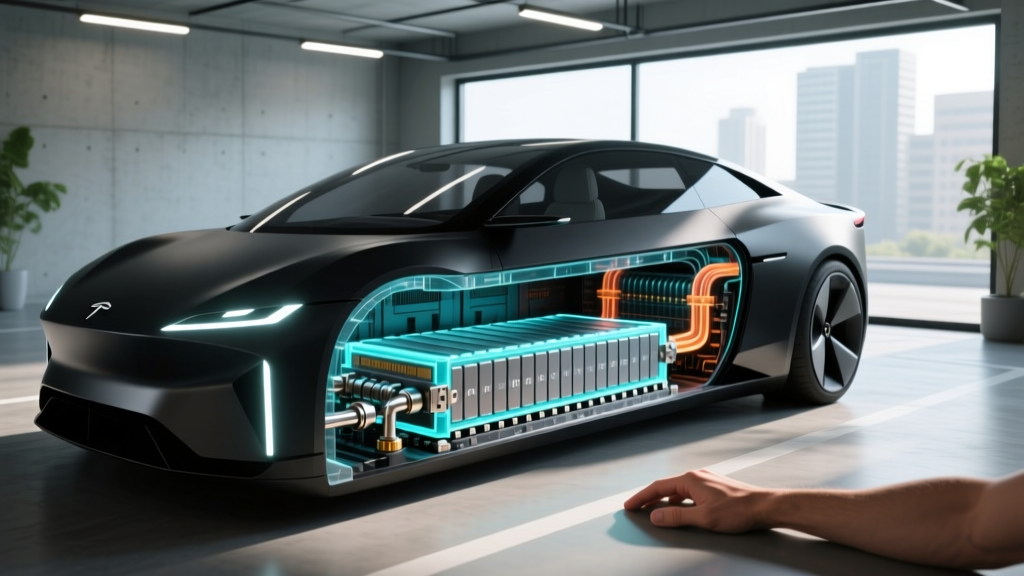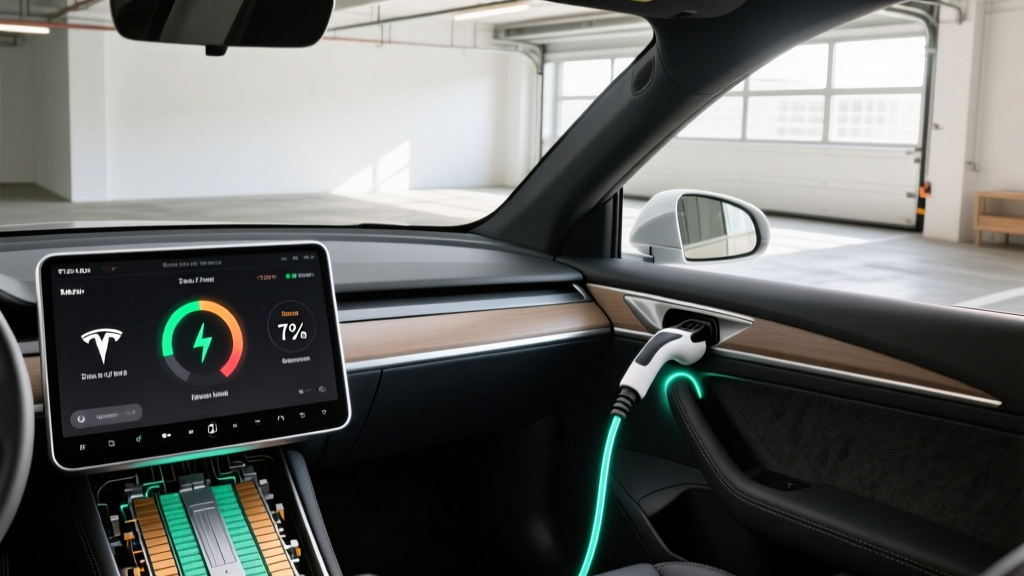
If you own a Tesla or are shopping for one, the traction battery is the single most expensive component in the vehicle — and its longevity directly affects range, resale value, and long-term ownership cost. The good news: Tesla's battery packs routinely outlast 200,000 miles with manageable degradation, provided you understand the chemistry inside your specific model and follow a few evidence-based habits. This guide covers exactly how to save Tesla battery health across the 2026 Model 3, Model Y, Model S, and Model X lineup, with real degradation data, warranty specifics, and actionable daily practices.
LFP vs NMC/NCA: Which Tesla Battery Chemistry Do You Have?
Tesla uses two fundamentally different battery chemistries across its 2026 lineup, and your care strategy depends entirely on which one is under your floor. The Standard Range (now called "Rear-Wheel Drive") Model 3 and Model Y use lithium iron phosphate (LFP) cells, while Long Range and Performance variants use nickel-based chemistry (NMC or NCA). These aren't minor variations — they dictate how you should charge, store, and drive.
| Attribute | LFP (LiFePO₄) | NMC / NCA (Nickel-based) |
|---|---|---|
| Models using it | Model 3 RWD, Model Y RWD | Model 3 LR/Perf, Model Y LR/Perf, Model S, Model X |
| Energy density | Lower (~160 Wh/kg cell-level) | Higher (~250 Wh/kg cell-level) |
| Typical usable capacity | ~57-60 kWh (Model 3 RWD) | ~75-82 kWh (LR models), ~100 kWh (Model S/X) |
| Cycle life | 3,000+ cycles to 80% SoH | 1,500-2,000 cycles to 80% SoH |
| Daily charge recommendation | 100% OK — Tesla recommends 100% at least weekly | 80% daily; 100% only for trips |
| Cold-weather performance | More range loss in freezing temps (~30-40%) | Better cold performance (~20-30% loss) |
| Cost per kWh | Lower | Higher |
| Thermal stability | Excellent — less prone to thermal runaway | Good — requires active thermal management |
The practical takeaway: If you drive a Model 3 or Model Y RWD with LFP, you should actually charge to 100% regularly. LFP cells benefit from periodic full charges for cell balancing and state-of-charge calibration. If you have a Long Range or Performance model with NMC/NCA, holding daily charge at 80% meaningfully reduces degradation — the chemistry is more sensitive to high-voltage stress.
Real-World Tesla Battery Degradation: What the Data Shows
Tesla's 2025 Impact Report and aggregated fleet data from sources like Tesla's official sustainability disclosures and independent trackers like Tessie and Recurrent Auto show a consistent degradation pattern across the fleet:
- Year 1 / ~15,000 miles: 2-4% capacity loss (initial formation loss)
- Year 3 / ~45,000 miles: 5-8% total loss
- Year 5 / ~75,000 miles: 8-12% total loss
- Year 8 / ~120,000 miles: 10-15% total loss (NMC); 5-10% (LFP)
- 150,000+ miles: Degradation curve flattens significantly — most packs retain 80-90% of original capacity at 200,000 miles
This means a Model 3 Long Range with an EPA-rated 363 miles when new might show roughly 310-325 miles of range at 100,000 miles — not a crisis, but noticeable. LFP packs in the RWD models tend to degrade more slowly in terms of pure capacity, though their lower starting range means the absolute mile loss feels similar.
Tesla Battery Warranty: What's Actually Covered
Tesla's battery and drive unit warranty is one of the strongest in the industry, but the details matter — especially the capacity retention threshold that triggers a claim.
| Model | Warranty Period | Mileage Limit | Minimum Capacity Retention |
|---|---|---|---|
| Model 3 RWD (LFP) | 8 years | 100,000 miles | 70% |
| Model 3 Long Range / Performance | 8 years | 120,000 miles | 70% |
| Model Y (all trims) | 8 years | 120,000 miles | 70% |
| Model S / Model X | 8 years | 150,000 miles | 70% |
The warranty covers defects and excessive degradation below 70% of original capacity within the stated time or mileage (whichever comes first). If your 82 kWh Model 3 Long Range pack drops below ~57.4 kWh usable within 8 years or 120,000 miles, Tesla will repair or replace it to bring capacity above the threshold. In practice, very few owners hit this floor — fleet data shows the vast majority of packs remain above 80% at the warranty boundary.
What's not covered: Damage from accidents, flooding, or unauthorized modifications. Also, the warranty does not guarantee a brand-new battery — Tesla may install a remanufactured pack with capacity at or above the threshold.
How Much Does a Tesla Battery Replacement Cost?
Out-of-warranty replacement is the scenario that generates the most anxiety. Here's what the actual numbers look like in 2026:
| Model | Battery Size | Chemistry | Estimated Replacement Cost |
|---|---|---|---|
| Model 3 RWD | ~57-60 kWh | LFP | $10,000 - $13,000 |
| Model 3 Long Range | ~75-82 kWh | NMC | $13,000 - $16,000 |
| Model Y Long Range | ~75-82 kWh | NMC | $13,000 - $16,000 |
| Model S / Model X | ~100 kWh | NMC | $18,000 - $22,000 |
These figures include the pack and labor at a Tesla Service Center. Independent EV shops may offer remanufactured packs at 20-30% lower cost. The critical context: most Tesla batteries do not need replacement during the vehicle's typical ownership life. Data from Recurrent Auto shows that battery replacements are rare — the vast majority of packs retain functional capacity well past 150,000 miles. Catastrophic failures (sudden death, not gradual degradation) are uncommon and usually occur early, covered under warranty.
7 Evidence-Based Habits to Maximize Tesla Battery Life
These practices are drawn from Tesla's own owner guidance, battery research from institutions like Argonne National Laboratory, and large-scale fleet data analysis.
- Set the right daily charge limit. NMC/NCA owners: 80% for daily use. LFP owners: charge to 100% at least once per week per Tesla's recommendation. Use the Tesla app's charge limit slider — it's there for a reason.
- Minimize DC fast charging when Level 2 is available. Supercharging at 250 kW is convenient for road trips, but habitual daily use accelerates degradation. Research shows packs that primarily use Level 2 AC charging degrade 2-4% less over 100,000 miles compared to packs that Supercharge daily. Reserve Supercharging for trips, not your commute.
- Avoid prolonged storage at extreme SoC. Don't leave an NMC Tesla sitting at 100% for days — the high cell voltage accelerates electrolyte decomposition. If storing for a week or more, set charge to 50%. LFP is more tolerant but still benefits from not sitting at 0% for extended periods.
- Precondition before Supercharging. Use the car's built-in navigation to route to a Supercharger — this triggers battery preconditioning, warming the pack to optimal temperature for fast charging. Cold packs charge slower and experience more stress during high-rate charging. This matters especially in winter.
- Use Scheduled Charging and Scheduled Departure. Set your Tesla to finish charging just before you leave each morning. This avoids the battery sitting at elevated SoC overnight and ensures the pack is at a moderate temperature when you start driving.
- Limit exposure to extreme heat. Parking in direct sun in 110°F Phoenix summer for days on end stresses the thermal management system. Use shaded or covered parking when possible. The car's cabin overheat protection and battery thermal management consume energy even when parked.
- Don't obsess over regen braking settings. While aggressive regen can slightly increase cell stress through frequent high-current pulses, the effect on degradation is negligible compared to charge habits and temperature. Use whatever regen setting feels comfortable.
How to Monitor Tesla Battery Health (State of Health)
Tesla doesn't display a single "battery health percentage" on the main screen the way some competitors do, but you have several ways to track State of Health (SoH):
- Tesla app range estimate: Compare your current displayed range at 100% charge (or calculate from your current SoC) against the EPA-rated range when new. A Model Y LR showing 300 miles at 100% vs. 330 EPA miles suggests ~9% degradation.
- Third-party apps (Tessie, Stats, TezLab): These connect to Tesla's API and log charge sessions, estimated capacity, and degradation trends over time. Tessie, for example, provides a SoH estimate and historical graph.
- Tesla Service diagnostic: You can request a battery health check at a Service Center. They'll run a full diagnostic and provide the pack's measured capacity in kWh.
- Manual calculation: On a full charge (or known SoC), note the displayed rated miles. Divide by the original EPA rated miles. This gives a rough SoH proxy, though it's affected by temperature and recent driving patterns.
Track SoH quarterly rather than daily — short-term fluctuations from temperature and BMS recalibration create noise. A consistent downward trend over months is what matters.
Looking Ahead: Solid-State and Silicon-Anode Batteries
The next major leap in battery technology involves solid-state electrolytes (replacing the liquid electrolyte in current lithium-ion cells) and silicon-dominant anodes (replacing graphite). These promise higher energy density, faster charging, and longer cycle life.
However, as of 2026, solid-state batteries remain in limited production for niche applications and are not yet available in any Tesla or mainstream EV. Toyota, Samsung SDI, and QuantumScape have announced production timelines targeting 2027-2029 for initial vehicle integration, but these are preliminary and subject to delay. Silicon-anode technology is closer — companies like Sila Nanotechnologies and Group14 are supplying silicon-composite anodes to some manufacturers now, offering 10-20% energy density gains in current-generation cells.
What this means for your current Tesla: Your LFP or NMC pack is mature, proven technology with well-understood degradation characteristics. Waiting for solid-state is not a practical ownership strategy — the packs in today's vehicles are engineered to last the life of the car with proper care.
Frequently Asked Questions
How long do Tesla batteries last in years and miles?
Based on fleet data, most Tesla battery packs retain 80-90% of original capacity at 200,000 miles. In terms of calendar years, degradation is typically 1-2% per year after the initial first-year loss. Many Model S packs from 2013-2015 (now 10-13 years old) still function with 75-85% capacity. Full pack failure is rare — gradual capacity loss is the norm, and most batteries outlast the vehicle's body and interior.
Is it bad to Supercharge my Tesla every day?
Daily Supercharging isn't catastrophic, but fleet data shows it accelerates degradation by roughly 2-4% over 100,000 miles compared to primarily Level 2 charging. The high charge rate (up to 250 kW on V3/V4 Superchargers) generates heat and stress in the cells. If you must Supercharge frequently, precondition the battery via navigation routing and avoid charging past 80% unless needed — the charge curve tapers significantly above 80%, adding time and stress for diminishing gains.
Should I charge my Tesla LFP battery to 100% every day?
Tesla officially recommends charging LFP-equipped vehicles (Model 3 RWD, Model Y RWD) to 100% at least once per week, and daily 100% charging is acceptable. LFP chemistry is more stable at full charge than NMC, and regular full charges help the battery management system (BMS) accurately calibrate state of charge. If your daily driving uses only 30-40% of the battery, charging to 100% nightly poses no meaningful degradation concern with LFP.
Does cold weather permanently damage the Tesla battery?
No. Cold weather causes temporary range loss (20-40% in freezing temperatures due to increased internal resistance and cabin heating demands), but this is fully reversible when temperatures warm. Permanent damage from cold is essentially nonexistent — Tesla's thermal management system actively protects the pack. However, charging a frozen battery at high rates without preconditioning can cause lithium plating, so always precondition before winter fast charging.
What happens if my Tesla battery degrades below 70%?
If this occurs within the warranty period (8 years and the applicable mileage limit), Tesla will repair or replace the pack at no cost to restore capacity above the 70% threshold. Outside warranty, you'd face the replacement costs outlined above. In practice, reaching 70% capacity requires extreme usage patterns or a defective pack — the vast majority of Teslas never approach this threshold during normal ownership.