When EV owners search for "how to remove a battery from a car," they're usually facing one of three scenarios: a high-voltage traction pack that has degraded beyond warranty thresholds, a collision-damaged module that needs extraction, or a curiosity about what's actually involved in an EV battery swap. Unlike the 12V auxiliary battery under the hood of any car (or in the frunk of many EVs), the high-voltage traction battery is a 400V to 800V, multi-hundred-pound energy storage system that demands specialized training, insulated tools, and manufacturer-approved procedures. This guide explains what removal actually entails, what chemistry is inside the pack, how long these batteries really last, and what it costs when replacement becomes necessary.
Why Removing an EV Traction Battery Is Not a DIY Job
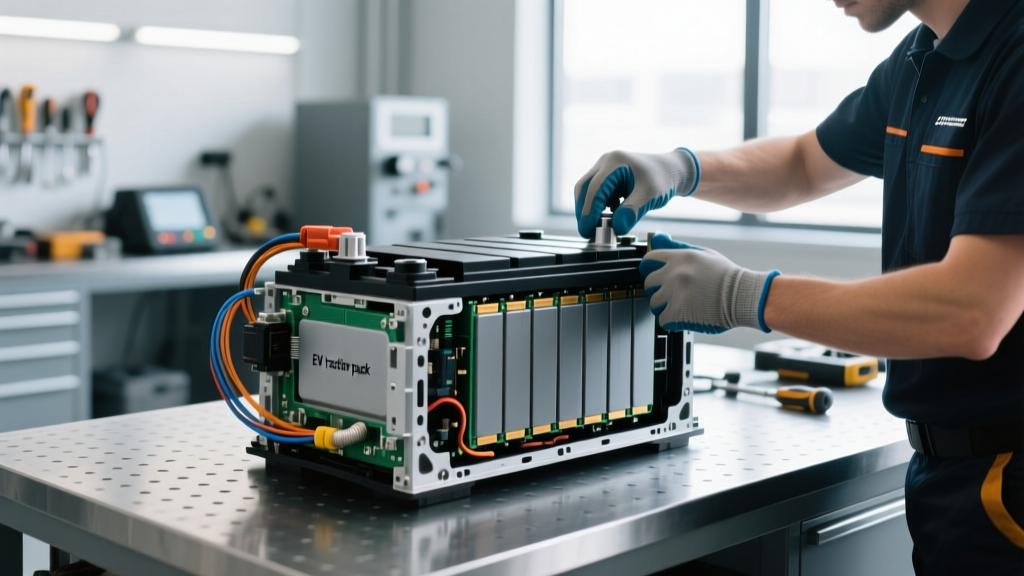
The high-voltage traction battery in a modern EV stores between 50 kWh and 130 kWh of energy at voltages ranging from 350V to over 800V in 800V-architecture vehicles like the Hyundai Ioniq 5, Kia EV6, and Porsche Taycan. For context, 50 volts is generally considered the threshold for dangerous shock potential; EV packs operate at 7 to 16 times that level. Removing one requires:
- High-voltage safety certification (ASE L3 or OEM-equivalent training)
- Insulated hand tools rated for 1000V (CAT III or CAT IV)
- A manufacturer-specific scan tool to deactivate the battery management system (BMS), open contactors, and verify zero-voltage state at the service disconnect
- A hydraulic lift table or battery lift platform — packs weigh between 600 lbs (smaller packs like the Nissan Leaf 40 kWh) and over 1,500 lbs (the GMC Hummer EV's ~212 kWh Ultium pack)
- Proper PPE: arc-flash-rated face shield, Class 0 rubber insulating gloves with leather protectors
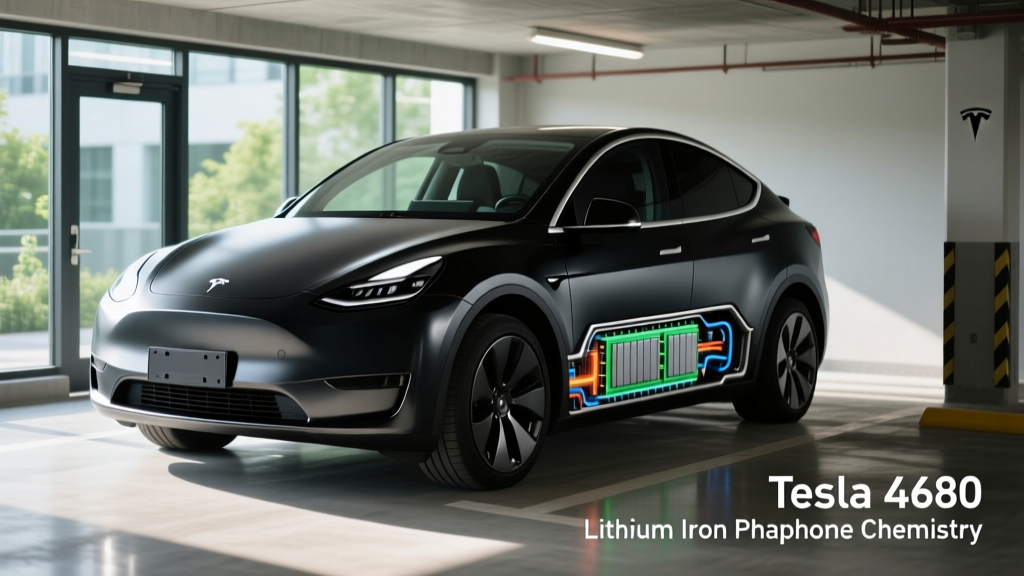
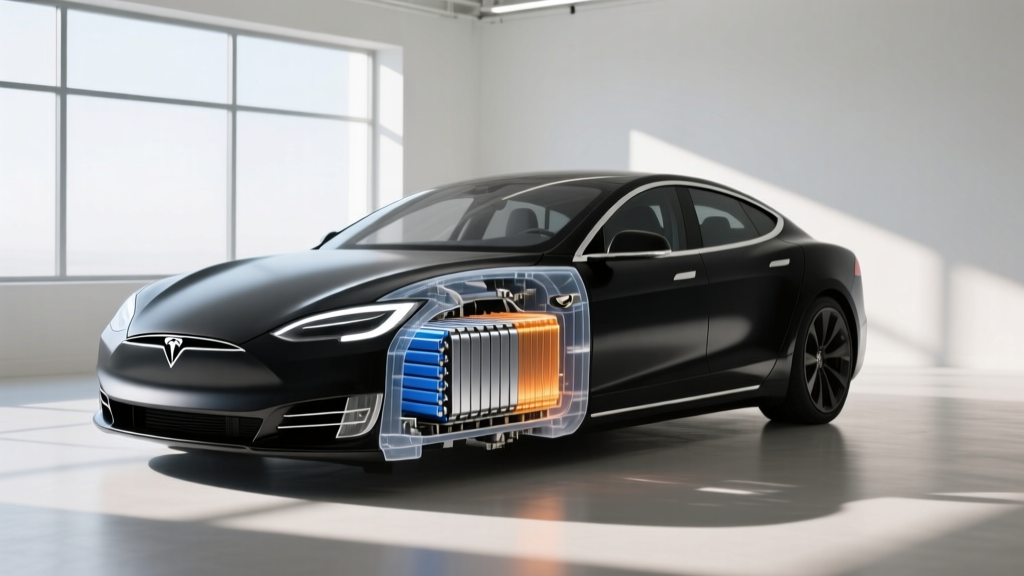
Automakers route the service disconnect and contactor controls differently across platforms. Tesla's structural battery pack in the Model Y, for instance, integrates the pack as a stressed chassis member with bonded cell modules — removal is effectively a partial vehicle disassembly. By contrast, older platforms like the BMW i3 used bolt-in modules that could be individually swapped. In 2026, the trend is firmly toward cell-to-pack (CTP) and cell-to-chassis (CTC) designs that make modular repair harder but improve energy density and structural rigidity.
What Chemistry Is Inside Your EV Battery? LFP vs NMC vs NCA
Before considering removal or replacement, understand what's in the pack. Two dominant lithium-ion chemistries power the 2026 EV market:
- NMC (Nickel Manganese Cobalt) / NCA (Nickel Cobalt Aluminum): Higher energy density (~250–300 Wh/kg at the cell level), enabling longer range in a given volume. Used in most long-range and performance EVs — Tesla Model 3 Long Range, Ford Mustang Mach-E Extended Range, Rivian R1T/R1S, Hyundai Ioniq 5.
- LFP (Lithium Iron Phosphate): Lower energy density (~160–200 Wh/kg) but superior cycle life (3,000–5,000+ cycles vs 1,000–2,000 for NMC), greater thermal stability, no cobalt, and lower cost. Used in Tesla Model 3/Y Standard Range, Ford Mustang Mach-E Select (2025+), BYD models, and the base Rivian R1T Standard pack.
| Attribute | LFP (Lithium Iron Phosphate) | NMC / NCA |
|---|---|---|
| Energy density (cell-level) | 160–200 Wh/kg | 250–300 Wh/kg |
| Cycle life (to 80% capacity) | 3,000–5,000+ cycles | 1,000–2,000 cycles |
| Cold-weather performance | Moderate — slower charging below 32°F; range loss ~30–40% | Better — range loss ~20–30% in cold |
| Thermal runaway risk | Very low | Low but higher than LFP |
| Cost per kWh (2026 est.) | ~$80–$100 | ~$110–$140 |
| Recommended charge habit | Can charge to 100% daily; benefits from periodic full charges for BMS calibration | Best kept 20–80% for daily use; 100% for trips only |
| Common in (2026 models) | Tesla Model 3/Y RWD, Mach-E Select, BYD Seal, Rivian Standard | Model 3/Y LR, Ioniq 5/6, EV6, Mach-E GT, Rivian Max |
Which is better? For high-mileage drivers, fleet use, or owners who can charge at home to 100% nightly, LFP offers longer calendar life and lower degradation anxiety. For buyers prioritizing maximum range in a single charge, cold-climate performance, or towing capability, NMC/NCA remains the pragmatic choice. Neither is universally superior — it depends on your driving pattern and climate.
How Long Do EV Batteries Actually Last? Real Degradation Data
The fear that EV batteries need replacement every few years is not supported by fleet data. Most modern packs are engineered to retain 70–80% of original capacity after 150,000–200,000 miles. Here's what real-world degradation looks like across chemistries and use patterns:
Typical Capacity Retention Over Time (fleet and owner-reported averages):
- Tesla Model 3/Y (NMC, 2019–2023): ~5–7% loss at 50,000 miles; ~10–12% at 100,000 miles; ~12–15% at 150,000 miles (source: Tesla Impact Reports, Recurrent Auto fleet data)
- Tesla Model 3/Y (LFP, 2022–2025): ~3–5% loss at 50,000 miles; projected ~8–10% at 150,000 miles based on early fleet data
- Hyundai Ioniq 5 (NMC, 2022–2025): ~4–6% loss at 50,000 miles; ~8–12% at 100,000 miles (owner-reported via Ioniq forums and fueleconomy.gov tracking)
- Nissan Leaf (NMC, 2018–2023, air-cooled): Higher degradation due to passive thermal management — 10–18% loss at 60,000–80,000 miles, particularly in hot climates
- Chevrolet Bolt EV/EUV (NMC, 2017–2023, recall-replaced packs): Post-recall replacement packs showing ~5–8% loss at 50,000 miles with improved thermal management
Key takeaway: liquid-cooled packs from 2020 onward consistently outperform older air-cooled designs. The degradation curve is also non-linear — most capacity loss occurs in the first 20,000–30,000 miles, then plateaus. A 2022 Model Y with 80,000 miles may show only marginally more degradation than one with 40,000 miles.
What Does the EV Battery Warranty Actually Cover?
Federal law (via EPA and CARB requirements adopted by most manufacturers) mandates a minimum of 8 years / 100,000 miles for battery capacity coverage, though California Air Resources Board (CARB) states require 10 years / 150,000 miles. Here's how major automakers structure their coverage in 2026:
| Manufacturer | Warranty Period | Mileage Limit | Capacity Threshold | Notes |
|---|---|---|---|---|
| Tesla | 8 years | 100,000–120,000 mi (varies by model) | 70% retention | Model 3/Y: 100k mi; Model S/X: 150k mi |
| Hyundai / Kia | 10 years | 100,000 mi | 70% retention | Among the longest coverage in the industry |
| Ford | 8 years | 100,000 mi | 70% retention | Covers Mach-E, F-150 Lightning |
| General Motors | 8 years | 100,000 mi | 70% retention (60% for Bolt post-recall) | Ultium platform; varies by model |
| Rivian | 8 years | 120,000–175,000 mi | 70% retention | Commercial fleet warranty up to 175k mi |
| BMW | 8 years | 100,000 mi | 70% retention | i4, iX, i7 platform coverage |
What's covered: Capacity loss below the stated threshold, manufacturing defects, BMS failures, and cell imbalance that cannot be corrected via software. What's typically excluded: Damage from accidents, flooding, unauthorized modifications, or use of non-OEM charging equipment that causes electrical damage. Always read your specific warranty booklet — terms vary by model year and trim.
How Much Does It Cost to Replace an EV Battery?
Out-of-warranty battery replacement is the single largest potential expense in EV ownership, but it's also one most owners never face. According to IRS and industry data, fewer than 5% of EVs have required a full pack replacement as of 2025, and the vast majority of those were covered under warranty or recall. When replacement is needed, here's what it costs:
| Vehicle / Pack Size | Battery Cost (Parts) | Labor (Removal + Install) | Total Estimated Cost |
|---|---|---|---|
| Tesla Model 3 Standard Range (~57 kWh LFP) | $7,000–$10,000 | $1,500–$3,000 | $8,500–$13,000 |
| Tesla Model Y Long Range (~82 kWh NMC) | $12,000–$16,000 | $2,000–$3,500 | $14,000–$19,500 |
| Hyundai Ioniq 5 (~77 kWh NMC) | $11,000–$15,000 | $2,000–$3,500 | $13,000–$18,500 |
| Ford F-150 Lightning Extended Range (~131 kWh) | $18,000–$25,000 | $3,000–$5,000 | $21,000–$30,000 |
| Chevrolet Silverado EV (~200 kWh Ultium) | $25,000–$35,000 | $3,500–$6,000 | $28,500–$41,000 |
| Nissan Leaf (40–60 kWh) | $6,500–$9,000 | $1,000–$2,000 | $7,500–$11,000 |
These figures are pre-incentive. Some states offer rebates for battery replacement, and third-party refurbishers are beginning to offer remanufactured packs at 30–50% lower cost. As of 2026, the average pack-level cost has fallen to approximately $110–$140/kWh for NMC and $80–$100/kWh for LFP, down from over $200/kWh in 2020 (source: BloombergNEF battery price surveys). When is replacement typically needed? Rarely before 150,000 miles in a liquid-cooled pack. Most EVs are totaled, traded, or scrapped before the battery requires full replacement.
What Factors Accelerate Battery Degradation?
Not all miles are equal when it comes to battery wear. The following factors have the most measurable impact on long-term State of Health (SoH):
Battery Care Checklist — Maximize Pack Life
- Avoid sustained 100% state of charge (NMC/NCA): Store and daily-drive between 20–80%. Charge to 100% only when departing on a trip. LFP owners can charge to 100% daily — in fact, periodic full charges help the BMS calibrate cell balancing.
- Minimize DC fast charging frequency: Occasional road-trip fast charging is fine, but daily 150–350 kW DC sessions accelerate degradation. A 2023 study by Recurrent Auto found that vehicles fast-charging more than 3 times per week showed ~1–2% additional capacity loss at 50,000 miles compared to primarily Level 2-charged vehicles.
- Precondition before fast charging: Most EVs (Tesla, Hyundai/Kia, Ford, Rivian) automatically precondition the battery when a Supercharger or DC fast station is set in the nav. This brings cells to optimal temperature (~95°F), enabling faster charging and reducing lithium plating risk.
- Avoid extreme heat exposure: Prolonged parking in 100°F+ ambient without thermal management active accelerates calendar degradation. Garage parking or shaded charging helps in desert climates.
- Don't store at 0% or 100% for extended periods: If leaving the EV unused for 2+ weeks, set charge to 50–60%. Most BMS systems have a "storage mode" or allow scheduled charging limits.
- Use regenerative braking moderately in cold weather: In sub-freezing temps, aggressive regen on a cold battery can cause lithium plating. Most EVs automatically reduce regen when the battery is cold, but gentle driving for the first 10–15 minutes in winter is best practice.
How to Check Your EV Battery's State of Health (SoH)
State of Health (SoH) is the percentage of original capacity your pack can still hold. A new battery is 100% SoH; at 70% SoH, your 80 kWh pack holds roughly 56 kWh, meaning proportionally reduced range. Here's how to monitor it:
- OEM apps: Tesla's app shows estimated range at 100% charge but does not display a direct SoH percentage. Hyundai's Bluelink and Ford's FordPass provide battery health indicators in newer model years. BMW's iDrive includes a battery health report accessible via the service menu.
- OBD-II diagnostic tools: Devices like the OBDLink SX paired with apps such as Leaf Spy (Nissan Leaf), ABRP/OBD2 adapters (general), or Tesla-specific tools like Tessie or Stats can read the BMS-reported SoH directly. This is the most reliable owner-accessible method.
- Dealer diagnostic report: Request a battery health check during service visits. Dealerships can pull a full BMS log showing individual cell voltages, internal resistance, and calculated SoH.
- Manual calculation: Track your kWh added during a full charge (using your charger's meter or the car's energy screen) vs. the original usable capacity. If your 77 kWh pack now accepts only 65 kWh from 5% to 100%, that's approximately 84% SoH (accounting for charging losses of ~5–8%).
Emerging Battery Tech: Solid-State and Silicon Anodes
The next generation of battery technology is in active development but not yet available in production vehicles as of early 2026:
- Solid-state batteries: Replace the liquid electrolyte with a solid ceramic or polymer separator, promising 40–50% higher energy density, faster charging, and near-zero fire risk. Toyota has announced a solid-state EV for 2027–2028 (preliminary, not yet on sale), targeting 750 km (~466 miles) of range. Samsung SDI and QuantumScape are supplying prototypes to multiple OEMs. Realistic volume-production timeline: 2028–2030 at the earliest, with initial availability limited to premium models.
- Silicon-dominant anodes: Companies like Sila Nanotechnologies and Group14 are replacing graphite anodes with silicon composites, boosting energy density by 20–40%. The Mercedes G-Class EV (2025) uses a silicon-anode battery from Sila. Expect broader adoption by 2027–2028 across mid-price segments.
- Sodium-ion batteries: CATL and BYD are deploying sodium-ion cells in entry-level Chinese-market EVs. Lower energy density than LFP but cheaper and free of lithium/cobalt. US-market availability is uncertain before 2028.
None of these technologies change the removal or replacement calculus for today's EVs. Current lithium-ion packs are mature, well-understood, and increasingly affordable to replace if needed.
Frequently Asked Questions
How long do EV batteries last in years and miles?
Most liquid-cooled EV batteries from 2020 onward are designed to retain 70–80% of original capacity at 150,000–200,000 miles or 10–15 years. Real-world fleet data from Tesla, Hyundai, and Ford shows average degradation of 10–15% at 100,000 miles. Air-cooled packs (early Nissan Leaf, early Fiat 500e) degrade faster, particularly in hot climates.
How much does an EV battery cost to replace in 2026?
Replacement costs range from approximately $7,500 for a Nissan Leaf pack to $30,000+ for a Ford F-150 Lightning Extended Range or Chevrolet Silverado EV pack, including parts and labor. Average mid-size EV packs (75–85 kWh) cost $13,000–$19,000 installed. However, fewer than 5% of EVs have required out-of-warranty replacement, and costs continue to decline as cell prices drop.
What does the EV battery warranty cover?
Federal minimum is 8 years / 100,000 miles with a 70% capacity retention threshold. Hyundai/Kia offer 10 years / 100,000 miles. Coverage includes capacity loss below the threshold, manufacturing defects, and BMS failures. Exclusions typically include accident damage, flooding, unauthorized modifications, and in some cases, damage from non-OEM charging equipment.
How do I check and maximize my EV battery health?
Monitor SoH via OBD-II diagnostic apps (Leaf Spy, Tessie, ABRP), dealer diagnostic reports, or OEM apps where available. Maximize life by keeping NMC/NCA packs between 20–80% daily charge, minimizing DC fast charging to road-trip use only, preconditioning before fast charging, avoiding prolonged storage at 0% or 100%, and parking in shade or garages in extreme heat.
LFP vs NMC — which battery chemistry is better for me?
Choose LFP if you charge at home daily, want maximum cycle life (3,000–5,000+ cycles), drive in moderate climates, and don't need the absolute longest single-charge range. Choose NMC/NCA if you need maximum range per charge, drive frequently in cold weather, tow heavy loads, or take regular long road trips where energy density matters. Neither is universally better — the right choice depends on your driving pattern.
Can I remove the EV battery myself?
No. High-voltage traction batteries operate at 350V–800V and can deliver lethal shock. Removal requires HV-certified technicians, insulated tools, manufacturer scan tools to deactivate the BMS and verify zero-voltage state, and heavy-lift equipment for packs weighing 600–1,500+ lbs. The 12V auxiliary battery is safe for owner replacement; the traction battery is not.