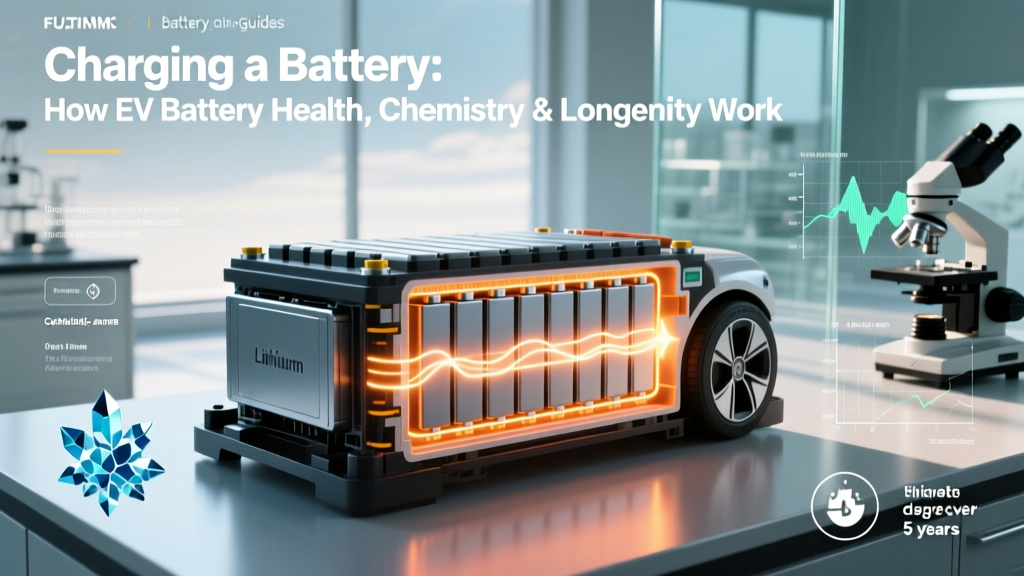
Search "how to put jumper cables on battery" and you will find a flood of gas-car tutorials. But if you own an electric vehicle, the answer is more nuanced — and getting it wrong can cost you thousands. EVs actually carry two batteries: a conventional 12V auxiliary battery (same as a gas car) and a high-voltage traction battery (400V–800V) that powers the motor. You can jump the 12V; you never jump, probe, or tamper with the traction pack. This guide walks through the correct jump-start procedure for the 12V system, then explains everything you actually need to know about the big battery that determines your EV's range, longevity, and resale value.
Jump-Starting an EV: Only the 12V Battery
Modern EVs use the high-voltage traction battery to run the drivetrain, but they still rely on a small 12V lead-acid or lithium-ion auxiliary battery to boot the vehicle's computers, door locks, infotainment, and — critically — the contactors that connect the main pack. If the 12V dies, the car is a brick, even if the traction battery is at 100% State of Charge (SoC).
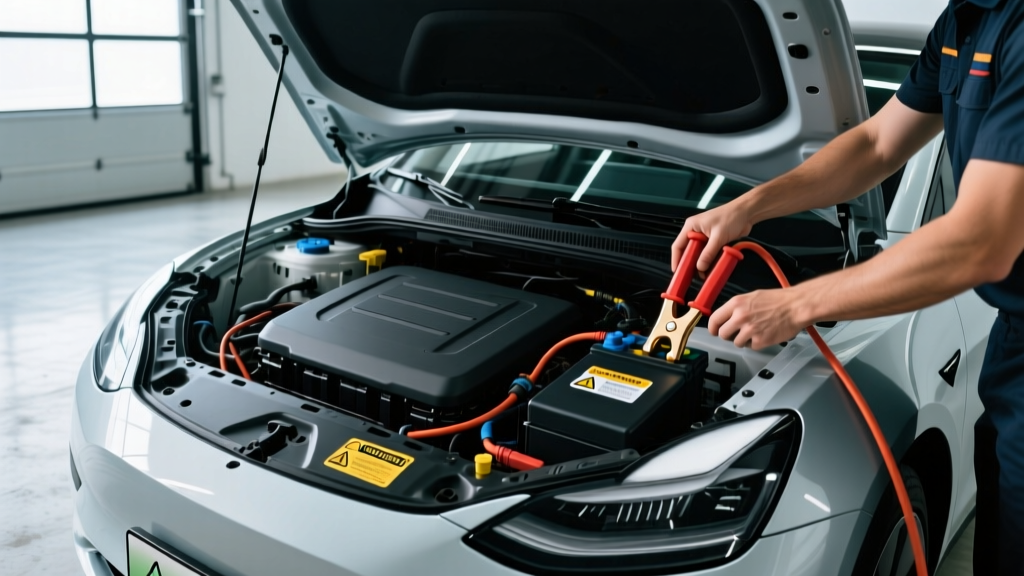
Step-by-Step: How to Put Jumper Cables on an EV 12V Battery
- Locate the 12V battery. In a Tesla Model 3/Y it is behind the front trunk liner (some 2022+ models use a lithium-ion 12V with no accessible terminals — consult the owner's manual). In a Hyundai Ioniq 5 or Kia EV6, it sits under the hood like a conventional car. Many newer models (Ford F-150 Lightning, Rivian R1T) also place it in the frunk area.
- Verify voltage. Confirm it is a 12V system. Do not connect jumper cables to any orange-sheathed wiring — orange indicates high-voltage (400V+) components that can be lethal.
- Connect cables in order: Red clamp to dead battery's positive (+) terminal → Red clamp to donor battery's positive (+) → Black clamp to donor battery's negative (−) → Black clamp to an unpainted metal ground on the dead EV's chassis (not the negative terminal, to avoid spark near potential off-gassing).
- Start the donor vehicle (or power pack) and wait 2–3 minutes. Then power on the EV — it should boot its systems and close the main contactors.
- Disconnect in reverse order. Let the EV remain "on" (ready to drive) for at least 20 minutes so the DC-DC converter recharges the 12V from the traction pack.
EV Traction Battery Chemistry: LFP vs NMC vs NCA
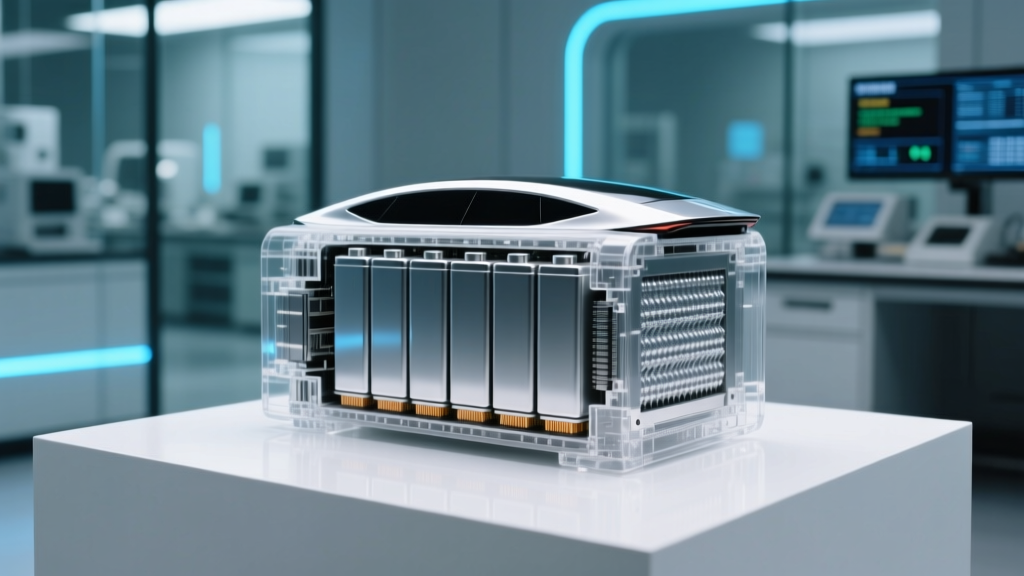
The traction battery is the single most expensive component in your EV. Its chemistry dictates range, charging behavior, cold-weather performance, cycle life, and cost. As of 2026, virtually all consumer EVs use one of three lithium-ion chemistries.
| Attribute | LFP (Lithium Iron Phosphate) | NMC (Nickel Manganese Cobalt) | NCA (Nickel Cobalt Aluminum) |
|---|---|---|---|
| Energy density | Lower (~160 Wh/kg cell-level) | Higher (~220–260 Wh/kg) | Highest (~260–290 Wh/kg) |
| Cycle life | 3,000–5,000+ cycles | 1,000–2,000 cycles | 1,000–1,500 cycles |
| Cold-weather performance | Weaker; slower charging below freezing | Better low-temp output | Good; Tesla uses heat pump mitigation |
| Cost per kWh | Lower (~$80–100/kWh pack-level) | Moderate (~$110–140/kWh) | Moderate-High |
| Recommended SoC daily | 100% OK (periodic full-charge calibration) | 80% preferred; 100% only before trips | 80% preferred; 100% only before trips |
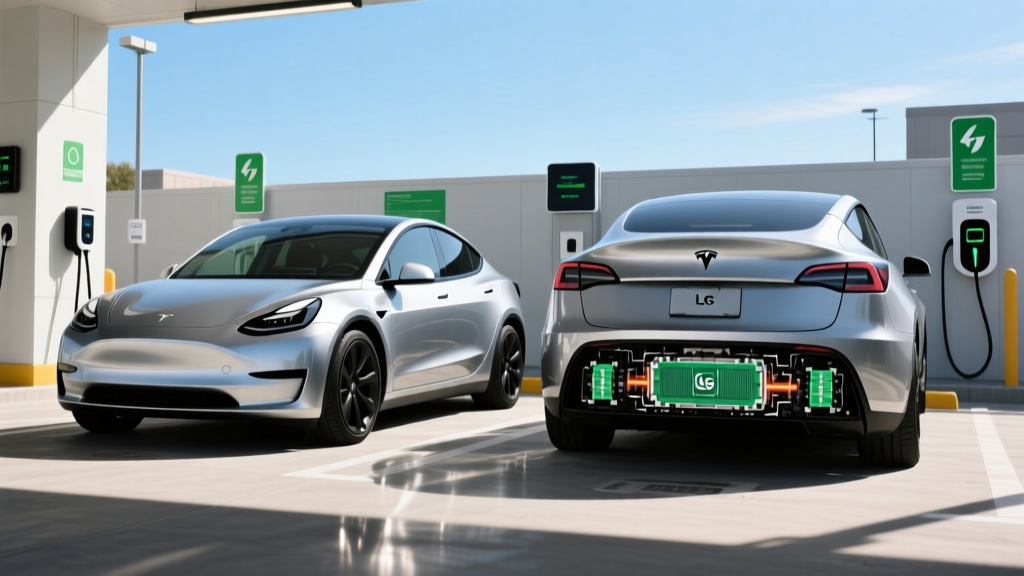
| Example 2026 models | Tesla Model 3 RWD, Model Y RWD, Ford Mustang Mach-E Select (LFP variant) | Hyundai Ioniq 5, Kia EV6, VW ID.4, Chevy Equinox EV | Tesla Model S/X, Model 3 Long Range AWD |
Which is better? There is no universal winner. LFP is the pragmatic choice for buyers who want lower cost, longer cycle life, and the convenience of daily 100% charging — ideal for commuters and ride-share drivers. NMC/NCA wins for drivers who need maximum range per kWh, tow frequently, or live in cold climates where energy density matters. If you're shopping a dual-motor long-range model, you will almost certainly get NMC or NCA. If you're shopping a base RWD Tesla, you will get LFP.
How Long Do EV Batteries Last? Real Degradation Data
The question every EV shopper asks: how long until the battery dies? The honest answer, backed by fleet data, is that most modern traction batteries outlast the vehicle itself.
- Year 1 / 15,000 mi: ~2–5% capacity loss (initial formation)
- Year 5 / 75,000 mi: ~8–12% loss
- Year 8 / 120,000 mi: ~12–18% loss
- Year 10+ / 150,000+ mi: ~18–25% loss (many packs still functional)
LFP packs generally show slower long-term degradation but can exhibit a steeper initial drop in the first year. Tesla's own 2024 Impact Report noted its fleet averaged roughly 12% degradation at 150,000 miles across Model S/X (NCA) and Model 3/Y (NMC and LFP mixes). Geotab's multi-year study of over 10,000 EVs found an average annual loss of 1.8% across brands — meaning a 300-mile EPA-rated EV would still deliver roughly 270 miles after 5 years.
The degradation curve is not linear. Most packs lose 2–5% in the first year, then settle into a slow, near-linear decline. Catastrophic failure (sudden, non-degradation-related loss) is rare and typically covered under warranty.
EV Battery Warranty: What's Actually Covered
Federal law (EPA emissions-related warranty requirements interpreted for EVs) effectively mandates a minimum of 8 years / 100,000 miles on the battery in most states. California Air Resources Board (CARB) states push this to 10 years / 150,000 miles. Manufacturers typically exceed the minimum.
| Manufacturer | Duration / Mileage | Capacity Retention Threshold | Notes |
|---|---|---|---|
| Tesla | 8 yr / 100,000–120,000 mi (varies by model) | 70% | Model 3/Y RWD: 100k; LR/Performance: 120k |
| Hyundai / Kia | 10 yr / 100,000 mi | 70% | Among the longest in the industry |
| Ford | 8 yr / 100,000 mi | 70% | Applies to Mustang Mach-E, F-150 Lightning |
| General Motors (Chevy/Cadillac) | 8 yr / 100,000 mi | 60–70% (model-dependent) | Equinox EV, Blazer EV, Lyriq |
| Volkswagen | 8 yr / 100,000 mi | 70% | ID.4, upcoming ID.7 |
| Rivian | 8 yr / 175,000 mi | 70% | Highest mileage cap in the market |
The critical fine print: warranties cover capacity loss below the stated threshold, not gradual degradation above it. If your 82-kWh pack degrades to 78% (above a 70% threshold), you will not qualify for a replacement — even if you have lost 50 miles of range. Warranties also cover defects and catastrophic failure, which are statistically rare but expensive when they occur.
EV Battery Replacement Cost: What to Budget (and When)
Out-of-warranty traction battery replacement is the number one fear among EV shoppers. Here is what the numbers actually look like in 2026.
| Vehicle | Battery Size | Chemistry | Est. Replacement Cost |
|---|---|---|---|
| Tesla Model 3 RWD | ~60 kWh | LFP | $10,000–$13,000 |
| Tesla Model Y Long Range | ~75 kWh | NMC | $14,000–$17,000 |
| Hyundai Ioniq 5 | 77.4 kWh | NMC | $15,000–$19,000 |
| Ford F-150 Lightning Ext. Range | 131 kWh | NMC | $25,000–$32,000 |
| Chevrolet Equinox EV | ~85 kWh | NMC (Ultium) | $16,000–$20,000 |
| Rivian R1T (Large Pack) | ~129 kWh | NMC | $24,000–$30,000 |
Context matters. Pack-level pricing has fallen from ~$180/kWh in 2020 to roughly $110–140/kWh in 2026 (per BloombergNEF battery price surveys). Labor adds $1,500–$3,500 depending on vehicle architecture. Crucially, most EV owners never pay this: batteries are lasting longer than the average ownership period, and when they do need service, modular repair (replacing individual cell modules rather than the entire pack) is becoming standard at certified shops — dropping costs to $3,000–$7,000 for partial repairs.
Factors That Accelerate (or Slow) Battery Degradation
Not all miles are equal. A battery's State of Health (SoH) is shaped by how you charge, where you park, and how hard you drive.
- Fast-charging frequency: DC fast charging at 150–350 kW generates significant heat. Occasional road-trip fast charging is fine; daily fast charging accelerates degradation by an estimated 1–3% over the pack's life vs. Level 2 home charging. Whenever possible, rely on Level 2 (7–19 kW) for daily needs.
- State of Charge habits: For NMC/NCA packs, storing at 100% SoC — especially in heat — stresses the cathode. Set your daily charge limit to 80% and only charge to 100% within a few hours of a long trip. LFP packs are more tolerant and should actually be charged to 100% periodically (weekly or monthly) to recalibrate the Battery Management System (BMS).
- Extreme temperatures: Lithium-ion cells degrade faster above 95°F (35°C) and below 20°F (−7°C). Liquid-cooled packs (standard on nearly all 2026 EVs) mitigate this, but parking in shade in summer and a garage in winter meaningfully extends life.
- Preconditioning: Use your EV's battery preconditioning feature before DC fast charging. Tesla, Hyundai/Kia (E-GMP), Ford, and GM all warm or cool the pack to the optimal temperature window (~77–95°F / 25–35°C), enabling faster charging and reducing thermal stress.
- Deep discharges: Avoid regularly driving the pack below 10% SoC. Unlike older NiMH batteries, lithium-ion has no "memory effect" — shallow, partial cycles are healthier than full 0–100% swings.
- Calendar aging: Even an EV that sits unused degrades. A pack stored at 50% SoC in moderate temperatures ages slowest. Avoid leaving an EV at 100% or 0% SoC for weeks.
How to Check and Monitor Battery Health (SoH)
State of Health (SoH) is the percentage of original capacity remaining in your pack. A new EV starts at 100% SoH; at 70–80% SoH, you will notice meaningful range reduction. Here is how to monitor it:
- In-vehicle displays: Tesla provides a projected range figure that updates with pack health. Hyundai/Kia's infotainment includes a battery health screen (EV settings → Battery → State of Health on 2024+ models). BMW iX and i4 display SoH percentage directly.
- OBD-II dongles + apps: Tools like OBDLink SX paired with apps such as Car Scanner or Leaf Spy (for Nissan Leaf) can read BMS-reported SoH, cell voltage variance, and degradation curves.
- Third-party services: Recurrent offers free battery health reports for participating owners, comparing your pack's degradation to a fleet of identical vehicles.
- Dealer diagnostics: A pre-purchase inspection at a certified dealer can pull a full BMS log — essential for used-EV buyers. Request this report before purchasing any secondhand EV.
For used-EV shoppers, SoH is the single most important data point. A 2022 Model 3 Long Range with 90% SoH is a far better buy than one at 78%, even if the odometer is similar.
Emerging Battery Technology: Solid-State and Silicon Anode
Headlines promise "solid-state batteries" will revolutionize EVs. Here is the realistic, 2026-grounded outlook:
- Solid-state batteries (replacing liquid electrolyte with a solid ceramic, sulfide, or polymer) promise higher energy density (~400+ Wh/kg cell-level), faster charging, and improved safety. Toyota has announced limited production in select 2027–2028 models; Samsung SDI and QuantumScape target 2027–2029 for broader commercialization. Expect initial availability in premium models above $80,000 MSRP, with mainstream trickle-down not arriving until the early 2030s.
- Silicon-anode cells (replacing graphite anodes partially or fully with silicon) are already shipping in limited applications. GM's Ultium platform has incorporated silicon-containing anodes since 2024, and companies like Sila Nanotechnologies and Group14 are scaling supply. Benefit: 10–20% energy density improvement over conventional graphite anodes, available now in incrementally improved packs.
- Sodium-ion batteries are entering the market for lower-cost, shorter-range urban EVs (CATL, BYD). Not expected in US-market long-range vehicles before 2028, but a cost-reduction lever for future entry-level models.
Bottom line: if you are buying an EV in 2026, you are buying proven lithium-ion technology. Next-gen chemistries will not make today's packs obsolete — they will extend range and reduce cost for future buyers. The current generation is mature, reliable, and well-warrantied.
Frequently Asked Questions
Can I use jumper cables on the main EV traction battery?
No. The traction battery operates at 400V–800V and is sealed, liquid-cooled, and managed by the BMS. Jumper cables are for the 12V auxiliary battery only. Attempting to connect cables to HV components is extremely dangerous.
How long do EV batteries last in years and miles?
Most modern liquid-cooled lithium-ion traction batteries retain 70–85% of original capacity at 150,000 miles and 10+ years. Fleet data from Recurrent Auto and Geotab confirms that the vast majority of packs outlast the vehicle's economic life. Catastrophic failure is rare and warranty-covered.
How much does an EV battery cost to replace?
Full pack replacement ranges from ~$10,000 for a 60-kWh LFP pack (Tesla Model 3 RWD) to $30,000+ for a 131-kWh NMC pack (F-150 Lightning Extended Range). However, most owners never pay this: warranties cover 8–10 years / 100,000–175,000 miles, modular repair is increasingly available for $3,000–$7,000, and most packs outlast the car.
What does the EV battery warranty cover?
Typical warranties cover capacity loss below 70% of original (some GM models: 60%) within 8 years / 100,000 miles (10/100k for Hyundai/Kia; 8/175k for Rivian). They also cover manufacturing defects and catastrophic failure. Gradual degradation above the threshold is considered normal wear and is not covered.
How do I maximize EV battery health?
Charge to 80% daily for NMC/NCA packs (100% is fine for LFP with periodic calibration). Minimize DC fast charging to road trips. Precondition the battery before fast charging. Avoid storing at 100% or 0% SoC. Park in shade or a garage when possible. Use Level 2 home charging as your primary method.
LFP vs NMC — which battery chemistry is better for me?
Choose LFP if you want lower cost, longer cycle life (3,000–5,000+ cycles), and the convenience of daily 100% charging — ideal for commuters, warm-climate drivers, and ride-share use. Choose NMC/NCA if you need maximum range, tow heavy loads, live in cold climates, or want the longest single-charge trips. Both chemistries are proven and well-warrantied in 2026.
Does the 12V battery in an EV need special maintenance?
The 12V auxiliary battery in an EV is charged by the DC-DC converter from the traction pack whenever the car is "on" or plugged in. If you leave the EV unplugged and unused for weeks, the 12V can drain. Keep the car plugged in (even at Level 1) during long storage, or use a 12V maintainer if the vehicle will sit for 30+ days without being driven.
Sources: fueleconomy.gov (EPA range and efficiency data), Recurrent Auto battery degradation research, manufacturer warranty documentation (Tesla, Hyundai, Ford, GM, VW, Rivian — 2026 model year).