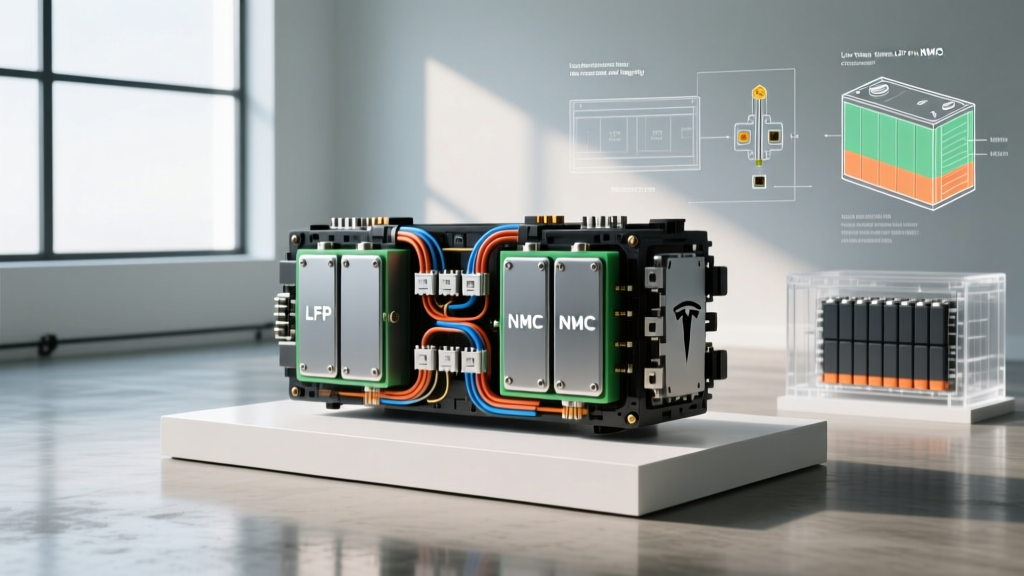
If you're researching how to charge auto battery systems in an electric vehicle, you're asking the right question at the right time. The high-voltage traction battery is the single most expensive component in any EV — typically $8,000 to $22,000 to replace — and how you charge it directly determines how long it retains usable capacity. Unlike a gasoline car where fueling habits barely affect the tank, EV battery chemistry responds measurably to charge rate, ambient temperature, and the State of Charge (SoC) windows you use daily.
This guide covers the two dominant lithium-ion chemistries in 2026 EVs (LFP and NMC/NCA), real degradation data from fleet and consumer vehicles, what federal warranty mandates actually cover, and the specific charging habits that maximize battery State of Health (SoH) over 100,000+ miles. We'll also clarify a common point of confusion upfront: this guide addresses the high-voltage traction battery that propels the car — not the 12V auxiliary battery that powers accessories and computers.
LFP vs NMC/NCA: The Chemistry Decision That Shapes How You Charge
Every EV sold in the US in 2026 uses one of two lithium-ion cathode chemistries: Lithium Iron Phosphate (LFP) or Nickel Manganese Cobalt / Nickel Cobalt Aluminum (NMC/NCA). The chemistry determines your daily charging ceiling, cold-weather range loss, and long-term degradation curve — so understanding the difference is essential before you plug in.
| Attribute | LFP (Lithium Iron Phosphate) | NMC / NCA |
|---|---|---|
| Energy Density | Lower (~160–180 Wh/kg cell-level) | Higher (~220–280 Wh/kg cell-level) |
| Typical Vehicles | Tesla Model 3/Y RWD, Ford Mustang Mach-E Select (LFP trims), base Chevy Equinox EV | Tesla Long Range/Performance, Hyundai Ioniq 5/6, Rivian, Porsche Taycan, most AWD/Long Range trims |
| Daily Charge Recommendation | 100% SoC daily is fine (and encouraged for BMS calibration) | 80% SoC daily; 100% only before long trips |
| Cycle Life | 3,000–5,000+ full cycles to 80% capacity | 1,000–2,000 full cycles to 80% capacity |
| Cold-Weather Performance | Greater range loss in freezing temps (~30–40% reduction); slower DC charging when cold | Better cold performance (~20–30% reduction); more tolerant of cold fast-charging |
| Cost | Lower raw material cost (no cobalt/nickel) | Higher cost due to nickel and cobalt content |
| SoC Estimation | Flat voltage curve makes SoC harder to estimate; periodic 100% charges help recalibrate | Steeper voltage curve allows more accurate SoC estimation |
| Thermal Stability | Superior — higher thermal runaway threshold (~270°C) | Lower thermal runaway threshold (~210°C); requires robust thermal management |
The practical takeaway: If your EV has an LFP battery (check your owner's manual or window sticker), you should charge to 100% regularly — Tesla and Ford explicitly recommend this for LFP trims. If you have NMC/NCA, set your daily charge limit to 80% and only push to 100% when you'll be driving the full range within a few hours. This single habit is the most impactful thing you can control.
How Long Do EV Batteries Actually Last? Real Degradation Data
The question "how long will my EV battery last?" has a data-backed answer, and it's more reassuring than most buyers expect. According to battery analytics firm Recurrent Auto, which tracks over 15,000 EVs in real-world conditions, the average EV battery in 2025–2026 retains roughly 90–95% of its original capacity after 100,000 miles. Catastrophic failure requiring full replacement is rare — well under 2% of vehicles in major fleet studies.
Here's what degradation looks like across typical ownership milestones:
| Time / Mileage | Average Capacity Retained | Notes |
|---|---|---|
| Year 1 / ~12,000 mi | 95–98% | Initial "break-in" drop; steepest part of the curve |
| Year 3 / ~36,000 mi | 92–96% | Curve flattens significantly after year 1–2 |
| Year 5 / ~60,000 mi | 88–94% | Most vehicles still well above warranty threshold |
| Year 8 / ~100,000 mi | 85–92% | Federal warranty mandate benchmark (70% minimum) |
| Year 10+ / ~150,000 mi | 80–90% | Data limited; early Model S/X fleets showing strong results |
A few important caveats: degradation is non-linear. Most loss occurs in the first 12–24 months, then the curve flattens dramatically. This means a 5-year-old EV with 90% capacity is likely to retain 87–88% at year 8, not lose another 10%. Also, "capacity" here refers to usable energy — your EPA-rated range shrinks proportionally, so a 300-mile EPA vehicle at 90% SoH delivers roughly 270 miles at full charge under the same conditions.
Real-world range also drops in cold weather and at sustained highway speeds independent of degradation. A 300-mile EPA-rated EV might deliver 240–260 miles on a 70°F highway trip and 200–230 miles in 20°F weather — these are environmental losses, not battery wear. See fueleconomy.gov's EV technology overview for EPA testing methodology details.
What Does the EV Battery Warranty Actually Cover?
Federal law mandates that all EV batteries sold in the US carry a minimum warranty of 8 years or 100,000 miles (whichever comes first). In California and states that have adopted CARB emissions standards (currently 17 states plus DC), the mandate extends to 10 years or 150,000 miles. These are minimums — some manufacturers exceed them.
| Manufacturer | Warranty Period | Capacity Threshold | Notes |
|---|---|---|---|
| Tesla (Model 3/Y RWD — LFP) | 8 yr / 100,000 mi | 70% retention | Long Range/Performance: 8 yr / 120,000 mi |
| Hyundai / Kia | 10 yr / 100,000 mi | 70% retention | Exceeds federal minimum; among the best |
| Ford (Mach-E, F-150 Lightning) | 8 yr / 100,000 mi | 70% retention | Standard across EV lineup |
| General Motors (Ultium platform) | 8 yr / 100,000 mi | 70% retention (some trims 60% for Bolt-era) | Verify by specific model year |
| Rivian | 8 yr / 175,000 mi | 70% retention | Higher mileage cap than most competitors |
| BMW (i4, iX, i7) | 8 yr / 100,000 mi | 70% retention | — |
What "70% retention" means in practice: If your 80 kWh (usable) battery drops below 56 kWh of usable capacity within the warranty window, the manufacturer must repair or replace it at no cost. In reality, the vast majority of EVs never hit this threshold. A battery at 70% capacity still functions — it just has reduced range. Many fleet vehicles continue operating well below 70%, though consumer tolerance for range loss varies.
Warranties typically cover defects, premature degradation, and thermal management failures. They do not cover damage from accidents, flooding, or unauthorized modifications. Read your specific warranty booklet — terms vary, and some manufacturers prorated coverage after certain milestones.
EV Battery Replacement Cost: What to Expect and When
Full traction battery replacement is uncommon in the first 10–15 years of ownership, but it's the single biggest "what if" expense EV buyers weigh. Costs vary enormously by battery size, chemistry, and whether you need a full pack or individual module replacement.
| Vehicle / Battery Size | Full Pack Replacement (Parts + Labor) | Module-Level Repair | Typical Need Timeline |
|---|---|---|---|
| Tesla Model 3 RWD (~60 kWh LFP) | $10,000 – $14,000 | $2,500 – $5,000 per module group | 15+ years / 200,000+ mi (if ever) |
| Hyundai Ioniq 5 (~77 kWh NMC) | $14,000 – $18,000 | $3,000 – $6,000 | 15+ years / 200,000+ mi |
| Ford F-150 Lightning Extended (~131 kWh) | $20,000 – $28,000 | $4,000 – $8,000 | 15+ years / 200,000+ mi |
| Chevrolet Equinox EV (~85 kWh Ultium) | $13,000 – $17,000 | $3,000 – $5,500 | 15+ years / 200,000+ mi |
| Porsche Taycan (~93 kWh NMC) | $22,000 – $30,000+ | $5,000 – $9,000 | 15+ years / 200,000+ mi |
Several factors work in the owner's favor here. First, module-level repairs are increasingly possible — if one cell group degrades disproportionately, a shop can replace just that module rather than the entire pack, saving thousands. Second, battery costs continue declining. According to BloombergNEF, average lithium-ion pack prices fell below $130/kWh at the cell level in 2025, and replacement pricing follows with a lag. Third, the used EV battery market is growing, with refurbished packs available at 40–60% of new-pack cost for common models.
The bottom line: most EV owners will sell or trade the vehicle before needing a battery replacement. For those who keep EVs 15+ years, budget $12,000–$20,000 as a worst-case reserve for a mainstream model, and know that module repairs will likely cost far less.
How to Charge Auto Battery Packs for Maximum Longevity
Now to the core question: what charging habits actually preserve battery health? Research from the Idaho National Laboratory, Tesla fleet data, and third-party analytics from Recurrent Auto converge on a consistent set of best practices.
Daily Charging Habits
- NMC/NCA owners: Set charge limit to 80% for daily driving. Only charge to 100% when you'll drive the extra range within 12–24 hours.
- LFP owners: Charge to 100% at least once per week to help the Battery Management System (BMS) recalibrate cell balancing.
- Avoid sitting at extreme SoC: Don't leave any EV parked at 100% or below 10% for days or weeks. If storing, aim for 50–60% SoC.
- Precondition before fast charging: Use your EV's navigation-based preconditioning (Tesla, Hyundai, Ford, BMW all offer this) to warm the battery to optimal temperature before arriving at a DC fast charger. This reduces charge time and stress on cells.
DC Fast Charging: Use It, But Understand the Trade-Offs
- Occasional DC fast charging (1–3 times per week) shows negligible additional degradation compared to Level 2 charging in controlled studies.
- Daily DC fast charging (especially at 150+ kW) does accelerate wear — Idaho National Lab testing showed ~5–8% additional capacity loss over 50,000 miles vs. Level 2-only charging.
- The charge curve matters: most EVs taper charging speed significantly above 80% SoC. Charging from 80–100% on DCFC is both slow and stressful on cells — do this rarely.
- Never fast-charge a cold battery without preconditioning. Lithium plating can occur below ~32°F (0°C) at high charge rates, causing permanent damage.
Temperature Management
- Hot weather: Park in shade or a garage when possible. Battery thermal management systems run harder in heat, consuming energy and adding wear. Sustained battery temps above 104°F (40°C) accelerate degradation.
- Cold weather: Plug in when parked (even at Level 1) to allow the thermal management system to maintain battery temperature. Precondition before driving to reduce range loss and enable regen braking.
- Vehicles with active liquid thermal management (Tesla, Hyundai E-GMP, GM Ultium, Rivian) handle temperature extremes far better than passively cooled packs.
Monitoring Your Battery's State of Health (SoH)
State of Health (SoH) is a percentage representing your battery's current maximum capacity relative to its original capacity when new. A new EV starts at 100% SoH; a 5-year-old EV might sit at 92% SoH. Here's how to check and track it:
In-vehicle displays: Some manufacturers provide SoH readouts directly in the infotainment system. Hyundai and Kia include a battery health screen in recent Ioniq and EV6 models. Tesla does not expose SoH natively, but third-party apps can estimate it.
Third-party apps and tools: Services like Tessie (for Tesla), Recurrent, and OBDeleven (for VW Group) pull data from the vehicle's CAN bus or API to estimate SoH with reasonable accuracy. These compare energy consumed vs. distance traveled over multiple charge cycles to calculate effective capacity.
Dealer diagnostics: Any authorized service center can run a full battery health report during routine service. Request this if you're approaching the warranty mileage threshold and want documentation of capacity retention. This is especially valuable if you plan to make a warranty claim.
DIY estimation: Charge to 100%, note the displayed range, and compare it to the original EPA-rated range (adjusted for the fact that EPA range assumes 100% SoC). If your 300-mile EPA vehicle shows 270 miles at 100% on a mild day, your SoH is approximately 90%. This is rough — display range estimates fluctuate based on recent driving patterns — but it's a useful sanity check.
Emerging Battery Technologies: What's Next and When
Several next-generation battery technologies are in advanced development, but none are commercially available in consumer EVs as of 2026. Here's a realistic timeline based on manufacturer announcements and industry analysis:
Solid-state batteries: Toyota, Samsung SDI, and QuantumScape are leading solid-state development, which promises 30–50% higher energy density, faster charging, and improved safety (no liquid electrolyte to leak or ignite). Toyota has announced a solid-state EV for 2027–2028, but initial production will be extremely limited and expensive. Widespread solid-state availability across mainstream models is not expected before 2030–2032. Current prototypes still face challenges with cycle life and manufacturing scalability.
Silicon-dominant anodes: Companies like Sila Nanotechnologies and Group14 are replacing graphite anodes with silicon composites, boosting energy density by 20–40%. Early applications are appearing in premium vehicles (Mercedes-Benz's G-Class EV uses a silicon-anode battery from Sila), but cost remains high. Expect broader adoption in mainstream EVs by 2028–2030.
Sodium-ion batteries: CATL and BYD have begun producing sodium-ion cells for lower-cost, shorter-range EVs, primarily in China. Sodium-ion offers lower energy density but dramatically lower material cost and better cold performance. US-market availability is uncertain and likely 2028+ if it arrives at all, given the current dominance of LFP for budget trims.
None of these technologies should influence a current purchase decision. Today's LFP and NMC batteries are mature, well-understood, and backed by extensive real-world data. The EV you buy in 2026 will have a battery that outlasts the vehicle's useful life in most cases.
Frequently Asked Questions
How long do EV batteries last in years and miles?
Based on fleet data from Tesla, Hyundai, and Chevrolet Bolt owners tracked by Recurrent Auto and other analytics firms, most EV batteries retain 85–92% of original capacity at 100,000 miles (roughly 8 years of average driving). Full failure requiring replacement is rare — under 2% in major studies. Many early Tesla Model S vehicles have exceeded 200,000 miles on original packs with 80%+ retention. The federal warranty guarantees at least 70% capacity at 8 years / 100,000 miles.
How much does it cost to replace an EV battery?
Full pack replacement ranges from roughly $10,000 for a Tesla Model 3 RWD (~60 kWh LFP) to $28,000+ for a Ford F-150 Lightning Extended Range (~131 kWh). However, module-level repairs — replacing only the degraded cell groups — typically cost $2,500–$8,000. Most owners never need replacement; the battery outlasts the car's economic life. Costs are declining as cell prices fall and the refurbished battery market grows.
Does the federal EV tax credit cover battery replacement?
No. The IRS §30D clean vehicle credit applies only to the purchase of a new or used EV, not to aftermarket battery replacement. The credit has income caps ($150K single / $300K joint for new; $75K / $150K for used), MSRP caps ($55K for cars, $80K for SUVs/trucks/vans), and battery sourcing requirements. Consult a tax professional for your specific eligibility.
Should I avoid DC fast charging to preserve battery life?
You don't need to avoid it entirely. Studies from Idaho National Laboratory show that moderate DC fast charging (1–3 sessions per week) causes only marginally more degradation than Level 2 charging — roughly 1–3% additional loss over 50,000 miles. The concern is exclusive DCFC use at high power (150+ kW) without preconditioning, especially in cold weather. For daily charging, Level 2 at home (7–11 kW) is ideal; use DC fast charging for road trips and occasional top-ups without worry.
LFP vs NMC — which battery chemistry is better?
Neither is universally "better" — they serve different priorities. Choose LFP if you want maximum cycle life, can charge to 100% daily without worry, prioritize lower cost, and live in a moderate climate. Choose NMC/NCA if you need maximum range in a given pack size, frequently drive in cold weather, want faster DC charging in winter, or are buying a Long Range / Performance / AWD trim (which almost universally use NMC). Both chemistries are proven to last 150,000+ miles with proper care.
How do I check my EV battery's State of Health?
Check your vehicle's infotainment system for a battery health screen (available on Hyundai/Kia and some others). Use third-party apps like Tessie or Recurrent for Tesla and other connected EVs. Request a formal battery health report from your dealer during service visits. As a rough check, charge to 100% and compare displayed range to the original EPA figure — a 10% drop in displayed range at full charge roughly corresponds to 10% SoH loss.
Is it safe to leave my EV plugged in overnight every night?
Yes — this is the recommended practice for most EV owners. Modern Battery Management Systems stop charging once the target SoC is reached and manage cell balancing during extended plug-in periods. In fact, leaving your EV plugged in (even at Level 1, 120V) helps the thermal management system maintain optimal battery temperature, especially in extreme heat or cold. Set your charge limit to 80% (NMC) or 100% (LFP) and plug in whenever you're home.
Sources: U.S. Department of Energy / fueleconomy.gov — EV technology and efficiency data; IRS.gov — §30D Clean Vehicle Credit eligibility rules; manufacturer warranty documentation from Tesla, Hyundai, Ford, GM, and Rivian official press sites.