If you own an electric vehicle — or are seriously considering one — the high-voltage traction battery is the single most expensive component in the car. Understanding how to charge a battery pack correctly isn't just about plugging in; it's about managing chemistry, temperature, and charging habits to preserve capacity over hundreds of thousands of miles. This guide breaks down the science, the data, and the practical steps that separate owners who see minimal degradation from those who accelerate it.
What Happens Inside an EV Battery Pack When You Charge
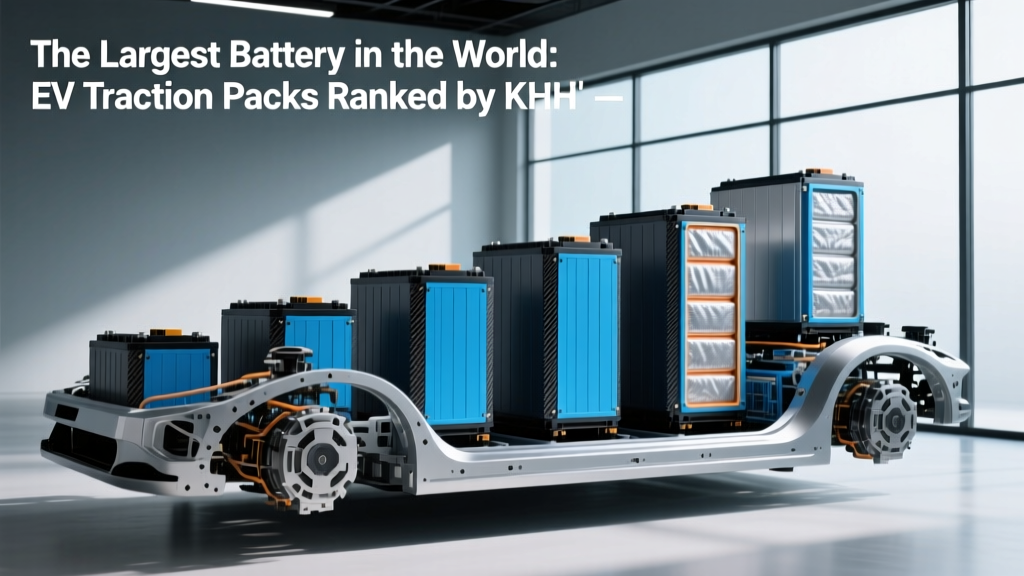
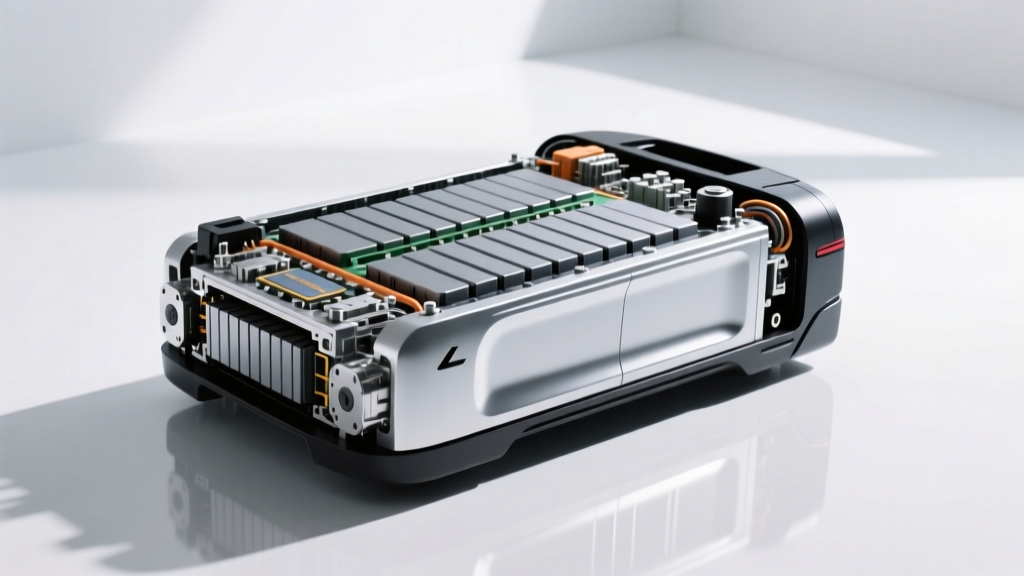
An EV battery pack is not a single cell. It's a carefully managed assembly of hundreds (sometimes thousands) of individual lithium-ion cells wired in series and parallel to deliver the voltage and energy capacity the vehicle needs. A 77 kWh pack in a Volkswagen ID.4, for example, contains 288 pouch cells organized into 12 modules. The Battery Management System (BMS) monitors every cell group's voltage, temperature, and current flow in real time.
When you charge, lithium ions migrate from the cathode through the electrolyte and into the anode (typically graphite or a graphite-silicon blend). Discharging reverses this flow. Each cycle causes microscopic structural stress on the electrode materials. The rate at which you charge, the temperature at which you charge, and the state of charge (SoC) range you operate within all determine how quickly that stress accumulates into measurable capacity loss.
The BMS enforces a buffer — typically 3-5 kWh at the top and bottom of the pack — that you never actually access. When your dashboard reads 0%, there's still energy in reserve. When it reads 100%, the pack isn't truly full. This buffer is your first line of defense against overcharge and deep-discharge damage, but it doesn't eliminate degradation. Your habits do the rest.
LFP vs NMC/NCA: Which Chemistry Is in Your Pack?
Not all lithium-ion batteries are the same. The two dominant chemistries in 2026 model-year EVs are Lithium Iron Phosphate (LFP) and Nickel Manganese Cobalt (NMC) or Nickel Cobalt Aluminum (NCA). The chemistry determines energy density, cycle life, thermal stability, cold-weather behavior, and cost.
| Attribute | LFP (Lithium Iron Phosphate) | NMC / NCA (Nickel-based) |
|---|---|---|
| Energy Density | Lower (~160-180 Wh/kg cell-level) | Higher (~220-260 Wh/kg cell-level) |
| Cycle Life | 3,000-5,000+ cycles to 80% SoH | 1,000-2,000 cycles to 80% SoH |
| Cold Performance | More range loss below 32°F; slower cold charging | Better low-temp discharge; preconditioning helps significantly |
| Thermal Stability | Excellent — very resistant to thermal runaway | Good, but requires more active cooling |
| Cost | Lower — no cobalt or nickel | Higher — commodity-priced metals |
| Typical SoC Recommendation | Can be charged to 100% regularly; Tesla recommends weekly 100% calibration | Best kept 20-80% daily; 100% for trips only |
| Common in (2026) | Tesla Model 3/Y RWD, Ford Mustang Mach-E Select (LFP trims), BYD models, Rivian Standard | Hyundai Ioniq 5/6, Chevy Equinox EV, BMW i4/iX, VW ID.4, most long-range trims |
Which is better? It depends on your use case. If you want maximum range per charge and don't mind managing SoC habits, NMC delivers the miles. If you want a battery that tolerates daily 100% charges, lasts longer in cycle count, and costs less to replace, LFP is the pragmatic pick — especially for commuters who can charge at home every night. The trade-off is that LFP packs are heavier for the same kWh, so vehicles using LFP tend to have slightly lower EPA range ratings in equivalent body styles.
How Long Do EV Batteries Actually Last?
The short answer: far longer than most buyers fear. According to data aggregated by Recurrent Auto from over 15,000 vehicles in their fleet-monitoring program, the average EV battery retains approximately 90-95% of its original capacity after 5 years and 100,000 miles. Degradation follows a curve that's steepest in the first 1-2 years (typically 2-5% loss as the solid electrolyte interface stabilizes), then flattens to roughly 1-2% per year thereafter.
| Vehicle Age / Mileage | Typical Capacity Retained (NMC) | Typical Capacity Retained (LFP) |
|---|---|---|
| 1 year / 15,000 mi | 95-97% | 97-99% |
| 3 years / 45,000 mi | 91-94% | 94-97% |
| 5 years / 75,000 mi | 88-92% | 92-96% |
| 8 years / 120,000 mi | 83-88% | 89-94% |
| 10 years / 150,000 mi | 78-85% | 86-92% |
Data synthesized from Recurrent Auto fleet reports, Geotab longitudinal studies, and manufacturer warranty claim rates. Individual results vary based on climate, charging habits, and thermal management system quality.
For context, a 2026 Hyundai Ioniq 5 with a 77.4 kWh NMC pack rated at 305 miles EPA would, after 8 years and 120,000 miles with typical use, retain roughly 260-270 miles of range. That's still enough for the vast majority of daily driving and road trips with a brief fast-charge stop. Most EV batteries will outlast the vehicle's body, suspension, and interior before they degrade to a point that makes the car impractical.
Battery Warranty: What's Covered and What's Not
Federal law effectively mandates that automakers warranty EV batteries for at least 8 years or 100,000 miles (whichever comes first) in most states, and 10 years/150,000 miles in California Air Resources Board (CARB) states. But the details matter — specifically, the capacity-retention threshold that triggers a warranty claim.
| Manufacturer (2026 Models) | Warranty Period | Capacity Threshold | Notes |
|---|---|---|---|
| Tesla (Model 3/Y) | 8 yr / 100,000 mi (LFP RWD); 8 yr / 120,000 mi (LR/AWD) | 70% retention | LFP and NMC packs share same threshold |
| Hyundai / Kia | 10 yr / 100,000 mi | 70% retention | Among the longest coverage periods |
| Ford (Mach-E, F-150 Lightning) | 8 yr / 100,000 mi | 70% retention | Covers battery and hybrid/electric components |
| General Motors (Ultium-based) | 8 yr / 100,000 mi | 70% retention (60% for commercial) | Module-level replacement where possible |
| Volkswagen (ID.4) | 8 yr / 100,000 mi | 70% retention | Covers cell, module, and BMS components |
| Rivian | 8 yr / 175,000 mi (Max pack); 8 yr / 120,000 mi (Standard/Large) | 70% retention | Max pack has highest mileage warranty in class |
| BMW (i4, iX) | 8 yr / 100,000 mi | 70% retention | Includes thermal management system |
What's covered: Capacity loss below the stated threshold under normal use, manufacturing defects, BMS failures, and thermal management system failures that cause battery damage.
What's typically not covered: Damage from accidents, flooding, unauthorized modifications, or use of non-approved charging equipment. Gradual degradation above the threshold (say, dropping to 72% over 8 years) is considered normal wear and won't trigger a warranty replacement. Always read the specific warranty booklet for your model year — terms can shift.
How Much Does an EV Battery Replacement Cost?
This is the question that generates the most anxiety — and the most misinformation. Here's the reality: the vast majority of EV owners will never need a full battery replacement. When replacements do occur, they're almost always covered under warranty. Out-of-pocket replacements are rare and typically involve vehicles that are 12-15+ years old or have been damaged.
| Vehicle / Pack Size | Battery Chemistry | Estimated Replacement Cost (Parts + Labor) | When Typically Needed |
|---|---|---|---|
| Tesla Model 3 RWD (~60 kWh) | LFP | $10,000 - $13,000 | Very rarely before 200,000+ mi |
| Tesla Model Y LR (~75 kWh) | NMC | $13,000 - $16,000 | Very rarely before 200,000+ mi |
| Hyundai Ioniq 5 (~77.4 kWh) | NMC | $14,000 - $18,000 | Very rarely before 180,000+ mi |
| Ford F-150 Lightning Ext. Range (~131 kWh) | NMC | $22,000 - $30,000 | Extremely rare; largest consumer pack |
| Chevy Equinox EV (~85 kWh) | NMC (Ultium) | $14,000 - $18,000 | Very rarely; modular design allows partial replacement |
| Nissan Leaf (40-60 kWh) | NMC (passive air cooling) | $7,000 - $10,000 | Earlier (100,000-150,000 mi) due to passive thermal mgmt |
Several factors are driving replacement costs down: LFP chemistry eliminates expensive cobalt and nickel, modular pack designs (like GM's Ultium platform) allow replacing individual modules rather than the entire pack, and the growing EV salvage market provides refurbished packs at 40-60% of new cost. According to IRS §30D guidelines, a new battery installed as part of a qualifying repair may also factor into tax credit calculations for the vehicle — consult a tax professional for your specific situation.
How to Charge a Battery Pack for Maximum Lifespan
The way you charge is the single biggest variable you control. Here's what the data says actually matters:
Daily Charging Habits
- NMC owners: Set your charge limit to 80% for daily driving. Use 100% only when you need the full range for a trip. Avoid routinely dropping below 10% SoC.
- LFP owners: Charge to 100% at least once per week. LFP cells have a very flat voltage curve, and the BMS needs regular full charges to accurately calibrate cell balancing. Tesla, Ford, and BYD all recommend this explicitly.
- Level 2 is your friend: Home Level 2 charging (7-11.5 kW / 240V) is the gentlest way to charge. The slower rate produces less heat and less stress on the cells compared to DC fast charging.
- Don't baby it too much: The difference between 80% and 75% daily limits is marginal. Don't sacrifice usability for theoretical gains. The BMS buffer already protects you from the worst extremes.
DC Fast Charging
- Occasional DCFC is fine: Studies from Idaho National Laboratory show that vehicles fast-charged frequently (multiple times per week) show slightly higher degradation — but the difference is typically 2-4% over 100,000 miles compared to Level 2-only charging. Not catastrophic.
- Avoid consecutive fast charges when possible: Back-to-back DCFC sessions (like on a road trip) generate cumulative heat. Preconditioning — which most modern EVs do automatically when you navigate to a charger — mitigates this significantly.
- Understand the charge curve: A 240 kW peak rate only applies at low SoC (typically 10-30%). Above 60%, the rate tapers. Above 80%, it drops sharply. Charging from 80-100% on DCFC can take as long as 10-80%. Plan accordingly.
Temperature Management
- Cold weather: Lithium-ion cells resist accepting charge when cold (below ~40°F). Always precondition your battery before charging — most EVs do this when you set a departure time or navigate to a charger. Charging a cold pack at high power causes lithium plating on the anode, which is permanent capacity loss.
- Hot weather: Avoid leaving your EV at 100% SoC in sustained heat (above 95°F) for extended periods. The combination of high SoC and high temperature accelerates electrolyte decomposition. If you're parking at an airport for a week in July, leave the pack at 50-60%.
- Garage parking helps: Keeping the vehicle in a temperature-moderate environment reduces the thermal management system's workload and extends battery life measurably over years.
How to Check Your Battery's State of Health (SoH)
State of Health is the percentage of your battery's current maximum capacity compared to its original capacity when new. A 77 kWh pack at 92% SoH can now hold about 70.8 kWh. Here's how to monitor it:
- In-vehicle displays: Many 2026 EVs show SoH or a health indicator in the settings menu. Tesla displays rated range vs. actual; Hyundai/Kia shows a battery health percentage in the EV settings. BMW provides a State of Health readout in the iDrive system.
- OBD-II tools: Devices like the OBDLink MX+ paired with apps such as EV Bat Health or Car Scanner can read the BMS-reported SoH directly. This is the most accurate consumer-accessible method.
- Third-party monitoring: Services like Recurrent Auto (free for members) and Geotab track your battery health over time using telematics data and compare it against fleet averages for your specific model.
- The manual method: Charge to 100%, note the displayed range, and compare it to the original EPA rating adjusted for your typical driving conditions. If your 305-mile Ioniq 5 now shows 265 miles at 100% on a mild day, that's roughly 87% SoH.
Check SoH every 3-6 months. A sudden drop (more than 3-4% in a short period) warrants a dealer visit, as it may indicate a failing cell module rather than normal degradation.
What's Coming Next: Solid-State, Silicon Anodes, and Beyond
The battery landscape is evolving, but timelines matter more than headlines. Here's a realistic view of what's on the horizon as of 2026:
- Silicon-dominant anodes: Already in limited production (Group14 Technologies supplies Porsche and Mercedes-Benz). Silicon can store roughly 10x more lithium than graphite, boosting energy density. Current implementations use silicon as a minor additive (5-10%); dominant-silicon anodes are expected in limited high-performance models by 2027-2028. The challenge is silicon's 300% volume expansion during charging, which cracks particles over cycles.
- Solid-state batteries: Toyota, Samsung SDI, and QuantumScape all have prototype cells running in lab and limited fleet testing. Toyota has announced a 2027-2028 production timeline for a limited-run vehicle. Solid-state replaces the liquid electrolyte with a solid ceramic or polymer, promising higher energy density (~400-500 Wh/kg at cell level), faster charging, and improved safety. Mass production at competitive cost remains 2029-2031 at the earliest for mainstream vehicles. These are not available to consumers today.
- Sodium-ion batteries: CATL and BYD are producing sodium-ion cells for lower-cost, shorter-range vehicles in China. Energy density is lower than LFP (~140-160 Wh/kg), but sodium is abundant and cheap. Possible US-market appearance in budget EV segments by 2028-2029.
- LMFP (Lithium Manganese Iron Phosphate): An evolution of LFP that adds manganese for ~15-20% higher energy density while retaining LFP's cycle life and safety advantages. Tesla and Ford are expected to adopt LMFP cells in standard-range models within the next 2-3 model years.
None of these technologies change today's buying decision. Current NMC and LFP batteries, properly cared for, will deliver 150,000-250,000+ miles of useful service. The next-generation chemistries will matter when you're shopping for your next EV, not this one.
Frequently Asked Questions
How long do EV batteries last in years and miles?
Based on fleet data from Recurrent Auto and Geotab, most modern EV batteries with active liquid thermal management retain 83-92% capacity at 8 years / 120,000 miles. LFP packs trend toward the higher end of that range. Many packs will exceed 200,000 miles before dropping below the 70% warranty threshold. The Nissan Leaf (with passive air cooling) is a notable exception — earlier models degraded faster, often reaching 70% SoH around 100,000-130,000 miles in hot climates.
How much does an EV battery cost to replace?
Full pack replacement costs range from approximately $7,000 (smaller packs like the 40 kWh Nissan Leaf) to $30,000 (large packs like the 131 kWh F-150 Lightning Extended Range). Most mainstream packs (75-85 kWh) fall in the $13,000-$18,000 range including labor. However, most owners will never pay this — the battery is covered under the 8-year/100,000-mile warranty, and modular designs increasingly allow replacing individual modules for $2,000-$5,000 rather than the entire pack.
What does the battery warranty actually cover?
EV battery warranties cover capacity loss below a stated threshold (typically 70% of original capacity) over the warranty period (typically 8 years/100,000 miles). They also cover manufacturing defects, BMS failures, and thermal management system failures. They do not cover damage from accidents, misuse, or unauthorized modifications. In CARB states (California and states adopting California emissions standards), the warranty extends to 10 years/150,000 miles.
How do I check my battery's State of Health?
Most 2026 EVs display battery health information in the vehicle settings. For more precise readings, use an OBD-II adapter (such as OBDLink MX+) with an EV-specific app to read the BMS-reported SoH directly. Third-party services like Recurrent Auto also provide ongoing monitoring. Check every 3-6 months and note any sudden drops exceeding 3-4%.
LFP vs NMC — which battery chemistry is better for me?
Choose LFP if: you want to charge to 100% daily without worry, you prioritize cycle life and longevity, you live in a moderate climate, and you're okay with slightly lower range per charge. Choose NMC if: you need maximum range, you're willing to manage daily charge limits (20-80%), you regularly drive in cold weather, or you're buying a long-range trim. Neither is universally better — they serve different ownership patterns.
Does frequent DC fast charging destroy my battery?
No, but it does accelerate degradation slightly. Idaho National Laboratory testing found that vehicles charged primarily via DCFC showed approximately 2-4% more capacity loss over 100,000 miles compared to vehicles charged primarily on Level 2. Modern thermal management systems precondition the battery before fast charging, which significantly reduces heat-related stress. If you road-trip monthly and fast-charge a few times per trip, the impact is minimal. If you fast-charge daily because you lack home charging, expect the higher end of typical degradation rates.
Should I charge my EV to 100% every night?
If you have an LFP battery: yes, or at least once per week — the BMS needs full charges for accurate cell balancing. If you have an NMC battery: no, set the limit to 80% for daily use and reserve 100% for days when you need the full range. Consistently holding an NMC pack at 100% SoC, especially in warm weather, accelerates electrolyte degradation. The 20-80% daily window is the sweet spot for NMC longevity.