The Chemistry Inside Your EV: LFP vs NMC/NCA
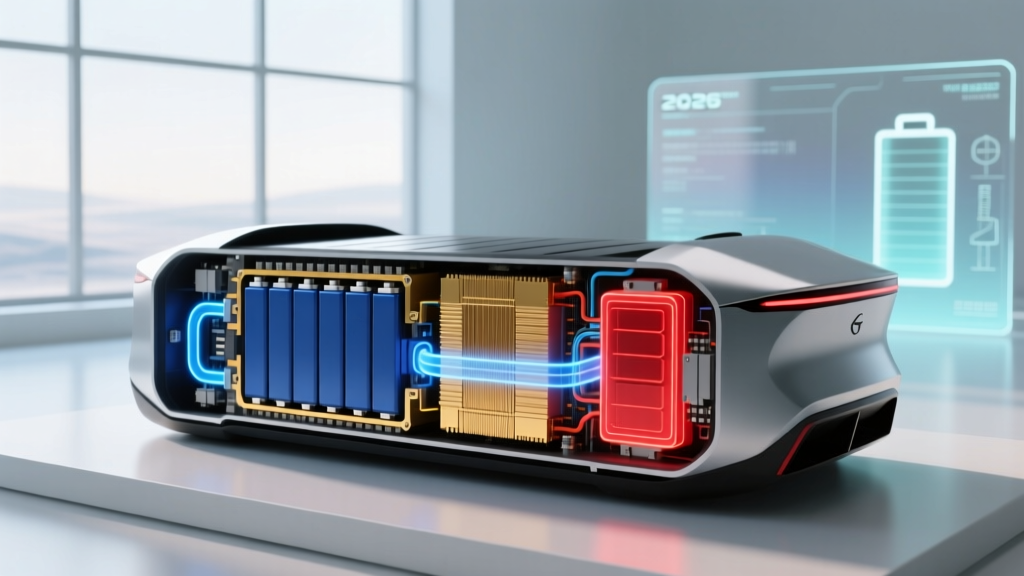
Before you can optimize how you charge a battery pack, you need to know what chemistry sits beneath your floorboards. In 2026, virtually every mainstream EV uses one of two lithium-ion cathode chemistries: LFP (lithium iron phosphate) or NMC/NCA (nickel manganese cobalt / nickel cobalt aluminum). The choice fundamentally affects how you should charge, how fast the pack degrades, and what range you get per kilowatt-hour.
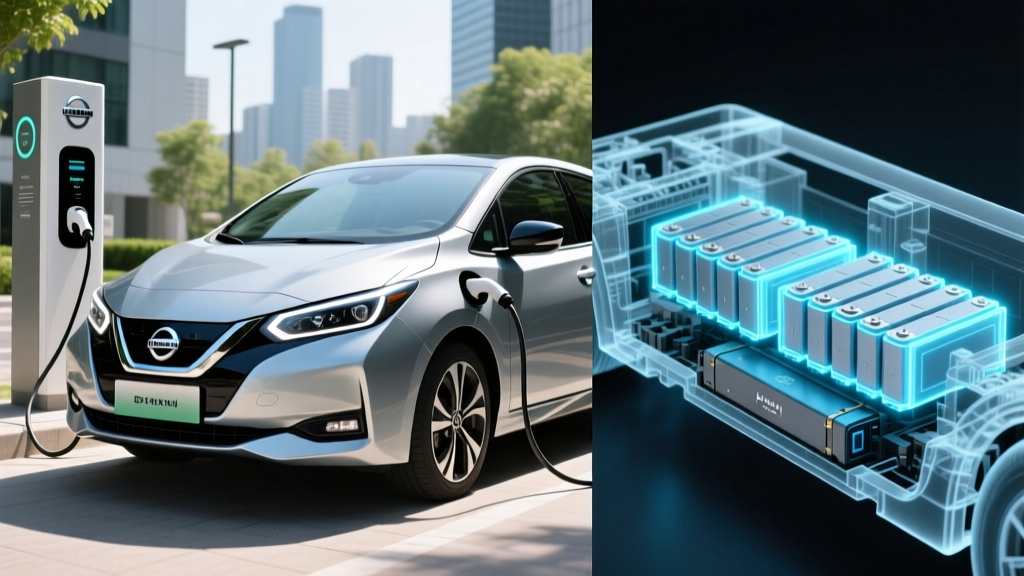
LFP cells, now standard in the Tesla Model 3 RWD, base Ford Mustang Mach-E Select, and several BYD models sold globally, trade peak energy density for exceptional cycle life and thermal stability. They tolerate repeated 100% charges far better than NMC and resist thermal runaway more effectively. The trade-off: LFP packs are heavier per kWh of capacity, deliver less range in freezing temperatures (roughly 30-40% loss at 20°F vs. 20-30% for NMC with a heat pump), and historically offered lower total range per pack size.
NMC and NCA chemistries dominate in long-range and performance trims — the Tesla Model Y Long Range, Hyundai Ioniq 5, BMW iX, Rivian R1T, and most 300+ mile vehicles use nickel-rich cathodes. They pack more energy into less weight, charge faster at DC stations (often sustaining 200-250 kW peaks), and perform better in cold climates when paired with active thermal management. But they degrade faster if routinely held at 100% state of charge and are more sensitive to high-temperature storage.
| Attribute | LFP (LiFePO₄) | NMC / NCA |
|---|---|---|
| Energy density (cell-level) | 160–180 Wh/kg | 220–300 Wh/kg |
| Typical cycle life | 3,000–5,000+ cycles | 1,000–2,000 cycles |
| Cold-weather range loss (20°F) | ~30–40% | ~20–30% (with heat pump) |
| Recommended daily SoC | Up to 100% | 80% for daily; 100% for trips |
| Thermal runaway risk | Very low | Low (with BMS management) |
| Cost per kWh (2026 pack-level) | ~$90–$110 | ~$120–$145 |
| Common vehicles (2026) | Tesla Model 3 RWD, Mach-E Select, BYD Dolphin | Model Y LR, Ioniq 5, BMW iX, Rivian R1T |
How Long Do EV Batteries Last? Real Degradation Data
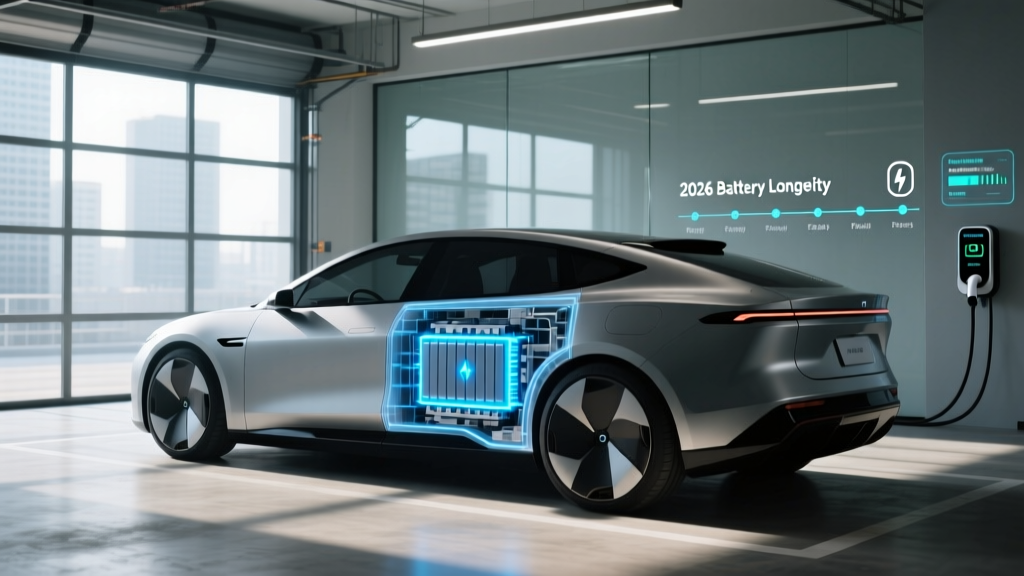
The single most common question from prospective EV buyers: will the battery outlast the car? Based on fleet data, manufacturer reports, and independent testing through 2025–2026, the answer for most modern packs is yes.
According to fueleconomy.gov, the U.S. Department of Energy's EV technology hub, most current lithium-ion traction batteries are engineered to retain at least 70–80% of original capacity after 150,000–200,000 miles. Real-world data from Tesla's 2025 Impact Report showed that Model S/X packs retained approximately 88% capacity at 150,000 miles and roughly 85% at 200,000 miles. Hyundai and Kia report similar curves for their E-GMP platform vehicles, with the Ioniq 5 and EV6 showing roughly 90% retention at 60,000 miles in fleet testing.
LFP packs tend to degrade even more slowly. Data from Tesla's Shanghai-built Model 3 RWD fleet (LFP chemistry) indicates roughly 92–95% capacity retention at 100,000 miles when owners follow the recommended 100% charge routine. The degradation curve is not linear — the steepest drop typically occurs in the first 10,000–20,000 miles (roughly 2–5% loss), after which the rate flattens significantly.
- Year 1 / 15,000 mi: ~95–97% capacity retained
- Year 3 / 45,000 mi: ~92–94% retained
- Year 5 / 75,000 mi: ~89–92% retained
- Year 8 / 120,000 mi: ~85–89% retained
- Year 10 / 150,000 mi: ~82–87% retained
Sources: Tesla Impact Report, Recurrent Auto battery data, manufacturer fleet reports. Individual results vary with climate, charging habits, and chemistry.
What does this mean practically? An EV with an original EPA range of 310 miles (like the 2026 Hyundai Ioniq 5 Long Range AWD) would still deliver roughly 265–275 miles at 150,000 miles — still sufficient for most daily driving and road trips with brief DC fast-charging stops.
How to Charge a Battery Pack: Best Practices by Chemistry
How you charge a battery pack daily has a measurable impact on its long-term state of health (SoH). The physics are clear: lithium-ion cells experience the most stress at extreme states of charge (above 90% and below 10%) and at elevated temperatures. Here is how to translate that into a daily routine.
For NMC/NCA packs (Tesla Long Range, Ioniq 5, Rivian, BMW iX, etc.):
- Set your daily charge limit to 80%. Use 100% only when departing for a road trip within a few hours.
- Avoid letting the pack sit at 100% for extended periods. If you charge to full, drive within 1–2 hours.
- Keep the pack above 10% when possible. Occasional dips to 5% won't cause immediate damage, but routinely running the pack to near-zero accelerates degradation.
- Use Level 2 home charging (7–11.5 kW) as your primary method. It generates far less heat than DC fast charging.
For LFP packs (Tesla Model 3 RWD, Mach-E Select, etc.):
- Charge to 100% regularly — Tesla and Ford explicitly recommend this for LFP. The battery management system (BMS) needs periodic full charges to accurately calibrate cell balancing.
- LFP tolerates high SoC storage better than NMC, but it's still best practice not to leave the car at 100% for weeks without driving.
- The 10% lower-bound recommendation still applies — avoid routinely draining below 10%.
DC fast charging and heat management:
DC fast charging (50–350 kW) is essential for road trips, but frequent daily use accelerates degradation due to heat generation inside the cells. Research from the Idaho National Laboratory found that vehicles charged primarily via DC fast charging showed roughly 2–4% more degradation over 50,000 miles compared to those charged primarily on Level 2. That said, modern thermal management systems (liquid cooling with preconditioning) have narrowed this gap considerably.
If you must rely on DC fast charging frequently — say, for rideshare work or a commute without home charging access — precondition the battery before arriving at the charger (most EVs do this automatically when you navigate to a charger in the infotainment system). Preconditioning warms the cells to the optimal temperature range (roughly 77–95°F / 25–35°C), which reduces internal resistance and heat generation during charging. This also enables the pack to accept peak charge rates faster — a preconditioned Ioniq 5 can hit its 240 kW peak within 2–3 minutes of plugging in, while a cold pack may take 10–15 minutes to ramp up.
- ✅ Know your chemistry (LFP or NMC) — it dictates your charge-limit strategy
- ✅ Install a Level 2 home charger (240V, 32–48A) for daily charging
- ✅ Set charge limits: 80% for NMC daily, 100% for LFP regular use
- ✅ Precondition before DC fast charging (use nav to charger)
- ✅ Avoid parking at 100% SoC for days in hot weather
- ✅ Avoid routinely draining below 10% SoC
- ✅ In extreme cold, plug in when parked to let the BMS manage temperature
- ❌ Don't exclusively DC fast charge if Level 2 is available
- ❌ Don't store the vehicle at 0% or 100% for extended periods
What Does the EV Battery Warranty Cover?
Federal law mandates that EV batteries sold in the United States carry a minimum warranty of 8 years or 100,000 miles (whichever comes first). In California Air Resources Board (CARB) states — which include California, Colorado, Maine, Massachusetts, New York, Oregon, Rhode Island, Vermont, Virginia, and Washington — the mandate extends to 10 years or 150,000 miles.
Most automakers exceed these minimums. The critical detail is the capacity retention threshold — the point at which the manufacturer considers the pack "failed" and will replace or repair it. In 2026, this threshold is typically set at 70% of original capacity, though a few manufacturers hold at 65% or even 60% for certain models.
| Vehicle | Warranty Term | Capacity Threshold | Chemistry |
|---|---|---|---|
| Tesla Model 3 RWD | 8 yr / 100,000 mi | 70% | LFP |
| Tesla Model Y Long Range | 8 yr / 120,000 mi | 70% | NMC |
| Hyundai Ioniq 5 | 10 yr / 100,000 mi | 70% | NMC |
| Ford Mustang Mach-E | 8 yr / 100,000 mi | 70% | LFP (Select) / NMC (GT) |
| Chevrolet Equinox EV | 8 yr / 100,000 mi | 60% | NMC (Ultium) |
| BMW iX xDrive50 | 8 yr / 100,000 mi | 70% | NMC |
| Rivian R1T Dual-Motor | 8 yr / 175,000 mi | 70% | NMC |
Warranty claims typically cover manufacturing defects, premature cell failure, and capacity loss below the threshold under normal use. They do not cover damage from collisions, flooding, improper modifications, or use of non-approved charging equipment. If your pack drops below the threshold within the warranty period, the manufacturer will replace failed modules or the entire pack — usually with a refurbished unit that meets the retention threshold, not necessarily a brand-new pack.
EV Battery Replacement Cost: What to Expect
This is the figure that generates the most anxiety, so let's ground it in data. As of 2026, a full high-voltage traction battery replacement (parts and labor) typically costs between $5,000 and $22,000 depending on pack size, chemistry, and vehicle. However, full-pack replacements remain rare. Most out-of-warranty failures involve individual module replacements, which run $500–$2,500 per module.
| Vehicle | Pack Size (usable) | Chemistry | Full-Pack Replacement Estimate |
|---|---|---|---|
| Tesla Model 3 RWD | 57.5 kWh | LFP | $7,000–$9,000 |
| Tesla Model Y LR | 75 kWh | NMC | $10,000–$14,000 |
| Hyundai Ioniq 5 LR AWD | 77.4 kWh | NMC | $10,000–$13,000 |
| Ford F-150 Lightning Ext. Range | 131 kWh | NMC | $18,000–$22,000 |
| Chevrolet Silverado EV | 200 kWh | NMC (Ultium) | $20,000–$25,000+ |
| Rivian R1T Max Pack | 149 kWh | NMC | $16,000–$20,000 |
Context matters enormously here. According to data from Recurrent Auto, fewer than 5% of EVs in their study fleet of over 15,000 vehicles required any battery-related warranty claim within the first eight years of ownership, and outright full-pack failures outside of manufacturing defects are even rarer. The vast majority of EV batteries will outlast the useful economic life of the vehicle itself. For comparison, a gasoline engine replacement or major rebuild often costs $4,000–$8,000 and is far more common at high mileage than an EV battery failure.
If you do face an out-of-warranty replacement, the cost trajectory is favorable. Pack-level pricing has fallen from over $1,000/kWh in 2010 to roughly $100–$140/kWh in 2026 (per BloombergNEF data), and is projected to continue declining. By the time most 2026-model EVs need a replacement pack in the 2035–2040 timeframe, costs are expected to be significantly lower.
Monitoring Battery Health: How to Check State of Health (SoH)
State of Health (SoH) is the percentage of your battery's current maximum capacity relative to its original capacity when new. A pack at 92% SoH that originally held 77.4 kWh now holds roughly 71.2 kWh — which directly translates to reduced range.
Most modern EVs surface SoH data through the vehicle's infotainment system or companion app. Tesla displays battery health in the service menu (accessible via the touchscreen), while Hyundai/Kia provides it through the UVO/Bluelink app. Third-party tools like OBD-II dongles paired with apps such as ABRP (A Better Route Planner), LeafSpy (for Nissan), or Scan My Tesla can pull more granular cell-level data including individual cell voltage deviation, which is a leading indicator of module imbalance.
For a more formal assessment, services like Recurrent Auto offer free battery health reports that benchmark your pack against thousands of identical vehicles in their database. Some dealerships can run a full diagnostic that provides a certified SoH reading — useful if you're buying or selling a used EV.
What to watch for:
- Gradual, linear decline is normal. Losing 1–2% SoH per year after the initial break-in period is expected.
- Sudden drops (e.g., 5% in a few weeks) may indicate a failing module or BMS issue and warrant a service visit.
- Large cell voltage deviations (more than 50 mV between cells at rest) suggest cell imbalance that a BMS recalibration or module replacement may address.
- Range that fluctuates wildly day-to-day (not weather-related) can indicate BMS calibration issues, sometimes resolved by a full 100%-to-10% cycle on LFP packs.
Looking Ahead: Solid-State and Silicon-Anode Batteries
The next major leap in battery technology is solid-state batteries, which replace the liquid electrolyte in current lithium-ion cells with a solid material (ceramic, sulfide, or polymer). The potential benefits are substantial: 30–50% higher energy density (enabling 400+ mile ranges in smaller packs), faster charging (potentially 10–80% in under 10 minutes), dramatically reduced fire risk, and longer cycle life.
As of 2026, solid-state batteries remain in limited production. Toyota has announced a pilot installation in a small run of bZ-series vehicles for the Japanese market, with broader commercial availability targeted for 2028–2030. Samsung SDI and QuantumScape (backed by Volkswagen) are in advanced validation phases with OEM partners, but no mainstream U.S.-market vehicle currently ships with a solid-state pack.
Silicon-anode technology is closer to widespread adoption. By blending silicon into the graphite anode (currently 5–15% silicon content), manufacturers can boost energy density by 10–20% without changing the cathode chemistry. Several 2026 models from GM (Ultium platform) and startups like Sila Nanotechnologies' partners have begun incorporating higher-silicon anodes. This is an incremental improvement, not a revolution, but it contributes to the steady increase in range-per-kWh we've seen across the industry.
The realistic takeaway: if you're buying an EV in 2026, today's lithium-ion packs — whether LFP or NMC — are mature, well-understood technology backed by extensive warranty coverage and real-world longevity data. Waiting for solid-state means waiting at minimum 3–5 years for broad availability at competitive pricing, during which time you'd be driving a gasoline vehicle with higher per-mile fuel costs.
Frequently Asked Questions
How long do EV batteries last in years and miles?
Most modern EV batteries (2023–2026 production) are designed to retain 70–85% of original capacity after 150,000–200,000 miles, which typically translates to 12–18 years of average use (12,000–15,000 miles/year). Fleet data shows that many packs exceed these figures. LFP chemistry packs tend to last longer in terms of cycle count.
How much does it cost to replace an EV battery?
Full-pack replacements range from roughly $5,000 for smaller LFP packs (Tesla Model 3 RWD) to $20,000–$25,000 for large packs (Ford F-150 Lightning Extended Range, Chevrolet Silverado EV 200 kWh). However, full replacements are rare — most issues are resolved with individual module replacements at $500–$2,500. The vast majority of EV batteries outlast the vehicle's economic life.
Is it bad to charge my EV to 100% every day?
It depends on your battery chemistry. For NMC/NCA packs, daily 100% charging accelerates degradation — set your limit to 80% for daily driving and charge to 100% only before road trips. For LFP packs, manufacturers like Tesla and Ford explicitly recommend regular 100% charging for proper cell balancing and accurate range estimation.
Does DC fast charging damage my battery?
Occasional DC fast charging on road trips has a negligible effect on battery health. Frequent daily DC fast charging (multiple times per week) can add roughly 2–4% additional degradation over 50,000 miles compared to Level 2 charging, per Idaho National Laboratory research. Modern thermal management and preconditioning systems have significantly reduced this impact. If you have access to Level 2 home charging, use it as your primary method.
LFP vs NMC — which battery chemistry is better?
Neither is universally better; they serve different priorities. Choose LFP if you want maximum cycle life, lower cost, and don't mind slightly less range and worse cold-weather performance. Choose NMC if you need maximum range, faster DC charging speeds, and better cold-weather efficiency. LFP is ideal for daily commuters with home charging; NMC suits road-trippers and cold-climate drivers.
How do I check my EV battery's state of health?
Most EVs display SoH through the infotainment system or companion app. Third-party OBD-II tools (Scan My Tesla, LeafSpy, ABRP) provide more detailed cell-level data. Services like Recurrent Auto offer free benchmarked battery health reports. A dealership diagnostic can provide a certified SoH reading.
Will my EV battery need to be replaced during ownership?
Statistically, probably not. According to Recurrent Auto's fleet data, fewer than 5% of EVs required battery warranty claims within eight years. Pack pricing continues to decline (~$100–$140/kWh in 2026), and by the time a 2026-model EV might need replacement in the late 2030s, costs are projected to be substantially lower. The federal warranty mandate (8 yr/100,000 mi minimum) provides strong protection during the most common ownership period.