Why Your Tesla's Range Display Might Be Lying to You
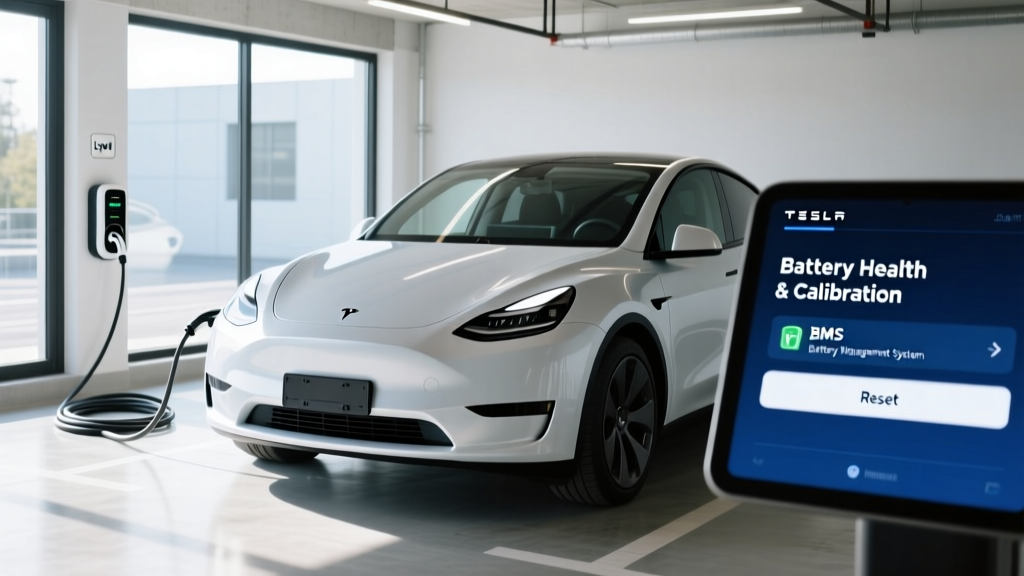
If your Tesla's displayed range suddenly drops or fluctuates wildly, the battery itself is probably fine — the Battery Management System (BMS) just lost track of the actual state of charge. Understanding how to calibrate Tesla battery systems is one of the most practical maintenance skills an owner can develop, and it costs nothing but a weekend of planning.
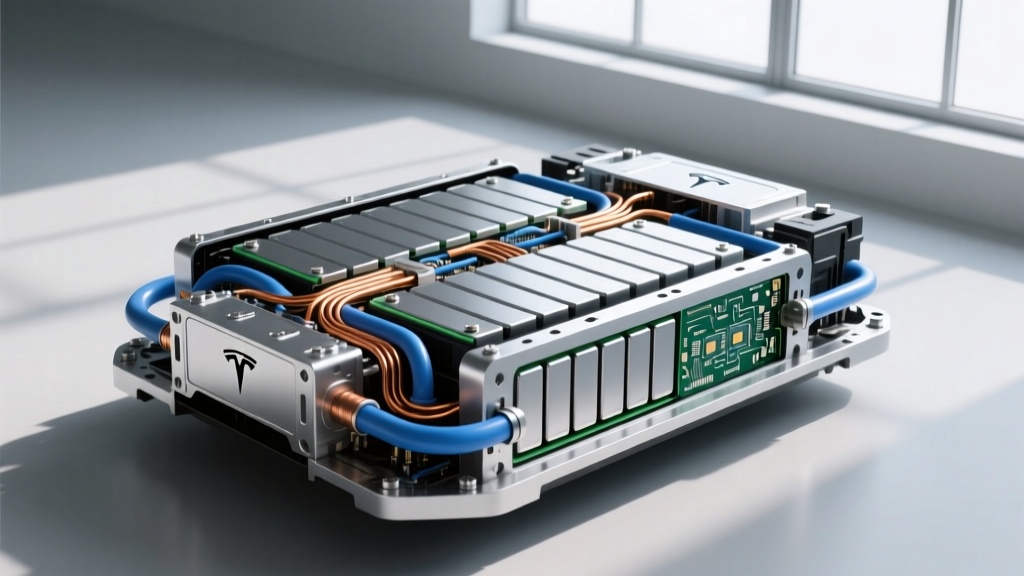
The BMS estimates remaining energy by tracking voltage, current flow, and temperature. Over time, especially with partial charge cycles, these estimates drift. The fix is a controlled deep-discharge and recharge cycle that gives the BMS clear reference points at both the top and bottom of the battery's usable window. But the procedure differs significantly depending on whether your Tesla uses an LFP (lithium iron phosphate) or NMC/NCA (nickel manganese cobalt / nickel cobalt aluminum) pack.
Identify Your Tesla's Battery Chemistry First
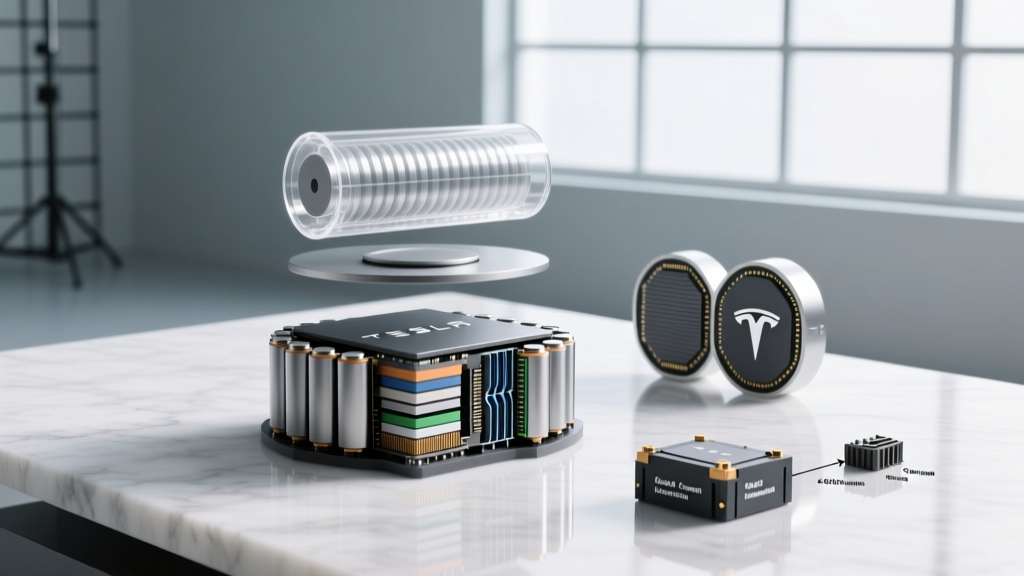
Before attempting any calibration, you must know what's under your floor. Tesla has used two primary chemistries across its 2024–2026 lineup, and the calibration approach — and daily charging habits — diverge sharply.
| Factor | LFP (LiFePO4) | NMC / NCA |
|---|---|---|
| Models (2026) | Model 3 RWD, Model Y RWD (Standard Range) | Model 3 Long Range/Performance, Model Y LR/Perf, Model S, Model X |
| Energy Density | Lower (~160 Wh/kg cell-level) | Higher (~250–280 Wh/kg cell-level) |
| Cycle Life | 3,000–5,000+ cycles to 80% SoH | 1,000–2,000 cycles to 80% SoH |
| Cold Performance | Weaker below 32°F; more range loss | Better low-temp discharge capability |
| Daily Charge Limit | 100% recommended at least weekly | 80% daily; 100% only for trips |
| Calibration Need | Higher — flat voltage curve confuses BMS | Moderate — voltage curve gives clearer SoC signal |
| Cost | Lower (no cobalt/nickel) | Higher (critical mineral content) |
The LFP voltage curve is nearly flat between roughly 20% and 80% state of charge. That's great for longevity but terrible for BMS accuracy — the system can't distinguish 40% from 60% by voltage alone, so it relies on coulomb counting (tracking amps in and out), which drifts over weeks of partial cycles. This is why LFP Tesla owners see range-estimate errors more frequently and why Tesla explicitly recommends charging to 100% at least once per week.
How to Calibrate a Tesla Battery: Step-by-Step
This procedure works for both chemistries but is most impactful for LFP packs. Plan this on a weekend when you don't need the car for long trips.
Step 1: Charge to 100%
Set your charge limit to 100% and let the car complete the full charge. For NMC/NCA owners doing a one-time calibration, this is fine — just don't make it a daily habit. Leave the car plugged in at 100% for at least one hour after charging completes so the BMS can perform cell balancing.
Step 2: Drive Down to ~10% State of Charge
Drive normally until the displayed SoC reaches approximately 10%. Avoid aggressive driving or extreme regenerative braking settings, as the goal is a steady, predictable discharge. Do not let the car reach 0% or shut down — that risks stranding you and can stress the pack.
Step 3: Let the Car Rest
Park the car and let it sleep for 2–3 hours. Turn off Sentry Mode, cabin overheat protection, and any scheduled charging or preconditioning. The BMS needs the car fully powered down (asleep, not just parked) to take accurate open-circuit voltage readings at the low end.
Step 4: Recharge Uninterrupted to 100%
Plug in and charge back to 100% in one continuous session, ideally on a Level 2 home charger at 32–48 amps (7.7–11.5 kW). Avoid DC fast charging for this cycle — the high current generates heat and the BMS gets less precise readings. Again, let the car sit at 100% for at least an hour after completion.
Step 5: Verify the Result
After the cycle, your displayed range at 100% should closely match the EPA-rated range for your specific model and wheel configuration. For example, a 2026 Model 3 Long Range AWD with 19" wheels should show approximately 341 miles (its EPA-rated figure). If the number still seems off, repeat the cycle once more — severely drifted BMS units sometimes need two full cycles.
BMS Calibration Checklist
- Confirm battery chemistry (LFP or NMC) in the Tesla app or vehicle settings
- Disable Sentry Mode, cabin overheat protection, and scheduled features
- Charge to 100% on Level 2 — let sit 1+ hour post-charge
- Drive to ~10% SoC with normal driving habits
- Park and let the car sleep 2–3 hours uninterrupted
- Recharge to 100% in one session on Level 2
- Let sit 1+ hour at 100% for cell balancing
- Verify displayed range matches EPA spec
Real Degradation Data: What to Actually Expect
Calibration fixes the display, not the battery. Actual chemical degradation is a separate phenomenon, and the data is reassuring for most owners. Tesla's own fleet data, published in their 2025 Impact Report, shows that Model 3 and Model Y packs retain approximately 85% of original capacity at 150,000 miles. Independent tracking by TeslaFi and Recurrent Auto corroborates this with large owner datasets.
Typical Tesla Battery Degradation Curve (NMC/NCA Packs)
| Mileage | Average Capacity Retained | Range Loss (on 341-mi pack) |
|---|---|---|
| New | 100% | 0 mi |
| 30,000 mi | ~95% | ~17 mi |
| 60,000 mi | ~92% | ~27 mi |
| 100,000 mi | ~88% | ~41 mi |
| 150,000 mi | ~85% | ~51 mi |
| 200,000 mi | ~80–82% | ~61–68 mi |
Sources: Tesla 2025 Impact Report, Recurrent Auto battery health data (2025). LFP packs show slower degradation but start from a lower total capacity.
The degradation curve is nonlinear: the steepest drop occurs in the first 10,000–20,000 miles as the solid electrolyte interphase (SEI) layer forms on the anode. After that, degradation slows to roughly 1–2% per year for typical drivers. LFP packs degrade even more slowly — many fleet operators report 90%+ retention at 100,000 miles — but they start with about 10–15% less total capacity than equivalent NMC packs.
Tesla Battery Warranty: What's Covered and What Isn't
Tesla's battery warranty is one of the stronger guarantees in the EV industry, but the details matter. The warranty covers defects and excessive capacity loss — defined as dropping below 70% retention — during the warranty period.
| Model | Warranty Period | Mileage Limit | Minimum Retention |
|---|---|---|---|
| Model 3 RWD (LFP) | 8 years | 100,000 miles | 70% |
| Model 3 LR / Performance | 8 years | 120,000 miles | 70% |
| Model Y (all trims) | 8 years | 120,000 miles | 70% |
| Model S / Model X | 8 years | 150,000 miles | 70% |
Source: Tesla New Vehicle Limited Warranty. Whichever comes first — time or mileage.
The warranty does not cover capacity loss from abuse (repeatedly draining to 0%, leaving the car at 0% for extended periods), damage from accidents or flooding, or modifications to the battery or charging system. It also doesn't cover the 12V auxiliary battery — that's a separate component with its own shorter warranty.
Battery Replacement Cost: The Numbers Most Owners Never Need
Here's the context that fear-based headlines omit: the vast majority of Tesla owners will sell or trade their vehicle before the traction battery needs replacement. Out-of-warranty replacements are rare, but the costs are real and worth knowing.
| Model / Pack Size | Battery Cost (parts) | Labor | Total Estimate |
|---|---|---|---|
| Model 3 RWD (~60 kWh LFP) | $8,000–$10,000 | $2,000–$3,000 | $10,000–$13,000 |
| Model 3/Y LR (~75–82 kWh NMC) | $12,000–$16,000 | $2,000–$3,000 | $14,000–$19,000 |
| Model S/X (~100 kWh) | $15,000–$20,000 | $2,500–$4,000 | $17,500–$24,000 |
Estimates based on Tesla service center quotes and independent EV repair shops (2025–2026). Refurbished packs can reduce parts cost by 30–40%.
When replacement is needed, it's typically at 200,000+ miles or 12–15+ years. Some high-mileage Tesla taxis and fleet vehicles have exceeded 300,000 miles on original packs. The more common failure mode isn't gradual degradation but a defective module or contactor — which is exactly what the warranty is designed to catch.
Factors That Accelerate Battery Degradation
Battery chemistry sets the baseline, but your habits determine where on the curve you land. The five most impactful factors, ranked by effect size:
- State of charge extremes: Storing the car at 100% for days or weeks accelerates calendar aging. For NMC/NCA packs, the sweet spot is 20–80% for daily use. LFP packs tolerate 100% better and Tesla recommends weekly full charges for calibration — but even LFP shouldn't sit at 100% for weeks unused.
- DC fast charging frequency: Occasional Supercharging (1–2x/week) has minimal impact. Daily DC fast charging at 250 kW generates sustained heat and accelerates degradation by an estimated 2–5% over the pack's life compared to exclusive Level 2 charging. Preconditioning the battery before fast charging — which Tesla does automatically when you navigate to a Supercharger — reduces this effect significantly.
- Extreme temperatures: Operating in sustained 100°F+ heat without thermal management degrades cells faster. Tesla's active liquid cooling system mitigates this substantially, but parking in shade and using scheduled departure preconditioning still help. Cold weather doesn't cause permanent degradation — it temporarily reduces available capacity, which returns when the pack warms.
- Deep discharge events: Regularly driving below 5% SoC stresses the anode. The car's buffer (typically ~2–3 kWh hidden below the displayed 0%) protects against true over-discharge, but it's best to avoid routinely arriving home at single-digit SoC.
- High-mileage fast cycling: Drivers who deplete and recharge the full battery daily (ride-share, delivery) accumulate cycle count faster. LFP packs handle this better due to their superior cycle life.
How to Monitor Battery Health (State of Health)
Tesla doesn't display a State of Health (SoH) percentage in the vehicle UI, unlike some competitors. But there are reliable ways to track it:
- TeslaFi or Tessie app: These third-party tools log your charge data and calculate SoH by comparing energy added during a full charge to the pack's original rated capacity. A 2026 Model 3 LR with an 82 kWh pack that accepts only 72 kWh from 0–100% is showing ~88% SoH.
- Manual 100% charge test: Charge to 100% and note the displayed range. Compare it to the EPA-rated range when new. A 341-mile rated car showing 300 miles at 100% after calibration indicates roughly 88% capacity retention.
- Service mode (limited): Tesla's service mode (accessible via the software screen) shows some battery metrics, but it's not a full diagnostic. For a definitive SoH reading before a warranty claim, a Tesla service center can pull the full pack log.
Track SoH quarterly rather than obsessively — normal variance of 1–2% between readings is expected due to temperature and recent driving patterns.
What's Next: Solid-State and Silicon Anode Batteries
Current lithium-ion technology will dominate through at least 2030, but two emerging technologies could reshape the landscape:
Solid-state batteries replace the liquid electrolyte with a solid material, potentially offering 40–50% higher energy density, faster charging, and improved safety (no flammable electrolyte). Toyota, Samsung SDI, and QuantumScape are leading development. Toyota has announced a 2027–2028 production target for limited-run vehicles, but mass-market availability at scale is realistically 2030 or later. These are forward-looking timelines, not available products.
Silicon anode technology replaces graphite anodes with silicon, which can store roughly 10x more lithium ions per gram. Companies like Sila Nanotechnologies and Group14 are already shipping early production materials. Expect incremental adoption starting in 2027–2028 models, likely blended with graphite anodes at first. This could add 10–20% range to existing pack sizes without increasing physical dimensions.
For current buyers, these developments are informational, not decisional. Today's NMC and LFP packs are mature, well-understood, and backed by real-world data spanning billions of fleet miles. Waiting for solid-state means waiting years — and paying a premium when it arrives.
Frequently Asked Questions
How often should I calibrate my Tesla battery?
For LFP packs (Model 3 RWD, Model Y RWD), calibrate every 2–3 months or whenever the displayed range seems inconsistent. For NMC/NCA packs, once or twice a year is sufficient — and regular daily charging to 80% with occasional 100% trips provides adequate BMS reference points without a dedicated calibration cycle.
Does calibrating the battery improve actual range?
No. Calibration corrects the BMS estimate displayed on screen — it doesn't restore chemically degraded capacity. If your pack has genuinely lost 10% capacity, calibration will make the display accurately reflect that loss rather than hiding it or overstating it.
Can I calibrate using a Supercharger?
It's not recommended. Level 2 charging (7–11.5 kW) gives the BMS more precise voltage readings and allows proper cell balancing during the extended time near 100% SoC. DC fast charging generates heat and the BMS may not get clean reference data. Use your home wall connector or a public Level 2 station.
My Tesla shows less range after an OTA update — is the battery degraded?
Likely not. Tesla periodically adjusts the range calculation algorithm via over-the-air updates to better reflect real-world consumption. This changes the displayed number without changing actual battery capacity. A calibration cycle after a major update can help the BMS sync with the new algorithm.
Is LFP or NMC better for long-term ownership?
If you plan to keep the car past 150,000 miles, LFP's superior cycle life (3,000–5,000 cycles vs. 1,000–2,000) is a genuine advantage. However, LFP packs start with less range and perform worse in cold weather. For owners in northern climates who prioritize winter usability, NMC remains the stronger choice. There is no universally "better" chemistry — it depends on your climate, driving patterns, and ownership timeline.
Will frequent Supercharging void my battery warranty?
No. Tesla's warranty covers the battery regardless of charging method. However, Tesla has noted in service bulletins that vehicles charged exclusively via DC fast charging may see slightly higher degradation, and in rare warranty disputes, charging history can be reviewed. In practice, Tesla has honored warranties for high-Supercharger-use vehicles including fleet and ride-share cars.