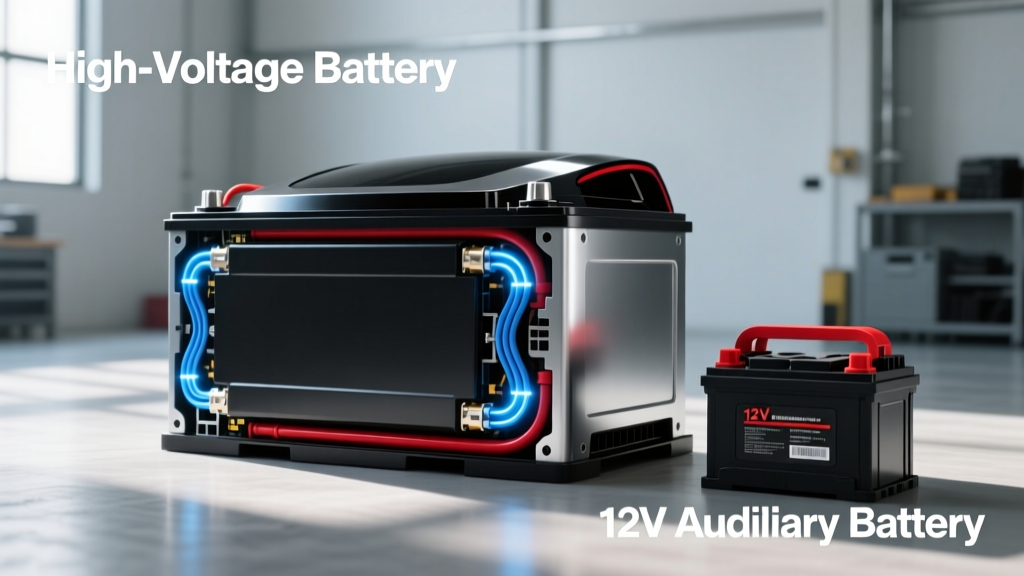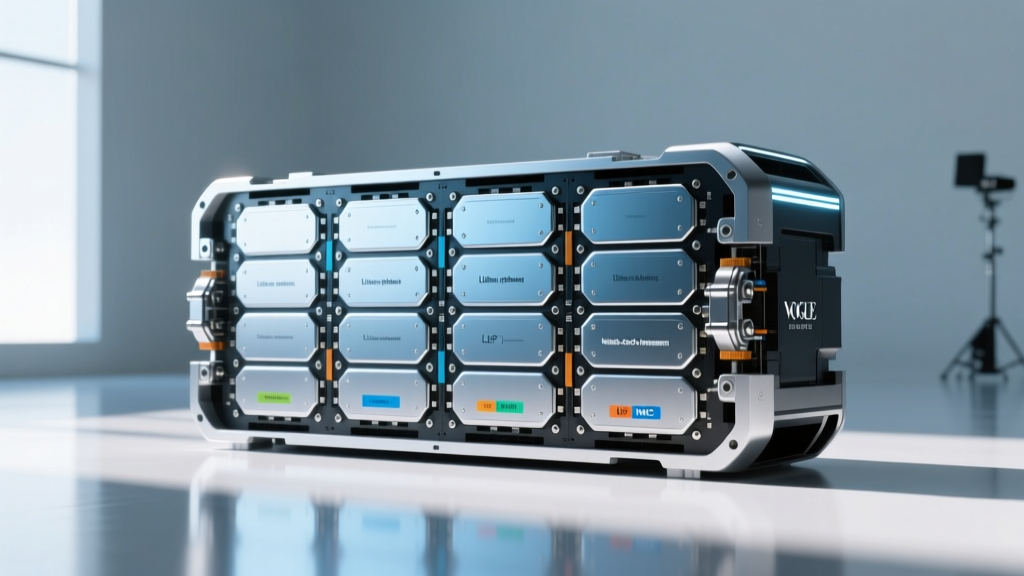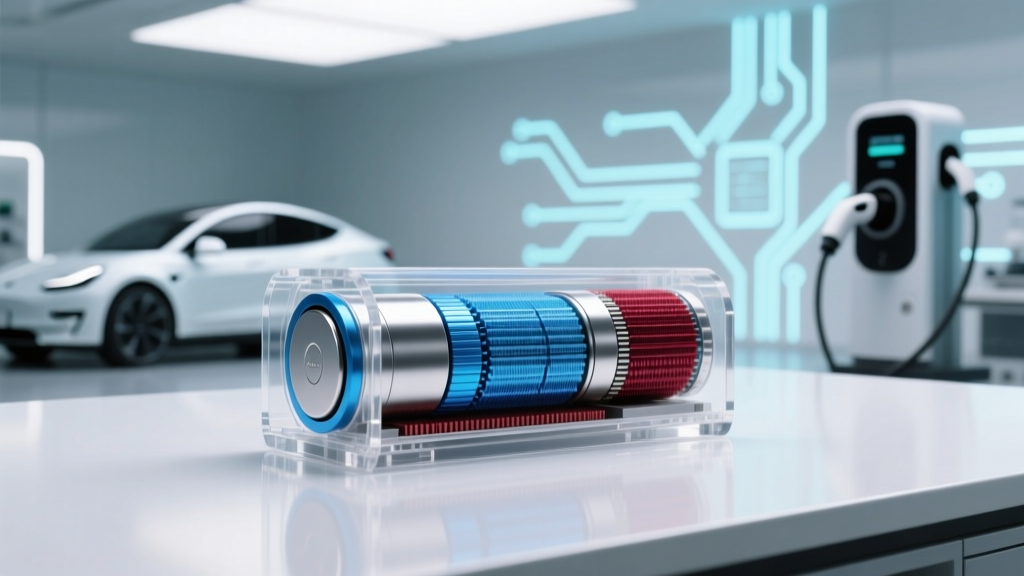
Current EV Battery Chemistry: LFP vs NMC/NCA
Before understanding next-generation solid-state technology, it helps to ground yourself in the lithium-ion chemistries powering today's EVs. Every battery on the road in 2026 uses a lithium-ion cell, but the cathode material defines the trade-offs you live with as an owner: energy density, cycle life, cold-weather behavior, and cost per kilowatt-hour (kWh).
| Attribute | LFP (Lithium Iron Phosphate) | NMC/NCA (Nickel Manganese Cobalt / Nickel Cobalt Aluminum) |
|---|---|---|
| Energy Density | Lower (~160 Wh/kg cell-level) | Higher (~250–300 Wh/kg cell-level) |
| Typical EPA Range | Shorter packs, 240–270 mi common | Longer packs, 300–400+ mi common |
| Cycle Life | 3,000–5,000+ cycles | 1,000–2,000 cycles |
| Cold-Weather Performance | More range loss below freezing (~30–40%) | Better cold retention (~20–30% loss) |
| Cost per kWh | Lower (~$90–110/kWh pack-level) | Higher (~$130–160/kWh pack-level) |
| Recommended SoC Habit | Can charge to 100% daily | Best kept 20–80% daily; 100% for trips only |
| Thermal Runaway Risk | Very low | Low, but higher than LFP |
| Examples (2026) | Tesla Model 3 RWD, base Model Y, BYD Seal | Hyundai Ioniq 5, Ford Mustang Mach-E Extended Range, Rivian R1T |
LFP vs NMC — Which Is Better and Why?
There is no single winner. LFP suits daily commuters who can charge at home every night and don't need maximum range; the chemistry rewards you with a longer calendar life and the freedom to charge to 100% without degradation anxiety. NMC/NCA is the right pick for road-trippers, cold-climate drivers, and anyone who needs 300+ miles of EPA range from a reasonably sized pack. The trade-off is a slightly shorter cycle life and more careful state-of-charge (SoC) management.
How Long Do EV Batteries Last? Real-World Degradation Data
The short answer: most modern EV traction batteries will outlast the vehicle they're installed in. The long answer requires looking at actual degradation curves from fleets and long-term owners.
Typical Degradation Profile (NMC and LFP, liquid-cooled packs):
- Year 1 / 15,000 mi: ~2–4% capacity loss (initial formation drop)
- Year 3 / 45,000 mi: ~5–8% total loss
- Year 5 / 75,000 mi: ~8–12% total loss
- Year 8 / 120,000 mi: ~10–15% total loss
- Year 10 / 150,000 mi: ~12–18% total loss
LFP packs tend to degrade more slowly in cycle count but can show slightly faster calendar aging in hot climates. NMC packs degrade faster per cycle but often start with higher usable capacity, so the net range loss feels similar.
Sources: Geotab fleet data (6,300+ EVs), Recurrent Auto battery health reports.
For context, a 2026 Tesla Model 3 Long Range with an 82 kWh (usable ~79 kWh) NMC pack and a 341-mile EPA rating might deliver around 290–300 real-world miles at the 8-year mark — still well within daily usability for most drivers. An LFP Model 3 RWD with a 60 kWh pack and 272-mile EPA range might retain ~235–245 miles of range at the same point.
What Does the EV Battery Warranty Cover?
Federal law in the United States mandates that EV batteries carry a minimum warranty of 8 years or 100,000 miles (whichever comes first). In California Air Resources Board (CARB) states, that extends to 10 years or 150,000 miles. Most automakers match or exceed these floors.
| Manufacturer | Warranty Term | Capacity Retention Threshold |
|---|---|---|
| Tesla (Model 3/Y LFP) | 8 yr / 100,000 mi | 70% minimum |
| Tesla (Model 3/Y Long Range) | 8 yr / 120,000 mi | 70% minimum |
| Hyundai / Kia (E-GMP) | 10 yr / 100,000 mi | 70% minimum |
| Ford (Mach-E, F-150 Lightning) | 8 yr / 100,000 mi | 70% minimum |
| Rivian (R1T / R1S) | 8 yr / 175,000 mi | 70% minimum |
| GM (Ultium-based) | 8 yr / 100,000 mi | 70% minimum (60% for Bolt-era) |
| BMW (i4, iX) | 8 yr / 100,000 mi | 70% minimum |
The critical detail is the capacity retention threshold. If your battery drops below 70% of its original usable capacity within the warranty period, the manufacturer must repair or replace it — typically by swapping in a refurbished pack that meets the threshold, not necessarily a brand-new one. Damage from accidents, improper charging equipment, or unauthorized modifications is excluded.
How Much Does an EV Battery Cost to Replace?
Out-of-warranty battery replacement is the number-one fear among prospective EV buyers. The reality is that very few packs need full replacement during the vehicle's first ownership cycle. When they do, costs have dropped significantly since 2020 but remain substantial.
| Vehicle / Pack Size | Battery Capacity | Estimated Replacement Cost |
|---|---|---|
| Tesla Model 3 RWD (LFP) | 60 kWh | $8,000–$12,000 |
| Tesla Model 3 Long Range (NMC) | 82 kWh | $12,000–$16,000 |
| Hyundai Ioniq 5 (NMC) | 77.4 kWh | $11,000–$15,000 |
| Ford F-150 Lightning Extended Range | 131 kWh | $18,000–$25,000 |
| Rivian R1T Large Pack | 135 kWh | $20,000–$28,000 |
| Chevrolet Equinox EV | 85 kWh | $12,000–$16,000 |
These figures include the pack and labor but not diagnostic fees or ancillary components (coolant lines, contactors). Most replacements occur after 150,000+ miles or 10+ years, and many packs are repaired at the module level — replacing a few degraded modules rather than the entire pack — for $3,000–$7,000.
Factors That Affect EV Battery Life
Maximize Your Battery's Lifespan — Practical Owner Habits:
- Limit DC fast charging to road trips. Frequent use of 150+ kW DC chargers accelerates degradation. For daily use, Level 2 home charging at 7–11 kW is ideal.
- Avoid extreme SoC states. For NMC/NCA packs, keep daily SoC between 20–80%. Charge to 100% only when departing on a trip. LFP packs tolerate 100% daily charging well — Tesla recommends it for accurate SoC calibration.
- Precondition in cold weather. Use your EV's scheduled departure or preconditioning feature to warm the battery before driving or charging. Cold lithium plating is a real degradation mechanism below 32°F.
- Don't leave the car at 100% SoC for extended periods. High voltage stress accelerates calendar aging. If storing for a week+, leave the pack at ~50% SoC.
- Park in shade or a garage in hot climates. Sustained battery temperatures above 95°F (35°C) accelerate degradation. Thermal management systems help, but passive heat soak still matters.
- Use regen braking moderately. Aggressive regen in cold weather without preconditioning can stress cells. Most EVs automatically limit regen when the pack is cold or near 100% SoC.
How to Check and Monitor EV Battery Health (SoH)
State of Health (SoH) is a percentage representing your battery's current maximum capacity relative to its original capacity. A new battery is 100% SoH; a battery that can only hold 68 kWh of its original 82 kWh is at ~83% SoH.
How owners check SoH in 2026:
- In-vehicle displays: Tesla shows battery health in the service menu (Software → Battery Health). Hyundai/Kia include a battery-condition screen in the EV menu. BMW iDrive shows a battery health percentage under vehicle settings.
- OBD-II dongles + apps: Tools like OBDLink SX paired with apps such as EVBatMon or Car Scanner ELM OBD2 can read the BMS-reported SoH on most EVs.
- Third-party services: Companies like Recurrent Auto provide battery health reports based on telematics data, useful when buying a used EV.
- Dealer diagnostics: A service center can pull a full BMS log showing individual module voltages, internal resistance, and SoH — ask for this when purchasing a used EV out of warranty.
How Do Solid-State Batteries Work? The Next-Generation Technology
Solid-state batteries replace the liquid electrolyte in a conventional lithium-ion cell with a solid material — typically a ceramic, sulfide glass, or polymer. This single change cascades through every performance metric:
- Safety: No flammable liquid electrolyte means dramatically lower thermal-runaway risk. Solid electrolytes don't leak, vent, or catch fire the way liquid ones can under abuse conditions.
- Energy density: Solid electrolytes enable the use of lithium-metal anodes (instead of graphite), which can theoretically double the anode's specific capacity. Cell-level energy densities of 400–500 Wh/kg are targeted, compared to ~250–300 Wh/kg for today's best NMC cells.
- Charging speed: Solid electrolytes can tolerate faster lithium-ion transport without dendrite formation (the needle-like structures that cause short circuits in liquid cells). This could enable 10–80% charging in under 10 minutes at high power.
- Temperature range: Solid-state cells operate more efficiently in extreme cold because ion transport through a solid electrolyte is less temperature-sensitive than through a liquid.
How a Solid-State Cell Charges and Discharges
In any battery, lithium ions shuttle between the cathode and anode through an electrolyte. During discharge, ions flow from anode to cathode, releasing electrons through the external circuit (powering your motor). During charging, the process reverses.
In a solid-state cell, that ion shuttle happens through a solid ceramic or sulfide layer instead of a liquid solution. The solid electrolyte serves double duty: it conducts ions and acts as a physical separator, preventing the anode and cathode from touching. Because the solid material is mechanically rigid, it can suppress lithium dendrites — allowing the use of pure lithium metal at the anode, which stores far more energy per gram than the graphite anodes in today's cells.
Why Solid-State Batteries Aren't in Your EV Yet
Despite years of announcements, solid-state batteries face stubborn engineering challenges that keep them out of mass-market EVs as of 2026:
- Manufacturing scale: Producing thin, defect-free solid electrolyte layers at the speed and cost of today's liquid-cell coating lines is unsolved at gigawatt-hour scale.
- Interface resistance: The boundary between the solid electrolyte and the electrodes develops micro-cracks during charge/discharge expansion cycles, increasing resistance over time.
- Pressure requirements: Many solid-state designs require significant external stack pressure (10–50 MPa) to maintain contact between layers — adding weight and complexity to the pack.
- Cost: Current prototype costs are estimated at 3–5× the per-kWh cost of mature NMC liquid cells.
Realistic timeline: Toyota has announced limited solid-state production for a 2027–2028 vehicle, targeting ~750 km (WLTP) range and 10-minute fast charging. Samsung SDI and QuantumScape (backed by Volkswagen) are targeting 2028–2030 for initial automotive deployments. Nissan and Honda have pilot lines running but have not committed to a specific model. Widespread, affordable solid-state EVs are realistically a 2030+ prospect.
Source: U.S. Department of Energy, Solid-State Battery Overview.
Other Emerging Battery Tech Worth Watching
Solid-state isn't the only advance on the horizon:
- Silicon-dominant anodes: Companies like Sila Nanotechnologies and Group14 are replacing graphite with silicon-composite anodes in today's liquid cells, boosting energy density by 20–40%. Mercedes-Benz's EQG (G-Class electric) uses silicon-anode cells from Sila. Expect broader adoption by 2027–2028.
- Sodium-ion batteries: CATL and BYD are deploying sodium-ion cells in lower-cost Chinese-market EVs. Sodium is abundant and cheap, but energy density is ~30% lower than LFP. Best suited for city cars and stationary storage.
- LMFP (Lithium Manganese Iron Phosphate): An evolution of LFP that adds manganese for ~15–20% higher energy density while retaining LFP's safety and cost advantages. Tesla and BYD are evaluating LMFP for mid-range models.
Frequently Asked Questions
How long do EV batteries last in years and miles?
Most modern liquid-cooled EV batteries retain 70–85% of their original capacity after 8–10 years or 120,000–150,000 miles. With proper care, many packs reach 200,000+ miles before dropping below the 70% threshold that triggers warranty replacement. Data from Geotab's fleet study of over 6,300 EVs shows an average annual degradation of roughly 1.8% per year across all chemistries.
How much does an EV battery cost to replace?
Full pack replacement costs range from ~$8,000 for a 60 kWh LFP pack (Tesla Model 3 RWD) to $25,000+ for a 131 kWh pack (Ford F-150 Lightning Extended Range). Module-level repairs — replacing only the degraded sections — cost $3,000–$7,000. Most owners never pay these costs because the battery outlasts the vehicle or is covered under the 8-year/100,000-mile warranty.
What does the EV battery warranty actually cover?
The warranty covers defects and excessive capacity loss — defined as dropping below 70% of original usable capacity within 8 years or 100,000 miles (10 years/150,000 miles in CARB states). It does not cover damage from collisions, floods, improper aftermarket chargers, or unauthorized modifications. The replacement pack may be refurbished, as long as it meets the 70% threshold.
How do I check my EV's battery health?
Most 2026 EVs display battery State of Health (SoH) in the vehicle's settings or service menu. You can also use an OBD-II adapter with apps like EVBatMon or Car Scanner, request a dealer diagnostic report, or use a telematics service like Recurrent Auto for a third-party health assessment.
Is LFP or NMC better for my situation?
Choose LFP if you charge at home nightly, want maximum cycle life, prefer to charge to 100% without worry, and don't need 300+ miles of range. Choose NMC/NCA if you take frequent road trips, live in a cold climate where energy density matters, or need the longest possible range from a given pack size. Both chemistries will comfortably outlast a typical ownership period with proper care.
Will solid-state batteries be available in EVs soon?
Not for most buyers. Toyota targets limited production in a 2027–2028 model, and Samsung SDI/QuantumScape aim for 2028–2030. Widespread, cost-competitive solid-state EVs are unlikely before 2030+. Current liquid lithium-ion cells (LFP and NMC) remain the practical choice for any EV purchased today.