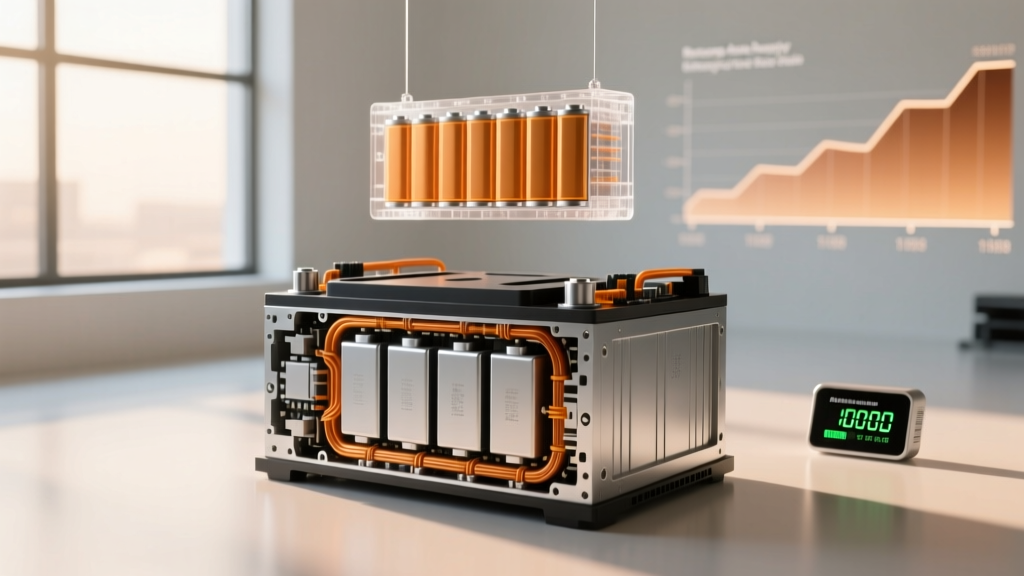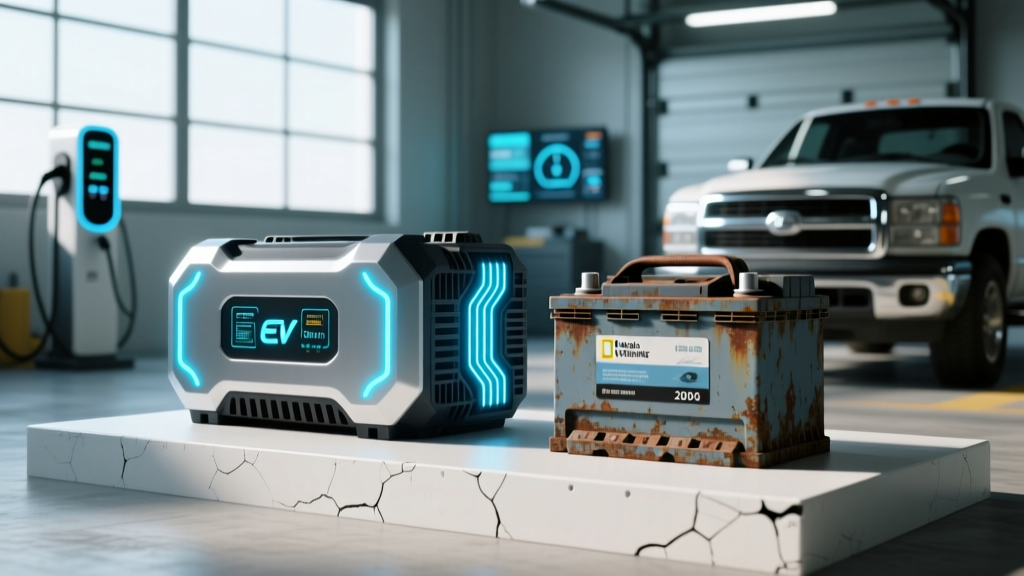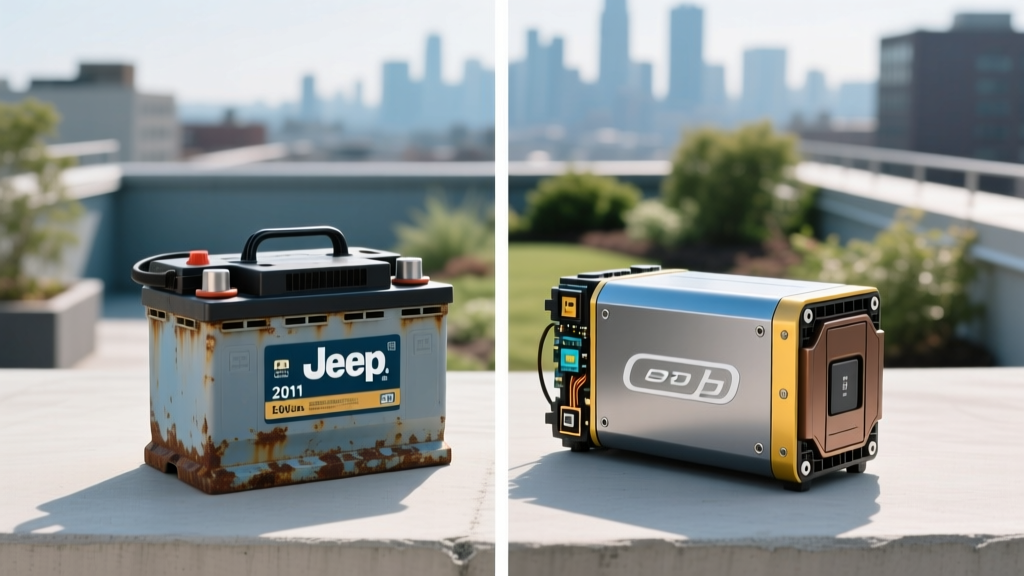
If you're shopping for an electric vehicle or already own one, the high-voltage traction battery is the single most expensive component in the car — and the one most shrouded in misinformation. Search "how do you recharge a battery" and you'll find forum posts predicting catastrophic $20,000 replacements at 80,000 miles. The reality, backed by millions of cumulative fleet miles, is far more encouraging: modern EV batteries routinely outlast the vehicles they power.
This guide breaks down exactly how EV batteries work, how they degrade, what warranties actually cover, and the daily habits that meaningfully extend battery life. We'll also compare the two dominant chemistries — LFP and NMC — and look at what's coming next.
How Long Do EV Batteries Actually Last?
The short answer: significantly longer than most buyers assume. Data from fleet operators, manufacturer reports, and independent testing consistently shows modern lithium-ion EV batteries retaining 85-90% of original capacity after 150,000 miles of typical use.
Here's what the real-world data shows across major platforms:
Typical Capacity Retention Over Time (Fleet & Owner Data):
- Tesla Model 3/Y (NMC/NCA, 2018-2024): ~88-90% capacity at 100,000 miles; ~85% at 150,000 miles (Tesla Impact Report 2023)
- Chevrolet Bolt EV/EUV (NMC, 2017-2023): ~90-92% capacity at 100,000 miles in temperate climates; slightly higher degradation in hot-climate fleet use
- Nissan Leaf (LMO/NMC, various): Earlier passive-cooled models (2011-2017) showed accelerated degradation in hot climates — 80% capacity as early as 60,000 miles. Active thermal management in newer models corrected this.
- Hyundai Ioniq 5 / Kia EV6 (NMC, 2022-2026): Early owner data suggests ~93-95% at 50,000 miles; projected 87-90% at 150,000 miles
- Tesla Model 3 Standard Range (LFP, 2021-2026): LFP chemistry shows minimal degradation — fleet data indicates 95%+ retention at 100,000 miles
The critical takeaway: battery degradation is not linear. Most capacity loss occurs in the first 20,000-30,000 miles (typically 3-5%), then the curve flattens dramatically. A battery that has lost 5% in year one is not on track to lose 25% by year five.
For context, the average American drives ~14,000 miles per year (FHWA data). A modern EV battery retaining 80%+ capacity at 200,000 miles will serve most owners for 14+ years of typical use — well beyond the point where other vehicle components (suspension, interior, electronics) dictate replacement.
LFP vs NMC: Which Battery Chemistry Is Right for You?
Not all EV batteries are the same. The two dominant cathode chemistries in 2026 passenger EVs are LFP (lithium iron phosphate) and NMC (nickel manganese cobalt) / NCA (nickel cobalt aluminum). Each has distinct trade-offs that affect range, longevity, cost, and daily usability.
| Attribute | LFP (Lithium Iron Phosphate) | NMC / NCA (Nickel-based) |
|---|---|---|
| Energy Density | Lower (~160-180 Wh/kg cell-level). Heavier pack for same kWh. | Higher (~220-280 Wh/kg cell-level). Lighter, more compact. |
| Cycle Life | 3,000-5,000+ cycles to 80% capacity | 1,000-2,000 cycles to 80% capacity |
| Calendar Life | Excellent — less prone to calendar degradation | Good, but degrades faster when stored at high SoC |
| Cold-Weather Performance | Weaker — more range loss below freezing (~35-40% loss) | Better cold performance (~25-30% loss below freezing) |
| Charging to 100% | Recommended regularly — no penalty for full charges | Best kept 20-80% daily; 100% only before trips |
| Cost | Lower — no cobalt or nickel; ~$80-100/kWh at pack level (2026) | Higher — commodity-dependent; ~$110-140/kWh at pack level (2026) |
| Thermal Stability | Superior — higher runaway threshold, inherently safer | Good with active thermal management; lower thermal runaway margin |
| SoC Estimation | Harder — flatter voltage curve makes % estimation less precise | Easier — steeper voltage curve allows accurate gauge |
| Common In (2026) | Tesla Model 3 RWD, Model Y RWD, BYD models, Ford Mustang Mach-E Select (standard range), base trims | Long-range and performance trims across most brands; Rivian, Lucid, Porsche, BMW |
The practical decision: If your daily driving is under 200 miles, you have home charging, and you live in a moderate climate, LFP is the superior longevity play — charge it to 100% daily and don't worry. If you need maximum range, tow frequently, or regularly face sub-freezing winters, NMC gives you the energy density and cold-weather usability you need — just respect the 80% daily charge limit.
What Does the EV Battery Warranty Actually Cover?
Federal law mandates a minimum battery warranty of 8 years / 100,000 miles for all EVs sold in the United States (10 years / 150,000 miles in California and states adopting CARB standards). But the details matter enormously.
| Manufacturer | Warranty Period | Capacity Threshold | Notes |
|---|---|---|---|
| Tesla (Model 3/Y RWD — LFP) | 8 yr / 100,000 mi | 70% retention | Standard warranty; covers defects + excessive degradation below threshold |
| Tesla (Model 3/Y LR & Performance) | 8 yr / 120,000 mi | 70% retention | Higher mileage cap for Long Range variants |
| Hyundai / Kia | 10 yr / 100,000 mi | 70% retention | Among the longest warranty periods in the industry |
| Ford (Mustang Mach-E) | 8 yr / 100,000 mi | 70% retention | Covers battery components and capacity loss below threshold |
| GM (Ultium-platform EVs) | 8 yr / 100,000 mi | 70% retention (60% on Bolt) | Bolt EV had 8yr/100k at 60% threshold; newer Ultium at 70% |
| Rivian | 8 yr / 175,000 mi | 70% retention | Highest mileage cap among major OEMs as of 2026 |
| BMW (iX / i4) | 8 yr / 100,000 mi | 70% retention | Standard across BMW EV lineup |
What's covered: Manufacturing defects, cell/module failures, and capacity degradation below the stated threshold. If your battery drops below 70% of original capacity within the warranty window, the manufacturer must repair or replace it at no cost.
What's typically NOT covered: Damage from accidents, improper charging equipment, modifications, or cosmetic issues. Gradual degradation that stays above the threshold (e.g., losing 25% over 9 years) is considered normal wear.
The reality check: Warranty claims for battery degradation are rare. The 70% threshold is conservative — most batteries never approach it within the warranty period. According to data from Recurrent Auto, fewer than 1.5% of EVs in their studied fleet required battery replacement under warranty.
How Much Does It Cost to Replace an EV Battery?
This is the question that keeps prospective buyers up at night. Let's ground it in actual numbers rather than worst-case headlines.
| Vehicle / Battery Size | Battery Capacity | Estimated Replacement Cost (2026) | Context |
|---|---|---|---|
| Tesla Model 3 RWD (LFP) | ~60 kWh | $12,000 - $16,000 | Full pack replacement; module-level repair possible at lower cost |
| Tesla Model Y Long Range | ~82 kWh | $14,000 - $20,000 | Varies by service center; out-of-warranty |
| Chevrolet Bolt EV | ~65 kWh | $14,000 - $16,000 | Post-recall replacement packs; GM pricing has stabilized |
| Hyundai Ioniq 5 | ~77.4 kWh | $15,000 - $22,000 | Dealer-dependent; independent shops emerging |
| Ford F-150 Lightning (Extended Range) | ~131 kWh | $25,000 - $35,000 | Largest consumer packs carry highest replacement cost |
| Porsche Taycan | ~93.4 kWh | $25,000 - $30,000+ | Premium brand labor + parts markup |
When is replacement actually needed? Almost never during the warranty period, and rarely before 200,000+ miles for modern chemistries. The batteries most likely to need replacement today are early-generation EVs (2011-2016 Nissan Leafs, early Chevy Sparks) with passive thermal management and older cell designs. For a 2024-2026 EV with active liquid cooling, the battery will likely outlast the vehicle's economic life.
Module-level repair is changing the math. Most modern packs are modular — a single degraded or failed module can be replaced for $2,000-$5,000 rather than swapping the entire pack. Independent EV repair shops are increasingly offering this service, driving costs down.
What Affects Battery Life? The Factors That Actually Matter
Battery degradation is driven by electrochemical stress. Here are the factors ranked by real-world impact, based on fleet data and lab research:
1. State of Charge Habits (High Impact)
Storing an NMC battery at 100% SoC for extended periods accelerates calendar degradation. The electrolyte oxidizes faster at high voltage. Best practice for NMC: Set daily charge limit to 80%; charge to 100% only when you'll drive immediately. For LFP: Charge to 100% regularly — LFP chemistry does not suffer the same high-SoC stress, and periodic full charges help the BMS calibrate.
2. Extreme Temperatures (High Impact)
Heat is the enemy of lithium-ion longevity. Batteries regularly exposed to ambient temperatures above 95°F (35°C) without adequate thermal management degrade faster. Cold doesn't cause permanent damage but temporarily reduces available capacity and slows charging. Best practice: Garage your EV when possible in hot climates; precondition the battery before fast-charging in cold weather.
3. DC Fast-Charging Frequency (Moderate Impact)
Exclusive reliance on DC fast charging (150-350 kW) causes more degradation than Level 2 home charging, primarily due to heat generation at high C-rates. However, the effect is smaller than commonly feared. Tesla's own fleet data shows vehicles that fast-charge >90% of the time retain only ~3-5% less capacity at 100,000 miles vs. primarily home-charged vehicles. Best practice: Use Level 2 (7-11 kW) for daily charging; DC fast charge on road trips without anxiety.
4. Depth of Discharge (Moderate Impact)
Regularly draining the battery to near 0% stresses cells more than partial cycles. Shallow cycles (e.g., 30-70% SoC) are gentler than deep cycles (5-95%). Best practice: Plug in when convenient rather than waiting for the battery to drop below 10%.
5. Time / Calendar Aging (Low-Moderate Impact)
All batteries degrade over time regardless of use, but modern chemistries age slowly. An EV driven 5,000 miles/year will still see ~1-2% annual degradation from calendar effects alone.
Daily Battery Care Checklist:
- ☐ NMC owners: Set charge limit to 80% for daily use
- ☐ LFP owners: Charge to 100% at least once per week for BMS calibration
- ☐ Plug in when convenient — avoid regularly dropping below 10% SoC
- ☐ Use Level 2 home charging as your primary method
- ☐ Precondition the battery before DC fast charging (most EVs do this automatically when you navigate to a charger)
- ☐ Park in shade or a garage during hot weather when possible
- ☐ If storing the EV for >2 weeks, leave it at ~50% SoC (NMC) or ~60-70% (LFP)
- ☐ Don't obsess — modern BMS systems actively protect the battery from worst-case scenarios
How to Check and Monitor Battery Health (State of Health)
State of Health (SoH) is the percentage of original capacity your battery currently holds. A new battery is 100% SoH; a battery that held 75 kWh when new and now holds 67.5 kWh is at 90% SoH.
Methods to check SoH:
- In-vehicle displays: Some manufacturers (BMW, Mercedes, Hyundai) show battery health percentage in the infotainment system or service menu. Tesla does not natively display SoH but shows estimated range at 100% charge, which you can compare to the original EPA rating.
- OBD-II diagnostics: Apps like Scan My Tesla, Leaf Spy (for Nissan Leaf), and Car Scanner can read BMS data directly via the OBD-II port, showing actual kWh capacity, cell voltage variance, and SoH percentage.
- Third-party services: Companies like Recurrent offer battery health reports based on connected vehicle data, providing fleet-benchmarked degradation curves for your specific model.
- Dealer diagnostic: Any authorized service center can run a full battery health report. Request this during routine service or before purchasing a used EV.
- Manual calculation: Charge to 100% (or your known limit), note the displayed range, and compare to the original EPA-rated range adjusted for your charge percentage. This is imprecise (range estimates fluctuate based on recent driving) but gives a rough SoH indicator.
For used-EV buyers: Always request a battery health report before purchase. A 2022 Model 3 Long Range showing 280 miles at 100% (vs. the original 358 EPA miles) would indicate ~78% SoH — below the 70% warranty threshold and potentially eligible for a warranty claim if within 8 years / 120,000 miles.
How Do You Recharge a Battery for Maximum Longevity?
The answer to "how do you recharge a battery" depends on your chemistry, your routine, and your climate. Here's the framework:
For NMC/NCA batteries (most long-range EVs):
- Set your daily charge limit to 80%.
- Use a Level 2 home charger (240V, 32-48 amps / 7.7-11.5 kW) as your primary charging method.
- Charge to 100% only when departing on a road trip — and drive shortly after reaching full charge rather than letting it sit.
- Precondition the battery before fast charging (set your navigation to the charging station, and most EVs will warm or cool the pack to optimal temperature automatically).
- Avoid leaving the car at very low (<10%) or very high (>90%) SoC for days at a time.
For LFP batteries (standard-range Teslas, BYD, select base trims):
- Charge to 100% at least once per week — Tesla and BYD both recommend this.
- LFP tolerates full-charge storage better than NMC, but still avoid leaving it at 100% for weeks without driving.
- Level 2 home charging remains optimal for longevity; DC fast charging is fine for road trips.
- Be aware that LFP's flatter voltage curve means the battery percentage gauge may be less precise — periodic 100% charges help the BMS recalibrate.
What's Next: Solid-State and Silicon-Anode Batteries
Several next-generation battery technologies are in development, but none are available in production consumer EVs as of 2026:
- Solid-state batteries: Replace the liquid electrolyte with a solid conductor, promising higher energy density (>400 Wh/kg), faster charging, and improved safety. Toyota has announced a solid-state EV for 2027-2028, and QuantumScape is working with Volkswagen, but mass production at competitive pricing remains 3-5+ years away for mainstream vehicles.
- Silicon-anode batteries: Replace graphite anodes with silicon, increasing capacity by 20-40%. Companies like Sila Nanotechnologies and Group14 are supplying silicon-dominant anode materials to manufacturers. The Mercedes G-Class electric (2025) uses a silicon-anode battery from Sila, but at premium pricing. Broader adoption is expected in 2027-2029 model years.
- Sodium-ion batteries: Use abundant sodium instead of lithium, dramatically reducing cost. CATL and BYD are producing sodium-ion cells for budget EVs in China. US availability is uncertain and likely limited to entry-level models if adopted.
The honest timeline: If you're buying an EV in 2026, current LFP and NMC chemistries are mature, well-understood, and backed by extensive warranty coverage. Waiting for solid-state means waiting at minimum until 2028-2029 for limited availability at premium pricing — and likely 2030+ for mainstream affordability.
Frequently Asked Questions
How long do EV batteries last in years and miles?
Modern EV batteries (2020 and later, with active thermal management) typically retain 85-90% of original capacity at 150,000 miles. In years, that translates to 10-15 years of average use before capacity drops below 80%. Many will outlast the vehicle itself. LFP chemistries show even stronger longevity, with fleet data suggesting 90%+ retention at 200,000 miles.
How much does an EV battery cost to replace?
Full pack replacement costs range from approximately $12,000 for a ~60 kWh pack (Tesla Model 3 RWD) to $35,000 for a ~131 kWh pack (Ford F-150 Lightning Extended Range). However, most batteries never need replacement during the vehicle's useful life, and module-level repairs ($2,000-$5,000) are increasingly available as a lower-cost alternative to full pack swaps.
What does the EV battery warranty cover?
All US-market EVs carry a minimum 8-year/100,000-mile battery warranty (10yr/150,000mi in CARB states). The warranty covers manufacturing defects and capacity degradation below a specified threshold — typically 70% of original capacity. If your battery drops below that threshold within the warranty period, the manufacturer replaces or repairs it at no cost. The warranty does not cover accident damage, misuse, or modifications.
How do I check my EV battery's health?
Options include: (1) In-vehicle battery health displays (available on some brands like BMW and Hyundai); (2) OBD-II diagnostic apps that read BMS data directly; (3) Third-party battery health reports from services like Recurrent; (4) Dealer diagnostics during service visits. For used-EV purchases, always obtain a battery health report before committing.
LFP vs NMC — which battery chemistry is better?
Neither is universally better — they serve different needs. LFP offers superior cycle life (3,000-5,000 cycles), lower cost, better thermal safety, and the convenience of regular 100% charging — ideal for daily commuting and moderate climates. NMC provides higher energy density (more range in a lighter pack), better cold-weather performance, and is used in long-range and performance trims. Choose LFP if you prioritize longevity and simplicity; choose NMC if you need maximum range or operate in cold climates.
Does fast charging damage my EV battery?
Exclusively DC fast-charging causes slightly more degradation than Level 2 charging — fleet data shows approximately 3-5% additional capacity loss at 100,000 miles for vehicles that fast-charge >90% of the time. This is a modest difference, not a catastrophic one. Modern battery management systems actively limit charge rates when the pack is cold or near full to protect cells. Use Level 2 at home for daily needs and fast charge on road trips without significant concern.
Should I be worried about battery replacement cost?
For a 2024-2026 EV with active thermal management, the probability of needing an out-of-warranty battery replacement is low. Battery degradation data consistently shows modern packs retaining >80% capacity well beyond 150,000 miles. Combined with 8-10 year warranties covering degradation below 70%, the financial risk is manageable — and declining pack costs ($80-140/kWh in 2026 vs. $400+/kWh in 2015) mean replacements will be cheaper in the future if ever needed.
For official warranty details on your specific vehicle, consult your owner's manual or the manufacturer's website. For tax credit eligibility on new EV purchases, review current IRS §30D guidelines, as income limits, MSRP caps, and battery-sourcing requirements apply and change periodically.