If you've ever typed "how many batteries does a Tesla have" into a search bar, you're not alone. The question sounds simple, but the answer depends entirely on what you mean by battery. Every Tesla rolling off the line in 2026 carries at least two energy-storage systems: a massive high-voltage traction battery that propels the car, and a 16V lithium-ion auxiliary battery that powers the lights, screens, and computers. Some older Model S and X vehicles shipped with a third, smaller 12V lead-acid unit before Tesla migrated the entire lineup to lithium aux packs.
This guide focuses on the one that actually matters to your wallet and your road-trip range: the high-voltage traction battery. We'll cover how Tesla's cell chemistry has evolved (LFP vs NMC/NCA), what real-world degradation looks like at 100,000+ miles, what the warranty actually covers, and what a replacement costs if you're unlucky enough to need one outside warranty.
The Two (Sometimes Three) Batteries in a Tesla
Let's clear up the count first:
- Traction battery (high voltage): 1 unit. This is the skateboard-mounted pack storing between 57.5 kWh (Model 3 RWD) and ~100 kWh (Model S/X) of usable energy. It powers the drive motors and is the "EV battery" everyone talks about.
- Auxiliary battery (low voltage): 1 unit. In 2026 models, this is a 16V lithium-ion pack (~96 Wh) that runs the vehicle electronics, door handles, and safety systems. Earlier Model S/X used a 12V lead-acill battery; Tesla phased those out around 2021-2022.
- Key fob / backup: Not part of the car, but worth noting — your key card and phone-as-a-key don't rely on the aux battery, which is why you can still unlock a "dead" Tesla.
For the rest of this article, "battery" means the high-voltage traction pack. The 16V aux is a ~$300-$500 service item with a 4-6 year typical lifespan and has nothing to do with range or degradation curves.
Inside the Pack: Cylindrical Cells, Not One Big Battery
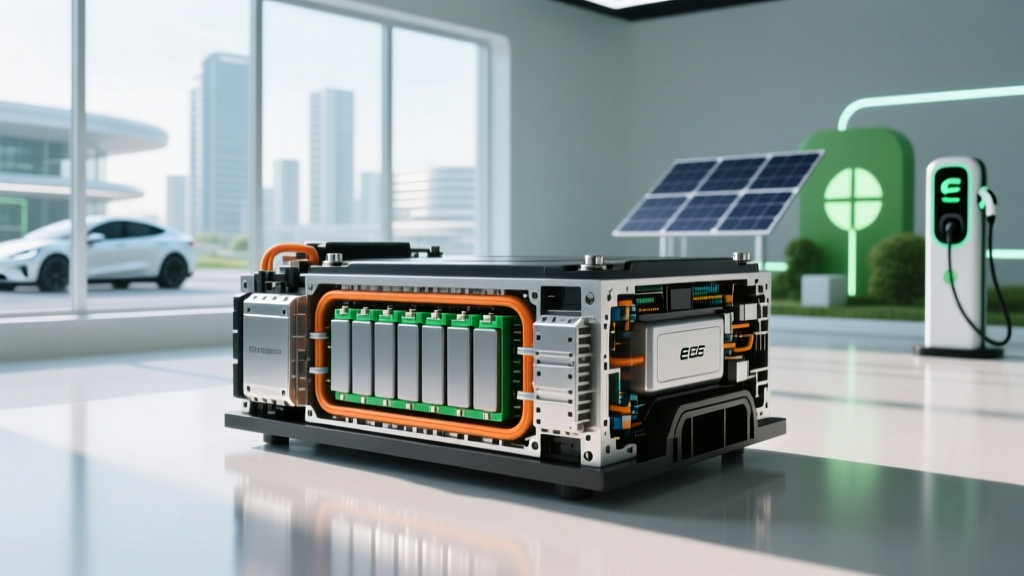
When people ask "how many batteries" they sometimes mean individual cells. A Tesla traction pack isn't one monolith — it's thousands of small cylindrical lithium-ion cells wired in series and parallel, grouped into modules and managed by a battery management system (BMS).
- Model 3 / Model Y (CATL LFP, RWD): ~2,000-3,000 prismatic or 2170 cylindrical cells depending on pack revision.
- Model 3 / Model Y Long Range & Performance: ~4,400 Panasonic 2170 NCA cells.
- Model S / Model X (2026): ~8,000+ 18650-format cells in the refreshed pack architecture.
- Cybertruck: Uses 4680-format structural cells, fewer in count but much larger per cell (~968 Wh each).
The BMS balances cell voltages, manages thermal conditions via the glycol cooling loop, and enforces top/bottom buffers — meaning you never actually touch 0% or 100% of the pack's gross capacity. A 75 kWh "usable" pack might have 82 kWh gross, with ~3.5% buffer at each end to prevent lithium plating and cathode damage.
LFP vs NMC/NCA: Tesla's Two Chemistry Families
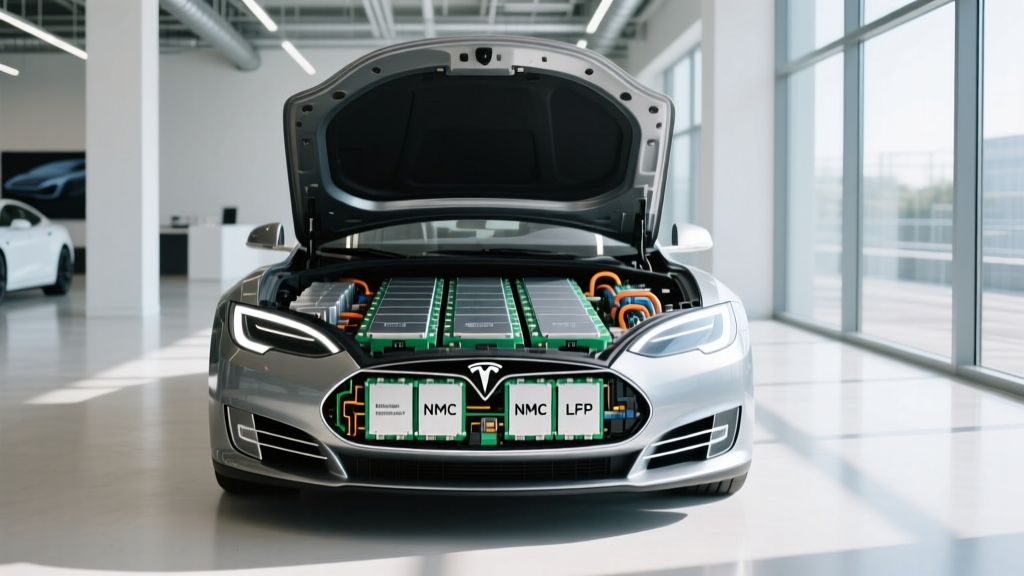
Tesla currently ships two distinct cathode chemistries depending on trim and market. Understanding which one is in your car dictates how you should charge, store, and think about longevity.
| Attribute | LFP (Lithium Iron Phosphate) | NMC / NCA (Nickel-based) |
|---|---|---|
| Used in (2026) | Model 3 RWD, Model Y RWD | Model 3 LR/Perf, Model Y LR/Perf, Model S/X, Cybertruck |
| Energy density | Lower (~160 Wh/kg cell) | Higher (~250-270 Wh/kg cell) |
| Typical pack size | 57.5-60 kWh usable | 75-100 kWh usable |
| Cycle life | 3,000-5,000+ full cycles | 1,500-2,500 full cycles |
| Cold-weather range loss | More pronounced (~35-40% at 20°F) | Moderate (~25-30% at 20°F) |
| Recommended daily SoC | 100% (Tesla recommends weekly 100% calibration) | 80% daily, 100% only for trips |
| Cost per kWh (pack level) | ~$90-110 | ~$130-160 |
| Cobalt content | Zero | Low (NCA) to moderate (NMC 811) |
| Thermal stability | Excellent (higher runaway threshold) | Good, but requires more active cooling |
The practical takeaway: If your daily commute is under 150 miles and you want the longest possible pack life with the lowest purchase price, the LFP-equipped RWD trims are hard to beat — you can charge to 100% every night without guilt. If you need 320+ miles of EPA range, tow frequently, or live in cold climates, the NMC/NCA Long Range packs give you more usable energy and better winter performance, but they demand disciplined 80% daily charging.
How Long Do Tesla Batteries Actually Last?
Tesla's 2025 Impact Report (the most recent full-year dataset available) reported that Model 3 and Model Y packs retain an average of 85% of original capacity after 200,000 miles. That's a 15% degradation figure across a sample of hundreds of thousands of vehicles — not lab extrapolation.
Real-world data from fleet operators like Tesloop and community datasets (TeslaFi, Recurrent Auto) paint a consistent picture:
Typical Tesla Traction Battery Degradation Curve
- Year 1 / 15,000 mi: ~3-5% loss (rapid initial SEI layer formation)
- Year 3 / 45,000 mi: ~7-9% total loss
- Year 5 / 75,000 mi: ~9-11% total loss
- Year 8 / 120,000 mi: ~12-15% total loss
- Year 12 / 200,000 mi: ~15-18% total loss (NMC); ~10-12% (LFP)
Source: Tesla Impact Reports, Recurrent Auto battery studies, fleet telemetry. Individual results vary with charging habits and climate.
Two patterns stand out. First, degradation is non-linear: the steepest drop happens in the first 20,000 miles, then the curve flattens dramatically. Second, LFP packs consistently show slower long-term fade than NMC/NCA, which is why CATL-supplied packs are popular in high-mileage fleet applications.
For context, the average American driver covers ~14,500 miles per year per FHWA data, meaning a 200,000-mile pack lifespan translates to roughly 14 years of typical use — longer than most owners keep their cars.
What Tesla's Battery Warranty Actually Covers
Tesla's limited battery warranty is one of the strongest in the industry, but the fine print matters. Coverage is split by model and chemistry:
| Model / Trim | Warranty Term | Mileage Cap | Minimum Capacity Retention |
|---|---|---|---|
| Model 3 RWD (LFP) | 8 years | 100,000 mi | 70% |
| Model 3 Long Range / Performance | 8 years | 120,000 mi | 70% |
| Model Y (all trims) | 8 years | 120,000 mi | 70% |
| Model S / Model X | 8 years | 150,000 mi | 70% |
| Cybertruck | 8 years | 120,000 mi | 70% |
What's covered: Defects in materials or workmanship, AND capacity loss below the 70% threshold within the term. If your 82 kWh pack measures below 57.4 kWh on Tesla's diagnostic tool before 120,000 miles, Tesla replaces or remanufactures it at no cost.
What's not covered: Damage from accidents, flooding, improper modifications, or using the pack as a stationary power source (V2H/V2G setups outside Tesla's approved Powerwall integration). Cosmetic corrosion and normal capacity fade above 70% are also excluded.
The 70% threshold is key: Tesla defines it against the pack's original nominal capacity, not the usable window. In practice, very few packs fall below 70% within the warranty window — most degradation claims that succeed involve defective modules or BMS faults, not gradual wear.
How Much Does a Tesla Battery Replacement Cost?
Out-of-warranty replacements are rare but expensive. Based on service invoices shared by owners and independent shops in 2025-2026, here's the realistic range:
| Model / Pack | Battery Size | Part Cost | Labor | Total Range |
|---|---|---|---|---|
| Model 3 RWD (LFP) | ~60 kWh | $8,000 - $11,000 | $1,500 - $2,500 | $9,500 - $13,500 |
| Model 3 / Y Long Range | ~75-82 kWh | $12,000 - $16,000 | $1,800 - $2,800 | $13,800 - $18,800 |
| Model S / X | ~100 kWh | $16,000 - $22,000 | $2,500 - $4,000 | $18,500 - $26,000 |
| Cybertruck (4680) | ~123 kWh | $18,000 - $25,000 | $3,000 - $4,500 | $21,000 - $29,500 |
Three important caveats. First, Tesla often installs remanufactured packs (refurbished with new modules) rather than brand-new ones, which reduces cost. Second, independent EV shops like Electrified Garage and Gruber Motors now offer third-party replacements at 20-35% below Tesla Service Center pricing. Third, module-level repair is sometimes possible — a single failed module can be replaced for $1,500-$3,000 rather than swapping the whole pack.
When is replacement actually needed? Almost never within the first 10 years for a privately owned car. The overwhelming majority of Tesla traction battery replacements happen after collision damage, coolant leaks causing internal corrosion, or high-mileage fleet use exceeding 250,000 miles.
Factors That Accelerate (or Preserve) Battery Life
Physics, not luck, determines how quickly your pack degrades. These are the variables you can control:
Battery Care Checklist for Tesla Owners
- State of charge habits: For NMC/NCA, keep daily SoC between 20-80%. For LFP, charge to 100% at least weekly to help the BMS calibrate cell voltages.
- DC fast charging: Occasional Supercharging (1-2x per week) has minimal measurable impact per Tesla's fleet data. Daily 250 kW Supercharging, especially at low SoC or in extreme heat, accelerates calendar aging. Use Level 2 home charging as your baseline.
- Temperature management: Always enable "Preconditioning" before Supercharging — the pack needs to reach ~95°F (35°C) to accept peak kW without lithium plating. In winter, plug in when parked so the car uses grid power, not battery energy, to stay warm.
- Storage: If leaving the car for 2+ weeks, set charge limit to 50% and keep it plugged in. Avoid 100% storage (accelerates cathode oxidation) and sub-10% storage (risks copper dissolution in the anode).
- Sentry Mode & vampire drain: Sentry Mode can consume 200-400 Wh per day. If you're parked unplugged for days, disable it to avoid cycling the pack through micro-discharges.
The single biggest myth in EV ownership is that fast charging "kills" batteries. Tesla's own data shows that vehicles Supercharging 3+ times per week degrade only ~1-2% more over 150,000 miles than those that exclusively Level-2 charge — a statistically real but practically small difference. Heat and high SoC are far bigger culprits than charge speed alone.
How to Check Your Tesla's Battery Health (SoH)
Tesla doesn't expose a clean "State of Health" percentage in the car's UI the way some competitors do, but you can triangulate it:
- Range method: Charge to 100% and note the displayed range. Compare it to the EPA sticker (e.g., Model 3 LR = 341 mi EPA). If your 100% display reads 300 mi on a 341-mi car, that's ~88% SoH. Caveat: the displayed range is a BMS estimate, not a direct measurement, and can drift.
- TeslaFi / Tessie app: Third-party apps that poll Tesla's API can track the "ideal range" metric over time and plot a degradation curve. TeslaFi's $5/month subscription is the gold standard for this.
- Service diagnostic: You can request a battery health check at a Tesla Service Center (mobile or in-shop). They run a controlled discharge test and report actual pack capacity in kWh. This is the most accurate method and is free under warranty.
- OBD-II dongles: Tools like the OBDeleven or Scan My Tesla app paired with a Bluetooth OBD reader can pull live BMS data including nominal full pack, buffer size, and cell voltage spread.
For used-EV buyers, a pre-purchase battery diagnostic is the single most valuable inspection you can pay for. A 2020 Model 3 with 60,000 miles showing 92% SoH is a far better buy than one with 40,000 miles showing 84% SoH — the latter likely sat at 100% in a hot climate or was frequently DC fast-charged from low SoC.
What's Next: Solid-State, Silicon Anodes, and Realistic Timelines
Several next-generation technologies are in development, but none are currently shipping in any Tesla or any mass-market EV as of early 2026:
- Solid-state batteries: Toyota, Samsung SDI, and QuantumScape have announced prototype cells promising 30-50% higher energy density and 10-minute fast charges. Toyota targets limited production in 2027-2028; widespread adoption is unlikely before 2030. Cost per kWh remains 3-4x current liquid-electrolyte cells.
- Silicon-dominant anodes: Companies like Sila Nanotechnologies and Group14 are shipping silicon-composite anodes in limited applications (Mercedes G-Wagen, select consumer electronics). These boost energy density ~20% but face swelling and cycle-life challenges at scale.
- 4680 dry-electrode cells: Tesla's own 4680 program, now in its third generation at Giga Texas, has largely solved early yield issues. Expect broader deployment across Model Y and a refreshed Model 3 in the 2027-2028 timeframe, with ~10-15% cost-per-kWh reduction versus 2170 cells.
- Sodium-ion: CATL has begun shipping sodium-ion packs in Chinese-market EVs. These are cheaper and cold-tolerant but have ~30% lower energy density — suitable for urban runabouts, not long-range Teslas.
For buyers today, these timelines mean the pack in your 2026 Tesla is already a mature, well-understood technology. Waiting for solid-state is a bit like waiting for a 400-mpg gas car — theoretically possible, commercially distant.
Frequently Asked Questions
How many batteries does a Tesla have total?
Two: one high-voltage traction battery (57-123 kWh depending on model) that drives the wheels, and one 16V lithium auxiliary battery that powers electronics. Older Model S/X used a 12V lead-acid auxiliary, now replaced with lithium.
How long do Tesla batteries last in years and miles?
Fleet data shows Tesla packs retain ~85% capacity at 200,000 miles, which translates to 14+ years at the US average of 14,500 miles/year. LFP packs in Model 3 RWD and Model Y RWD often show even slower fade, with some fleet units above 90% SoH at 150,000 miles.
How much does it cost to replace a Tesla battery?
Out-of-warranty, expect $9,500-$13,500 for a Model 3 RWD, $13,800-$18,800 for Model 3/Y Long Range, and $18,500-$26,000 for Model S/X. Remanufactured packs and independent shops can reduce these figures by 20-35%. In practice, most Teslas are retired or traded in before the pack needs replacement.
Is LFP better than NMC for a Tesla?
Neither is universally better. LFP wins on cycle life (3,000-5,000 cycles vs 1,500-2,500), cost, and daily charging flexibility (100% is fine). NMC wins on energy density (more range per pound), cold-weather performance, and high-speed charging headroom. Pick LFP for commuting and budget; pick NMC for road trips, towing, and cold climates.
Does Supercharging damage Tesla batteries?
Minimally. Tesla's fleet data shows heavy Supercharger users lose only 1-2% more capacity over 150,000 miles than Level-2-only users. The bigger risks are charging at high power when the pack is cold (causes lithium plating) or repeatedly charging to 100% on NMC packs. Always precondition before DC fast charging.
What voids the Tesla battery warranty?
Accident damage, flood/submersion, aftermarket modifications to the high-voltage system, using the pack as a grid-tied storage source outside Tesla's Powerwall integration, and salvage titles. Normal degradation is covered down to 70% of original capacity within the 8-year / 100,000-150,000 mile term.
Should I buy an extended battery warranty for a used Tesla?
Rarely. Tesla's 8-year factory warranty is already among the longest in the industry, and the failure rate outside warranty is low. Third-party extended warranties typically cost $3,000-$5,000 and come with extensive exclusions. A pre-purchase SoH check is a better investment.
Sources: Tesla Impact Reports, fueleconomy.gov for EPA range figures, FHWA annual mileage data, Recurrent Auto battery studies.