If you've ever typed "how many batteries in a Tesla" into a search bar, you're not alone — it's one of the most common questions from EV-curious shoppers. The short answer: one high-voltage traction battery pack, but that single pack contains thousands of individual lithium-ion cells wired together. And then there's a separate, smaller 12V or 16V auxiliary battery that powers the electronics. Understanding the difference — and what's actually inside that big pack under the floor — is the key to making an informed Tesla purchase.
This guide breaks down exactly how Tesla batteries are configured, what chemistry they use in 2026 models, how long they last based on real degradation data, what warranty coverage looks like, and what a replacement actually costs if you ever need one.
The One-Pack, Thousands-of-Cells Architecture
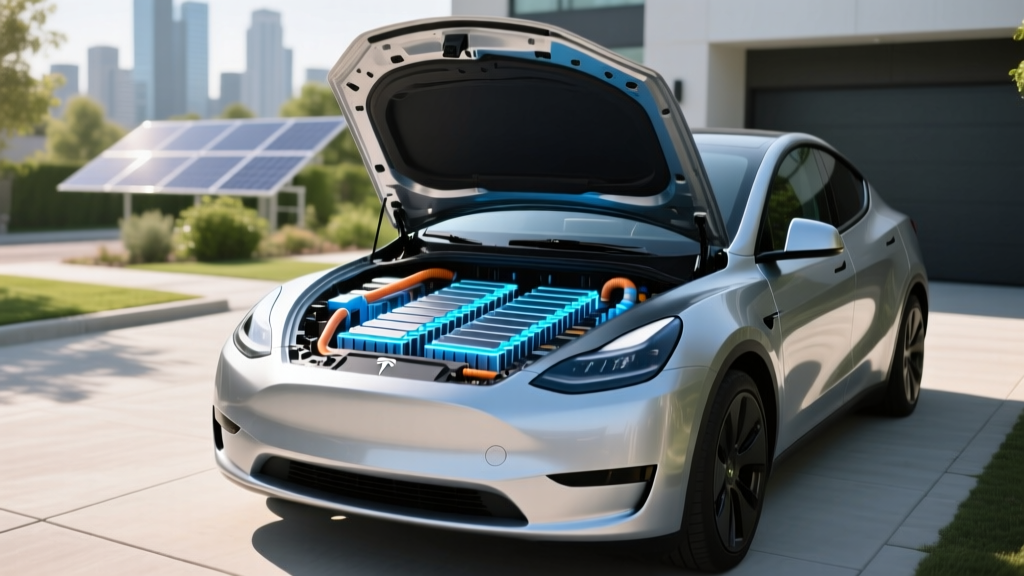
Every Tesla on the road today — Model 3, Model Y, Model S, Model X, and Cybertruck — uses a single high-voltage traction battery pack mounted beneath the vehicle floor. This is the energy source that drives the electric motors and determines your range. But "one battery" is a bit misleading in terms of internal complexity.
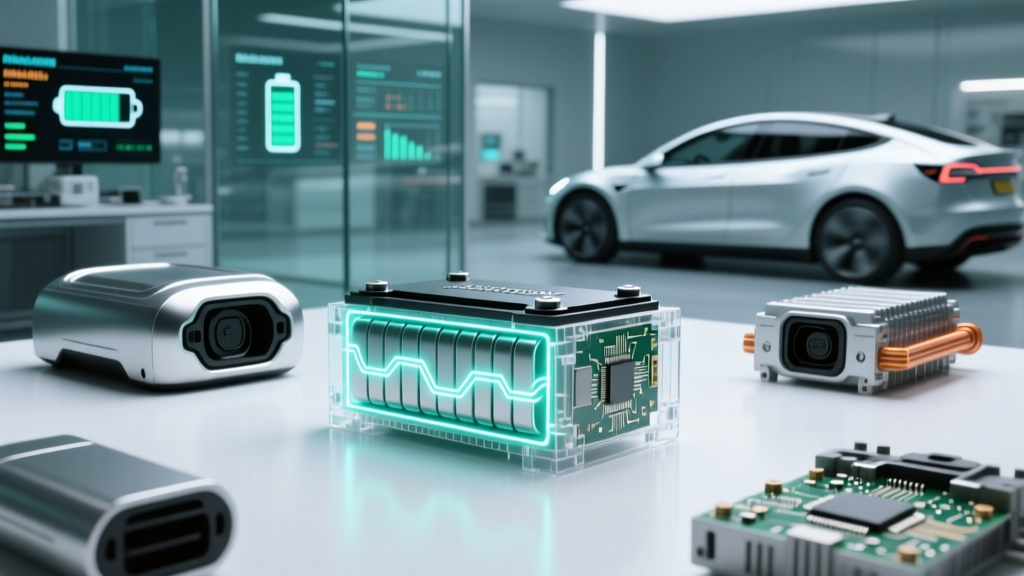
That single pack is an assembly of thousands of small cylindrical or prismatic cells, grouped into modules (or structural sections), managed by a sophisticated Battery Management System (BMS). Here's how the cell count breaks down by model and pack type:
| Model / Pack Type | Cell Form Factor | Approx. Cell Count | Usable Capacity (kWh) |
|---|---|---|---|
| Model 3 / Model Y RWD (LFP) | Prismatic (CATL) | ~200–300 large cells | ~57–60 kWh |
| Model 3 / Model Y Long Range (NMC/NCA) | 2170 cylindrical | ~4,416 cells | ~75–82 kWh |
| Model S / Model X (NCA) | 18650 cylindrical | ~7,104–8,256 cells | ~95–100 kWh |
| Cybertruck AWD / Cyberbeast | 4680 cylindrical | ~1,000–1,200 cells | ~123 kWh |
The older Model S and Model X use the small 18650 cells (similar in size to a AA battery), which is why they need so many. The Model 3 and Model Y Long Range switched to the larger 2170 format, reducing cell count while increasing per-cell energy. The Cybertruck uses Tesla's newest 4680 cells — much larger, fewer needed, and integrated into a structural pack that contributes to vehicle rigidity.
Tesla Battery Chemistry: LFP vs. NMC vs. NCA
Tesla uses different battery chemistries depending on the trim level, and this choice has real-world implications for range, charging habits, longevity, and cold-weather performance. In 2026, Tesla's lineup uses three primary chemistries:
- LFP (Lithium Iron Phosphate) — used in Model 3 and Model Y Rear-Wheel Drive (Standard Range) variants
- NMC (Nickel Manganese Cobalt) — used in some Long Range packs
- NCA (Nickel Cobalt Aluminum) — used in Model S, Model X, and Performance variants
| Factor | LFP (LiFePO₄) | NMC / NCA |
|---|---|---|
| Energy Density | Lower (~160 Wh/kg cell-level) | Higher (~250–300 Wh/kg cell-level) |
| Typical EPA Range | 272 mi (Model 3 RWD) | 341 mi (Model 3 LR), 402 mi (Model S) |
| Cycle Life | 3,000–5,000+ cycles | 1,000–2,000 cycles |
| Daily Charging Recommendation | Charge to 100% regularly | Tesla recommends 80% daily; 100% for trips |
| Cold-Weather Performance | More range loss in cold (~30–40%) | Better cold performance (~20–30% loss) |
| Cost | Lower (no cobalt or nickel) | Higher (cobalt/nickel commodity exposure) |
| Thermal Stability | Excellent — very low thermal runaway risk | Good — requires active thermal management |
| Best For | Daily commuters, high-mileage drivers, fleet use | Long-distance travelers, performance seekers |
So which is better? It depends on your use case. If you commute 30–50 miles daily and can charge at home every night, the LFP pack in the Model 3 RWD is arguably the smarter long-term play — you get superior cycle life, the ability to charge to 100% without worry, and a lower purchase price. If you regularly take road trips over 250 miles or live in a region with harsh winters, the NMC/NCA pack in a Long Range or Performance variant gives you the buffer you need.
How Long Do Tesla Batteries Actually Last?
This is the question behind the question. The good news: Tesla's high-voltage traction batteries are lasting significantly longer than early skeptics predicted. Based on Tesla's own Impact Reports and aggregated fleet data from sources like Recurrent Auto, here's what the data shows:
- After 50,000 miles: ~3–5% capacity loss (most vehicles retain 95–97% State of Health)
- After 100,000 miles: ~6–10% capacity loss (90–94% SoH)
- After 150,000 miles: ~10–14% capacity loss (86–90% SoH)
- After 200,000 miles: ~12–18% capacity loss (82–88% SoH)
The degradation curve is non-linear: the steepest loss occurs in the first 20,000–30,000 miles (~2–4%), then it flattens into a slow, gradual decline. Most Tesla packs are projected to retain above 80% capacity at 200,000 miles, which is beyond the typical ownership period for most buyers.
For context, the average American drives roughly 13,500 miles per year according to FHWA data. That means a Tesla battery could reasonably serve for 15–20 years before reaching 200,000 miles — and even at that point, it still holds 80%+ of its original capacity. For most owners, the car will be retired or sold long before the battery needs replacement.
What About LFP Longevity?
LFP packs show even slower degradation in early data. Because LFP chemistry tolerates 100% state-of-charge without the same stress that NMC/NCA experiences, and because LFP has a cycle life rated at 3,000–5,000+ cycles, these packs are expected to outlast even the generous projections above. Several high-mileage fleet operators report LFP Model 3 packs holding 95%+ capacity at 80,000 miles.
Tesla's Battery Warranty: What's Covered
Tesla's battery warranty is one of the most straightforward in the industry. Here's the breakdown for current 2026 models:
| Model | Warranty Period | Mileage Limit | Minimum Capacity Retention |
|---|---|---|---|
| Model 3 RWD (LFP) | 8 years | 100,000 miles | 70% |
| Model 3 Long Range / Performance | 8 years | 120,000 miles | 70% |
| Model Y (all trims) | 8 years | 120,000 miles | 70% |
| Model S / Model X | 8 years | 150,000 miles | 70% |
| Cybertruck | 8 years | 120,000 miles | 70% |
What this means in practice: If your Tesla's battery drops below 70% of its original capacity within the warranty period (whichever limit comes first — years or miles), Tesla will replace or refurbish the pack at no cost to you. This covers manufacturing defects and abnormal degradation. It does not cover damage from accidents, flooding, or modifications.
The 70% threshold is significant: at 70% capacity, a Model 3 Long Range that originally delivered 341 miles of EPA range would still offer ~239 miles — still very usable for daily driving. Most packs never reach this threshold during the warranty period based on current fleet data.
Tesla Battery Replacement Cost: What to Expect
While most Tesla batteries outlive the car's practical ownership window, replacement costs are a legitimate concern for used buyers and high-mileage drivers. Here's the current landscape for out-of-warranty replacements:
| Model | Battery Size (usable kWh) | Estimated Replacement Cost (Parts + Labor) | Typical Replacement Timeline |
|---|---|---|---|
| Model 3 RWD (LFP) | ~57–60 kWh | $10,000–$14,000 | Rarely needed before 250,000+ mi |
| Model 3 LR / Model Y LR | ~75–82 kWh | $13,000–$18,000 | Rarely needed before 200,000+ mi |
| Model S / Model X | ~95–100 kWh | $16,000–$22,000 | Some early packs replaced at 150,000–200,000 mi |
| Cybertruck | ~123 kWh | $18,000–$25,000 | Too new for real-world data |
These figures include the battery pack and Tesla service center labor. Independent EV shops can sometimes source refurbished packs for 20–30% less. It's worth noting that Tesla often replaces individual modules or cell groups rather than the entire pack when a fault is isolated, which can reduce costs significantly for out-of-warranty repairs.
The critical context: Battery replacement is rarely needed. According to Tesla's Impact Report data, fewer than 1.5% of Tesla vehicles have ever required a full battery replacement, and the vast majority of those were covered under warranty. For a 2026 buyer, the realistic scenario is that you will sell, trade, or retire the vehicle before a paid replacement becomes necessary.
Factors That Affect Tesla Battery Life
While Tesla's thermal management system is among the best in the industry, your habits still influence long-term battery health. Here's what the data shows matters most:
- Limit DC fast charging frequency: Occasional Supercharging is fine, but daily use of 250 kW DC fast charging accelerates degradation by ~1–3% over 100,000 miles compared to primarily Level 2 home charging. Use Superchargers for road trips; charge at home for daily needs.
- Follow the state-of-charge guidance for your chemistry: NMC/NCA owners should set daily charge limits to 80% and only charge to 100% when departing on a trip. LFP owners should charge to 100% at least once per week (Tesla recommends this for accurate BMS calibration).
- Avoid prolonged storage at extreme SoC: Don't leave an NMC/NCA vehicle sitting at 100% for days. If storing for a week or more, set the charge limit to ~50%.
- Use preconditioning: When navigating to a Supercharger, the Tesla automatically warms the battery for optimal charging. In cold weather, plug in and precondition before driving to reduce range loss and battery stress.
- Extreme heat is worse than extreme cold: Sustained ambient temperatures above 100°F (38°C) with frequent 100% charges cause more long-term degradation than cold weather. Tesla's active cooling mitigates this, but parking in shade or a garage helps.
- Don't obsess over regen braking settings: Regenerative braking does not meaningfully affect battery longevity. Use whatever setting you prefer for driving comfort.
How to Check Your Tesla's Battery Health
Tesla does not display a straightforward "State of Health" percentage in the vehicle's interface the way some competitors (like Hyundai or BMW) do. However, there are several ways to assess your pack's condition:
Method 1: The Range Calculation
Charge your Tesla to 100% (for LFP) or note the projected range at a known state of charge (for NMC/NCA, charge to 90% or 80% and divide accordingly). Compare the displayed range to the original EPA figure. A Model 3 Long Range that showed 341 miles when new but now shows 315 miles at 100% has experienced roughly 7.6% degradation.
Method 2: Third-Party Apps
Apps like TeslaFi, Tessie, and Stats (for iOS) pull data from Tesla's API and can estimate battery health over time by tracking your charge sessions, energy added, and displayed range at various SoC levels. These tools provide a more granular picture than the in-car display alone.
Method 3: Service Center Diagnostic
If you're evaluating a used Tesla or want a definitive answer, a Tesla Service Center can run a battery health diagnostic that reports actual usable capacity in kWh versus the original spec. This is the most authoritative measurement and is recommended before purchasing a high-mileage used Tesla out of warranty.
What's Next: Solid-State and Silicon-Anode Batteries
The battery technology landscape is evolving, but it's important to separate what's available now from what's on the horizon:
Silicon-anode batteries: Companies like Sila Nanotechnologies and Group14 are working on silicon-dominant anodes that could boost energy density by 20–40% over current graphite anodes. Tesla has shown interest, and limited silicon content already exists in some current cells. Expect incremental adoption through 2027–2029, primarily improving range per kWh rather than dramatically changing the ownership experience.
Solid-state batteries: Often hyped as the "holy grail," solid-state cells replace the liquid electrolyte with a solid conductor, promising higher energy density, faster charging, and improved safety. Toyota, Samsung SDI, and QuantumScape have announced prototype milestones, but no mass-production solid-state EV battery is available in any consumer vehicle as of 2026. Realistic volume production timelines point to 2028–2030 for premium applications, with mainstream adoption likely post-2030.
Sodium-ion batteries: CATL and other manufacturers are producing sodium-ion cells for lower-cost, lower-range applications. These could appear in future entry-level Tesla models as a cost-reduction strategy, though they offer lower energy density than both LFP and NMC.
For today's buyer, these emerging technologies are not a reason to wait. Current lithium-ion packs already deliver 200,000+ mile lifespans with manageable degradation, and the vehicles available now benefit from mature charging infrastructure and proven reliability.
Frequently Asked Questions
How many batteries does a Tesla have?
Two, technically: one large high-voltage traction battery pack (containing thousands of individual cells) that powers the motors and determines range, and one small low-voltage auxiliary battery (12V or 16V) that runs the electronics, lights, and computers. When people ask "how many batteries in a Tesla," they usually mean the traction pack — and that's just one unit.
How long do Tesla batteries last in years?
Based on fleet degradation data, Tesla's traction batteries are lasting 15–20+ years at average US driving rates (~13,500 miles/year). Most packs retain above 80% capacity at 200,000 miles. LFP packs may last even longer due to higher cycle-life ratings.
How much does it cost to replace a Tesla battery?
Out-of-warranty replacement costs range from roughly $10,000 for a Model 3 RWD LFP pack to $22,000+ for a Model S/X pack, including labor. However, fewer than 1.5% of Tesla vehicles have ever needed a full pack replacement, and most replacements are covered under the 8-year warranty.
What does Tesla's battery warranty cover?
Tesla warrants the traction battery for 8 years and 100,000–150,000 miles (depending on model) with a minimum 70% capacity retention guarantee. If the battery degrades below 70% within that period, Tesla replaces or refurbishes it at no charge. The warranty covers manufacturing defects and abnormal degradation but not accident damage or modifications.
Is LFP better than NMC for a Tesla?
Neither is universally better — they serve different needs. LFP offers longer cycle life (3,000–5,000+ cycles), lower cost, and the ability to charge to 100% daily without concern, making it ideal for commuters and high-mileage drivers. NMC/NCA provides higher energy density (more range in the same pack size) and better cold-weather performance, making it better for long-distance drivers and cold climates. If you need over 300 miles of EPA range, you'll need NMC/NCA. If 272 miles is sufficient, LFP is the more durable choice.
Does frequent Supercharging damage the battery?
Occasional Supercharging has minimal impact. However, exclusive reliance on DC fast charging (250 kW) rather than Level 2 home charging can accelerate degradation by an estimated 1–3% over 100,000 miles. Tesla's thermal management system actively cools the pack during fast charging to mitigate stress. For best long-term health, use Level 2 charging for daily needs and reserve Supercharging for road trips.
Can I check my Tesla battery health myself?
Yes, approximately. Charge to 100% (LFP) or a known percentage (NMC/NCA) and compare the displayed range to the original EPA figure. For more precise tracking, third-party apps like TeslaFi or Tessie log charge data and estimate State of Health over time. For a definitive measurement, a Tesla Service Center can run a diagnostic reporting actual usable kWh.
Sources: Tesla Impact Reports, fueleconomy.gov, Recurrent Auto battery research, Tesla Battery Warranty. Data reflects 2025–2026 model-year vehicles. Specifications and pricing subject to change.