Why "Running the Car" Won't Recharge an EV Battery
If you've ever had a dead 12V battery in a gas car, you've probably heard the advice: "just run the engine for 20 to 30 minutes and the alternator will recharge it." That logic works because internal-combustion vehicles use a belt-driven alternator to convert mechanical energy into electricity, topping off a small 12V lead-acid battery that powers the starter, lights, and accessories.
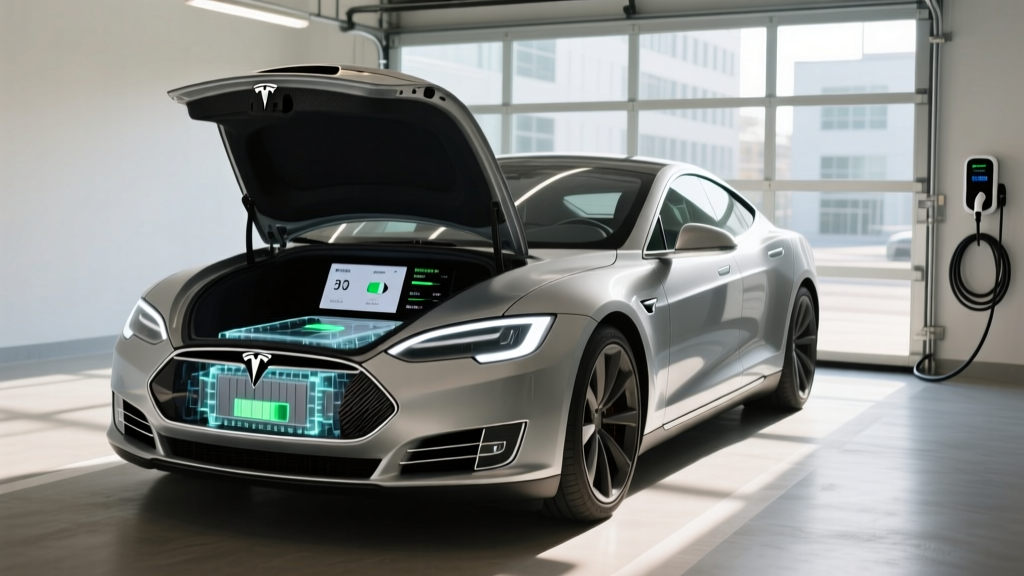
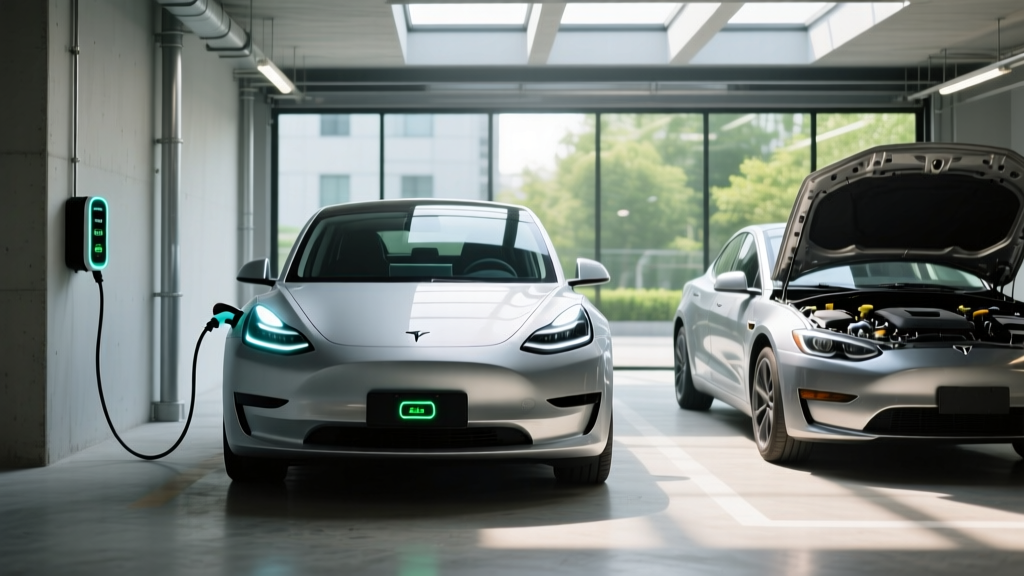
Electric vehicles flip this equation entirely. There is no alternator, no mechanical link between motion and battery replenishment. An EV's high-voltage traction battery—the large lithium-ion pack that actually propels the car—can only be recharged by plugging into an external power source (Level 1, Level 2, or DC fast charger) or through regenerative braking, which recovers a modest amount of energy during deceleration.
This distinction matters because the search query "how long to run a car to recharge battery" almost always comes from one of two scenarios:
- Scenario A: A gas-car owner with a dead 12V battery looking for the idle-time fix.
- Scenario B: A new EV owner wondering whether driving the car recharges the main battery (it doesn't—you plug it in).
For gas cars, idling for 20–30 minutes can partially recharge a depleted 12V battery via the alternator, though a dedicated battery tender is far more effective and healthier for the battery. For EVs, the high-voltage traction battery requires a plug. The only onboard mechanism that puts energy back into the pack is regenerative braking, which typically recovers 5–15% of energy on a typical drive cycle—not enough to meaningfully "recharge" but enough to extend range.
This article uses that question as a springboard into the topic that actually matters for EV owners and shoppers: how long EV batteries last, what degrades them, what the warranty covers, and what replacement costs look like in 2026.
The 12V Battery vs. the High-Voltage Traction Battery
Before going further, it's critical to separate the two batteries in most EVs:
- 12V auxiliary battery: A small lead-acid or lithium-iron-phosphate (LFP) battery that powers the vehicle's computers, door locks, lights, and safety systems when the main pack is disconnected. Some newer EVs (like certain Tesla and Hyundai models) use a 12V LFP unit or even draw from the main pack via a DC-DC converter, eliminating the separate 12V battery entirely.
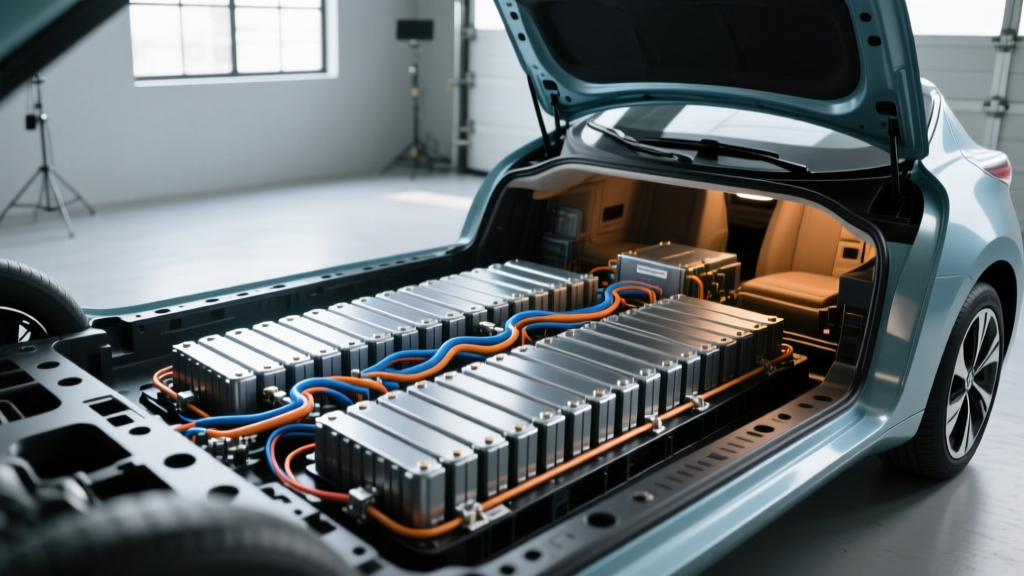
- High-voltage traction battery: The large pack (typically 50–100+ kWh) that powers the electric motors. This is the expensive, warrantied component that defines the vehicle's range and longevity.
When people ask about "recharging the battery by running the car," they're almost always referring to the 12V battery in a gas vehicle. In an EV, if the 12V battery dies, the car won't start—even if the main traction battery is fully charged. The fix is the same as any car: a jump-start or a dedicated 12V charger. Idling doesn't apply because EVs don't idle in the traditional sense; they're either on (drawing from the traction battery via the DC-DC converter) or off.
EV Battery Chemistry: LFP vs NMC/NCA Trade-Offs
The longevity and behavior of your EV's traction battery depend heavily on its chemistry. In 2026, two chemistries dominate the market:
| Attribute | LFP (Lithium Iron Phosphate) | NMC/NCA (Nickel Manganese Cobalt / Nickel Cobalt Aluminum) |
|---|---|---|
| Energy density | Lower (~160–180 Wh/kg cell-level) | Higher (~220–300 Wh/kg cell-level) |
| Typical cycle life | 3,000–5,000+ cycles | 1,000–2,000 cycles |
| Cold-weather performance | Weaker; more range loss below freezing | Better low-temp discharge capability |
| Cost per kWh | Lower (no cobalt or nickel) | Higher (commodity-sensitive) |
| Recommended daily SoC | 100% OK; benefits from periodic full charge for BMS calibration | 80% daily; 100% only for long trips |
| Thermal stability | Excellent; lower thermal runaway risk | Good but requires more active thermal management |
| Common 2026 applications | Tesla Model 3/Y RWD, Ford Mustang Mach-E Select (base), BYD models | Long-range and performance trims, Hyundai Ioniq 5/6, GM Ultium-based vehicles |
Which is better? It depends on your use case. If you want maximum range per charge, drive in cold climates frequently, or prioritize performance, NMC/NCA packs deliver higher energy density. If you plan to keep the vehicle 10+ years, charge to 100% daily without worry, and prioritize lower replacement cost, LFP is the stronger pick. According to IEA Global EV Outlook data, LFP market share in global EV sales surpassed 40% by 2025 and continues to grow, driven by cost and durability advantages.
How Long Do EV Batteries Actually Last?
The short answer: far longer than most buyers expect. Modern EV traction batteries are engineered to outlast the vehicle's useful economic life in most cases.
Here's what the data shows:
- Typical degradation: Most NMC-based EV batteries lose approximately 5–10% of original capacity in the first 50,000 miles, then degrade more slowly—roughly 1–2% per year or per 15,000–20,000 additional miles thereafter.
- LFP packs: Often show 3–5% loss over the same initial period, with slower long-term fade. Tesla's 2025 Impact Report noted that Model 3/Y LFP batteries retained approximately 92% of original capacity at 100,000 miles.
- Real-world fleet data: Geotab's longitudinal study of over 10,000 EVs found average annual degradation of approximately 1.8% across all chemistries, with significant variation based on climate and charging habits.
Degradation curve (typical NMC pack):
- Year 1 / 15,000 mi: ~2–3% loss (initial formation loss)
- Year 3 / 45,000 mi: ~5–7% total loss
- Year 5 / 75,000 mi: ~8–10% total loss
- Year 8 / 120,000 mi: ~12–15% total loss
- Year 10 / 150,000 mi: ~15–18% total loss (still above most warranty thresholds)
A vehicle with an EPA range of 300 miles when new would typically retain approximately 255–270 miles of range at 150,000 miles—still highly usable for daily driving.
Battery Warranty Terms: What's Covered and for How Long
Federal law mandates that EV batteries carry a minimum warranty of 8 years or 100,000 miles (whichever comes first) in most states, with California Air Resources Board (CARB) states requiring 10 years/150,000 miles. Most manufacturers exceed these minimums.
| Manufacturer / Model | Warranty Period | Mileage Cap | Capacity Retention Threshold |
|---|---|---|---|
| Tesla Model 3/Y (LFP) | 8 years | 100,000 mi (120,000 mi Long Range) | 70% |
| Hyundai Ioniq 5 | 10 years | 100,000 mi | 70% |
| Ford Mustang Mach-E | 8 years | 100,000 mi | 70% |
| Chevrolet Equinox EV / Blazer EV | 8 years | 100,000 mi | 60% (some trims 70%) |
| BMW i4 / iX | 8 years | 100,000 mi | 70% |
| Rivian R1T / R1S | 8 years | 175,000 mi | 70% |
What triggers a warranty claim? If your battery's usable capacity drops below the stated threshold (typically 70% of original) within the warranty period, the manufacturer will repair or replace the pack at no cost. In practice, very few EVs hit this threshold within the warranty window. According to fueleconomy.gov, the vast majority of EV batteries retain well above 70% capacity at the 8-year/100,000-mile mark under normal use.
What voids the warranty? Modifications to the battery management system, use of non-approved charging equipment that causes damage, physical damage from collisions or flooding, and failure to follow basic maintenance (like cooling system service) can void coverage. Normal degradation from proper use is always covered.
EV Battery Replacement Cost: What to Expect
This is the number-one fear for prospective EV buyers—and it's the area most distorted by headlines. Here are the facts for 2026:
| Vehicle | Battery Size (kWh) | Full Pack Replacement Cost (Parts + Labor) | Typical Replacement Trigger |
|---|---|---|---|
| Tesla Model 3 RWD (LFP) | ~60 kWh | $12,000–$16,000 | Rarely needed; most packs outlive the car |
| Hyundai Ioniq 5 | ~77.4 kWh | $14,000–$20,000 | Module-level repair often possible |
| Ford Mustang Mach-E (Extended Range) | ~91 kWh | $18,000–$25,000 | Covered under warranty if premature |
| Chevrolet Bolt EV (2022–2023 generation) | ~65 kWh | $10,000–$14,000 | Larger Ultium packs cost more |
| Rivian R1T (Large Pack) | ~128 kWh | $22,000–$30,000 | Module service preferred over full swap |
| Mercedes EQS | ~108 kWh | $25,000–$35,000 | Luxury segment premium |
Critical context: Battery replacement is rarely a sudden, catastrophic expense. Most packs degrade gradually, and many manufacturers now offer module-level repair—replacing only the degraded cell groups rather than the entire pack—for $2,000–$6,000. Additionally, battery prices continue to fall. BloombergNEF reported average pack prices below $120/kWh at the cell level in late 2025, down from over $200/kWh just a few years prior. By the time a replacement is actually needed (typically 15+ years out), costs will likely be significantly lower.
Most EV batteries are scrapped or recycled only when the vehicle itself is totaled or retired. Out-of-warranty full-pack replacement is uncommon in practice.
Factors That Accelerate (or Preserve) Battery Life
Battery degradation isn't just about age and mileage. How you charge, drive, and store your EV has a measurable impact on long-term health.
Best Practices for Maximizing EV Battery Longevity
- Limit DC fast charging: Frequent use of 150+ kW DC fast chargers generates heat and stress. Use Level 2 (7–19 kW) for daily charging and reserve DCFC for road trips. Research from the National Renewable Energy Laboratory (NREL) shows that exclusive DCFC use can increase degradation rates by 1.5–2x compared to Level 2 charging.
- Avoid extreme State of Charge: For NMC/NCA batteries, keep daily SoC between 20–80%. LFP batteries tolerate 100% better and benefit from periodic full charges for BMS calibration. Avoid leaving any EV parked at 100% SoC for extended periods (days/weeks).
- Manage temperature: Extreme heat is more damaging than cold. If you live in a hot climate, park in shade or a garage when possible. Precondition the battery while plugged in before fast charging or driving in extreme cold—this warms the cells and reduces stress.
- Don't let the battery sit at 0%: Storing an EV with a near-empty battery accelerates degradation. If storing for weeks, aim for 40–60% SoC.
- Use scheduled charging: Most EVs let you set a charge limit and schedule. Set it to finish charging just before you leave—this minimizes time spent at high SoC.
- Keep cooling systems maintained: Follow the manufacturer's service schedule for battery thermal management fluid replacement (typically every 4–5 years or 50,000–75,000 miles).
How to Check and Monitor Your Battery's State of Health
State of Health (SoH) is a percentage indicating how much capacity your battery retains compared to its original, new condition. Here's how to monitor it:
- In-vehicle displays: Many 2026 EVs (Tesla, Hyundai/Kia, BMW, Rivian) include a battery health indicator in the settings menu, showing estimated SoH or current maximum range compared to original.
- OBD-II diagnostic tools: Devices like the OBDLink MX+ paired with apps such as EV Health or Torque Pro can read the battery management system's reported SoH, cell voltage variance, and temperature data.
- Dealer diagnostics: Any authorized service center can pull a detailed battery health report. Request this during routine service visits, especially before the warranty expires.
- Third-party services: Companies like Recurrent Auto offer battery health reports based on connected vehicle data, often free for participating owners.
- Manual calculation: Track your vehicle's maximum displayed range at 100% SoC over time. If your new EV showed 310 miles at 100% and now shows 285 miles at 100% (adjusted for temperature), your approximate SoH is 285/310 = ~92%.
A healthy EV battery should show gradual, linear degradation—not sudden drops. If you notice a rapid loss of range (more than 5% over a few months under consistent conditions), schedule a diagnostic check, as this could indicate a defective module covered under warranty.
What's Next: Solid-State and Silicon-Anode Batteries
Looking ahead, two technologies promise to further extend battery life and reduce replacement concerns:
- Silicon-anode batteries: Companies like Sila Nanotechnologies and Amprius are commercializing silicon-dominant anodes that increase energy density by 20–40% over current graphite anodes. These are beginning to appear in limited production vehicles (the Mercedes G-Class 580e uses a silicon-anode pack from Amprius). Expect broader adoption by 2028–2030.
- Solid-state batteries: Toyota, Samsung SDI, and QuantumScape have announced solid-state prototypes promising 500+ mile ranges, 10-minute fast charging, and dramatically longer cycle life. However, mass production at automotive scale remains a challenge. Toyota has stated it aims for limited commercialization by 2027–2028, with volume production likely not before 2030.
These are forward-looking technologies not yet available in mainstream 2026 production vehicles. Current lithium-ion chemistries (LFP and NMC) remain the standard and are more than adequate for the typical vehicle lifespan.
Frequently Asked Questions
How long do you have to run a gas car to recharge a dead 12V battery?
Typically 20–30 minutes of driving (not just idling—higher RPMs generate more alternator output). However, a deeply discharged 12V battery is best recharged with a dedicated smart charger or battery tender over several hours. Repeated deep discharges shorten 12V battery life regardless of recharge method.
Does driving an EV recharge its main battery?
No. The traction battery only recharges from an external power source (plug) or through regenerative braking during deceleration, which recovers a small fraction of energy. You cannot "run" an EV to recharge its main battery—doing so depletes it further.
How long do EV batteries last in years and miles?
Most modern EV batteries retain 70–85% of original capacity at 150,000–200,000 miles (10–15 years). LFP chemistries tend to outlast NMC in cycle life. Many packs will remain functional for the entire useful life of the vehicle.
How much does it cost to replace an EV battery?
Full pack replacement ranges from approximately $10,000 for smaller packs (Chevrolet Bolt) to $30,000+ for large luxury packs (Rivian, Mercedes EQS). However, module-level repairs ($2,000–$6,000) are often possible, and most batteries never need full replacement. Prices continue to decline year over year.
What does the EV battery warranty cover?
Federal minimum is 8 years/100,000 miles; CARB states require 10 years/150,000 miles. Coverage applies if the battery degrades below a stated capacity threshold (typically 70% of original). Manufacturing defects, premature degradation, and module failures are covered. Physical damage and improper modifications are not.
LFP or NMC—which battery chemistry should I choose?
Choose LFP if you want longer cycle life, lower cost, daily 100% charging capability, and plan to keep the car 10+ years. Choose NMC if you need maximum range, live in a very cold climate, or prioritize performance. Both chemistries are reliable and will outlast the vehicle in most cases.
How do I check my EV battery's State of Health?
Use the vehicle's built-in battery health display (if available), an OBD-II scanner with an EV-compatible app, a dealer diagnostic report, or track your maximum displayed range at 100% SoC over time and compare to the original EPA range figure.