If you've searched "how long to run car to charge battery" and landed on an EV guide, you're likely asking one of two very different questions: either your 12-volt auxiliary battery died and you want to recharge it by driving, or you're a new EV owner wondering how the high-voltage traction battery recharges itself. These are fundamentally separate systems, and conflating them leads to bad decisions — and potentially a stranded vehicle.
This guide addresses both, then goes deep on the topic that actually matters for EV ownership: how long the high-voltage traction battery lasts, what degrades it, what the warranty covers, and what replacement actually costs in 2026.
The Two Batteries in Every EV: Traction vs. 12V Auxiliary
Every battery-electric and plug-in hybrid on the road carries two batteries:
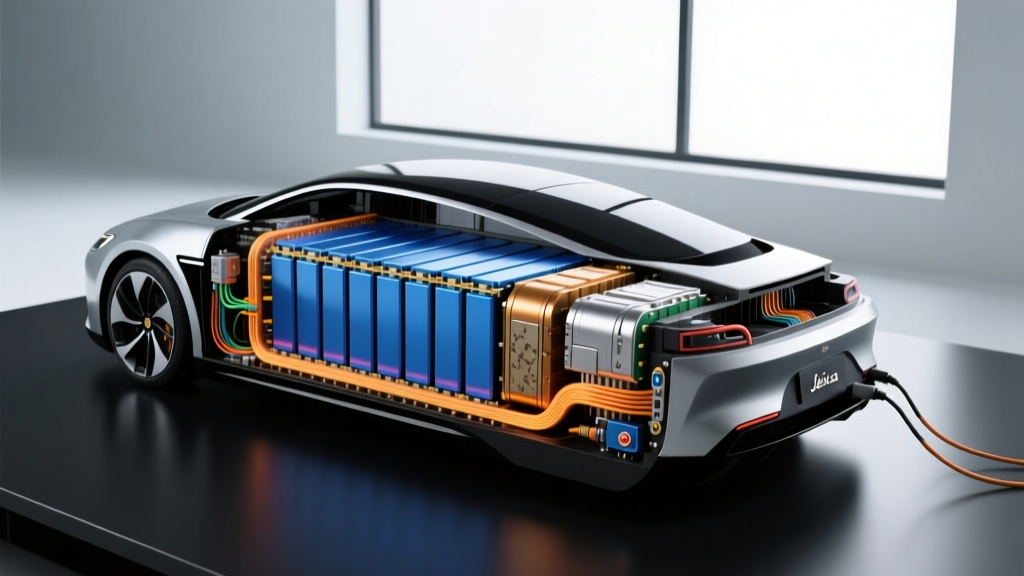
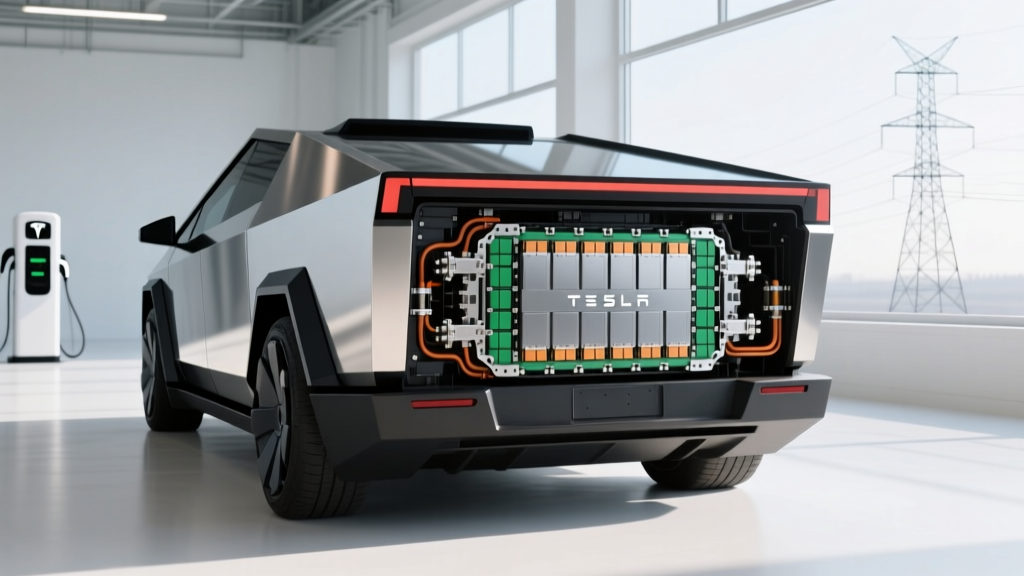
- High-voltage traction battery: Typically 40–150 kWh of usable capacity at 400V or 800V. This powers the electric motor(s) and determines your driving range.
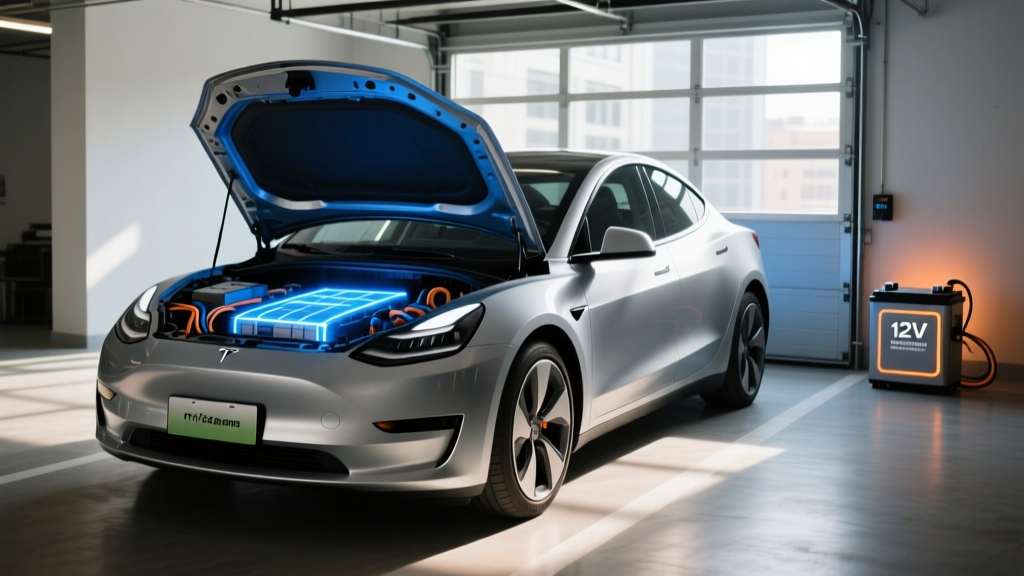
- 12V auxiliary battery: A small lead-acid or lithium-ion pack (usually under 1 kWh) that runs the lights, infotainment, door locks, and — critically — the contactors that close the circuit to the main pack.
When people ask "how long to run car to charge battery," they're almost always dealing with a dead 12V system. Here's the answer: in a conventional gas car, 20–30 minutes of highway driving will put a meaningful charge back into a 12V battery via the alternator. In an EV, the DC-DC converter performs the same job — stepping down high-voltage DC to 12V — and it charges the auxiliary battery whenever the car is in READY mode, whether you're moving or parked with climate control on.
Battery Chemistry: LFP vs. NMC/NCA Trade-Offs
The chemistry inside your EV's traction pack determines its energy density, lifespan, cold-weather behavior, and cost. In 2026, two dominant chemistries cover nearly every new EV sold in the U.S.:
| Attribute | LFP (Lithium Iron Phosphate) | NMC/NCA (Nickel Manganese Cobalt / Nickel Cobalt Aluminum) |
|---|---|---|
| Energy Density | Lower (~160–180 Wh/kg cell-level) | Higher (~250–300 Wh/kg cell-level) |
| Cycle Life | 3,000–5,000+ cycles to 80% SoH | 1,000–2,000 cycles to 80% SoH |
| Cold Performance | Weaker; ~15–25% range loss below 32°F | Better; ~10–18% range loss below 32°F |
| Cost per kWh | Lower ($90–$115/kWh pack-level in 2026) | Higher ($120–$155/kWh pack-level in 2026) |
| Max SoC Charging | Can charge to 100% daily without accelerated degradation | Best kept 20–80% for daily use; 100% only for trips |
| Thermal Stability | Superior; much lower thermal runaway risk | Good with active thermal management, but higher runaway risk |
| Common Applications | Tesla Model 3/Y RWD, base Ford Mustang Mach-E, standard-range models | Long-range and performance trims, most luxury EVs, Rivian, Lucid |
Which is better? It depends on your use case. LFP is the clear winner for daily commuting, cost-conscious buyers, and anyone who wants the simplicity of charging to 100% every night. NMC/NCA wins for maximum range, cold-climate drivers, and performance applications where energy density matters. According to data compiled by the International Energy Agency, LFP's global market share in passenger EVs surpassed 40% in 2025 and continues climbing as automakers adopt it for standard-range trims.
How Long Do EV Batteries Actually Last?
The short answer: most modern EV traction batteries will outlast the car they're installed in under normal ownership patterns. But "last" needs defining — a battery doesn't suddenly die like a light bulb; it gradually loses capacity.
Real-World Degradation Data
Based on aggregated fleet data from sources including Recurrent Auto and Geotab's longitudinal studies, here's what typical degradation looks like for liquid-cooled packs in 2020–2026 model-year EVs:
| Milestone | Average Capacity Retained (NMC) | Average Capacity Retained (LFP) |
|---|---|---|
| 1 year / 15,000 mi | 96–98% | 97–99% |
| 3 years / 45,000 mi | 92–95% | 95–98% |
| 5 years / 75,000 mi | 88–93% | 92–96% |
| 8 years / 120,000 mi | 82–88% | 88–94% |
| 10 years / 150,000 mi | 78–85% | 85–92% |
A few patterns emerge: degradation is fastest in the first year (typically 2–4% loss), then flattens into a slow linear decline. LFP packs consistently show slower degradation than NMC, particularly when regularly charged to 100%. The average U.S. driver covers about 13,500 miles per year (per FHWA data), meaning most owners will sell or trade the vehicle long before the pack reaches 80% capacity.
When Is Replacement Actually Needed?
A traction battery is generally considered "failed" when it drops below 70–80% of original capacity — the threshold where range loss becomes practically noticeable. Based on current degradation curves, this threshold is rarely reached before 150,000–200,000 miles on liquid-cooled NMC packs, and potentially 250,000+ miles on LFP. Catastrophic failures (cell shorts, manufacturing defects) do occur but are covered under warranty and remain statistically rare — well under 2% of vehicles in major fleet studies.
What the Battery Warranty Actually Covers
Federal law mandates a minimum EV battery warranty of 8 years or 100,000 miles (whichever comes first) in most states, and 10 years or 150,000 miles in California Air Resources Board (CARB) states including California, New York, Massachusetts, Oregon, Washington, and others adopting CARB standards. Here's what major manufacturers offer as of 2026:
| Manufacturer | Warranty Period | Capacity Threshold | Notes |
|---|---|---|---|
| Tesla (Model 3/Y RWD — LFP) | 8 yr / 100,000 mi | 70% retention | Standard range trims |
| Tesla (Model 3/Y LR/Perf — NMC) | 8 yr / 120,000 mi | 70% retention | Long Range and Performance |
| Hyundai / Kia | 10 yr / 100,000 mi | 70% retention | Among the longest coverage |
| Ford (Mach-E, F-150 Lightning) | 8 yr / 100,000 mi | 70% retention | Covers components and capacity |
| GM (Ultium-based: Equinox EV, Blazer EV, Silverado EV) | 8 yr / 100,000 mi | 70% retention | Some trims offer extended options |
| Rivian | 8 yr / 175,000 mi | 70% retention | Higher mileage cap for adventure use |
| BMW / Mercedes-Benz | 8 yr / 100,000 mi | 70% retention | Standard luxury-EV terms |
What's covered: Capacity loss below the stated threshold, manufacturing defects, and component failures within the battery system (modules, BMS, cooling). What's typically NOT covered: Damage from accidents, improper charging (e.g., using non-certified equipment that causes surges), neglect of thermal management system maintenance, or cosmetic issues. Always read the specific warranty booklet — terms vary, and some manufacturers prorate coverage in later years.
EV Battery Replacement Cost: What to Expect
If your battery fails outside warranty — or you're buying a used EV with a degraded pack — replacement is the big fear. Here's the 2026 reality:
| Vehicle / Pack Size | Battery Cost (Parts) | Labor | Total Estimated Range |
|---|---|---|---|
| Nissan Leaf (40–62 kWh) | $6,500–$9,000 | $1,500–$2,500 | $8,000–$11,500 |
| Tesla Model 3 Standard Range (~60 kWh LFP) | $7,000–$10,000 | $2,000–$3,000 | $9,000–$13,000 |
| Tesla Model Y Long Range (~75 kWh NMC) | $10,000–$14,000 | $2,000–$3,500 | $12,000–$17,500 |
| Ford Mustang Mach-E Extended Range (~91 kWh) | $12,000–$16,000 | $2,500–$4,000 | $14,500–$20,000 |
| Ford F-150 Lightning Extended Range (~131 kWh) | $18,000–$25,000 | $3,000–$5,000 | $21,000–$30,000 |
| GMC Hummer EV (~212 kWh) | $30,000–$40,000 | $4,000–$6,000 | $34,000–$46,000 |
These numbers look steep, but context matters. Pack-level battery prices have fallen roughly 90% since 2010 (from over $1,200/kWh to roughly $100–$140/kWh in 2026), and they continue declining. More importantly, the vast majority of EV batteries never need replacement during typical ownership. A 2025 study by Recurrent Auto found that fewer than 1.5% of EVs in their dataset of 15,000+ vehicles required a battery swap. The fear of a $20,000 surprise bill is real but statistically unlikely to materialize for a first or second owner.
Factors That Accelerate (or Preserve) Battery Life
Your battery's lifespan isn't fixed — it's heavily influenced by how you charge, drive, and store the vehicle. Here's what the data shows:
- Daily charging limit: Set to 80% for NMC/NCA packs; LFP packs can be charged to 100% daily without concern.
- DC fast charging: Occasional use (road trips) is fine. Daily DCFC sessions accelerate degradation by an estimated 1–3% over 5 years vs. Level 2 charging, due to sustained high cell temperatures.
- Extreme heat: Prolonged exposure above 95°F accelerates chemical aging. Park in shade or a garage when possible; precondition while plugged in.
- Extreme cold: Cold doesn't permanently damage the battery, but charging a frozen pack without preconditioning can cause lithium plating. Always precondition before charging in sub-freezing temperatures.
- Storage: If the car sits unused for weeks, store at 40–60% SoC. Avoid storing at 100% or below 10%.
- Regen braking: Using regen is fine — it does not harm the battery. The BMS manages charge acceptance rates.
The single most impactful habit: avoid keeping NMC/NCA batteries at 100% SoC for extended periods. A pack sitting at full charge in hot weather degrades measurably faster than one held at 50–80%. Most EVs allow you to set a charge limit in the app or infotainment system — use it.
Monitoring Your Battery's State of Health (SoH)
State of Health (SoH) is the percentage of original capacity your pack can still hold. Here's how to check it:
- In-car displays: Tesla shows battery health in the service menu (accessible via the touchscreen). Hyundai/Kia includes an SoH readout in the EV settings on newer models. BMW provides a battery health certificate on request.
- OBD-II tools: Devices like the OBDLink SX paired with apps such as EVBatMon or Car Scanner can read the BMS-reported SoH directly from the CAN bus. Accuracy varies by vehicle, but readings are generally within 1–2% of dealer diagnostics.
- Dealer diagnostics: Most service centers can run a full battery health report. Request one before purchasing a used EV — it's the single most important pre-purchase check.
- Manual calculation: Charge to 100%, note the displayed range, and compare to the original EPA-rated range. If your 310-mile EPA vehicle now shows 260 miles at full charge, that's roughly 84% SoH (adjusting for the fact that displayed range estimates fluctuate with driving habits).
For used-EV buyers, SoH is the metric that matters more than mileage. A 60,000-mile car with 94% SoH is a better buy than a 30,000-mile car at 88% SoH — the latter likely saw frequent DC fast charging, extreme-temperature storage, or consistent 100% charge holds.
What's Next: Solid-State and Silicon-Anode Batteries
Two technologies dominate the "next generation" conversation, but neither is available in production EVs as of early 2026:
Solid-state batteries replace the liquid electrolyte with a solid ceramic, polymer, or sulfide material. The promise: higher energy density (potentially 400–500 Wh/kg at the cell level), faster charging, and dramatically improved safety. Toyota, Samsung SDI, and QuantumScape have all announced pilot production timelines in the 2027–2030 window, but commercial availability in mass-market vehicles remains estimated at 2028–2032 at the earliest. Manufacturing scale-up and cost reduction are the primary bottlenecks.
Silicon-anode batteries replace or supplement the graphite anode with silicon, which can store roughly 10x more lithium ions per gram. Companies like Sila Nanotechnologies and Group14 are supplying early production cells, and the Mercedes-Benz G-Class electric (announced for 2025–2026) was among the first to feature silicon-anode chemistry. Expect incremental adoption through the late 2020s, primarily in premium vehicles where cost per kWh is less constraining.
Neither technology changes the buying decision today. Current lithium-ion packs — both LFP and NMC — are proven, well-warrantied, and improving incrementally every model year. Waiting for solid-state is waiting for a technology that, even when it arrives, will debut at a steep premium in limited-production vehicles.
Frequently Asked Questions
How long do I need to run my EV to charge the 12V auxiliary battery?
If your 12V battery is low (but not completely dead), putting the car in READY mode for 20–30 minutes — whether driving or stationary — allows the DC-DC converter to replenish it. If the 12V is completely dead, you'll need a jump-start or a dedicated 12V charger first; the DC-DC converter can't boot without minimum 12V voltage to close the high-voltage contactors.
Does regenerative braking charge the main battery while driving?
Yes — regen braking recovers kinetic energy and feeds it back into the traction battery. However, this doesn't add net energy; it merely recovers a portion (typically 15–25%) of what you used to accelerate. You cannot "self-charge" an EV through driving alone — the energy must ultimately come from the grid via plug-in charging.
Is it bad to charge my EV to 100% every night?
For LFP batteries: no, it's actually recommended. Tesla and Ford both advise LFP owners to charge to 100% at least weekly to help the BMS calibrate. For NMC/NCA batteries: yes, holding at 100% nightly accelerates degradation. Set your charge limit to 80% for daily use and only charge to 100% before long trips.
How much does it cost to charge an EV battery from empty to full?
At the U.S. average residential electricity rate of roughly $0.16/kWh (per EIA 2025 data), fully charging a 75 kWh pack costs about $12. A 100 kWh pack costs about $16. Public DC fast charging is typically 2–4x more expensive at $0.30–$0.60/kWh depending on the network and time of day.
Will my EV battery need replacing before I sell the car?
Statistically, very unlikely. With average ownership lasting 6–8 years and average annual mileage around 13,500 miles, most owners accumulate 80,000–110,000 miles — well within both the warranty period and the battery's practical lifespan. Out-of-warranty replacements are overwhelmingly a concern for third or fourth owners of high-mileage vehicles.