If you're researching how long a hybrid battery can last — whether for a conventional hybrid (HEV), plug-in hybrid (PHEV), or full battery-electric vehicle (BEV) — the short answer is reassuring: modern traction batteries routinely outlast the vehicles they power. But the real answer depends on chemistry, usage patterns, climate, and how aggressively you charge. This guide breaks down the data, warranty protections, replacement economics, and care strategies every electrified-vehicle owner or buyer needs to know.
How Long Do Hybrid and EV Batteries Actually Last?
The high-voltage traction battery in a hybrid or EV is engineered for longevity far beyond consumer electronics. Based on warranty data, fleet telemetry, and independent testing, here's what the numbers show:
- HEV (e.g., Toyota Prius, Honda Accord Hybrid): 150,000–250,000+ miles (10–15+ years). Toyota's nickel-metal hydride (NiMH) and newer lithium-ion packs have demonstrated exceptional durability, with many original Prius batteries surpassing 200,000 miles.
- PHEV (e.g., Toyota RAV4 Prime, Jeep Wrangler 4xe): 120,000–200,000 miles (10–15 years). Smaller batteries cycled more frequently see slightly faster wear, but federal warranty mandates protect owners.
- BEV (e.g., Tesla Model Y, Hyundai Ioniq 5): 200,000–300,000+ miles (15–20+ years). Larger packs with advanced thermal management degrade more slowly in percentage terms.
A Consumer Reports analysis of long-term ownership data found that hybrid battery replacement before 150,000 miles is now rare, and most failures cluster in early-production models rather than current-generation vehicles. Fleet data from Recurrent Auto, which tracks over 15,000 EVs, shows median battery degradation at roughly 5–8% after 100,000 miles for modern BEVs.
- Year 1 / 15,000 mi: ~2–3% capacity loss (initial formation)
- Year 3 / 45,000 mi: ~5–6% total loss
- Year 5 / 75,000 mi: ~7–9% total loss
- Year 8 / 120,000 mi: ~10–12% total loss
- Year 10 / 150,000 mi: ~12–15% total loss
Understanding Battery Chemistry: LFP vs. NMC vs. NiMH
Not all hybrid and EV batteries are created equal. The chemistry inside the cells determines energy density, cycle life, cost, and cold-weather behavior. Here's how the three main chemistries compare in 2026:
| Attribute | NMC / NCA (Lithium Nickel Manganese Cobalt / Nickel Cobalt Aluminum) |
LFP (Lithium Iron Phosphate) |
NiMH (Nickel-Metal Hydride) |
|---|---|---|---|
| Used In | Most BEVs, many PHEVs | Tesla Model 3/Y Standard Range, Ford Mustang Mach-E Select, BYD models | Older HEVs (early Prius), some current HEVs |
| Energy Density | High (200–300 Wh/kg) | Moderate (140–180 Wh/kg) | Low (60–120 Wh/kg) |
| Cycle Life | 1,000–2,000 full cycles | 3,000–5,000+ full cycles | 500–1,000 full cycles |
| Cold Performance | Better (with preconditioning) | Weaker below 32°F; needs more preconditioning | Moderate |
| Degradation Rate | Moderate (~2% / year typical) | Slow (~1–1.5% / year typical) | Moderate to high |
| Cost | Higher (cobalt, nickel) | Lower (iron, phosphate — no cobalt) | Low |
| Best For | Maximum range, cold climates | Longevity, daily commuting, cost savings | Budget HEVs, proven reliability |
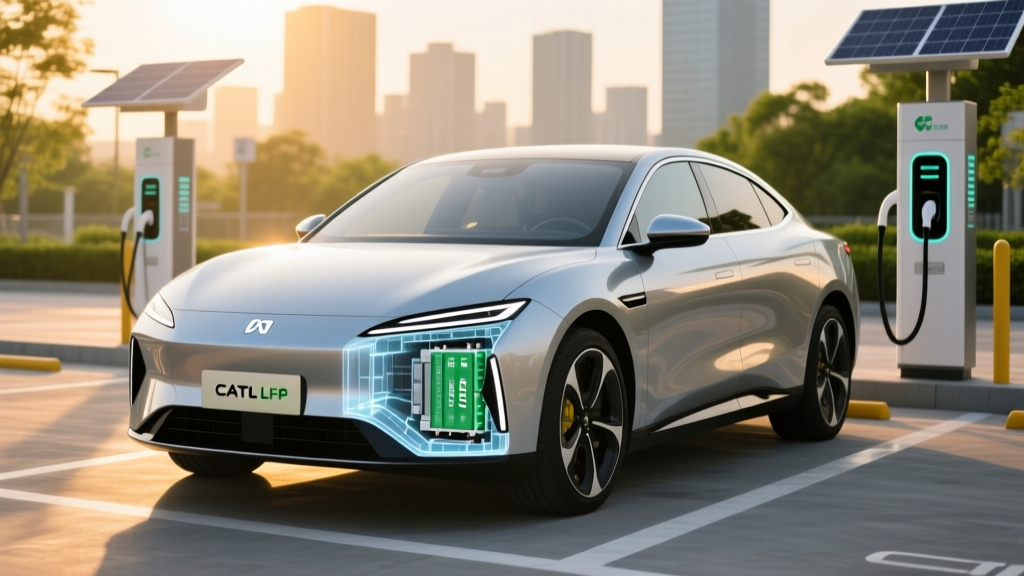
LFP vs. NMC — which is better? It depends on your priorities. If you want maximum driving range and live in a cold climate, NMC/NCA delivers higher energy density and better low-temperature performance. If you plan to keep the vehicle 10+ years, charge daily, and want the lowest degradation risk, LFP is the longevity champion — and it's increasingly available in mainstream models. Tesla's Standard Range vehicles, the base Ford Mustang Mach-E, and several BYD models all use LFP. For HEV buyers, the chemistry matters less because the battery is small (1–2 kWh) and the engine buffers most of the load.
What Does the Hybrid and EV Battery Warranty Actually Cover?
Federal law mandates that hybrid, PHEV, and EV battery warranties cover at least 8 years or 100,000 miles (whichever comes first) in most states, and 10 years or 150,000 miles in California Air Resources Board (CARB) states (CA, CT, ME, MD, MA, NJ, NY, OR, RI, VT, WA, and others adopting CARB standards). Some manufacturers exceed these minimums.
| Manufacturer | Warranty Term | Capacity Retention Threshold | Notes |
|---|---|---|---|
| Toyota (HEV/PHEV) | 10 yr / 150,000 mi | Not publicly specified; case-by-case | Covers Prius, RAV4 Hybrid/Prime, Camry Hybrid |
| Hyundai / Kia (HEV/PHEV/BEV) | 10 yr / 100,000 mi | ~70% capacity | Among the longest in the industry |
| Tesla (BEV) | 8 yr / 100,000–120,000 mi (varies by model) | 70% capacity retention | Long Range/Performance models get 120k mi |
| Ford (BEV/PHEV) | 8 yr / 100,000 mi | 70% capacity retention | Mach-E, F-150 Lightning, Escape PHEV |
| GM / Chevrolet (BEV) | 8 yr / 100,000 mi | 60–70% (varies by model year) | Ultium-based vehicles; Bolt EUV included |
| Honda (HEV) | 8 yr / 100,000 mi (10 yr / 150k in CARB states) | Case-by-case | Accord Hybrid, CR-V Hybrid |
Key detail: The warranty threshold matters. A 70% retention guarantee means the manufacturer will repair or replace the battery if it drops below 70% of original capacity within the warranty period. In practice, most modern packs retain 85–90% at the 8-year mark under normal use. The warranty protects against abnormal degradation — not normal wear that stays above the threshold.
How Much Does a Hybrid or EV Battery Cost to Replace?
Battery replacement is the single biggest fear for hybrid and EV buyers. Here's the reality: most original batteries never need replacement during typical ownership. When replacement is necessary — usually after 150,000+ miles or due to a manufacturing defect — costs vary enormously by vehicle and battery size.
| Vehicle | Battery Size | Replacement Cost (Parts + Labor) | Typical Replacement Mileage |
|---|---|---|---|
| Toyota Prius (HEV) | ~1.3 kWh | $2,000–$4,000 | 200,000+ mi (if ever) |
| Toyota RAV4 Prime (PHEV) | 18.1 kWh | $6,000–$9,000 | 150,000+ mi |
| Ford Mustang Mach-E (BEV) | 70–91 kWh | $12,000–$18,000 | 200,000+ mi |
| Tesla Model 3 / Y (BEV) | 60–82 kWh | $10,000–$16,000 | 200,000+ mi |
| Hyundai Ioniq 5 (BEV) | 58–77.4 kWh | $11,000–$17,000 | 200,000+ mi |
| Chevrolet Bolt EV/EUV (BEV) | 65 kWh | $9,000–$14,000 | 200,000+ mi |
Context that matters: Battery pack prices have fallen roughly 80% since 2013 (from ~$500/kWh to approximately $100–$130/kWh at the cell level in 2026, per BloombergNEF). Refurbished and remanufactured packs are increasingly available at 40–60% of new-pack cost. Independent hybrid/EV repair shops now offer module-level repairs for HEV batteries (replacing individual cells rather than the full pack) for $500–$1,500. And critically: by the time a battery actually needs replacement, the vehicle's resale value has typically absorbed the cost equation — you're making a repair-vs.-replace decision on a car worth $5,000–$12,000, not facing a catastrophic bill on a new vehicle.
Factors That Accelerate Battery Degradation
Battery lifespan isn't just about age — it's about how you use and store the pack. These are the primary degradation accelerators, ranked by impact:
- Frequent DC fast charging (especially above 150 kW): High charge rates generate heat, which stresses lithium-ion cells. Occasional road-trip fast charging is fine; daily reliance on DCFC accelerates wear. Tesla's own data shows vehicles that fast-charge more than 90% of the time degrade roughly 2–3% more over 100,000 miles than those primarily charging on Level 2.
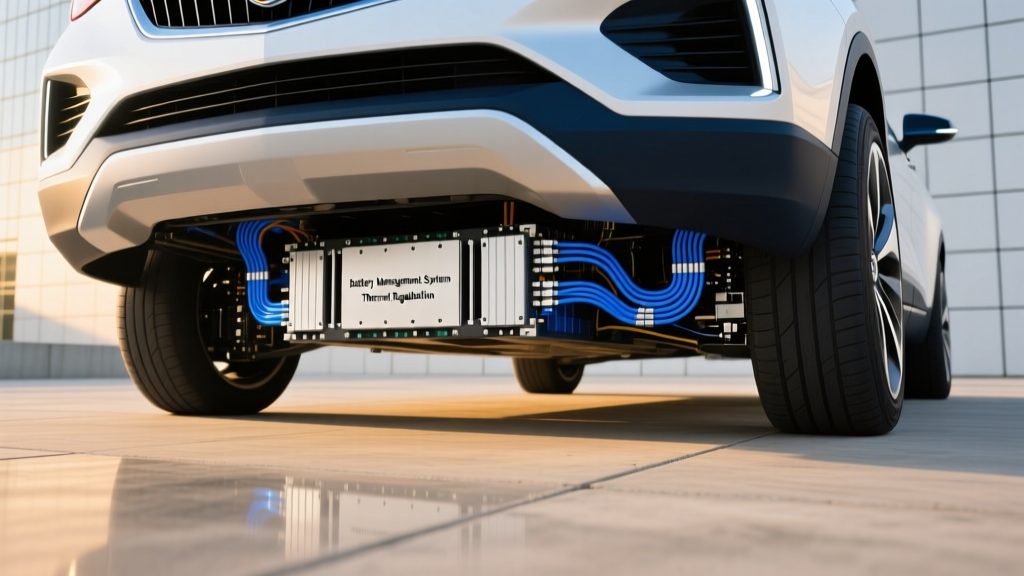
- Extreme temperatures without preconditioning: Sustained operation above 95°F or below 15°F without thermal management active causes lithium plating and electrolyte breakdown. Modern EVs with active liquid cooling/heating (Tesla, Hyundai E-GMP, GM Ultium) handle this far better than passively cooled packs.
- Chronic 100% State of Charge (SoC) storage: Sitting at full charge for days or weeks stresses NMC cells. For daily use, 80–90% SoC is the longevity sweet spot. LFP batteries are the exception — they tolerate 100% SoC better and Tesla recommends periodic full charges for LFP calibration.
- Deep discharge (below 10% SoC): Regularly draining the battery to near-zero stresses cells. The vehicle's buffer (typically 2–5 kWh reserved at the bottom) protects against true zero, but habitual deep discharges still accelerate wear.
- High-performance driving in hot conditions: Sustained high-current draw (track days, aggressive towing in summer heat) without adequate cool-down periods generates cumulative thermal stress.
- ✅ Set daily charge limit to 80–90% (NMC) or 100% (LFP — check your owner's manual)
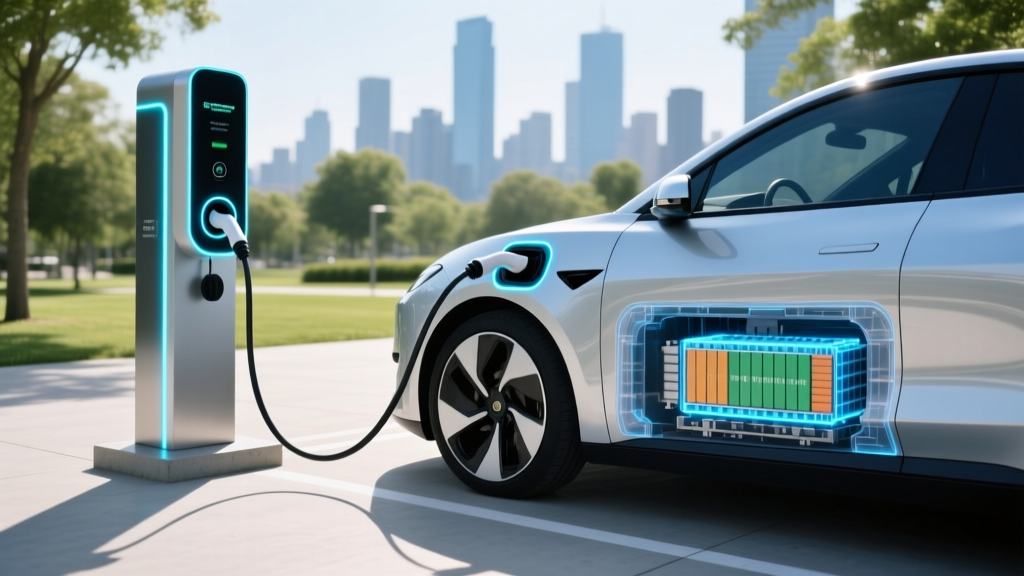
- ✅ Use Level 2 home charging as your primary method; reserve DCFC for road trips
- ✅ Enable battery preconditioning before fast charging (most EVs do this automatically via navigation)
- ✅ Park in shade or a garage during extreme heat; plug in during extreme cold so the thermal system can run on grid power
- ✅ Avoid letting SoC drop below 15% for extended periods
- ✅ If storing the vehicle for 2+ weeks, leave it at ~50% SoC
- ✅ Keep tire pressure optimized — underinflated tires increase rolling resistance and battery load
How to Check and Monitor Battery Health (State of Health)
State of Health (SoH) is the percentage of original battery capacity remaining. Here's how to track it across different platforms:
- Tesla: The in-car energy app shows projected range vs. original. Third-party apps like Tessie or TeslaFi calculate SoH from charge logs. Service centers can run a full capacity test on request.
- Hyundai / Kia: The EV dashboard screen displays battery health percentage. The dealer diagnostic tool (KDS/GDS) provides detailed cell-level SoH data.
- Ford: The FordPass app and in-cluster display show estimated range. Dealer diagnostics provide SoH percentage.
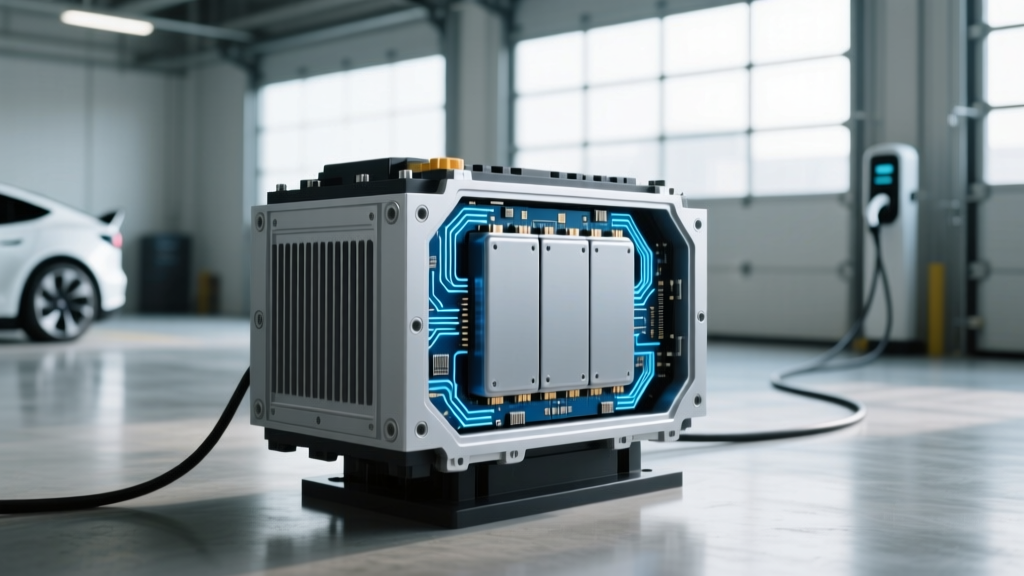
- General OBD-II method: For any EV or hybrid, an OBD-II dongle paired with apps like LeafSpy (Nissan), Car Scanner, or ABRP can read battery health data from the vehicle's BMS (Battery Management System). This is especially useful when buying used.
- Recurrent Auto / Geotab: These fleet-tracking services publish aggregate degradation data and offer individual vehicle health reports for subscribers.
When to be concerned: If SoH drops below 80% before the warranty expires, contact the manufacturer — you're likely eligible for repair or replacement. A sudden range loss of 10%+ in a short period (weeks, not months) signals a potential cell imbalance or module failure that warrants dealer diagnosis.
Emerging Battery Technology: What's Coming Next
While today's lithium-ion batteries already deliver 15–20-year lifespans, next-generation chemistries promise even greater durability and lower cost:
- Solid-state batteries: Replace the liquid electrolyte with a solid conductor, eliminating flammability risk and potentially doubling cycle life. Toyota has announced a 2027–2028 production timeline for solid-state EVs with ~750 km range and 10-minute fast charging. Samsung SDI and QuantumScape are targeting similar timelines. Status: pre-production; not yet commercially available in any consumer vehicle.
- Silicon-dominant anodes: Replacing graphite anodes with silicon increases energy density by 20–40%. Companies like Sila Nanotechnologies and Group14 are supplying early production cells, with broader adoption expected by 2027–2028. Status: early production in limited applications.
- Sodium-ion batteries: Use abundant sodium instead of lithium, cutting cost dramatically. CATL has begun production in China for city EVs; US-market adoption is expected post-2027. Cycle life is competitive with LFP. Status: production in China; announced for future US models.
- LMFP (Lithium Manganese Iron Phosphate): An LFP evolution adding manganese for higher energy density while retaining LFP's longevity and safety advantages. Expected in mainstream models by 2027. Status: announced; limited production.
For buyers in 2026, today's NMC and LFP batteries are mature, well-warrantied, and proven in millions of vehicles. Waiting for solid-state is unnecessary for most buyers — the current generation will likely outlast your ownership period.
Frequently Asked Questions
How long do hybrid batteries last compared to EV batteries?
HEV batteries (1–2 kWh) often last 200,000+ miles because they're never deeply discharged — the engine constantly buffers them. PHEV batteries (10–20 kWh) typically last 150,000–200,000 miles. BEV batteries (60–100+ kWh) routinely last 200,000–300,000+ miles. In all cases, the battery usually outlasts the vehicle's economic life.
Is it worth replacing a hybrid battery on a 10-year-old car?
It depends on the vehicle's overall condition and the replacement cost. A $2,500 Prius battery replacement on a car with 180,000 miles that's otherwise solid can add 5+ years of reliable service. A $15,000 BEV battery replacement on a high-mileage vehicle with other wear issues may not be economical. Get a full vehicle inspection before committing.
Does fast charging really damage the battery?
Occasional DC fast charging causes negligible harm. Daily fast charging, especially at 250–350 kW without preconditioning, accelerates degradation by approximately 1–3% over 100,000 miles compared to Level 2 charging. Modern thermal management systems mitigate this significantly — Tesla's data shows Supercharger-heavy usage still results in less than 15% degradation at 150,000 miles.
What happens when a hybrid battery degrades — does the car stop working?
No. Degradation means reduced capacity, not sudden failure. An HEV with a degraded battery will rely more on the gas engine and may see slightly lower MPG. A PHEV or BEV will show reduced electric range. The car remains drivable. Catastrophic failure (a dead cell or BMS fault) triggers a warning light and may limit power, but this is rare and typically warranty-covered.
Can I extend my hybrid battery's life by driving less?
Calendar aging (degradation from time, regardless of use) accounts for roughly 1–2% capacity loss per year even in a parked vehicle. So driving less helps marginally, but proper SoC management and temperature control matter more. A vehicle driven 15,000 miles/year with good charging habits will often have a healthier battery than one driven 5,000 miles/year but stored at 100% SoC in a hot garage.
Do hybrid battery warranties transfer to second owners?
Yes — in most cases, the federally mandated 8-year/100,000-mile battery warranty transfers to subsequent owners automatically. CARB-state extended warranties (10yr/150k) also transfer. Always verify with the manufacturer using the VIN when buying used.