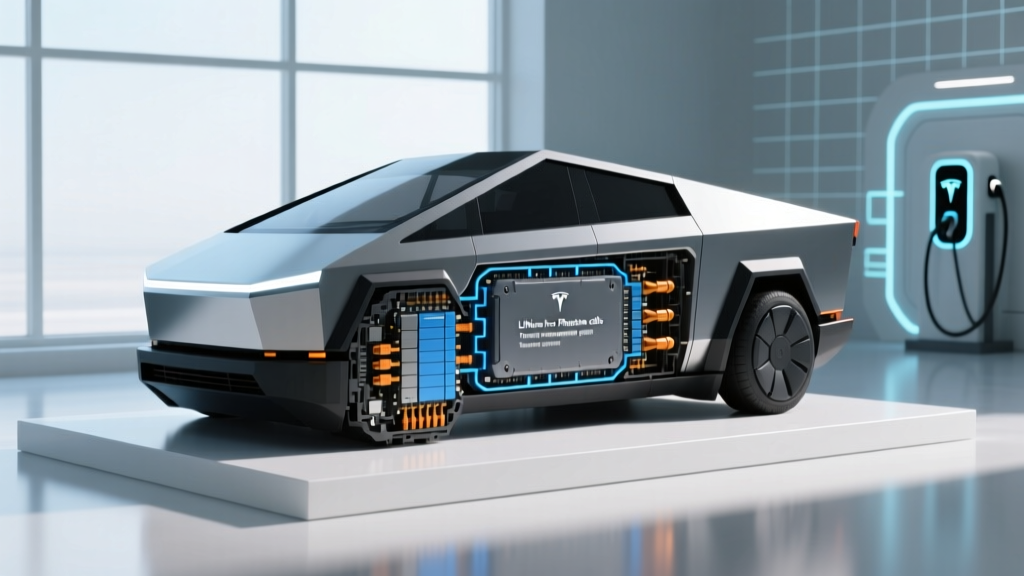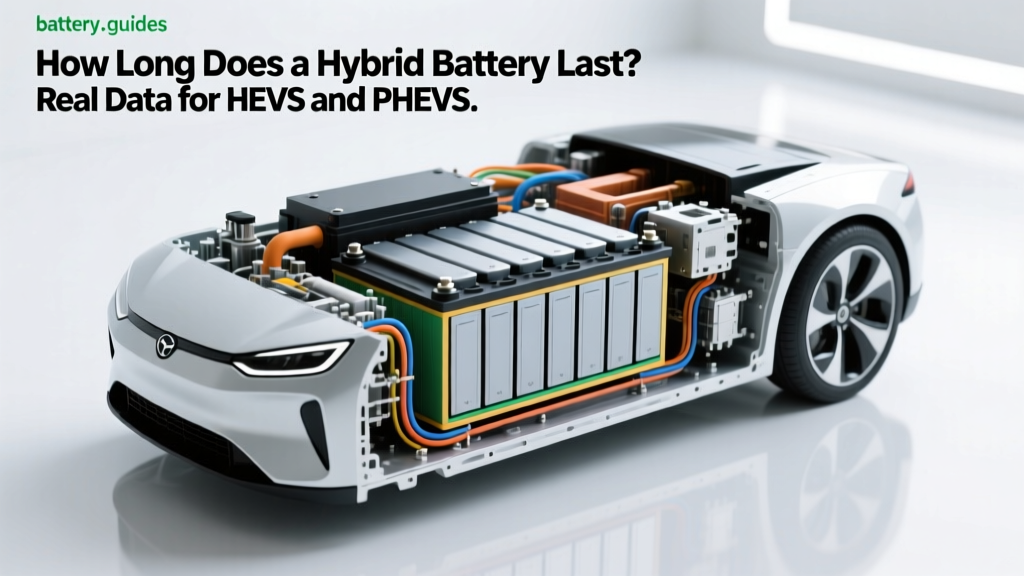
If you're shopping for a hybrid or plug-in hybrid, one question almost certainly dominates your research: how long does a hybrid battery last? It's a fair concern. The high-voltage traction battery is the single most expensive component in any electrified vehicle, and unlike a gas car's fuel tank, it does degrade over time. But the reality in 2026 is far more reassuring than the early-2000s horror stories suggest.
Modern hybrid batteries routinely outlast 150,000 miles with minimal capacity loss, and federal warranty mandates provide a strong safety net. Still, longevity varies based on chemistry, climate, driving habits, and whether you're dealing with a small 1.3 kWh HEV pack or a 19 kWh PHEV battery. This guide gives you the exact numbers — degradation rates, replacement costs, warranty thresholds, and the chemistry trade-offs that determine how your battery ages.
HEV vs. PHEV Batteries: Size, Stress, and Lifespan
Before discussing longevity, it helps to understand what's under the floor. Hybrid electric vehicles (HEVs) like the Toyota Prius or Honda Accord Hybrid carry small batteries — typically 1.0 to 1.6 kWh — that buffer energy from regenerative braking and assist the gas engine. Plug-in hybrids (PHEVs) like the Toyota RAV4 Prime or Jeep Wrangler 4xe carry much larger packs, usually 15 to 22 kWh, enabling 25–45 miles of electric-only driving.
This size difference creates different aging profiles:
- HEV batteries experience shallow charge-discharge cycles. The car's battery management system (BMS) keeps the pack between roughly 40% and 80% state of charge (SoC), avoiding the high-stress zones at the top and bottom. This shallow cycling is gentle on the cells, and many Toyota Prius packs have been documented surpassing 200,000 miles with under 15% degradation.
- PHEV batteries see deeper daily cycles — you plug in, charge to full, then deplete down to the hybrid buffer (usually ~15% SoC). Deeper cycles mean more wear per cycle, but PHEV packs are proportionally larger, so each mile driven uses fewer total cycles. Real-world PHEV data shows most packs retaining 85–92% capacity after 100,000 miles.
NMC vs. LFP: Which Chemistry Powers Your Hybrid?
| Attribute | NMC / NCA (Nickel-based) | LFP (Lithium Iron Phosphate) |
|---|---|---|
| Energy Density | Higher (~200–260 Wh/kg) — smaller pack for same kWh | Lower (~140–180 Wh/kg) — needs more physical space |
| Cycle Life | 1,000–2,000 cycles to 80% SoH | 3,000–5,000+ cycles to 80% SoH |
| Cold-Weather Performance | Better low-temp discharge and regen acceptance | Reduced regen and power below ~32°F (0°C) |
| Cost per kWh | Higher (nickel, cobalt supply-chain dependent) | Lower (iron and phosphate are abundant) |
| Typical Hybrid Use | Most PHEVs (RAV4 Prime, Wrangler 4xe, Tucson PHEV) | Growing in HEVs and some China-market PHEVs; BYD leading adoption |
| Thermal Stability | Good but requires active cooling at high SoC | Excellent — inherently more stable chemistry |
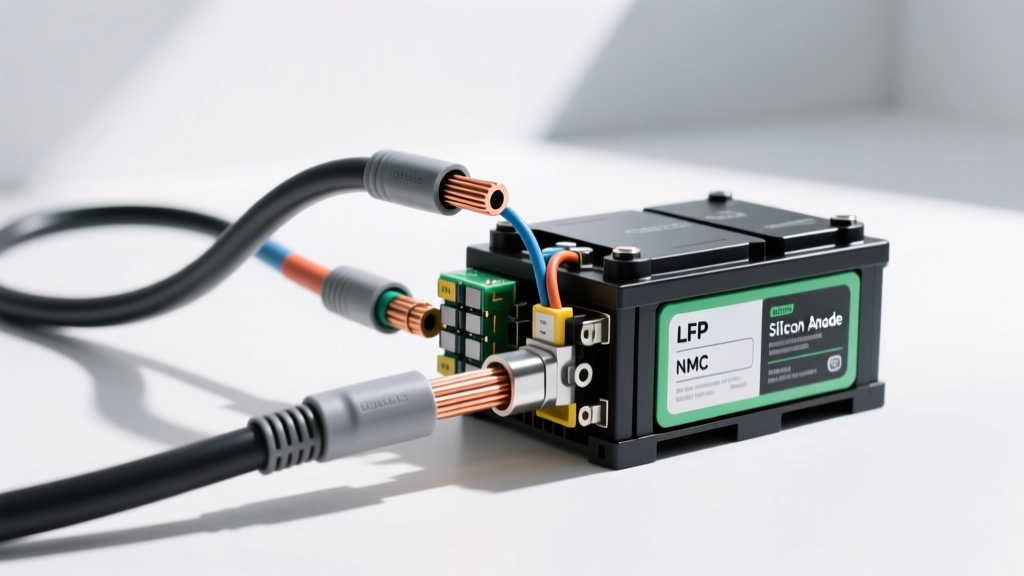
Most US-market hybrids and PHEVs sold in 2025–2026 use NMC chemistry due to energy-density requirements in compact packaging. LFP adoption is expanding, particularly in standard-range BEVs and some next-gen HEVs where packaging allows a physically larger pack.
Hybrid Battery Degradation: What the Data Actually Shows
Degradation is the gradual loss of a battery's total energy capacity, measured as State of Health (SoH). A battery at 90% SoH holds 90% of its original kWh. For hybrids, this matters less than for BEVs because you have a gas engine as backup — but it does reduce electric-only range on PHEVs and can slightly lower MPG on HEVs.
Typical Degradation Curves by Vehicle Type
| Vehicle Type | Battery Size | SoH at 50k mi | SoH at 100k mi | SoH at 150k mi | Source / Notes |
|---|---|---|---|---|---|
| HEV (e.g., Toyota Prius, gen 4–5) | ~1.3 kWh (NiMH or Li-ion) | ~95–97% | ~90–94% | ~85–90% | Taxi fleet data, fueleconomy.gov |
| PHEV (e.g., RAV4 Prime, 2021–2025) | 18.1 kWh (NMC) | ~94–96% | ~88–92% | ~82–88% | Owner-reported data, manufacturer BMS logs |
| PHEV (e.g., Chrysler Pacifica Hybrid) | 16 kWh (NMC) | ~93–95% | ~86–90% | ~80–86% | FCA warranty claim data, owner forums |
Key insight: Degradation is not linear. The steepest drop typically occurs in the first 20,000–30,000 miles (roughly 2–5% loss), then the curve flattens significantly. A PHEV battery that has lost 8% after 60,000 miles is unlikely to lose another 8% in the next 60,000 miles — expect roughly 4–6% additional loss.
For context, a RAV4 Prime owner at 100,000 miles with 90% SoH still has roughly 16.3 kWh usable — translating to about 38 miles of electric range instead of the original 42. Noticeable, but not debilitating. And the gas engine seamlessly covers the gap.
What Does the Hybrid Battery Warranty Actually Cover?
Federal law in the United States mandates that hybrid and EV battery packs carry a minimum warranty of 8 years or 100,000 miles, whichever comes first. In California Air Resources Board (CARB) states — which include California, New York, Massachusetts, Oregon, Washington, and several others — the mandate extends to 10 years or 150,000 miles.
Hybrid Battery Warranty Comparison (2025–2026 Models)
| Manufacturer | Federal Warranty | CARB-State Warranty | Capacity Threshold |
|---|---|---|---|
| Toyota (Prius, RAV4 Hybrid, RAV4 Prime) | 10 yr / 150,000 mi | 10 yr / 150,000 mi | Below ~70% SoH triggers coverage |
| Honda (Accord Hybrid, CR-V Hybrid) | 8 yr / 100,000 mi | 10 yr / 150,000 mi | Below ~70% SoH |
| Hyundai / Kia (Tucson Hybrid, Sportage PHEV) | 10 yr / 100,000 mi | 10 yr / 150,000 mi | Below ~70% SoH |
| Stellantis (Pacifica Hybrid, Wrangler 4xe) | 8 yr / 100,000 mi | 10 yr / 150,000 mi | Below ~70% SoH |
| Ford (Escape PHEV, Maverick Hybrid) | 8 yr / 100,000 mi | 10 yr / 150,000 mi | Below ~70% SoH |
Source: Manufacturer warranty guides, EPA Green Vehicles. CARB-state list subject to change; verify with your state's environmental agency.
A critical nuance: the warranty threshold (usually 70% SoH) is the point at which the manufacturer is obligated to repair or replace. A battery at 72% SoH — which might mean your RAV4 Prime's electric range has dropped from 42 to roughly 30 miles — is not covered. This is why understanding realistic degradation curves matters. Most owners will never hit that 70% threshold within the warranty period.
Hybrid Battery Replacement Cost: What You'd Actually Pay
If your battery degrades below usability or suffers a cell failure outside warranty, replacement is the expensive reality. However, it's important to frame this correctly: the vast majority of hybrid batteries are never replaced. They outlast the vehicle's economic life. When replacement is needed, it typically occurs at 150,000+ miles on vehicles that are 10–15 years old.
Hybrid Battery Replacement Cost Ranges (2026 Estimates)
| Vehicle | Battery Size | OEM New | Refurbished / Remanufactured | Typical Replacement Mileage |
|---|---|---|---|---|
| Toyota Prius (gen 4, 2016–2022) | ~1.3 kWh NiMH | $2,500–$3,500 | $1,200–$2,000 | 180,000–250,000 mi |
| Toyota Prius (gen 5, 2023–2026) | ~1.3 kWh Li-ion | $3,000–$4,200 | $1,500–$2,500 | Projected 200,000+ mi |
| Toyota RAV4 Prime (PHEV) | 18.1 kWh NMC | $8,000–$12,000 | $5,000–$7,500 | Projected 180,000+ mi |
| Honda Accord Hybrid | ~1.3 kWh Li-ion | $2,800–$4,000 | $1,400–$2,200 | 170,000–220,000 mi |
| Chrysler Pacifica Hybrid | 16 kWh NMC | $7,500–$10,000 | $4,500–$6,500 | 150,000–200,000 mi |
| Jeep Wrangler 4xe | 17.3 kWh NMC | $8,500–$11,500 | $5,500–$7,500 | Projected 160,000+ mi |
Prices include parts only; add $500–$1,500 for labor depending on dealership and vehicle. Refurbished options typically come with 1–3 year warranties. Sources: dealership parts departments, Toyota Warranty Guide, independent hybrid repair shops.
The cost gap between HEV and PHEV batteries is stark. A Prius HEV battery is small and relatively affordable to replace — comparable to a major engine repair on a gas car. A PHEV's 16–19 kWh pack is a fraction of a full BEV battery but still represents a significant expense. This is why buying a used PHEV outside warranty deserves extra diligence (more on checking SoH below).
Factors That Accelerate (or Protect) Hybrid Battery Life
Not all hybrid batteries age at the same rate. Your driving environment, charging habits, and climate play measurable roles in degradation speed. Here's what the electrochemistry actually rewards and punishes:
Battery Longevity Best Practices
- Avoid prolonged storage at extreme SoC. If your PHEV will sit unused for weeks, aim for ~50% SoC. Storing at 100% or near 0% accelerates calendar degradation, especially in heat.
- Minimize high-temperature exposure. Batteries degrade fastest above 95°F (35°C). Park in shade or a garage when possible. The BMS will limit charging power in extreme heat, but the cells still endure stress.
- Don't obsess about DC fast charging on PHEVs. Most PHEVs don't even support DC fast charging (they're limited to Level 2 AC), so this is largely a non-issue. For the few that do (e.g., Mitsubishi Outlander PHEV), occasional fast charging is fine; daily use may slightly accelerate wear.
- Let the car manage battery temperature. Don't block the battery cooling vents (usually located near the rear seats or cargo area). A blocked vent forces the BMS to limit power or tolerate higher cell temps.
- Drive it regularly. Hybrid batteries prefer regular shallow cycles over long idle periods. A Prius driven 10 miles daily will typically age better than one driven 70 miles once a week and parked for six days.
- Use the car's built-in charge-limit settings (PHEV). Some PHEVs (e.g., BMW X5 xDrive50e) allow you to set a max charge of 80–90% for daily use. This reduces stress on NMC cells. Use 100% for days you need maximum electric range.
For HEV owners, most of this is managed automatically. The Prius BMS is famously conservative — it never lets the battery approach true 0% or true 100%, which is why Toyota NiMH packs from 2004 are still on the road today. PHEV owners have slightly more agency (and responsibility) because they control when and how much they plug in.
How to Check Your Hybrid Battery's State of Health
State of Health (SoH) tells you what percentage of original capacity your battery retains. Unlike BEVs, which increasingly surface SoH in the infotainment system, most hybrids keep this data behind the curtain. Here's how to access it:
For Toyota and Lexus hybrids: The Toyota app provides limited battery health data on newer models. For precise SoH, an OBD-II scanner paired with the Dr. Prius or Hybrid Assistant app (both free or low-cost on Android) can read the battery's internal health metrics directly from the ECU. The "Lifetime Monitor" test in Dr. Prius performs a controlled discharge-recharge cycle and reports SoH as a percentage.
For Hyundai/Kia PHEVs: The dealer can pull SoH via the KDS (Kia Diagnostic System) or GDS (Genesis/Hyundai Diagnostic System) tool. Request a "high-voltage battery health report" at your next service visit — most dealers will provide this at no charge during a scheduled maintenance appointment.
For Stellantis PHEVs (Pacifica, Wrangler 4xe): The wiTECH diagnostic tool at the dealer provides cell-level voltage data and overall SoH. Some owners have successfully used the OBDLink MX+ scanner with third-party apps to pull basic pack data.
For all brands: A practical proxy for SoH on a PHEV is tracking your electric-only range over time. If your RAV4 Prime used to deliver 40 miles on a full charge in 70°F weather and now delivers 35 under identical conditions, you're likely at roughly 87–90% SoH. Log your range monthly under similar temperature and driving conditions for a reliable trend line.
What's Next: Solid-State and Silicon-Anode Batteries
The next major leap in battery technology will eventually reach hybrids, but timelines remain longer than headlines suggest:
Solid-state batteries replace the liquid electrolyte with a solid material, promising higher energy density, faster charging, and improved safety. Toyota has announced a commercialization target of 2027–2028, initially in BEVs. Hybrid applications would follow, likely in the 2029–2031 timeframe. Expect first deployments in premium models due to high initial manufacturing costs.
Silicon-anode technology (used by companies like Sila Nanotechnologies and Group14) replaces graphite anodes with silicon-dominant materials, boosting energy density by 20–40%. This is closer to production — Mercedes-Benz's 2025 G-Class EV uses a silicon-anode pack, and trickle-down to PHEV packs is plausible by 2027–2028.
Sodium-ion batteries offer a lower-cost, cobalt-free alternative with excellent cycle life but lower energy density. CATL and BYD are already producing these for entry-level BEVs in China. For hybrids, sodium-ion could be ideal for HEV applications where the pack is small and energy density is less critical. US-market availability is projected for 2027+.
None of these technologies are currently available in US-market hybrids. If you're buying a hybrid in 2025–2026, you're getting proven NMC or LFP lithium-ion chemistry — which, as the data above shows, is already durable enough for most ownership lifespans.
Frequently Asked Questions
How long does a hybrid battery last in years and miles?
Most modern HEV batteries (Toyota Prius, Honda Accord Hybrid) last 150,000–250,000 miles and 12–20 years before degradation meaningfully affects performance. PHEV batteries (RAV4 Prime, Wrangler 4xe) typically deliver 150,000–200,000 miles before falling below 80% SoH. Many hybrid batteries are never replaced — the car is retired or sold before the pack fails.
How much does it cost to replace a hybrid battery?
HEV battery replacement (Prius, Accord Hybrid) costs $2,500–$4,200 for an OEM pack, or $1,200–$2,500 for a refurbished unit. PHEV battery replacement (RAV4 Prime, Pacifica Hybrid, Wrangler 4xe) runs $7,500–$12,000 OEM, or $4,500–$7,500 refurbished. Labor adds $500–$1,500. Most replacements occur at 150,000+ miles, often on vehicles 10+ years old.
What does the hybrid battery warranty cover?
Federal law requires a minimum 8-year/100,000-mile hybrid battery warranty. In CARB states, it extends to 10 years/150,000 miles. Toyota and Hyundai/Kia voluntarily offer 10 years/100,000 miles nationwide. Coverage triggers when SoH drops below approximately 70%. The warranty covers defects and premature degradation, not damage from accidents, flooding, or improper modifications.
How do I check my hybrid battery health?
For Toyota hybrids, use an OBD-II scanner with the Dr. Prius or Hybrid Assistant app to read SoH directly. For other brands, request a high-voltage battery health report from your dealer at a service visit. You can also track your PHEV's electric-only range over time as a practical SoH proxy — declining range under consistent conditions signals degradation.
LFP vs NMC — which is better for a hybrid battery?
NMC (nickel manganese cobalt) is the dominant hybrid chemistry in the US because it offers higher energy density in a compact package — critical for PHEVs that need 15–20 kWh in limited space. LFP (lithium iron phosphate) offers far superior cycle life (3,000–5,000+ cycles vs. 1,000–2,000) and lower cost, but requires more physical space for the same kWh. LFP is better if packaging allows; NMC is better when space is constrained. For most US-market hybrids today, NMC is the pragmatic choice, and its longevity is well-proven.
Does extreme cold damage a hybrid battery?
Cold weather temporarily reduces battery performance — expect slower regenerative braking, reduced electric-only range (10–20% loss below freezing for PHEVs), and slightly higher fuel consumption on HEVs. This is not permanent damage; performance returns when temperatures rise. However, chronic exposure to extreme heat (sustained 100°F+ ambient) causes more permanent degradation than cold. Garage parking in hot climates is the single best longevity investment.
Is it worth buying a used hybrid with high mileage?
Yes, with due diligence. A 120,000-mile Prius with a verified SoH above 85% is a strong buy — the battery likely has 80,000+ miles of useful life remaining. For used PHEVs, verify SoH before purchase (dealer diagnostic report or OBD-II scan) and confirm whether the battery warranty is still active and transferable. Avoid used PHEVs where the seller cannot provide battery health data.