The Real Answer: Most EV Batteries Outlive the Car
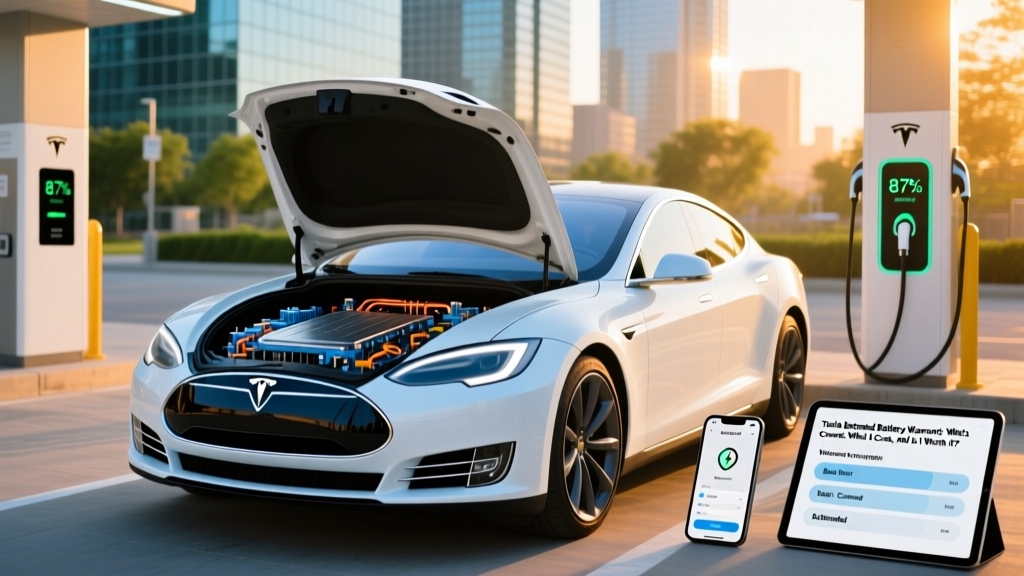
If you've searched "how long does an interstate battery last" wondering about the high-voltage traction pack in your electric vehicle, here's the short answer backed by a decade of fleet data: most modern EV batteries retain 85-90% of their original capacity after 150,000 miles, and the vast majority will outlast the vehicle's useful life. Unlike the 12V auxiliary battery under the hood of every car (which typically needs swapping every 3-5 years), the lithium-ion traction battery powering your EV's drivetrain is engineered for longevity measured in hundreds of thousands of miles.
That said, "how long" depends on chemistry, charging habits, climate, and how aggressively the pack is cycled. This guide breaks down the data, the science, and the dollars — so you can buy, own, and eventually sell an EV with eyes wide open.
LFP vs NMC vs NCA: Chemistry Determines Longevity
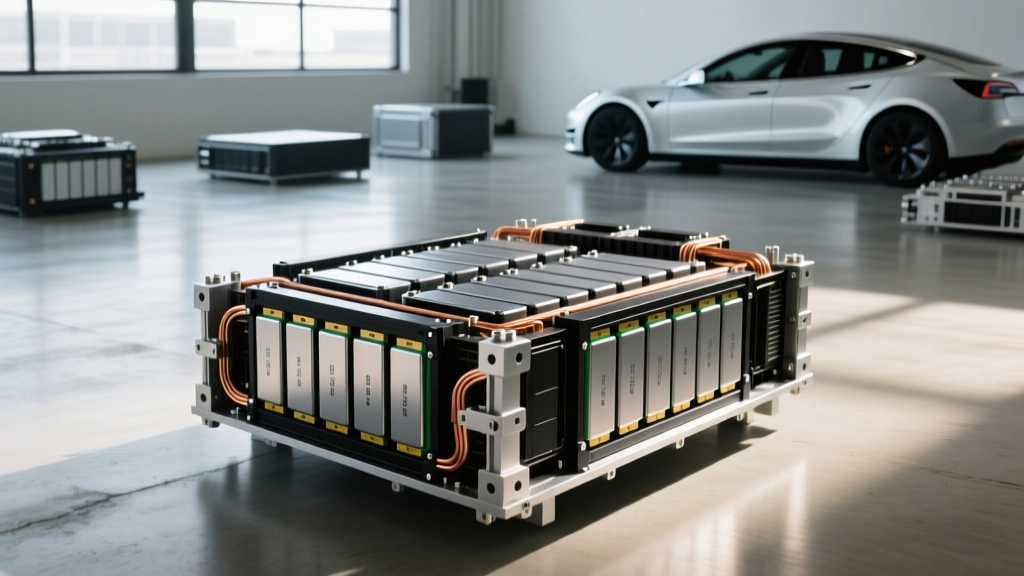
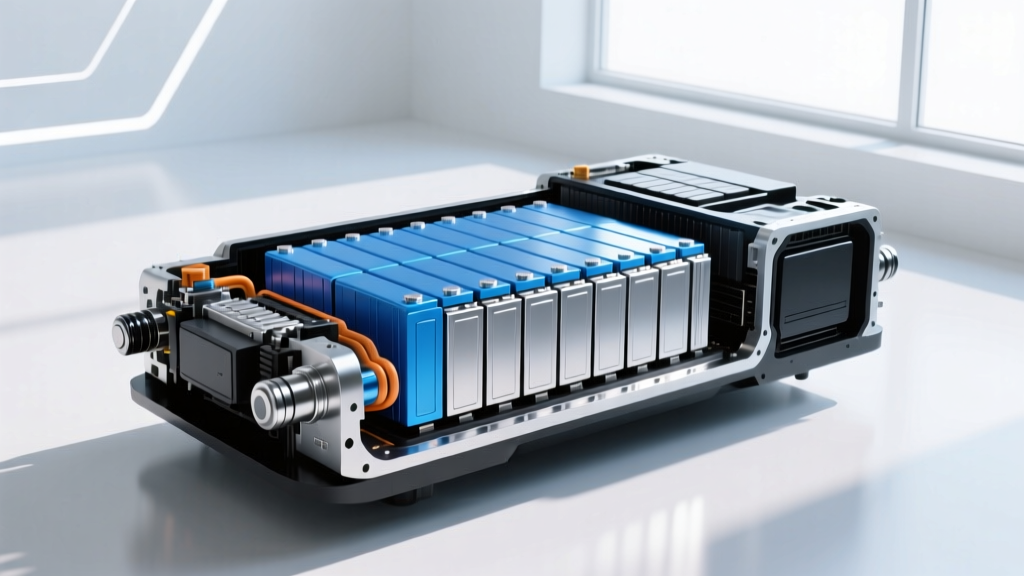
Not all EV batteries are built the same. The two dominant lithium-ion chemistries on the road in 2026 — lithium iron phosphate (LFP) and nickel manganese cobalt (NMC) / nickel cobalt aluminum (NCA) — have fundamentally different trade-offs in energy density, cycle life, cold-weather performance, and cost.
| Attribute | LFP (LiFePO₄) | NMC / NCA |
|---|---|---|
| Energy Density | ~160-180 Wh/kg (lower) | ~220-300 Wh/kg (higher) |
| Typical Cycle Life | 3,000-5,000+ cycles | 1,500-2,500 cycles |
| Calendar Life | 15-20+ years | 10-15 years |
| Cold-Weather Performance | Weaker below 32°F; slower charging | Better low-temp conductivity |
| Cost per kWh (2026) | ~$80-100/kWh at pack level | ~$110-140/kWh at pack level |
| Thermal Stability | Excellent; less prone to thermal runaway | Good; requires more active management |
| Cobalt Content | None | Varies; some formulations use cobalt |
| Common In (2026 Models) | Tesla Model 3/Y RWD, Ford Mustang Mach-E Select (LFP option), BYD models, Rivian Standard | Tesla Long Range, Hyundai Ioniq 5/6, Kia EV6/EV9, GM Ultium vehicles, BMW iX |
Which is better? It depends on your use case. LFP's vastly superior cycle life means a pack rated for 3,000+ full cycles at 250 miles of range each could theoretically deliver 750,000 miles before hitting 80% capacity. That's effectively the lifetime of two cars. The trade-off: lower energy density means heavier packs for the same range, and LFP cells are more sluggish in freezing temperatures — you'll notice slower DC fast-charge speeds in winter unless the pack is preconditioned.
NMC/NCA packs pack more energy into less weight and volume, enabling longer-range and higher-performance vehicles. They degrade somewhat faster per cycle but still deliver 1,500+ cycles — enough for 300,000+ miles in most applications. For buyers in cold climates or those who prioritize maximum range and performance, NMC/NCA remains the practical choice.
EV Battery Degradation: What the Data Actually Shows
EV batteries don't suddenly "die." They gradually lose capacity over time and use — a process called degradation. You'll see this as a slow reduction in maximum range. A car that showed 310 miles at 100% state of charge (SoC) when new might show 285 miles after three years. The battery still works; it just holds fewer kilowatt-hours (kWh).
Degradation follows a characteristic curve: a steeper drop in the first 1-2 years (often 2-5% as the solid electrolyte interphase stabilizes), followed by a long, slow linear decline. Here's what aggregated fleet data from sources like Geotab's long-term EV battery study and manufacturer reports show:
- Year 1 / ~15,000 mi: 95-98% capacity retained (initial break-in loss)
- Year 3 / ~45,000 mi: 91-95% retained
- Year 5 / ~75,000 mi: 88-93% retained
- Year 8 / ~120,000 mi: 84-90% retained
- Year 10 / ~150,000 mi: 80-88% retained
Note: LFP packs consistently track at the higher end of these ranges; early-generation NMC packs (2013-2017) with less sophisticated thermal management track lower. Liquid-cooled packs in 2020+ vehicles significantly outperform older passive-cooled designs.
A concrete example: Tesla's 2025 Impact Report disclosed that Model 3/Y vehicles retain approximately 85% of original range at 200,000 miles. Hyundai and Kia report similar figures for their E-GMP platform vehicles. The Nissan Leaf — which uses passive air cooling on older models — historically showed faster degradation, losing 10-15% within the first five years in hot climates, illustrating how thermal management matters as much as chemistry.
What the Battery Warranty Actually Covers
Federal law in the United States mandates that EV batteries carry a minimum warranty of 8 years or 100,000 miles (whichever comes first). In California Air Resources Board (CARB) states, that extends to 10 years or 150,000 miles. Most manufacturers exceed these minimums and guarantee a specific capacity-retention threshold — typically 70% of original capacity.
| Manufacturer | Warranty Term | Capacity Threshold | Chemistry Notes |
|---|---|---|---|
| Tesla (Model 3/Y RWD — LFP) | 8 yr / 100,000 mi | 70% retention | LFP pack; cycle-life headroom is enormous |
| Tesla (Model 3/Y LR — NMC) | 8 yr / 120,000 mi | 70% retention | NMC pack; longer mileage coverage |
| Hyundai / Kia (E-GMP) | 10 yr / 100,000 mi | 70% retention | NMC; among the longest time coverage |
| GM (Ultium platform) | 8 yr / 100,000 mi | 70% retention | NMC; covers Bolt EV/EUV, Equinox EV, Blazer EV, Silverado EV |
| Ford (Mustang Mach-E, F-150 Lightning) | 8 yr / 100,000 mi | 70% retention | NMC and LFP options depending on trim |
| Rivian (R1T / R1S) | 8 yr / 175,000 mi | 70% retention | Highest mileage threshold in the segment |
| BMW (i4 / iX / i7) | 8 yr / 100,000 mi | 70% retention | NMC; modular pack allows section replacement |
What triggers a warranty claim? If your battery's usable capacity drops below the guaranteed threshold (e.g., a 75 kWh pack falling below 52.5 kWh usable) within the warranty period, the manufacturer will repair or replace the pack — or individual modules, depending on the architecture — at no cost to you. Some manufacturers, like BMW and GM with modular Ultium packs, can replace individual modules rather than the entire battery, dramatically reducing out-of-warranty repair costs.
Warranties typically exclude damage from collisions, flooding, improper modifications, or use outside normal parameters (e.g., sustained 100% SoC storage in extreme heat for months). Read your owner's manual for specific exclusions.
How Much Does an EV Battery Cost to Replace?
This is the question that generates the most anxiety — and the most misinformation. Let's ground it in actual numbers.
| Vehicle / Battery Size | Chemistry | Battery Capacity | Replacement Cost (Parts + Labor) | When Typically Needed |
|---|---|---|---|---|
| Tesla Model 3 RWD | LFP | ~60 kWh | $7,000 – $10,000 | Rarely; 300,000+ mi expected life |
| Tesla Model Y Long Range | NMC | ~82 kWh | $12,000 – $16,000 | 200,000+ mi; often outlasts vehicle |
| Hyundai Ioniq 5 | NMC | 77.4 kWh | $10,000 – $14,000 | 200,000+ mi |
| Ford F-150 Lightning Ext. Range | NMC | ~131 kWh | $18,000 – $25,000 | 200,000+ mi; largest consumer pack |
| Chevrolet Equinox EV | NMC (Ultium) | ~85 kWh | $10,000 – $14,000 | Modular; individual module $2,000-$4,000 |
| Nissan Leaf (40/62 kWh) | NMC | 40-62 kWh | $6,500 – $9,000 | Earlier degradation risk, esp. in hot climates |
| Rivian R1T (Large Pack) | NMC | ~128 kWh | $16,000 – $22,000 | 200,000+ mi |
Context matters enormously here. A $12,000-$16,000 battery replacement sounds steep, but consider: the average age of a scrapped vehicle in the US is roughly 12 years, and the average vehicle is driven about 13,500 miles per year according to the Federal Highway Administration. That's ~162,000 miles over a vehicle's life. The data consistently shows that the vast majority of EV batteries will retain well above 70% capacity at that mileage — meaning most EV owners will never pay for a battery replacement.
For the minority who do face an out-of-warranty replacement (typically second or third owners of high-mileage vehicles), costs have been declining. Pack-level prices have fallen from over $1,000/kWh in 2010 to roughly $100-140/kWh in 2026, according to BloombergNEF battery price surveys. Aftermarket and refurbished packs are also becoming available, often at 40-60% of new-pack pricing.
Factors That Accelerate (or Preserve) Battery Life
Your battery's lifespan isn't predetermined — it's shaped by how you use and store the vehicle. Here are the biggest factors, ranked by impact:
- Avoid sustained 100% SoC: For NMC/NCA packs, daily charging to 80% significantly reduces stress on the cells. Reserve 100% charges for road trips. LFP packs tolerate 100% better and manufacturers like Tesla actually recommend periodic full charges for LFP to recalibrate the battery management system (BMS).
- Minimize DC fast-charging frequency: Occasional fast charging is fine — modern thermal management handles it well. But daily reliance on 150+ kW DC fast charging generates cumulative heat stress. If you have home Level 2 access, use it for daily needs and reserve DCFC for road trips.
- Don't let the pack sit at very low SoC: Storing an EV at 0-5% SoC for weeks risks cell damage. If storing for extended periods, leave the car plugged in with a charge limit set to 50-70%.
- Precondition in extreme cold: When DC fast-charging in cold weather, use your vehicle's navigation-based preconditioning (most EVs warm the battery when a charger is set as the destination). Charging a cold pack causes lithium plating — a permanent degradation mechanism.
- Park in shade or garages when possible: Sustained high battery temperatures (above 95°F ambient, especially at high SoC) accelerate calendar degradation. This is why liquid-cooled packs dramatically outperform passively cooled designs in hot climates.
- Drive smoothly when the battery is very cold or very hot: Extreme regen braking on a cold pack stresses cells similarly to extreme fast charging.
A practical rule: if you charge at home on Level 2 (typically 7-11 kW), set your daily limit to 80% for NMC/NCA or 100% for LFP, precondition before fast-charging in cold weather, and avoid leaving the car at very low or very high SoC for weeks at a time. Follow those basics and your battery will very likely outlast the rest of the vehicle.
How to Check Your Battery's State of Health (SoH)
State of Health (SoH) is the percentage of your battery's original usable capacity that remains. A new battery is at 100% SoH; a battery that held 75 kWh when new but now holds 67.5 kWh is at 90% SoH. Here's how to monitor it:
- In-vehicle displays: Many 2024+ EVs (Tesla via the service menu, Hyundai/Kia via the infotainment system, BMW via iDrive) show SoH or estimated full-charge capacity. Tesla's approach is indirect — compare your displayed range at 100% SoC to the original EPA-rated range.
- OBD-II dongles and apps: Third-party tools like OBD2 scanners with EV-capable software (e.g., ABRP-linked dongles, ScanGauge, or manufacturer-specific apps) can read the BMS directly for precise SoH figures, cell voltage deltas, and pack temperature.
- Dealer diagnostics: Any authorized service center can pull a full battery health report. Request this before buying a used EV — it's the single most important data point.
- Charging-data analysis: If you track your kWh consumed per full charge (your home charger or charging app logs this), a declining trend over months indicates degradation. Divide current full-charge kWh by original usable capacity for a rough SoH estimate.
For used-EV buyers: always verify SoH before purchase. A 2020 Model 3 Long Range with 90% SoH at 60,000 miles is in excellent shape; one at 78% SoH may have been repeatedly fast-charged in extreme heat and could be approaching warranty-claim territory.
What's Next: Solid-State, Silicon Anodes, and Realistic Timelines
Emerging battery technologies promise step-change improvements, but timelines matter for buyers making decisions today.
- Silicon-dominant anodes: Companies like Sila Nanotechnologies and Group14 are already shipping silicon-blended anode materials that boost energy density by 10-20% over conventional graphite. These are appearing in limited production vehicles (e.g., the Mercedes G-Class electric variant) and will become more common through 2027-2028. They don't fundamentally change cycle-life expectations but enable more range in the same pack volume.
- Semi-solid-state batteries: NIO in China has deployed a 150 kWh semi-solid-state pack in the ET7 sedan, achieving over 600 miles of range (WLTP). However, cost remains prohibitive for mass-market vehicles, and production volumes are minimal. Expect limited availability in premium vehicles through 2028.
- True solid-state batteries: Toyota, Samsung SDI, and QuantumScape have announced pilot production timelines for 2027-2029. Toyota has stated it aims for commercialization by 2027-2028 in limited models. Realistically, solid-state packs at scale and at consumer-accessible pricing are a 2030+ proposition for most buyers.
- Sodium-ion batteries: CATL and BYD are producing sodium-ion packs for smaller, lower-cost EVs (primarily in China). Lower energy density limits them to city cars and light commercial vehicles, but they offer excellent cycle life, cold performance, and zero critical-mineral dependency. Watch for entry into the US market in budget segments by 2028-2029.
Frequently Asked Questions
How long do EV batteries last in years and miles?
Based on fleet data from Geotab, Tesla, and other manufacturers, most modern liquid-cooled EV batteries retain 80-90% of original capacity at 150,000-200,000 miles (roughly 10-15 years of average driving). LFP packs often exceed this, with cycle-life ratings supporting 300,000+ miles before reaching 80% capacity. Catastrophic battery failure (sudden death) is exceedingly rare — degradation is gradual and predictable.
How much does an EV battery cost to replace in 2026?
Full pack replacement costs range from approximately $7,000 for smaller packs (60 kWh LFP) to $25,000 for the largest consumer packs (130+ kWh NMC in trucks like the F-150 Lightning). Most mainstream SUVs and sedans fall in the $10,000-$16,000 range including labor. However, the vast majority of EV owners will never need a replacement — the battery typically outlasts the vehicle. Modular architectures (GM Ultium, BMW) allow individual module replacement for $2,000-$4,000 per module.
What does the EV battery warranty actually cover?
Federal minimum: 8 years / 100,000 miles. CARB states: 10 years / 150,000 miles. Most manufacturers guarantee the battery will retain at least 70% of original usable capacity during the warranty period. If capacity drops below that threshold, the manufacturer repairs or replaces the pack at no cost. Warranties exclude collision damage, flooding, unauthorized modifications, and abuse (like leaving the car at 0% SoC for months). Check your specific owner's manual for details.
How do I check and maximize my EV battery's health?
Check SoH through your vehicle's built-in diagnostics, an OBD-II scanner with EV software, or a dealer diagnostic report. To maximize longevity: charge NMC/NCA to 80% daily (100% for LFP), minimize daily DC fast-charging, avoid storing the car at very low or very high SoC for extended periods, precondition the battery before fast-charging in cold weather, and park in shade or a garage in hot climates.
LFP vs NMC — which battery chemistry is better for me?
Choose LFP if: you want maximum cycle life and longevity, you live in a mild or warm climate, you prioritize lower cost and cobalt-free sourcing, and you don't need the absolute longest single-charge range. Choose NMC/NCA if: you need maximum range and performance, you live in a cold climate where LFP's winter charging slowdown matters, or you're buying a larger vehicle where energy density keeps weight manageable. Both chemistries in 2026 are proven and reliable — neither is a bad choice.
Does fast charging damage my EV battery?
Occasional DC fast charging (1-2 times per week) causes negligible additional degradation in modern liquid-cooled packs. Daily reliance on high-power DCFC (150+ kW) does accelerate wear over time due to cumulative heat stress, but the effect is measured in single-digit percentage points over 100,000 miles — not the "battery-killer" some forums suggest. The bigger risk is fast-charging a cold battery without preconditioning, which can cause lithium plating. Always use nav-to-charger preconditioning in cold weather.
Will my EV battery need replacing before I sell the car?
Statistically, very unlikely. The average American drives ~13,500 miles/year and keeps a car for ~6-7 years — roughly 80,000-95,000 miles. Fleet data shows modern EV batteries retain 88-95% capacity at that mileage. The car's suspension, interior, and electronics are more likely to show age than the battery. Second and third owners of high-mileage EVs (150,000+ miles) are the ones most likely to consider a replacement, and even then, refurbished packs and module-level repairs keep costs manageable.
Sources: Geotab EV Battery Health Study, fueleconomy.gov (EPA), BloombergNEF Battery Price Survey, manufacturer warranty documentation (Tesla, Hyundai, GM, Ford, Rivian, BMW).