The Short Answer: Prius Batteries Routinely Last 150,000–200,000+ Miles
If you're researching how long do Prius batteries last, the real-world data is reassuring. Toyota's hybrid battery packs — across every Prius generation from 2001 to the current 2026 model — are engineered for longevity over performance. Most original Prius traction batteries reach 150,000 to 200,000 miles (roughly 12–15 years of average driving) before capacity loss becomes noticeable. Many exceed 250,000 miles with proper care. The high-voltage hybrid battery is fundamentally different from the small 12V auxiliary battery under the hood, which typically needs replacement every 4–6 years like any conventional car battery.
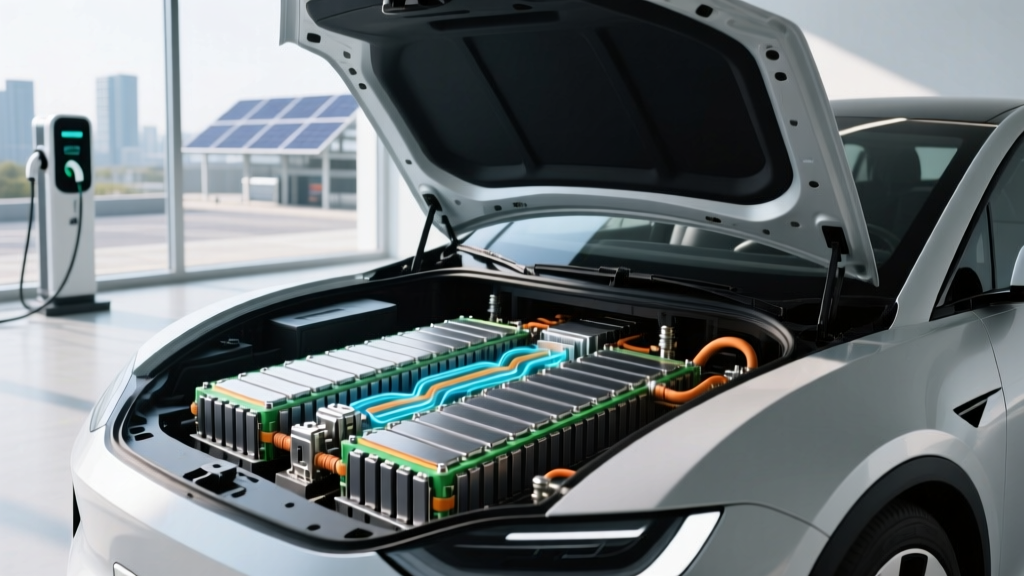
Toyota's nickel-metal hydride (NiMH) packs in earlier generations and the lithium-ion (Li-ion) packs in current models degrade slowly because Toyota deliberately limits their usable capacity window — often using only about 40–60% of total cell capacity to minimize stress. This conservative buffer strategy is the primary reason Prius batteries outlast those in many battery-electric vehicles (BEVs) that cycle deeper.
Prius Battery Chemistry Across Generations: NiMH vs. Lithium-Ion
Understanding what's inside your Prius battery matters when evaluating lifespan and replacement options. Toyota transitioned chemistries over the model's 25-year history, and each has distinct longevity characteristics.
| Attribute | NiMH (Gen 1–3, 2001–2015) | Li-ion / Bipolar NiMH (Gen 4–5, 2016–2026) |
|---|---|---|
| Energy Density | Lower (~60–80 Wh/kg) | Higher (~120–160 Wh/kg for Li-ion) |
| Typical Usable Capacity | ~1.3 kWh (buffered to ~0.6 kWh usable) | ~1.3 kWh HEV / 13.6 kWh Prime PHEV |
| Cycle Life | Excellent — 1,500+ shallow cycles typical | Very good — 1,000–2,000+ shallow cycles |
| Cold Performance | Tolerant but less efficient below 32°F | Better low-temp power delivery |
| Cost (Replacement) | Lower — refurbished packs from ~$1,000 | Higher — OEM packs $2,000–$3,500 |
| Expected Lifespan | 150,000–250,000 miles | 150,000–200,000+ miles (data still maturing for Gen 5) |
The 2023–2026 fifth-generation Prius uses a lithium-ion pack in the standard hybrid and a larger 13.6 kWh Li-ion pack in the Prius Prime PHEV. The Prime's pack enables an EPA-rated 44 miles of electric-only driving. Because Toyota still uses a substantial buffer (the Prime doesn't let you drain below roughly 15% or charge above ~85% in daily use), degradation remains gradual.
For context on the broader EV landscape, pure BEVs typically use NMC (nickel manganese cobalt) or LFP (lithium iron phosphate) chemistries. LFP offers longer cycle life and lower cost but lower energy density and poorer cold-weather range. NMC delivers higher energy density and better cold performance but at greater material cost. The Prius Li-ion packs use a Toyota-specific formulation optimized for shallow cycling — closer in philosophy to LFP's longevity focus than to the high-density NMC packs in performance-oriented BEVs.
Real-World Degradation Data: What Owners Actually See
Unlike BEVs where degradation is measured in range lost (e.g., dropping from 300 to 270 EPA miles), Prius hybrid battery degradation manifests differently. You won't see a dramatic range drop because the gas engine compensates. Instead, watch for:
- Reduced EV-mode duration: The car switches to the gas engine sooner when coasting or at low speeds
- Lower fuel economy: A degraded pack forces the ICE to work harder — expect a 3–8 MPG drop in advanced stages
- More frequent engine cycling: The engine starts and stops more often to maintain battery charge
- Prius Prime PHEV: Electric-only range drops from 44 miles toward 35–38 miles over 8–10 years
- Year 1–3 (0–45,000 mi): Less than 5% capacity loss — virtually unnoticeable in daily driving
- Year 5 (60,000–75,000 mi): 5–10% capacity loss — slight reduction in EV-mode coasting, MPG still near EPA rating
- Year 8–10 (100,000–130,000 mi): 10–18% capacity loss — more noticeable engine engagement, Prius Prime EV range drops ~5–8 miles
- Year 12–15 (150,000–200,000 mi): 18–30% capacity loss — this is when some owners consider replacement; car remains drivable but fuel economy declines
Sources: fueleconomy.gov owner MPG submissions, PriusChat community long-term logs, Consumer Reports reliability surveys.
A critical point: even at 25–30% degradation, the Prius remains a functional hybrid — it just gets worse gas mileage. The car doesn't strand you. This is a major advantage over a BEV with a degraded pack, where range loss directly affects trip planning.
Toyota's Hybrid Battery Warranty: What's Covered and for How Long
Toyota's hybrid battery warranty is among the strongest in the industry and a key reason buyers trust the Prius platform. Here's what the current coverage looks like:
| Coverage Detail | Specification |
|---|---|
| Duration | 10 years / 150,000 miles (whichever comes first) for 2020+ models |
| Prior models (2019 and earlier) | 8 years / 100,000 miles (10 years / 150,000 mi in CARB states) |
| Coverage Threshold | Battery must fail or lose capacity below functional threshold (verified by Toyota diagnostic scan) |
| What's Covered | Hybrid battery pack, battery control module, inverter with converter |
| Transferable? | Yes — warranty follows the vehicle, not the original owner |
| CARB State Extension | 10 yr / 150,000 mi applies in CA, NY, MA, and other states adopting California emissions standards |
For the 2026 Prius and Prius Prime, the 10-year/150,000-mile warranty applies nationwide. Toyota's diagnostic threshold for warranty replacement isn't a fixed percentage like BEV manufacturers typically publish (e.g., 70% capacity retention). Instead, Toyota technicians run a proprietary health check — if the battery can't hold sufficient charge to operate the hybrid system within parameters, it qualifies for warranty replacement.
Prius Battery Replacement Cost: What You'll Actually Pay
Most Prius owners never need a battery replacement during their ownership. But if you buy a high-mileage used Prius or keep yours past 200,000 miles, here's what to budget:
| Replacement Option | Cost Range (Parts + Labor) | Notes |
|---|---|---|
| New OEM from Toyota dealer | $2,500 – $4,000 | Full new pack; includes core exchange credit (~$200–$500) |
| Refurbished / reconditioned pack | $1,000 – $2,000 | Failed modules replaced with tested cells; 1–3 year warranty typical |
| Individual module replacement | $500 – $1,200 | Only the failed module(s) replaced; requires a skilled independent shop |
| Aftermarket new pack (e.g., Dorman) | $1,800 – $2,800 | Available for Gen 2–4; limited availability for Gen 5 as of 2026 |
| Prius Prime PHEV pack (OEM) | $4,500 – $7,000 | Larger 13.6 kWh pack; higher parts cost; typically under warranty when needed |
Labor typically runs 2–4 hours at $100–$150/hr at a dealer, or less at a hybrid-specialist independent shop. The physical replacement is straightforward — the pack sits under the rear seat/bench area and is accessible without major disassembly.
What Kills a Prius Battery Early (and How to Prevent It)
While most Prius batteries age gracefully, certain habits and conditions accelerate degradation. Understanding these factors helps you maximize pack life — whether you own a 2010 Gen 3 or a 2026 Gen 5.
- Prolonged storage at extreme states of charge: Leaving a Prius Prime fully charged (100%) or fully depleted (0%) for weeks stresses Li-ion cells. Store at roughly 50–60% SoC if the car will sit unused for more than two weeks.
- Extreme heat exposure: Consistent parking in direct sun in hot climates (Arizona, Texas, Florida) accelerates chemical aging. The Prius battery cooling fan intake (typically near the rear seat) can get blocked by cargo — keep it clear.
- Neglecting the battery cooling fan filter: The hybrid battery has its own cooling fan with a filter (located near the rear seat on most generations). A clogged filter causes the pack to run hot, accelerating degradation. Clean or replace this filter every 12–15 months — it's a $15–$25 part.
- Frequent deep discharges (Prius Prime): Running the Prime to 0% EV range daily and then immediately DC fast-charging to 100% adds stress. When possible, charge to 80–90% for daily use and save 100% for long trips.
- Very low annual mileage: Counterintuitively, Prius batteries in cars driven fewer than 5,000 miles/year can degrade faster than those driven 12,000–15,000 miles/year. Batteries benefit from regular cycling. If you drive infrequently, take the car for a 20-minute drive at least once a week.
- Ignoring warning lights: A hybrid system warning or check engine light related to battery temperature or voltage imbalance should be diagnosed promptly. Driving with a weak module can cascade into broader pack damage.
How to Check Your Prius Battery Health (State of Health)
Unlike some BEVs that display State of Health (SoH) directly in the infotainment system, Toyota doesn't provide a simple battery health percentage on the Prius dashboard. Here's how owners can assess their pack:
Dealer Diagnostic Scan
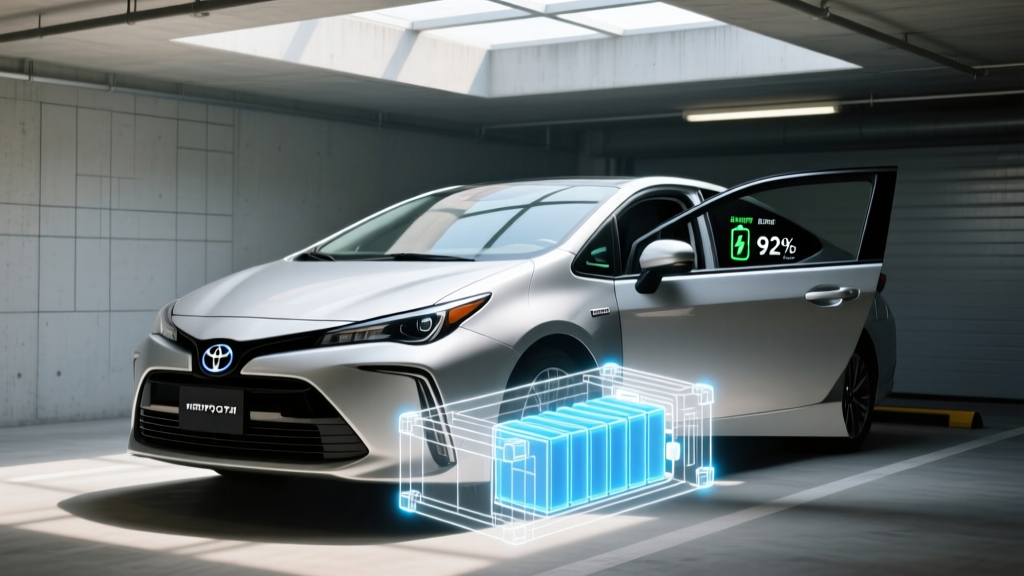
Any Toyota dealer can run a Hybrid Battery Health Check using Toyota's Techstream diagnostic tool. This reads individual module voltages, internal resistance, and overall pack capacity. Ask specifically for a "hybrid battery health report" — it's often free or $50–$100 if not part of scheduled service. This is the most authoritative method.
OBD-II Scanner with Hybrid App
Enthusiast owners use an OBD-II Bluetooth adapter ($25–$50) paired with apps like Dr. Prius or Hybrid Assistant (Android). These read real-time battery data including:
- Individual module voltage spread (a spread greater than 0.3V under load suggests a weak module)
- Battery temperature vs. ambient
- Charge/discharge current limits
- Estimated SoH percentage (Dr. Prius runs a "Life Expectancy Test" that cycles the battery and reports a health score)
The MPG Method
Track your fuel economy over time using fueleconomy.gov's "My MPG" tool or the car's trip computer. If your Prius consistently delivered 52 MPG combined when new and now averages 45–47 MPG under similar driving conditions, that 5–7 MPG drop signals meaningful battery degradation. This is the simplest no-tools approach.
Looking Ahead: Solid-State and Next-Gen Battery Tech
Toyota is investing heavily in solid-state battery technology, which promises higher energy density, faster charging, and improved longevity by replacing the liquid electrolyte with a solid material. Toyota has announced plans to begin limited solid-state battery production in 2027–2028, initially targeting BEVs rather than hybrids.
For current and near-term Prius buyers, this doesn't change the calculus. The existing Li-ion and bipolar NiMH packs are proven, well-understood, and supported by an extensive replacement ecosystem. Solid-state batteries, when they arrive, will likely debut in Toyota's BEV lineup (the bZ series) before filtering into hybrid applications. Realistically, a solid-state Prius battery is a 2030+ prospect at the earliest.
Toyota has also introduced bipolar NiMH technology in some Gen 5 Prius trims, which improves power density and reduces internal resistance compared to traditional NiMH module designs. This is an incremental improvement available now, not a future promise.
Frequently Asked Questions
How long do Prius batteries last in years and miles?
Most Prius traction batteries last 150,000 to 200,000 miles, which translates to roughly 12–15 years at average annual mileage (12,000–15,000 mi/yr). Many exceed 200,000 miles. Toyota's 10-year/150,000-mile warranty (for 2020+ models) reflects this engineering confidence.
How much does it cost to replace a Prius hybrid battery?
A new OEM replacement runs $2,500–$4,000 for the standard Prius HEV and $4,500–$7,000 for the Prius Prime PHEV. Refurbished packs cost $1,000–$2,000, and individual module replacement can be as low as $500–$1,200. Most owners never need a replacement because the battery outlasts their ownership.
Does Toyota's warranty cover hybrid battery replacement?
Yes. For 2020 and newer Prius models, Toyota covers the hybrid battery for 10 years or 150,000 miles (whichever comes first). The warranty is transferable to subsequent owners. In CARB states, the 10yr/150k coverage also applies to 2019 and older models. If the battery fails a Toyota diagnostic health check within the warranty period, replacement is covered.
Can I check my Prius battery health myself?
Yes. The most accessible DIY method is an OBD-II adapter with the Dr. Prius or Hybrid Assistant app, which can read module voltages and run a health test. You can also monitor your fuel economy trend — a consistent 5+ MPG drop from your baseline suggests degradation. For the definitive assessment, a Toyota dealer can run a Techstream hybrid battery diagnostic.
Is the Prius battery the same as a BEV battery? What about LFP vs NMC?
No. The standard Prius HEV battery is tiny — about 1.3 kWh — compared to a BEV's 60–100 kWh pack. The Prius Prime PHEV uses a 13.6 kWh pack, still far smaller than a BEV. Toyota's hybrid packs prioritize shallow-cycle longevity over energy density. While BEVs use LFP or NMC chemistries optimized for range, Prius batteries are optimized for hundreds of thousands of small charge/discharge cycles. The LFP vs NMC debate matters more for BEV buyers; for Prius owners, Toyota's chosen chemistry is already optimized for the hybrid use case.
Should I be worried about buying a used Prius with 150,000+ miles?
Not necessarily. Many Prius vehicles at 150,000–180,000 miles still have their original battery with 75–85% capacity remaining. Before buying, get a hybrid battery health check (dealer or Dr. Prius app), review maintenance records for the battery cooling fan filter, and budget $1,500–$3,000 as a contingency for a potential refurbished pack replacement down the road. Even with a replacement, a high-mileage Prius often costs less to own than a lower-mileage conventional car.
Sources: Toyota Prius Official Specifications, fueleconomy.gov, Consumer Reports Prius Reliability Data. Replacement cost estimates aggregated from dealer quotes, aftermarket suppliers, and owner community reports as of early 2026. Warranty terms per Toyota's published coverage; verify with your dealer for model-year specifics.