The Real Answer: Most EV Batteries Outlast the Car
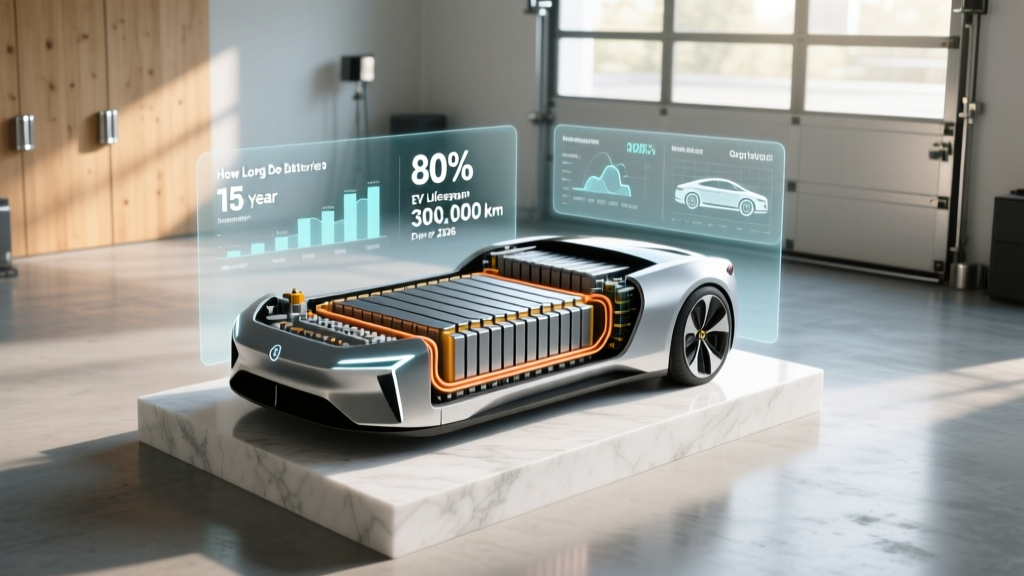
If you're researching electric vehicles, you've likely searched how long do batteries in cars last — and found a tangle of conflicting claims. The short answer, backed by fleet data and long-term ownership studies, is that modern EV traction batteries typically last 15 to 20 years or 200,000+ miles before degrading to a point where replacement might be considered. Most will retain 70–85% of their original capacity at that point, still providing usable daily range.
That said, "lasting" doesn't mean "performing like new." EV batteries degrade gradually, much like a smartphone battery, losing a few percent of capacity each year. Understanding the chemistry inside your pack, the factors that accelerate wear, and what your warranty actually covers is the difference between confident EV ownership and needless anxiety.
This guide pulls together real degradation data, replacement cost figures, and chemistry trade-offs so you can evaluate any 2026 EV purchase with clear expectations.
LFP vs. NMC/NCA: Which Battery Chemistry Lasts Longer?
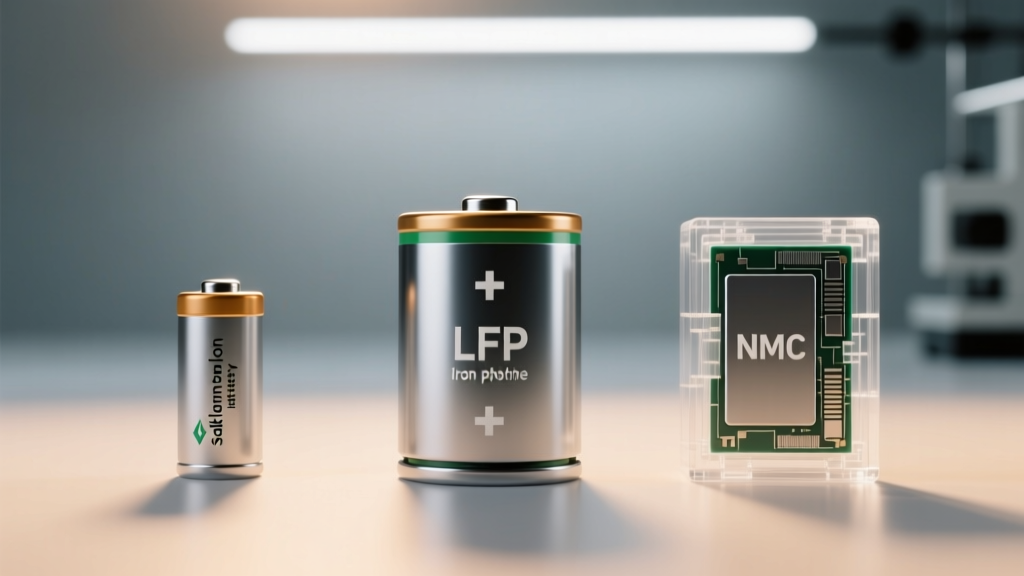
Not all EV batteries are built the same. The two dominant lithium-ion chemistries in 2026 passenger EVs are LFP (lithium iron phosphate) and NMC/NCA (nickel manganese cobalt / nickel cobalt aluminum). Each has distinct trade-offs that affect longevity, range, and cold-weather behavior.
| Attribute | LFP (Lithium Iron Phosphate) | NMC / NCA (Nickel-based) |
|---|---|---|
| Typical Cycle Life | 3,000–5,000+ cycles | 1,000–2,000 cycles |
| Energy Density | Lower (~160–180 Wh/kg cell-level) | Higher (~220–300 Wh/kg cell-level) |
| Calendar Degradation | Slower; flatter degradation curve | Faster early loss, then stabilizes |
| Cold-Weather Performance | Weaker; more range loss below 32°F | Better low-temp conductivity |
| Cost (per kWh, pack-level) | ~$90–$110 | ~$120–$150 |
| Recommended Daily Charge | 100% OK (beneficial for BMS calibration) | 80% preferred for longevity |
| Common in 2026 Models | Tesla Model 3/Y RWD, Ford Mustang Mach-E Select, BYD, Rivian Standard | Hyundai Ioniq 5/6, Kia EV6/EV9, Chevy Equinox EV, BMW iX, most long-range trims |
Which is better? If your priority is maximum cycle life and lower cost — and you can accept somewhat reduced range and colder-weather compromise — LFP wins on longevity. If you need the longest possible range per charge and better winter performance, NMC/NCA is the better fit, provided you follow the 80% daily charge guideline.
According to IEA Global EV Outlook data, LFP's global market share in passenger EVs surpassed 40% in 2025, driven by its cost advantage and superior cycle life. For most commuters driving under 40 miles daily, an LFP pack charged to 100% each night will outlast the vehicle's useful life with minimal concern.
EV Battery Degradation: What the Data Actually Shows
Battery degradation follows a characteristic curve: a steeper drop in the first 1–2 years (typically 2–5%), followed by a long, slow linear decline. This pattern holds across most chemistries and manufacturers.
Typical EV Battery Capacity Retention Over Time
| Age / Mileage | Avg. Capacity Retained (NMC) | Avg. Capacity Retained (LFP) |
|---|---|---|
| Year 1 / ~12,000 mi | 95–97% | 97–99% |
| Year 3 / ~36,000 mi | 90–94% | 94–97% |
| Year 5 / ~60,000 mi | 86–91% | 91–95% |
| Year 8 / ~96,000 mi | 80–87% | 87–93% |
| Year 10 / ~120,000 mi | 76–84% | 84–91% |
| Year 15 / ~180,000 mi | 70–80% | 78–88% |
Sources: Geotab fleet data (2024 longitudinal study of 10,000+ EVs), Recurrent Auto battery health reports, manufacturer warranty thresholds. Individual results vary based on climate, charging habits, and thermal management system quality.
A concrete example: a 2023 Tesla Model 3 Long Range with a 75 kWh usable NMC battery rated at 341 miles EPA new would, at Year 8 and 96,000 miles, retain roughly 83% capacity — about 62 kWh usable, translating to approximately 283 miles of EPA-equivalent range. That's still enough for the vast majority of daily driving and road trips with brief DC fast-charging stops.
Real-world caveat: These figures assume moderate climates and mixed charging. Vehicles in extreme heat (Arizona, Texas summers) with frequent DC fast charging may see 2–4% additional loss over the same period. Liquid-cooled battery packs (standard on Tesla, Hyundai E-GMP, GM Ultium, Rivian) significantly mitigate heat-related degradation versus passive-cooled older designs.
What Does the EV Battery Warranty Actually Cover?
Federal law mandates that EV batteries sold in the United States carry a minimum warranty of 8 years / 100,000 miles (10 years / 150,000 miles in CARB states including California, New York, Massachusetts, and others). However, the specific terms — particularly the capacity retention threshold — vary by manufacturer and matter enormously.
| Manufacturer | Warranty Period | Capacity Threshold | Notes |
|---|---|---|---|
| Tesla (Model 3/Y LFP RWD) | 8 yr / 100,000 mi | 70% retention | Standard range models |
| Tesla (Model 3/Y LR & Performance) | 8 yr / 120,000 mi | 70% retention | NMC/NCA Long Range |
| Hyundai / Kia (E-GMP) | 10 yr / 100,000 mi | 70% retention | Ioniq 5, EV6, EV9 |
| GM (Ultium platform) | 8 yr / 100,000 mi | 70% retention (60% for Bolt-era) | Equinox EV, Blazer EV, Silverado EV |
| Ford (Mach-E, F-150 Lightning) | 8 yr / 100,000 mi | 70% retention | Extended range packs differ in kWh |
| Rivian (R1T, R1S) | 8 yr / 175,000 mi | 70% retention | Higher mileage cap than most |
| BMW (i4, iX, i7) | 8 yr / 100,000 mi | 70% retention | Includes battery management system |
Critical detail: The warranty covers the battery dropping below the stated threshold — not normal gradual degradation above it. A pack that retains 71% at year 8 is functioning within warranty spec, even though you've lost nearly a third of your original range. In practice, very few modern liquid-cooled EV batteries fall below 70% within the warranty period under normal use.
Warranties typically cover defects in materials and workmanship plus excessive capacity loss. They do not cover damage from accidents, flooding, improper charging equipment, or modifications. Per the EPA's emissions warranty requirements, the battery is classified as a major emissions-control component, which is why the federal minimum is so robust.
How Much Does It Cost to Replace an EV Battery?
This is the question that generates the most fear — and the most misinformation. Let's anchor the discussion in actual replacement costs and, more importantly, how rarely full replacements are needed.
| Vehicle / Pack Size | Battery Capacity | Out-of-Warranty Replacement Cost |
|---|---|---|
| Tesla Model 3 RWD (LFP) | ~57 kWh usable | $9,000 – $13,000 |
| Tesla Model Y Long Range | ~75 kWh usable | $12,000 – $16,000 |
| Hyundai Ioniq 5 (Standard Range) | ~58 kWh usable | $10,000 – $14,000 |
| Hyundai Ioniq 5 (Long Range) | ~77 kWh usable | $14,000 – $18,000 |
| Ford Mustang Mach-E (Extended) | ~88 kWh usable | $15,000 – $22,000 |
| Ford F-150 Lightning (Extended) | ~131 kWh usable | $22,000 – $32,000 |
| Chevy Silverado EV | ~200 kWh usable | $30,000 – $42,000 |
| Rivian R1T (Max Pack) | ~149 kWh usable | $25,000 – $35,000 |
When is replacement actually needed? Data from Recurrent Auto and Geotab shows that fewer than 2–3% of EVs require a full battery replacement within the first 10 years of ownership — and the vast majority of those replacements occur under warranty at no cost to the owner. Most batteries that do need service require only individual module or cell replacements, which cost significantly less ($1,500–$5,000 depending on the pack architecture).
Also worth noting: battery pack prices have fallen from over $400/kWh in 2010 to approximately $110–$130/kWh at the pack level in 2025–2026, per BloombergNEF data. Replacement costs will continue declining as the EV fleet ages and the aftermarket matures.
5 Factors That Accelerate (or Preserve) Battery Life
Your battery's longevity isn't purely a function of time. These five factors have measurable, data-backed impacts on degradation rate:
Battery Health Best Practices
- Minimize DC fast charging to when you need it. Frequent use of 150+ kW DC fast chargers (especially without preconditioning) accelerates degradation by roughly 1–2% over 5 years compared to predominantly Level 2 home charging. For road trips, fast charging is fine — just don't rely on it as your daily routine if you have home Level 2 access.
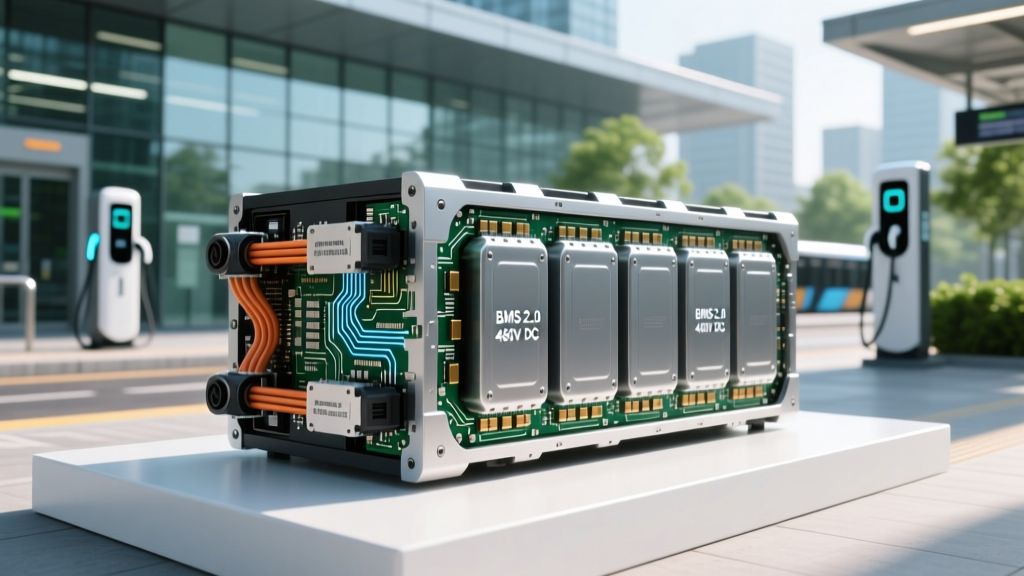
- Avoid extreme states of charge for NMC/NCA batteries. Keeping an NMC pack between 20% and 80% for daily use reduces stress on the cathode. LFP batteries are the exception — they benefit from regular 100% charges for BMS (Battery Management System) calibration.
- Let the thermal management system do its job. Modern EVs actively cool and heat battery packs. In extreme heat, park in shade or a garage when possible. In extreme cold, use preconditioning (available on virtually all 2026 EVs) to warm the pack before charging or driving. Preconditioning reduces cold-weather range loss from ~30% to ~15–20%.
- Don't store at 100% or 0% for extended periods. If leaving your EV unused for more than a week, set the charge limit to 50–60%. Calendar degradation accelerates significantly at high states of charge in warm conditions.
- Use a quality Level 2 home charger. A 240V / 32–48A Level 2 charger (7.7–11.5 kW) provides the optimal balance: fast enough for overnight replenishment, gentle enough to avoid thermal stress. See the U.S. Department of Energy's EV technology overview for charging best practices.
How to Check Your EV Battery's State of Health (SoH)
State of Health (SoH) is the percentage of your battery's current maximum capacity compared to its original capacity when new. Monitoring SoH helps you track degradation, plan for warranty claims if needed, and assess value when buying or selling a used EV.
Methods for Checking SoH
In-vehicle displays: Many 2026 EVs show battery health directly in the infotainment system. Tesla provides a battery health percentage under Service > Battery Health. Hyundai/Kia's E-GMP vehicles display SoH in the EV settings menu. BMW includes it in the iDrive vehicle status panel.
OBD-II diagnostic tools: Third-party OBD-II readers like the OBDLink MX+ paired with apps such as ABRP (A Better Route Planner) or LeafSpy (for Nissan Leaf) can read the BMS-reported SoH directly. This is the most reliable method for used-EV purchases.
Charging data analysis: Apps like Recurrent and TezLab track your charging sessions over time and estimate SoH by comparing actual energy accepted (kWh) during charges against the battery's rated capacity. This method is less precise but requires no hardware.
Dealer diagnostic reports: Any authorized service center can pull a full battery health report, including individual cell voltage balance and module-level degradation data. Request this during routine service or before a used-EV purchase.
Emerging Battery Tech: Solid-State and Silicon Anodes
If you're evaluating a 2026 EV purchase, you've likely seen headlines about solid-state batteries and silicon anodes promising dramatically longer life and faster charging. Here's a realistic, timeline-grounded assessment:
Silicon anode batteries are already entering production. Companies like Sila Nanotechnologies and Group14 supply silicon-composite anode materials to manufacturers including Mercedes-Benz (for the upcoming G-Class EV) and Panasonic (for Tesla's 4680 cells). Silicon anodes offer roughly 20–40% higher energy density than graphite anodes and modestly improved cycle life. Expect broader adoption across 2027–2028 model-year vehicles.
Solid-state batteries replace the liquid electrolyte with a solid ceramic, polymer, or sulfide material, promising higher energy density (potentially 400+ Wh/kg), faster charging (10–80% in under 10 minutes), and improved safety. Toyota, Samsung SDI, and QuantumScape have announced pilot production, with Toyota targeting limited deployment in a 2027–2028 model-year vehicle. However, mass-market availability at competitive pricing is not expected before 2030–2032.
Bottom line for today's buyers: Current lithium-ion technology — both LFP and NMC — is mature, well-understood, and proven to deliver 15+ years of service. Waiting for solid-state is not a practical strategy if you need a vehicle in the next 2–3 years. The batteries in 2026 EVs are already excellent and improving incrementally each model year.
Frequently Asked Questions
How long do EV batteries last in years and miles?
Based on fleet data from Geotab and Recurrent Auto, modern liquid-cooled EV batteries typically retain 70–85% of original capacity at 15–20 years or 200,000+ miles. LFP chemistry generally outlasts NMC/NCA in cycle count, though NMC offers higher energy density and better cold-weather performance. Most EV batteries will outlast the vehicle's economic useful life without needing replacement.
How much does an EV battery cost to replace?
Out-of-warranty replacement costs range from approximately $9,000 for a smaller pack (Tesla Model 3 RWD, ~57 kWh) to $30,000–$42,000 for large truck packs (Chevy Silverado EV, ~200 kWh). However, fewer than 3% of EVs require full battery replacement within the first decade, and the vast majority of those are covered under the 8-year/100,000-mile federal minimum warranty. Module-level repairs, when needed, typically cost $1,500–$5,000.
What does the battery warranty actually cover?
EV battery warranties cover the pack dropping below a specified capacity retention threshold (typically 70%) within the warranty period (8 years/100,000 miles minimum; 10 years/100,000 miles in CARB states). They also cover manufacturing defects and BMS failures. They do not cover damage from accidents, flooding, improper equipment, or normal gradual degradation above the threshold. Check your specific manufacturer's warranty document for exact terms.
How do I check and maximize my EV battery health?
Check SoH through your vehicle's built-in battery health display, an OBD-II diagnostic tool, a charging-data app like Recurrent, or a dealer diagnostic report. To maximize longevity: prioritize Level 2 home charging over daily DC fast charging, keep NMC/NCA batteries between 20–80% for daily use (LFP can charge to 100%), precondition the battery in cold weather, avoid storing the vehicle at extreme states of charge, and park in shade or a garage during hot weather.
Is LFP or NMC better for battery longevity?
LFP (lithium iron phosphate) offers superior cycle life (3,000–5,000+ cycles vs. 1,000–2,000 for NMC) and a flatter degradation curve, making it the longevity winner. However, NMC/NCA provides higher energy density (longer range per charge) and better cold-weather performance. For daily commuters who charge at home and prioritize a 20-year battery lifespan, LFP is the stronger choice. For drivers who need maximum range and regularly drive in sub-freezing conditions, NMC remains the better fit with proper charge-limit habits.
Does fast charging damage my EV battery?
Occasional DC fast charging — such as on road trips — has minimal impact on battery health. However, relying on 150+ kW DC fast charging as your primary daily charging method can accelerate degradation by an estimated 1–3% over 5 years compared to Level 2 charging, primarily due to thermal stress. Modern EVs with active liquid cooling and battery preconditioning (routing navigation to a charger warms the pack for optimal charge acceptance) mitigate this significantly. If you have home Level 2 access, use it for daily charging and reserve DC fast charging for longer trips.
Do I need to worry about battery replacement if I buy a used EV?
For a used EV within its warranty period (under 8 years/100,000 miles), battery replacement risk is extremely low. For out-of-warranty vehicles, request a battery health report showing current SoH. A used EV with 85%+ SoH at 80,000 miles has significant remaining life. Given that pack replacement costs are declining and module-level repairs are available, a degraded battery is a manageable expense — not the financial catastrophe often portrayed in media coverage.
Sources referenced: U.S. Department of Energy / fueleconomy.gov, IRS §30D Clean Vehicle Credit guidance, Geotab EV Battery Degradation Study, Recurrent Auto Battery Health Reports, BloombergNEF Battery Price Survey.