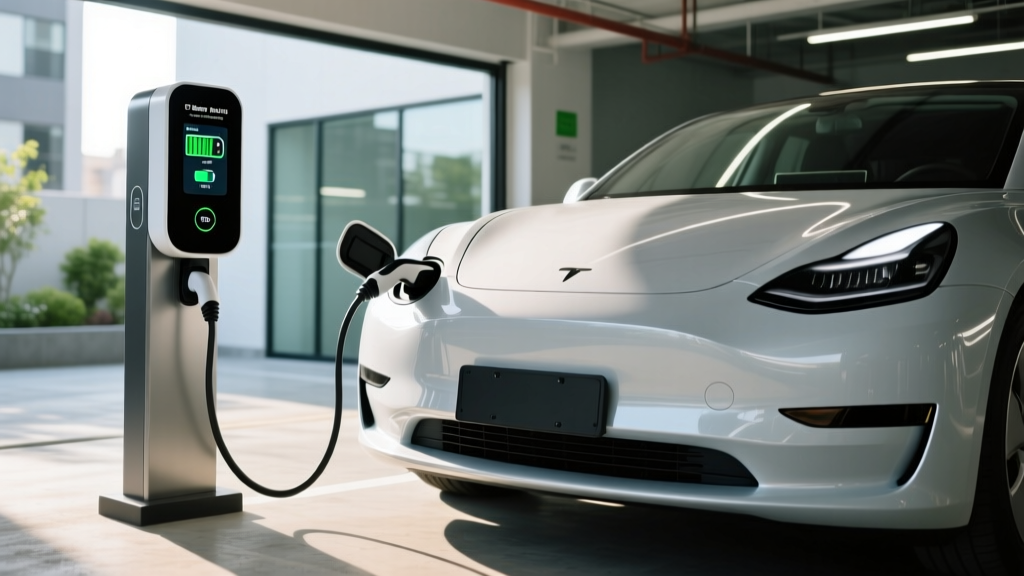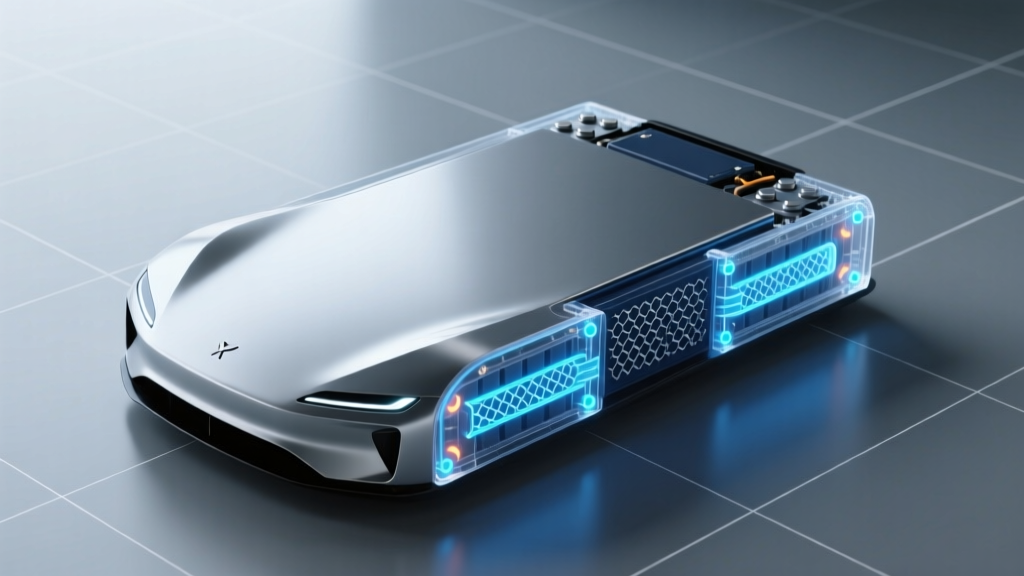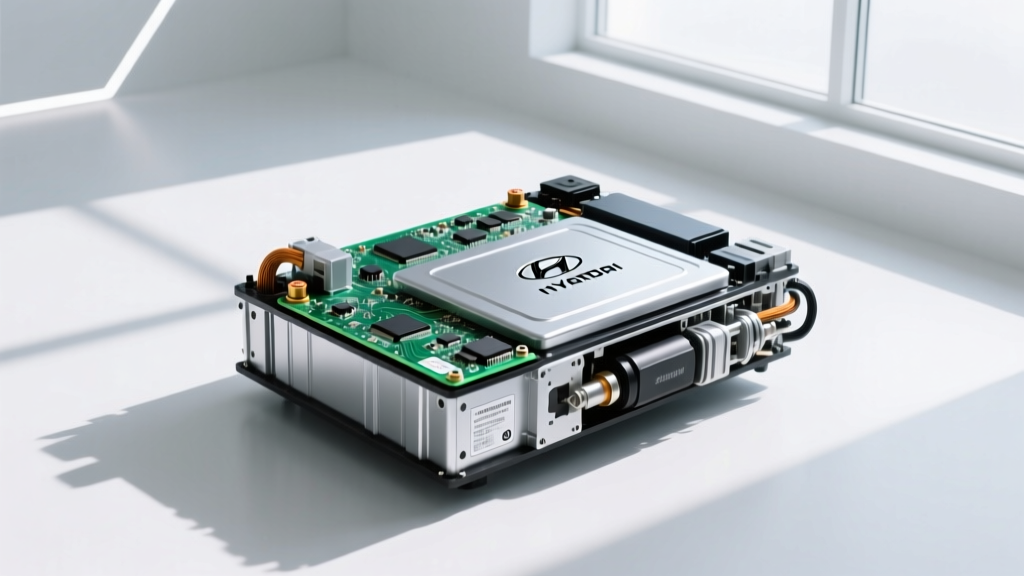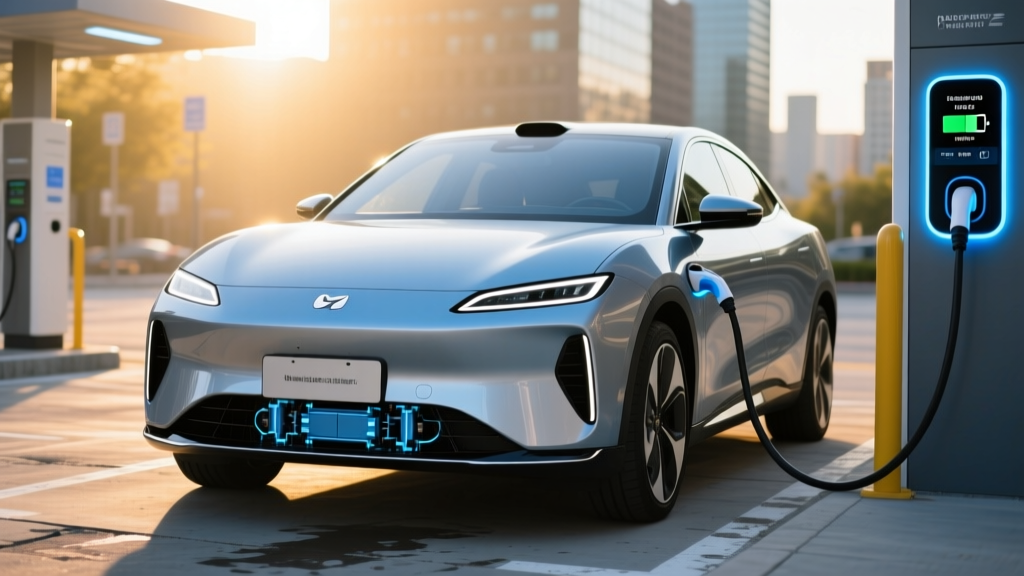
If you're shopping for an electric vehicle in 2026, the single most persistent question is probably not about range or charging speed — it's about longevity. How long do EV batteries last? The short answer, backed by over a decade of fleet data and millions of miles of real-world driving, is that most modern EV traction batteries will outlast the car they're installed in. But the details matter: chemistry type, charging habits, climate, and warranty structure all shape what "lasting" actually means for your wallet and your ownership experience.
This guide cuts through the fear-mongering and the marketing. We'll walk you through real degradation curves, compare LFP and NMC chemistries with hard numbers, explain what warranties actually cover (and what they don't), and give you a practical framework for maximizing your battery's State of Health over a decade or more of ownership.
How Long Do EV Batteries Actually Last? The Data
Let's start with the headline number: most EV batteries manufactured from 2020 onward are engineered to retain 70–80% of their original capacity after 150,000–200,000 miles or 10–15 years of typical use. That's not a failure point — that's a retention threshold. A battery at 75% State of Health (SoH) still functions; it just offers less range per charge.
Here's what real-world data tells us across major platforms:
Typical EV Battery Degradation Curve (NMC Chemistry, Liquid-Cooled)
| Mileage | Years (avg 12k mi/yr) | Avg Capacity Retained (SoH) | Range Impact (example: 300-mi EPA) |
|---|---|---|---|
| 0 | 0 | 100% | 300 mi |
| 30,000 | 2.5 | 95–97% | 285–291 mi |
| 60,000 | 5 | 90–94% | 270–282 mi |
| 100,000 | 8.3 | 85–90% | 255–270 mi |
| 150,000 | 12.5 | 78–85% | 234–255 mi |
| 200,000 | 16.7 | 72–80% | 216–240 mi |
Sources: Geotab fleet data, Recurrent Auto battery health reports, manufacturer warranty thresholds. Individual results vary by chemistry, climate, and charging behavior.
Several important nuances emerge from this data. First, degradation is non-linear — the steepest drop typically occurs in the first 20,000–30,000 miles (often 2–5%), then the curve flattens considerably. Second, LFP (lithium iron phosphate) batteries, now standard in many base-trim EVs from Tesla, BYD, Ford, and others, show even slower degradation — often retaining 90%+ capacity past 100,000 miles due to inherently more stable chemistry.
Third, and critically: complete battery failure before 150,000 miles is rare in liquid-cooled packs from major manufacturers. Catastrophic failures that require full replacement are far more often linked to manufacturing defects (covered under warranty) or physical damage than to normal wear.
LFP vs NMC vs NCA: Chemistry Determines Longevity
Not all EV batteries are created equal. The cathode chemistry inside the cells is the single biggest factor in how long your battery lasts, how it performs in cold weather, and what it costs to replace. In 2026, three chemistries dominate the US market:
| Attribute | LFP (Lithium Iron Phosphate) | NMC (Nickel Manganese Cobalt) | NCA (Nickel Cobalt Aluminum) |
|---|---|---|---|
| Cycle Life | 3,000–5,000+ cycles | 1,000–2,000 cycles | 1,000–1,500 cycles |
| Energy Density | Lower (~160 Wh/kg cell-level) | Higher (~220–260 Wh/kg) | Highest (~260–280 Wh/kg) |
| Degradation Rate | Slowest — ~2–4% per 30k mi | Moderate — ~3–5% per 30k mi | Moderate — ~3–6% per 30k mi |
| Cold-Weather Performance | Weaker — more range loss below 32°F | Better — less cold-weather penalty | Better — similar to NMC |
| Typical SoC Recommendation | 100% daily OK (beneficial for calibration) | 80% daily recommended | 80–90% daily recommended |
| Cost per kWh (pack-level) | ~$90–$110 | ~$120–$150 | ~$130–$160 |
| Common 2026 Applications | Tesla Model 3/Y RWD, Ford F-150 Lightning base, BYD models | Hyundai Ioniq 5/6, Kia EV6/EV9, VW ID.4, Rivian | Tesla Model S/X, some Lucid configs |
The trade-off is straightforward: LFP batteries last longer and cost less, but they're heavier and less energy-dense — meaning less range in the same physical space, and more noticeable range loss in freezing temperatures. NMC and NCA offer more range per pound and better winter performance, but they degrade faster over time and carry higher replacement costs.
For a commuter who charges at home daily and lives in a mild climate, LFP is increasingly the smart longevity play. For a road-tripper in Minnesota who needs every mile of range in January, NMC's cold-weather advantage may justify its steeper degradation curve.
What Does the EV Battery Warranty Actually Cover?
Federal law mandates that EV battery warranties cover a minimum of 8 years or 100,000 miles (whichever comes first). In California and states that have adopted CARB emissions standards (now over a dozen states), the requirement extends to 10 years or 150,000 miles. Most major manufacturers exceed these minimums. Here's how the landscape looks in 2026:
| Manufacturer | Battery Warranty | Capacity Retention Threshold | Notes |
|---|---|---|---|
| Tesla (Model 3/Y RWD — LFP) | 8 yr / 100,000 mi | 70% | Long Range/Performance (NMC): 8 yr / 120,000 mi |
| Hyundai / Kia | 10 yr / 100,000 mi | 70% | Among the most generous terms in the market |
| Ford (F-150 Lightning, Mustang Mach-E) | 8 yr / 100,000 mi | 70% | Components covered separately |
| General Motors (Ultium platform) | 8 yr / 100,000 mi | 70% | Some commercial fleet configs differ |
| Volkswagen (ID.4) | 8 yr / 100,000 mi | 70% | Coverage includes battery management system |
| Rivian | 8 yr / 175,000 mi | 70% | Higher mileage cap reflects truck/adventure use case |
| BMW | 8 yr / 100,000 mi | 70% | Some models offer extended warranty purchase options |
Understanding the threshold is essential. A warranty guaranteeing 70% capacity retention does not mean the manufacturer replaces your battery if it drops to 69%. It means they'll repair or replace modules to bring it back above the threshold — often swapping individual modules rather than the entire pack. Total pack replacement under warranty is uncommon.
Also critical: warranties typically exclude damage from accidents, flooding, improper modifications, or use of non-approved charging equipment. They also don't cover normal cosmetic degradation — only capacity loss beyond the stated threshold. Always read the specific warranty booklet for your model year; terms can shift annually.
EV Battery Replacement Cost: What to Expect and When
This is where fear-mongering runs rampant, so let's ground this in reality. Most EV batteries never need full replacement during the vehicle's usable life. According to data from Recurrent Auto, fewer than 5% of EVs in their studied fleet of over 15,000 vehicles required a battery replacement — and the vast majority of those were covered under warranty due to manufacturing defects.
That said, if you're buying a used EV out of warranty, planning to keep a vehicle past 200,000 miles, or simply want to understand the worst-case scenario, here are current replacement cost ranges:
| Vehicle (2024–2026 examples) | Battery Size (kWh usable) | Chemistry | Replacement Cost Range (parts + labor) |
|---|---|---|---|
| Tesla Model 3 RWD | ~57 kWh | LFP | $10,000–$14,000 |
| Tesla Model Y Long Range | ~75 kWh | NMC | $14,000–$18,000 |
| Hyundai Ioniq 5 | ~77.4 kWh | NMC | $14,000–$20,000 |
| Ford F-150 Lightning Extended Range | ~131 kWh | NMC | $22,000–$32,000 |
| Chevrolet Equinox EV | ~85 kWh | NMC (Ultium) | $14,000–$19,000 |
| Rivian R1T (Large Pack) | ~128 kWh | NMC | $20,000–$28,000 |
| VW ID.4 | ~82 kWh | NMC | $13,000–$18,000 |
Costs based on 2025–2026 service estimates from manufacturer service centers and independent EV shops. Labor typically accounts for $1,500–$3,000 of the total. Prices continue to decline as pack-level kWh costs fall.
Two important context points. First, module-level repair is increasingly common and dramatically cheaper. Many packs are composed of 8–16 individual modules; if one or two degrade prematurely, a shop can replace just those modules for $2,000–$6,000 rather than swapping the entire pack. Second, pack-level costs have dropped roughly 50% since 2018 and continue falling — the $100/kWh pack-level threshold, once seen as a milestone, has been crossed for LFP and is approaching for NMC.
Factors That Accelerate (or Slow) Battery Degradation
Your battery's lifespan isn't purely a function of time and miles. How you charge, where you park, and how you drive all measurably affect degradation. Here are the factors ranked by impact, based on fleet telemetry and laboratory cycling data:
1. State of Charge (SoC) Habits — High Impact
Lithium-ion cells experience the most stress at the extremes of charge — above 90% and below 10%. For NMC and NCA chemistries, daily charging to 100% accelerates calendar aging. Setting your charge limit to 80% for daily use and reserving 100% for road trips can meaningfully extend pack life. LFP is the exception: Tesla and BYD recommend periodic 100% charges for LFP packs to keep the battery management system (BMS) calibration accurate.
2. DC Fast Charging Frequency — Moderate-to-High Impact
Occasional DC fast charging (1–2 times per week) has minimal impact on modern, liquid-cooled packs. But daily DC fast charging — particularly at rates above 150 kW — generates sustained heat that accelerates cell wear over time. Fleet data from Geotab shows vehicles that DC fast-charged more than three times per week degraded roughly 1.5–2x faster over 100,000 miles than those primarily using Level 2 home charging.
3. Temperature Exposure — Moderate Impact
Batteries prefer the same temperatures humans do: roughly 60–80°F. Prolonged exposure to ambient temperatures above 95°F (especially while parked at high SoC) accelerates calendar degradation. Extreme cold doesn't permanently damage cells but temporarily reduces usable capacity and slows charge acceptance — which is why preconditioning (warming the battery before fast charging) is critical in winter. Most modern EVs do this automatically when you navigate to a charger.
4. Depth of Discharge — Low-to-Moderate Impact
Regularly draining the battery to near 0% stresses cells more than shallow cycles. You don't need to obsess over this — but if you can plug in when you hit 20% rather than waiting for 2%, your cells will thank you over a decade of ownership.
Practical Battery Care Checklist
- Set daily charge limit to 80% (NMC/NCA) or follow manufacturer guidance for LFP
- Use Level 2 home charging as your primary method; reserve DCFC for road trips
- Precondition the battery before DC fast charging in cold weather (use built-in nav to charger)
- Avoid parking at 100% SoC for extended periods in hot weather
- Don't let SoC sit at 0% for days — plug in soon after reaching very low charge
- Keep tires properly inflated — reduces energy draw and heat generation from the pack
- Use manufacturer-approved charging equipment to protect warranty coverage
How to Check Your EV Battery's State of Health
Unlike a gas car's engine, you can't hear a degrading battery — but you can measure it. State of Health (SoH) is expressed as a percentage of the battery's original usable capacity. Here's how to monitor it in 2026:
In-vehicle displays: Many 2024–2026 EVs now include a battery health indicator in the settings menu. Tesla offers a "Battery Health" screen showing estimated range at 100% compared to original. Hyundai/Kia's Bluelink connected services provides SoH data through the app. BMW includes battery health in the iDrive system on newer models.
OBD-II diagnostic tools: Third-party tools like OBDLink SX/MX+ paired with apps such as Leaf Spy (Nissan), Scan My Tesla, or Car Scanner can pull real SoH data from the BMS. This is especially useful for used-EV buyers who want independent verification before purchase.
Dealer or independent EV service centers: A professional battery health check typically costs $50–$150 and provides a detailed report including individual module voltage variance, internal resistance, and overall SoH. This is worth doing when buying any used EV outside of CPO warranty.
Third-party services: Companies like Recurrent offer battery health reports that compare your pack's degradation against a database of thousands of identical vehicles — giving you context for whether your battery is aging faster or slower than average.
What's Next: Solid-State and Silicon Anode Batteries
If you've followed EV news, you've seen promises of solid-state batteries — cells using a solid electrolyte instead of the liquid one in today's lithium-ion packs. The potential benefits are significant: higher energy density (possibly 400+ Wh/kg at cell level), faster charging, reduced fire risk, and potentially 5,000+ cycle life.
But as of 2026, solid-state batteries remain in limited pilot production and pre-commercial testing. Toyota has announced a solid-state battery targeting 2027–2028 production vehicles, and QuantumScape continues to ship prototype cells to automotive partners. Samsung SDI and CATL have announced silicon-anode enhancements to existing lithium-ion cells that boost energy density by 10–20% — these are closer to market, appearing in select 2026–2027 model-year vehicles.
Practical takeaway: If you're buying an EV in 2026, you're buying liquid lithium-ion — either LFP or NMC/NCA. The technology is mature, well-understood, and backed by extensive real-world longevity data. Waiting for solid-state means waiting at least 2–4 more years for meaningful market availability, with early adoption likely limited to premium models at high MSRPs. The batteries available today are already good enough to last the life of the vehicle for the vast majority of owners.
Frequently Asked Questions
How long do EV batteries last in years and miles?
Most modern EV batteries (2020 and newer) retain 70–80% of original capacity after 150,000–200,000 miles or 12–16 years. Complete failure before 150,000 miles is rare in liquid-cooled packs. LFP chemistry batteries often exceed these figures, with some fleet data showing 90%+ retention past 100,000 miles.
How much does it cost to replace an EV battery?
Full pack replacement ranges from roughly $10,000 for a smaller LFP pack (Tesla Model 3 RWD) to $22,000–$32,000 for a large NMC pack (F-150 Lightning Extended Range). However, most replacements are covered under warranty, and module-level repairs — replacing only degraded sections of the pack — typically cost $2,000–$6,000. Pack costs continue declining annually.
What does the EV battery warranty cover?
Federal minimum is 8 years / 100,000 miles (10 yr / 150,000 mi in CARB states). Warranties guarantee a capacity retention threshold — typically 70% — meaning the manufacturer will repair or replace the battery if SoH drops below that level under normal use. Warranties generally exclude accident damage, flooding, unauthorized modifications, and improper charging equipment.
Is LFP or NMC better for battery longevity?
LFP is significantly better for cycle life and long-term degradation — rated for 3,000–5,000+ cycles vs. 1,000–2,000 for NMC. LFP also tolerates daily 100% charging, which simplifies ownership. However, NMC offers higher energy density (more range in a lighter, smaller pack) and better cold-weather performance. Choose LFP for maximum longevity and value; choose NMC for maximum range and winter capability.
Does fast charging damage my EV battery?
Occasional DC fast charging (1–2 times per week) has minimal impact on modern liquid-cooled packs. Daily DCFC, especially at rates above 150 kW without preconditioning, accelerates degradation measurably over time. For longest battery life, use Level 2 home charging as your primary method and reserve DC fast charging for road trips. Always precondition the battery in cold weather before fast charging.
How do I check my EV battery health before buying used?
Use an OBD-II diagnostic tool with an EV-compatible app (Scan My Tesla, Leaf Spy, Car Scanner) to pull State of Health data directly from the BMS. Alternatively, request a battery health check from a dealer or independent EV shop ($50–$150). Compare the result against the manufacturer's warranty threshold — if SoH is above 70% and the vehicle is within the warranty period, you're covered if it degrades further.
Do EV batteries need to be replaced like phone batteries?
No. Unlike smartphones, which often show significant degradation within 2–3 years due to small cells, high charge rates relative to capacity, and limited thermal management, EV batteries are liquid-cooled, managed by sophisticated BMS software, and designed for 1,000–5,000 charge cycles. A phone battery cycles once or more per day; an EV battery typically cycles 0.3–0.5 times per day. The engineering and scale are fundamentally different.
For official warranty details specific to your vehicle, consult your manufacturer's warranty booklet. For federal tax credit eligibility related to battery sourcing requirements under IRS §30D, consult a tax professional — rules on critical minerals and battery component sourcing change frequently.