Charging a Tesla: From Wall Outlet to Supercharger
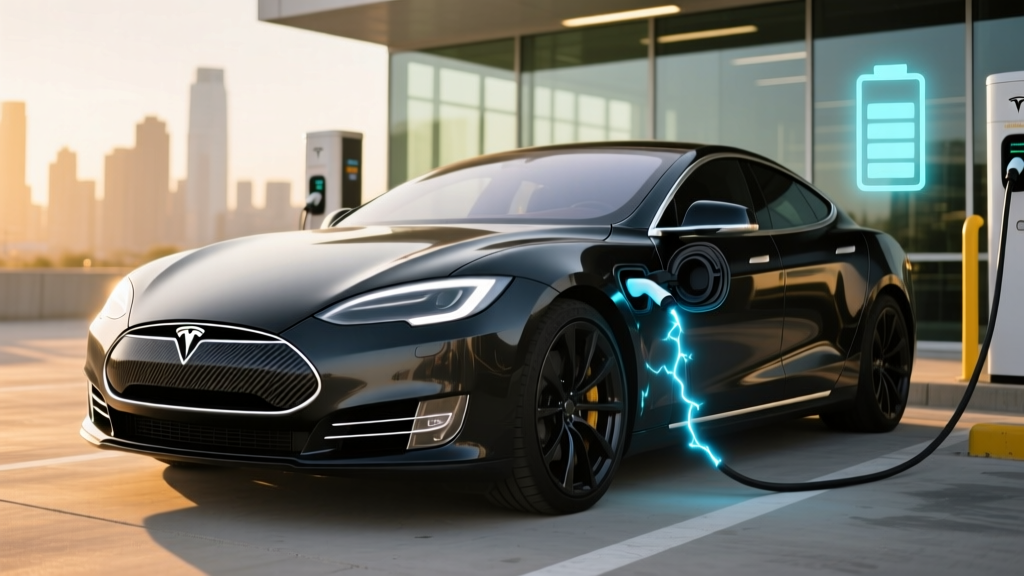
If you're researching Tesla ownership or just bought one, the first practical question is often: how long does it take to charge a Tesla battery? The answer depends entirely on which charging level you use, which Tesla model you drive, and the battery chemistry inside your pack. A Tesla Model 3 Rear-Wheel Drive with a ~57 kWh LFP battery charges very differently from a Model S with a 100 kWh NCA pack.
This guide breaks down exact charge times across all three charging levels, then goes deeper into what actually determines how your Tesla battery ages, what the warranty covers, and what replacement costs look like in 2026.
| Charging Level | Power (kW) | Miles of Range per Hour | Typical 10–80% Time | Best For |
|---|---|---|---|---|
| Level 1 (120V household) | ~1.4 kW | ~3–5 mi/hr | 40–60+ hours | Emergency trickle, overnight top-off |
| Level 2 (240V home/public) | 7.2–11.5 kW | ~25–44 mi/hr | 6–10 hours (full) | Daily home charging |
| DC Fast (Supercharger V3/V4) | 150–325 kW peak | ~200 mi in 15 min (peak) | 15–30 min | Road trips, rapid top-ups |
A few critical nuances that spec sheets often gloss over:
- kW vs. kWh: kW (kilowatts) measures power — how fast energy flows into the battery. kWh (kilowatt-hours) measures energy capacity — how much the battery holds. A 75 kWh battery charged at 11.5 kW takes roughly 6.5 hours from 0–100% in ideal conditions.
- Charge curve taper: Teslas don't sustain peak DC fast-charge rates to 100%. A Model 3 Long Range might peak at 250 kW around 10–20% State of Charge (SoC), then taper to ~100 kW by 60%, and drop below 50 kW past 80%. That's why 10–80% times are the industry standard — the last 20% can take as long as the first 60%.
- Preconditioning matters: If you navigate to a Supercharger using the Tesla app or in-car navigation, the car preheats the battery to optimal temperature. Without preconditioning — especially in cold weather — peak charge rates can be 30–50% lower until the pack warms up.
Tesla Battery Chemistry: LFP vs. NCA/NMC
Tesla uses two distinct battery chemistries across its 2026 lineup, and the chemistry in your car directly affects charging behavior, range, longevity, and daily charging habits.
| Attribute | LFP (Lithium Iron Phosphate) | NCA/NMC (Nickel-based) |
|---|---|---|
| Models using it | Model 3 RWD, Model Y RWD | Model 3/Y Long Range & Performance, Model S, Model X, Cybertruck |
| Energy density | Lower (~160 Wh/kg cell-level) | Higher (~250–270 Wh/kg cell-level) |
| Typical usable capacity | ~57–60 kWh | ~75–100 kWh |
| Cycle life | 3,000–5,000+ cycles | 1,000–2,000 cycles |
| Recommended daily SoC | 100% (Tesla recommends charging to full regularly) | 80% daily, 100% for trips only |
| Cold-weather performance | Weaker — more range loss below freezing | Better cold tolerance with thermal management |
| Cost per kWh | Lower | Higher |
| Degradation profile | Very flat curve, minimal early loss | Slight early drop, then gradual linear decline |
Which is better? Neither is universally superior. LFP is the pragmatic choice for daily commuters who want maximum cycle life and don't need 350+ miles of range. You can charge LFP to 100% every night without accelerating degradation — in fact, Tesla recommends it because LFP's flat voltage curve makes State of Charge estimation difficult without periodic full charges. NCA/NMC is the pick for long-range road trippers and performance buyers who need higher energy density. Just keep daily charging to 80%.
How Long Do Tesla Batteries Actually Last?
The short answer: most Tesla high-voltage traction batteries outlast the car itself. Tesla's 2025 Impact Report showed that Model 3 and Model Y battery packs retain approximately 85% of original capacity after 200,000 miles — which translates to roughly 15% degradation over the average vehicle's full lifetime. For context, most gasoline vehicles are scrapped between 150,000 and 200,000 miles.
Typical Tesla Battery Degradation Curve (NCA/NMC packs, aggregated fleet data):
- Year 1 / ~15,000 mi: ~3–5% capacity loss (initial formation loss)
- Year 3 / ~45,000 mi: ~7–9% total loss
- Year 5 / ~75,000 mi: ~9–11% total loss
- Year 8 / ~120,000 mi: ~12–15% total loss
- 200,000 mi: ~15% total loss (per Tesla fleet data)
LFP packs show even flatter curves — often under 5% loss at 100,000 miles — because the chemistry is inherently more stable. Source: Tesla Impact Report, fueleconomy.gov.
Real-world degradation is not linear. The biggest drop happens in the first year or two (calendar aging and initial cycling), then the curve flattens significantly. A 2023 Model 3 Long Range with 40,000 miles showing 5% degradation is completely normal and not a reason for concern.
What Does the Tesla Battery Warranty Cover?
Tesla's battery and drive unit warranty is one of the more straightforward in the industry, but the details matter — especially the capacity retention threshold.
| Model | Warranty Period | Mileage Limit | Minimum Capacity Retention |
|---|---|---|---|
| Model 3 RWD (LFP) | 8 years | 100,000 miles | 70% |
| Model 3 Long Range / Performance | 8 years | 120,000 miles | 70% |
| Model Y (all trims) | 8 years | 120,000 miles | 70% |
| Model S / Model X | 8 years | 150,000 miles | 70% |
| Cybertruck | 8 years | 120,000 miles | 70% |
What's covered: If your battery drops below 70% of its original usable capacity within the warranty period (whichever comes first — years or miles), Tesla will repair or replace it to bring it back to at least 70%. This covers manufacturing defects, abnormal degradation, and drive unit failures.
What's NOT covered: Normal degradation above 70%, damage from accidents, flooding, or unauthorized modifications. If you charge to 100% daily on an NCA/NMC pack against Tesla's recommendations and see accelerated degradation, warranty claims may be scrutinized — though Tesla has generally honored claims when data shows a genuine defect.
How Much Does a Tesla Battery Replacement Cost?
This is the question that generates the most anxiety — and the most misinformation. Let's ground it in data.
| Model | Battery Size (usable) | Chemistry | Replacement Cost Range |
|---|---|---|---|
| Model 3 RWD | ~57 kWh | LFP | $12,000–$16,000 |
| Model 3/Y Long Range | ~75–82 kWh | NCA/NMC | $15,000–$22,000 |
| Model S / X | ~95–100 kWh | NCA/NMC | $20,000–$28,000 |
| Cybertruck | ~123 kWh | NMC (4680 cells) | $25,000–$35,000 (estimated) |
These figures include the battery pack and labor at a Tesla Service Center. Costs have declined significantly since 2020 as cell prices dropped and Tesla's structural battery pack design simplified some replacement procedures.
When is replacement actually needed? Almost never during normal ownership. Based on fleet data, fewer than 1–2% of Tesla battery packs have required out-of-warranty replacement. Most packs retain 80–85% capacity at 200,000 miles — well above the 70% threshold. The vehicles that do need replacements are typically high-mileage fleet vehicles (taxis, rideshare) exceeding 300,000+ miles, or rare cases of manufacturing defects caught under warranty.
The fear of a $20,000 surprise bill is understandable but statistically unlikely. For comparison, a gasoline vehicle's transmission replacement can cost $4,000–$8,000, and engine rebuilds can exceed $10,000 — events that are far more common than EV battery failure.
Factors That Affect Tesla Battery Life
While Tesla's thermal management system is among the best in the industry, owner habits still influence long-term battery health. Here's what the data shows:
Battery Care Best Practices
- Daily charge limit: Set to 80% for NCA/NMC packs (Long Range, Performance, Model S/X). Set to 100% for LFP packs (Model 3/Y RWD) — Tesla recommends regular full charges for LFP calibration.
- Avoid prolonged 100% SoC: On NCA/NMC, only charge to 100% when you'll drive soon after (road trips). Letting a full pack sit for days in heat accelerates calendar aging.
- Don't baby the DC fast charger: Occasional Supercharging is fine. Daily exclusive Supercharging can add ~1–2% extra degradation over 100,000 miles compared to primarily Level 2 home charging. Tesla's battery management system actively manages this, but heat from repeated high-rate charging accumulates.
- Cold weather charging: Always precondition before fast-charging in cold weather. Plug in when you arrive home in winter — the car uses grid power to maintain battery temperature rather than draining the pack.
- Storage: If leaving the car for weeks, set charge limit to 50% and leave it plugged in. Avoid storing at 100% or below 20%.
- Heat exposure: Parking in extreme heat (110°F+ / 43°C+) regularly with high SoC accelerates calendar aging. Use a garage or shaded spot when possible.
How to Check and Monitor Your Tesla's Battery Health
Tesla doesn't display a simple "State of Health" (SoH) percentage like some competitors, but there are reliable ways to monitor your pack:
- In-car range display: Switch to the "Typical" or EPA range display (not "Ideal"). Compare your current displayed range at 100% SoC to the original EPA rating. A 2023 Model 3 Long Range that originally displayed 333 EPA miles at 100% but now shows 310 miles has roughly ~7% degradation.
- Tesla Service Mode: Accessible through the software menu (tap the model name, hold for 3 seconds, enter "service"). The "High Voltage Battery" section shows estimated nominal full-pack capacity in kWh — the most direct SoH proxy Tesla provides.
- Third-party tools: Apps like TeslaFi, Tessie, or Stats (for iPhone) log detailed charge data, including energy added vs. SoC change, which lets you calculate pack capacity over time with high precision.
- OBD-II dongles: Tools like the OBDLink MX+ paired with apps like Scan My Tesla can pull real-time BMS (Battery Management System) data, including nominal full charge capacity, cell voltage deltas, and pack temperature.
Check your SoH quarterly rather than obsessively. Small fluctuations of 1–2% between measurements are normal and reflect temperature, recent driving patterns, and BMS recalibration rather than actual degradation.
What's Next: Solid-State and Silicon Anode Batteries
Looking forward, two battery technologies are generating significant interest — but neither is available in production Teslas today.
Solid-state batteries replace the liquid electrolyte with a solid material, promising higher energy density (potentially 400+ Wh/kg at the cell level), faster charging, and improved safety. Toyota, Samsung SDI, and QuantumScape have announced prototype cells, but mass production at automotive scale remains challenging. Realistic timeline for consumer vehicles: 2028–2032 for limited production, likely starting in premium models.
Silicon anode technology (used partially in Tesla's 4680 cells) replaces graphite anodes with silicon to increase energy storage per unit volume. Tesla's current 4680 cells already incorporate a silicon-composite anode. Next-generation versions with higher silicon content could boost energy density 15–25% over current cells. Timeline: incremental improvements rolling into production 2026–2028.
For current buyers: these technologies are promising but not a reason to delay a purchase. Today's LFP and NCA/NMC packs already deliver 200,000+ mile lifespans with manageable degradation, and any future pack will need years of real-world validation before matching today's proven track record.
Frequently Asked Questions
How long does it take to charge a Tesla battery at home on a standard outlet?
A standard 120V household outlet (Level 1) delivers roughly 1.4 kW to the battery. For a Model 3 RWD with a ~57 kWh pack, going from 20% to 80% takes approximately 25–30 hours. Level 1 is practical only for overnight top-offs of 30–50 miles or emergency use.
How long does it take to charge a Tesla on a Level 2 home charger?
A 240V Level 2 charger at 11.5 kW (Tesla Wall Connector on a 60-amp circuit) adds roughly 44 miles of range per hour to a Model 3. A full charge from 10% to 100% takes about 6–7 hours for a Model 3 RWD or 8–9 hours for a Long Range. Most owners arrive home, plug in, and wake up to a full battery every morning.
How fast does a Tesla Supercharger charge the battery?
V3 Superchargers peak at 250 kW and can add up to 200 miles in 15 minutes under optimal conditions (preconditioned battery, low starting SoC). V4 Superchargers, rolling out through 2025–2026, support up to 325 kW for compatible vehicles. Real-world 10–80% times range from 18 minutes (Model 3 Long Range) to 30+ minutes (Cybertruck) depending on pack size, temperature, and state of charge.
How long do Tesla batteries last in years and miles?
Based on Tesla fleet data and third-party tracking, most Tesla battery packs retain 85%+ capacity at 200,000 miles. In years, that translates to 13–15 years of average driving (15,000 mi/year). LFP packs in Model 3/Y RWD are expected to last even longer due to their superior cycle life. Most packs will outlive the vehicle they're installed in.
Should I be worried about Tesla battery replacement costs?
Statistically, the risk is low. Fewer than 1–2% of Tesla packs have needed replacement, and most of those were covered under the 8-year warranty. For context, a $15,000–$22,000 battery replacement at 200,000+ miles is comparable to or less than the cumulative cost of gasoline, oil changes, and transmission service over the same distance in a conventional vehicle. The fear of catastrophic battery failure is not supported by fleet data.
Does frequent Supercharging damage the Tesla battery?
Exclusively relying on DC fast charging adds a small amount of extra degradation — roughly 1–2% more loss at 100,000 miles compared to primarily Level 2 charging. Tesla's battery management system actively limits charge rates when the pack is hot or cold to protect longevity. For most owners who mix home Level 2 charging with occasional Supercharging on road trips, the effect is negligible.
Does cold weather permanently damage a Tesla battery?
No. Cold weather causes temporary range loss (15–30% reduction in extreme cold) because the battery's internal resistance increases and energy is used for cabin and pack heating. This range recovers when temperatures rise. Permanent damage only occurs if the battery is charged at high rates while frozen — which Tesla's BMS prevents by restricting charge speed until the pack warms up.