Why "Putting a Battery in a Car" Isn't Like Swapping a Phone Battery
When shoppers ask "how do you put a battery in a car," they're usually picturing something like dropping a 12V lead-acid block into a gas car's engine bay. An EV traction battery is a completely different animal. A modern electric-vehicle battery pack weighs between 700 and 1,200 pounds, stores 50 to 120 kWh of energy, and serves as a structural component of the vehicle's chassis.
Installing one requires a hydraulic lift, high-voltage safety certification, specialized coolant flushing, and software calibration that pairs the battery management system (BMS) to the vehicle's powertrain controllers. This isn't a driveway job — it's factory or dealer-level work that typically takes 4 to 8 labor hours at a certified EV service center.
But understanding how the battery is integrated, what chemistry is inside, and how it degrades over time is essential for any EV buyer. This guide covers the engineering, the ownership realities, and the data you need to make a confident purchase.
How EV Batteries Are Integrated Into the Vehicle
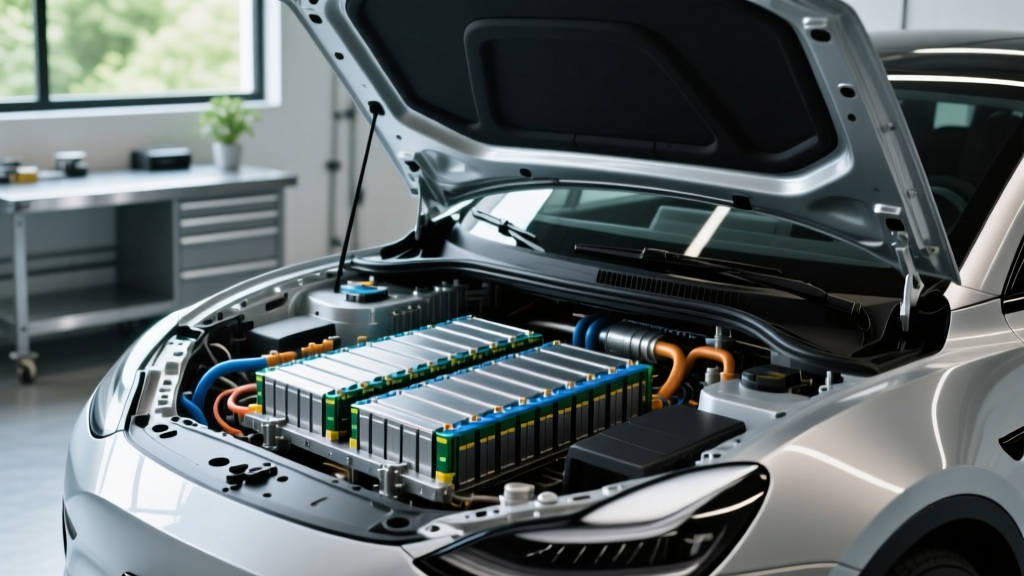
Most modern EVs use a skateboard architecture: a flat battery pack mounted under the floor between the axles. This placement lowers the center of gravity, improves handling, and maximizes interior space. The pack is bolted to the vehicle's structural frame with dozens of high-torque fasteners and connected to:
- High-voltage cabling (typically 400V or 800V) running to the inverter and drive motors
- Thermal management loops — liquid coolant circuits that heat or cool the cells to maintain optimal operating temperature (usually 20–40°C)
- Low-voltage harnesses connecting the BMS to the vehicle's central computer for SoC reporting, charge scheduling, and safety cutoffs
- Structural adhesives and crash rails designed to protect cells during side-impact collisions
Some newer platforms, like Tesla's structural battery pack in the Model Y, use the battery cells themselves as a load-bearing element — the cells are bonded between upper and lower cast aluminum frames. This reduces weight but makes replacement more complex and costly.
The physical installation process at a service center involves: draining coolant, disconnecting high-voltage contactors (with verified zero-voltage confirmation), unbolting the pack, lowering it on a hydraulic table, and reversing the process with a new or refurbished unit — followed by BMS pairing, coolant refill and bleed, and a full-system diagnostic calibration.
Battery Chemistry: LFP vs NMC vs NCA
The two dominant lithium-ion chemistries in 2026 EVs are lithium iron phosphate (LFP) and nickel manganese cobalt (NMC), with nickel cobalt aluminum (NCA) used primarily by Tesla and a few others. Each has distinct trade-offs that affect range, longevity, cost, and daily usability.
| Attribute | LFP (LiFePO₄) | NMC (NMC 811 / 9½½) | NCA |
|---|---|---|---|
| Energy density (Wh/kg, cell-level) | 160–200 | 250–300 | 260–310 |
| Typical cycle life (to 80% SoH) | 3,000–5,000+ | 1,000–2,000 | 1,000–1,500 |
| Cold-weather performance | Moderate (more range loss below 32°F) | Better low-temp conductivity | Better low-temp conductivity |
| Cost per kWh (pack-level, 2026) | ~$80–$100 | ~$110–$140 | ~$115–$145 |
| Recommended daily charge limit | 100% (LFP benefits from full charges) | 80–90% for daily use | 80–90% for daily use |
| Thermal stability / safety | Excellent (higher thermal runaway threshold) | Good (requires robust BMS) | Good (requires robust BMS) |
| Cobalt content | None | Low (5–10%) | Low (~5%) |
| Example 2026 vehicles | Tesla Model 3 RWD, Ford Mustang Mach-E Select (LFP option), BYD Seal | Hyundai Ioniq 5, Kia EV6, VW ID.4, Ford Mach-E Extended Range | Tesla Model Y Long Range, Model S, Rivian R1T (Max Pack) |
Which is better — LFP or NMC?
There's no universal winner. Choose LFP if you prioritize longevity, lower cost, and plan to own the vehicle for 10+ years or 150,000+ miles. LFP's superior cycle life means less degradation over time, and the ability to charge to 100% daily simplifies routine. Choose NMC/NCA if you need maximum range per charge, frequently drive in cold climates, or tow — the higher energy density translates to more miles from a smaller, lighter pack.
How Long Do EV Batteries Last? Degradation Data
EV batteries don't suddenly fail — they gradually lose capacity, measured as State of Health (SoH). A battery at 90% SoH holds 90% of its original energy when new.
Typical Degradation Curve (Based on Aggregate Fleet Data):
- Year 1 / 15,000 mi: 2–5% loss (initial "formation" drop as the solid-electrolyte interlayer stabilizes)
- Years 2–5 / 30,000–75,000 mi: ~0.5–1.5% per year (linear, gradual decline)
- Years 5–8 / 75,000–120,000 mi: ~0.5–1.0% per year (slowing)
- Year 8–10 / 120,000–150,000 mi: Most packs retain 80–88% SoH (NMC); LFP packs often retain 88–94% SoH
Sources: Geotab fleet battery health study analyzed over 10,000 EVs across multiple model years, confirming that median degradation sits around 1.8% per year across all chemistries, with LFP packs showing measurably slower decline.
Real-world context: A 2022 Tesla Model 3 Long Range (NCA, 82 kWh usable) at 60,000 miles typically shows 90–93% SoH — meaning its EPA range of 341 miles effectively becomes ~307–317 miles. That's noticeable but not debilitating. Most EV batteries will outlast the vehicle's body, suspension, and interior before reaching a point where replacement is necessary.
What Does the Battery Warranty Cover?
Federal law mandates a minimum 8-year/100,000-mile warranty on EV battery packs for emissions-related compliance, and most manufacturers meet or exceed this baseline. California Air Resources Board (CARB) states require 10 years/150,000 miles.
| Vehicle | Warranty Term | Capacity Threshold | Notes |
|---|---|---|---|
| Tesla Model 3 RWD (LFP) | 8 yr / 100,000 mi | 70% retention | LFP chemistry; 8 yr / 120,000 mi for Long Range |
| Tesla Model Y Long Range | 8 yr / 120,000 mi | 70% retention | NCA chemistry |
| Hyundai Ioniq 5 | 10 yr / 100,000 mi | 70% retention | Among the longest terms in the industry |
| Ford Mustang Mach-E | 8 yr / 100,000 mi | 70% retention | Both LFP and NMC variants covered equally |
| Chevrolet Equinox EV | 8 yr / 100,000 mi | 60% retention | Lower threshold — note the difference |
| Rivian R1T / R1S | 8 yr / 175,000 mi | 70% retention | Higher mileage cap reflects truck use case |
| BMW iX | 8 yr / 80,000 mi | 70% retention | Lower mileage cap than most competitors |
What triggers a warranty claim? If a diagnostic scan confirms the pack has fallen below the stated retention threshold (e.g., 70% of original capacity) within the warranty window, the manufacturer will repair or replace the pack — sometimes replacing only degraded modules rather than the entire unit. Warranties do not cover damage from collisions, flooding, unauthorized modifications, or use of non-compliant charging equipment.
How Much Does an EV Battery Cost to Replace?
Out-of-warranty battery replacement is the single largest potential EV repair cost. However, the context matters: the vast majority of EV batteries never need replacement during typical ownership. When they do, it's usually after 150,000+ miles or 10+ years — at which point the vehicle's residual value may not justify the expense.
| Vehicle / Pack Size | Battery kWh | Estimated Replacement Cost | Notes |
|---|---|---|---|
| Tesla Model 3 RWD (LFP) | 60 kWh | $8,000–$12,000 | Refurbished packs available at lower cost |
| Tesla Model Y Long Range | 82 kWh | $12,000–$16,000 | Structural pack adds labor complexity |
| Hyundai Ioniq 5 | 77.4 kWh | $11,000–$15,000 | Modular design may allow partial replacement |
| Ford F-150 Lightning (Extended Range) | 131 kWh | $20,000–$28,000 | Largest consumer pack; highest cost |
| Chevrolet Bolt EV (older platform) | 65 kWh | $9,000–$13,000 | Recall-replaced packs now use updated chemistry |
| Nissan Leaf (40 kWh pack) | 40 kWh | $6,500–$9,000 | Passive air cooling led to higher degradation rates |
For context, a federal tax credit under IRS §30D can offset up to $7,500 of a new EV purchase (subject to MSRP caps, buyer income limits, and battery-sourcing requirements), but battery replacements on existing vehicles are not eligible for this credit. Some states offer repair or replacement assistance programs — check your state energy office for current availability.
Factors That Affect Battery Life — and How to Maximize It
Not all miles age a battery equally. The following factors have measurable impact on long-term State of Health:
Battery Care Checklist for Maximum Longevity
- Avoid habitual DC fast charging: Occasional road-trip fast charging is fine, but daily use of 150+ kW DC chargers accelerates degradation by ~0.3–0.5% per year vs. Level 2 charging. The heat generated at high C-rates stresses cell internals.
- Follow chemistry-appropriate charge limits: NMC/NCA owners should set daily charge to 80% and reserve 100% for trips. LFP owners should charge to 100% at least once a week — LFP cells benefit from full-charge calibration and don't suffer the same high-SoC stress.
- Minimize extreme-temperature exposure: Parking in shade or a garage during summer, and using preconditioning (plugged in) during winter, reduces thermal cycling stress. Batteries degrade fastest when held above 45°C (113°F) or below -10°C (14°F) for extended periods.
- Don't store at 100% or 0%: If leaving the vehicle for more than a week, set SoC to 50–60%. Prolonged storage at full charge or near-empty accelerates calendar aging.
- Use preconditioning before fast charging: Most EVs automatically warm the battery when a DC fast charger is set as a navigation destination. This enables faster charging and reduces cell stress. A cold battery forced to accept high current suffers lithium plating — a permanent capacity loss mechanism.
- Keep software updated: OTA updates often refine BMS algorithms, thermal management thresholds, and charge-curve profiles. Tesla, Rivian, and Hyundai/Kia regularly push battery-management improvements.
How to Check Your Battery's State of Health
Monitoring SoH helps you track degradation and plan for any future warranty claim. Methods vary by manufacturer:
- In-vehicle display: Some vehicles (notably the Nissan Leaf with its 12-bar health indicator) show SoH directly on the dash. Most others do not expose this natively.
- Manufacturer app: Tesla's app shows estimated range at 100% charge, which you can compare to the original EPA figure to approximate SoH. Hyundai's Bluelink and FordPass provide similar estimates.
- OBD-II diagnostic tools: Devices like the OBDLink MX+ paired with apps such as EVBatMon (for older Leafs/Bolts) or manufacturer-specific CAN-bus readers can pull raw BMS data including pack voltage, individual cell deltas, and reported Ah capacity.
- Dealer diagnostic scan: A service center can run a full battery health report — often required for warranty claims. Request this at each annual service visit.
- Third-party services: Companies like Recurrent Auto provide battery health reports based on connected vehicle data, useful for used-EV buyers verifying a vehicle's pack condition before purchase.
What's Next? Solid-State and Silicon-Anode Batteries
Emerging battery technologies promise higher energy density, faster charging, and longer life — but timelines remain fluid and no solid-state EV is available for consumer purchase in 2026.
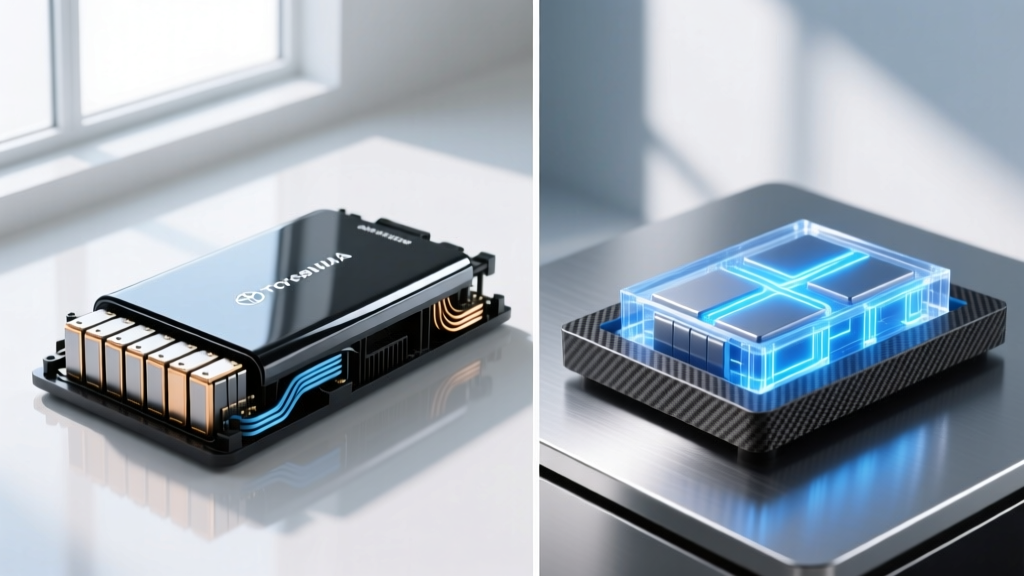
- Solid-state batteries: Toyota has announced limited production of solid-state-equipped vehicles for 2027–2028, claiming 750+ km (WLTP) range and 10-minute fast charging. Samsung SDI and QuantumScape are also advancing prototypes. Realistically, broad consumer availability is 2029 or later. These cells replace the liquid electrolyte with a solid ceramic or polymer, enabling lithium-metal anodes and dramatically higher energy density (~400–500 Wh/kg at cell level).
- Silicon-dominant anodes: Companies like Sila Nanotechnologies and Group14 are supplying silicon-carbon anode materials that boost energy density by 15–25% over graphite. The Mercedes-Benz G-Class electric (2025) and select upcoming GM models use early silicon-anode cells. Expect wider adoption by 2027–2028.
- Sodium-ion batteries: CATL and BYD have begun producing sodium-ion packs for lower-cost, shorter-range EVs in China. Energy density is lower (~120–160 Wh/kg), but raw materials are abundant and cheap. Possible US-market entry in budget EVs by 2028.
These are forward-looking developments. For buyers in 2026, today's LFP and NMC packs — with their proven degradation curves and robust warranties — remain the practical choice.
Frequently Asked Questions
How long do EV batteries last in years and miles?
Based on fleet data from Geotab and manufacturer reports, most modern EV batteries retain 80–90% of original capacity at 150,000 miles or 10 years. LFP chemistry packs often exceed 90% at that point. Many batteries will outlast the rest of the vehicle.
How much does an EV battery cost to replace?
Replacement costs range from approximately $6,500 for a smaller pack (Nissan Leaf 40 kWh) to $28,000 for the largest consumer packs (Ford F-150 Lightning Extended Range, 131 kWh). Most replacements fall in the $10,000–$16,000 range including labor. However, the majority of EV batteries never require replacement during normal ownership.
What does the battery warranty cover?
Federal minimum is 8 years/100,000 miles; CARB states require 10 years/150,000 miles. Coverage applies when the pack falls below a stated capacity retention threshold (typically 70%, though Chevrolet uses 60% on some models). The warranty covers defects and abnormal degradation but excludes collision damage, flooding, and unauthorized modifications.
How do I check and maximize my EV battery health?
Check SoH via your manufacturer app, an OBD-II diagnostic tool, or a dealer scan. Maximize longevity by following chemistry-appropriate charge limits (80% daily for NMC/NCA; 100% weekly for LFP), minimizing habitual DC fast charging, preconditioning before fast charges, and avoiding prolonged storage at extreme SoC levels.
LFP vs NMC — which is better for my situation?
LFP offers longer cycle life (3,000–5,000+ cycles), lower cost, better thermal safety, and no cobalt — but lower energy density and more cold-weather range loss. NMC/NCA delivers higher range per kWh, better cold performance, and lighter weight — but shorter cycle life and higher cost. If you plan to keep your EV 8+ years and charge mostly at home, LFP is the longevity play. If you need maximum range or live in a cold climate, NMC/NCA is the better fit.
Can I install an EV battery myself?
No. High-voltage EV battery packs operate at 400–800 volts — enough to be lethal without proper training, insulated tools, and safety protocols. Installation requires manufacturer-specific software pairing, coolant system bleeding, and BMS calibration. All battery replacement work should be performed by a certified EV technician at a dealership or qualified independent shop.