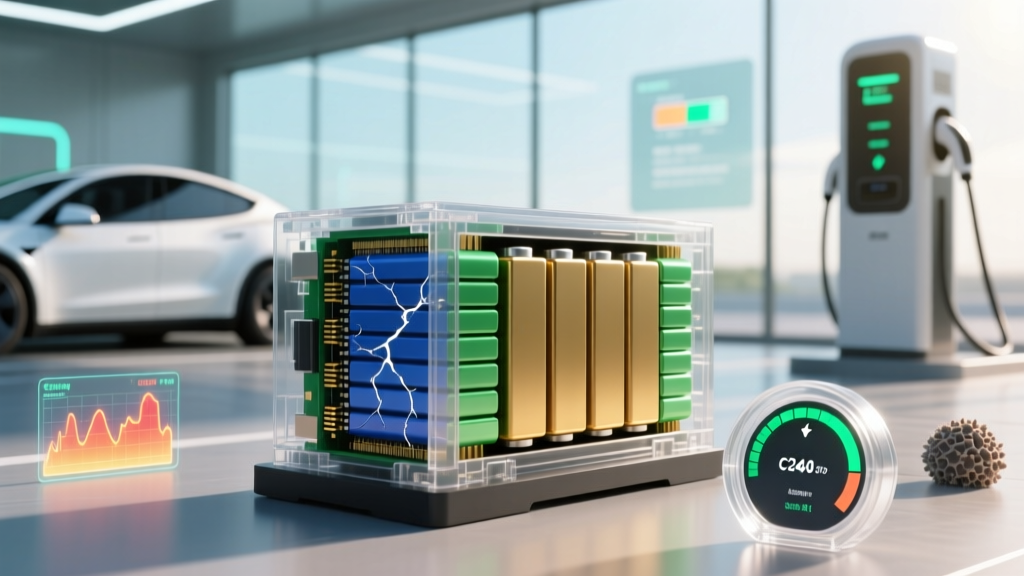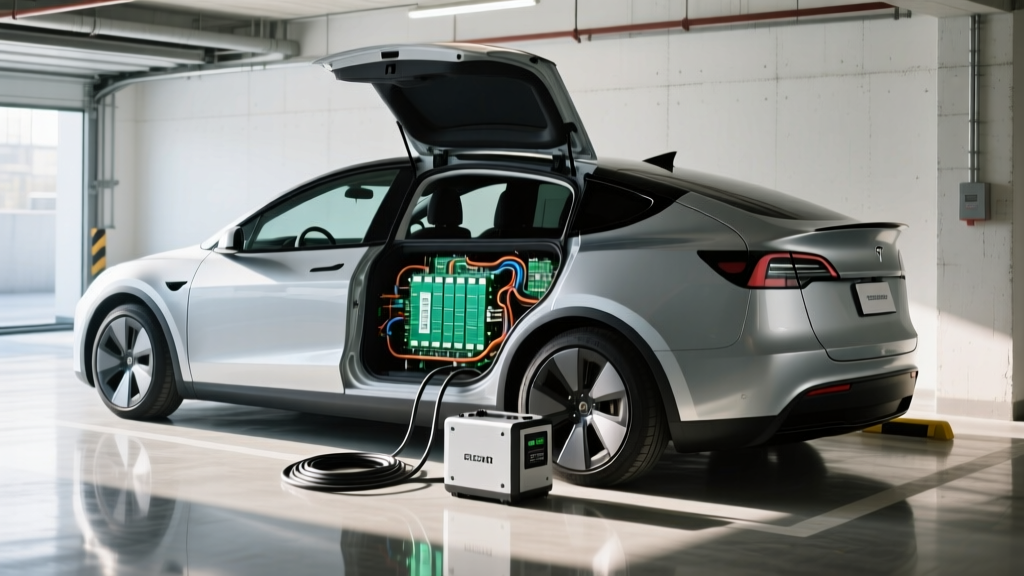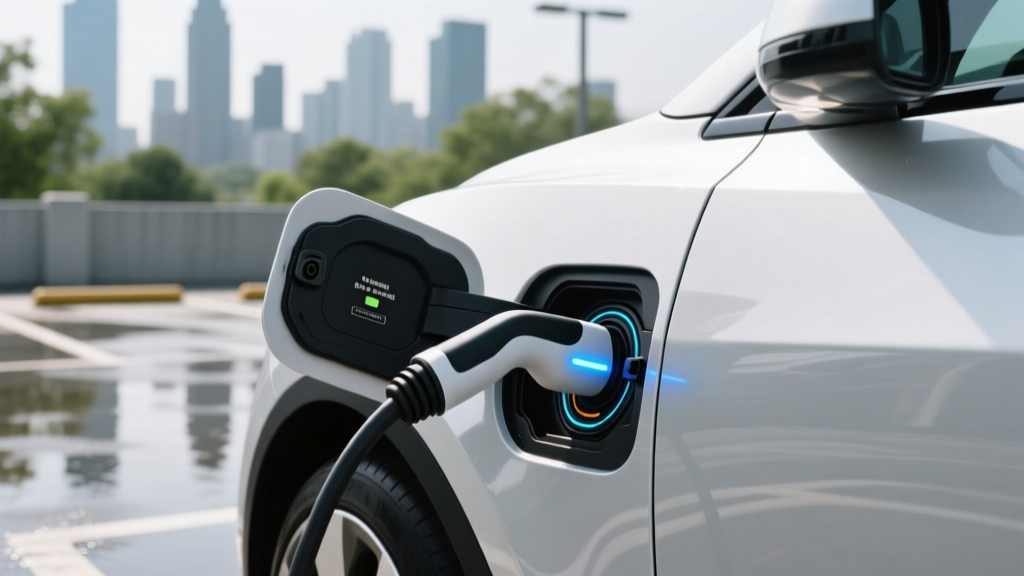
The single most expensive component in any electric vehicle is the high-voltage traction battery. Depending on the model, it represents 25–40% of the vehicle's total manufacturing cost. Yet most EV owners have only a vague sense of how charging habits, chemistry choices, and thermal conditions affect that battery's lifespan. Understanding how you charge a battery — and how that battery is built — is the difference between a pack that degrades gracefully over 15 years and one that needs attention far sooner.
This guide breaks down the chemistry inside modern EV batteries, what real-world degradation data shows, what warranties actually cover, and the daily practices that measurably extend battery life.
LFP vs NMC vs NCA: The Chemistry Inside Your EV Battery
Not all EV batteries use the same chemistry. The three dominant cathode types in 2026 production vehicles are LFP (lithium iron phosphate), NMC (nickel manganese cobalt), and NCA (nickel cobalt aluminum). The chemistry determines energy density, cycle life, cold-weather behavior, and cost.
| Attribute | LFP | NMC | NCA |
|---|---|---|---|
| Energy density (Wh/kg, cell level) | 160–180 | 220–260 | 240–270 |
| Typical cycle life to 80% SoH | 3,000–5,000 | 1,000–2,000 | 800–1,500 |
| Cold-weather range retention (20°F) | ~60–65% of EPA | ~70–75% of EPA | ~70–75% of EPA |
| Daily charging to 100% SoC | Recommended | Not recommended (80% preferred) | Not recommended (80% preferred) |
| Cost per kWh (cell level, est.) | $80–$100 | $110–$140 | $115–$145 |
| Common in (2026 examples) | Tesla Model 3 RWD, base Model Y RWD, Ford Mustang Mach-E Select (LFP option) | Hyundai Ioniq 5, Kia EV6, Chevy Equinox EV, VW ID.4 | Tesla Model S/X, Lucid Air |
| Thermal runaway risk | Very low | Moderate (managed by BMS/cooling) | Moderate (managed by BMS/cooling) |
LFP: The Long-Life, Lower-Range Choice
LFP batteries sacrifice some energy density for dramatically longer cycle life and superior thermal stability. Tesla shifted its standard-range Model 3 and Model Y to LFP in 2022 and has expanded it further. The trade-off: an LFP-equipped Model 3 RWD delivers an EPA-estimated 272 miles on a ~60 kWh usable pack, while the NMC Long Range variant pushes 363 miles on ~82 kWh usable. If you prioritize longevity and plan to keep the car 10+ years, LFP's 3,000+ cycle life means you could theoretically charge from 0–100% every day for over 8 years before hitting 80% State of Health.
NMC: The Range and Performance Standard
NMC dominates the mid-market and long-range segment because it packs more energy into the same physical space. The EPA's fuel economy database shows NMC-equipped vehicles like the Ioniq 5 (318 miles EPA on the Long Range AWD trim) achieve higher range from comparable pack sizes. The trade-off is a shorter cycle life and the need to avoid sustained high SoC — daily charging to 100% accelerates NMC degradation measurably.
NCA: Tesla's Premium Chemistry
NCA, used primarily by Tesla in Model S and Model X and by Lucid, offers the highest energy density but the shortest cycle life of the three. For luxury vehicles where range-per-kilogram matters most, this is an acceptable trade. For high-mileage fleet use, less so.
How Long Do EV Batteries Actually Last? Real Degradation Data
The most persistent fear among prospective EV buyers is that the battery will need replacement within a few years. Real-world data tells a different story — but the numbers depend heavily on chemistry and usage.
Observed Degradation Curves (Compiled from fleet data and owner reports):
- NMC batteries (typical mid-range EV, 75–85 kWh pack): ~5–8% capacity loss after 100,000 miles / 4 years; ~10–14% after 200,000 miles / 8 years. The degradation curve is steeper in the first 20,000 miles (2–4% initial drop), then flattens into a slow linear decline.
- LFP batteries (Tesla Model 3 RWD fleet data): ~3–5% loss after 100,000 miles; ~6–9% after 200,000 miles. LFP's slower degradation is well-documented in high-mileage taxi and rideshare fleets.
- NCA batteries (Tesla Model S/X): ~6–10% loss at 100,000 miles; data at 200,000+ miles shows 12–18% loss, with wide variance depending on Supercharging frequency.
A study by Geotab, analyzing data from over 10,000 EVs, found that the average EV battery loses about 2.3% of its capacity per year under typical usage. At that rate, after 10 years the average pack retains roughly 77% of its original capacity — still well above the 70% threshold that most warranties guarantee.
The critical insight: battery degradation is non-linear. You lose a few percent quickly, then the curve flattens. Most batteries will outlast the vehicle's useful economic life. Complete battery failure (sudden, catastrophic) is extremely rare in liquid-cooled modern packs — it's gradual capacity loss that matters.
What Does the Battery Warranty Actually Cover?
Federal law mandates that EV batteries carry a minimum warranty of 8 years / 100,000 miles (10 years / 150,000 miles in California Air Resources Board states). But what triggers a warranty claim varies by manufacturer.
| Manufacturer | Warranty Period | Capacity Threshold | Notes |
|---|---|---|---|
| Tesla (Model 3/Y LFP) | 8 yr / 100,000 mi | 70% retention | Standard Range; Long Range AWD is 8yr/120,000 mi |
| Tesla (Model S/X) | 8 yr / 150,000 mi | 70% retention | Higher mileage due to premium segment |
| Hyundai / Kia | 10 yr / 100,000 mi | 70% retention | Among the longest coverage in the industry |
| GM (Chevy/Blazer/Equinox EV) | 8 yr / 100,000 mi | 70% retention | Ultium platform; module-level replacement possible |
| Ford (Mach-E / F-150 Lightning) | 8 yr / 100,000 mi | 70% retention | F-150 Lightning extended-range: 131 kWh pack |
| Volkswagen (ID.4) | 8 yr / 100,000 mi | 70% retention | MEB platform; LFP option on base trim for 2026 |
Key details that catch owners off guard:
- The 70% threshold means significant degradation must occur before a claim is valid. A battery at 72% SoH, while noticeably reduced, does not trigger a warranty replacement.
- Warranties cover defects and abnormal degradation, not gradual capacity loss within the expected curve. If your battery loses 25% capacity in 3 years, that's a warranty claim. If it loses 12% over 8 years, that's considered normal.
- Module-level replacement is increasingly common. Rather than swapping the entire pack, manufacturers like GM and Hyundai can replace individual degraded modules — reducing cost and downtime.
How Much Does an EV Battery Cost to Replace?
Out-of-warranty battery replacement is the scenario that generates the most anxiety. Here's what the numbers actually look like in 2026:
| Vehicle / Pack Size | Battery Capacity | Chemistry | Estimated Replacement Cost |
|---|---|---|---|
| Tesla Model 3 RWD | ~60 kWh | LFP | $10,000–$13,000 |
| Tesla Model Y Long Range | ~82 kWh | NMC/NCA | $14,000–$18,000 |
| Hyundai Ioniq 5 Long Range | ~77.4 kWh | NMC | $13,000–$17,000 |
| Ford F-150 Lightning Extended | ~131 kWh | NMC | $22,000–$30,000 |
| Chevy Equinox EV | ~85 kWh | NMC (Ultium) | $14,000–$18,000 |
| Lucid Air Grand Touring | ~112 kWh | NCA | $20,000–$28,000 |
Context that reduces the fear factor:
- Most EV batteries never need replacement. Based on current degradation curves, a typical NMC pack will retain 75–80% capacity at 200,000 miles. That's still 240+ EPA miles from a 310-mile vehicle — usable for most drivers.
- Cell prices continue to fall. BloombergNEF reports lithium-ion pack prices averaging ~$115/kWh at the cell level in 2025, down from $140/kWh in 2023. Replacement costs in 2030 will likely be 20–30% lower than today.
- Module-level repair is changing the math. If only one or two modules degrade abnormally, a $2,000–$4,000 module swap may restore the pack — no full replacement needed.
- The vehicle's residual value absorbs most of this. If you trade or sell a 10-year-old EV, the battery condition is reflected in the price. You're not paying full replacement cost on a car worth $12,000.
How Do You Charge a Battery to Maximize Its Life? Daily Habits That Matter
How you charge a battery day-to-day has a measurable impact on its long-term State of Health. The physics are clear: lithium-ion cells degrade faster at high states of charge, high temperatures, and high charge/discharge rates. Here's what the data supports.
The 6 Habits That Extend Battery Life
- Set a daily charge limit of 80% for NMC/NCA batteries. Sustained time at 100% SoC accelerates electrolyte decomposition and cathode wear. Tesla, Hyundai, and Ford all default their charge-limit setting to 80–90% for this reason. LFP batteries are the exception — Tesla recommends periodic charging to 100% for LFP to keep the BMS calibration accurate.
- Minimize DC fast charging when possible. DCFC at 150–350 kW pushes high current through cells, generating heat. A study published by the Idaho National Laboratory found that vehicles charged primarily via DCFC showed ~1–2% additional degradation over 50,000 miles compared to Level 2-only charging. That's not catastrophic, but it compounds. Use DCFC for road trips; rely on Level 2 at home for daily needs.
- Avoid letting SoC drop below 10% for extended periods. Deep discharge stresses the anode. If you're storing the vehicle for weeks, set the charge limit to 50–60% and leave it plugged in so the thermal management system can operate.
- Use preconditioning before fast charging. Most EVs (Tesla, Hyundai E-GMP, GM Ultium) will warm the battery to optimal temperature (typically 35–40°C / 95–104°F) when you navigate to a charger. This reduces charge time and limits the thermal stress of high-current charging. If your car has a preconditioning toggle, use it.
- Park in shade or a garage during extreme heat. Battery degradation accelerates above 35°C (95°F) ambient, especially at high SoC. A car sitting at 100% SoC in a Phoenix summer (115°F / 46°C) is under far more chemical stress than one at 60% in a shaded garage. Some vehicles (Tesla, Rivian) will run the cooling system while parked if plugged in — this is why plugging in during heat waves is recommended.
- Don't obsess over regenerative braking settings. Regen does cycle the battery, but at relatively low C-rates (typically 0.3–0.5C). The degradation impact of regen is negligible compared to SoC and temperature factors. Use whatever regen setting you prefer for driving comfort.
The kW vs kWh Distinction That Affects Charging Decisions
A quick but critical clarification: kW (kilowatts) measures power — the rate at which energy flows into the battery. kWh (kilowatt-hours) measures energy — the total capacity of the battery. A 77 kWh battery charged at 11 kW (Level 2) takes roughly 7 hours from empty. That same battery charged at 240 kW (DCFC) could theoretically fill in under 20 minutes, but the charge curve means peak kW is only sustained at low SoC. Above 80%, the rate tapers sharply to protect the cells — which is why 10–80% charge times are the industry standard metric, not 0–100%.
How to Check Your Battery's State of Health (SoH)
State of Health is the percentage of original capacity your battery can still hold. A new battery is 100% SoH; a degraded one might be 88%. Here's how to monitor it:
- In-car displays: Tesla shows estimated range at 100% (which you can compare to original EPA figures). The Hyundai Ioniq 5 and Kia EV6 display a battery health indicator in the settings menu. GM's Ultium vehicles show battery health percentage via the infotainment system or the myChevrolet/myCadillac app.
- OBD-II diagnostic tools: Devices like the OBDLink SX paired with apps such as EV Health or LeafSpy (Nissan-specific) can read the BMS directly and report SoH to within ~1%.
- Manufacturer service centers: Any authorized dealer can pull a full battery health report during service. This is worth doing annually if you're approaching warranty thresholds.
- Third-party testing: Companies like Recurrent Auto provide battery health reports based on telematics data. Some used-EV listings now include a Recurrent battery score.
If you notice a sudden drop in range (more than 5% in a short period) or inconsistent SoC readings, that can signal a module imbalance or cooling system issue — both warrant a dealer diagnostic before they worsen.
Factors That Accelerate Degradation: What the Data Shows
Not all miles are equal. The following factors have the strongest measured impact on battery degradation rate:
- Exclusive DC fast charging: Vehicles that DCFC more than 90% of the time show approximately 1–3% additional capacity loss over 100,000 miles versus predominantly Level 2 charging (Idaho National Laboratory fleet study).
- Hot climates with high-SoC storage: EVs in Phoenix, Las Vegas, and the Middle East that regularly sit at 90–100% SoC show degradation rates 1.5–2x higher than vehicles in moderate climates stored at 50–70% SoC.
- High annual mileage with frequent full cycles: Rideshare vehicles doing 60,000+ miles/year with daily 10–100% cycles accumulate degradation faster than the typical 12,000-mile/year commuter who charges 30–80% nightly.
- Cold-climate fast charging without preconditioning: Charging a frozen battery at high kW causes lithium plating on the anode — an irreversible form of degradation. This is why preconditioning is non-negotiable in sub-freezing conditions.
For the average owner charging at home on Level 2, setting an 80% limit, and living in a moderate climate, degradation will track the lower end of the ranges cited above — roughly 1.5–2% per year.
What's Next: Solid-State and Silicon-Anode Batteries
Emerging battery technologies promise to shift the longevity and energy-density equation, but realistic timelines matter.
- Solid-state batteries: Toyota has announced production intent for solid-state cells in limited vehicles by 2027–2028, with claims of 750+ km (466+ mi) range and 10-minute fast charging. Samsung SDI and QuantumScape are also in advanced testing. However, solid-state packs remain in pre-production validation as of early 2026 — no mass-market vehicle currently uses them. Expect initial deployment in limited, premium applications before broad availability in the 2030s.
- Silicon-anode batteries: Companies like Sila Nanotechnologies and Group14 are producing silicon-dominant anode materials that boost energy density 15–25% over graphite anodes. These are beginning to appear in limited production (Mercedes-Benz's G-Class 580e uses a silicon-anode pack). Wider adoption is expected through 2027–2029 as manufacturing scales.
- Sodium-ion batteries: CATL and BYD are producing sodium-ion cells for lower-cost, lower-range applications (city cars, energy storage). Not yet in US-market vehicles, but a potential chemistry for budget EVs in the late 2020s.
For buyers deciding today: current LFP and NMC batteries are mature, well-understood technologies backed by extensive warranty coverage. Waiting for solid-state means waiting at minimum 2–4 years for limited availability, likely at a significant price premium.
Frequently Asked Questions
How long do EV batteries last in years and miles?
Based on fleet data from Geotab and manufacturer reports, most modern liquid-cooled EV batteries retain 75–85% of original capacity at 200,000 miles or 10–12 years. LFP batteries trend toward the higher end of that range. Very few batteries require full replacement before the vehicle is retired for other reasons.
How much does it cost to replace an EV battery?
Full pack replacement ranges from approximately $10,000 for a 60 kWh LFP pack (Tesla Model 3 RWD) to $22,000–$30,000 for a 131 kWh NMC pack (F-150 Lightning Extended Range). However, most batteries never need replacement, and module-level repairs ($2,000–$4,000) are increasingly available for isolated degradation issues.
What does the EV battery warranty cover?
Federal law requires a minimum 8-year / 100,000-mile warranty (10/150,000 in CARB states). The warranty covers defects and abnormal degradation — typically defined as falling below 70% capacity retention. Normal gradual loss is not a warranty claim. Check your specific manufacturer's terms, as Hyundai/Kia offers 10/100,000 and some brands cover the battery cooling system separately.
Should I charge my EV to 100% every night?
For NMC and NCA batteries: no. Set your charge limit to 80% for daily use and charge to 100% only before long trips. For LFP batteries: Tesla recommends charging to 100% at least once per week to maintain BMS calibration, and daily 100% charging is acceptable due to LFP's superior cycle life.
Does fast charging damage my EV battery?
DC fast charging causes slightly more degradation than Level 2 charging — approximately 1–3% additional capacity loss over 100,000 miles if used exclusively. Occasional DCFC on road trips has negligible impact. The bigger risk is fast charging in extreme cold without preconditioning, which can cause lithium plating. Always use your vehicle's preconditioning feature before DCFC sessions.
LFP vs NMC — which battery chemistry is better?
It depends on your priorities. LFP is better for longevity (3,000–5,000 cycles vs 1,000–2,000), thermal safety, and cost — but offers 10–15% less range per kWh and slightly worse cold-weather performance. NMC is better for maximizing range and is the standard for long-range and AWD trims. If you plan to keep the vehicle 10+ years and don't need maximum range, LFP is the stronger choice. If you need 300+ miles per charge, NMC is necessary.
How do I check my EV battery health?
Most modern EVs display battery health or estimated 100% range via the infotainment system or companion app. For more precise readings, an OBD-II scanner with EV-compatible software can read the BMS directly. Authorized dealers can pull a full health report during scheduled service. If range drops suddenly or inconsistently, schedule a diagnostic — it may indicate a fixable module or cooling issue rather than general degradation.
The bottom line: modern EV batteries are engineered to outlast the vehicle around them. By understanding your battery's chemistry, setting appropriate charge limits, minimizing unnecessary fast charging, and monitoring SoH periodically, you'll extract the maximum life from the most valuable component in your car. The data overwhelmingly shows that with reasonable care, battery replacement is a problem most EV owners will never face.